
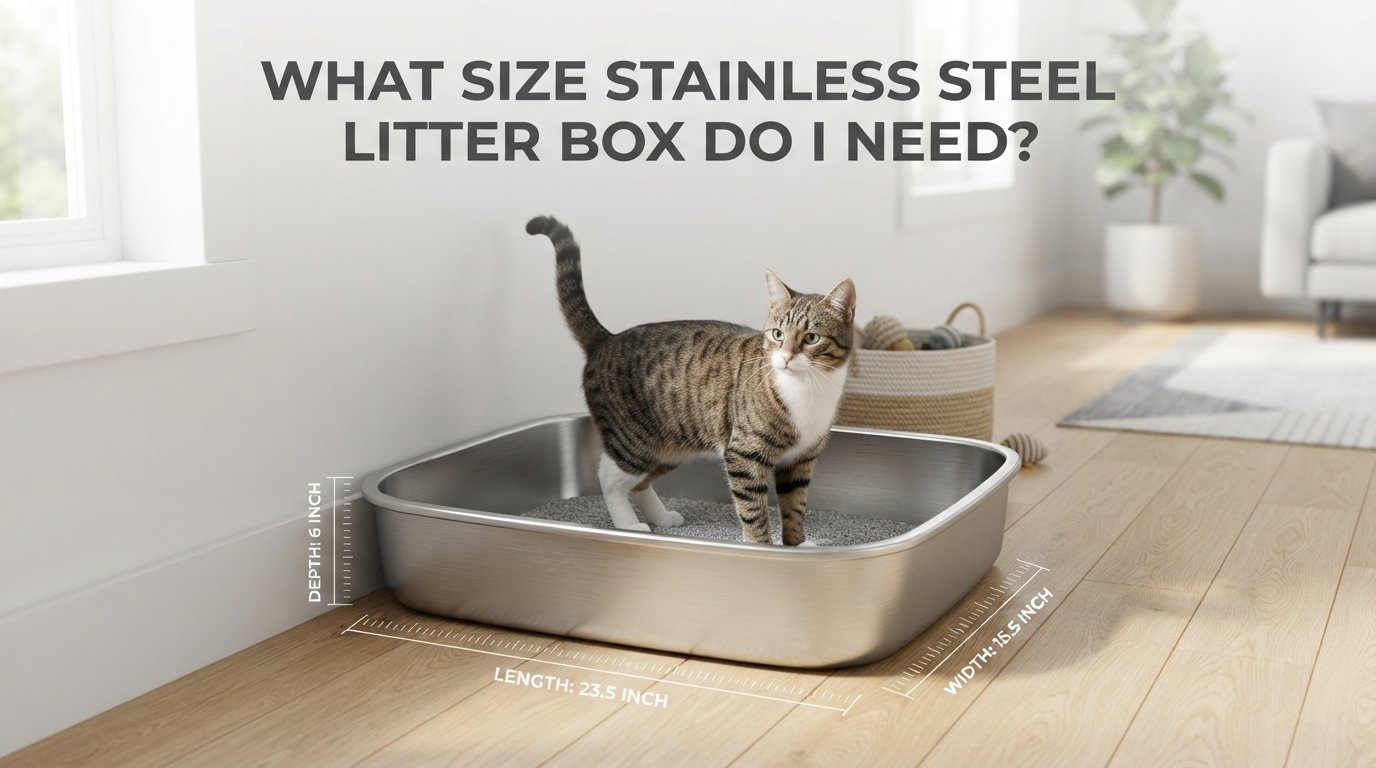
What size stainless steel litter box do I need? Measure your cat from nose to tail base, add 6 to 8 inches, and that’s your minimum interior length. Most adult cats do fine around 22 to 24 inches long. Large breeds need closer to 28 inches or more, and no listing photo will tell you that on its own. Wall height matters just as much: 6 to 8 inches suits kittens and senior cats, while sprayers and diggers need 10 to 12 inches of containment. An “XL” label on Amazon doesn’t guarantee any of this. The measurements below are pulled from interior dimensions where the manufacturer lists them, not from marketing copy.
Five stainless steel options are compared below, ranging across height, footprint, and enclosure style. Sizing is only one piece of the decision. Steel gauge and shape change how a box holds up day to day too, and that’s easy to miss from a photo alone. Our stainless steel litter box hub rounds up the full buying series, and if you’re comparing litter box types more broadly, start with our indoor cat litter box guide.
| Cat Type | Interior Length | Wall Height |
|---|---|---|
| Kitten | 14 to 16 in | 4 to 6 in |
| Average adult cat | 20 to 24 in | 6 to 8 in (10 to 12 in for sprayers) |
| Large breed (Maine Coon, Ragdoll) | 24 to 28+ in | 8 to 12 in |
| Senior or arthritic cat | 20 to 26 in | Under 6 in, or a cut-low entry |
Stainless Steel Litter Box Sizes We Compared
These are the listings we reference throughout this guide. Each card includes a short read on what stands out, the stated dimensions, and patterns we noticed in buyer feedback. Prices and stock change often, so confirm current details and the most recent reviews before you buy.
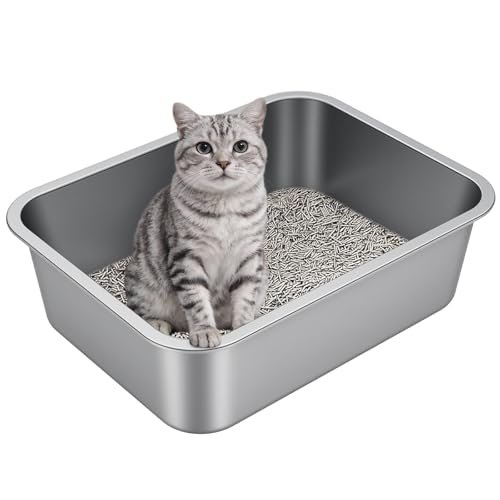 Idymere Stainless Steel High Sided Cat Litter Box
A compact, open-top stainless steel box suited to kittens or smaller adult cats.
8.4/10
|
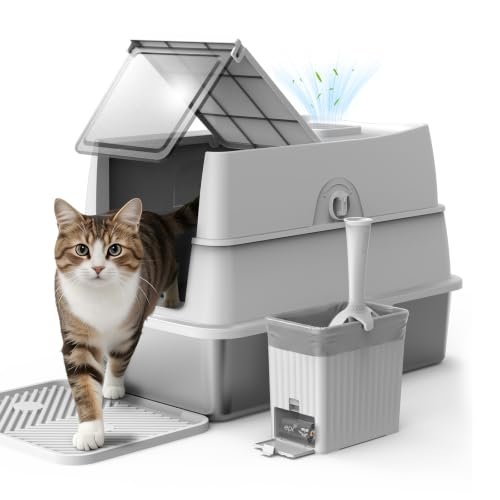 Stainless Steel Litter Box with Lid, Extra Large Enclosed
An enclosed, leak-proof metal box with a flip-top lid for daily maintenance.
7.9/10
|
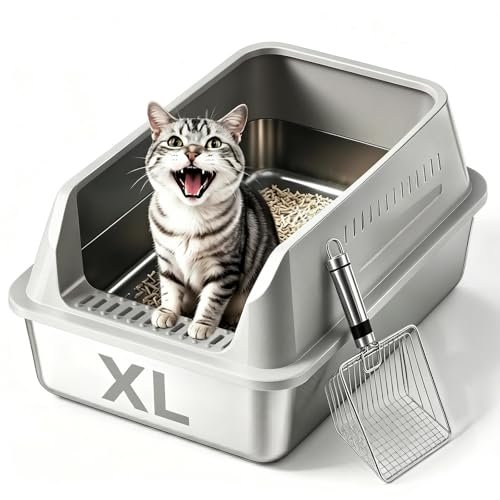 XL Enclosed Stainless Steel Cat Litter Box with Lid
A spacious, open-top XL box built for durability and larger litter capacity.
8.1/10
|
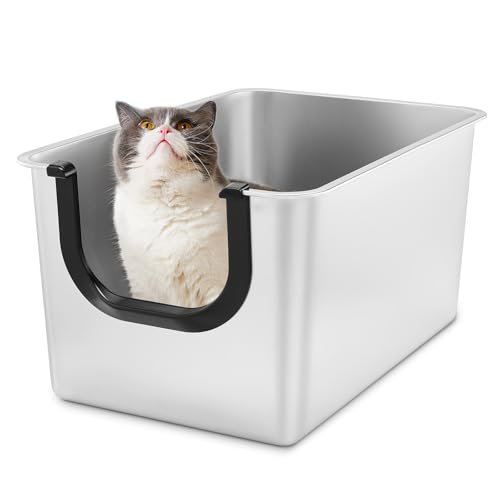 Yangbaga Stainless Steel Litter Box, 12in High Sides
Extra large stainless steel tray with 12 inch walls and a low, easy entry point.
8.5/10
|
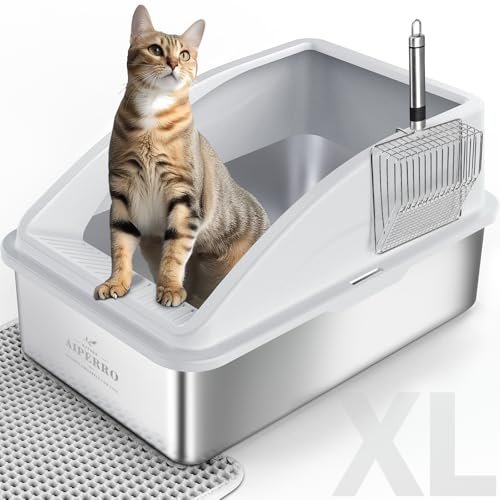 AIPERRO Stainless Steel Litter Box, XL Enclosed
An enclosed XL box with a built-in litter filter to reduce tracking.
7.6/10
|
How We Judged Each Pick
These notes reflect practical fit, verifiable specs from the listing, and what buyers report back after weeks of daily use, not lab claims that can’t be checked.
|
The Idymere is a smart, space-saving pick if you’re not dealing with a large breed. At 16.93 by 12.99 by 5.12 inches, the open top helps with airflow, which supports odor control. The steel finish wipes clean far more easily than plastic that holds onto smell over time. |
|
If your cat sprays or digs aggressively, this enclosed model is worth a look. The overlapping seams close off the gaps where urine typically escapes on cheaper enclosed boxes. The lid hinge is the one part that needs gentle handling during your daily scoop. |
|
This box suits households with large cats well. The 10.24 inch walls contain mess without an enclosure, and the wide entry means bigger cats don’t have to duck or squeeze in. The ergonomic scoop that ships with it is a nice touch for daily cleaning. |
|
This is the strongest all-around pick for large cats. The 12 inch walls stop even determined sprayers, and the U-shaped low entry solves the usual tradeoff where high sides make entry harder for older cats. Smooth, rolled edges mean no sharp seams under paws either, which matters if you’re wondering whether stainless steel is safe for cats with sensitive paws or claws. |
|
A solid option for large cats that need a private, enclosed space. The built-in filter plate cuts down on tracked litter, though several reviewers mention it takes extra scrubbing to keep the plate itself clean during weekly deep cleans. |
Sizing a Stainless Steel Litter Box the Right Way
Not every “large” metal box is actually large where it counts. A box only works if your cat can stand, turn, and dig without brushing the walls. If they can’t, they’ll often start using other spots in the house instead.
Focus on your cat’s actual length and weight, not the box’s outer dimensions. Interior floor space and wall height are what keep a home clean and prevent the “hanging tail” problem, where the tail hangs over the rim and drags through litter on the way out.
Steel gauge is worth checking too. Boxes made from 18/8 or 18/10 stainless steel resist denting and staining far better than thin, budget-grade steel, which can develop small rust spots at the seams within a year of regular scooping. If the higher price tag has you hesitating next to a plastic box, our breakdown of whether stainless steel litter boxes are worth it lays out the cost math over a few years of ownership.
How to Choose the Right Litter Box Size?
Choosing the right stainless steel litter box size gets easier once you break it into a few concrete steps rather than comparing star ratings. This is the framework we use for the stainless steel category specifically, since sizing needs here differ from plastic or self-cleaning boxes.
|
01
Measure Your Cat First
Measure from nose to tail base and add 6 to 8 inches. Larger breeds such as Maine Coons or Ragdolls usually need a box of 24 inches or longer to avoid feeling cramped.
|
02
Pick Open Top or Enclosed
Open-top steel trays are easier to scoop and ventilate better, which helps with odor. Enclosed boxes contain litter scatter and spraying but need more clearance around them and more frequent scooping to avoid trapping smell.
|
|
03
Weigh the Tradeoffs
A bigger box means more comfort but also more floor space used and more litter needed to fill it. A smaller box saves room but risks your cat feeling cramped, which is one of the more common reasons cats stop using a box consistently.
|
04
Match It to Where It Lives
A box in a busy hallway benefits from a lid for privacy and mess control, while one tucked in a quiet laundry room or bathroom can stay open for easier daily scooping. Multi-cat homes generally need one box per cat, plus one extra.
|
Matching Footprint to Your Cat’s Size
The most common mistake is choosing a box based on the space available in the home rather than the cat’s physical needs. A cat that can’t comfortably stand and rotate will often avoid the box, and no amount of high-sided design will fix that. Always weigh interior length and width over the printed exterior dimensions.
Smaller cats and kittens do well with compact units like the Idymere, which balances a manageable footprint with reasonably deep walls. Large breeds or multi-cat households need wider bases so cats aren’t stepping on each other’s territory. Boxes like the Stainless Steel Litter Box with Lid offer real internal volume, letting bigger cats move freely without bumping the walls.
Look for interior floor area rather than the outer footprint. Some boxes have wide rims that eat into usable space without adding any real room for the cat. A 23 inch length is a reasonable standard for most adult cats, and if your cat is exceptionally large, aim for the longest interior measurement you can find.
How These Two Differ
- Idymere: A compact 16.93 inch length that works well in tight spaces or for smaller cats.
- Stainless Steel Litter Box with Lid: A 23 inch length that gives larger cats room to turn comfortably.
For small to medium cats, the Idymere works well at 16.93 inches and fits tight spots where larger boxes won’t. For larger breeds, the Stainless Steel Litter Box with Lid offers 23 inches of length, giving the cat enough room to avoid feeling boxed in, which matters for consistent litter box use.
Managing Containment With Wall Height
High walls help with cats that spray or kick litter aggressively, but very high walls can be a real barrier for older cats or kittens climbing in. Balancing containment against easy access matters most if your cat has joint issues or arthritis. Our high-sided stainless steel litter box picks go deeper on wall height specifically, if that’s your main sizing concern.
The Yangbaga uses 12 inch sides for strong protection against high-spraying cats, paired with a U-shaped entry cut low enough for older cats to step through. Other models rely on enclosed lids instead, solving the same scatter and leakage problem a different way. If odor is more of a concern than mess, our guide on cleaning a stainless steel litter box covers the scooping routine that keeps either style neutral.
Watch your cat’s habits before deciding. Horizontal kickers do fine with a simple high-walled open tray. Vertical sprayers usually need an enclosed box or a tall stainless tray, and our stainless steel litter box for high sprayers guide breaks that comparison down further. Pay attention to entry height too, since a 6 inch threshold is far easier on arthritic joints than a steep, high side.
How These Two Differ
- Yangbaga: Pairs 12 inch walls with a low entry point for better accessibility.
- XL Enclosed Stainless Steel Cat Litter Box: Uses 10.24 inch walls with an open top, balancing containment and easy reach.
The Yangbaga suits high-sprayers who still need easy entry, thanks to its U-shaped cut. For those who prefer an open top, the XL Enclosed Stainless Steel Cat Litter Box offers 10.24 inch walls that keep litter contained while leaving the top clear for quick scooping.
Open Tray or Self-Cleaning: Does It Change the Size You Need?
Self-cleaning litter boxes rake or sift used litter into a separate compartment. Almost none of them come in stainless steel. The sifting mechanism and motor housing are cheaper and easier to mold in plastic, so even the “steel” automatic models on the market usually mean a coated tray sitting inside a plastic shell, not a solid metal build.
If odor control is your real goal rather than convenience, a plain open-tray steel box with daily scooping does the same job without a motor that can jam or need a firmware update. You lose the speed of an automatic rake, which clears a cycle in under a minute. You gain a box that never breaks down and never needs replacement litter cartridges.
Size math changes too. A self-cleaning unit’s rake mechanism eats 3 to 5 inches of usable length on one end, so a “24 inch” automatic box can leave a cat with less real floor space than a 20 inch steel tray with no moving parts at all. If you’re comparing the two, measure the sifting chamber separately from the total footprint before you line it up against the steel options above.
Fitting a Stainless Steel Box Into a Small Bathroom or Corner
Steel boxes are almost always rectangular, and there’s a real reason for that. Corner-fit litter boxes exist in plastic because the triangular shape molds in one continuous piece. Steel sheet doesn’t bend that way without extra welded seams, and seams are exactly where rust and odor start to build up over time.
If floor space is tight, skip hunting for a triangular steel box and look for a narrower rectangular tray instead, something in the 14 to 18 inch width range, and set it along a wall rather than jammed into a true corner. You’ll lose a couple inches of turning room compared to a dedicated corner unit. What you keep is the seamless, easy-to-rinse surface that’s the whole reason to buy steel over plastic in the first place.
What Buyers Often Get Wrong About Litter Box Size?
Listings label almost everything “XL.” Don’t take that at face value. Check the actual inch measurements to confirm a box is genuinely large enough for your cat.
Don’t assume an enclosed box is the only way to manage odor either. Much of odor control comes from the material itself. Stainless steel is a real upgrade over plastic since it won’t absorb smell the way scratched plastic does.
| ✗ | Assuming every “XL” box suits a big cat.
Check the actual inches. Interior floor space is what determines if a cat can turn around comfortably.
|
| ✗ | Believing an enclosed box eliminates all odor.
Odor control comes mainly from the non-porous steel surface and daily scooping, not the lid alone.
|
| ✗ | Assuming stainless steel never rusts.
Stainless steel is durable, but confirm you’re buying a high grade, such as 18/8. See our breakdown of whether stainless steel litter boxes rust for what actually causes seam corrosion.
|
| ✗ | Thinking taller walls are always better.
High walls help with mess, but they can be a real barrier for older or arthritic cats trying to climb in.
|
| ✗ | Buying a liner to protect a steel box.
Liners are built for plastic rims and slide around on smooth steel. The non-porous surface doesn’t need the protection a liner is meant to give.
|
How to Make the Final Size Decision
Prioritize your cat’s comfort over how the box looks in the room. When in doubt, go with the largest box your space allows. For an older cat, prioritize a lower entry point. For a messy sprayer, prioritize high walls or a full enclosure. If size isn’t your only question, our full guide to choosing a stainless steel litter box walks through material, shape, and budget together.
Weight Capacity and Multi-Cat Households
Manufacturers rarely publish a weight limit for stainless steel litter boxes the way they do for self-cleaning models, since there’s no motor or sensor to overload. The real limit is gauge. Thin 22-gauge steel can oil-can (flex and pop back) under a cat over 15 pounds, while 18/8 or a solid 20-gauge sheet holds its shape under repeated digging and standing. If your cat runs large, ask the seller which gauge they use rather than trusting the weight claim on the listing photo.
Multiple cats change the math on both size and count. Two cats sharing one box, even a large one, tends to lead to territorial avoidance, where one cat simply stops using it. The standard vet guideline is one box per cat, plus one spare, placed in separate rooms rather than lined up together.
| Cats in the Home | Boxes Needed | Notes |
|---|---|---|
| 1 | 2 | One as backup in case the primary is blocked or dirty |
| 2 | 3 | Place in different rooms, not side by side |
| 3+ | Cats + 1 | Spread across at least two floors or wings of the home if possible |
Do Liners and Mats Work With Stainless Steel?
Most liners are made for the flared rims of plastic boxes. They slide around on smooth steel walls, and a digging cat’s claws can catch and tear them mid-scratch. Skip the liner on a steel box. It’s the one accessory the material makes unnecessary, since the metal already rinses clean without one.
A litter mat outside the box still earns its place, and it matters more with an open-top steel tray than an enclosed one, since there’s no lid to catch the first few steps out. A rubber-backed mat about 24 by 16 inches placed directly against the entry side catches most of what gets tracked before it reaches carpet or hardwood.
Quick Buying Checklist
- ☐ Interior length is your cat’s nose-to-tail measurement plus 6 to 8 inches
- ☐ Steel is 18/8, 18/10, or at least 20-gauge
- ☐ Wall height matches how your cat digs or sprays, not just the tallest option on the shelf
- ☐ Entry point is low enough for a kitten, senior, or arthritic cat if that applies
- ☐ You’ve counted one box per cat plus one spare in a multi-cat home
- ☐ No liner on the shopping list; plan to wash with mild soap and water instead
Frequently Asked Questions
Is stainless steel better than plastic for a litter box?
Stainless steel is non-porous, so it won’t absorb urine odor or scratch the way plastic does over time. Scratched plastic traps bacteria and smell even after washing, while stainless steel wipes clean down to bare metal. For the full comparison, see stainless steel versus plastic litter boxes.
How do I measure my cat for a litter box?
Measure your cat from the tip of the nose to the base of the tail while they’re standing naturally, then add 6 to 8 inches. That total is the minimum interior length your box should offer.
What size litter box does a Maine Coon need?
A Maine Coon or other large breed needs at least 28 inches of interior length. Anything shorter forces the cat to crouch instead of turning around freely.
Is a bigger litter box always better?
Not always. A box much larger than your cat needs eats up floor space and takes more litter to fill properly. Match the box to your cat’s actual length, not the biggest one on the shelf.
Do I need a lid for my litter box?
A lid helps contain kicked litter and spraying, but it also traps humidity and odor if the box isn’t scooped daily. An open, high-sided steel box often manages smell just as well through better airflow.
How long do stainless steel litter boxes last?
A well-made stainless steel box in 18/8 or higher grade steel can last many years without cracking, staining, or holding odor, which typically makes it outlast two or three plastic replacements.
Are stainless steel litter boxes easy to clean?
Yes. The smooth, non-stick surface rinses clean with water and mild soap, and clumped litter doesn’t stick to the sides the way it can on textured plastic.
Do I need a liner in a stainless steel litter box?
No. Liners are made to grip the flared rims of plastic boxes, and they slide around on smooth steel walls, so claws can catch and tear them mid-dig. The non-porous steel surface rinses clean without one.
How many litter boxes do I need for multiple cats?
The standard guideline is one litter box per cat, plus one extra. Two cats need three boxes, spread across different rooms rather than lined up side by side, so no cat has to guard a single shared spot.
Is there a self-cleaning stainless steel litter box?
Very few. Self-cleaning boxes rely on a rake or sifting mechanism that’s easier and cheaper to mold in plastic, so nearly all automatic models use a plastic housing even if the litter tray inside is coated.
Is there a corner stainless steel litter box?
Corner-fit boxes are almost always plastic because the triangular shape molds in one piece. Steel sheet doesn’t bend that way without extra seams, which is where rust tends to start, so most steel boxes are rectangular.
How much weight can a stainless steel litter box hold?
Most listings don’t publish a weight limit since there’s no motor to overload. The real constraint is steel gauge: thin 22-gauge steel can flex and pop under a cat over 15 pounds, while 18/8 or 20-gauge steel holds its shape.
