
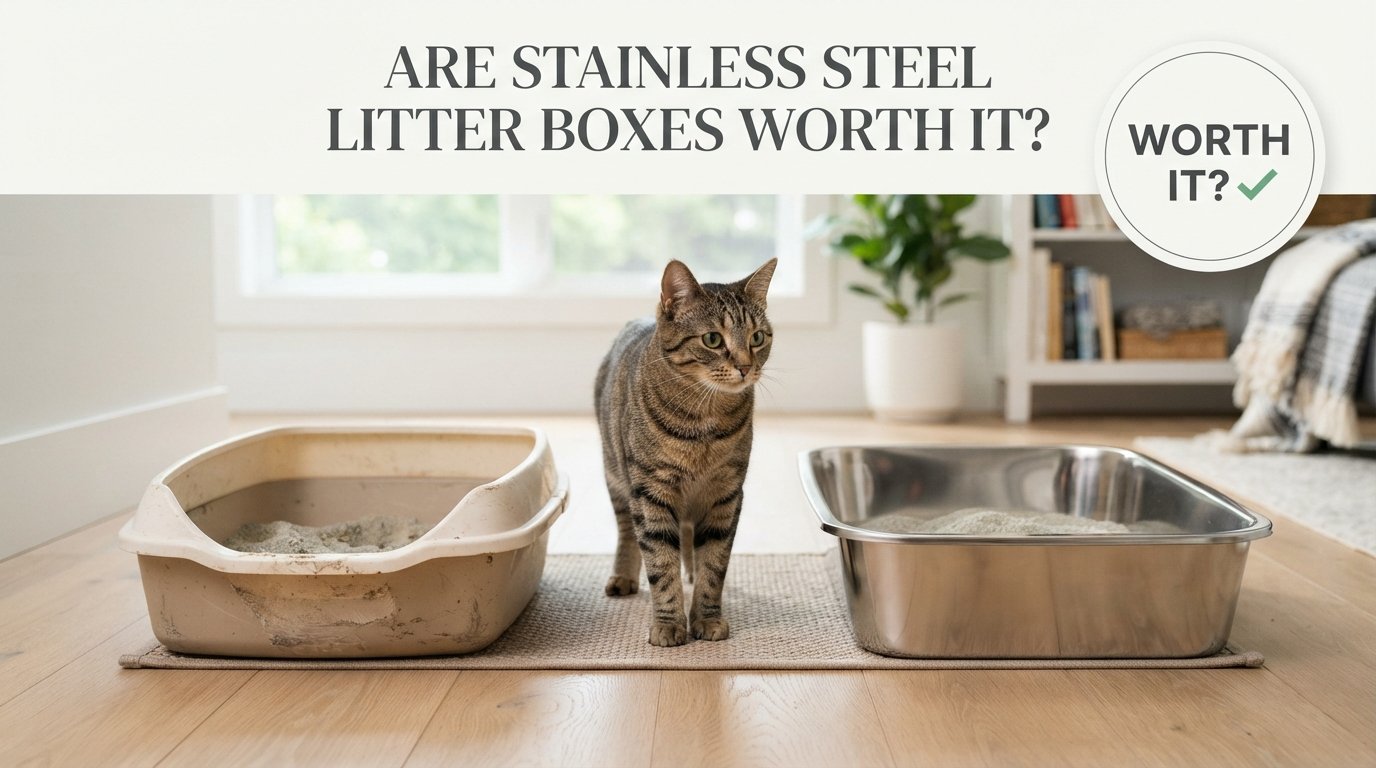
A stainless steel litter box is worth the extra money if your plastic one still smells after a full scrub, or if the tray is so scratched that nothing gets it clean. Steel is non-porous, so urine sits on the surface instead of soaking in the way it does in gouged plastic. That’s the whole case for it. Steel won’t fix a lazy scooping routine, and a few boxes sold as “stainless” still use plastic shells, lids, and guards, so it pays to know which parts are actually metal.
I compared five models: one open pan and four enclosed boxes, from a 16.93-inch pan up to a 23.5-inch enclosure for big cats. Below you’ll find which ones earn the upgrade, which are overkill, and how stainless steel stacks up against plastic on odor, cleaning, price, and noise.
Last updated September 2026. This post contains Amazon affiliate links. If you buy through them, I may earn a small commission at no extra cost to you. Scores reflect spec sheets, listing details, and buyer feedback.
Is a Stainless Steel Litter Box Worth It? The Quick Verdict
|
Buy one if:
|
Skip it if:
|
Products in this guide
These are the five Amazon listings I compare throughout this guide. Each card gives a short read on what stands out in the listing: materials, stated use case, and patterns in buyer feedback. Before you buy, follow the link to check fit, today’s price, and the latest verified reviews.
|
Idymere Stainless Steel High Sided Cat Litter Box Spacious stainless steel pan with high sides for odor control 8.2/10 |
AIPERRO Stainless Steel Litter Box | XL Enclosed Cat Litter Boxes with L Patented angled filter reduces litter tracking in enclosed design 8.7/10 |
Stainless Steel Litter Box with Lid | Extra Large Enclosed Cat Litter Bo Premium leak-proof design with hands-free flip-top cleaning 9.1/10 |
|
WoofiGo Enclosed Stainless Steel Cat Litter Box with Lid, XL Extra Large Spacious ABS-stainless combo with curved high walls 8.5/10 |
FURTIME Stainless Steel Litter Box with Lid, Large Enclosed Cat Litter B Dual entry design with flip-top and bamboo charcoal deodorizer 8.8/10 |
Stainless Steel Litter Boxes Compared Side by Side
Sizes and features below come from the listings. Two of the four enclosed boxes pair a steel base with plastic parts, so “stainless steel litter box” can mean very different things depending on the model.
| Model | Style | Listed size (L x W x H) | Best feature | Score |
|---|---|---|---|---|
| Idymere High Sided | Open pan | 16.93″ x 12.99″ x 5.12″ | Simple pan that wipes clean fast | 8.2/10 |
| AIPERRO XL Enclosed | Enclosed | 23″ x 15″ x 11″ | 30° angled filter plate cuts litter scatter | 8.7/10 |
| Stainless Steel Litter Box with Lid (XL) | Enclosed, flip-top | Extra large (check listing) | Overlapping joints and plastic guards for leak protection, 120° lid, carbon filter | 9.1/10 |
| WoofiGo XL Enclosed | Enclosed, ABS shell on steel base | 23.5″ x 15.6″ x 13″ | Buckle locks the shell to the base, curved walls | 8.5/10 |
| FURTIME Dual Entry | Enclosed, dual entry | Large (check listing) | Two entry points, flip-top, bamboo charcoal deodorizer | 8.8/10 |
How we judged each pick
Each score comes from practical fit, the specs on the listing, and what buyers report back. I haven’t run lab tests, so I don’t claim any.
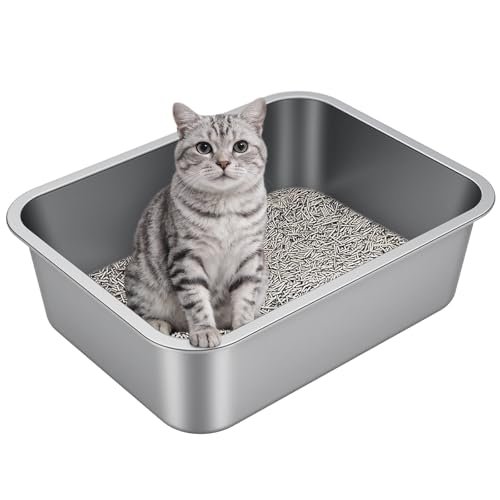 |
The Idymere is the easiest way to leave plastic behind. It’s an open pan at 16.93″L x 12.99″W x 5.12″H, roomy for kittens and smaller cats, and it dries quickly after a rinse. Because the steel is non-porous, urine doesn’t work its way into the material the way it does in a scratched plastic tray. The trade-off: 5.12-inch walls won’t stop a cat that kicks hard or sprays high, and an open pan lets the smell of a full box into the room. Pick it for a cat that hates enclosures, or for a small space where a hood would take over. |
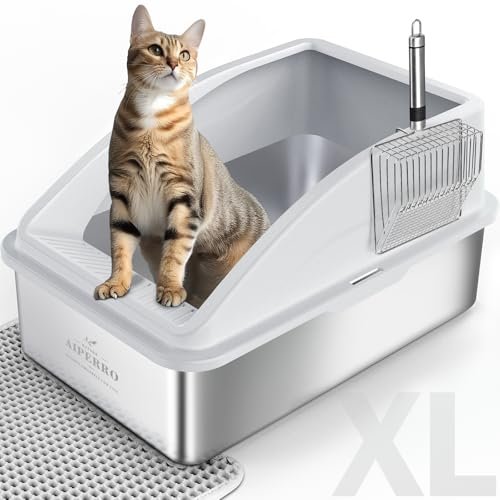 |
That 30° angled filter plate is the reason to look at the AIPERRO. It’s built to cut the litter scatter that follows a cat out of the box, and at 23 x 15 x 11 inches there’s room for a larger breed to turn around. The enclosure adds privacy and a sealed bottom keeps mess contained. If you have several cats and need to handle odor and tracking with one purchase, this is a strong fit. |
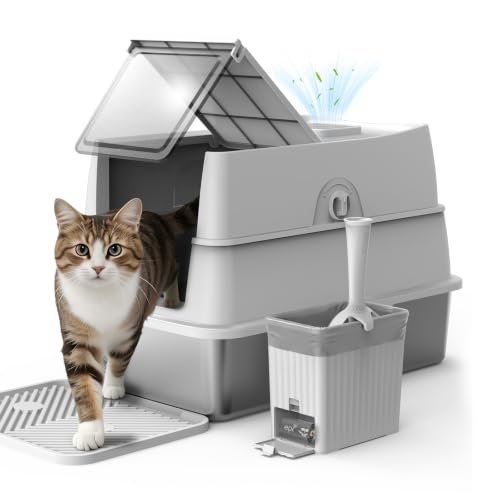 |
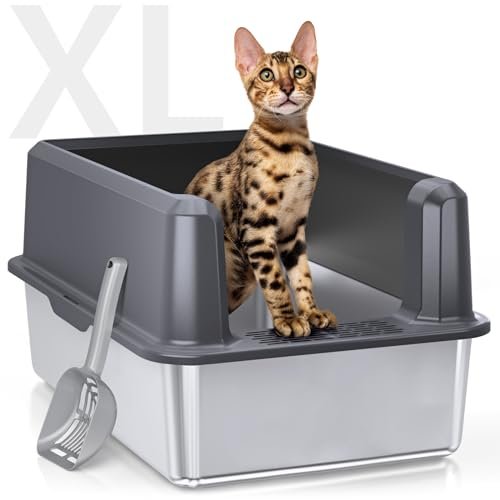
This is the top pick. Overlapping joints and plastic guards form a seal that keeps urine off your floor, which matters a lot with a high sprayer. I’m a fan of the 120° flip-top lid because it stays open by itself, so you can scoop with both hands. A built-in carbon filter and a non-porous steel basin handle odor. One honest note: those guards are plastic, so this is a steel box with a few plastic parts, not an all-metal one. |
 |
The WoofiGo sits between an enclosed box and an easy-to-clean pan. At 23.5″ x 15.6″ x 13″ it fits larger cats, and the curved walls are shaped to keep litter from flying out. The buckle is my favorite part: it locks the ABS shell to the steel base, so the box doesn’t shift the way cheaper models do. Keep in mind the shell is plastic and only the base is steel. It’s a spacious setup for a messy digger. |
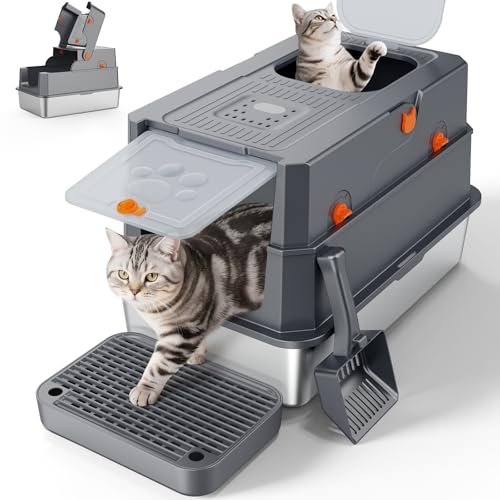 |
Dual entry is the FURTIME’s edge. Older cats and picky ones get two ways in and out, which helps when one side of the room is awkward. A three-layer construction forms a tight, leak-resistant seal, and a bamboo charcoal deodorizer adds odor control. The flip-top lid makes scooping easy, and the steel surface is smooth enough that waste doesn’t cling. For a cat with mobility issues, or anyone who wants a versatile sealed box, it’s a smart pick. |
Buyer Briefing
What Separates One Metal Litter Box From Another
Metal boxes aren’t interchangeable pans. The real differences show up in how the lid attaches and how the entry is shaped. Plenty of buyers fixate on basin size and overlook the seal, then wonder why a high sprayer still soaks the floor.
Start with your cat’s bathroom habits. If litter tracking or heavy spray is the problem, go enclosed. Moving from disposable plastic to a non-porous metal basin gets you a surface that won’t hold onto smells over time.
The Selection Logic
I compare stainless steel litter boxes on long-term hygiene and durability against plastic, since odor-holding scratches are the classic plastic failure. From there I narrow the field by wall height, ease of cleaning, and the steel gauge and grade, because thin or low-grade metal can warp, dent, or rust.
|
01 Identify the Real Need Start by checking whether plastic is the problem. If your current box has deep scratches that hold odor, a 304-grade stainless basin is the fix. |
02 Match the Product Type Think about your cat’s body first. High walls suit sprayers, and easy-entry designs suit senior cats who still deserve the benefits of steel. |
|
03 Check the Tradeoff Weigh the higher upfront cost against the chance that you’ll never replace a scratched or warped tray. |
04 Choose by Real Use Last, look at upkeep. A good box scoops easily and has no hidden gaps where waste can lodge. |
Stainless Steel vs Plastic Litter Boxes: Which Is Better?
Stainless steel is better on odor retention, scratch resistance, and cleaning. Plastic wins on price, weight, and quiet scooping. Here’s how the two compare on the things that matter day to day.
| Factor | Stainless steel | Plastic |
|---|---|---|
| Odor retention | Non-porous, so urine stays on the surface and rinses off | Scratches and pores can hold odor even after washing |
| Scratches | Resists deep gouges from scoops and digging | Scratches easily, and grooves trap residue |
| Cleaning | Waste slides off smooth metal, and mild soap is enough | Needs more scrubbing as the surface wears |
| Upfront price | Higher | Lower |
| Weight | Heavier, though still easy to carry for a deep clean | Light |
| Scooping noise | A metal scoop on a steel floor is loud | Quieter |
| Mixed materials | Many enclosed models add plastic lids, shells, or guards | One material throughout |
So is a stainless steel litter box better? For a cat that lives with lingering odor, yes. For a cat who’s happy in a plain plastic pan you wash weekly, the gain is smaller and the price gap may not pay off.
Benefits of a Stainless Steel Litter Box
- It doesn’t absorb urine. A non-porous surface means the odor stays in the litter, not in the tray.
- It resists scratches. Plastic picks up grooves from scoops and claws, and those grooves hold residue. Steel is harder, though a metal scoop can still leave faint surface marks.
- It cleans fast. Wet clumps and stuck-on waste rinse away with warm water and mild soap.
- It holds its shape. A decent gauge doesn’t warp or yellow the way old plastic can. Very thin sheet metal can dent, so check the listed gauge.
- It has fewer hiding spots for bacteria. A smooth, hard surface gives waste less to cling to.
The Downsides of Stainless Steel Litter Boxes
Steel isn’t perfect, and a few of these drawbacks catch buyers off guard.
- Higher cost. Expect to pay more than for a plastic pan of the same size.
- Not always all steel. The WoofiGo has an ABS shell and the top-scoring lidded box uses plastic guards. Read the material list before you buy.
- Noise. Scooping with a metal scoop is loud. A plastic scoop is quieter, and litter depth helps.
- Cold surface. Steel feels cool underfoot, and some cats need a few days to accept it.
- Steel grade varies. 304 stainless resists rust well. Lower grades can stain or pit, so favor listings that state the grade.
- Bulk. Extra-large enclosures can crowd a small bathroom or laundry room.
Do Stainless Steel Litter Boxes Smell Less?
The box itself does. The litter doesn’t. Three things create litter box smell, and steel only fixes one of them.
| Odor source | Does steel help? | What to do |
|---|---|---|
| The tray surface | Yes. Urine can’t soak into non-porous metal. | Rinse and wash on a regular schedule. |
| Waste in the litter | No. | Scoop at least once a day. Use a clumping litter that suits your cat. |
| Trapped air in an enclosure | Only with a filter. | Pick a model with a carbon filter or charcoal deodorizer, and replace it on the maker’s schedule. |
An open pan like the Idymere lets odor drift into the room, but it never builds up in a closed space. An enclosed box holds smell in until you lift the lid, and then you get it all at once. A filter softens that, though it can’t replace scooping. For clumping litter, a full dump and wash every two to four weeks is a common baseline, and multi-cat homes usually go shorter.
Choice Point 01
Open-Top Versatility Versus Enclosed Odor Defense
The first decision is open or enclosed. Open designs like the Idymere prioritize airflow and let you see the box at a glance, which helps shy cats feel less trapped. They also suit small spaces where a large hood would feel bulky.
Enclosed models like the AIPERRO and the Stainless Steel Litter Box with Lid block tracking and high spray. Carbon filters and sealed joints trap ammonia odor before it spreads. If litter on the floor is your main complaint, go enclosed.
Your cat’s personality should break the tie. An anxious cat may prefer the visibility of an open pan, while a messy digger does better behind walls. Measure the spot first. An enclosure that blocks a walkway becomes a trip hazard in a tight room.
|
Idymere Stainless Steel High Sided Cat Litter Box Spacious stainless steel pan with high sides for odor control |
8.2/10 Check Price Amazon |
|
Stainless Steel Litter Box with Lid | Extra Large Enclosed Cat Litter Box for Big Cats | High Si Premium leak-proof design with hands-free flip-top cleaning |
9.1/10 Check Price Amazon |
How Products Differ Here
- →Idymere: This open design prioritizes air circulation and gives the cat a clear, unobstructed view.
- →Stainless Steel Litter Box with Lid: This enclosed system creates a physical seal to trap odors and prevent leakage.
Product Evidence
If you’re fighting a persistent mess, the Stainless Steel Litter Box with Lid has a sealed joint design the open Idymere can’t match. The Idymere is a good pick for basic upkeep and airflow. For a high sprayer who would otherwise soak the walls or floor, the enclosed model gives you structural security.
Choice Point 02
Leak-Proof Integrity for High-Sprayers
Stainless steel boxes differ a lot when it comes to holding liquid. The metal pan is non-porous, but the joints where lid meets base are where leaks start. A poor seal lets urine creep into the frame, where the odor is hard to reach and harder to clean.
The FURTIME and the Stainless Steel Litter Box with Lid use overlapping assembly to lock the shell to the metal pan. That physical barrier stops leaks at the seam. If your cat sprays high or hovers in the corners, this feature matters more than any other spec.
Inspect the locking mechanism before you buy. A buckle connection like the WoofiGo’s keeps the enclosure attached even with an energetic digger inside. If the lid shifts or gaps open, most of steel’s odor advantage disappears.
|
WoofiGo Enclosed Stainless Steel Cat Litter Box with Lid, XL Extra Large Litter Box for Big Cats Spacious ABS-stainless combo with curved high walls |
8.5/10 Check Price Amazon |
|
FURTIME Stainless Steel Litter Box with Lid, Large Enclosed Cat Litter Box for Big Cats, Metal C Dual entry design with flip-top and bamboo charcoal deodorizer |
8.8/10 Check Price Amazon |
How Products Differ Here
- →WoofiGo: It relies on a buckle system to lock the enclosure to the pan, preventing any shifting.
- →FURTIME: This model uses a three-layer overlapping structure to physically seal the box against leaks.
Product Evidence
The FURTIME and WoofiGo both show why assembly matters for leak prevention. A basic stainless pan handles odor, but these two go after gap leakage. A reinforced buckle or overlapping seal keeps residue from building up in the seams.
How to Switch Your Cat to a Stainless Steel Litter Box
Most cats adjust quickly, but a cold metal floor and a new smell can put off a nervous one. Go slowly and keep everything else the same.
- Set it beside the old box. Leave the old one where it is for the first week so your cat has a choice.
- Use the same litter at the same depth. Change one thing at a time.
- Add a scoop of used litter. The familiar scent tells your cat this is the bathroom.
- Open up enclosed boxes at first. Prop the lid open or remove it for the first few days, then close it once your cat is using the box.
- Retire the old box gradually. Once your cat uses the steel one every time, remove the plastic box.
If your cat is a senior or has trouble stepping in, check the entry height in the listing before you buy. For a lower-entry covered option, see our low entry covered litter box guide.
How to Clean a Stainless Steel Litter Box
- Scoop and empty. Dump all the litter into a bag or bin.
- Rinse with warm water. Waste slides off smooth steel, so you’ll need little effort at this stage.
- Wash with mild soap and a soft cloth. Skip steel wool and abrasive pads, which scratch the surface and can lead to pitting.
- Skip bleach. Chlorine can pit stainless steel. Warm water and mild soap do the job.
- Rinse thoroughly. Leftover soap can put a cat off the box.
- Dry completely. Standing water leaves spots and, over time, stains. Check the seams and lid joints too.
What Buyers Often Misread
Stainless steel isn’t a magic bullet. It beats plastic on odor resistance, but it won’t help if the box is too small or too hard for your cat to enter.
Another common mix-up is the idea that enclosed boxes are hard to get into. Many newer models are built with accessibility in mind, so you can often keep your cat comfortable and your floors clean.
| ✗ | Claim that all stainless steel is rust-proof forever.
Stainless steel can pit under harsh scrubbers or bleach. Stick to mild soap and soft cloths. |
| ✗ | Belief that enclosed boxes always trap odors better.
Without ventilation or a carbon filter, an enclosure can hold smells in. Keep scooping daily. |
| ✗ | Assuming bigger is always better for every space.
Measure first. An extra-large enclosure can overwhelm a small laundry room or bathroom. |
| ✗ | Thinking the scoop included is always sufficient.
The bundled scoop is usually a bonus. A heavy-duty metal scoop digs through deep clumping litter better, though it’s louder on steel. |
| ✗ | Assuming “stainless steel” means the whole box is steel.
Several enclosed models use plastic shells, lids, or guards. Only the parts your cat’s waste touches need to be steel, but read the listing so you know. |
Stainless Steel Litter Box Buying Checklist
Run any box through this list before you click buy.
- ☐ Steel grade. Look for 304 stainless in the listing. If no grade is stated, ask or move on.
- ☐ Which parts are steel. Check the pan, lid, and shell separately.
- ☐ Size for your cat. A common guideline is a box about 1.5 times your cat’s length from nose to base of tail. The 23 to 23.5 inch enclosures here come closest for adult cats, and the 16.93-inch Idymere suits kittens and smaller cats.
- ☐ Wall height and entry height. Higher for sprayers, lower for seniors. If the listing doesn’t state entry height, measure or ask.
- ☐ Seal design. Overlapping joints or a buckle beat a lid that just sits on top.
- ☐ Filter or deodorizer. Confirm you can buy replacements.
- ☐ Floor space. Measure the spot and leave room to open the lid.
- ☐ Return policy. Some cats reject metal, so make sure you can send it back.
How To Make the Final Choice
Look at how your cat actually uses the box. A messy digger or high sprayer needs a fully enclosed model with a secure seal. A cat that likes open space, in a home with room to spare, is best served by an open stainless steel pan, the lowest-effort and most hygienic option here.
If your main concern is simple, open access for kittens or elderly cats
Idymere Stainless Steel High Sided Cat Litter , The Idymere is my pick for those who want a simple, high-quality open pan that’s easy to clean.
If your main concern is maximum leak prevention for high-sprayers
Stainless Steel Litter Box with Lid | Extra L , The Stainless Steel Litter Box with Lid is the best choice for total leak protection.
If your main concern is structural stability for energetic diggers
WoofiGo Enclosed Stainless Steel Cat Litter B , The WoofiGo is the best bet if you need a secure, sturdy enclosure that won’t budge.
If your main concern is litter tracking in a multi-cat home
AIPERRO Stainless Steel Litter Box | XL Enclosed , The AIPERRO’s 30° angled filter plate is built to cut scatter, and its size handles larger breeds.
If your main concern is an older or picky cat that wants two ways in
FURTIME Stainless Steel Litter Box with Lid , The FURTIME’s dual entry and charcoal deodorizer make it the most flexible sealed option.
Frequently Asked Questions
Are stainless steel litter boxes worth it?
Yes, if odor that survives washing or a scratched plastic tray is your problem. They cost more up front, and several models mix steel with plastic parts, so confirm what you’re buying.
Do stainless steel litter boxes smell less than plastic?
The box surface does, because non-porous metal doesn’t soak up urine the way plastic can. The litter and waste still smell, so scoop daily and use a filter if the box is enclosed.
Are stainless steel litter boxes better than plastic?
They’re better on odor retention, scratch resistance, and cleaning. Plastic is cheaper, lighter, and quieter to scoop. See the comparison table above for the full breakdown.
What are the benefits of a stainless steel litter box?
The main ones are no urine absorption, strong scratch resistance, and fast cleanup with mild soap and water. A smooth surface also gives bacteria and residue fewer places to lodge.
Do stainless steel litter boxes rust?
Good steel such as 304 resists rust well. Abrasive scrubbing, bleach, and leaving the box wet can cause pitting or stains, and lower grades of stainless can rust sooner. Wash gently and dry fully.
Are these boxes heavy to move?
They weigh more than a cheap plastic tray, but they’re still light enough to lift for a deep clean.
Will my cat use a metal box?
Most cats adjust right away. A nervous cat may object to the cool surface or new smell, so put a bit of used litter in the new box and set it next to the old one. The steps above walk through the switch.
How do I clean a stainless steel litter box?
Use warm water, mild soap, and a soft cloth. Waste slides off the smooth surface, so cleanup goes faster than with plastic. Avoid bleach and abrasive pads.
Does litter stick to stainless steel?
Clumping litter releases from smooth steel more easily than from scratched plastic. Wet clumps can still cling if they sit for hours, so scoop promptly.
Can I use these for multiple cats?
Yes. The extra-large sizes handle heavier traffic without wearing down. The usual rule still applies, though: one box per cat, plus one spare, so a big box doesn’t replace a second one.

Written by Mishu
A passionate cat lover and indoor living enthusiast, Mishu is the founder and voice behind Indoor Living Cat – a go-to resource for cat owners who want to create the happiest, healthiest life for their feline companions indoors.
View Full Profile