
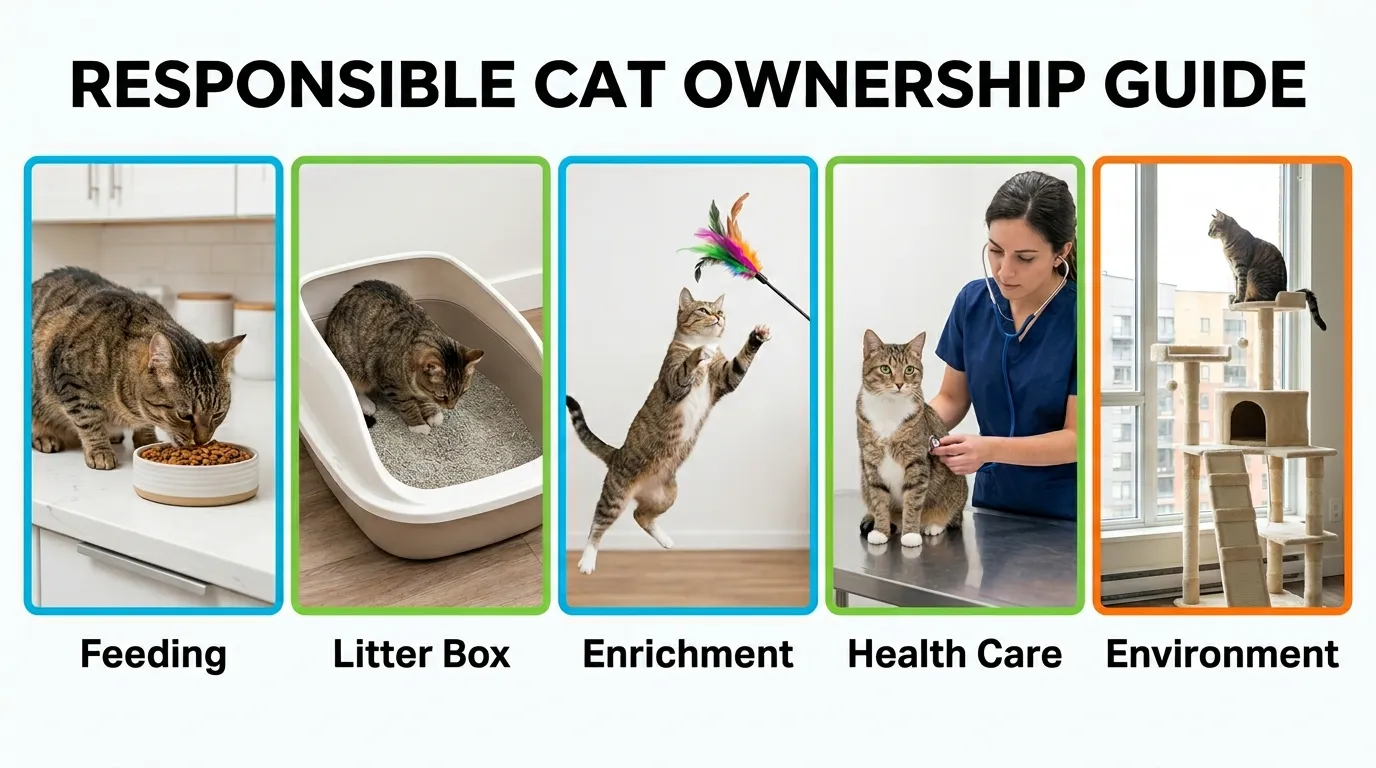
Indoor cat care is more than just filling a food bowl. It is about creating a healthy, happy life for your cat inside your home. Cats kept indoors live 12 to 18 years on average, compared to just 2 to 5 years for outdoor cats. But that longer life only happens when you get the basics right. Proper indoor cat care includes feeding a balanced diet two to three times daily, keeping a clean litter box, and scheduling yearly vet checkups.
Small changes go a long way. Switching from one big meal to three smaller ones or adding an extra litter box can completely change your cat’s behavior and mood.
Beyond the basics, your cat also needs:
- Daily play at least 15 minutes of active interaction
- Vertical space like cat trees or shelves to climb
- Scratching surfaces to protect your furniture and their mental health
- A consistent routine because cats thrive on predictability
This guide covers everything from feeding and litter to enrichment and home setup, so you can avoid the most common mistakes and give your indoor cat the best possible life.
How to Feed an Indoor Cat the Right Way?

Indoor cats burn fewer calories than outdoor cats so portion control is the single most important feeding decision you will make. Most cats do best on two to three measured meals per day rather than free feeding, which causes almost every indoor cat to overeat over time.

Wet food is worth including in the daily diet even if you also use dry kibble. Cats have a naturally low thirst drive and wet food compensates for the moisture they would normally get from prey. A cat eating only dry food is often mildly dehydrated without you realizing it.
Treats should make up no more than 10 percent of your cat’s daily calorie intake. That rule sounds strict until you realize how small 10 percent of a cat’s daily calories actually is usually three to five treats per day, not a handful. Obesity in indoor cats leads directly to diabetes, joint problems and a shorter life. It is entirely preventable with consistent portion discipline.
| INSIGHT
The biggest feeding mistake I see is owners eyeballing portions instead of measuring them. A tablespoon more kibble per meal adds up to hundreds of extra calories per week. Buy a simple digital kitchen scale. Weigh your cat’s food for the first month until you have a reliable visual reference. Most cat owners are genuinely shocked by how small the correct portion looks. |
Litter Box Setup That Indoor Cats Actually Use
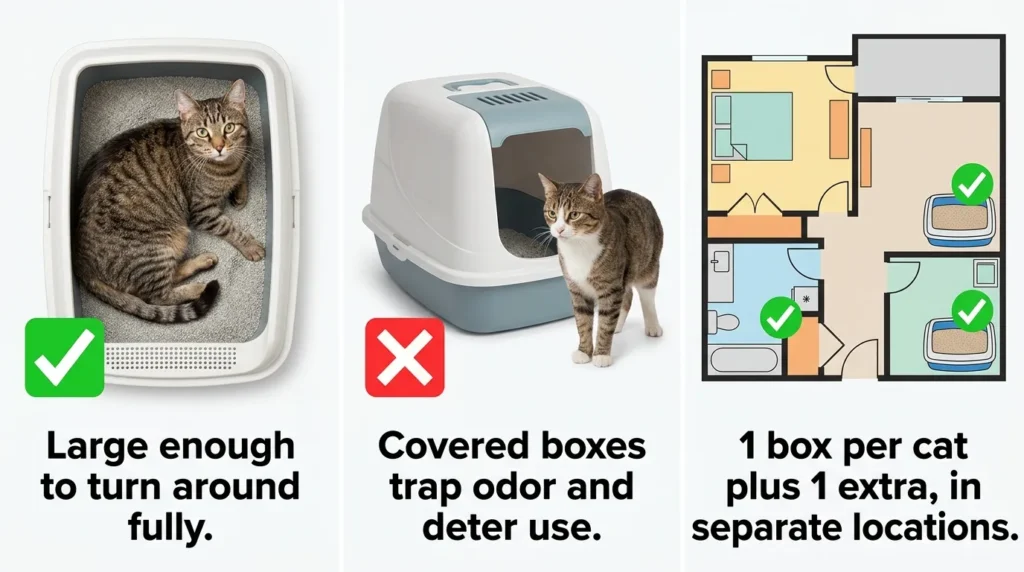
The litter box rule every indoor cat owner needs to know is one box per cat plus one extra. A single cat household needs two boxes. Two cats need three. This is not optional and it is not excessive it is the single most effective way to prevent litter box avoidance.
Box size matters more than most people realize. The box should be at least 1.5 times the length of your cat from nose to tail base. Most commercial litter boxes sold in pet stores are too small for an adult cat. A large clear storage tote with one low side cut out costs under $10 and works better than most purpose-built boxes.
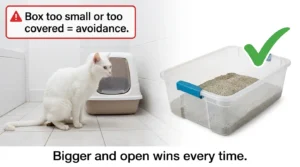 Scoop the boxes once a day at minimum. Cats are clean animals with a strong smell sensitivity and a dirty box is one of the top reasons cats start eliminating outside the box. If you find yourself skipping daily scooping, an automatic litter box is worth considering -just test it before committing since some cats refuse to use them.
Unscented clumping litter is the safe default choice. Heavily scented litters are designed to appeal to humans not cats. Many cats find strong artificial scents off-putting and will avoid a box that smells like a mountain spring or lavender field.
| INSIGHT
Place litter boxes in at least two separate locations in your home. Never put both boxes side by side in the same corner. A cat that feels threatened while using one box will often avoid both if they are next to each other. Separate rooms or opposite ends of a hallway is the right call. |
Indoor Cat Enrichment: How to Keep Your Cat Mentally Healthy?
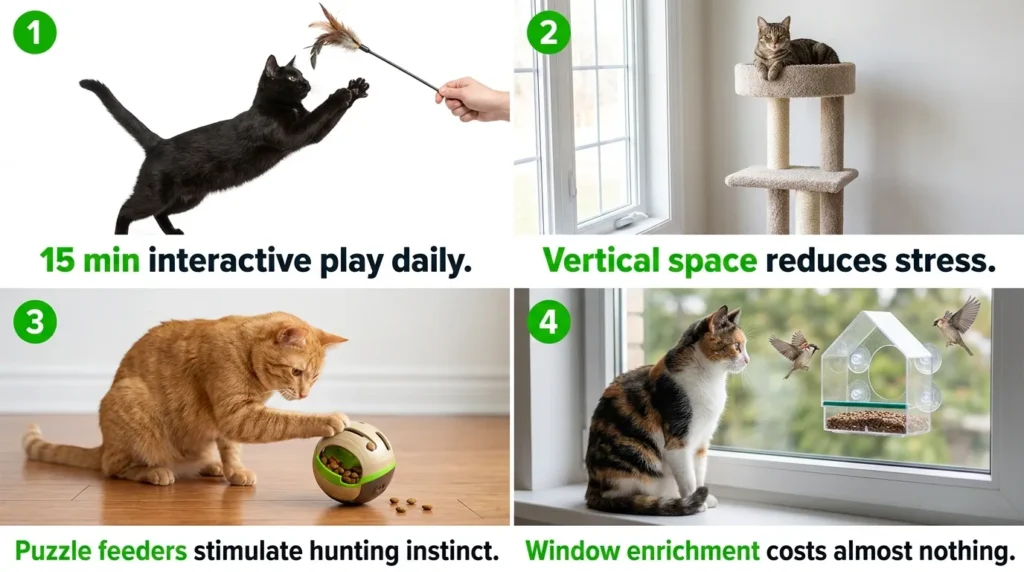
An indoor cat without enough mental stimulation does not just get bored. It gets anxious, destructive and sometimes aggressive. The difference between a calm indoor cat and a chaotic one is almost always the level of daily enrichment the cat receives.
Interactive play for at least 15 minutes every day is non-negotiable. A wand toy or feather on a string activates your cat’s predatory instinct in a way that no battery-powered toy or crinkle ball on the floor can replicate. Schedule it like you would any other daily task morning or evening, same time, every day.
Vertical space is the most underrated enrichment investment for apartment cats. A cat tree tall enough to reach near the ceiling gives a small-home cat the territorial behavior outlet it needs. Cats feel more secure when they can observe their environment from height. A high perch reduces stress in a way that floor-level toys simply cannot.
Puzzle feeders and foraging toys serve double duty. They slow down fast eaters and they provide cognitive enrichment by making your cat work for its food the way it would in the wild. Rotate toys every few days to prevent boredom from familiarity.
| INSIGHT
A window perch with a view of a bird feeder costs almost nothing and provides more entertainment per hour than most expensive cat toys. Birds trigger your cat’s hunting drive in a controlled low-stress way. If your apartment has a window that gets any daylight, a suction-cup perch and a cheap stick-on bird feeder on the outside of the glass is the highest-ROI enrichment purchase you will ever make. |
Creating a Cat-Friendly Home in a Small Apartment
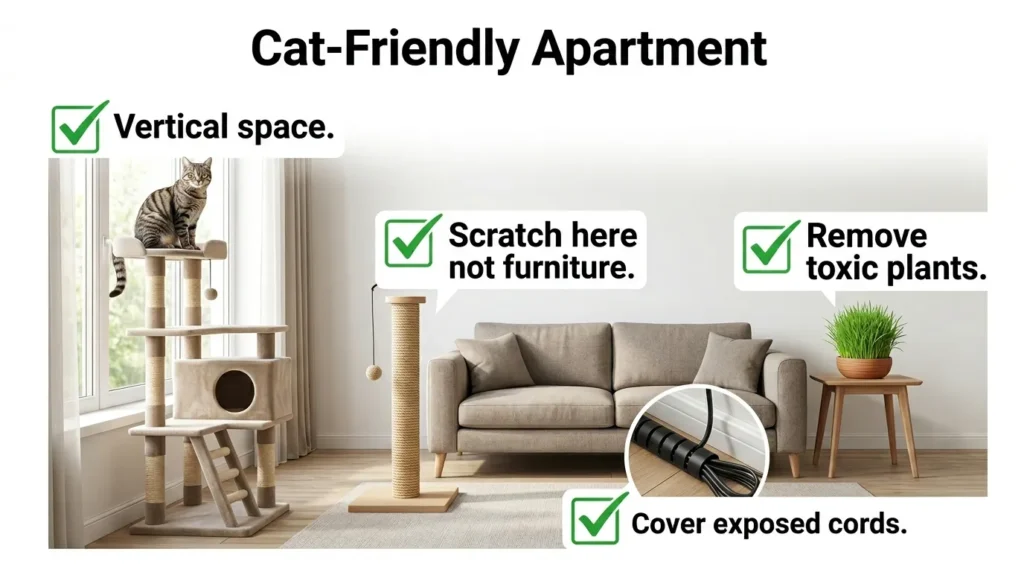
A cat-friendly apartment is not about expensive furniture. It is about small, intentional decisions that remove hazards and add what cats need to feel secure in a small space.
Scratching is a biological need, not bad behavior. Cats scratch to maintain their claws and mark their territory. Place a tall sisal scratching post near the furniture they already target and the problem is usually solved within days.
Toxic houseplants are a hazard many owners overlook. Common plants like lilies, pothos and snake plants can range from mildly irritating to fatal for cats. The ASPCA maintains a full toxic plant list at aspca.org worth checking before bringing a cat home.
Exposed electrical cords are another quiet danger. Cats chew on cords out of curiosity, especially young cats. Cable management sleeves from any hardware store fix this for under $15.
Three quick wins to start with:
- Scratching posts near furniture your cat already targets
- Plant audit using the ASPCA toxic plant list
- Cable sleeves to cover exposed cords throughout your home
Indoor Cat Health Care: What Your Cat Actually Needs Each Year?
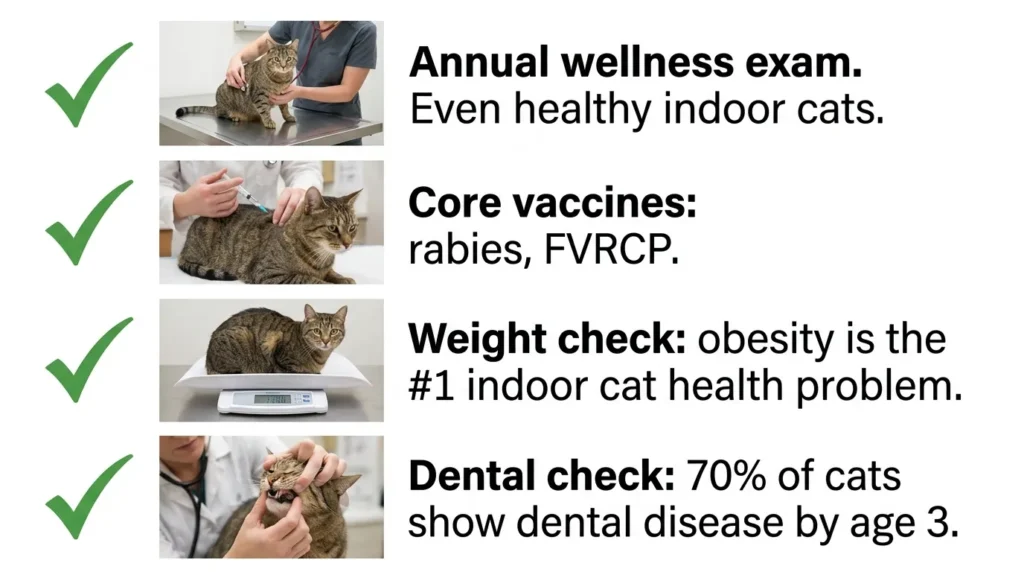
Indoor cats need annual vet checkups even when they appear completely healthy. Many serious conditions including kidney disease, hyperthyroidism and early-stage diabetes are detectable through routine bloodwork long before visible symptoms appear. A yearly exam is the most cost-effective health decision you will make for your cat.
 Obesity is the single most common and preventable health problem in indoor cats. Approximately 60 percent of cats in the United States are overweight or obese according to the Association for Pet Obesity Prevention. An overweight cat has a significantly higher risk of diabetes, arthritis and heart disease. Weight management through controlled portions and daily play is the most impactful health decision an owner can make.
Dental disease affects approximately 70 percent of cats by age three according to the American Veterinary Dental Society. Most owners never look at their cat’s teeth. Ask your vet to do a dental check at every annual visit and consider a dental cleaning if tartar buildup is noted.
Parasite prevention is still relevant for indoor cats. Fleas can enter on clothing or through window screens. Heartworm and intestinal parasites have documented cases in indoor-only cats. A monthly preventative conversation with your vet is worth having regardless of whether your cat ever goes outside.
| INSIGHT
The single best thing you can do for your indoor cat’s long-term health is establish a relationship with a vet before something goes wrong. Cats who have a veterinary baseline on file -weight, bloodwork, dental status – get faster and more accurate diagnoses when a problem does arise. Find a vet. Go once a year. Do not wait for a crisis. |
Indoor Cat Daily Routine: Why Consistency Matters More Than You Think?
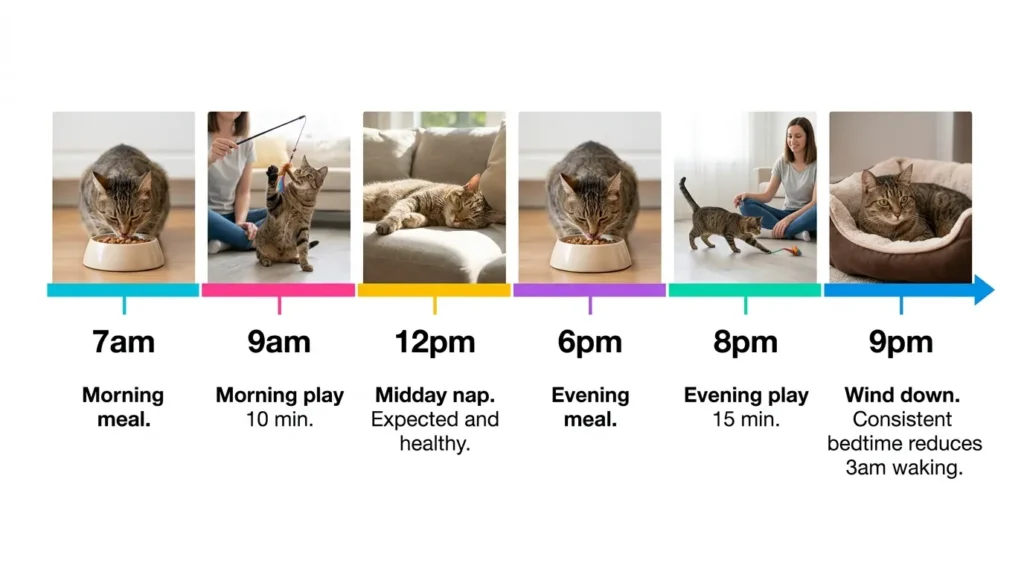
Cats are creatures of habit in a way that most owners underestimate. A consistent daily routine reduces anxiety, prevents destructive behavior and is one of the most reliable ways to eliminate early-morning waking. When a cat knows exactly when meals and play are coming it stops stress-meowing and patrolling at unpredictable hours.
The play-then-feed sequence is one of the most effective behavior tools available to cat owners. Play for 15 minutes then feed immediately after. This mimics the natural hunt-catch-eat cycle and tells your cat’s nervous system that the day is complete. Cats fed immediately after play sleep longer and more deeply.
Indoor cats sleep between 12 and 16 hours per day which is completely normal. What is not normal is a cat that is active all night and sleeping all day. Night activity usually means not enough daytime stimulation. Add a structured play session in the evening and a meal right before you go to bed and most cats adjust within a week.
Everything We Cover on Indoor Cat Care: Your Full Resource Library
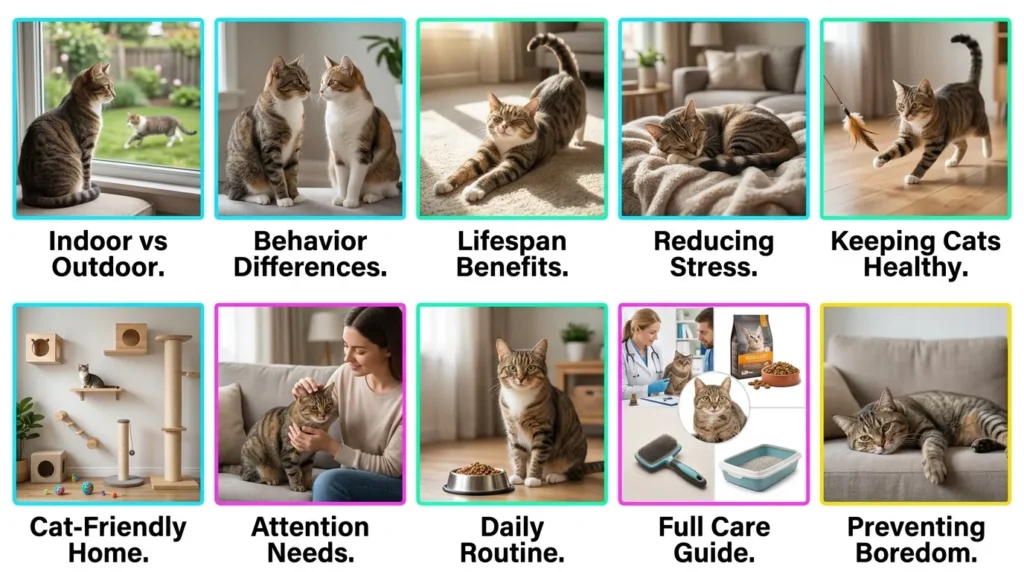
Each article below goes deep on one specific topic from this guide. Start with the one most relevant to what you are dealing with right now.
Indoor Cat vs Outdoor Cat: Behavior Differences You Need to Know
If you have ever wondered whether keeping a cat indoors changes its personality or behavior this article answers that directly. It covers how confinement affects activity levels, social behavior and natural instincts and what you can do to ensure your indoor cat expresses those instincts in healthy ways. Read the full breakdown in our guide to indoor vs outdoor cat behavior differences.
Indoor Cat vs Outdoor Cat Lifespan: The Numbers and What They Mean?
The lifespan gap between indoor and outdoor cats is significant and the reasons behind it are worth understanding fully. This article breaks down the exact research, the risk factors that shorten outdoor cat lives and what indoor owners can do to maximize the extra years a protected environment provides. See the full data in our guide to indoor vs outdoor cat lifespan.
Is It Cruel to Keep a Cat Indoors? The Honest Answer
This is one of the most searched questions about indoor cats and it deserves a direct answer rather than a deflection. The article examines what animal welfare research actually says about confinement, what conditions make indoor life genuinely good for a cat and when the setup crosses into something that needs to change. Get the full honest answer in our article on whether keeping a cat indoors is cruel.
How to Reduce Stress in Indoor Cats? 7 Proven Methods
Stress in indoor cats looks different from stress in humans and most owners miss the early signs completely. This article covers the specific behavioral signals that indicate a stressed indoor cat and walks through seven environment and routine changes that reliably reduce anxiety. Learn how to spot and fix it in our guide to reducing stress in indoor cats.
How to Keep an Indoor Cat Healthy: Daily Habits That Actually Work?
Keeping an indoor cat healthy long-term is about systems not heroics. This article focuses on the specific daily and weekly habits that prevent the most common indoor cat health problems before they start from weight management to dental care to parasite prevention. Build the right habits with our guide to keeping an indoor cat healthy.
How to Make Your Home Cat-Friendly: Room by Room Guide?
A cat-friendly home is not about dedicating rooms to your cat. It is about removing hazards and adding the specific elements that let a cat feel secure in a small space. This article goes room by room with specific actionable changes any apartment owner can make. See every change in our guide to making your home cat-friendly.
How Much Attention Does an Indoor Cat Need Every Day?
The answer to this question is more specific than most articles let on. It depends on the cat’s age, temperament and whether it lives with other cats and getting it wrong in either direction causes problems. This article gives you the actual numbers and the signs that tell you whether your cat is getting too much or too little. Find out exactly what your cat needs in our guide to how much attention indoor cats need.
Indoor Cat Daily Routine: A Schedule That Keeps Cats Calm
A structured daily routine is one of the most powerful tools for managing indoor cat behavior and it takes about 10 minutes a day to implement. This article gives you a full template routine broken down by time of day with explanations for why each element works. Build your cat’s schedule using our guide to the indoor cat daily routine.
How to Take Care of an Indoor Cat: The Complete Beginner’s Guide
If you are new to cat ownership or just adopted your first indoor cat this is the most comprehensive starting point available. It covers every aspect of basic care in one place with a practical focus on what actually matters in the first year. Start here with our complete guide to how to take care of an indoor cat.
Do Indoor Cats Get Bored? Signs to Watch and How to Fix It
Boredom in indoor cats is more common than most owners realize and it looks nothing like human boredom. It presents as destructive behavior, aggression, overeating or complete lethargy and it is entirely fixable with the right enrichment approach. Learn to recognize and address it in our guide to indoor cat boredom.
| INSIGHT
Every article linked above covers one topic in the depth this guide intentionally avoids. The pillar page orients you. The cluster articles solve the specific problem you are actually facing right now. If your cat is waking you up at 3am the daily routine article is where you start. If your cat is scratching furniture the cat-friendly home article has your fix. You can find all of these resources and more at IndoorLivingCat -everything on the site is written by and for real indoor cat owners in apartments and small homes. |
The Most Common Indoor Cat Care Mistake Owners Make
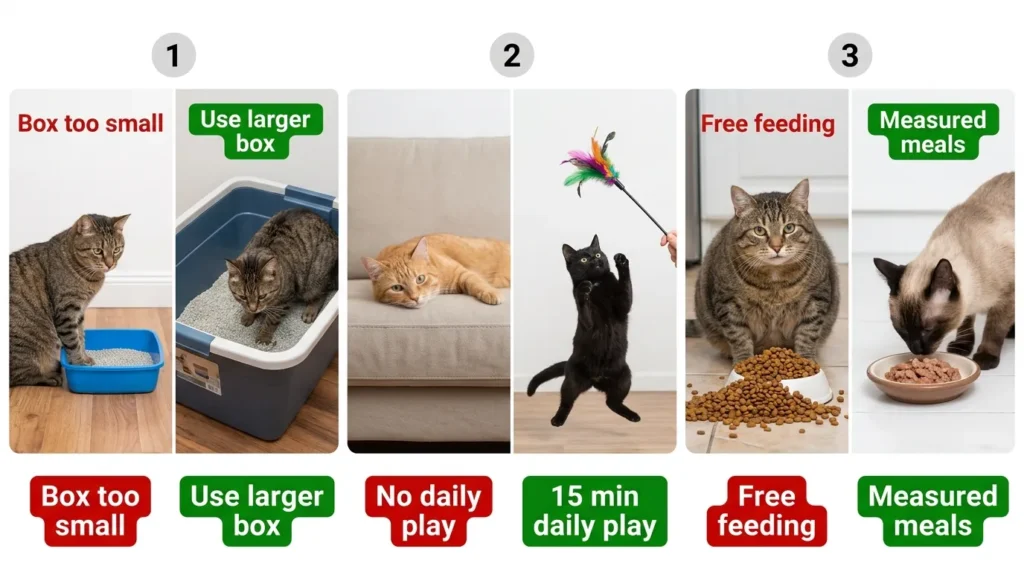
The most common mistake is treating enrichment as optional. Fifteen minutes of interactive play daily is not a luxury, it is a basic care requirement for a species built to hunt.
Never assume a quiet cat is a healthy cat. Cats hide discomfort until problems are advanced. Watch for subtle changes like eating less, sleeping more or avoiding the litter box and schedule regular vet visits.
Free feeding is the third mistake. Leaving food out all day leads to slow weight gain. Switch to measured twice-daily meals and you will see a difference within 60 days.
Frequently Asked Questions
How often should I feed my indoor cat?
Most adult indoor cats do best on two to three measured meals per day. Kittens under six months need three to four meals daily.
How many litter boxes does an indoor cat need?
The rule is one litter box per cat plus one extra, placed in separate locations. Scoop daily and replace litter fully every one to two weeks.
How much playtime does an indoor cat need each day?
Adult cats need at least 15 minutes of active interactive play daily. Kittens and cats under three years need closer to 30 minutes split into two sessions.
How often does an indoor cat need to go to the vet?
Once a year for a wellness exam is the minimum for healthy adult cats. Cats over 10 years old benefit from twice-yearly checkups to catch age-related conditions early.
How do I know if my indoor cat is bored?
Signs include excessive sleeping, destructive scratching, overeating and attention-seeking vocalization. Adding daily play, a window perch and a puzzle feeder usually resolves boredom within two weeks.
What is the most important thing for an indoor cat’s happiness?
Consistency. Predictable meal times, play sessions and sleep routines reduce anxiety and keep your cat calmer and healthier long term.
Conclusion
Good indoor cat care comes down to three consistent habits: a measured feeding schedule, daily active play and a clean litter setup. Everything else builds on those three foundations.
Start with a structured daily routine. It is the fastest and cheapest way to improve your cat’s behavior and wellbeing. Indoor cats live 12 to 18 years when cared for properly, yet nearly 60 percent are overweight due to poor feeding habits. Annual vet visits are essential even for healthy cats.
Get the basics right consistently and your cat will thrive for years to come.