
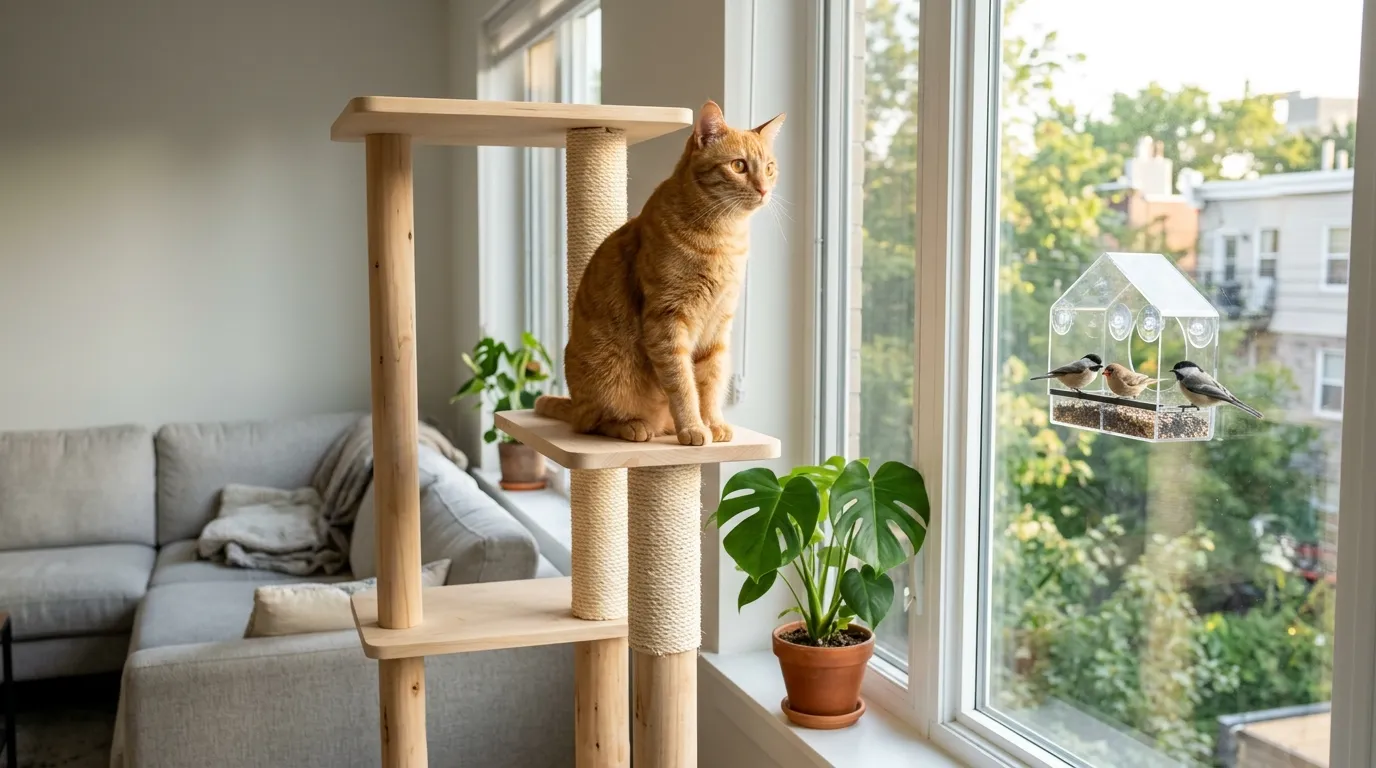
The best cat furniture for indoor cats is not about filling your apartment with expensive structures your cat ignores. It is about understanding exactly what your cat needs and buying the one or two things that actually deliver it.
Cat furniture for indoor cats refers to any dedicated structure that provides climbing, scratching, perching, hiding or resting opportunities that allow a cat to express its natural territorial and physical behaviors inside a home. Without adequate cat furniture, indoor cats scratch sofas, jump on counters, develop boredom-related anxiety and stop getting the physical exercise their bodies need.
My own cat ignored two cat trees before I understood what I was doing wrong. Both were the right style but the wrong height and the wrong location. The third tree was 66 inches tall, placed directly beside the window she already spent time at, and she used it within an hour of placement.
This guide covers cat trees, wall shelves, scratching posts, modern aesthetic options, small apartment solutions and budget DIY alternatives. Every section connects to a deeper resource for the specific furniture question you need answered most.
The best cat furniture for indoor cats is a tall cat tree of at least 60 inches placed beside a window, a sisal scratching post taller than your cat at full stretch and a window perch. These three items cover climbing, scratching and observation needs in any apartment size. Wall-mounted shelves are the best alternative when floor space is tight.
Why the Best Cat Furniture for Indoor Cats Actually Matters?
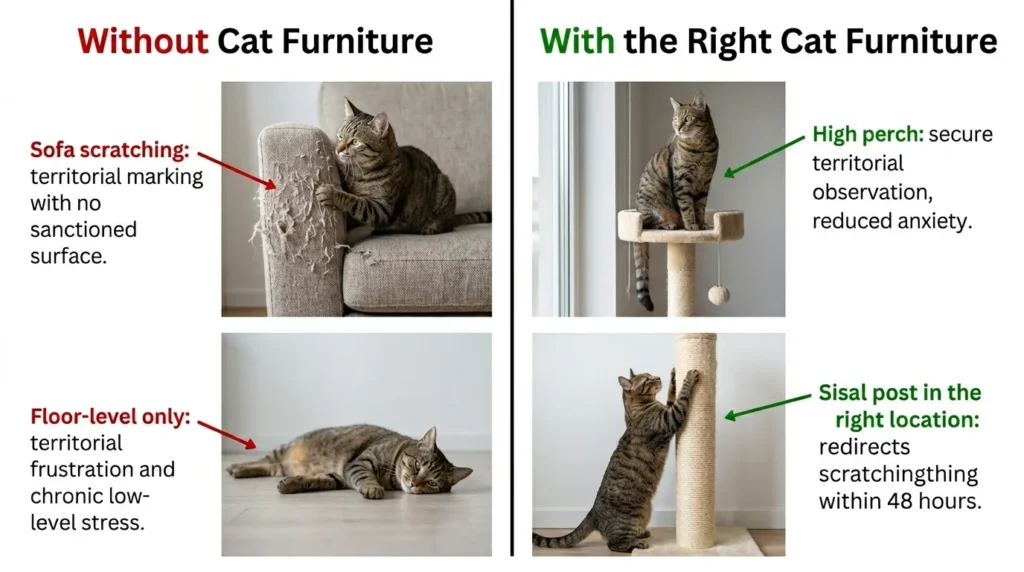
Cat furniture is not decorative. It is a functional requirement for a species that evolved to climb, scratch, perch and observe its territory from height. An indoor cat without adequate furniture is a cat doing all of those things on your couch, your door frames and your kitchen counter instead.
The connection between cat furniture and behavior is direct and well-documented. According to the American Association of Feline Practitioners, vertical space and dedicated scratching surfaces are among the most important environmental factors in indoor cat behavioral health. Cats that have adequate vertical territory and scratching outlets show lower stress markers and fewer problem behaviors.
Understanding vertical space for indoor cats why important changes how you think about furniture entirely. Cats do not experience your apartment horizontally the way you do. They experience it vertically. A cat with floor-to-ceiling territory in a 400-square-foot apartment has more functional living space than a cat with a 1500-square-foot apartment that offers nothing above waist height.
| Owner’s Tip
The behavioral shift I see most consistently when cat owners finally get the right furniture in the right location is the one that surprised me most: my cat stopped meowing at me during the day almost completely once I added the window-adjacent cat tree. She had been meowing for attention and stimulation because she had nothing to do. The tree gave her an activity that did not require me. That is what good furniture does. It makes your cat more independent and your home more peaceful. |
Cat Trees for Indoor Cats: What Makes a Good One and What to Avoid?
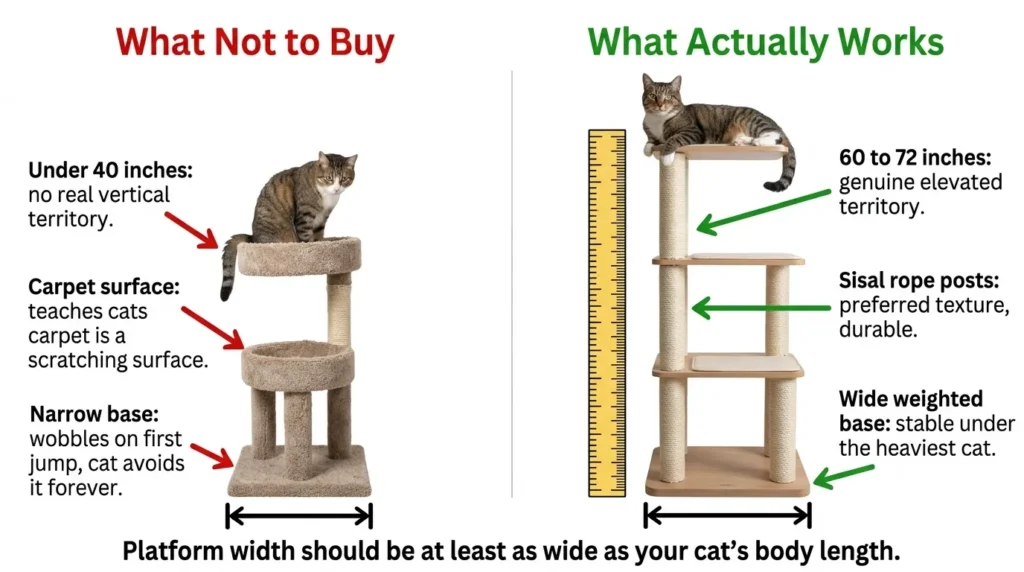
A cat tree is the most impactful single piece of cat furniture for an indoor cat and the one most owners get wrong. The two most consistent mistakes are buying one that is too short and buying one with a base too narrow to be stable. Both produce a tree the cat uses once and avoids permanently.
Knowing do indoor cats need a cat tree has a clear answer: yes, for most indoor cats a dedicated climbing and perching structure is the single highest-return furniture investment available. The alternative is a cat that finds its own high points, which always means your kitchen counter, your wardrobe and your refrigerator top.
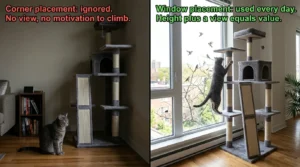
Knowing where to put cat tree in small apartment is as important as knowing what tree to buy. The location that produces daily use is always beside the window your cat already gravitates toward. The location that produces a tree that sits unused for years is any corner that does not have an outdoor view.
Buying checklist for a cat tree that gets used:
- Height: minimum 60 inches. 66 to 72 is ideal for most apartments.
- Base width: at least as wide as the tree is tall at its narrowest point.
- Scratching surface material: sisal rope only. Avoid carpet on any surface intended for scratching.
- Platform size: each platform should be large enough for your cat to lie down and turn around fully.
- Weight capacity: check the stated limit if your cat is over 12 pounds.
Knowing how to get cat to use cat tree comes down to two variables: placement beside a window and positioning the first available platform at a height your cat can reach comfortably from a standing jump. Rub a small amount of catnip on the platforms during the first week and use a wand toy to draw the cat up the levels.
Cat Wall Shelves: The Best Space-Saving Cat Furniture for Small Apartments
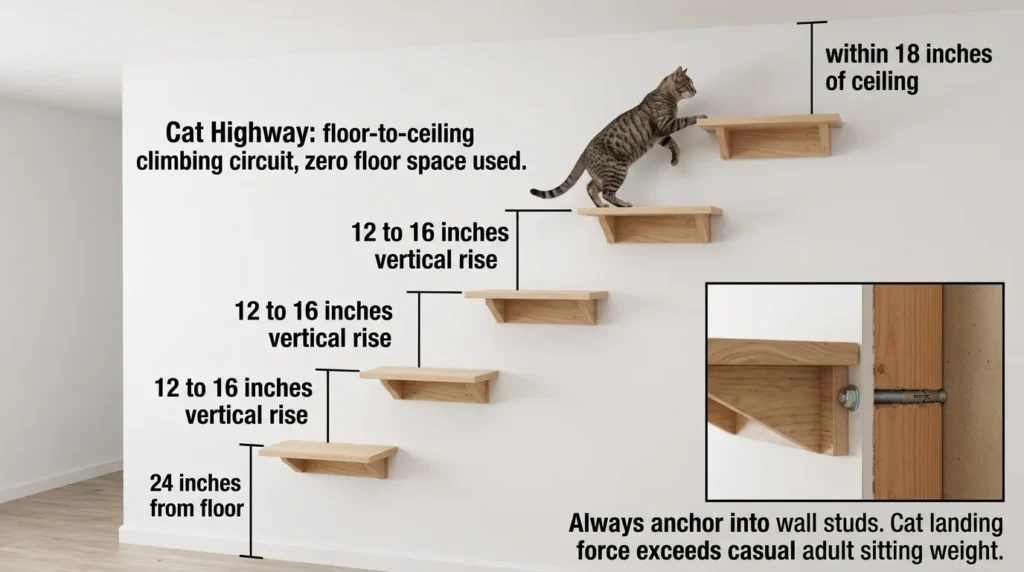
Wall-mounted cat shelves are the most space-efficient cat furniture available for apartment owners. A correctly installed shelf system gives a cat a complete floor-to-ceiling climbing circuit using vertical wall space that would otherwise sit completely unused.
Knowing how high should cat wall shelves be gives you the starting point: the lowest shelf at around 24 inches from the floor so the cat can reach it from a standing jump, then each subsequent shelf 12 to 16 inches higher with the highest shelf within 18 inches of the ceiling. That spacing gives a cat a reachable staircase from floor to maximum height.
Knowing how to build cat wall for apartment is more accessible than most renters expect. A set of three to five plywood shelves cut at 14 by 20 inches, covered with carpet or sisal fabric and mounted with heavy-duty L-brackets anchored into wall studs costs under $80 in materials and takes an afternoon to install. Renter-friendly tension-rod alternatives that require no wall anchors are also available from several brands.
Wall shelf specifications that matter:
- Minimum shelf depth: 12 inches. Less than this and the cat cannot sit comfortably without feeling precarious.
- Shelf surface: carpet or sisal fabric for grip. Smooth wood causes slipping on landing.
- Bracket rating: each shelf should hold at least 50 pounds to account for landing force.
- Spacing: 12 to 18 inches vertical gap between shelves. More than 18 inches and some cats will not make the jump.
Scratching Posts: The Cat Furniture Most Owners Buy Wrong
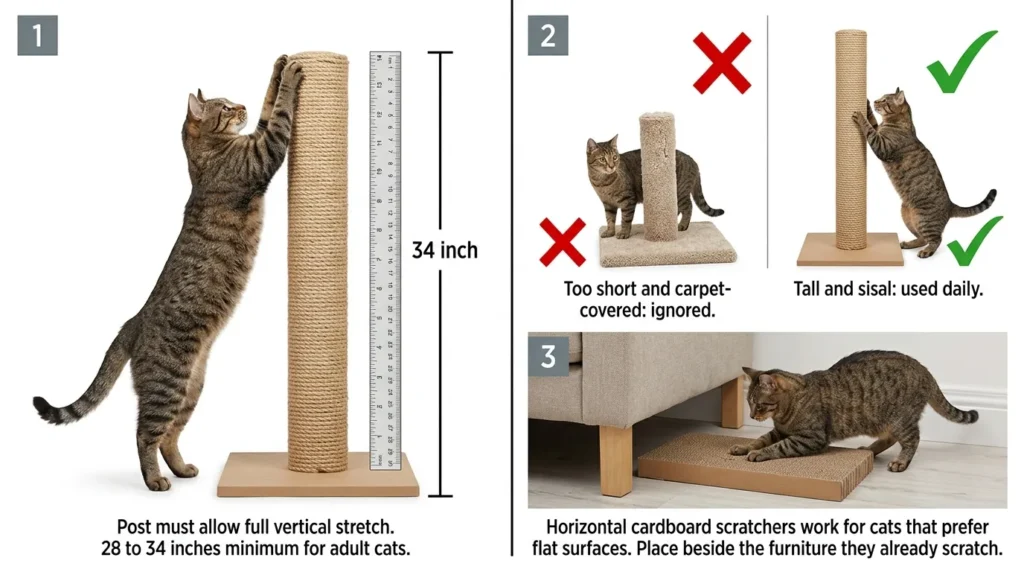
Knowing do cats need a scratching post is not in question. Every indoor cat needs at least one dedicated scratching surface. The question is what kind and where. Most scratching posts sold in pet stores are too short, too soft and in the wrong location to work.
A scratching post must be tall enough for your cat to scratch at full vertical stretch, typically 28 to 34 inches for an adult cat. A post shorter than this forces a compressed scratching position that does not fulfill the physical and territorial need driving the behavior. A cat that cannot stretch fully at the post will continue finding surfaces that let it do so.
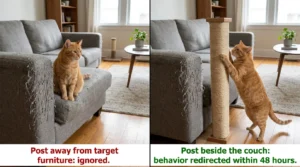
Scratching post placement is the most consistently underestimated variable. A post in the spare room is decoration. A post placed directly beside the sofa arm your cat is already scratching is a solution. Cats scratch to mark territory in prominent visible locations. Place the post in the location that intercepts the behavior, not the location that is convenient for you.
Post material comparison:
- Sisal rope: best overall. Texture closest to bark. Most durable. Preferred by the majority of cats.
- Sisal fabric: softer than rope. Good for cats that find rope too rough.
- Corrugated cardboard: excellent for horizontal scratching. Cheap and replaceable.
- Carpet: avoid on scratching surfaces. Teaches cats that carpet anywhere is acceptable to scratch.
Cat Furniture for Small Apartments: Maximum Impact, Minimum Space
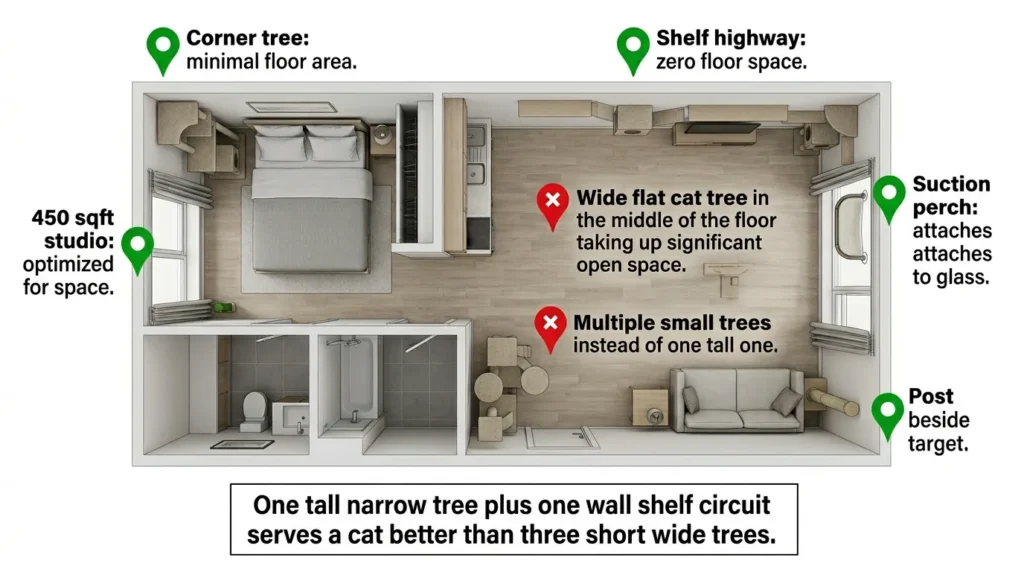
Knowing how to choose cat tree for small apartment requires shifting the decision criteria from width to height. A narrow tree that reaches 66 inches takes less floor space than a coffee table and delivers far more enrichment value than a wide low tree that occupies twice the area.
The space-efficient cat furniture options that work best in apartments under 600 square feet:
- Corner cat trees: triangular footprint fits flush into a corner using otherwise empty space.
- Wall-mounted shelves: zero floor footprint. Full vertical territory using wall space only.
- Suction-cup window perches: mount directly on the glass. Use the window itself as the furniture surface.
- Tall narrow towers: a tree 18 inches wide and 66 inches tall has a smaller footprint than a standard dining chair.
- Over-door perches: hook over a standard door frame and provide an elevated resting platform with no floor or wall contact.
The principle is consistent: one tall narrow piece delivers more territorial value than three short wide pieces. A cat with one genuine floor-to-ceiling climbing option is less stressed and less destructive than a cat surrounded by low platforms it outgrows within a year.
| Owner’s Tip
In a studio apartment I furnished a complete cat environment using only wall space and one corner. One 66-inch corner tree, four wall shelves in a staircase pattern and a window perch on the main window. The cat had a full climbing circuit, a window view and a resting point above head height. Total floor space used: approximately 18 square inches at the tree base. Total cost: under $90. The wall shelves were cut plywood with carpet remnant covers mounted with standard L-brackets from any hardware store. |
Modern Cat Furniture That Does Not Look Like Cat Furniture
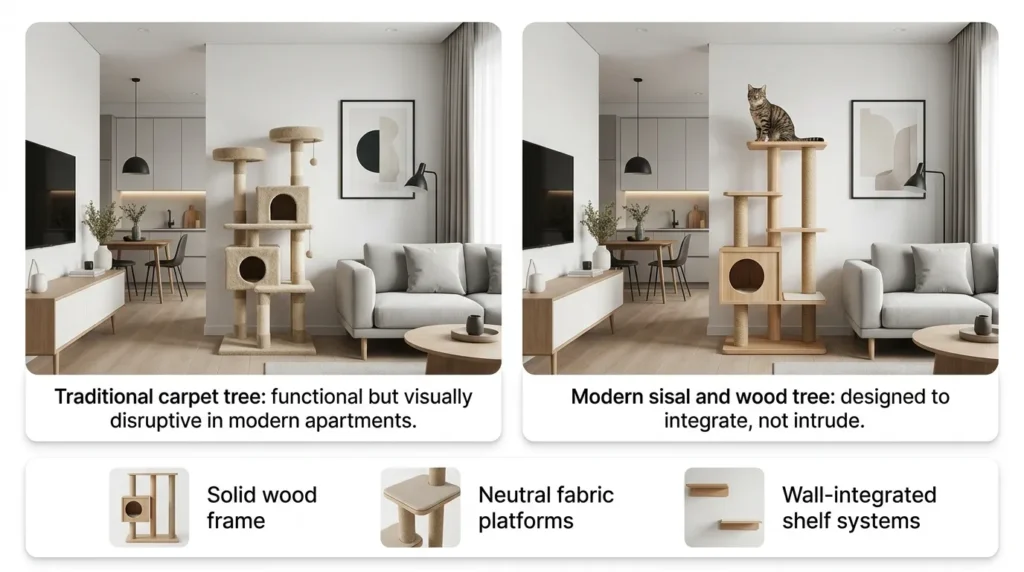
The traditional beige carpet cat tree is functional and most apartment owners do not want to look at it every day. The modern cat furniture market has changed enough in the past three years that this is no longer a necessary compromise. Well-built options exist that look like intentional home decor.
Modern cat furniture uses natural wood frames, neutral fabric upholstery and sisal rope instead of carpet. These materials serve the same functional purpose as their traditional counterparts and typically last significantly longer because solid wood and sisal rope outlast pressed cardboard and stapled carpet by years.
What actually distinguishes functional modern cat furniture from style-only pieces that fail:
- Frame material: solid wood or quality plywood, not MDF or particleboard. MDF splinters under repeated heavy impact.
- Scratching surfaces: sisal rope on every post, not decorative fabric that cats ignore.
- Platform cushions: removable and washable. Non-removable cushions become permanently odor-saturated within months.
- Base stability: wide and weighted. A beautiful tree that wobbles on first jump will never be used again.
Cat furniture that looks good stays in a prominent visible location. Cat furniture that looks bad gets moved to the back bedroom where your cat eventually stops using it. The aesthetic quality of the purchase is a functional decision not a vanity one.
Budget and DIY Cat Furniture That Actually Works
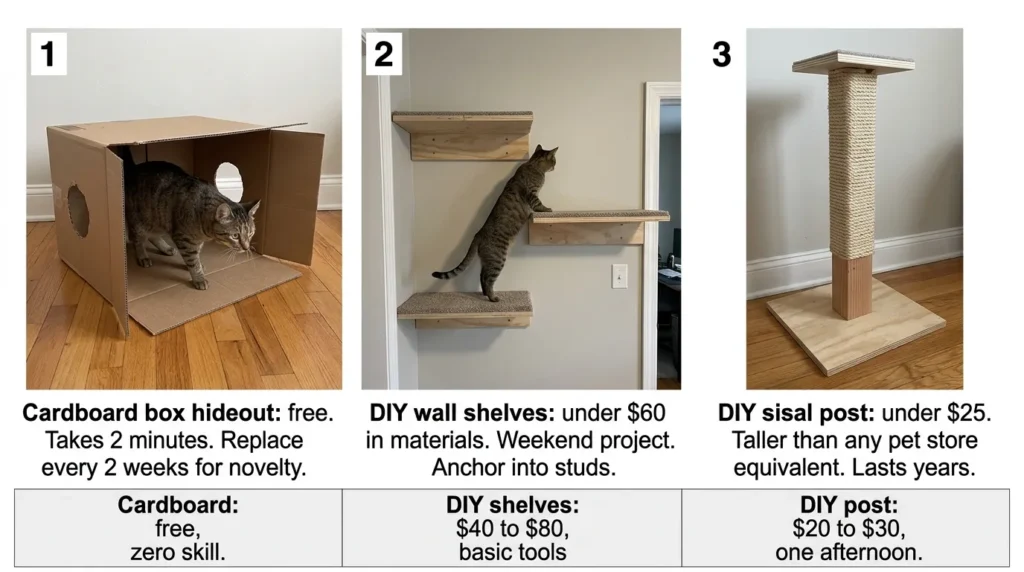
Budget cat furniture options can perform identically to premium alternatives when the right materials are used. The two variables that determine whether cheap or DIY cat furniture works are height and stability. A $25 DIY sisal post built from a 4×4 lumber post wrapped in sisal rope on a plywood base is more functional than a $60 commercial post that is too short and wobbles.
The DIY options that reliably work for indoor cats:
- Cardboard box hideout: a large box on its side with two holes cut for entry and exit, lined with a folded towel. Free. Cats love it. Replace every two weeks for novelty.
- Sisal post: a 4×4 lumber post at least 32 inches tall, mounted on a wide plywood base and wrapped tightly with sisal rope. Under $25 and taller than most pet store options.
- DIY wall shelves: plywood cut to 14 by 20 inches, covered with carpet remnant or sisal fabric, mounted with heavy-duty L-brackets anchored into studs. Three shelves in a staircase pattern for under $60.
- Repurposed bookshelf: an existing bookshelf with cleared upper shelves provides immediate cat territory with zero additional cost.
The only DIY shortcut that consistently fails is using carpet on scratching surfaces. Sisal rope costs about $15 for a 100-foot roll and lasts years. Carpet shreds within months and teaches the wrong scratching surface preferences.
Dig Deeper: Specific Cat Furniture Guides for Every Situation
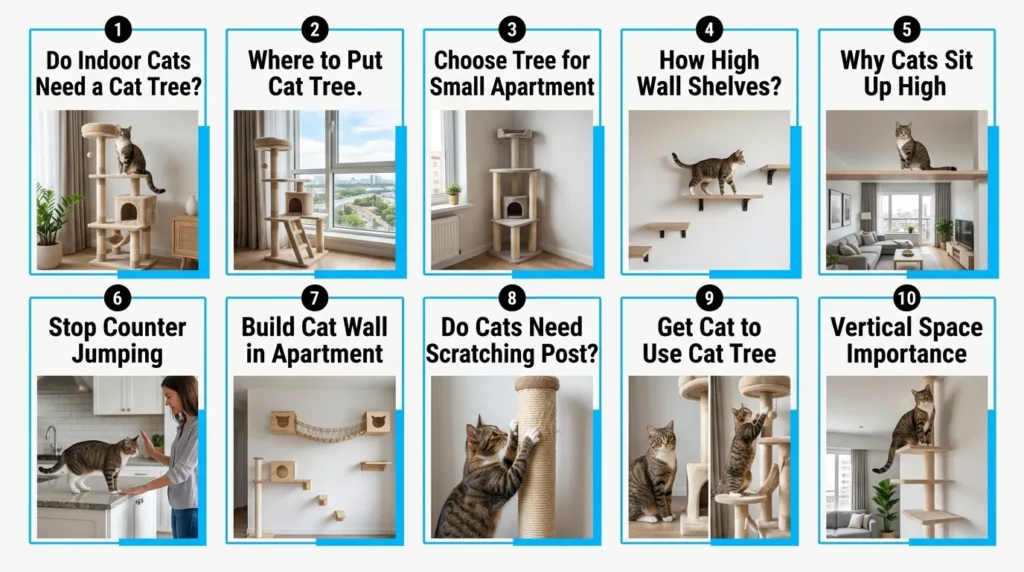
Find the one that matches your current situation and start there.
Do Indoor Cats Actually Need a Cat Tree?
This is the question most new indoor cat owners ask before making their first furniture purchase. The answer goes beyond a simple yes and examines the specific behavioral and health reasons a cat tree matters, what happens long-term without one and which cats benefit most from dedicated climbing structures.
Get the full breakdown in our article on do indoor cats need a cat tree.
Where to Put a Cat Tree in a Small Apartment?
Location determines whether a cat tree is used every day or ignored for months. This article covers the exact placement logic by room type, how to identify where your cat already wants to spend time and the specific reason the corner is almost always the wrong choice for cat trees in small apartments.
Find the ideal placement in our guide on where to put cat tree in small apartment.
How to Choose the Right Cat Tree for a Small Apartment?
Not every cat tree works in every space. This article gives you a decision framework based on your apartment size, your cat’s weight and your budget with specific measurement recommendations for apartments under 800 square feet where getting the footprint right matters as much as getting the height right.
Use the full buying framework in our guide on how to choose cat tree for small apartment.
How High Should Cat Wall Shelves Be?
Shelf height is the detail most DIY cat wall installations get wrong. Too close together and the circuit is frustrating. Too far apart and the cat will not bridge the gaps. This article provides the exact spacing measurements with the reasoning behind them and covers the special considerations for senior cats with reduced jump height.
Get the exact measurements in our guide on how high should cat wall shelves be.
Why Do Cats Like to Sit Up High?
Understanding the biology behind a cat’s need for elevated positions changes every furniture decision you make afterward. This article explains the territorial and instinctual reasons cats seek height and why providing elevated options is always more effective than redirecting cats away from counters and furniture tops.
Read the full explanation in our article on why do cats like to sit up high.
How to Stop Your Cat Jumping on Counters?
Counter jumping is almost always a furniture problem not a behavior problem. This article explains the exact mechanism behind counter preference, why deterrents alone fail and what specific furniture placement reliably ends counter jumping in most cats within a week.
Get the proven solution in our article on how to stop cat jumping on counters.
How to Build a Cat Wall in an Apartment?
A full DIY cat wall can be built for under $100 with materials from any hardware store and no specialist tools. This article provides step-by-step instructions with specific shelf dimensions, bracket types, wall anchoring methods for both permanent and renter-friendly installations and layout templates for rooms of different sizes.
Start building with our complete guide on how to build cat wall for apartment.
Do Indoor Cats Need a Scratching Post?
Every indoor cat needs a dedicated scratching surface and this article makes the case clearly enough that the purchase becomes obvious. It covers the biology of the scratching drive, what happens to cats without a sanctioned surface and the specific material and height specifications that determine whether a post actually gets used.
Read the full answer in our article on do cats need a scratching post.
How to Get Your Cat to Actually Use a Cat Tree?
Buying the right cat tree is step one. Getting your cat to use it consistently is a separate skill. This article covers the introduction techniques, placement adjustments and incentive strategies that work on cats ranging from enthusiastic climbers to completely indifferent ones.
Get your cat climbing with our guide on how to get cat to use cat tree.
Why Vertical Space Matters for Indoor Cats?
This article goes deeper on the behavioral science behind vertical territory than this guide does. It covers stress hormones, territorial mapping and the specific ways vertical access changes a cat’s experience of a small apartment, with practical implications for every furniture decision.
Read the full behavioral case in our article on vertical space for indoor cats why important.
| Owner’s Tip
Every article above links back to this guide when you want to return to the bigger picture. That two-way connection between this page and each article is how the whole cat furniture topic builds real search authority over time. The single most important thing I can tell any indoor cat owner about cat furniture: buy tall, buy sisal, buy beside the window. Everything else is secondary. Those three decisions determine whether the furniture gets used every day or becomes expensive decoration within a month. |
The Biggest Cat Furniture Mistakes Indoor Cat Owners Make
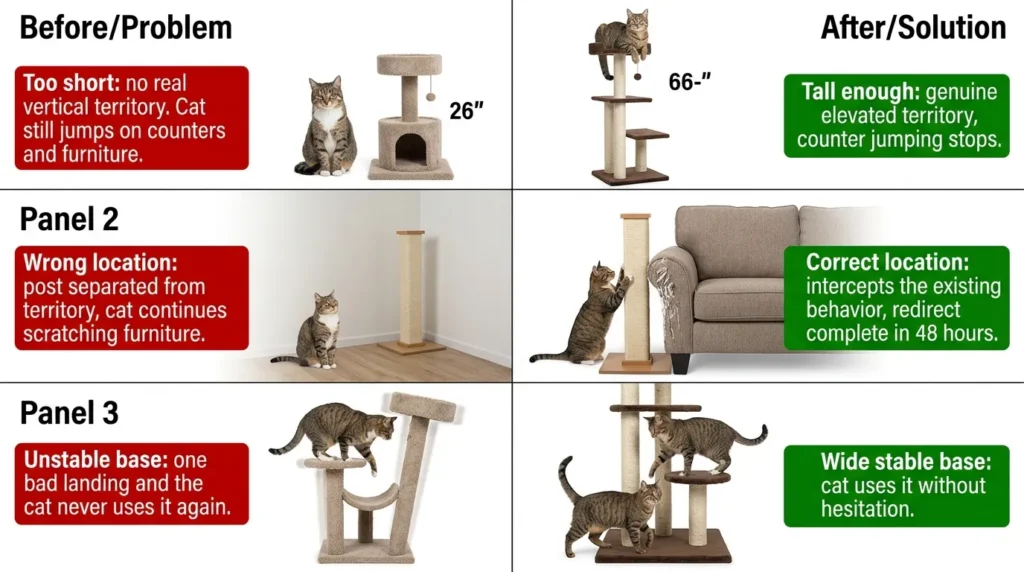
The most common cat furniture mistake is buying based on appearance and price rather than height and stability specifications. A beautiful $60 cat tree that is 30 inches tall and wobbles on first contact will sit unused within a week. A plain $90 tree that is 66 inches tall with a wide base and sisal rope posts will be used every day for years.
The second most common mistake is putting the furniture where it is convenient for the owner rather than where the cat already is. Cat furniture works by intercepting existing territorial behavior and providing a better alternative in the same location. Furniture placed for human convenience rather than cat behavior simply does not get used.
The third mistake is carpet on everything. Carpet-covered cat trees teach cats that carpet texture anywhere is acceptable to scratch. This is the opposite of what you want from a scratching surface. Choose sisal rope for posts and any surface intended for scratching and save soft fabric exclusively for resting platforms.
Frequently Asked Questions About Cat Furniture for Indoor Cats
What is the most important piece of cat furniture for an indoor cat?
A tall stable cat tree of at least 60 inches placed beside the window your cat gravitates toward most naturally. This single piece addresses climbing, perching, territory and sensory enrichment simultaneously. If you only buy one thing, make it the tallest cat tree your apartment ceiling allows. A sisal scratching post is the second most important purchase and should be placed beside the furniture your cat is already scratching.
Why is my cat not using the cat tree I bought?
In most cases the answer is location or height. A tree placed away from your cat’s existing territory will be ignored. Move it beside a window and within the same room where your cat already spends its time. If the tree is under 40 inches it may also be insufficient for a genuine territorial perch. Rub a small amount of catnip on the platforms and use a wand toy to play near the base during the first week. Both accelerate adoption.
Are wall-mounted shelves better than a cat tree for small apartments?
For space efficiency wall shelves win clearly. For ease of installation and portability a cat tree wins. The best approach for most small apartments is one tall corner cat tree near the main window combined with a three to four shelf circuit on one wall. If floor space is the hard constraint, wall shelves deliver more vertical territory per square foot than any freestanding tree at any price point.
What is the best scratching post material for indoor cats?
Sisal rope is the best material for the large majority of cats. Its texture closely matches tree bark which is what cats scratch in the wild. Sisal fabric is a slightly softer alternative for cats that find rope too rough. Corrugated cardboard is excellent for horizontal scratching. Avoid carpet on any scratching surface: it teaches cats that carpet is an acceptable scratching target, which creates problems throughout the home.
How much should I realistically spend on cat furniture?
A complete functional cat furniture setup costs between $100 and $250 for one-time purchases: a quality 60-plus inch cat tree ($80 to $150), a sisal scratching post ($25 to $60) and a window perch ($15 to $30). Trees under $50 are almost always too short or too unstable to be useful long-term. Wall shelves built DIY cost $40 to $80 for a set of three to five. These are durable long-term investments, not recurring costs.
Does cat furniture actually stop cats from scratching the sofa?
Yes, when placed correctly. A sisal post positioned directly beside the exact piece of furniture your cat is currently scratching redirects the behavior within two to seven days in most cases. The post in a corner away from the scratch target produces no change. Placement is the entire variable. During the transition period you can add double-sided tape to the sofa surface to discourage use while the post is being established as the preferred option.
Conslusion
The best cat furniture for indoor cats comes down to three decisions made correctly: a tall stable cat tree placed beside the window your cat already favors, a sisal scratching post placed beside the furniture your cat is currently scratching and a window perch that gives your cat passive daily enrichment without your involvement. These three pieces address all the core territorial and physical needs of an indoor cat in a small space.
If you are making your first purchase, start with the cat tree. Height is the highest-impact variable and getting it right from the beginning prevents the most common furniture problems. Our guide on do indoor cats need a cat tree explains exactly what to look for and why the height and base width specifications matter more than brand or price.
The best cat furniture for indoor cats includes a cat tree of at least 60 inches placed beside a window, a sisal rope scratching post taller than the cat at full stretch (28 to 34 inches minimum) and a window perch. Wall-mounted shelves spaced 12 to 16 inches apart provide zero-floor-footprint vertical territory for small apartments. Scratching posts must use sisal rope not carpet. Cat tree placement beside the cat’s preferred window is the single most important variable in determining whether furniture gets used. Counter jumping stops when a taller sanctioned perch is provided in the same room.