
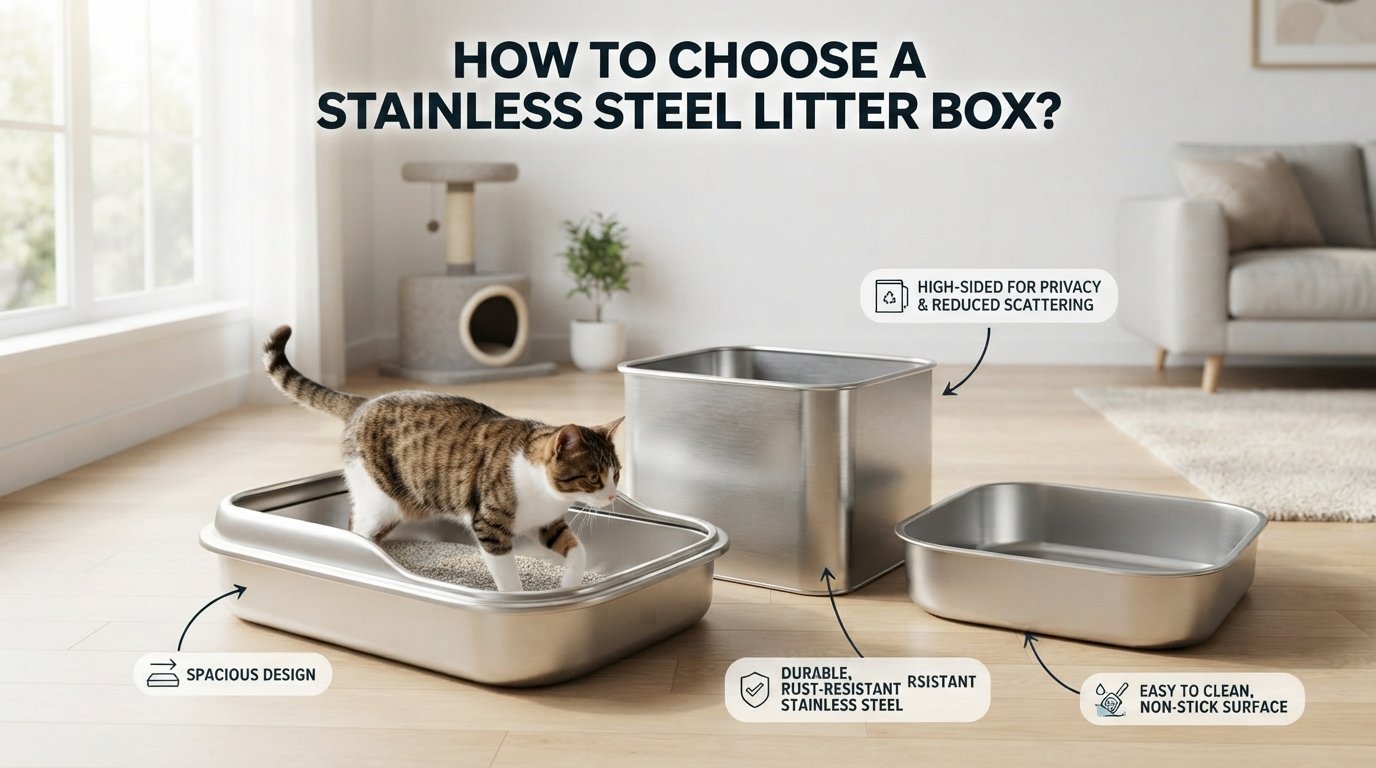
Shopping for a stainless steel litter box gets messy fast, because the listings rarely compete on one clean spec. In this set, the Idymere Stainless Steel High Sided box leans on sheer room: it measures 16.93″L x 12.99″W x 5.12″H, enough space for a kitten, a senior cat, or a medium adult to turn around without hitting a wall. The Yangbaga Stainless Steel Litter Box takes a different angle. Its whole selling point is a seamless, one-piece build with 12-inch walls, so there’s no welded seam for urine to leak into or for litter to hide inside. Neither spec makes the other product wrong. The right pick depends on your cat’s age, how hard they dig, and which tradeoff you can actually live with every day.
To get real value out of this guide, pay attention to the specific design details, wall height, entry height, lid type, and seam quality, because those are what actually shape your cleanup routine. Match those specs to your cat’s habits first. We also added a full spec comparison table, a second buying-factor section on odor and multi-cat setups, and a longer FAQ, since those are the questions we kept getting asked after the first version of this guide went live.
Products in this guide
These are the Amazon listings we anchor to when we talk about how to choose a stainless steel litter box in the rest of this guide. Each card pairs a thumbnail with a short editor read on what stands out in the listing: materials, stated use case, or patterns we see in buyer feedback. They are not a substitute for your own due diligence. Follow the link to verify fit, compatibility, today’s price, and the most recent verified reviews before you buy.
|
Idymere Stainless Steel High Sided Cat Litter Box A versatile, open-top option ideal for small to medium cats and multi-pet households. 7.8/10 |
Yangbaga Stainless Steel Litter Box: Extra Large Cat Box w/12in High Sid A seamless, extra-large basin featuring high walls and an accessible U-shaped entry. 8.9/10 |
FUTAM Stainless Steel Litter Box with Lid, Metal Litter Box for Kitten, A comprehensive starter kit for small cats featuring a protective lid and included accessories. 7.4/10 |
|
Idymere Large High Sided Stainless Steel Cat Litter Box A spacious, low-profile stainless steel tray designed for short-legged breeds and medium cats. 7.1/10 |
Stainless Steel Litter Box with Lid, Extra Large Enclosed Cat Litter Bo The ultimate enclosed solution for giant breeds, featuring a flip-top lid and carbon filtration. 9.3/10 |
How we judged each pick
These notes mirror how we evaluate listings for this guide: practical fit, credible specs, and what buyers report back, not lab claims we cannot verify.
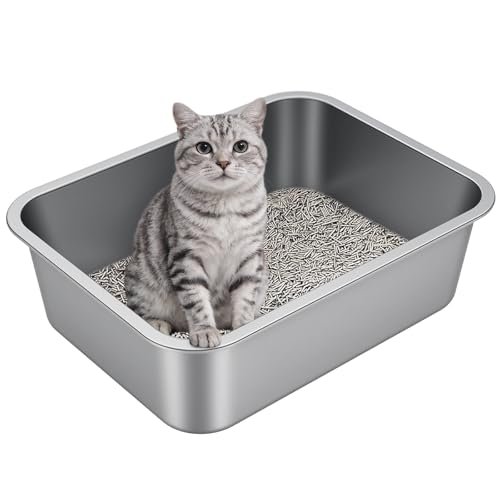 |
The Idymere high-sided box is a solid entry point if you’re ready to ditch plastic. It’s non-porous, so it won’t hold onto odors or trap deep scratches the way plastic does after a year of use. Walls run 5.12 inches, which suits smaller cats and seniors fine. A hard-spraying cat can still clear that height, though, so don’t expect it to catch everything. If you want an open-top setup with real airflow, this is a sturdy, low-maintenance workhorse. |
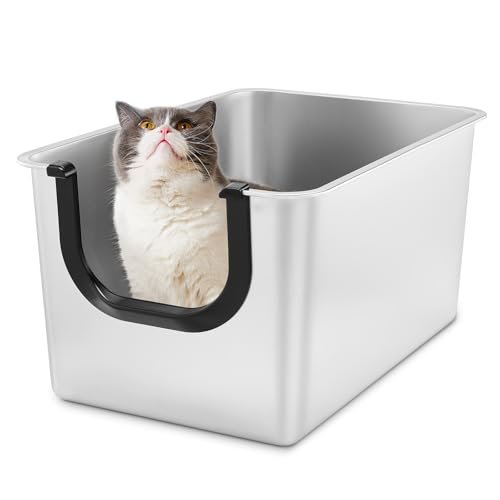 |
The Yangbaga’s one-piece, seamless build is what sold me on it. No welds, no crevices for urine to pool in and start to smell after a few weeks. Walls run 12 inches, tall enough to stop most diggers, and a 6-inch U-shaped cutout keeps entry easy for older cats even with those high sides. At 24 inches long, a large breed still has room to turn around fully. Skip the lids and filters and just want a box that won’t leak? This is the one to buy. |
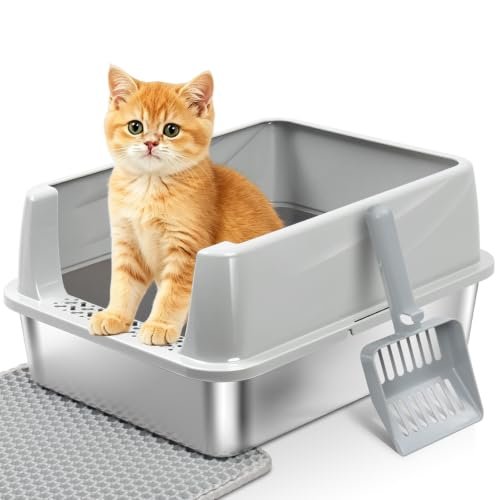 |
The FUTAM works like a full starter kit. It ships with a scoop and a mat, so you’re set up on day one without a second order. It splits the difference between metal hygiene and plastic containment through its hybrid lid design. A 4-inch entry is built for kittens and small cats, though that plastic lid does add a seam a pure metal box wouldn’t have. Want one box that also keeps litter scatter off the floor? This is a practical, no-fuss route. |
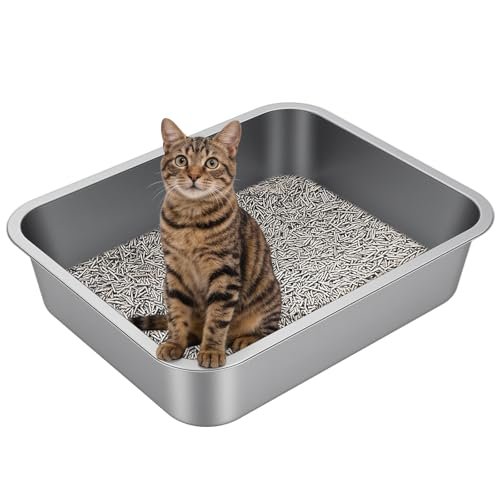 |
If you own a Munchkin or another short-legged breed, this Idymere’s low 3.94-inch profile is the reason to buy it over the others here. The footprint is large enough for comfort, and no cat has to climb a wall to get in or out. It shares the same scratch-resistant, odor-blocking surface as the rest of the stainless models in this guide. What it doesn’t share is wall height: those low sides won’t stop a heavy digger from kicking litter onto your floor. This is a tool built for one specific job, not an all-rounder. |
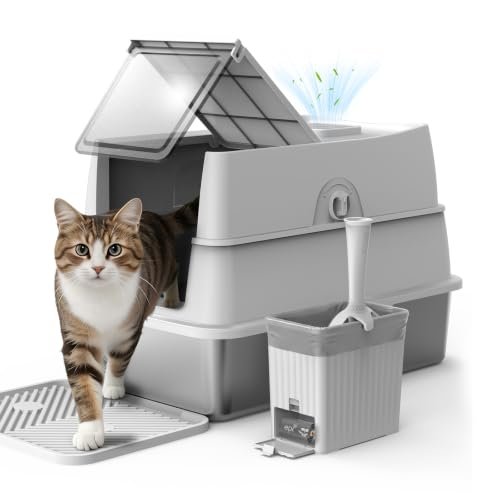 |
This enclosed model is built for large breeds like Maine Coons. The lid flips open to 120 degrees and stays there on its own, which frees up both your hands to scoop. Between the overlapping joint design and the carbon filter, it blocks odor and leaks better than any open box in this group. A built-in scoop holder and bag storage turn a daily chore into something closer to routine maintenance instead of a scramble to find the scoop. |
Size, Wall Height & Access Comparison
Listings love the word “large,” but large doesn’t tell you whether your cat can climb in or whether the walls will actually stop a hard digger. Here’s how the five picks in this guide stack up on the specs that matter most for daily use.
Specs are pulled from each manufacturer’s listing at the time of writing. Always confirm current dimensions on the product page, since sellers occasionally update sizing between batches.
Buyer Briefing
List of How To Choose A Stainless Steel Litter Box
It’s easy to assume all metal pans perform the same. Ignore side height or edge safety and you’ll end up with buyer’s remorse. Don’t let a low price tag distract you from checking whether the box’s dimensions actually fit your cat’s digging style or physical mobility.
Start by measuring your available floor space and thinking honestly about your cat’s age. A senior cat needs a low entry point, full stop. A cat that digs like it’s escaping prison needs high walls. Pin down these functional requirements before you even start comparing lids and filters and scoop holders.
Quick checklist before you buy
- Cat’s age and mobility, low entry for kittens and seniors, high walls only for able-bodied diggers
- How hard your cat digs, light coverers can use 4 to 5 inch walls, heavy diggers need 10 inches or more
- One-piece, seamless construction versus welded seams, seams are where urine gets trapped and starts to smell
- Rounded corners and rolled edges, sharp edges on metal are a real cut risk
- Number of cats in the home, more cats means more boxes, not one bigger box
- Whether you want a lid, lids help with odor and privacy but cut usable floor space and can spook nervous cats
- Floor space and how the box fits your bathroom, laundry room, or litter station
The Selection Logic
When I look at stainless steel litter boxes, I weigh durability against how easy the box is to live with day to day. I check how each design handles a multi-cat household, specifically how well it resists odor and how fast you can clean it. My framework balances physical footprint against the practical need for containment and easy access.
|
01 Identify the Real Need Name your actual pain point. Are you fighting lingering odors, deep claw scratches, or just tired of replacing cracked plastic pans? Stainless steel wins in all three areas because the surface is non-porous and doesn’t degrade the way plastic does. |
02 Match the Product Type Decide on a shape: open-top for airflow, high-sided for scatter control, or enclosed for maximum odor containment. Think about how each shape works with your litter type, since a fine-grain clumping litter tracks differently than pellets. |
|
03 Check the Tradeoff Weigh weight against portability. Heavier, thicker metal resists sliding around the floor, but it’s harder to pick up and carry to the sink. Finish matters too: polished surfaces look sleek but show scratches, brushed finishes hide wear better over time. |
04 Choose by Real Use Prioritize the small stuff: rounded corners so waste doesn’t get stuck in a seam, and a non-slip base so the box doesn’t skate across tile when your cat jumps in. These details decide whether scooping takes thirty seconds or five minutes. |
Choice Point 01
Prioritizing Access and Mobility for Your Cat
Your cat’s physical comfort comes first, before any spec sheet. High walls become a real barrier if your cat has joint pain or is still a kitten. A lot of owners skip this step and end up with accidents outside the box, then blame the litter instead of the entry height. Match the entry height to what your cat can actually manage.
Some designs solve this with a U-shaped or low-entry cutout. The Yangbaga Stainless Steel Litter Box, for example, keeps a 6-inch entry point even with 12-inch walls, which helps older cats get in without a running start. Standard high-sided models without that cutout may need a ramp or a step if the wall height is past your cat’s comfortable climbing range.
Watch your cat’s daily habits before you buy. A very high-sided box might suit a young, athletic cat that kicks litter everywhere. An aging cat with arthritis needs the opposite. Balance how much cleanliness you want against what your cat can physically do right now, not what they could do two years ago.
|
Yangbaga Stainless Steel Litter Box: Extra Large Cat Box w/12in High Side A seamless, extra-large basin featuring high walls and an accessible U-shaped entry. |
8.9/10 Check Price Amazon |
|
FUTAM Stainless Steel Litter Box with Lid, Metal Litter Box for Kitten, Small Litter Boxes with A comprehensive starter kit for small cats featuring a protective lid and included accessories. |
7.4/10 Check Price Amazon |
How Products Differ Here
- →Yangbaga Stainless Steel Litter Box: Extra Large Cat Box w/12in High Side: The Yangbaga has a 6-inch U-shaped entry specifically for easier access.
- →FUTAM Stainless Steel Litter Box with Lid, Metal Litter Box for Kitten, Small Litter Boxes with Scoo: The FUTAM uses a 4-inch lower platform to help kittens and seniors enter.
Product Evidence
For better accessibility, the Yangbaga Stainless Steel Litter Box keeps a 6-inch entry point even with high walls. The FUTAM Stainless Steel Litter Box goes even lower with a 4-inch platform, a solid option for cats with joint pain or a size that just doesn’t handle a tall lip well.
Choice Point 02
Odor Control, Cleaning, and Multi-Cat Households
Metal itself doesn’t smell. What smells is urine sitting in a seam or a scratch that a scoop can’t reach. That’s the whole argument for one-piece construction: fewer joints means fewer places for bacteria to build up between deep cleans. If a listing doesn’t say “seamless” or “one-piece,” assume it has welds somewhere and check the photos before buying.
A daily scoop handles most of the smell on its own. For a deeper clean, wash the box weekly with warm water and a mild dish soap, or a diluted vinegar solution if you want to cut mineral buildup from urine. Skip steel wool and abrasive scrubbers, they can scratch the surface and create the exact micro-grooves you bought stainless steel to avoid. Let the box air dry fully before you refill it, since damp litter clumps and sticks to metal more than it does to plastic.
If you have more than one cat, the standard rule is one litter box per cat, plus one extra. Two cats means three boxes, spread across different rooms rather than lined up side by side. Cats can be territorial about a shared box, and crowding them into one location defeats the purpose of having multiple boxes in the first place.
Image placeholder: photo of two or three stainless steel litter boxes placed in separate rooms of a multi-cat home
|
Stainless Steel Litter Box with Lid | Extra Large Enclosed Cat Litter Box for Big Cats The ultimate enclosed solution for giant breeds, featuring a flip-top lid and carbon filtration. |
9.3/10 Check Price Amazon |
|
Yangbaga Stainless Steel Litter Box: Extra Large Cat Box w/12in High Side A seamless, extra-large basin featuring high walls and an accessible U-shaped entry. |
8.9/10 Check Price Amazon |
How Products Differ Here
- →Stainless Steel Litter Box with Lid (Enclosed): Uses an active carbon filter plus a fully enclosed shell to trap odor before it reaches the room.
- →Yangbaga Stainless Steel Litter Box: Relies on a seamless open basin instead of filtration, betting on zero seams rather than trapping smell after the fact.
Product Evidence
If odor control is your top concern, the enclosed model’s carbon filter plus flip-top lid gives it a real edge over open designs. If you’d rather prevent the smell at the source, the Yangbaga’s seamless basin removes the crevices where odor-causing bacteria usually build up in the first place.
What Buyers Often Misread
Marketing shouts about “large” dimensions without saying how much usable space is actually inside. Don’t get fooled by the external footprint; hoods and rims eat into the room your cat has to move around in.
Another common miss is edge quality. Stainless steel is generally safe, but a poorly finished edge can be a real hazard. Look for rolled or rounded edges as a sign of decent construction, and check buyer photos, not just the studio shots, before you decide.
| ✗ | Claim that all stainless steel boxes are equally easy to clean.
Avoid models with internal seams, since these are magnets for trapped urine and residue. |
| ✗ | Believing that high sides always prevent all litter scatter.
Wall angle and height matter more for containment than base size alone. |
| ✗ | Assuming the largest external dimensions provide the most comfort.
Check that hoods and flaps don’t restrict movement or make the inside feel cramped. |
| ✗ | Thinking that all metal boxes are fully odor-proof.
Material is a good start, but odor-sensitive homes should look for enclosed designs with active carbon filtration. |
| ✗ | Assuming a stainless steel box will be silent.
Thinner gauge metal can amplify digging noise more than plastic does. A litter mat under the box cuts most of that clang. |
| ✗ | Expecting a plastic litter liner to work the way it does in a plastic pan.
Liners slide around on smooth steel walls and rarely stay put. Most owners skip them entirely since the surface wipes clean on its own. |
How To Make the Final Choice
Base your decision on your cat’s mobility and your home’s layout. For heavy-duty containment, go with a lidded, filtered model. For a cat that struggles to climb, prioritize a low-entry box. Above all, look for seamless basins and rounded edges, since those two details decide most of your hygiene and safety outcomes.
If your main concern is mobility for seniors or kittens
FUTAM Stainless Steel Litter Box with Lid, Me , the FUTAM’s 4-inch entry platform makes it the easiest to step into.
If your main concern is high-spraying cats
Stainless Steel Litter Box with Lid | Extra L , the enclosed model with the flip-top lid is the strongest option for high-sprayers and large-breed owners.
If your main concern is general durability and leak prevention
Yangbaga Stainless Steel Litter Box: Extra La , the Yangbaga’s one-piece, seamless build is the safest bet against leaks.
If you just want a simple, no-frills box
Idymere Stainless Steel High Sided Cat Litte , the open-top Idymere skips lids and filters and just does the basic job well.
Frequently Asked Questions
Are stainless steel boxes better than plastic?
For odor and hygiene, yes. Stainless steel is non-porous, so it doesn’t hold onto smell or bacteria the way scratched plastic does. Plastic is lighter and cheaper, which still matters if budget or portability is your main priority.
Do these boxes rust?
High-quality stainless steel resists corrosion and shouldn’t rust with normal care. Cheaper, thin-gauge steel or boxes with damaged coating can develop spots over time, so wipe the box dry after washing instead of letting litter sit wet against the metal.
How do I clean a stainless steel box?
Scoop daily. Wash it weekly with warm water and mild dish soap, or a diluted vinegar rinse for mineral buildup. Skip steel wool and harsh abrasives, since they scratch the surface. Dry it fully before adding fresh litter.
Will my cat like the metal surface?
Most cats adjust within a few uses. Keep the same litter they’re already used to during the switch, since a sudden texture change plus a new litter at the same time is what usually causes a cat to avoid the box.
Can I use these for other pets?
Yes. Many of these stainless steel pans work fine for other small pets, like rabbits or ferrets, as long as the wall height suits the animal.
Are stainless steel litter boxes noisy?
They can be louder than plastic, especially with thinner gauge metal and a cat that digs hard. Thicker steel is quieter, and a litter mat placed under the box absorbs most of the clang from scratching.
Can I use a litter liner in a stainless steel box?
You can, but liners tend to slide on smooth metal walls, unlike the friction they get against textured plastic. Most owners skip liners with stainless steel altogether, since the surface already wipes clean without one.
How many litter boxes do I need for multiple cats?
The standard guideline is one box per cat, plus one extra, spread across different rooms rather than clustered in one spot. Three cats means four boxes in an ideal setup, though two well-placed large boxes can work for calmer, non-territorial cats.
Do stainless steel litter boxes get cold?
Metal conducts temperature faster than plastic, so a box kept in an unheated garage or a cold laundry room can feel noticeably cooler to the touch in winter. Most homes stay warm enough that this isn’t an issue, but it’s worth keeping the box away from drafty spots if your cat seems hesitant.
How long do stainless steel litter boxes last?
Well-made stainless steel boxes hold up for years longer than plastic, which tends to crack, scratch, and absorb odor within a couple of years of regular use. Exact lifespan depends on the gauge of steel and how well it’s dried and maintained, so we can’t give you a single number that applies across every listing.
Are stainless steel litter boxes more expensive than plastic?
Generally yes, upfront. You’re paying for a material that resists odor and scratching, so it doesn’t need replacing as often. Prices shift constantly on Amazon, so check the live listing rather than trusting a number here that may already be out of date.
