
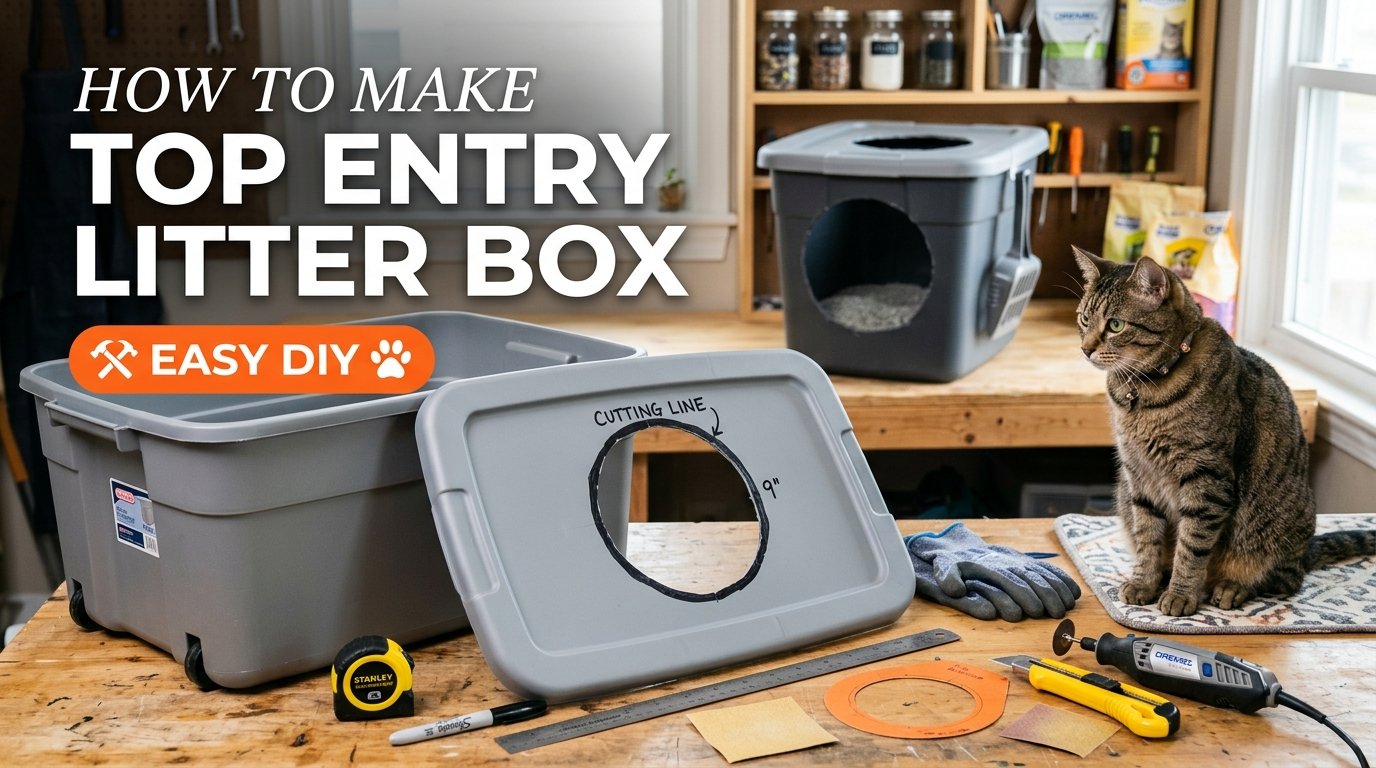
To make a top entry litter box at home, cut a hole about 9 to 11 inches wide in the lid of a plastic storage tote that holds 16 to 20 gallons or more, sand every cut edge smooth, and add 2 to 3 inches of litter. Tutorials put the job anywhere from 10 minutes to an hour. Your cat jumps in through the lid and climbs out over it, and that climb knocks loose granules off its paws before they reach your floor.
The problem this fixes is familiar. Open boxes let cats kick litter over the rim, and they leave waste within easy reach of dogs and houseguests. A top entry box closes the sides, so the mess stays inside and the box stays out of sight. This guide covers the full build, the hole size that works, and the cats who should skip this design entirely. If you’d rather not cut plastic, five ready-made models come later in the article.
Last updated: September 2026
How to Make a Top Entry Litter Box at Home
A store-bought top entry box is a plastic tub with a hole in the lid. A storage tote does the same job, and you pick the size, which matters if your cat is big. The build below needs one tote, one cut, and some sanding.
| DIY at a glance | What to expect |
|---|---|
| Time | 10 minutes to an hour, depending on tools and upgrades |
| Tote size | 16 to 20 gallons or bigger, at least 1.5 times your cat’s length inside |
| Entry hole | 8 to 10 inch circle for most cats, about 11 x 10 inches for heavier ones |
| Litter depth | 2 to 3 inches |
| Skip it if | Your cat is a senior with stiff joints or a kitten under about 4 to 6 months |
What You’ll Need
| Item | Notes |
|---|---|
| Plastic storage tote with lid | 16 to 20 gallons is a common size. Go bigger for a large cat. Flexible polypropylene cuts easiest. |
| Marker and a dinner plate (or pot lid) | For tracing a clean round opening. |
| Utility knife or rotary tool | A utility knife handles thin lids. A rotary tool such as a Dremel handles thicker plastic. |
| Cut-resistant gloves | Blades slip on plastic. Gloves cost less than a trip to urgent care. |
| Medium-grit sandpaper or a metal file | For smoothing every cut edge. |
| Litter and a scoop | Enough for a 2 to 3 inch layer. |
| Optional: rug scrap, carpet piece, or non-slip drawer liner | Sits on the lid and catches litter from paws. |
| Optional: drill | For a ring of grate holes in the lid and small vent holes in the sides. |
Pick the Right Tote
The tote decides how well the box works. Check these before you buy:
- ✓ Length: Measure your cat from nose to the base of the tail and multiply by 1.5. The inside of the tote should be at least that long.
- ✓ Height: Your cat needs to stand fully upright with the lid on. If the lid presses on their back, pick a taller tote.
- ✓ Plastic: Softer, flexible polypropylene cuts cleanly. Some rigid plastics crack under a blade.
- ✓ Shape: A flat bottom and straight walls hold litter better than a tapered tub.
- ✓ Lid: A thin lid is easiest to cut, and one that pops off without a fight makes daily scooping less of a chore.
Step-by-Step Instructions
- Test the idea with cardboard (optional). Cut a hole in a spare cardboard box and see whether your cat hops in or walks away. Cardboard soaks through, so this is a trial and never a real litter box.
- Trace the hole. Set a dinner plate on the lid about 2 inches from the back edge and trace around it. That leaves the wider part of the lid in front as a landing spot.
- Cut along the line. Start the cut with a drill bit or the tip of a knife, then work around the circle in short, slow passes. Wear gloves and cut away from your body.
- Smooth every edge. Sand or file the cut on both sides of the lid until a bare fingertip glides around it without catching. Your cat will squeeze through this hole every day, and a rough spot turns into a scrape.
- Check the fit. Pick your cat up and set them on the lid beside the hole. Shoulders and hips should clear the edge with no squeeze. If they don’t, enlarge the hole now. It’s easier before the litter goes in.
- Fill and place. Add 2 to 3 inches of litter, snap the lid on, and put the box in a quiet spot with its back against a wall. Leave the old box next to it for the first few days.
Safety note: Dull blades slip, so use a sharp one and cut slowly. Keep your cat out of the room until every edge is sanded. Check the cut edge monthly for new cracks, since plastic that’s been cut can split over time.
How Big Should the Hole Be?
Builders don’t agree on one number, and cats vary. These ranges come from published tutorials, and the pick-up test in step 5 settles it for your cat.
| Cat | Opening | Note |
|---|---|---|
| Small to average adult | 8 to 10 inch circle, about a dinner plate | A round cut has no corners to snag. |
| Large or stocky adult | About 11 x 10 inches | One builder used this size for a heavier cat and it worked. |
| Too small | Anything that brushes shoulders or hips | Cats that feel squeezed avoid the box. |
| Too big | Most of the lid gone | Less lid means less litter caught and less privacy. |
Upgrades Worth Adding
- Grip layer: Lay a rug scrap, carpet piece, or non-slip drawer liner on the lid. Trace the hole onto it and cut it out so the material doesn’t droop into the opening.
- Drilled grate: A ring of small holes around the entry lets loose granules fall back into the box.
- Ventilation: An enclosed tote holds odor. A few small holes high on the sides, well above the litter line, let air move. Scoop daily either way.
- Second opening: Some anxious cats refuse a box with a single exit. A small side opening gives them a way out.
- Edge cover: Tape over the cut edge adds a little protection. It wears off with use, so replace it when it does.
- Ramp: A wooden plank leaned against the box helps a cat that’s slowing down. It won’t fix a cat with painful joints (more on that below).
Will Your Cat Use a Top Entry Litter Box?
Some cats take to it on day one. Others circle it like a trap. Healthy, agile adults usually settle in within a few days, and the privacy and high walls suit diggers especially well. Cats with mobility problems are a different story.
| Your cat | Fit | What to do |
|---|---|---|
| Healthy adult | Good | Build it as described. Most cats adjust within a few days. |
| Kitten under about 4 to 6 months | Poor | Kittens are still building coordination. Use an open or low entry box until they’re bigger. |
| Senior or arthritic cat | Poor | Jumping in and out strains stiff joints. Choose a box with an entry of roughly 4 inches or lower. |
| Large or heavy cat | Depends | Use a big tote and a hole near the top of the size range. If shoulders or whiskers rub the walls, pick another design. |
| Anxious cat, or a home with a dog | Depends | Add a second opening or run the box lidless. A dog that sits on the lid can corner a cat inside. |
Call your vet first if the behavior changes. Cats hide pain well, and arthritis often goes unnoticed. A cat that hesitates at the box, misses it, or cries while using it may be hurting. Book a checkup before you swap boxes again.
How to Get Your Cat Used to It
- Put the new box next to the old one and leave both out for a few days.
- If your cat balks, take the lid off for a few days so it’s a plain high-sided tote, then put the lid back.
- Still no luck? Cut an opening in the side. Some cats won’t touch a hole in the top no matter what you do.
- Remove the old box only after your cat uses the new one every time.
DIY vs Store-Bought Top Entry Litter Box
| Factor | DIY tote box | Ready-made box |
|---|---|---|
| Cost | One tote plus sandpaper | Priced per model (see the Amazon links below) |
| Setup time | 10 minutes to an hour | Unbox and fill |
| Size | You choose, so a big cat gets a big box | Fixed by the model |
| Lid design | Flat lid until you add a rug or drilled holes | Textured, grooved, or filtered lid built in |
| Extras | Whatever you add yourself | Some include a scoop with a hook |
| Looks | Looks like a tote | Molded shell in neutral colors |
If you’re unsure your cat will accept a top entry, build one first. If your cat refuses it, you’re out a tote and an afternoon instead of a full-price box. Buy a ready-made model when you want a lid engineered for tracking, a scoop that hangs on the side, or something that looks decent in a living space. Still deciding between designs? Our guide to top entry vs front entry litter boxes lays out the tradeoffs.
5 Ready-Made Top Entry Litter Boxes If You’d Rather Buy
Finding the right box means balancing size, durability, and how easy it is to clean. These five models all use a lid that scrapes litter off paws and a hooded shape that holds in odor. Three of them are IRIS USA boxes with similar listings, so color and lid pattern are the main things to compare.
| # | Model | Standout feature | Watch out for |
|---|---|---|---|
| 1 | IRIS USA, Gray/White | Textured lid, compact footprint | May be tight for very large cats |
| 2 | IRIS USA, Beige | Sift-style lid holes, scoop with hook | Lid holes need regular cleaning |
| 3 | Amazon Basics, Gray | Filtered lid, removable top, onboard scoop storage | Large footprint, lid hinges need care |
| 4 | Arm & Hammer Premium | Microban protection, recycled materials, wide entry | Annual replacement recommended |
| 5 | IRIS USA Large, Beige/White | Grooved lid, scoop with hook | Shows dust, needs dedicated floor space |
|
1
|
IRIS USA Top Entry Cat Litter Box, Hooded Privacy, Large, Gray/White |
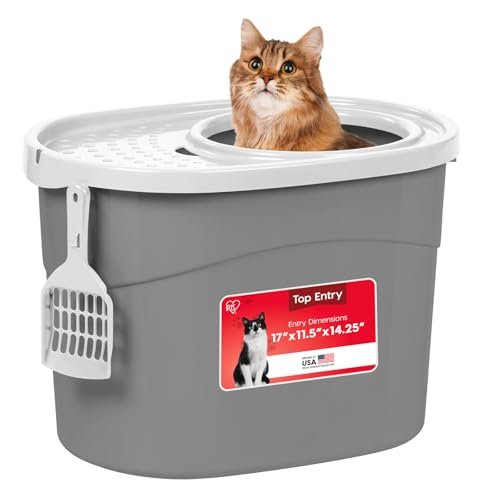
This gray and white IRIS USA box goes after tracking with a textured lid. When your cat jumps out, the surface pulls loose granules off its paws before they hit the floor. The hooded shell gives nervous cats some privacy and holds odors inside the box. It’s built from durable plastic, and the compact footprint slides into a laundry room or a tight bathroom corner.
The raised entry also puts off dogs. The lid comes off quickly for scooping, and the interior gives most cats room to turn around. Very large breeds may find it snug, so measure your cat first. The gray and white finish blends into most rooms.
How This Can Solve Your Problem
- ✓ Textured lid captures loose litter from paws
- ✓ Enclosed design keeps odors contained inside
- ✓ Elevated entry keeps curious dogs away
Important Considerations
- • May be too small for very large cat breeds
- • Requires lifting the lid to scoop
- • Plastic material requires regular washing
|
2
|
IRIS USA Top Entry Cat Litter Box, Hooded Privacy, Large, Beige |
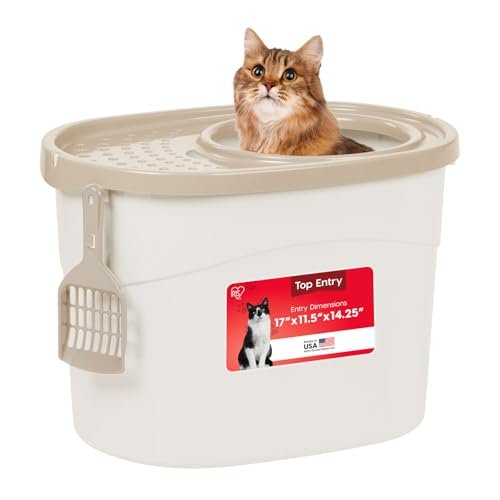
The beige IRIS USA box is made in the USA, according to its listing. Tall walls keep high-spraying cats from soaking your floor or wall, and the top entry gives your cat a private spot to go. Small holes in the lid work like a sifter, catching stray particles from paws before they scatter across the room.
A scoop with a hook comes in the box, so it hangs on the side and stays where you can find it. The interior is roomy for such a compact footprint, and the top-only entry blocks dogs. The neutral beige suits most rooms.
How This Can Solve Your Problem
- ✓ Integrated lid holes trap loose litter particles
- ✓ Includes a convenient scoop with storage hook
- ✓ Tall walls contain spraying and mess effectively
Important Considerations
- • Beige plastic may show stains over long-term use
- • Top entry might be difficult for senior cats
- • Requires consistent cleaning of the lid holes
|
3
|
Amazon Basics Large Cat Litter Box with High Sides, Top Entry |
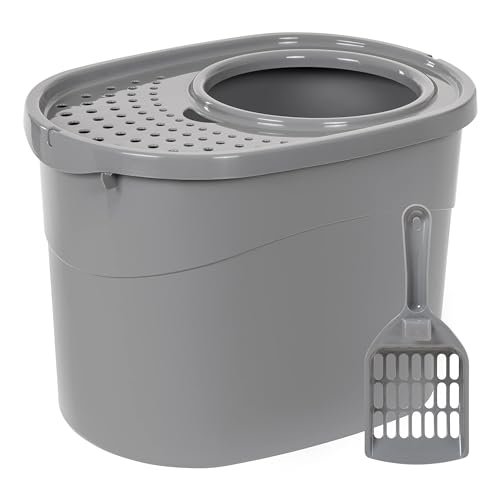
Amazon Basics makes a large top entry litter box with a filtered lid that catches granules as your cat exits, which saves you daily floor cleaning. The high sides hold in messes and help with odor. It’s made from durable, BPA-free plastic and comes in gray, a neutral color that fits most areas of the house.
The top cover is removable, so you can check the litter level and scoop without working around awkward angles. Onboard scoop storage keeps the tool with the box. Interior space is generous, and larger cats benefit most from that. The top entry also discourages dogs from getting in.
How This Can Solve Your Problem
- ✓ Filtered lid design traps litter scatter effectively
- ✓ Removable top allows for fast, easy scooping
- ✓ Includes convenient onboard storage for the scoop
Important Considerations
- • Gray plastic might show dust more clearly
- • Lid hinges require careful handling during cleaning
- • Large footprint needs appropriate floor space
|
4
|
Arm & Hammer Premium Top Entry Litter Box with Filter |
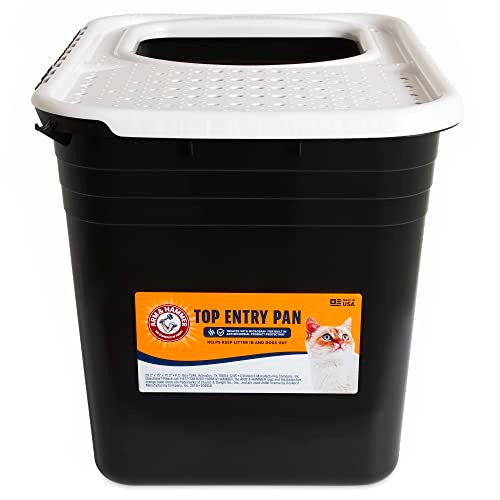
The Arm & Hammer Premium has high walls for privacy and a wide top entry sized for larger cats. A grated surface collects litter from paws as your cat climbs out. The unit includes Microban protection, which helps inhibit odors, and it’s made with recycled materials. It works with pine, crystal, and traditional clumping litter, so you don’t have to change your routine.
In a multi-pet home, the enclosed, high-sided design keeps dogs out of the litter. The usual guideline is a box about 1.5 times your cat’s length, and this model has the room to meet it. Plan on replacing it about once a year, since annual replacement is recommended for freshness.
How This Can Solve Your Problem
- ✓ Microban protection helps inhibit box odors
- ✓ Made from eco-friendly recycled materials
- ✓ Wide entry accommodates larger cat breeds
Important Considerations
- • Annual replacement recommended for freshness
- • Grates require regular cleaning to stay effective
- • Larger size may not fit in tiny bathrooms
|
5
|
IRIS USA Large Top Entry Cat Litter Box, Hooded Privacy, Beige/White |
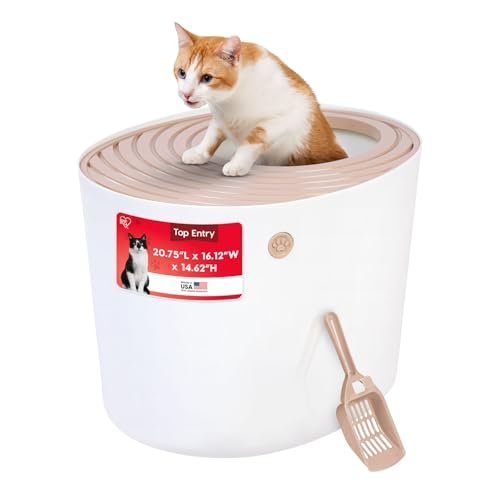
The large beige and white IRIS USA box has tall walls that hold in spraying and digging mess. Grooves in the lid catch litter clinging to paws as your cat jumps out, so the granules stay in the box instead of ending up on carpet or tile. The enclosed shape also offers the privacy some cats want, which can help with litter box habits.
The included scoop has a hook for hanging on the side of the box. The interior is roomy, the top entry deters dogs, and the neutral color scheme fits most rooms.
How This Can Solve Your Problem
- ✓ Grooved lid traps litter from cat paws
- ✓ Spacious interior accommodates most cat sizes
- ✓ Includes a hanging scoop for easy storage
Important Considerations
- • Beige and white finish shows dust
- • Requires lifting the lid for deep cleans
- • Larger footprint requires dedicated floor space
How to Cut Down Litter Tracking With Any Top Entry Box
The lid does most of the work, but only if the setup around it helps. A grated or textured surface catches granules as your cat walks across it. These steps keep that system working, whether you built the box or bought it:
- Put the box in a low-traffic area so your cat uses it consistently.
- Wipe the lid grooves or grate weekly. Clogged texture stops catching litter.
- Use a good clumping litter that makes less dust and smaller particles.
- Lay a small rug or mat under the box to catch anything that gets through.
- Scoop daily. A full box means more kicking and more tracking.
- Match the box to your cat’s size. A cramped cat jumps out too fast to shed litter on the lid.
If tracking continues, check the litter. Very fine, sandy litter clings to paws and slips through most lids. A heavier pellet or crystal variety usually helps.
What to Look For in a Top Entry Litter Box
Choosing a box means matching your cat’s size and body to the space in your home. Before anything else, decide whether your cat can jump in comfortably. The factors below apply to a DIY tote and a store-bought box alike.
Size and Dimensions
Measure your floor space, then measure your cat. A large cat needs enough room to turn around without touching the walls, and the box should run about 1.5 times your cat’s length. Check the manufacturer’s dimensions before you order.
Lid Design
Look for deep grooves, a grate, or a textured surface, because these pull litter off paws. A smooth lid won’t stop tracking.
Entry Opening
The opening should clear your cat’s shoulders and hips without a squeeze. Around a dinner plate in width suits many cats. Heavier cats need more.
Ease of Cleaning
A removable or hinged lid makes scooping faster. If the lid fights you, you’ll scoop less often, and that hurts odor control and your cat’s willingness to use the box.
Durability
Choose thick, BPA-free plastic that survives daily scooping and regular washing. Flimsy plastic cracks, and cracks trap odors that no amount of washing removes.
Top Entry Litter Box Maintenance Tips
Cats that dislike their box find other places to go, so placement and how often you scoop matter as much as the box itself. This schedule keeps a top entry box inviting:
| How often | Task |
|---|---|
| Daily | Scoop waste. A clean box keeps cats from kicking litter and tracking waste out. |
| Weekly | Wipe the lid grooves or grate so they keep trapping litter. |
| Monthly | Empty the box and wash it with mild soap. On a DIY box, also check the cut edge for cracks. |
| When needed | Replace the box once the plastic is scratched or stained. Scratches hold bacteria and odor that washing can’t reach. |
- Litter depth: Keep it at two to three inches. That’s enough to bury waste without encouraging heavy kicking.
- Location: Pick a quiet, easy-to-reach corner away from noisy appliances that might spook your cat.
- Watch for hesitation: If your cat avoids the top entry, they may need a slower introduction or a lower entry.
- One box per cat, plus one spare: A DIY tote costs little enough that a second one is easy to justify.
Consistency does the heavy lifting here. A box that’s clean and easy to reach gets used.
Common Mistakes With Top Entry Litter Boxes
Many owners fight tracking because they picked the wrong box for their cat‘s habits. Age and size trip people up most often. Avoid these:
- Ignoring cat mobility: Senior cats and cats with joint pain struggle to jump into a top entry box. Consider your cat’s physical ability before switching styles.
- Choosing the wrong litter: Fine, sandy litter tracks easily. Try a heavier, larger-particle litter to cut down on what sticks to paws.
- Neglecting the lid: The lid is the anti-tracking system. Clogged grates stop catching litter.
- Overfilling the box: Too much litter invites more kicking, and more kicking means more tracking. Stay near two to three inches.
- Underestimating size: A cramped cat may skip the box. A box that’s too small is a leading cause of accidents on the floor.
- Leaving a rough cut edge (DIY): An unsanded hole scrapes your cat and gives them a reason to avoid the box.
- Cutting the hole too small (DIY): Hips and shoulders need to clear the edge. Test with your cat before adding litter.
Quick Troubleshooting
| Problem | Likely cause | Fix |
|---|---|---|
| Cat won’t go in | Hole too small, or the box feels enclosed | Widen the hole, remove the lid for a few days, or cut a side opening. |
| Litter still reaches the floor | Fine litter, no grip layer, or too much litter | Switch to heavier litter, add a rug on the lid, and trim depth to 2 to 3 inches. |
| Box smells | Enclosed space, missed scooping, or scratched plastic | Scoop daily, add vent holes high on the sides, and replace a badly scratched tote. |
| Cat avoids the box after using it for months | Pain or a health issue | See your vet before changing anything else. |
Watch your cat for a week after any change and adjust from there.
Quick Summary
- DIY: Cut a 9 to 11 inch hole in a 16 to 20 gallon tote lid, sand the edge, and add 2 to 3 inches of litter. Skip it for senior cats and young kittens.
- This IRIS USA model uses a textured lid to trap litter and a high-walled design to contain odors, and its compact shape saves space.
See the gray IRIS box on Amazon - This beige IRIS USA box has a sift-style lid to capture particles and a scoop with a hook, so it handles tracking and keeps cleanup tools handy.
See the beige IRIS box on Amazon - The Amazon Basics box pairs a filtered lid with durable, BPA-free plastic and a removable top for quick scooping.
See the Amazon Basics box - Arm & Hammer’s premium box adds Microban protection and a grated entry, and it’s made with recycled materials.
See the Arm & Hammer box - This large IRIS USA box has grooves in the lid to catch litter, a roomy interior, and a hanging scoop.
See the large IRIS box
Frequently Asked Questions
How do you make a top entry litter box at home?
Trace a dinner plate on the lid of a 16 to 20 gallon plastic tote, about 2 inches from the back edge. Cut along the line, sand the edge smooth, and check the fit with your cat. Then add 2 to 3 inches of litter.
What size should the entry hole be?
Most cats do well with an 8 to 10 inch circle. Heavier cats may need about 11 x 10 inches. Pick your cat up and set them beside the hole before you finish sanding. If their shoulders and hips clear the edge easily, the size is right.
What’s the best container for a DIY top entry litter box?
A large tote made from flexible polypropylene, with a flat bottom, straight walls, and a lid that pops off. It should measure at least 1.5 times your cat’s length inside. Rigid, brittle plastic can crack when you cut it.
Can I use a cardboard box?
Only as a short test to see whether your cat likes a top entry. Cardboard soaks up urine and falls apart, so switch to plastic for real use.
Do cats like top entry litter boxes?
Many healthy adult cats do, especially ones that dig and value privacy. Seniors, kittens, and anxious cats often don’t. If yours hesitates, try the lid off for a few days or a second opening on the side.
Is a top entry litter box good for senior cats?
Usually not. Jumping in and out puts strain on stiff joints, so a box with a low entry of roughly 4 inches is a better choice. If your senior cat has started hesitating or missing the box, talk to your vet.
How long does it take a cat to get used to a top entry box?
Most cats adapt within a few days. Leaving the old box next to the new one during that time makes the switch easier. Once your cat is used to the new entry, you should see less tracking.
Do top entry litter boxes stop tracking completely?
No box stops it completely, but the lid cuts it down noticeably. A rug on the lid, heavier litter, and a clean grate close most of the gap.
Will a top entry litter box keep my dog out?
It stops most dogs. A big or determined dog may still get in, and one that camps on the lid can scare your cat. Place the box where the dog can’t reach it.
How often should I scoop and clean it?
Scoop daily and wash the whole box with mild soap once a month. Enclosed boxes hold odor, so skipping scooping shows up fast.
Is it worth buying a ready-made top entry litter box?
Yes, if you want a lid designed for tracking, a scoop that hangs on the box, and a cleaner look. If you’re unsure your cat will accept top entry, build the tote version first and buy later.

Written by Mishu
A passionate cat lover and indoor living enthusiast, Mishu is the founder and voice behind Indoor Living Cat – a go-to resource for cat owners who want to create the happiest, healthiest life for their feline companions indoors.
View Full Profile