
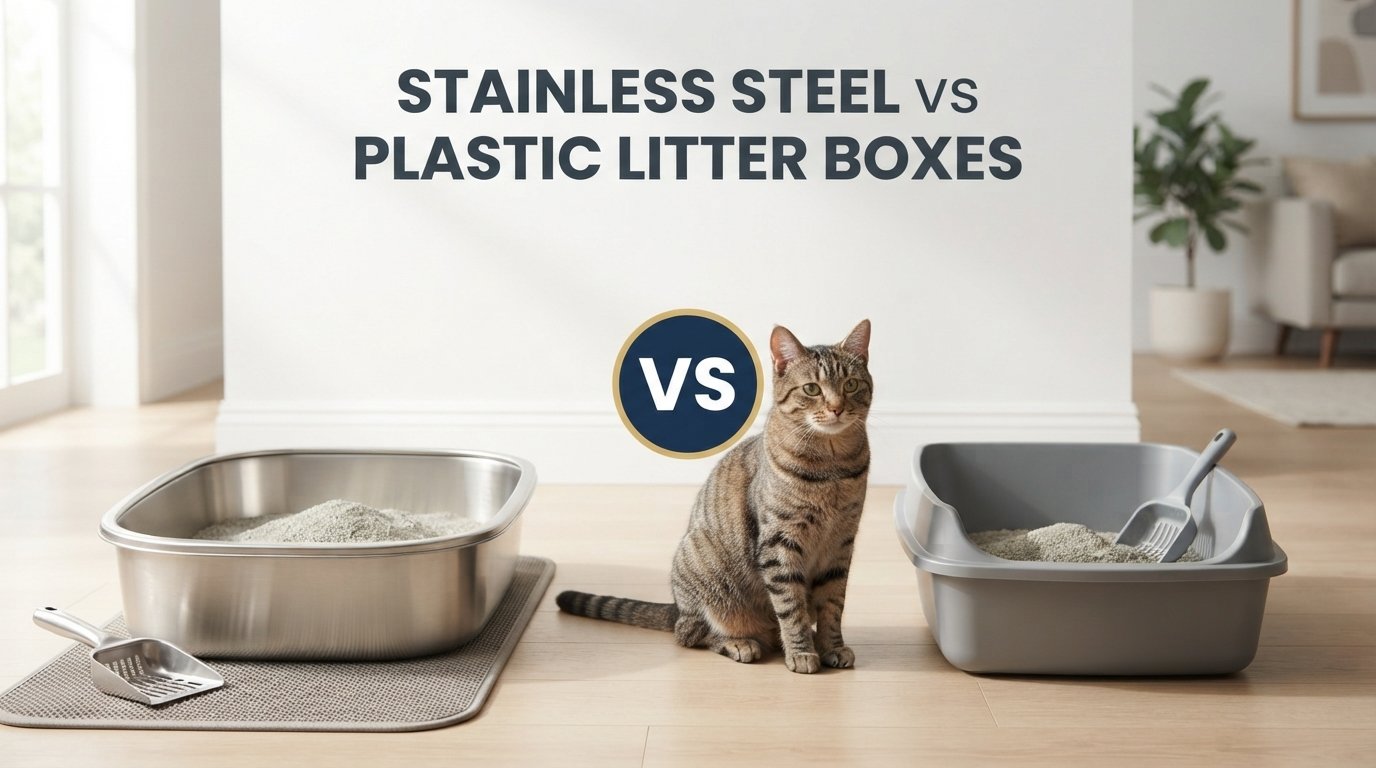
Stainless steel litter boxes beat plastic on two things that matter most, odor control and how long the box lasts. Steel is non-porous, so it doesn’t hold onto bacteria and smell the way scratched plastic does. Plastic still wins if you want something light and cheap on day one. Below is the real comparison, not the marketing pitch.
Short answer: Yes, stainless steel is the better material for most cat owners. It resists odor and outlasts plastic by years. Plastic still makes sense on a tight budget, for renters, or for cats bothered by the sound of digging on metal. The full breakdown, including which grade of steel actually matters, is below.
Stainless Steel vs. Plastic: Head-to-Head
Why Are Stainless Steel Litter Boxes Better Than Plastic?
Strip away the marketing and it comes down to what happens to the surface over time. Here’s the short version of why steel wins for most households:
- No scratches, no hiding spots. A smooth surface has nowhere for bacteria or odor to settle in.
- One wipe-down keeps working for years. Plastic loses effectiveness as scoops and claws wear it down.
- Seamless designs skip the weak points. A one-piece pan has no joints for urine to pool in, unlike multi-part plastic trays.
- 304-grade steel resists rust and pitting even in a box that stays damp between scoops.
- It replaces plastic’s usual 1 to 2 year cycle with something that can last considerably longer under normal use.
None of that means steel is perfect. It costs more upfront, it’s heavier, and it’s louder when your cat digs. Whether those tradeoffs matter to you is the real question, and we cover that further down.
Where Stainless Steel Actually Wins
Plastic litter boxes develop microscopic scratches from scoops and claws within months. Those scratches hold bacteria and odor that no amount of washing fully removes. That’s why an old plastic box smells bad right after you’ve cleaned it. Steel doesn’t have that failure point. It stays smooth, so the same quick weekly wipe-down keeps working instead of losing effectiveness as the box ages.
Not All Steel Boxes Are Equal: Check the Grade
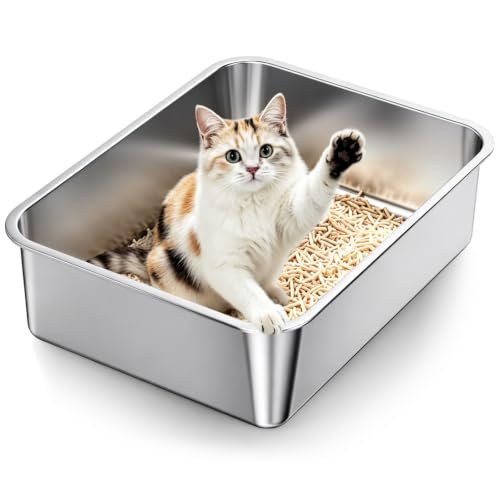
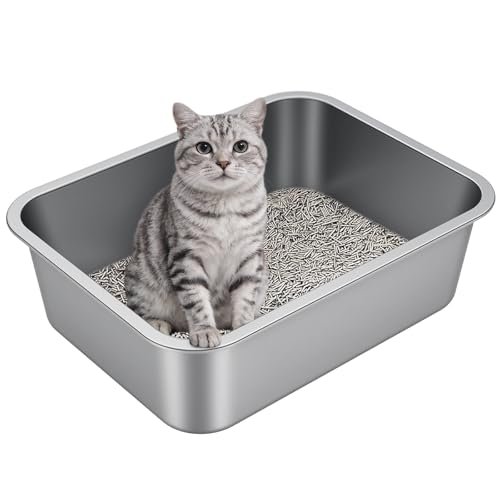
Most stainless steel litter boxes use 200 series or 304 grade steel. 304 costs more, but it has more chromium and nickel in the mix. That difference is why it resists rust and pitting so much better, especially in a box that sits damp between cleanings. Cheaper 200 series pans can show small rust spots within a year, often near seams or old scratches. If a listing doesn’t say what grade it uses, treat that as a small red flag, not a dealbreaker on its own.
Where Plastic Still Holds Its Own
This isn’t a one-sided comparison. Plastic boxes cost less upfront, weigh a fraction of what steel does, which matters if you move the box often to clean floors underneath, and digging sounds noticeably quieter on plastic than on metal. That can matter for sound sensitive cats or thin walled apartments. Deep scratches also make the surface harder to fully sanitize, which is part of why some owners replace a plastic box on a schedule instead of waiting for damage to show. The honest tradeoff: plastic wins on day one, steel wins over the life of the box. If you’re weighing whether the higher upfront cost actually pays off, we break down the full math in Are Stainless Steel Litter Boxes Worth It?
Design Matters As Much As the Material
Switching to steel solves only half the problem if the shape doesn’t fit your cat. Open boxes let air move, which helps with odor, but do little to stop litter scatter. Enclosed boxes contain mess and give shy cats privacy, though they can trap odor between scoops if you fall behind on cleaning. For placement, ventilation, and the rest of the setup beyond the box itself, our indoor cat litter box guide covers that ground.
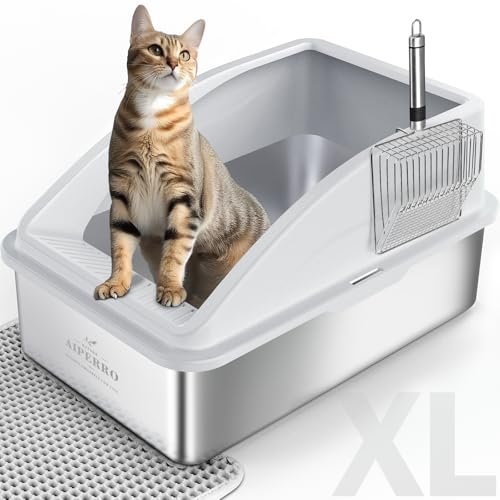
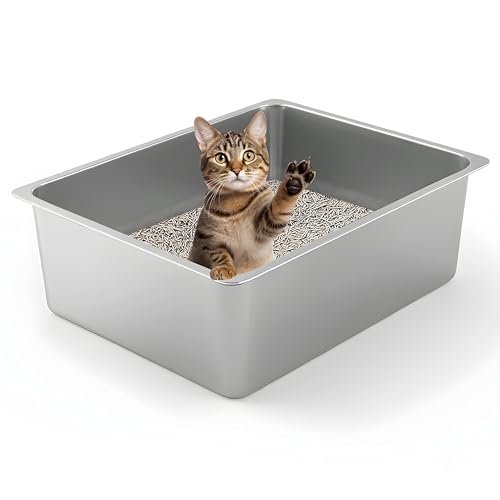
Still not sure which design fits your cat’s habits? Our full guide to choosing a stainless steel litter box goes through open versus enclosed, entry height, and multi-cat setups in more depth than this comparison covers.
Size and Access Still Determine Whether It Gets Used
A box that’s the better material but the wrong size still gets avoided. Kittens and senior or arthritic cats need low entry points no matter what the box is made of. Large cats need enough floor space to turn and dig without kicking litter over the walls.
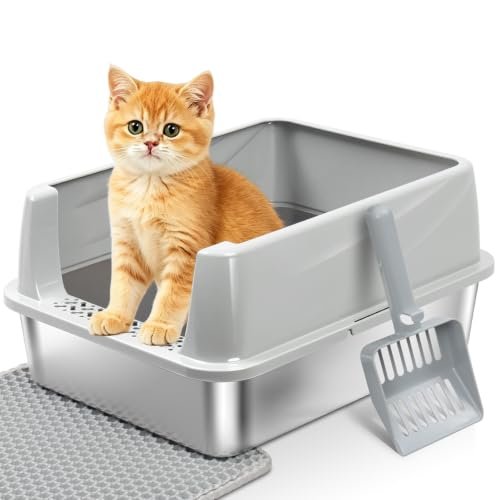
Not sure what dimensions fit your cat? Our guide on what size stainless steel litter box you need covers it in detail. This is one place where material matters less than getting the size right.
Do Cats Actually Like Stainless Steel Litter Boxes?
Material ranks low on a cat’s list of concerns. Box size, litter depth, how often you scoop, and where the box sits matter more to a cat than what the pan is made of. But material isn’t completely irrelevant either. Two things show up often enough to mention:
- Sound. Metal amplifies the scratch of digging paws. A cat used to a quiet plastic pan can hesitate the first few times, especially if they’re older or already skittish.
- Temperature. Steel feels cooler underfoot than plastic. Most cats never notice, but a few will avoid a cold box, particularly in an unheated room.
Neither one is a reason to skip steel outright, but they’re reasons to switch gradually instead of swapping the box overnight:
- Set the new steel box down next to the old plastic one instead of replacing it right away.
- Use the same litter and the same depth in both boxes so the only variable is the material.
- Scoop both daily. A cat won’t choose the cleaner box if you only maintain one of them.
- Remove the plastic box once your cat is using the steel one on its own. Most cats adjust within one to two weeks; seniors and particularly cautious cats can take longer.
Health and Hygiene: What the Material Means Day to Day
Scratched plastic is more than a smell problem. Bacteria and grime can build up in surface grooves that scrubbing can’t fully reach, and a box a cat considers dirty is one of the more common reasons cats start eliminating outside it. Steel doesn’t fix poor litter box habits by itself, you still need to scoop daily and wash it regularly, but it removes one of the places grime can hide in the first place.
Stainless Steel and Plastic: Pros and Cons at a Glance
If odor is your biggest complaint, steel solves that specific problem first. Our guide to stainless steel litter boxes for odor control goes deeper if that’s what’s driving your search. Here’s the short version for both materials.
Stainless Steel
- Pro: Won’t hold odor since scratches never really form on the surface.
- Pro: Lasts years longer than plastic under normal daily use.
- Pro: Wipes clean fast because waste doesn’t stick to smooth metal.
- Con: Costs more upfront than a basic plastic pan.
- Con: Heavier, so it’s less convenient to move for floor cleaning.
- Con: Digging sounds louder, which can bother sound sensitive cats.
Plastic
- Pro: Cheaper to buy and easy to replace.
- Pro: Light enough to carry and empty one handed.
- Pro: Quieter when a cat digs or scratches at it.
- Con: Scratches trap bacteria and odor within months of regular use.
- Con: Usually needs replacing every 1 to 2 years as the surface wears.
- Con: Can stain and warp faster in humid bathrooms or laundry rooms.
Myths That Muddy This Comparison
| ✗ | “Steel never needs deep cleaning”
It doesn’t absorb odor, but waste still sits on the surface until you scoop it. Steel means easier maintenance, not zero maintenance.
|
| ✗ | “Stainless steel never rusts”
High grade steel resists rust well, but thin or low grade steel can corrode if it stays wet repeatedly. See Do Stainless Steel Litter Boxes Rust? for what to actually watch for.
|
| ✗ | “All metal boxes are equally durable”
Seams and joints are weak points no matter the material. A one-piece steel pan is less likely to leak than a multi-part design.
|
| ✗ | “Steel is automatically unsafe for paws”
A common assumption, but most steel boxes have smooth, rounded edges built specifically to avoid this. We cover what to actually check in Are Stainless Steel Litter Boxes Safe for Cats?
|
| ✗ | “Cats hate stainless steel litter boxes”
Most cats adjust within a week or two. The ones who genuinely dislike it are usually reacting to the digging sound, not the material itself, and even that fades with time.
|
Quick Buying Checklist: Steel or Plastic?
- Multiple cats, or one cat with a strong odor problem? Lean steel.
- Tight budget or renting short term? Plastic is the practical choice.
- Cat is a kitten, senior, or easily startled? Introduce steel gradually rather than swapping the box overnight.
- Box lives in a humid bathroom or laundry room? Steel resists warping and staining better.
- Buying steel? Confirm it’s 304 grade before you check out.
- Want to buy once and be done for years? Steel pays for itself over time.
Which One Should You Pick: Steel or Plastic Litter Box?
If your main frustration is lingering odor, or replacing a warped, stained plastic box every year, stainless steel is the better material, full stop. If you’re on a tight budget, need to move the box often, or have a sound sensitive cat, plastic still has a real case. Match the design, open, enclosed, or hybrid, to your cat’s personality first, then choose steel or plastic within that shape. Our best stainless steel litter box roundup breaks down specific models by size and budget if you want more options than the three below.
Frequently Asked Questions
Are stainless steel litter boxes actually better than plastic?
For odor control and long term hygiene, yes. Plastic still wins on upfront cost and weight, so the better choice depends on which tradeoff matters more to you.
Why are stainless steel litter boxes better than plastic?
Mainly because the surface stays smooth. Plastic develops microscopic scratches within months that trap bacteria and odor no amount of scrubbing removes. Steel doesn’t scratch the same way, so a wipe-down keeps working for years instead of losing effectiveness as the box ages. It also resists staining, warping, and cracking better than plastic does.
Do stainless steel litter boxes smell less than plastic?
Generally yes. Plastic develops microscopic scratches over time that trap bacteria and odor no amount of washing fully removes. Steel’s smooth surface doesn’t absorb odor the same way.
Is stainless steel more durable than plastic litter boxes?
Yes. Quality stainless steel resists cracking, staining, and scratching far better than plastic, which typically needs replacing every 1 to 2 years as the surface wears down.
Is stainless steel more expensive than plastic?
Upfront, yes. Over 2 to 3 years, the cost often evens out or favors steel, since plastic boxes get replaced more often.
Do cats like stainless steel litter boxes?
Most cats don’t care about material as much as owners expect. Box size, litter depth, and cleanliness matter more than what the pan is made of. A few cats hesitate at first because digging sounds louder on metal or the surface feels cooler underfoot, but most adjust within one to two weeks when you introduce the new box gradually.
Do cats prefer stainless steel or plastic litter boxes?
There’s no clear species-wide preference. Box size, shape, and cleanliness matter more to most cats than the material. Some cats do avoid metal because digging sounds louder on it.
What grade of stainless steel is best for a litter box?
304 grade is the safer bet. It has more chromium and nickel than 200 series steel, which resists rust and pitting much better in a box that stays damp between cleanings.
Are stainless steel litter boxes heavier to clean?
The box itself is heavier to lift and dump than plastic. But the surface wipes clean faster because waste and litter don’t stick to smooth metal the way they do to scratched plastic.

Written by Mishu
A passionate cat lover and indoor living enthusiast, Mishu is the founder and voice behind Indoor Living Cat – a go-to resource for cat owners who want to create the happiest, healthiest life for their feline companions indoors.
View Full Profile