
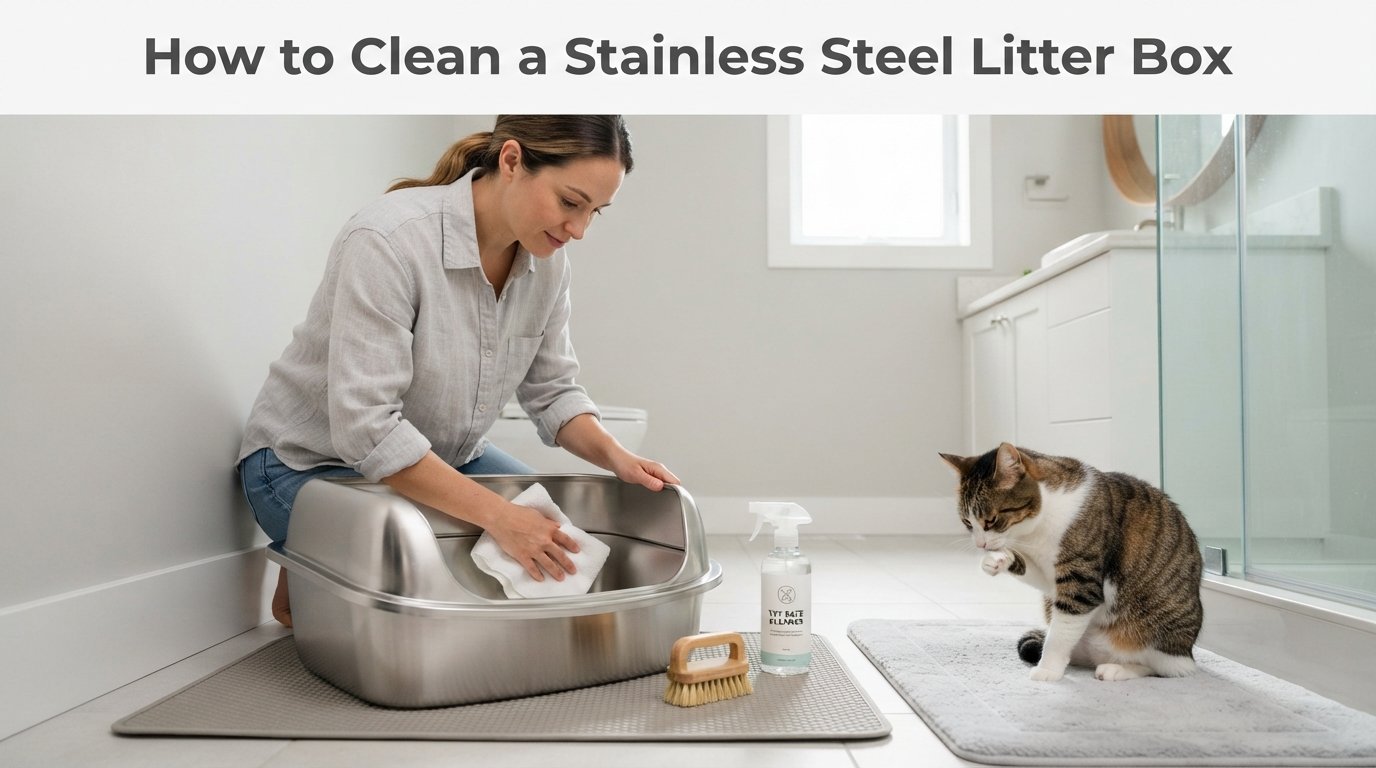
Stainless steel litter boxes are easier to clean than plastic. Easier doesn’t mean no work, though. Skip a real routine for how to clean a stainless steel litter box and grime, bacteria, and odor still build up, even on steel. Here’s the actual schedule that keeps a steel box hygienic, the mistakes that undo the material’s advantages, and what to reach for when soap and water alone stop cutting it. (If you haven’t picked an indoor cat litter box yet, start there first.)
Quick answer: Scoop waste daily, wipe the pan with mild soap and water each week, and do a full vinegar deep clean once a month (every two weeks for multi-cat homes). Reach for an enzyme cleaner only if odor lingers after that. Skip bleach for daily use, never mix bleach with vinegar, never scrub with steel wool, and dry the box fully before adding fresh litter.
What You’ll Need to Clean a Stainless Steel Litter Box
- A metal or sturdy plastic litter scoop
- Mild dish soap (unscented is best; strong fragrances can push cats away from the box)
- White vinegar, diluted 1:1 with water, for the monthly deep clean
- A soft microfiber cloth or non-abrasive sponge
- Rubber gloves
- A second container or bag to hold litter temporarily during deep cleans
- Baking soda (optional), useful for stubborn urine stains
- An enzyme-based pet odor remover (optional), for urine smell that survives a normal wash
- Household bleach, diluted, for occasional disinfecting only, never combined with vinegar
Box size changes how long this routine takes. A larger pan means more surface to wipe and more vinegar solution per deep clean. Not sure your current box is even the right size for your cat? Our guide on what size stainless steel litter box you need walks through it.
What Causes Odor in a Stainless Steel Litter Box
Steel doesn’t soak odor into the material itself, so a smell usually comes from somewhere else. Urine breaks down into ammonia within a day or two, and it gets sharper the longer waste sits in the box. A few things push a steel box toward smelling worse than it should:
- Litter left too long between scoops
- A lid or carbon filter that hasn’t been washed
- Moisture trapped in seams or corners after cleaning
- Lower-quality litter that doesn’t lock in ammonia well
- Uric acid crystals from old urine, which soap and vinegar can’t fully break down once they’ve dried in
If odor control is the main reason you switched to steel, box shape matters as much as the material. Our page on stainless steel litter boxes for odor control breaks down which designs actually cut smell instead of trapping it.
How to Clean a Stainless Steel Litter Box: The 3-Step Routine
| Task | Frequency | Time Needed |
|---|---|---|
| Scoop clumps and waste | 1 to 2 times daily | 1 to 2 minutes |
| Wipe down with soap and water | Weekly | 5 to 10 minutes |
| Deep clean and disinfect | Monthly (every 2 weeks for multi-cat homes) | 15 to 20 minutes |
1. Daily: Scoop
Remove clumps and solid waste at least once a day. Twice a day works better for multi-cat homes. Steel’s smooth surface lets clumps lift off clean, without the residue that scratched plastic leaves behind, but only if you scoop before waste dries onto the surface. Shake the scoop to sift out clean litter, then return it to the box. Rinse the scoop itself under hot water once a week too; it sits in the box all day and carries just as much bacteria as the pan does.
2. Weekly: Wipe Down
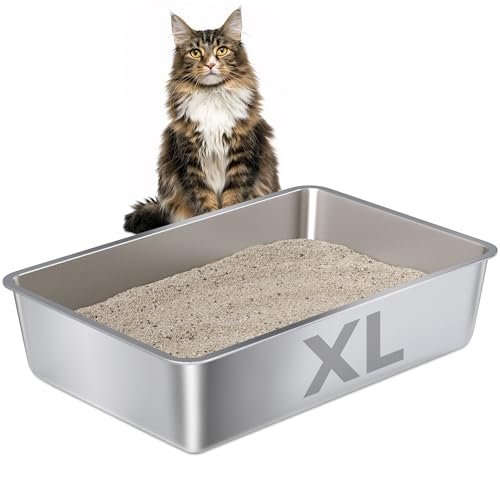
Once a week, empty the box, set aside litter that’s still clean, and rinse with warm water. Wash the inside with a soft cloth and a small amount of mild dish soap. Rinse well, since soap residue can irritate paws and discourage use, then let the box air dry before you add fresh litter.
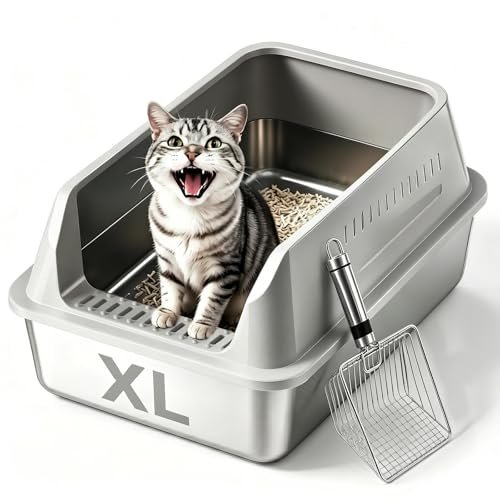
Have an enclosed or lidded box? Wipe the lid and any filter panel too. Trapped humidity inside a closed box causes most odor problems, not the steel itself.
3. Monthly: Deep Clean and Disinfect
Once a month, empty the box fully and wash it with warm soapy water. Then wipe the whole interior with a mix of equal parts white vinegar and water. Vinegar cuts through mineral deposits and urine buildup that soap alone leaves behind, without harsh chemical residue. Let the solution sit a few minutes before you rinse.
Rinse with clean water and dry the box completely: towel first, then 20 to 30 minutes of air drying, before you refill it. Moisture stuck in seams and corners is where bacteria and odor actually take hold, and over time it can also lead to surface corrosion on lower-grade steel. If you’ve noticed spotting or discoloration, our guide on whether stainless steel litter boxes rust explains what’s normal and what isn’t.
If the box still smells after all that, vinegar has hit its limit. That’s when an enzyme cleaner earns its place in the routine, see the comparison below.
Tip: For a stubborn urine stain, mix baking soda with a little water into a paste. Rub it on the stain, let it sit for 10 minutes, then rinse. It lifts marks that vinegar alone leaves behind.
Vinegar, Enzyme Cleaner, or Bleach: Which One to Use
These three get recommended for litter box cleaning constantly, and they’re not interchangeable. Each one does a different job, and picking the wrong one wastes time or leaves smell behind.
| Cleaner | Best For | How to Use | Watch For |
|---|---|---|---|
| White vinegar (1:1 with water) | Routine monthly deep cleans, mineral film, mild odor | Wipe on, let sit 5 minutes, rinse fully | Doesn’t break down dried uric acid crystals; it neutralizes, not disinfects |
| Enzyme-based cleaner | Urine odor that comes back after washing, older boxes with years of buildup in seams | Apply full strength to a clean, dry box, let it air dry rather than wiping it off right away | Costs more than vinegar; check the label says it’s safe on metal before you buy |
| Diluted bleach (about 1:32 with water) | Occasional deeper disinfecting, especially after illness or bringing home a new cat | Ventilate the room, apply, rinse until no smell remains | Fumes bother cats; not for weekly use; never mix with anything acidic |
Safety note: Never mix bleach and vinegar, or bleach and any other acidic cleaner, in the same session. The combination releases chlorine gas, which is dangerous to breathe in a small bathroom or laundry room. Rinse the box completely and let it dry before switching from one cleaner to the other.
What to Avoid
| ✗ | Steel wool or abrasive scouring pads
Even stainless steel can scratch. Scratches trap bacteria and give future waste something to stick to, the exact problem a smooth steel surface is supposed to avoid.
|
| ✗ | Frequent bleach use
Bleach is safe for stainless steel now and then, and it rinses off completely, but the fumes bother cats and repeated use isn’t necessary. Vinegar and soap handle routine maintenance fine. If you do use it, dilute it, open a window, and rinse until no smell remains. For more on what’s actually safe around your cat, see Are Stainless Steel Litter Boxes Safe for Cats?
|
| ✗ | Ammonia-based cleaners
Ammonia is one of the breakdown products of urine, so cleaning with it can leave a scent trail that reads to your cat as “this is where I pee.” Stick to soap, vinegar, or an enzyme cleaner instead.
|
| ✗ | Refilling while damp
Adding litter to a wet box makes it clump against the sides and rebuilds the bacterial environment you just cleaned away.
|
| ✗ | Ignoring the lid and filter on enclosed boxes
Odor complaints about “smelly” steel boxes almost always trace back to a lid or carbon filter that hasn’t been cleaned, not the steel pan itself.
|
| ✗ | Scented or heavily fragranced cleaners
A cat’s sense of smell is far sharper than ours. A soap that smells mild to you can be strong enough to make a cat skip the box entirely. Stick to unscented products.
|
Why Stainless Steel Is Easier to Clean Than Plastic
Plastic litter boxes pick up microscopic scratches from scoops and claws within months. Bacteria and odor settle into those scratches, and no amount of washing fully clears them out. That’s why an old plastic box smells bad again within days of a full clean. Steel resists scratching, has no pores for odor to seep into, and keeps working the same way after years of use, so the same weekly wipe-down never loses its effect. We go deeper on this comparison in Are Stainless Steel Litter Boxes Better Than Plastic?
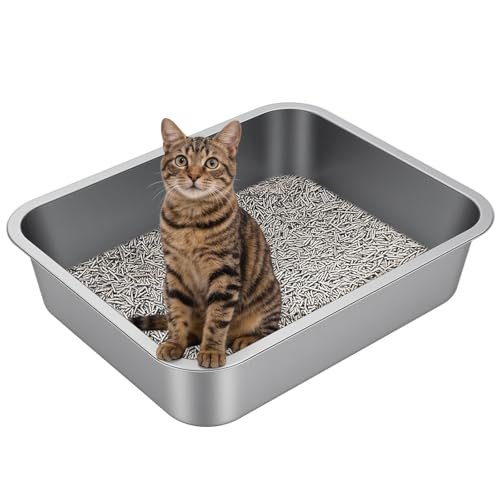
Not all steel boxes perform the same, though. Gauge thickness, seam welding, and finish quality change both how long a box lasts and how easily waste releases from the pan. The Idymere Large High Sided Stainless Steel Cat Litter Box is a solid example of this done well. Its smooth, high-sided pan with rounded edges makes lifting and washing more comfortable during the routine above.
Signs Your Box Needs Replacing, Not Just Cleaning
A good routine keeps a steel box working for years. It can’t fix a box that’s already damaged. Watch for these before you assume another deep clean will solve the smell:
- Rust spots that come back within a week or two of drying the box
- Scratches deep enough to catch a fingernail
- Seams that have started to separate or pull apart at the corners
- A smell that survives a full vinegar wash and an enzyme treatment
- Dents deep enough to hold standing liquid after you rinse
Any one of these means bacteria has a permanent foothold that cleaning products can’t reach. Our guide on whether stainless steel litter boxes rust covers how to tell surface staining from actual corrosion, and how to choose a stainless steel litter box covers what gauge and finish to look for the second time around.
Is the Extra Cleaning Worth It? A Quick Decision Guide
Stainless steel asks more of you upfront and less of you long term. Here’s the trade-off in plain terms:
What you gain:
- No scratch marks that hold onto smell
- A pan that survives years of daily scooping
- Faster cleanup once the weekly routine is set
What it costs you:
- A full dry cycle after every deep clean, plastic forgives a rushed rinse
- A higher price than most plastic boxes
- A metallic clank some cats need time to get used to
Still weighing whether to switch? Our full breakdown of whether stainless steel litter boxes are worth it covers cost against upkeep, and how to choose a stainless steel litter box covers size, shape, and depth beyond just the material.
Looking at specific boxes instead of cleaning the one you own? We compare the top picks, including this one, in our full best stainless steel litter box guide.
Frequently Asked Questions
Can I use bleach to clean a stainless steel litter box?
Occasionally, yes. Stainless steel tolerates diluted bleach well. Use it sparingly, ventilate the area, and rinse thoroughly until no odor remains, since bleach fumes can put cats off the box. Never mix it with vinegar or another acidic cleaner in the same cleaning session.
How often should I deep clean the litter box?
Once a month for most households. Every two weeks if you have multiple cats or the box sits in a low-ventilation spot like a closet or bathroom.
Should I use vinegar or an enzyme cleaner?
Use vinegar for the regular monthly deep clean; it handles mineral film and everyday odor well and costs almost nothing. Reach for an enzyme cleaner only when smell lingers after a full vinegar wash, since that usually means dried uric acid crystals in a seam or scratch that vinegar can’t fully break down.
Why does my stainless steel box still smell after cleaning?
Usually one of three causes: the box wasn’t fully dried before refilling, a lid or carbon filter needs cleaning, or the litter itself needs changing more often than the box gets washed. If none of those fit and the smell keeps returning, check the box for scratches or a separating seam; damage can hold odor no amount of cleaning will clear.
Do stainless steel litter boxes rust?
Good-quality stainless steel resists rust indefinitely. Thin, low-grade steel can develop surface corrosion over time if it’s left wet or scratched repeatedly, which is why drying the box after cleaning matters.
What’s the best soap for a stainless steel litter box?
Mild, unscented dish soap works best. Skip citrus or heavily fragranced cleaners; strong scents can push a cat away from the box.
Can I put a stainless steel litter box in the dishwasher?
Most are too large or have seams that trap water, so hand washing is safer. A few smaller pans are dishwasher safe; check the manufacturer’s care instructions first.
Is a litter mat necessary with a steel box?
It helps. Steel’s smooth surface means litter tracks off paws easily, but a mat at the entrance still catches most of the scatter before it reaches your floor.
How many litter boxes do I need for multiple cats?
The standard rule is one box per cat, plus one extra. Two cats means three boxes. It’s not just about odor: cats often refuse to share a box, and crowding too many cats onto too few boxes is one of the more common reasons for accidents outside the box, no matter how clean that box is.

Written by Mishu
A passionate cat lover and indoor living enthusiast, Mishu is the founder and voice behind Indoor Living Cat – a go-to resource for cat owners who want to create the happiest, healthiest life for their feline companions indoors.
View Full Profile