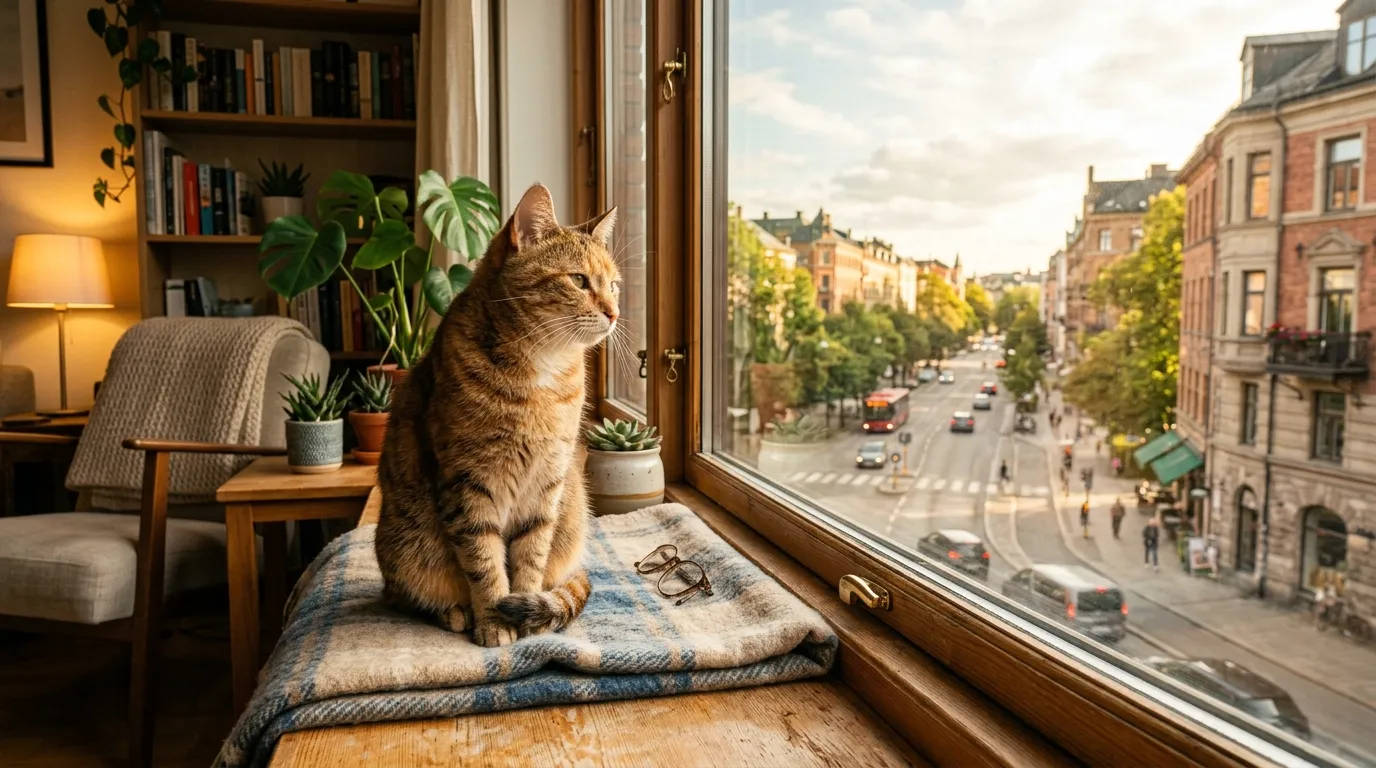
The first time someone asked me if keeping a cat indoors was cruel I did not have a good answer. My cat had lived inside her whole life, seemed perfectly happy and had never tried to escape through an open door. But the question stuck with me. I started paying closer attention and what I found was that the answer is not as simple as yes or no. Whether it is cruel to keep a cat indoors depends almost entirely on what the indoors looks like. A bare apartment with nothing to do is a different thing entirely from a well-enriched space that meets every instinct a cat has. This article gives you the honest answer and the specific conditions that determine which side of that line your cat is on.
No, it is not cruel to keep a cat indoors provided the environment meets the cat’s physical and behavioral needs. Indoor cats live an average of 12 to 18 years compared to 2 to 5 years for outdoor cats. The indoor life becomes a welfare problem only when enrichment is absent. With the right setup an indoor cat is protected rather than deprived.
Is It Cruel to Keep a Cat Indoors? What the Evidence Actually Says
Keeping a cat indoors is not cruel by definition and the scientific evidence supports this clearly. The question assumes that outdoor access is inherently natural and therefore better. Domestic cats evolved alongside humans over thousands of years and the cats that thrive best today are often those raised entirely indoors from kittenhood with no experience of outdoor life to miss.
Lifespan data makes the strongest case. Indoor cats live an average of 12 to 18 years. Free-roaming outdoor cats average 2 to 5 years in most urban and suburban environments. That gap does not exist because indoor cats are pampered to excess. It exists because outdoor cats face traffic, predators, infectious disease, parasites, territorial fighting and exposure to toxins daily.
The welfare concern is not the indoors itself. It is what the indoors contains. According to the American Association of Feline Practitioners, an indoor cat’s welfare depends on whether its environment provides outlets for its five core behavioral needs: hunting, climbing, hiding, scratching and social interaction. An apartment that provides all five is not cruel. An apartment that provides none of them is.
What Cats Actually Need That Has Nothing to Do With Being Outside?
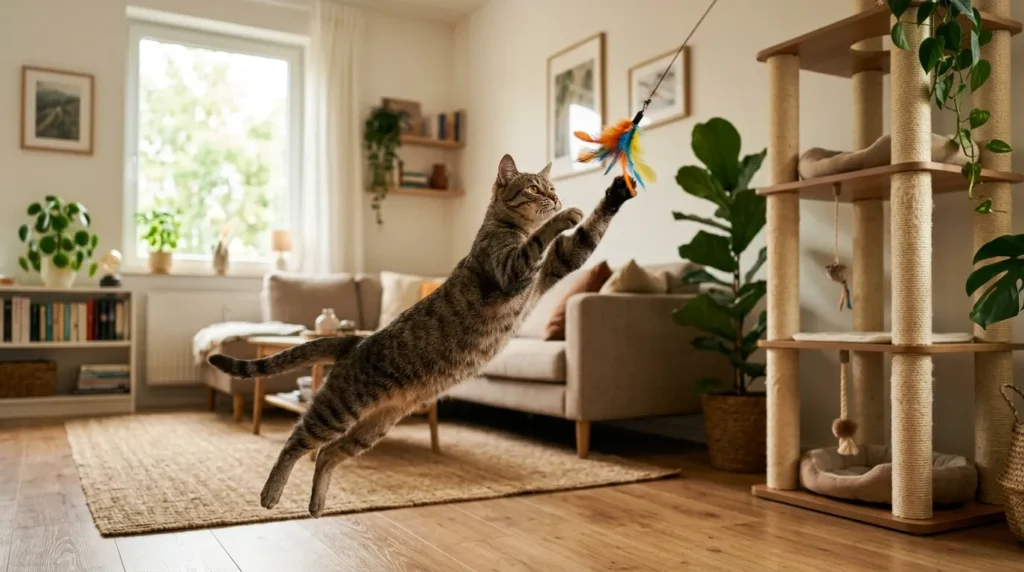
The behaviors people assume cats need outdoor space for are actually behaviors cats need outlets for regardless of location. Hunting does not require a garden. It requires daily interactive play with a toy that moves like prey. Climbing does not require trees. It requires vertical structures inside the home. Territorial exploration does not require a yard. It requires novelty and a space that changes enough to keep the brain engaged.
Instinctual behaviors in cats are driven by neurology not geography. A cat that has never been outside does not experience a longing for grass or open space the way a formerly outdoor cat might. It experiences a drive to stalk, chase, climb and claim territory. Those drives are entirely satisfiable within four walls when the owner understands what they are actually providing for.
 The cat that tears through the apartment at dawn is not doing so because it needs to go outside. It is doing so because it has a full tank of hunting energy and nowhere to put it. Give that same cat a ten-minute wand play session before bed followed immediately by food and the dawn chaos stops. Same cat. Same apartment. Different outcome because one variable was correctly identified and addressed.
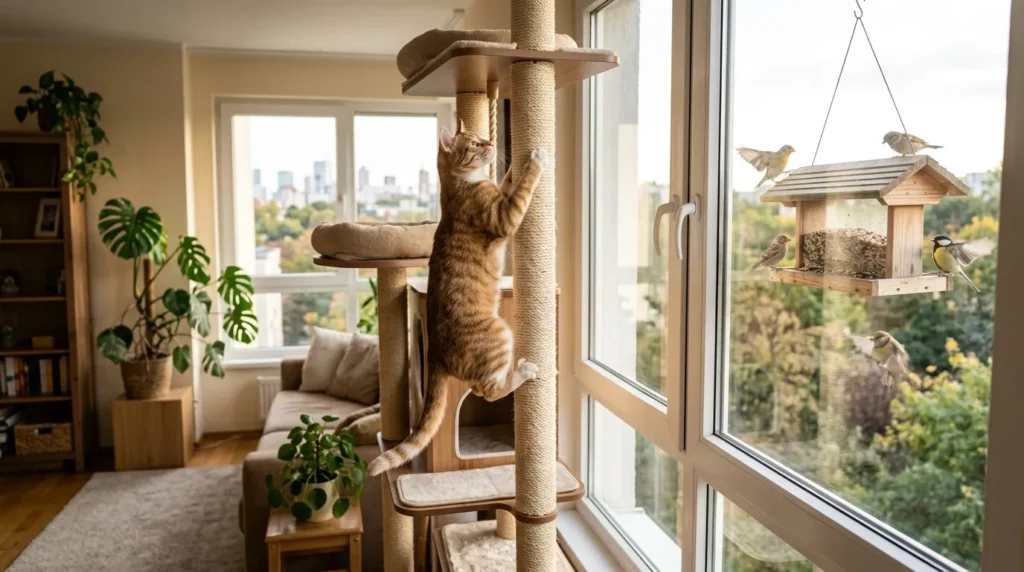
I have met cats kept in enormous houses with garden access that were genuinely miserable because their owners assumed the space was doing the work. Space without stimulation is just more room to pace. A small apartment with daily play, a cat tree and a window bird feeder gives a cat more of what it actually needs than a large home where it is left alone all day with nothing to engage its brain.
When Keeping a Cat Indoors Does Become a Welfare Problem
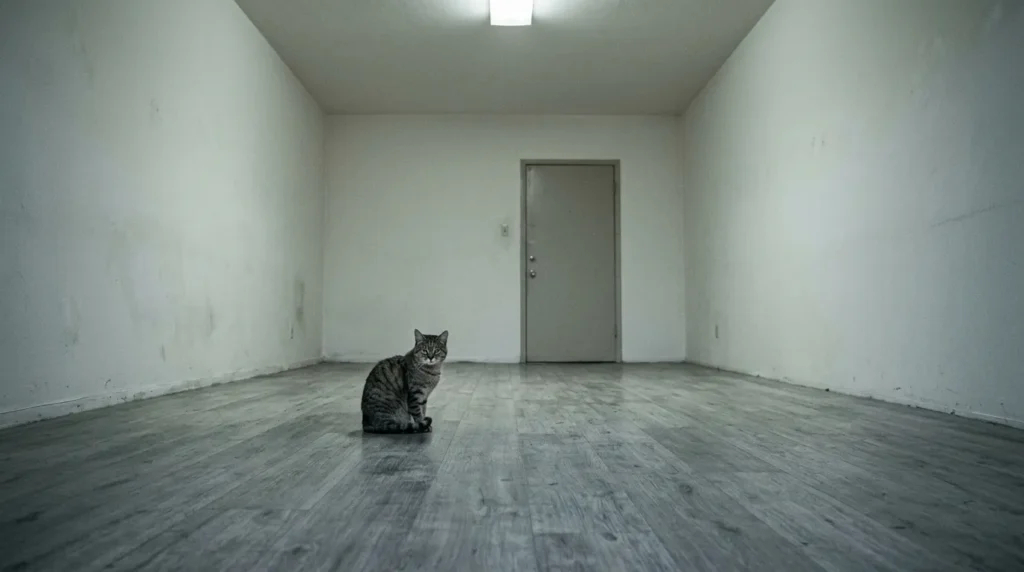
Keeping a cat indoors becomes a genuine welfare problem when the environment fails to meet its behavioral needs consistently over time. This is not a theoretical concern. It produces measurable physical consequences including obesity from inactivity, stress-related bladder disease, psychogenic hair loss from chronic anxiety and a shortened lifespan despite the absence of outdoor risks.
The specific conditions that make indoor life inadequate are identifiable. No interactive play means the hunting drive has no outlet. No vertical space means the cat has no territorial security or escape from ground-level stressors. No hiding spots means the cat cannot regulate its own arousal. No routine means the environment is unpredictable in a way that sustains chronic low-level stress.
Environmental deprivation in cats is defined as a persistent failure to provide conditions that allow a cat to perform its species-typical behaviors. It produces behavioral symptoms that look like personality but are not. A cat that has been environmentally deprived for years often appears calm and compliant because it has stopped trying to engage. That is not contentment. That is learned helplessness.
The Cats That Struggle Most With Indoor Life and Why?
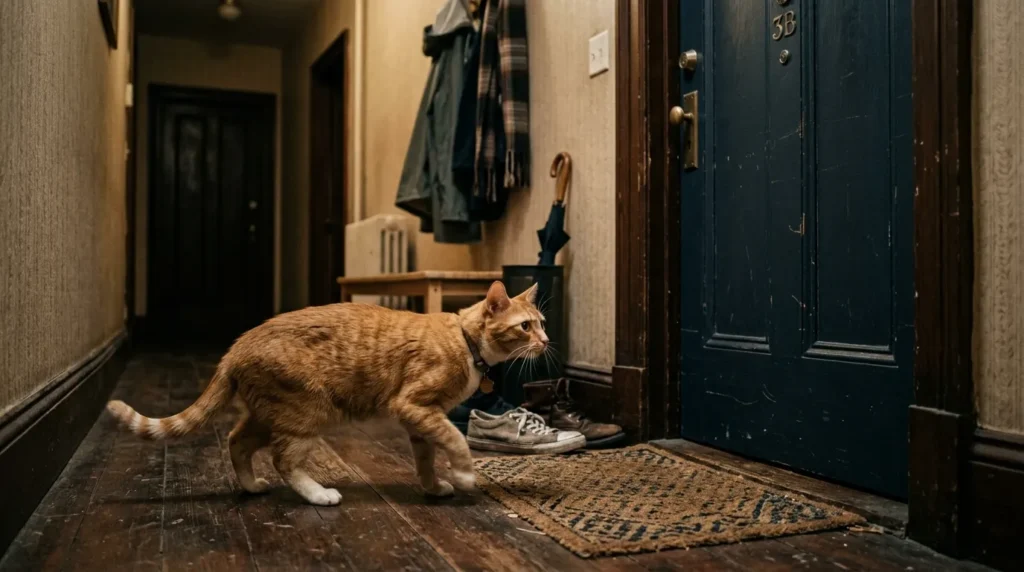
Not all cats adapt to indoor life with equal ease and understanding this matters. A cat raised indoors from kittenhood has no reference point for outdoor life and no established outdoor territory to feel separated from. For these cats the indoor environment is simply the world and they navigate it without the comparison that produces frustration.
A formerly outdoor cat brought inside as an adult is a different situation entirely. This cat has established patrol routes, scent marks across real territory and behavioral patterns built around outdoor activity. Transitioning this cat to indoor-only living requires deliberately building indoor territory from scratch and providing significantly higher stimulation levels than a cat that has never been outside would need.
High-energy breeds require specific acknowledgment. A Bengal, Abyssinian or Maine Coon has significantly higher baseline activity and stimulation requirements than a Persian or British Shorthair. A high-energy breed in an under-enriched indoor environment experiences a welfare deficit much faster than a calmer breed in the same conditions. Matching enrichment to the cat’s actual energy requirements determines whether indoor life works for that specific animal.
How to Make Indoor Life Genuinely Good Rather Than Just Safe?
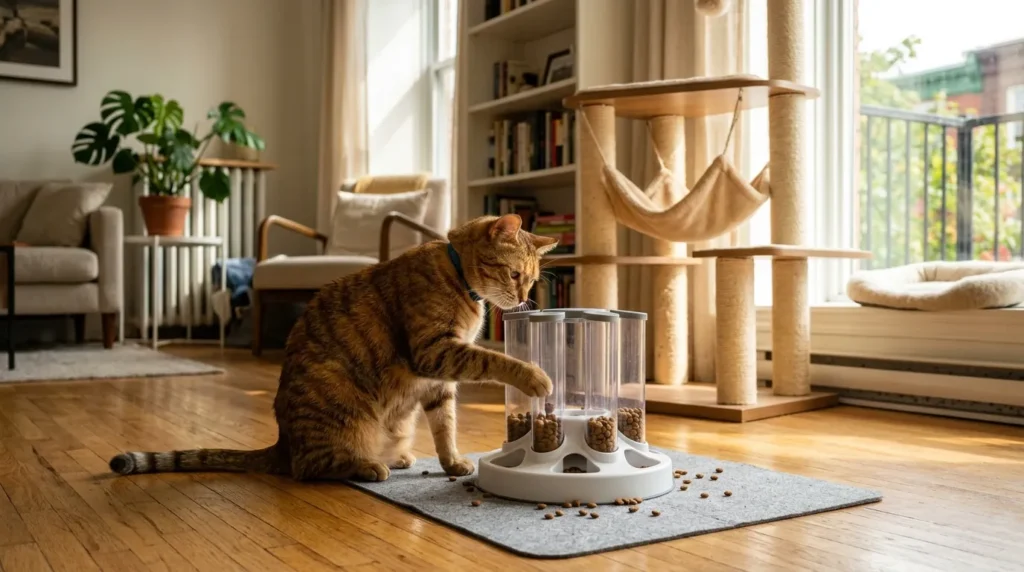
Making indoor life genuinely good rather than merely safe requires addressing the cat’s behavioral needs with the same seriousness as its physical ones. Food water and a clean litter box are the floor not the ceiling. A cat whose physical needs are met but whose behavioral needs are ignored is fed and sheltered but not well.
Interactive play for at least fifteen to twenty minutes daily is non-negotiable for an indoor cat in the same way that food is non-negotiable. It satisfies the hunting drive that has no other outlet and it is the single intervention with the most measurable impact on indoor cat behavioral health. Two sessions of ten minutes each fit into any schedule and prevent the majority of behavioral problems that lead owners to question whether keeping a cat inside was the right decision.
 A catio or enclosed balcony space bridges the gap between indoor safety and outdoor sensory experience for cats that seem restless despite good indoor enrichment. It provides fresh air, natural sounds, outdoor scents and visual complexity without the risks of free roaming. For cats that previously had outdoor access it is often the most effective transition tool available.
The goal is not to recreate the outdoors inside. The goal is to meet the specific needs that outdoor access happens to meet through other means. A bird feeder outside a window meets the visual stimulation need. A wand toy meets the hunting need. A cat tree meets the climbing need. Once you understand what each outdoor experience was providing you can replicate the function without replicating the location.
What Happens When Indoor Life Is Not Working?
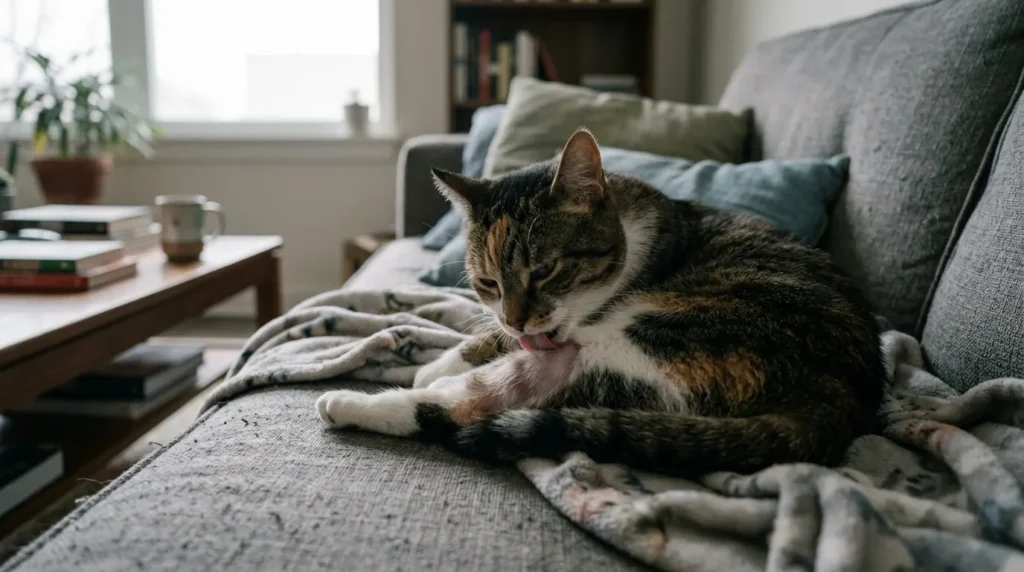
A cat that is not coping with indoor life shows it through behavior before any physical symptom appears. The behavioral signals arrive in sequence over weeks or months and most owners do not connect them to the environment because they arrive gradually rather than all at once.
Watch for a cat that stops using rooms it previously occupied freely, reduces its activity level significantly over several weeks or begins vocalizing more than it did before with no obvious trigger. These are early signals that the environment is not meeting needs rather than signs of illness though illness should always be ruled out first.
Over-grooming to the point of bald patches, repeated litter box avoidance in a previously reliable cat and unprovoked aggression toward owners or housemates are all late-stage signals that the indoor environment has been failing the cat for some time. Environmental changes need to be implemented systematically at this stage and a vet consultation should confirm no underlying physical cause is contributing.
This article is for informational purposes only. Always consult your vet if you have concerns about your cat’s health.
The Guilt-Driven Mistakes That Make Indoor Life Worse
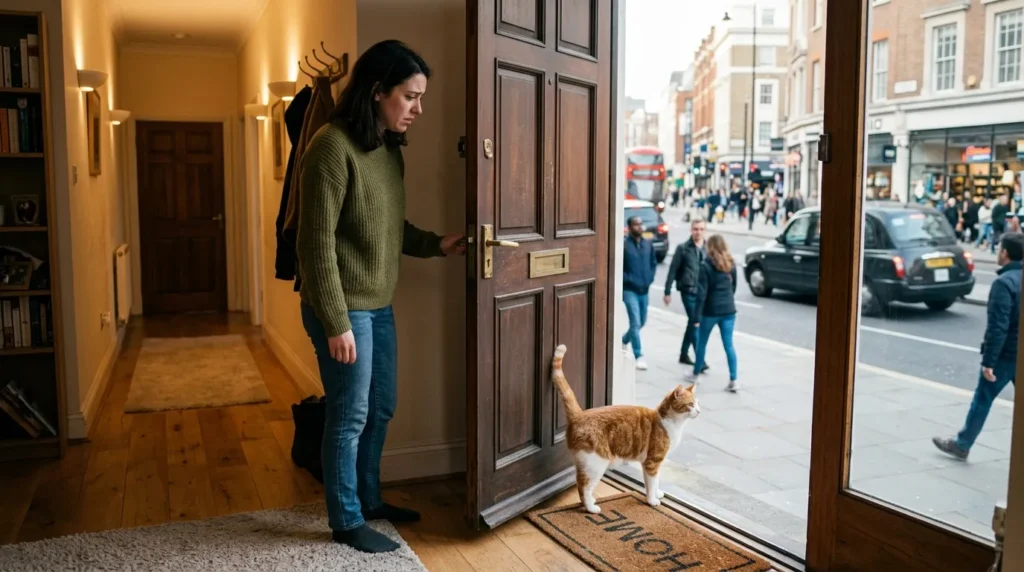
The most counterproductive response to questions about indoor cruelty is letting a cat outside unsupervised because of guilt rather than because the outdoor environment is actually safe. Guilt is not a welfare assessment. A cat let onto a busy street because its owner feels bad about keeping it inside has not had its welfare improved. It has been put at risk by an emotional response that bypassed rational evaluation.
The second mistake is adding toys and furniture without changing how the owner interacts with the cat. A cat tree nobody plays near and puzzle feeders the owner forgets to set out do not add meaningful enrichment. Enrichment requires consistent use not just presence. The cat does not automatically know what to do with a new object without interaction and reward.
The third mistake is assuming that a quiet calm cat confirms the environment is adequate. Cats do not consistently signal dissatisfaction the way dogs do. A cat that has adapted to an under-enriched environment often becomes quieter less active and less engaged over months. That looks like settling in. It is actually slow behavioral decline that reverses when enrichment is added.
Frequently Asked Questions About Keeping Cats Indoors
Is it cruel to keep a cat indoors all its life?
No, provided the environment meets the cat’s behavioral needs through daily play, climbing opportunities, hiding spaces and sensory variety. A cat raised indoors from kittenhood has no established outdoor territory to miss and adapts entirely to indoor life when set up correctly.
Do indoor cats get depressed from being inside?
Under-stimulated indoor cats develop depression-like states including reduced activity and social withdrawal. These are reversible with consistent environmental enrichment. A cat in a well-enriched indoor environment does not develop these states because its behavioral needs are being met daily.
Is it better to have two indoor cats so they keep each other company?
Two compatible cats reduce each other’s boredom during the hours the owner is away. Two incompatible cats create chronic territorial stress worse for both animals than being alone. Personality compatibility matters significantly more than the simple presence of a second cat.
Can an indoor cat be happy without going outside?
Yes. An indoor cat that receives daily interactive play, vertical space and window views and lives on a predictable routine shows no behavioral signs of deprivation. Happiness in cats is measured through behavioral indicators not through access to specific locations. If your cat shows behavioral distress despite a good indoor setup consult your vet to rule out medical causes first.
What is the bare minimum an indoor cat needs to not be miserable?
Two ten-minute interactive play sessions daily, one tall stable climbing structure, a window with something to watch outside, one litter box per cat plus one extra scooped daily and a consistent daily routine. These five things prevent the most common welfare failures in indoor cats without requiring significant expense or space.
Conclusion
Keeping a cat indoors is not cruel. Keeping a cat in an indoor environment that ignores its behavioral needs is. The distinction is entirely within the owner’s control and the requirements are not as demanding as most people assume. Daily play, a place to climb and a window with something worth watching cover the majority of what an indoor cat needs to live a full life. Start today by blocking fifteen minutes for wand play before your cat’s next meal. For a complete setup guide covering every behavioral need check out how to make your apartment cat friendly from scratch.
Keeping a cat indoors is not cruel provided the environment meets its core behavioral needs including daily interactive play totaling 15 to 20 minutes, vertical climbing space, hiding spots and sensory variety through window access and toy rotation. Indoor cats live an average of 12 to 18 years compared to 2 to 5 years for outdoor cats due to reduced exposure to traffic, disease, predators and toxins. Indoor life becomes a welfare problem only when behavioral needs are consistently unmet, producing stress-related conditions including feline idiopathic cystitis, obesity and psychogenic hair loss.