
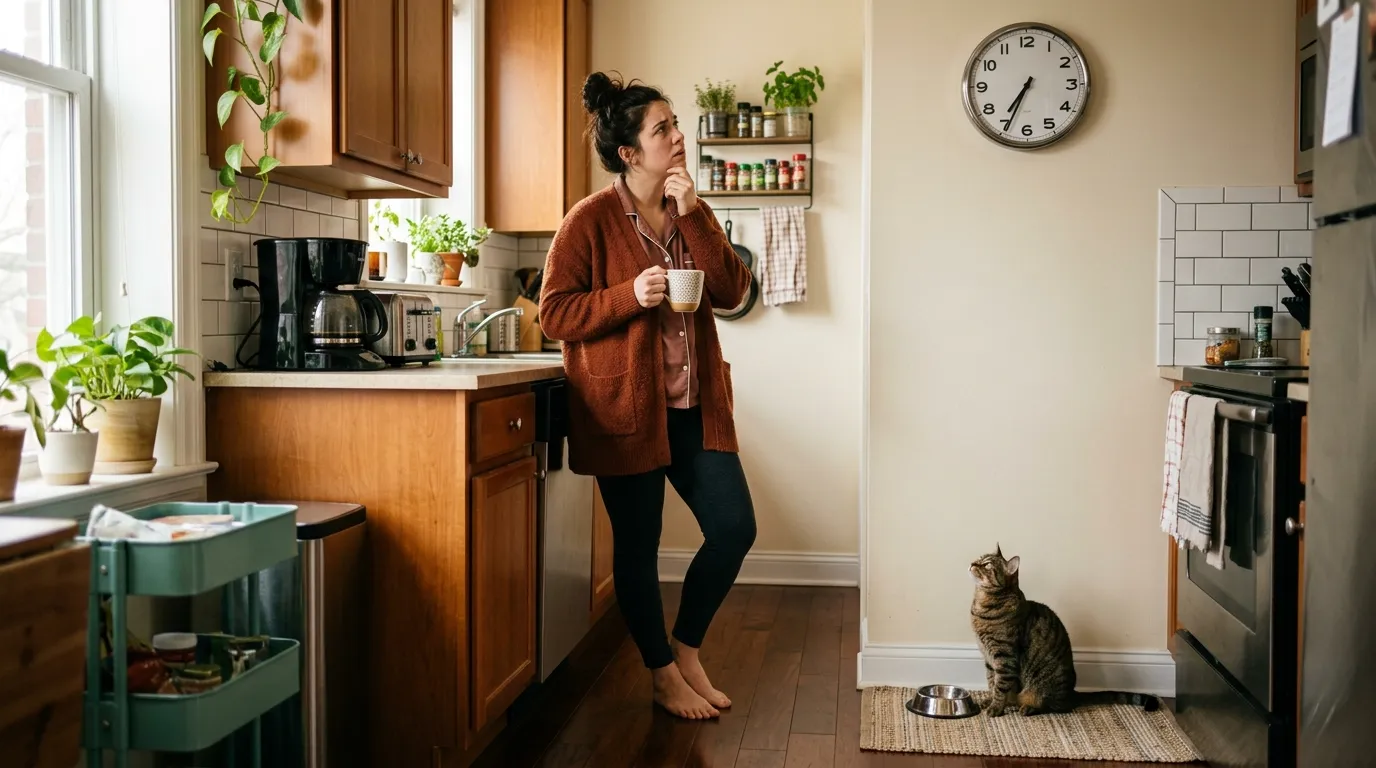
Your indoor cat is staring at you from beside the empty bowl again and you genuinely do not know if you are late feeding them or if they are just being dramatic. Knowing how often should I feed my indoor cat matters more than most owners realize because feeding frequency directly affects weight, digestion, behavior and how much your cat begs between meals. I noticed this when I shifted my cat from one large meal to three smaller ones and the 5am wake-up yowling stopped almost immediately not because she was getting more food but because the gap between meals was shorter. This guide gives you the exact feeding frequency for every life stage and explains why the schedule matters as much as the portion size.
Feed most healthy adult indoor cats two to three times per day at consistent times. Kittens under six months need three to four meals daily. Senior cats over ten years do best with two to three smaller meals. Never free-feed dry food all day it leads to overeating in sedentary apartment cats within months.
Why Feeding Frequency Matters More for Indoor Cats Than Outdoor Cats?
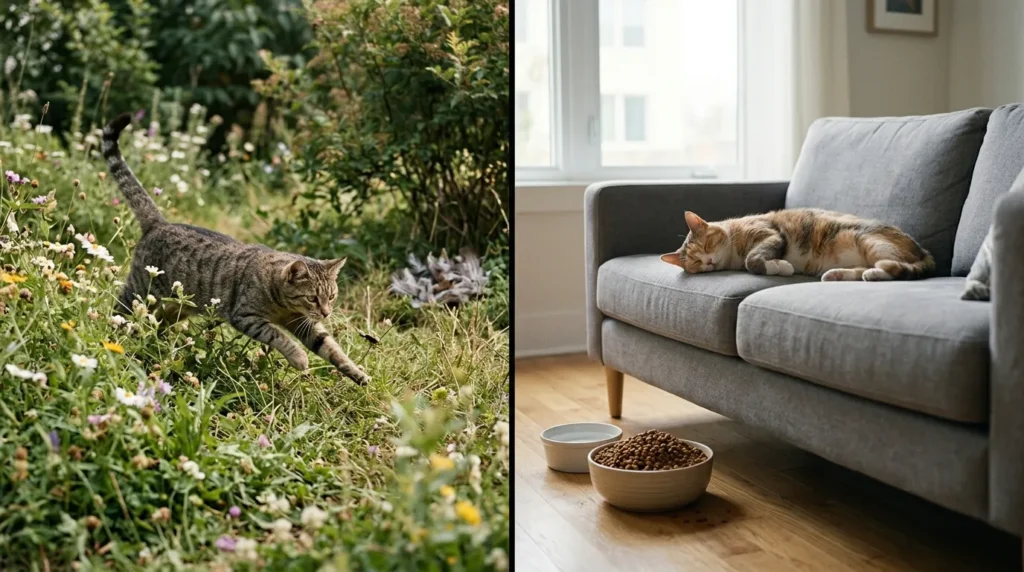
Feeding frequency for indoor cats is not a minor detail because sedentary apartment cats have no natural mechanism to regulate calorie intake the way outdoor cats do through physical hunting activity. An outdoor cat eats eight to twelve small meals per day in the wild by catching prey throughout their active hours. Indoor cats get their food delivered and will eat whenever it is available regardless of whether they are actually hungry.
A cat’s stomach empties every eight to ten hours under normal conditions. This means a cat fed only once per day experiences genuine hunger signals that drive food-obsession behavior and cause stress. Two meals twelve hours apart is the absolute minimum to prevent this. Three meals placed roughly six to eight hours apart is better for most indoor apartment cats because it keeps hunger signals consistently low throughout the day.
Consistent meal timing also produces a measurable behavioral benefit. Indoor cats that eat on a predictable schedule become calmer between meals because they learn that food is reliably coming. Cats fed unpredictably or free-fed on dry kibble develop persistent food-seeking behavior and beg more not because they need more calories but because the pattern of food availability is unclear to them.
How Often Should I Feed My Indoor Cat by Life Stage?
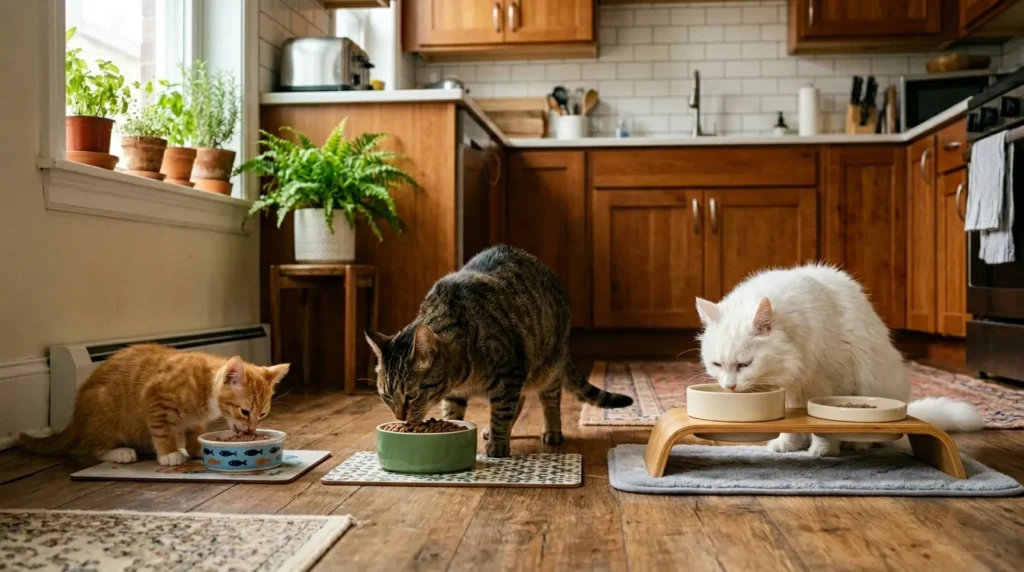
The right feeding frequency shifts significantly across a cat’s life because metabolic needs and stomach capacity change at every stage. Here is the direct answer for each:
| Life Stage | Age | Meals Per Day | Spacing | Key Reason |
| Young kitten | Under 12 weeks | 4 to 6 | Every 3 to 4 hours | Tiny stomach, very high growth calorie needs |
| Kitten | 3 to 6 months | 3 to 4 | Every 4 to 6 hours | Still growing rapidly, decreasing stomach limits |
| Kitten transitioning | 6 to 12 months | 3 | Every 5 to 6 hours | Growth slowing, approaching adult patterns |
| Adult neutered indoor | 1 to 10 years | 2 to 3 | Every 6 to 8 hours | Maintenance, obesity prevention |
| Senior | 10 years and older | 2 to 3 | Every 6 to 8 hours | Easier digestion, muscle maintenance |
Kittens need more frequent meals because their stomachs are physically small and their calorie-per-pound requirements are two to three times higher than adult cats. A kitten that eats too infrequently cannot consume enough calories per meal to support healthy growth and may develop hypoglycemia during long gaps. Four meals per day until six months is the minimum for a growing indoor kitten.
Adult indoor cats need the opposite adjustment. They have lower calorie requirements than kittens and lower activity levels than outdoor cats of the same size. Two well-timed meals prevent the hunger-driven behavior that makes indoor cats difficult to live with while also making weight management far simpler than free-feeding allows.
Senior cats often do well with three smaller meals rather than two standard-sized ones because smaller portions are easier to digest and help maintain consistent energy levels as metabolism becomes less efficient with age.
Free-Feeding vs. Scheduled Meals: Which Actually Works for Indoor Cats?
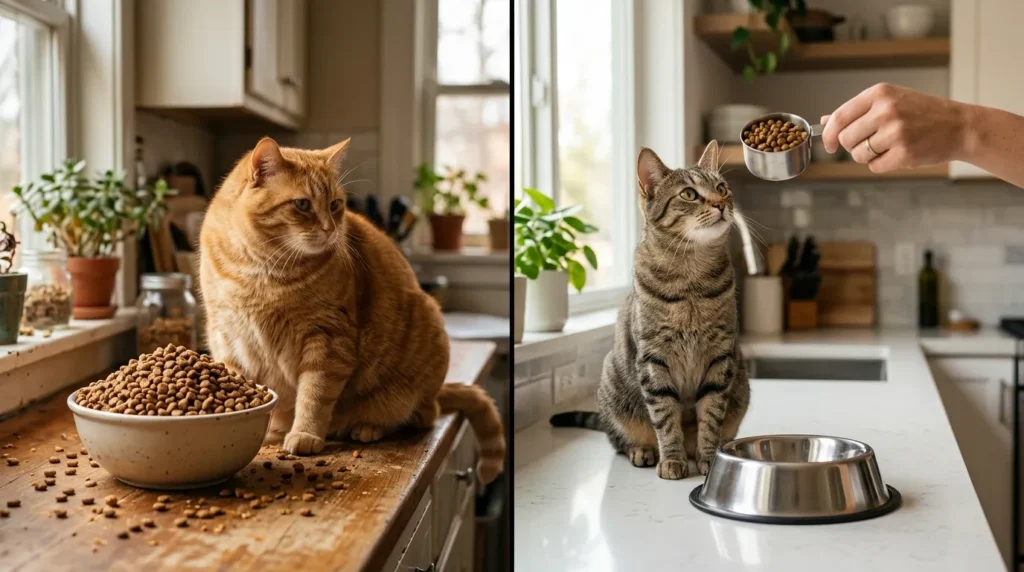
Free-feeding dry food works for some cats and fails badly for others, and the difference comes down to whether your individual cat self-regulates. Most indoor cats do not. When dry food is always available in a small apartment where there is little else to do, a significant proportion of cats will eat out of boredom as readily as hunger and gain weight slowly and steadily without any single meal being obviously excessive.
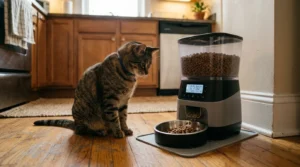
Scheduled meals at consistent times give you control over total daily calorie intake in a way that free-feeding fundamentally cannot. If your indoor cat is gaining weight on free-fed dry food, the solution is switching to scheduled meals rather than switching to a different food. The timing structure is what resolves the overconsumption not the formula.
The one situation where free-feeding works is for cats with a naturally high metabolism that maintain a healthy low weight despite constant food access. These cats exist but are significantly rarer among indoor apartment cats than outdoor cats. If your cat has ever been described as overweight or borderline overweight by a vet, free-feeding is not appropriate for them.
Insight Timed automatic feeders are one of the genuinely useful cat tools for apartment owners who work long hours. They dispense a measured portion at a set time which means your cat gets consistent meal timing even when you cannot be home at noon. The limitation is that most feeders only work reliably with dry food wet food requires a refrigerated feeder which is significantly more expensive. Budget for that difference if wet food is your primary food type.
The Best Daily Feeding Schedule for an Indoor Apartment Cat
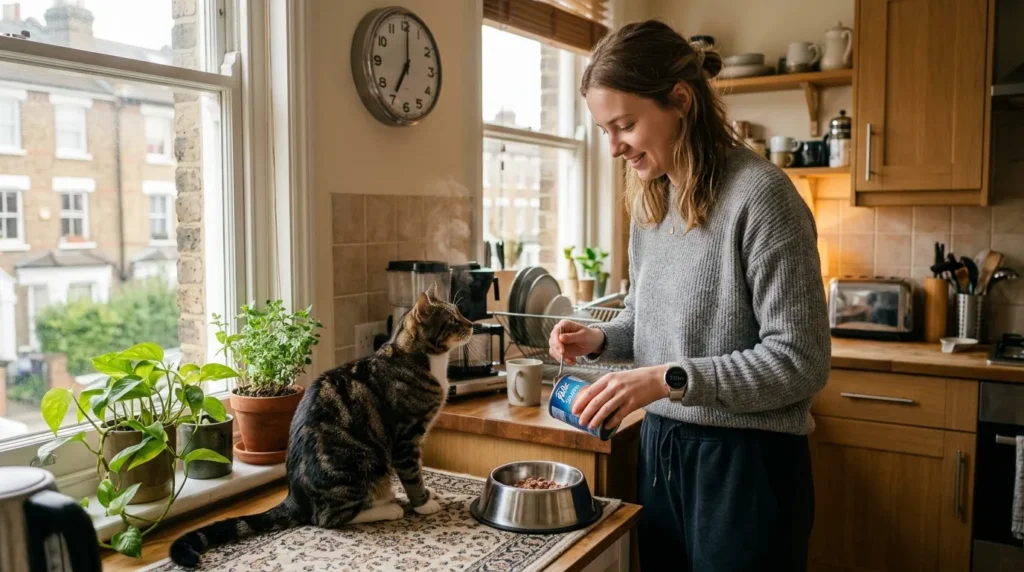
A practical daily feeding schedule for a typical indoor adult cat on two meals looks like this: morning meal when you wake up and evening meal when you return home or before bed. The gap between those two meals should not exceed twelve hours because beyond that point most cats start experiencing genuine hunger that produces anxious behavior.
For a three-meal schedule, the midday meal fits naturally at lunchtime if you work from home or can use a timed feeder. Morning, early afternoon and evening creates roughly six-hour gaps which keeps hunger signals consistently low throughout the day and almost completely eliminates food-related begging.
The timing of the last meal matters for sleep quality on both sides. Cats are crepuscular by nature most active at dawn and dusk. Feeding a full evening meal right before your bedtime satisfies the post-dusk activity peak and reduces the chances of your cat waking you at 5am demanding breakfast. Playing actively with your cat for ten minutes immediately before the evening meal mimics the hunt-catch-eat-groom-sleep cycle that wild cats follow and produces significantly calmer overnight behavior. The full approach to structuring a daily routine around feeding times that actually reduces apartment cat behavior problems is explained in depth in this guide on how to feed an indoor cat properly it covers the timing, portion math and wet versus dry scheduling in one place.
How Feeding Frequency Connects to Indoor Cat Health and Weight?
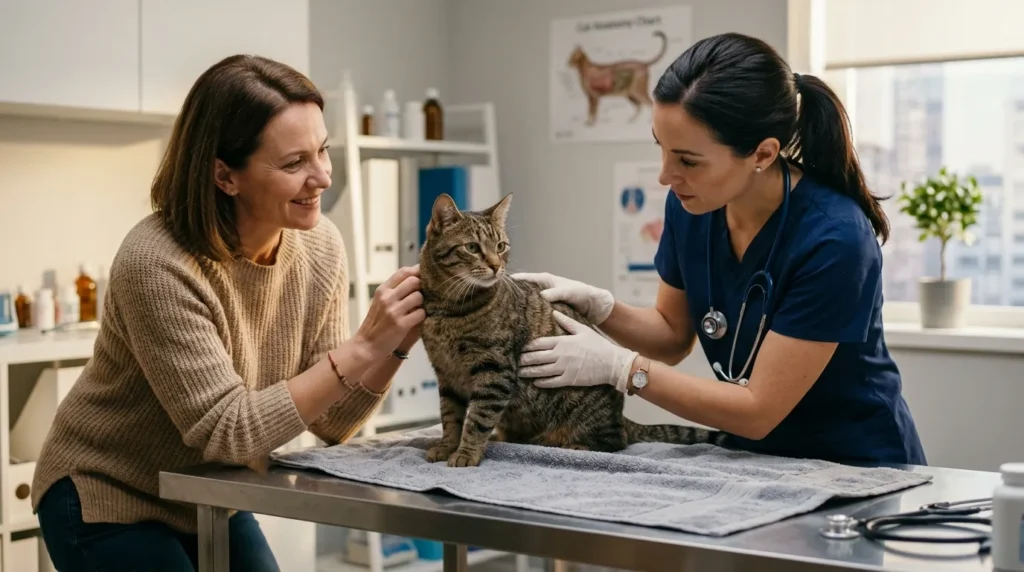
Feeding frequency directly affects blood sugar regulation in cats. A cat fed once per day experiences a sharp blood glucose spike followed by a long trough before the next meal. Over months and years this pattern is associated with increased metabolic stress and has been linked in some veterinary research to higher obesity risk in neutered indoor cats. Multiple smaller meals produce a flatter, more stable blood glucose profile throughout the day.
Weight management in indoor apartment cats is significantly easier to maintain through frequency control than through dramatic portion reduction. Cutting daily calories by 20 percent while keeping one meal per day often results in a cat that is visibly hungry and miserable. Keeping the same total daily calories across three smaller meals instead of one produces a cat that feels consistently satisfied on the same calorie intake.
According to the VCA Animal Hospitals feeding guidelines, a cat’s stomach empties in approximately eight to ten hours after a meal which means a twice-daily feeding schedule creates a meaningful hunger gap in most cats before the next meal arrives. Three meals eliminates that gap almost entirely. The connection between feeding frequency, weight management and the broader health picture of indoor apartment living is something worth understanding fully if your cat spends all day in a small space with limited physical activity. This guide on indoor cat health covers the specific health risks of indoor sedentary lifestyle and how daily feeding structure fits into preventing the most common issues.
Common Feeding Frequency Mistakes That Cause Behavior Problems
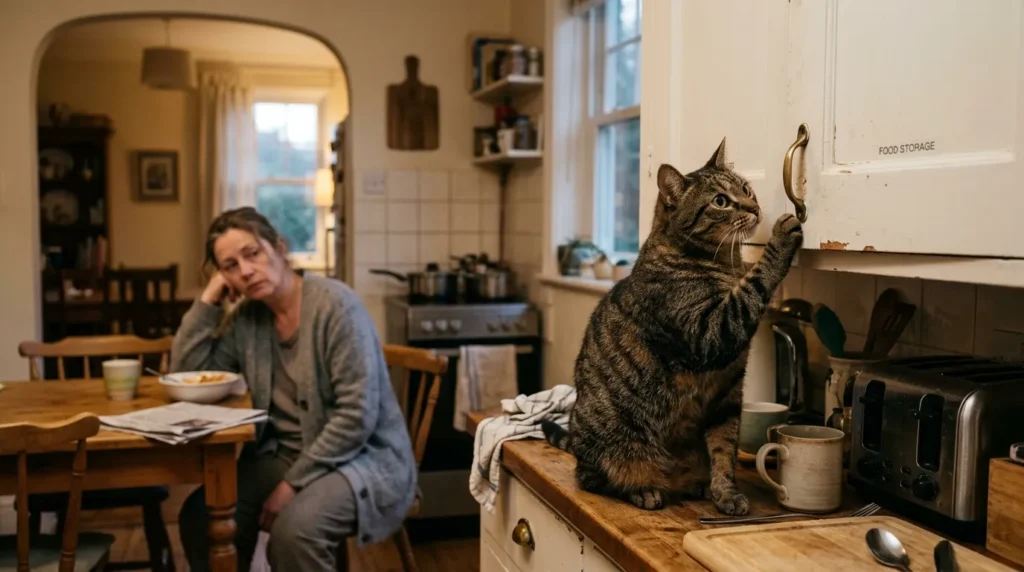
The most common feeding frequency mistake is feeding once per day with a large portion and assuming the cat will spread the eating throughout the day. Cats do not do this. Most cats eat their entire single daily meal within ten to twenty minutes of it being served and then spend the remaining twenty-three-plus hours in a state of increasing hunger that produces food-fixation behavior. This is where the cabinet-pawing, 4am yowling and persistent attention-seeking between meals comes from not bad behavior but a legitimate hunger response to an insufficient feeding structure.
The second mistake is treating the feeding frequency as flexible rather than consistent. Feeding at 7am one day and 10am the next creates unpredictability that increases anxiety in indoor cats that have no other significant environmental changes to give their day structure. Cats build internal schedules based on when feeding reliably occurs. Unpredictable timing produces a cat that starts monitoring you and requesting food at increasingly random times rather than waiting for the expected meal window.
The third mistake is responding to begging by feeding outside of scheduled meal times. This teaches your cat that begging produces food and reinforces the behavior permanently. The right response to begging between scheduled meals is play distraction rather than early feeding. A five-minute play session redirects the energy and does not establish the food-reward pattern that makes the begging worse.
Insight If your cat wakes you up before your alarm every single morning to demand breakfast, the fix is not feeding them earlier. That just moves the wake-up call earlier over the following week. The fix is a timed automatic feeder set for your target morning meal time so your cat learns that your waking up has nothing to do with when breakfast appears.
When Appetite Changes Are a Warning Sign Worth Taking Seriously?
A cat that suddenly loses interest in meals they previously ate reliably is telling you something meaningful. One skipped meal in a cat that is otherwise active and alert is usually not concerning. A cat that misses two or more meals in a row or whose interest in food drops noticeably over several days needs attention.
Sudden appetite increase is equally worth investigating in cats that previously ate consistent amounts. Hyperthyroidism in senior cats is one of the most common causes of a cat that suddenly wants significantly more food than usual while losing weight simultaneously. Diabetes can present similarly. Both conditions are diagnosable and manageable but require early intervention.
Watch for these specific warning signals beyond just reduced eating: visible weight loss over two to three weeks, vomiting after meals more than once a week, changes in litter box frequency alongside appetite changes and a coat that looks dull or unkempt. Any of these alongside an appetite change warrants a vet visit rather than a feeding schedule adjustment.
This article is for informational purposes only. Always consult your vet if your cat shows sudden changes in appetite, weight or feeding behavior.
Frequently Asked Questions About How Often to Feed an Indoor Cat
Is it okay to feed my indoor cat just once a day?
Once per day is below the recommended minimum for most adult cats. A cat’s stomach empties in eight to ten hours which means a single daily meal creates a prolonged hunger gap that causes stress and food-obsession behavior. Twice daily at minimum is the standard recommendation. Three times daily is genuinely better for indoor cats that beg between meals.
My indoor cat acts hungry all the time even after I feed them what does that mean?
Constant hunger behavior in a cat that is eating adequate calories usually signals one of three things: the meals are too far apart and the cat experiences real hunger between them, the food has low satiety value such as a heavily carbohydrate-based dry food, or the behavior is boredom-driven rather than hunger-driven. Try splitting the same daily calorie total across three meals rather than two and see if the behavior reduces within a week.
Can I leave dry food out all day for my indoor cat?
For cats that maintain a healthy weight despite constant food access, free-feeding dry food is manageable. For the majority of indoor apartment cats that have limited activity, free-feeding leads to gradual overconsumption and weight gain. If your vet has ever mentioned your cat is overweight or borderline, free-feeding is not appropriate for them regardless of convenience.
What is the best time of day to feed an indoor cat?
Morning and evening meals work well because they align with the natural crepuscular activity peaks of cats at dawn and dusk. For a two-meal schedule, twelve hours apart is the target 7am and 7pm for example. For three meals, morning, midday and evening works well. Consistency of timing matters more than the specific hours chosen.
How often should I feed my indoor cat if they are overweight?
Overweight indoor cats benefit from three smaller measured meals per day rather than two. More frequent smaller meals maintain steady energy and reduce hunger-driven begging while the total daily calorie intake is reduced to support weight loss. Always calculate portions by calorie target rather than cup volume and have your vet confirm a safe calorie target before starting a weight loss plan.
Set the Schedule and Stick to It
Feed your adult indoor cat two to three times per day at consistent times and start today by picking specific meal times rather than feeding whenever you remember. Kittens need three to four meals until they reach their first birthday. The schedule matters as much as the portion size because consistent timing produces calmer, more settled indoor cats and makes weight management genuinely manageable rather than a constant struggle.
Most healthy adult indoor cats should be fed two to three times per day at consistent times approximately six to eight hours apart. A cat’s stomach empties in eight to ten hours meaning a single daily meal creates a prolonged hunger gap that drives food-obsession behavior. Kittens under six months need three to four meals daily due to high calorie requirements and small stomach capacity. Senior cats do well with two to three smaller meals. Free-feeding dry food all day leads to overconsumption in most sedentary indoor apartment cats. Consistent meal timing produces calmer behavior and significantly easier weight management.