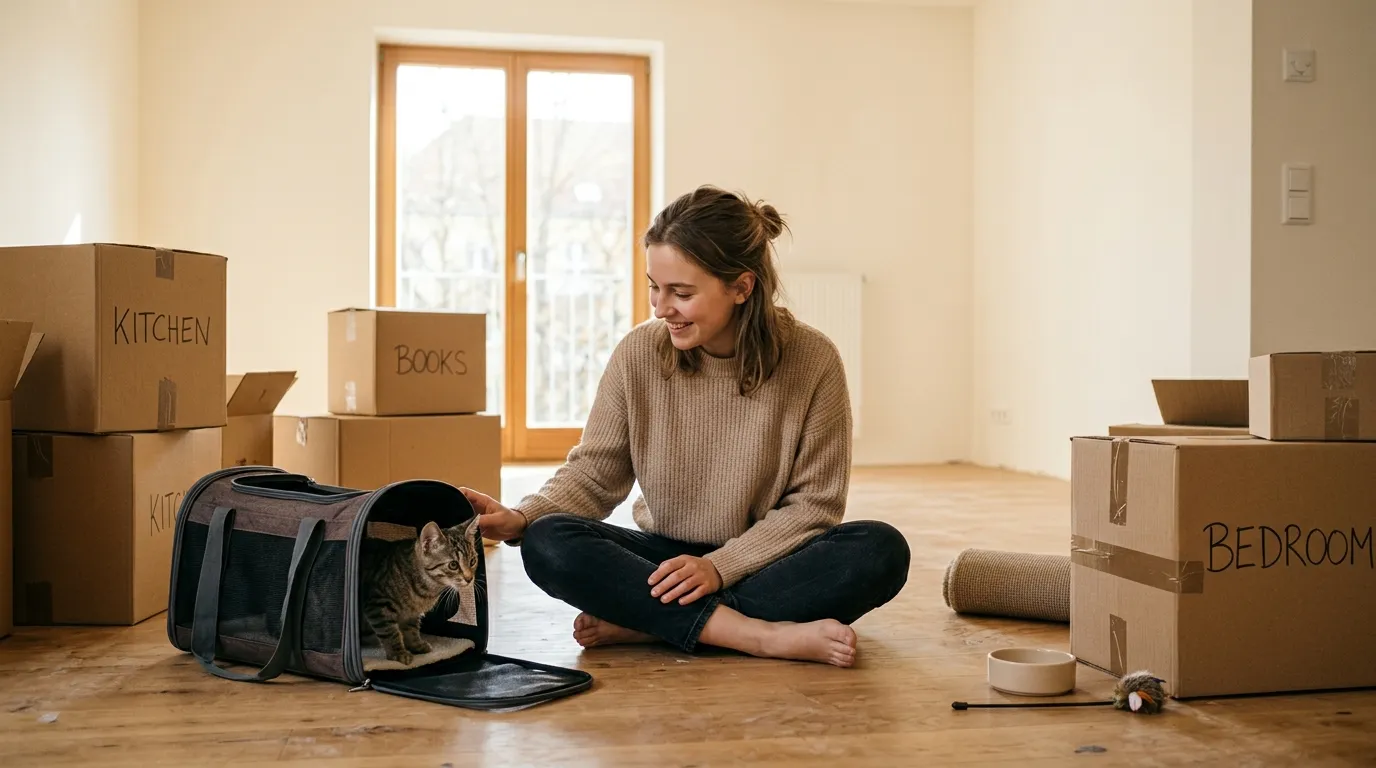
Setting up your first apartment with a cat feels exciting until you realize you have no idea what to actually buy and what you can skip. The list online looks endless and contradictory and the clock is ticking because the cat is coming home on Saturday. Knowing what you need for your first apartment with a cat comes down to a short list of genuine essentials things that affect your cat’s safety, comfort and adjustment and a longer list of things you can add gradually. I know this because I showed up to my first apartment with a cat toy and a bowl and figured out everything else the hard way over the next two weeks. This guide gives you the actual setup so you do not have to improvise.
For your first apartment with a cat, you need a carrier, litter box with unscented clumping litter, food and water bowls, a scratching post, a hiding spot and some basic toys before day one. Set up a safe room first. Everything else cat trees, fancy feeders, extra toys can come after your cat is settled.
The Supplies You Need Before Your Cat Comes Home
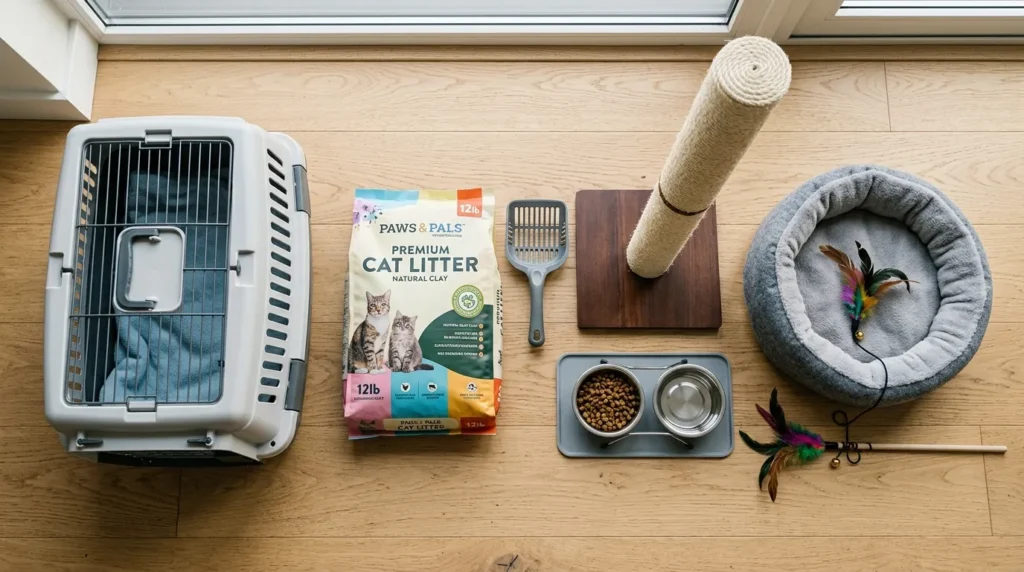
Every new cat owner over-buys the fun stuff and under-buys the functional stuff. The truth is that your cat does not care about the expensive automatic feeder on day one. They care about feeling safe, having somewhere to hide and knowing where the litter box is. Get the basics right first and build from there.
Here is what you genuinely need before your cat arrives, split by priority:
| Must-Have Before Day One | Can Wait Until Week Two |
| Hard-sided cat carrier | Automatic feeder |
| Litter box and unscented clumping litter | Cat tree (large) |
| Stainless steel food and water bowls | Puzzle feeders |
| Litter scoop and litter mat | Extra toys |
| Scratching post (sisal) | Water fountain |
| Cat bed or soft blanket | Window perch |
| Two to three basic toys | Second litter box |
| Enzymatic cleaner for accidents | Air purifier |
A cat carrier is not optional even if your cat is staying indoors. You will need it for vet visits and it doubles as a safe hiding spot in the apartment if you leave the door open. A hard-sided carrier feels more secure to a cat than a soft bag and holds up better over years of use.
Insight Skip the small carrier that looks right in the store. Your cat needs to be able to stand up, turn around and lie down in it comfortably. Buy one size bigger than you think you need. A cramped carrier makes every vet visit worse than it has to be.
The Safe Room Is the First Step That Almost Every New Cat Owner Skips
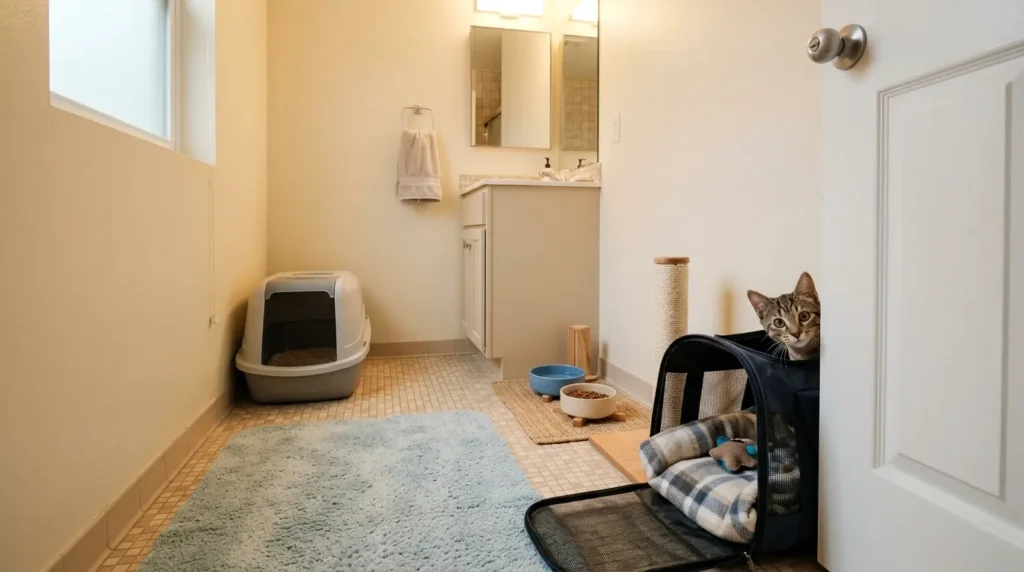
A safe room setup is a single small room where your cat lives for the first three to seven days before getting access to the full apartment. This is not a punishment. It is how you help a cat decompress without becoming overwhelmed in a completely foreign space.
Choose the smallest closable room you have. A bathroom works well. A spare bedroom works even better. The key is that the room has a door, some natural light and is away from loud appliances. In a studio apartment, section off part of the space using a freestanding pet gate or stacked boxes. It does not have to be perfect it just needs to feel contained and quiet.
Set everything up before you bring the cat home. Place the litter box on one side of the room and the food and water bowls on the opposite side cats do not like eating near their toilet, and putting them close together causes some cats to avoid both. Add the open carrier with a familiar-smelling blanket inside as a hiding spot. Leave a couple of low-key toys on the floor but do not overwhelm the space. The full picture of making apartment life genuinely comfortable for a cat from day one is covered in this guide on living with a cat in an apartment it goes into the long-term setup beyond just the first week.
First Apartment with a Cat What You Need for the Litter Box Area
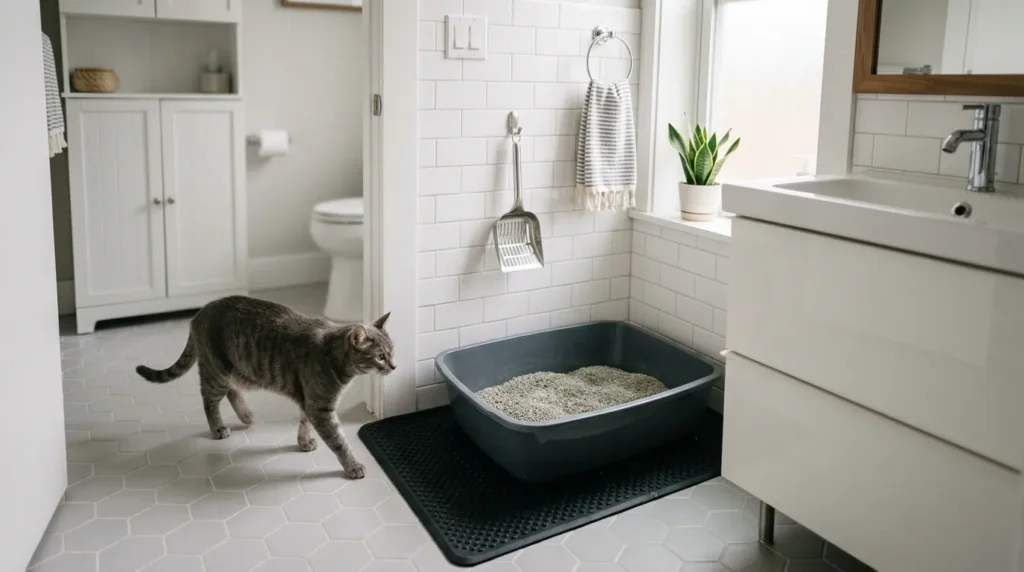
The litter box is the one thing that will affect your apartment life more than anything else you buy. Get this wrong and you will have odor problems, litter tracking all over the floor and a cat that avoids the box entirely. Get it right and you barely notice it is there.
Buy a larger box than you think you need. Most litter boxes sold at pet stores are genuinely too small for a full-grown cat and a cat that feels cramped in the box will start finding creative alternatives. A large uncovered box works better than a covered one for most cats because covered boxes trap odor inside and cats often dislike the enclosed feeling. Use unscented clumping litter heavily scented litters are marketed to owners but cats often reject them. Scoop once a day at minimum. For everything that goes into sizing, placement and litter type for a small apartment space, this breakdown on setting up a litter box for an indoor cat covers the specifics that make the difference between a box your cat uses reliably and one they avoid.
Insight Put a litter mat under the box that extends at least six inches in every direction. Cats track litter out on their paws with every exit and without a mat it ends up everywhere. A mat with a textured top surface catches the most litter and saves you from vacuuming the bathroom floor every single day.
Feeding Setup: What to Buy and How to Do It Right From Day One?
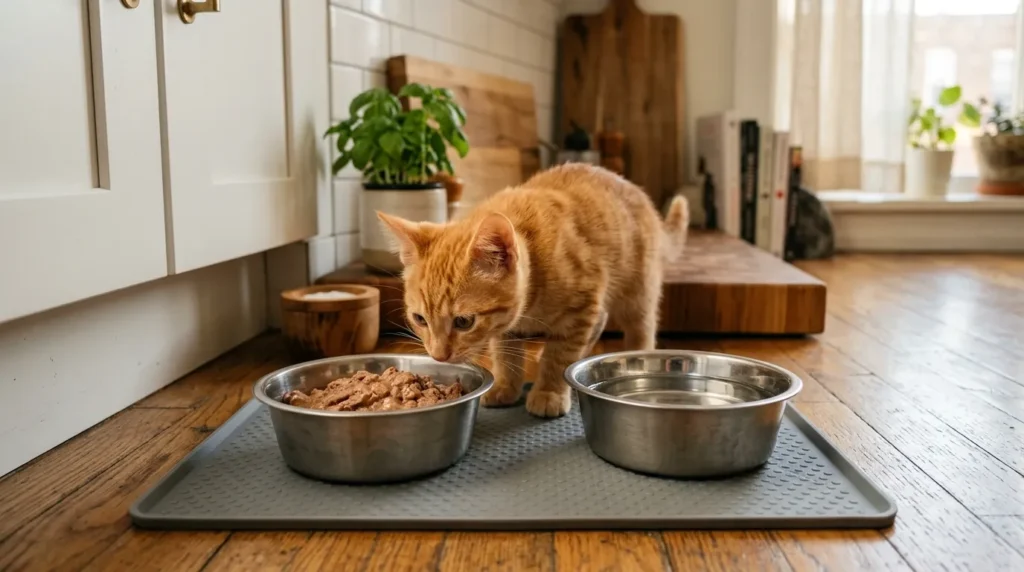
Start with stainless steel or ceramic bowls. Plastic bowls harbor bacteria in scratches and some cats develop feline chin acne from plastic contact over time. Use a non-slip mat under the bowls to stop them sliding across hard floors while your cat eats.
Feed wet food at least once a day, especially in the first weeks. Wet food keeps your cat hydrated and helps you notice whether they are eating normally. A cat that stops eating wet food is telling you something is wrong long before you would notice it with dry food alone. The relationship between what you feed your cat and how they feel in the apartment every single day is something that most new owners underestimate. This guide on how to feed an indoor cat properly explains portion sizes, meal frequency and the wet versus dry debate in a way that actually makes sense for apartment owners.
Vertical Space and Enrichment: What Small Apartments Actually Need?
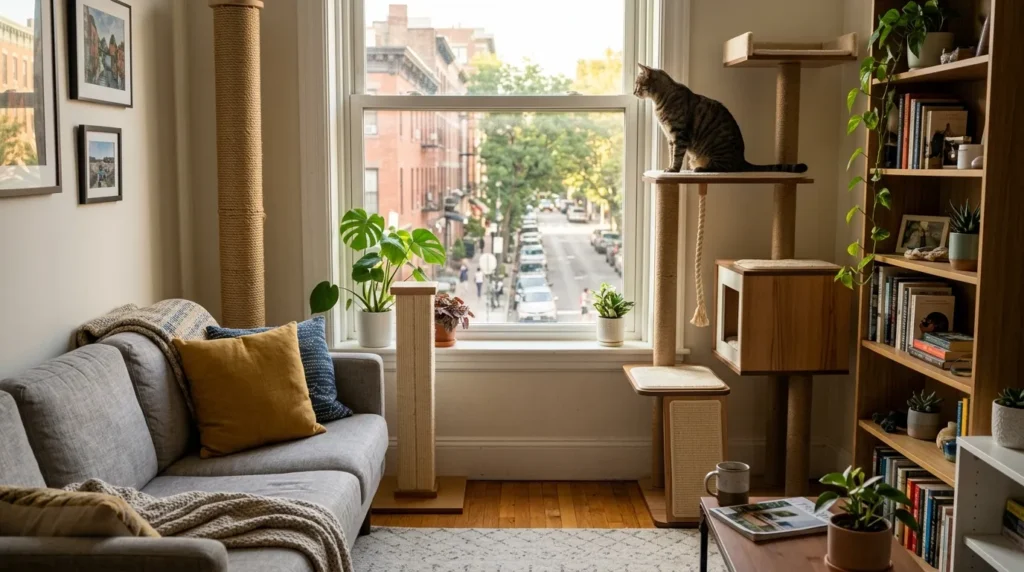
Vertical space matters more in a small apartment than in a house because your cat cannot expand horizontally. A cat that cannot climb, perch and survey the room from height gets bored faster and directs that energy toward your furniture. One tall scratching post placed right next to whatever piece of furniture your cat targets first will redirect the scratching almost immediately location matters more than the post itself.
A suction-cup window perch costs almost nothing and gives your cat a dedicated lookout point without taking up any floor space. It is one of the best things you can add in a studio or one-bedroom apartment. Rotate toys every week so the same things do not become invisible through familiarity. Ten to fifteen minutes of active wand play each evening does more for your cat’s mood and sleep quality than any amount of passive toys left on the floor. For a full picture of what actually works for enrichment in a small space, this article on indoor cat enrichment for apartment cats is worth reading once you are past the first setup week. When you are ready to invest in actual climbing furniture, this guide on the best cat furniture for indoor cats walks through what performs well in small apartments without taking over the room.
Cat-Proofing Your First Apartment Without Losing Your Security Deposit
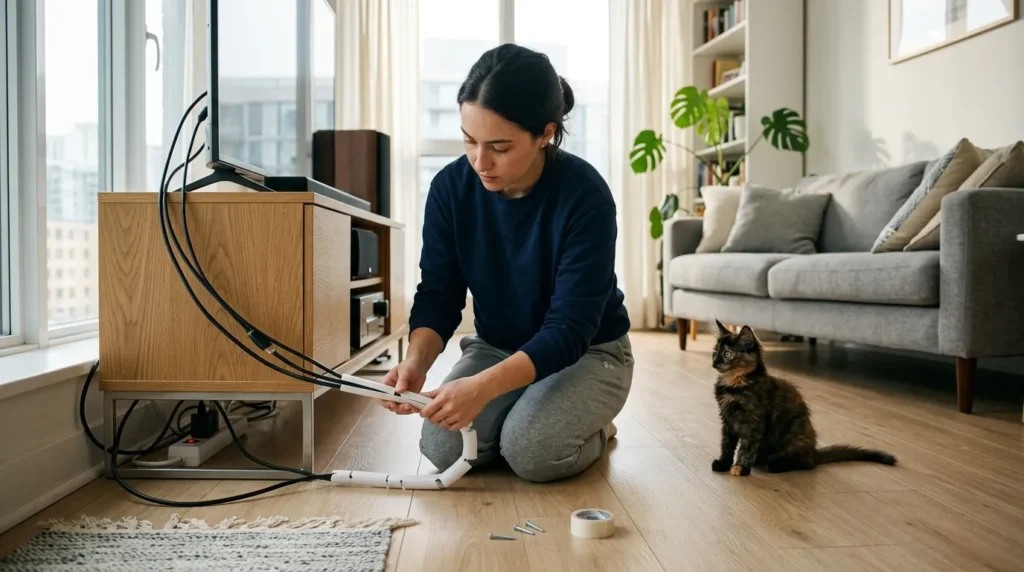
Every apartment cat-proofing solution you use should be reversible. You will lose part of your security deposit if you drill holes, leave adhesive residue or scratch floors. Cord covers, tension-mounted window screens, adhesive cabinet latches and removable furniture anchors all work without permanent changes.
Remove any lilies from the apartment immediately. According to the ASPCA Animal Poison Control Center, even minimal contact with true lily pollen can cause acute kidney failure in cats within 24 to 72 hours. Check any plants you already own against the ASPCA toxic plant list before your cat arrives.
Cover all blind cords and dangling cables with cord sleeves before bringing your cat home. Secure the trash can inside a cabinet or use one with a locking lid. Keep toilet lids closed. These are not complicated changes but they are the ones that prevent emergency vet visits in the first week.
Mistakes That First-Time Apartment Cat Owners Almost Always Make
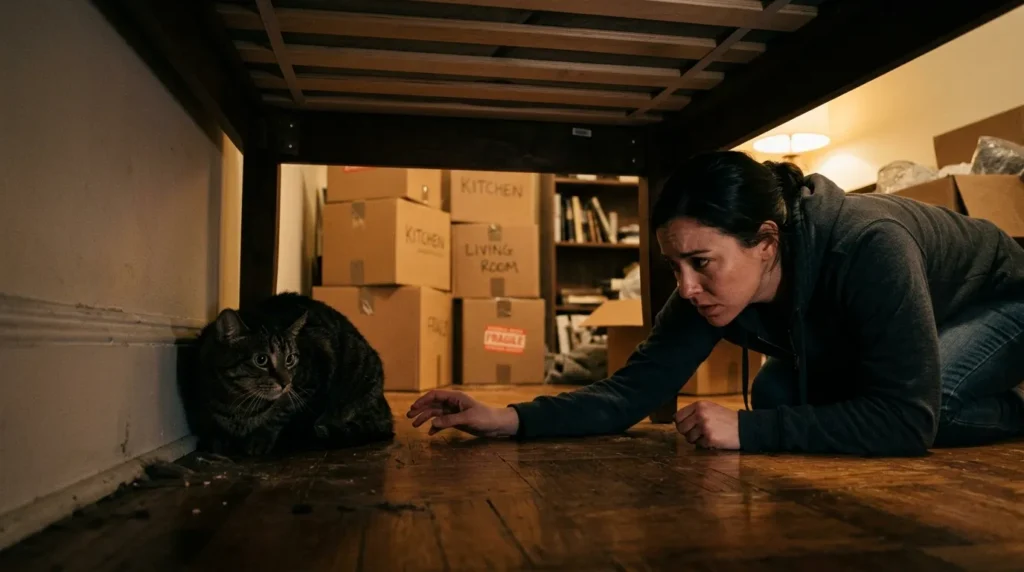
The most common mistake is giving the cat full access to the entire apartment on day one. It feels kind. It is actually stressful for the cat. A new environment has unfamiliar smells, sounds and surfaces everywhere. Too much space at once causes a cat to hide for days, avoid the litter box and stop eating. Start with the safe room and expand gradually once the cat eats consistently and approaches you without hesitation.
The second mistake is buying too much too soon. New cat owners spend a lot of money in the first week on things their cat ignores entirely. Your cat will pick one scratching post and ignore the other three. They will sleep in a cardboard box instead of the expensive bed. Buy the essentials first and learn what your specific cat actually likes before investing in more.
The third mistake is skipping the vet visit in the first week. Even if your cat seems completely fine, a baseline vet appointment catches health issues early and establishes a medical record. Keep indoor cat health as a consistent priority from day one rather than something you only think about when something goes wrong.
Insight If your cat hides for the first two or three days and barely eats, do not panic and do not force interaction. Sit quietly in the safe room, talk in a calm voice and let your cat come to you. Every cat adjusts at a different pace. Forcing contact early makes the adjustment longer, not shorter.
Frequently Asked Questions About Your First Apartment with a Cat
What do I actually need to buy before bringing a cat home to my apartment?
The true essentials are a carrier, litter box, unscented clumping litter, a scoop, food and water bowls, a scratching post and one or two toys. Everything else is optional in the first week. Set up a safe room before your cat arrives so they have a quiet, contained space to decompress rather than an overwhelming open apartment.
How long does a cat need to stay in the safe room before exploring?
Most cats are ready to start exploring after three to five days when they are eating consistently, using the litter box reliably and approaching you without retreating. Shy or anxious cats sometimes need a full week or two. Watch for confident eating and relaxed body language as your cues rather than a fixed number of days.
Can I have a cat in a small studio apartment?
Yes. Cats adapt well to studios when vertical space is prioritized. A tall cat tree near a window and a window perch give a cat the climbing and observation opportunities they need in a compact footprint. What matters most is daily interactive play and a consistent routine not square footage.
How do I stop my cat from scratching apartment furniture?
Place a scratching post directly next to whatever piece of furniture your cat has already targeted. Cats scratch in specific locations for territorial reasons and moving the post to an “ideal” spot across the room does not redirect the behavior. Sisal-covered posts outperform cardboard for most adult cats. Double-sided tape on the furniture surface discourages scratching while your cat builds the habit of using the post.
What should I do if my cat stops eating in the first few days?
A cat that skips one meal in the first day or two is likely just stressed by the new environment and that is normal. A cat that has not eaten meaningfully in 48 hours or more needs a vet visit. Cats that go without food for 48 to 72 hours are at risk of hepatic lipidosis, a serious liver condition. This article is for informational purposes only. Always consult your vet if your cat refuses food for more than 48 hours.
Your First Week Sets the Pattern for Everything After
For your first apartment with a cat, the safe room, the litter box setup and the daily feeding routine are the three things that determine how quickly your cat settles in. Get those right and everything else falls into place on its own schedule. Buy the essentials, skip the extras for now and start the safe room today if your cat is arriving this week. The adjustment goes faster than you expect when you give your cat the structure to feel safe first.
Setting up a first apartment with a cat requires a carrier, uncovered litter box with unscented clumping litter, stainless steel food and water bowls, a sisal scratching post and a safe room before the cat arrives. The safe room should be a single small closable space with the litter box on one side and food on the opposite side. New cats need three to seven days in the safe room before accessing the full apartment. Cats in small apartments need vertical space through cat trees or window perches. Most setup mistakes involve giving too much space too soon or buying enrichment items before knowing the cat’s preferences.