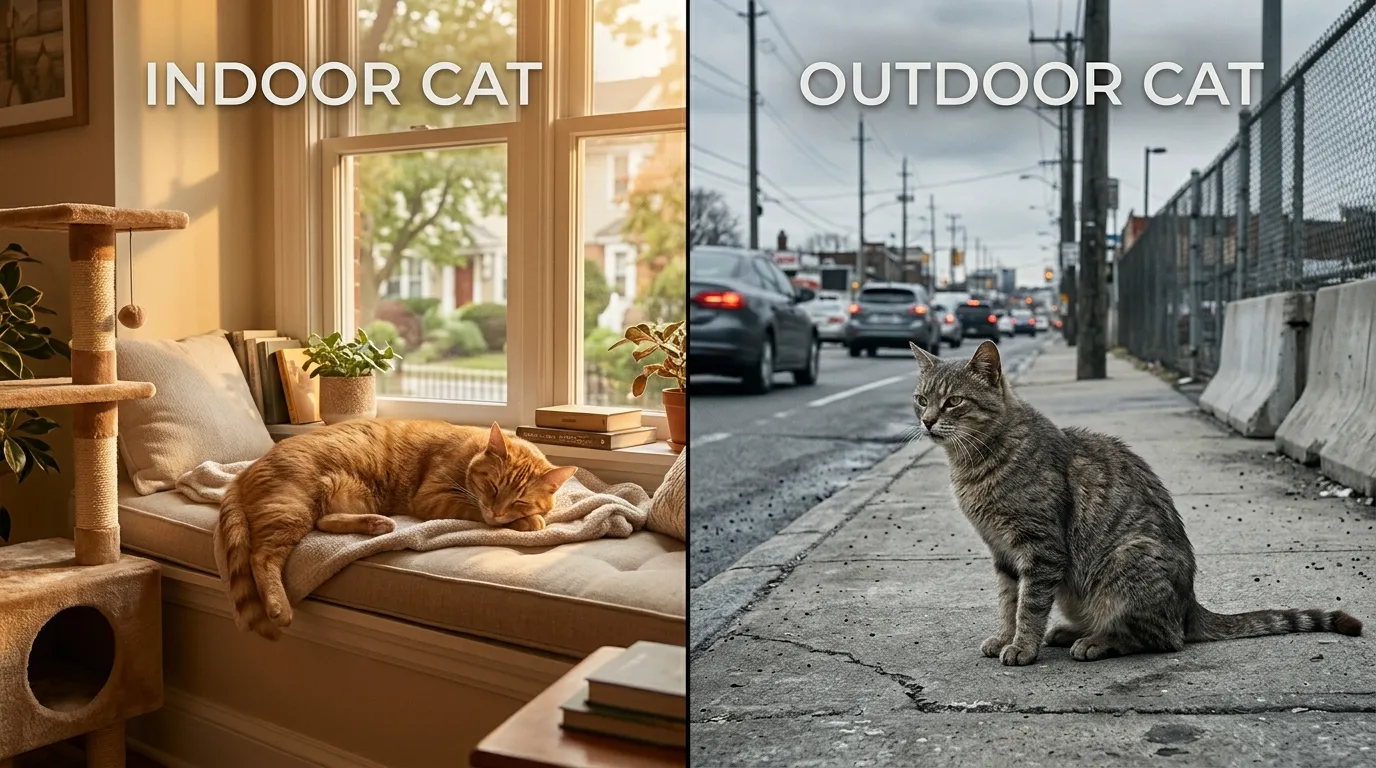
The indoor vs outdoor debate comes up every time someone gets a new cat and it almost always gets muddied by guilt and sentiment rather than settled by facts. I watched a neighbor lose two cats to traffic in three years while her indoor cat who was the same age sailed into his sixteenth birthday without a single serious health problem. The indoor cat vs outdoor cat lifespan difference is not close and it is not contested. Indoor cats live dramatically longer. This article breaks down why that gap exists, what drives it on both sides and what the verdict means for your cat specifically.
Indoor cats live an average of 12 to 18 years. Outdoor cats average 2 to 5 years. The gap of roughly 10 years comes from cumulative exposure to traffic, infectious disease, predators, toxins and territorial injury. Indoor cats win decisively on lifespan. The relevant question for most owners is not whether to keep their cat inside but how to make indoor life genuinely stimulating.
What the Indoor Cat Lifespan Looks Like and What Actually Drives It?
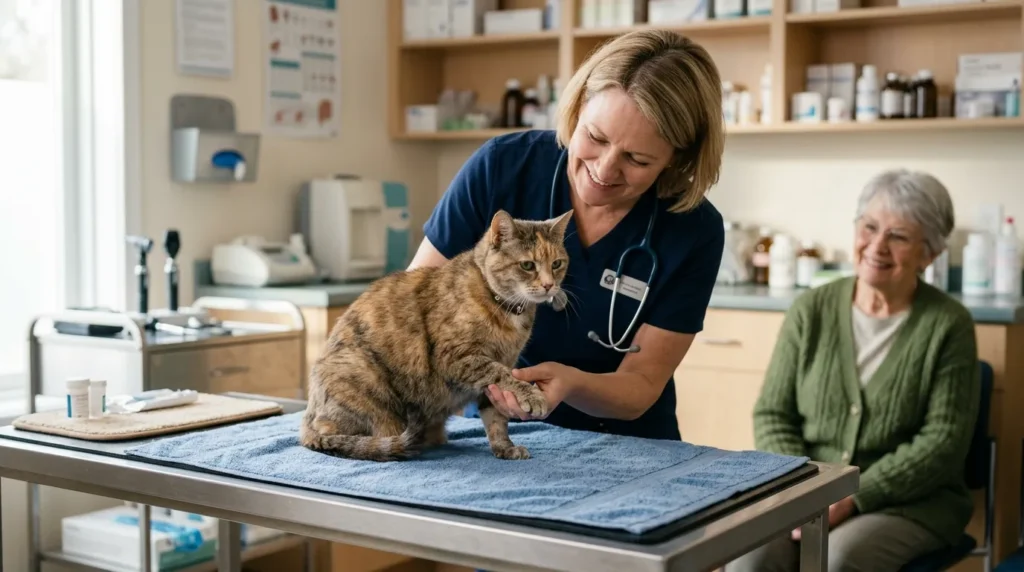
Indoor cats live an average of 12 to 18 years with well-cared-for cats regularly reaching 20 and beyond. The lifespan advantage does not come from the indoors itself. It comes from the elimination of the specific risk categories that kill outdoor cats young and the addition of consistent veterinary monitoring that catches disease early enough to treat it.
Preventive veterinary care is the single biggest driver of indoor cat longevity after physical safety. An indoor cat that receives annual wellness exams including bloodwork catches chronic kidney disease, hyperthyroidism and early diabetes at stages where they are manageable rather than terminal. Outdoor cats with the same conditions rarely receive the monitoring that would detect them early.
 Spay and neuter status contributes meaningfully to indoor cat lifespan and is more consistently achieved in indoor cats. Intact female cats face increased risks of mammary tumors and pyometra. Intact male cats are more likely to roam, fight and sustain injuries even when nominally kept indoors. Indoor-spayed or neutered cats avoid all of these risks entirely while also being calmer and easier to manage day to day.
The cats I have seen live into their late teens have almost all shared two things: they were spayed or neutered early and they had an owner who noticed small changes quickly. Those two variables together create the foundation for everything else. The indoor environment protects but the owner’s attentiveness is what extends the life.
What the Outdoor Cat Lifespan Looks Like and Why It Is So Short?
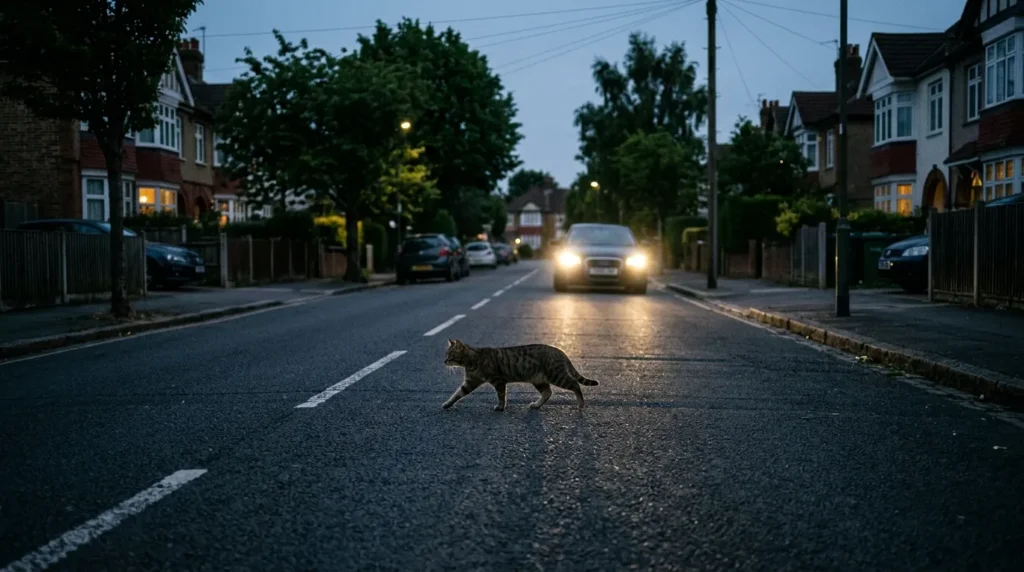
Outdoor cats average 2 to 5 years of life in urban and suburban environments. This is not pessimistic. It reflects the cumulative effect of threats that outdoor cats encounter daily and that compound over time. No single threat kills most outdoor cats. The combination of all of them does.
Traffic is the leading cause of premature death in outdoor cats in urban and suburban areas. Cats are crepuscular meaning they are most active at dawn and dusk which are exactly the periods of highest traffic risk. A cat that crosses a road twice a day accumulates thousands of road crossings over its lifetime and the statistical outcome is predictable.
Infectious disease is the second major factor. Feline immunodeficiency virus and feline leukemia virus are both transmitted through bite wounds from infected cats during territorial fights. Both are incurable. Both progress slowly enough that an infected cat may appear healthy for years while its immune system deteriorates. An indoor-only cat has no exposure pathway to either virus regardless of vaccination status.
Indoor Cat vs Outdoor Cat Lifespan: Where the Real Gap Comes From
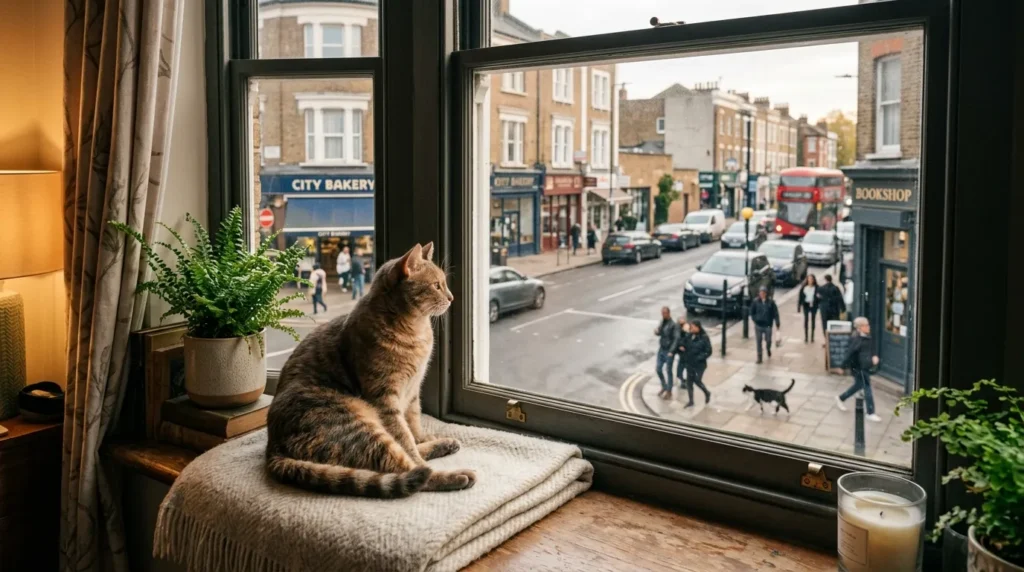
The indoor cat vs outdoor cat lifespan gap comes from five specific risk categories that outdoor cats face and indoor cats do not. Traffic and direct injury account for the largest share of early outdoor cat deaths. Infectious disease transmitted through bite wounds and direct contact with infected cats accounts for a significant secondary portion. Toxin exposure from rodenticides slug bait and antifreeze causes deaths that often go unattributed. Predator encounters and extreme weather events account for the remainder.
Indoor cats are not exposed to any of these categories. The protection is total rather than partial which is why the lifespan difference is so large. A cat that avoids traffic, FIV, toxins, predators and territorial fighting simultaneously gains more than a decade of expected life compared to a cat exposed to all of them.
The nuance worth adding is the indoor-outdoor cat category. Cats with supervised or limited outdoor access including enclosed gardens and catios show lifespan figures closer to fully indoor cats than to free-roaming outdoor cats. The risk is not outdoor air or outdoor experience. It is specifically unsupervised roaming in environments with traffic, other cats and human-introduced hazards.
Which Setup Produces a Better Long-Term Outcome for Your Cat?
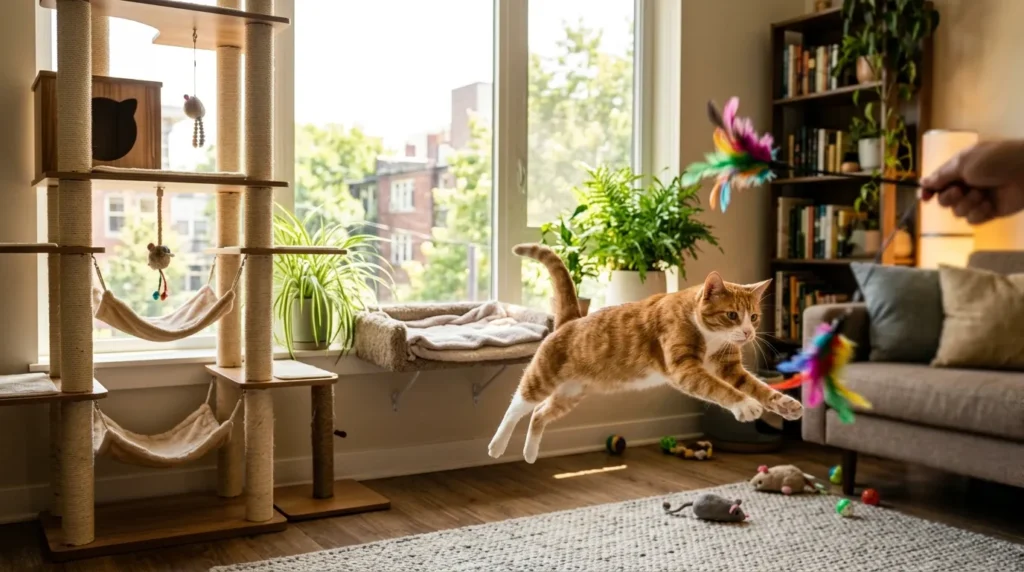
Indoor life produces a better long-term outcome on every measurable metric when the indoor environment is set up correctly. This is the condition that matters because an under-enriched indoor environment does produce worse behavioral outcomes than a well-managed outdoor lifestyle even if it still produces a longer lifespan.
 A well-enriched indoor cat that receives daily interactive play, has vertical climbing space, access to window stimulation and a consistent routine shows no measurable behavioral deficits compared to outdoor cats. According to research guidelines from the Ohio State University Indoor Pet Initiative, indoor cats with full environmental enrichment demonstrate equivalent behavioral health indicators to outdoor cats without the associated mortality risks.
The quality of life argument for outdoor cats dissolves when enrichment is present. The claim that outdoor cats are freer or happier rests on comparing them to under-enriched indoor cats. A well-enriched indoor cat is not deprived of anything meaningful that an outdoor cat has. It simply accesses the same behavioral outlets through different means.
The “outdoor cats are happier” argument almost always comes from people who have seen bored indoor cats and assumed that was the baseline. A bored indoor cat looks unhappy because it is. A well-enriched indoor cat looks exactly like what it is which is a cat that has everything it needs to thrive. The comparison is not between lifestyles. It is between good setup and bad setup.
The One Mistake People Make When Comparing Indoor and Outdoor Cat Lives
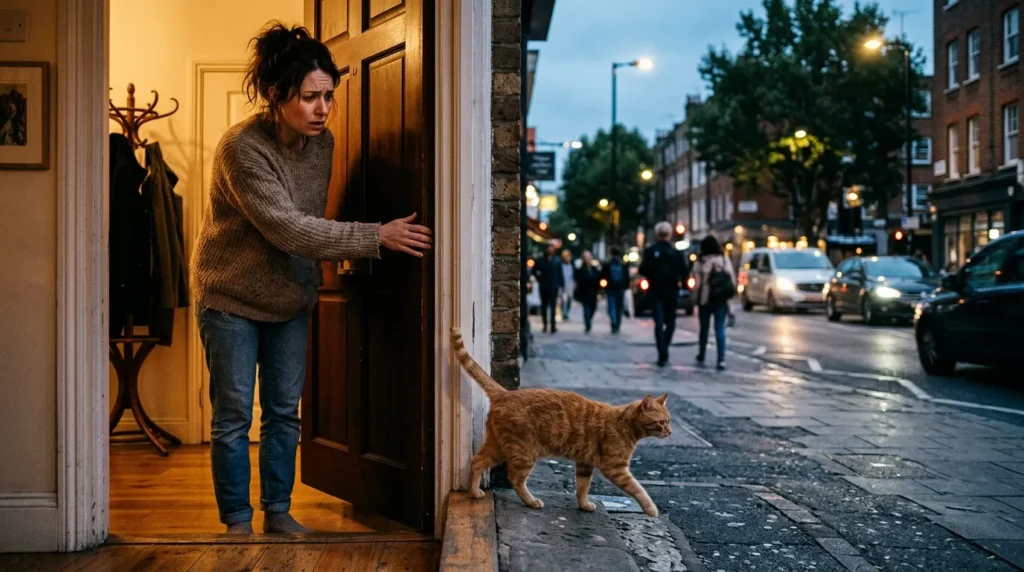
The most common mistake when comparing indoor and outdoor cat lifespan is treating it as a lifestyle preference question rather than a risk management question. People frame it as freedom versus restriction and then feel guilty about keeping their cat inside. That framing misrepresents what is actually happening.
Letting a cat roam outdoors unsupervised in a suburban or urban environment is not giving it freedom. It is exposing it to a risk profile that statistically shortens its life by a decade. A cat does not experience that as freedom any more than a person walking across a motorway experiences it as adventure. The cat simply does not have the information to assess the risk.
The mistake compounds when owners use intermittent outdoor access as a compromise. A cat with occasional unsupervised outdoor access carries the same exposure risks as a fully outdoor cat for every minute it spends outside. There is no partial safety in this scenario. The protection comes from full elimination of the risk categories not from reducing their frequency.
Our Verdict: What the Evidence Recommends for Most Owners?
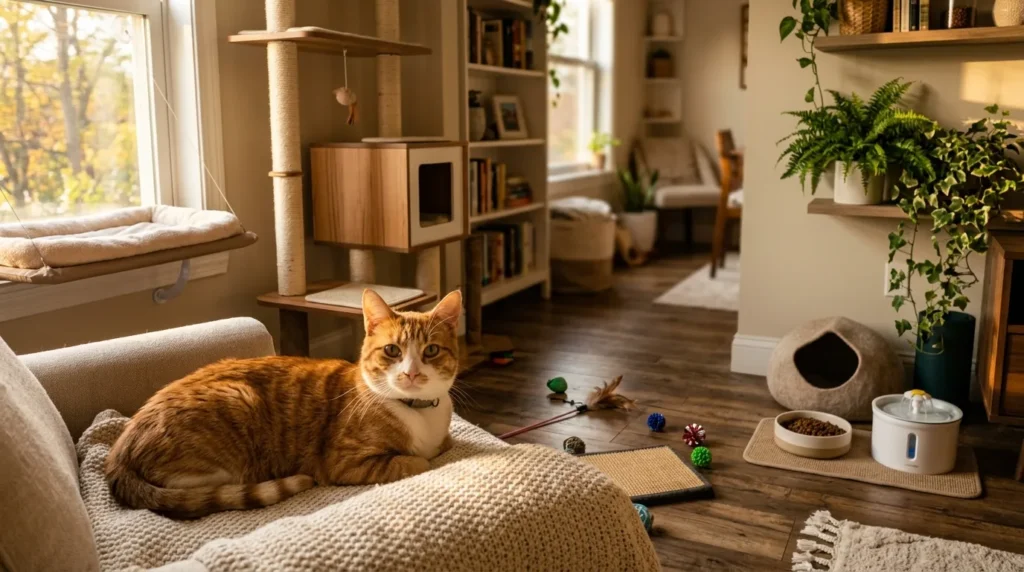
Indoor life wins on every measurable outcome for cats in urban and suburban environments. The lifespan advantage is significant, the disease exposure reduction is complete and the behavioral outcomes for enriched indoor cats are equivalent to outdoor cats. The verdict is not close and it does not require hedging.
The recommendation is full indoor living with active enrichment for any cat in a traffic-adjacent or densely populated area. For owners who want to provide outdoor experience without the risk profile of free roaming, enclosed catios and supervised harness walks provide the sensory benefits of outdoor access without the mortality risk that accompanies unsupervised roaming.
For cats already established as outdoor cats the transition to indoor living requires a deliberate process over several weeks rather than an abrupt change. The behavioral adjustment is real but manageable and the long-term outcome justifies the short-term effort.
Frequently Asked Questions About Indoor and Outdoor Cat Lifespan
How long do indoor cats live compared to outdoor cats?
Indoor cats live an average of 12 to 18 years. Outdoor cats average 2 to 5 years in urban and suburban settings. The gap reflects cumulative exposure to traffic, infectious disease, toxins and injury rather than any single cause.
Why do indoor cats live so much longer than outdoor cats?
Indoor cats avoid the five main causes of premature outdoor cat death which are traffic, bite-transmitted disease like FIV and feline leukemia, toxin exposure, predator encounters and territorial injury. Eliminating all five simultaneously produces the roughly 10-year lifespan advantage.
Do indoor cats get depressed from not going outside?
Well-enriched indoor cats show no behavioral signs of deprivation. The evidence for depression comes from comparisons with under-enriched indoor cats not from indoor cats generally. Daily interactive play, climbing space and window access provide the behavioral outlets outdoor access provides through different means.
Is it better to have an indoor-outdoor cat as a compromise?
Indoor-outdoor cats with unsupervised outdoor access carry the same disease and traffic risks as fully outdoor cats for every minute spent outside. Enclosed catios and supervised harness walks provide outdoor sensory experience without the mortality risk that makes free roaming so costly to lifespan.
What actually kills most outdoor cats?
Traffic is the leading cause of premature death in urban and suburban outdoor cats. Feline immunodeficiency virus and feline leukemia transmitted through bite wounds from territorial fighting are the leading infectious causes. Rodenticide poisoning and antifreeze toxicity account for a significant share of unexplained outdoor cat deaths.
Conclusion
The indoor cat vs outdoor cat lifespan comparison has a clear answer: indoor cats live roughly 10 years longer on average and that gap is driven by specific and preventable risk categories not by genetics or luck. Make the indoor environment work for your cat and the lifespan advantage becomes real rather than theoretical. Start today by adding one meaningful enrichment element your cat does not currently have. For a complete guide to building an indoor setup that meets every behavioral need check out how to make your home cat friendly from scratch.
Indoor cats live an average of 12 to 18 years compared to 2 to 5 years for outdoor cats in urban and suburban environments. The roughly 10-year lifespan gap results from outdoor cats’ cumulative exposure to traffic, feline immunodeficiency virus and feline leukemia transmitted through bite wounds, rodenticide and antifreeze toxicity, predator encounters and territorial injury. Indoor cats with full environmental enrichment including daily interactive play, vertical climbing space and window access show equivalent behavioral health to outdoor cats without the associated mortality risks. Spayed or neutered indoor cats consistently achieve the longest lifespans.