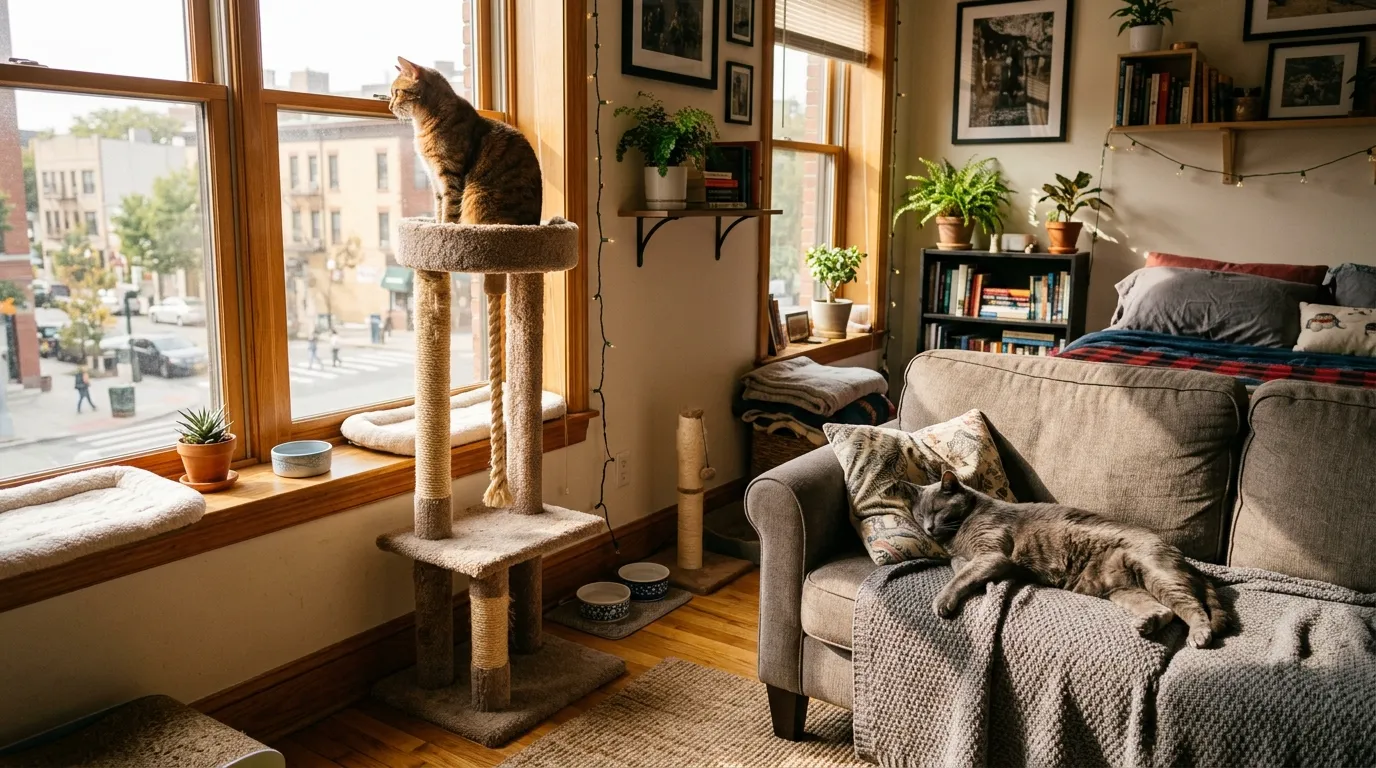
You want two cats but your apartment is small and you are not sure if it is fair to them. This is one of the most common worries that two cats in a small apartment create for owners and the answer is almost always more positive than people expect. The size of the floor plan matters far less than how the space is set up. I noticed this clearly when I added a second cat to a 550-square-foot apartment and realized the conflict had nothing to do with square footage it was about two litter boxes placed two feet apart and one cat tree that only one cat could use at a time. Fix the setup and the tension mostly disappears. This guide covers every setup decision that actually matters for multi-cat apartment living.
Two cats can thrive in a small apartment when you follow three rules: apply the N+1 litter box rule (three boxes for two cats), create vertical space so both cats have separate high perches and divide the apartment into resource zones so no cat controls access to what the other needs. Square footage is not the limiting factor setup is.
Can Two Cats Actually Be Happy in a Small Apartment?
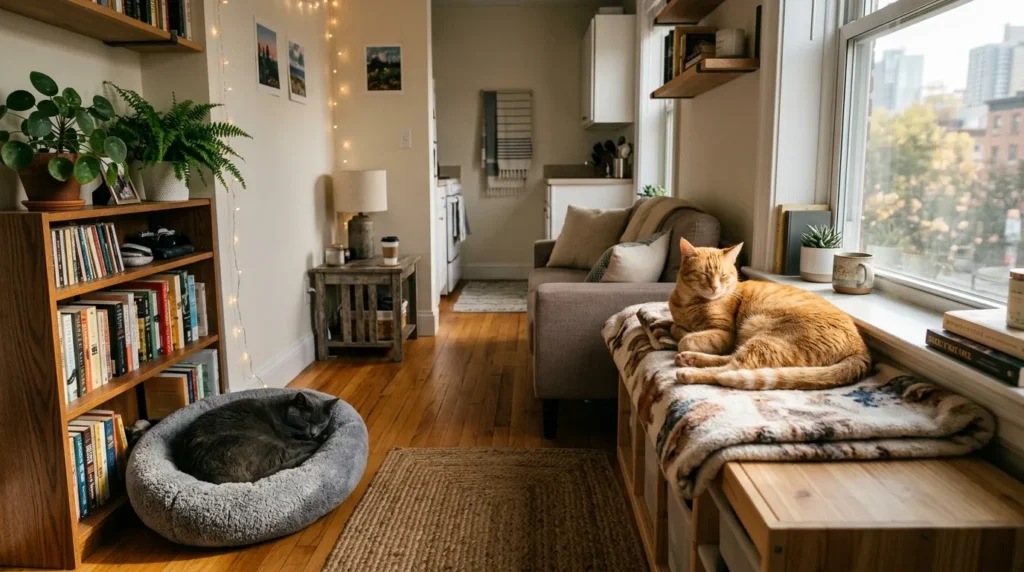
Two cats in a small apartment can be genuinely happy because cats measure their territory by access and predictability rather than square feet. A cat that can reach food, water, a litter box and a comfortable resting spot without being blocked by the other cat feels secure regardless of whether the apartment is 400 or 1,400 square feet.
The situations where small apartments fail multi-cat households are almost always resource problems rather than space problems. One litter box. One cat tree. Bowls side by side where one cat guards both. These create the kind of low-level stress that shows up as chasing, hiding, litter box avoidance and over-grooming. The space itself is not the issue. The setup is.
Bonded pairs that came from the same home or shelter adjust fastest. Two cats that have never met need a proper introduction process regardless of how big or small the apartment is. The full context of what apartment life does to a cat’s stress baseline is worth understanding before you bring home a second cat — this guide on living with a cat in an apartment covers the environmental factors that shape how comfortable cats feel in small shared spaces.
The N+1 Litter Box Rule That Prevents Most Multi-Cat Problems
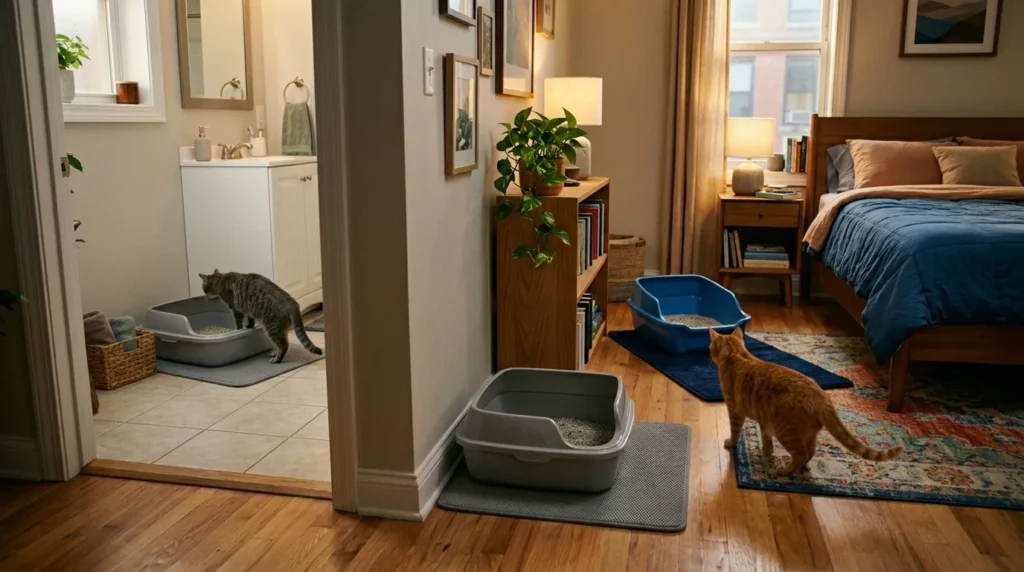
The N+1 rule is the single most important rule for multi-cat households and it means one litter box per cat plus one extra. Two cats need three litter boxes. This is not a preference it is the minimum needed to prevent litter box avoidance, which is the most common stress response in multi-cat apartments.
The placement of those three boxes matters as much as having them. Do not put all three boxes in the bathroom. Spread them across different rooms or different corners of the apartment so that one cat cannot position itself to block another cat’s access to all of them. A cat that gets ambushed at the litter box twice will start finding other places to go and once that habit starts it is difficult to reverse.
Size matters too. Each box should be large enough for your bigger cat to turn around and squat comfortably. Most store-bought boxes are too small for adult cats use the largest uncovered box you can fit in each location. Skip the covered boxes in multi-cat homes because they trap odor and create ambush points that anxious cats avoid. For everything that goes into sizing, litter type and placement that actually works in smaller spaces, this guide on setting up an indoor cat litter box gives the specific detail that makes the difference between a system that works and one that fails.
Insight The most common multi-cat litter mistake I see is three boxes in one bathroom. It counts as one location to your cats. Spread them out one in the bathroom, one in the bedroom and one anywhere else in the apartment. That separation is what actually prevents guarding.
Two Cats in a Small Apartment Need Zones Not Rooms
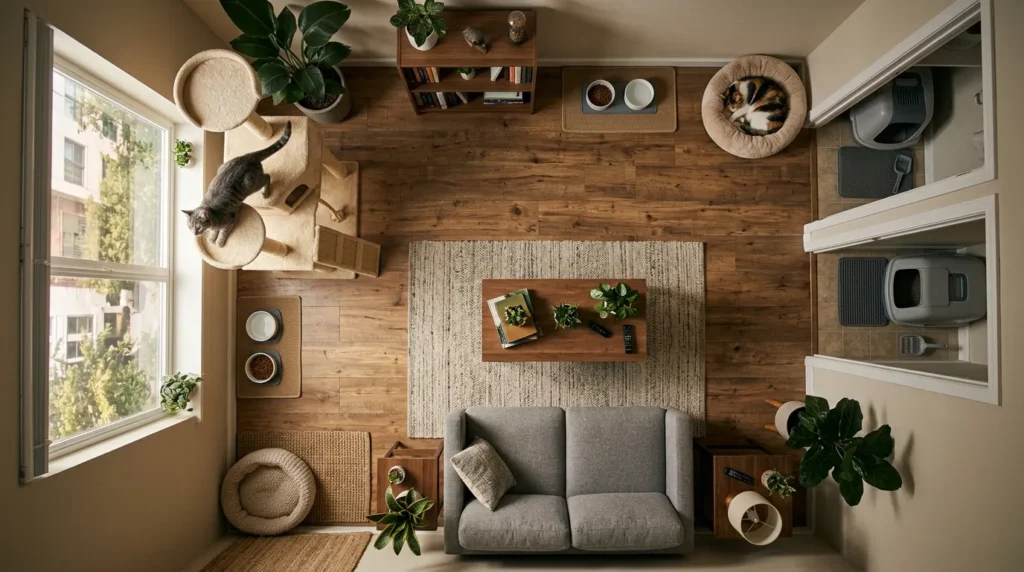
Two cats in a small apartment do best when the space is organized into zones rather than treated as one open area where everything competes for the same spots. A zone is simply a dedicated area for a specific function litter, feeding, resting and climbing. When these zones are spread across the apartment and each has enough room for both cats to access without crossing each other, stress drops significantly.
Here is a simple zone layout that works in apartments under 800 square feet:
| Zone | What Goes Here | Key Rule |
| Litter zone | 1 to 2 boxes on mats | Away from food and main traffic |
| Feeding zone | 2 separate feeding stations | Opposite sides of the room or in different areas |
| Resting zone | 2 or more beds or hideaways | In different parts of the apartment |
| Climbing zone | Cat tree, shelves, window perches | Spread across at least 2 different walls |
Resource guarding happens when one cat can physically position itself to block another cat’s access to food, water, rest spots or litter boxes. The zone layout prevents this not by giving each cat a separate room but by ensuring that no single location houses everything a cat needs. A cat that wants to guard the feeding area cannot simultaneously guard the litter box on the other side of the apartment.
Vertical Space Is What Actually Solves the Territory Problem?
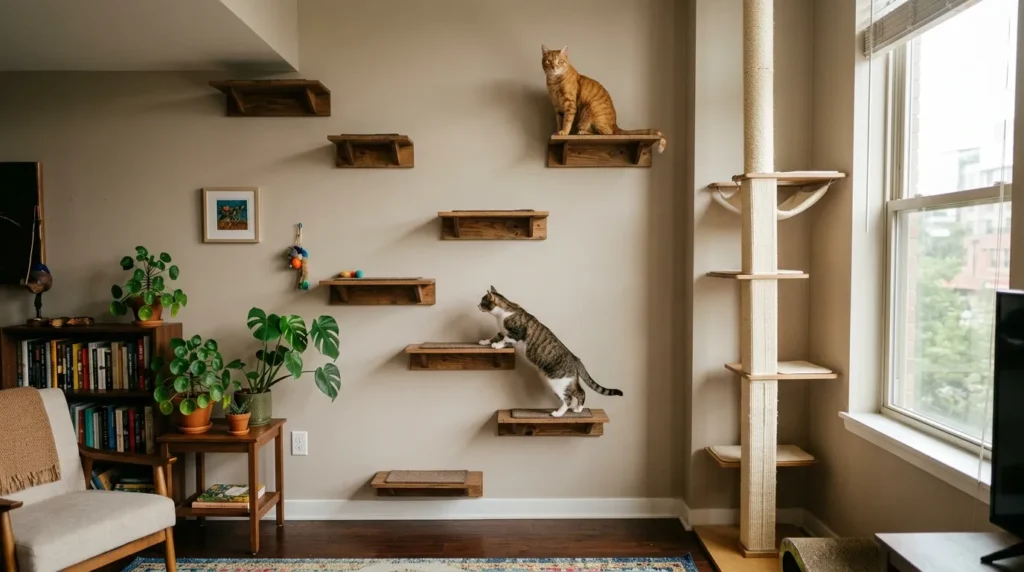
Vertical space solves the territory problem that floor space cannot. Two cats in a small apartment can both feel like they have private territory when they each have access to their own high perch. Cats communicate status through height the higher cat generally feels more confident so giving both cats the ability to be high prevents the low-level tension that builds when only one cat gets the elevated spots.
A cat highway is a set of connected shelves mounted at staggered heights across a wall so cats can travel from one end of the room to the other without touching the floor. It takes no floor space and creates an entirely separate movement layer for your cats they can pass each other at different heights without direct confrontation. Renter-friendly mounting options using command strips and tension systems mean you can set this up without drilling.
Aim for at least two separate high points on different walls so neither cat can block the other from reaching an elevated spot. Suction-cup window perches add a third option without any wall installation at all. For the specific enrichment setups that work best when two cats share a small space, this breakdown on indoor cat enrichment for apartments covers cat highway layouts and multi-cat stimulation ideas in depth. When you are ready to choose furniture, this guide on the best cat furniture for indoor cats has options that are specifically useful for apartments where floor space is limited.
Insight If your two cats keep fighting over the same cat tree, the problem is not aggression — it is scarcity. Add one more high spot on a completely different wall. The fighting almost always stops within a few days. Cats do not need to share perches when they can each claim their own.
Separate Feeding Stations Stop Food Tension Before It Starts
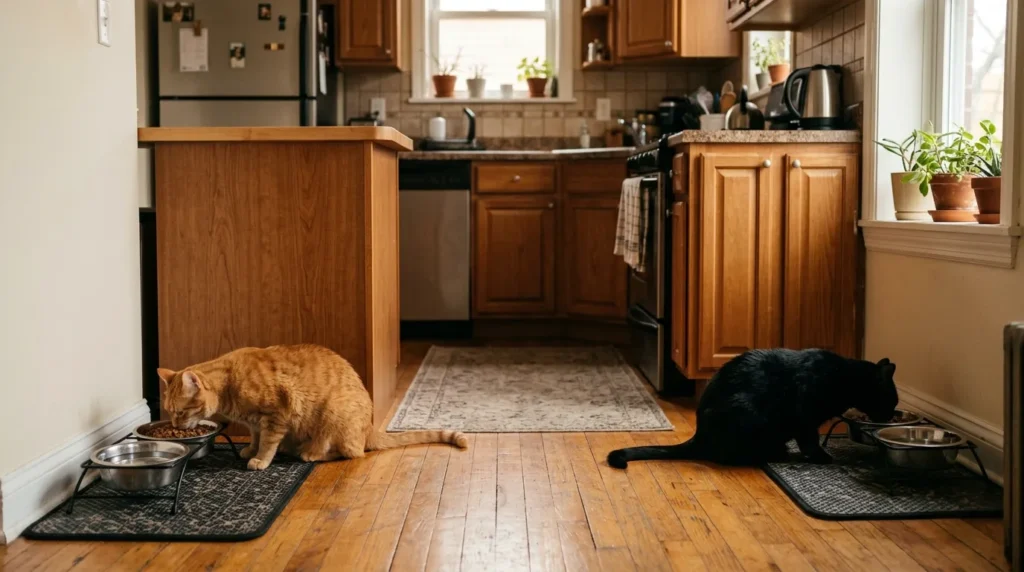
Separate feeding stations placed out of direct sight of each other remove the single biggest daily trigger for inter-cat tension. When two cats can see each other while eating, the faster or more dominant cat often rushes their own food and then moves to the other bowl. The slower eater feels threatened and either stops eating or eats too fast out of anxiety.
Place the two stations on opposite sides of the kitchen or in entirely different rooms if your layout allows it. Feed at scheduled times rather than leaving food out all day free feeding in a multi-cat home makes it much harder to monitor whether each cat is eating enough and which cat is eating whose food. Understanding how meal frequency and portion size affect indoor cats helps you build a feeding routine that keeps both cats calm and healthy. This guide on how to feed an indoor cat properly covers the specifics for multi-cat households, including how to manage weight differences between two cats eating in the same space.
How to Introduce a Second Cat to a Small Apartment Without Chaos?
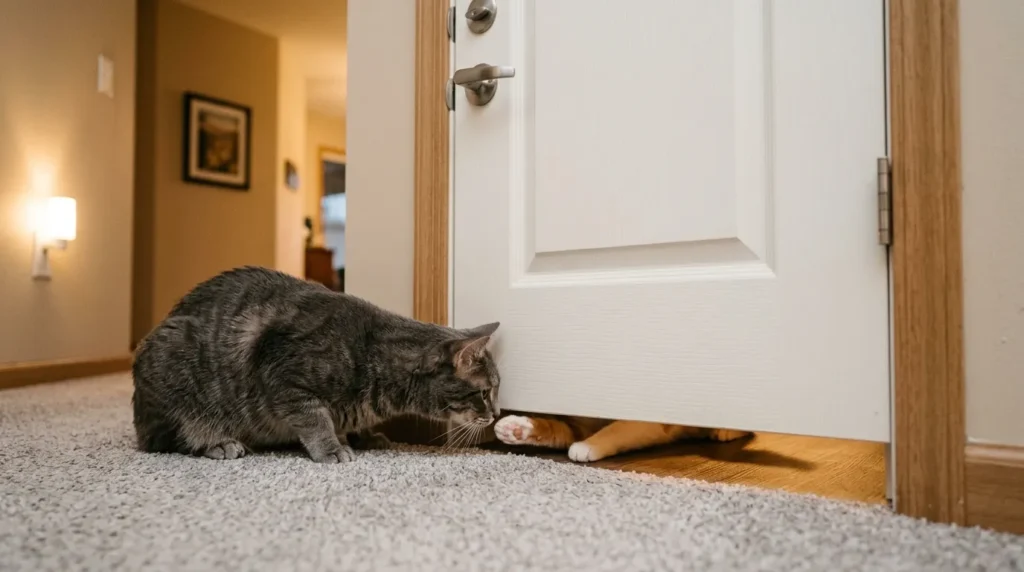
Introducing a second cat in a small apartment takes longer than most people expect and that is completely normal. The process should take a minimum of one to two weeks for cats that seem tolerant of each other and up to four to six weeks for cats that show strong reactions through the door. Rushing it creates a negative first impression that can take months to undo.
The introduction follows a clear sequence. Keep the new cat in a single room for the first week while the resident cat adjusts to the smell and sounds of another cat in the apartment. Swap bedding between the two cats daily so each cat gets used to the other’s scent before any face-to-face contact. Feed both cats near the closed door so they associate the other cat’s smell with the positive experience of eating. The next step is brief visual contact through a cracked door or baby gate before any shared space access.
According to the Cornell Feline Health Center, gradual scent-based introductions are significantly more successful than direct room-sharing introductions. Never put two cats in a room together and hope for the best — that approach sets the relationship back weeks in a single bad encounter. Understanding the territorial behavior patterns that drive how cats react to newcomers makes the whole process make much more sense. This article on indoor cat behavior explains the underlying reasons cats react the way they do to new animals and how to read the signals that tell you when your cats are ready to progress.
Common Mistakes That Create Tension Between Two Cats in Small Apartments
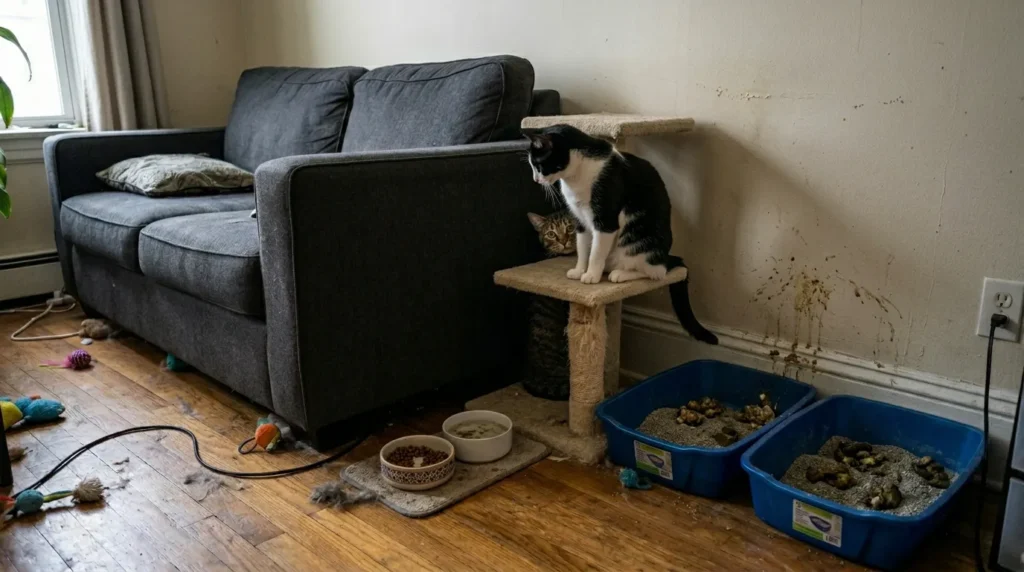
The most common mistake is treating resource quantity as a numbers problem instead of a distribution problem. Three litter boxes in one bathroom is not the same as three litter boxes in three different locations. Two food bowls side by side is not the same as two stations in different areas. Physical separation of resources is what prevents guarding proximity defeats the entire purpose of having multiple items.
The second mistake is skipping the slow introduction. Small apartments make it tempting to just let both cats figure it out because there is nowhere else for them to go. This is the worst approach in a tight space because the resident cat has no room to establish distance and the new cat has no safe retreat. The tension that results from a bad first encounter lingers for months in a space where the cats cannot fully avoid each other.
The third mistake is buying only one cat tree and one window perch. In a multi-cat home, scarcity at the high spots creates daily competition and that competition shows up as one cat chasing the other away repeatedly throughout the day. Two cats sharing a small apartment need at least two separate elevated areas on different walls. The investment in a second cat tree or a set of wall shelves costs less than any damage caused by two cats that are constantly stressed.
Insight If your two cats are getting along fine most of the time but still have one spot where conflict always starts, that spot almost always has a resource bottleneck — one way in, one way out, and something both cats want. Fix the layout at that spot and the conflict usually stops within days.
Frequently Asked Questions About Two Cats in a Small Apartment
How many litter boxes do I need for two cats in a small apartment?
Three is the minimum. The N+1 rule means one box per cat plus one extra. More importantly, spread them across different locations in the apartment so no single cat can block access to all of them at once. Two boxes side by side in one bathroom effectively count as one location to your cats.
Can two cats share a studio apartment without fighting?
Yes, when the setup is right. The studio needs at least two separate high perches on different walls, two feeding stations on opposite sides of the room and litter boxes in at least two different spots. Cats in studios adapt well when they each have access to resources without being blocked by the other cat.
How long does it take for two cats to get used to each other in a small space?
Most cats reach a comfortable tolerance within four to eight weeks of a proper introduction. Some bonded pairs that came from the same home adjust within days. Cats that had a bad first encounter may take three to six months to reach neutral coexistence. Rushing the introduction process is the number one reason cats in small apartments struggle long term.
What do I do if my two cats are constantly fighting in my apartment?
Separate them immediately using a baby gate or closed door and restart the introduction process from the beginning. Also audit your resources — count litter boxes, feeding stations and high spots. Most chronic fighting in small apartments traces back to resource scarcity or poor distribution rather than genuine incompatibility. Consult your vet if fighting involves injury or if one cat stops eating. This article is for informational purposes only. Always consult your vet if your cats are injuring each other or showing signs of chronic stress.
Is it cruel to keep two cats in a one-bedroom apartment?
No, provided the space is set up correctly with adequate resources and vertical territory. Many cats in small apartments are significantly more mentally stimulated and socially engaged than single cats in large homes with nothing to do. The quality of the setup matters far more than the size of the floor plan.
Your Two Cats Can Both Be Happy Here
Two cats in a small apartment works when you stop trying to compensate for size and start focusing on distribution. Three litter boxes in three locations, two feeding stations out of each other’s line of sight and at least two separate high perches on different walls — those three changes resolve the majority of multi-cat tension in small spaces. Start with the litter boxes today because that is the fastest fix with the most immediate impact.
Two cats in a small apartment can thrive when resources are distributed correctly. The N+1 rule requires three litter boxes for two cats placed in separate locations throughout the apartment. Each cat needs its own high perch on a different wall to prevent territorial competition. Feeding stations should be on opposite sides of the room or in separate areas. Introductions between a resident cat and a new cat should take one to six weeks using scent swapping before any direct contact. Resource guarding and not space limitations cause most multi-cat apartment conflict.