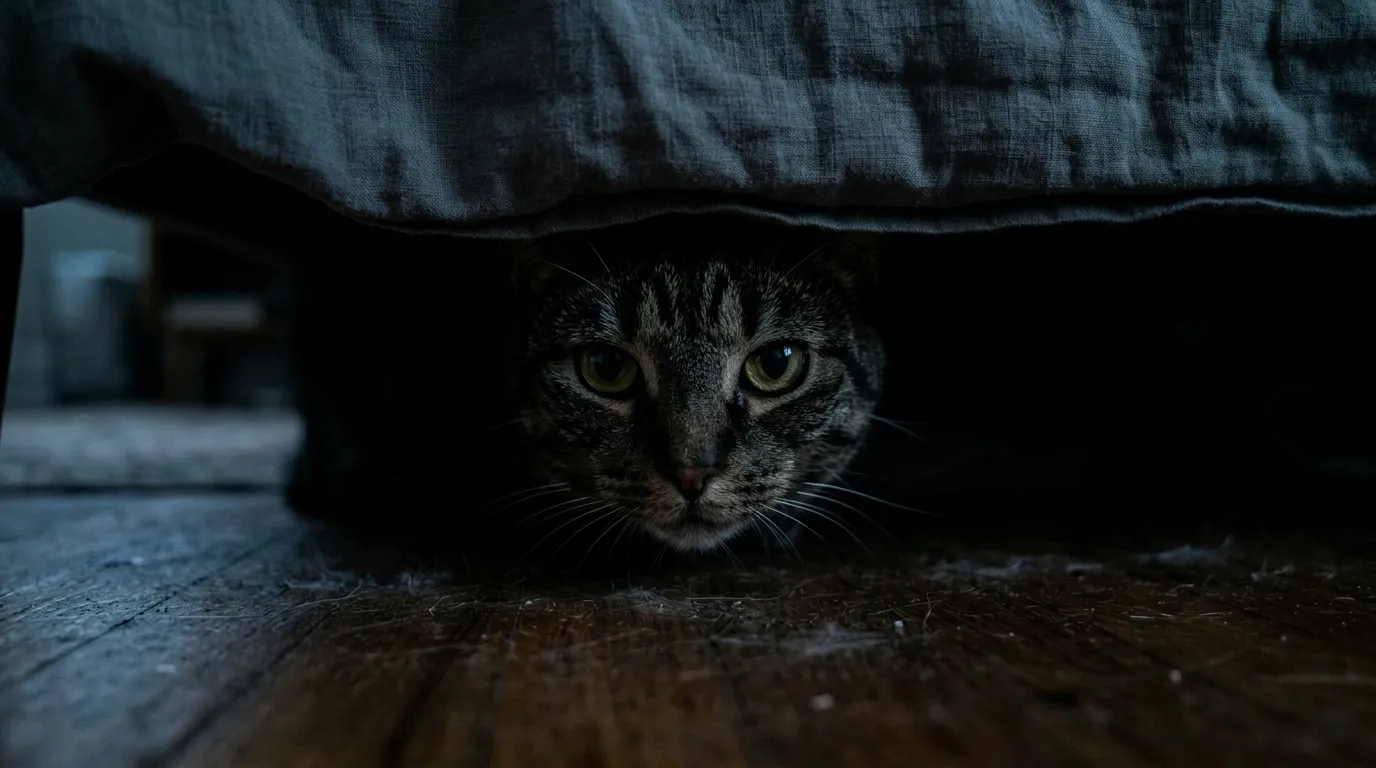
The clearest sign I ever missed was my cat hiding under the bathroom vanity for three days straight after my sister visited with her dog. The dog was only there for six hours. My cat had been fine all her life. I assumed she was just being dramatic and gave her space. What I did not realize was that three days of hiding with almost no food or water was her body telling me something was genuinely wrong and that she needed help not just time. Knowing how to reduce stress in indoor cats means recognizing those signals early and responding with the right changes rather than waiting for the problem to resolve on its own. This article covers six methods that address the actual sources of indoor cat stress rather than just the surface symptoms.
To reduce stress in indoor cats identify the specific trigger first. The six most effective methods are learning to read stress body language accurately, stopping forced handling, managing household changes gradually, reducing noise intrusion, resolving multi-cat tension through separate resources and preparing your cat for predictable stress events like vet visits. Most cats show improvement within one to two weeks of consistent targeted changes.
Method 1: Learn to Read Stress Body Language Before It Escalates
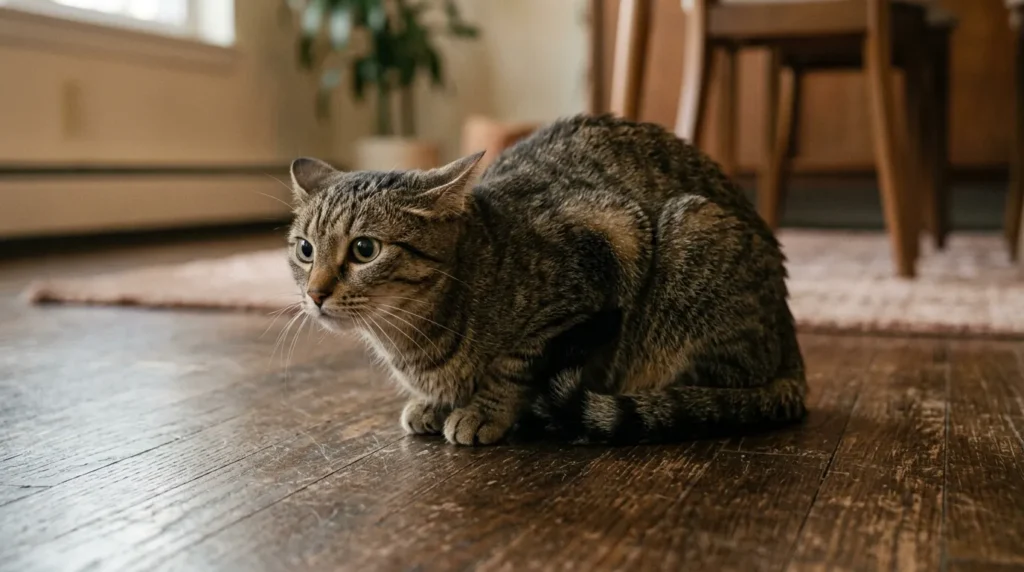
Reducing stress in indoor cats starts with catching it earlier than most owners do. By the time a cat hides for a full day or stops eating the stress has already been building for days. The signals that appear first are far subtler and learning to spot them gives you a much earlier window to intervene.
Chronic stress signals in cats appear in the body before the behavior changes dramatically. Watch for a cat that sits in a loaf position with its body tightly tucked rather than sprawling loosely. Watch for half-closed eyes that look more like squinting under fluorescent light than genuine relaxation. A tail wrapped tightly around the body while resting and ears that rotate slightly backward even at rest are both early indicators that a cat is managing sustained arousal rather than genuinely settled.
 The difference between a relaxed cat and a stressed cat at rest is visible in the muscle tone. A genuinely relaxed cat has loose jaw muscles, soft round eyes and lies slightly asymmetrically. A stressed cat holds its body with subtle tension even when still. Once you can see this difference you will start catching stress episodes days earlier than before and that early window is where interventions actually work.
Method 2: Stop Forced Handling and Let the Cat Set the Terms
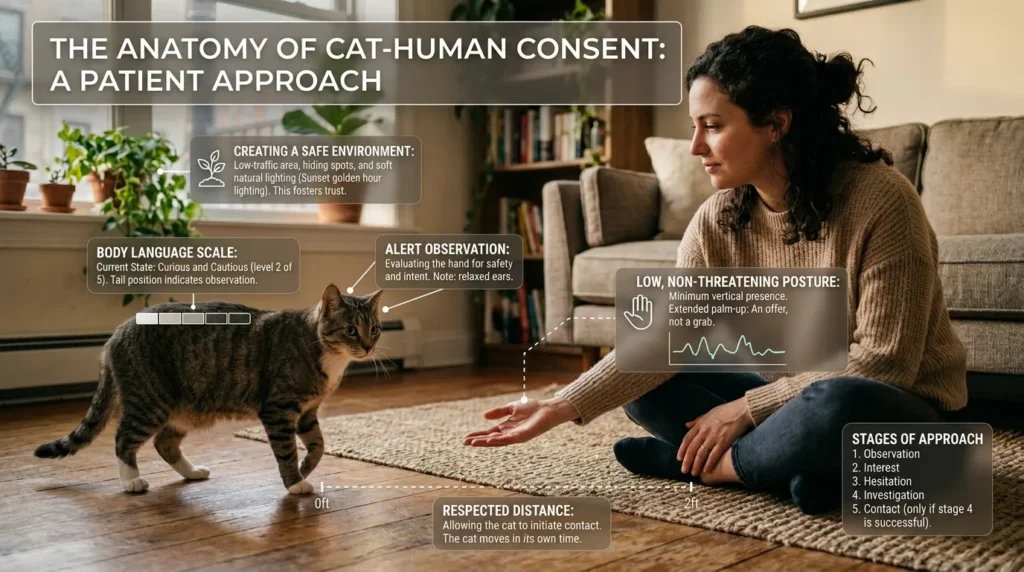
Forced physical contact is one of the most consistent stress sources in indoor cats and one of the least recognized because it comes from a place of genuine affection. Picking up a cat that is walking away, holding a cat that has gone stiff or continuing to pet a cat that has started tail-flicking are all forms of physical stress that accumulate across hundreds of small interactions over months.
Over-handling stress does not produce dramatic responses in most cats because cats suppress discomfort rather than expressing it openly. What it produces instead is a cat that becomes increasingly avoidant, develops a lower threshold for swatting or biting and eventually stops initiating contact at all. The owner interprets this as the cat becoming less affectionate. The cat has simply learned that approaching a human produces unpredictable physical experiences it cannot control.
The fix is immediate and costs nothing. Let the cat approach. Extend a hand and wait. Pet for three to five strokes then stop and observe. If the cat stays or pushes into your hand continue. If it moves away let it go without following. Cats that are consistently given this choice become more affectionate over time not less because contact becomes associated with positive predictable outcomes rather than unpredictable restraint.
The cats that bite without warning are almost always cats that have been giving warning signals for months that nobody noticed. The tail flick the skin twitch the turning of the head are all requests to stop. When those requests are consistently ignored the only option left is something impossible to ignore. If your cat bites read the ten seconds before the bite and you will find the warning every time.
Method 3: How to Reduce Stress in Indoor Cats During Household Changes?
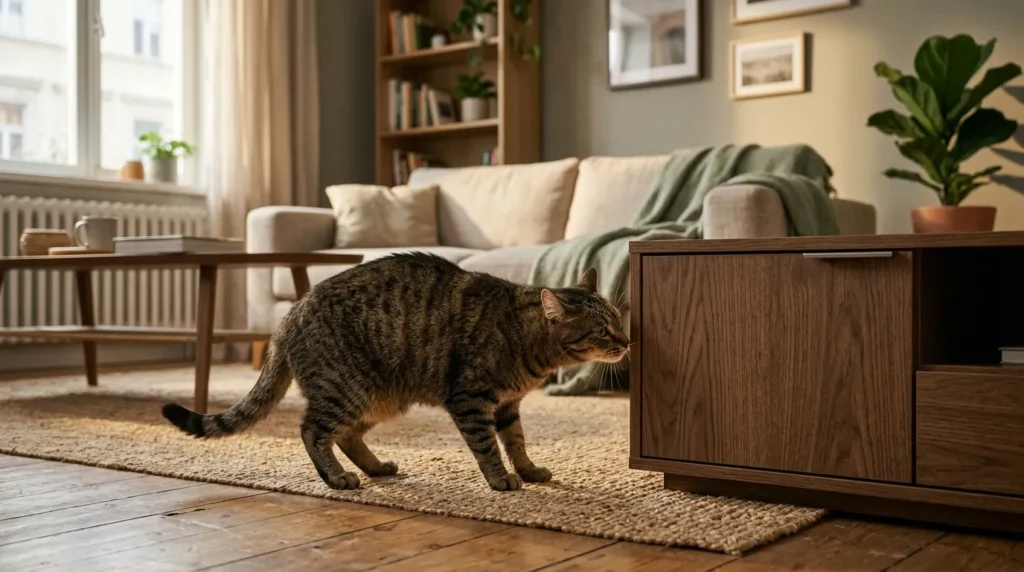
Household changes are among the most reliable stress triggers for indoor cats because they disrupt the scent landscape and spatial layout that a cat uses to navigate its territory. A new baby a new partner moving in a renovation or even a significant furniture rearrangement all require the cat to rebuild its internal map of a space it previously knew completely.
The critical variable is speed. A single change introduced gradually over several days produces a very different response than five changes happening simultaneously over a weekend. Before any significant household disruption set up one room that will not change. The cat’s food water litter and sleeping area stay in this room and the room itself stays off-limits to the disruption activity. This gives the cat a territorial anchor while the rest of the home changes around it.
For new people moving into the home the introduction should happen through scent before physical presence. Leave a worn item of clothing belonging to the new person in the cat’s space for several days before the first in-person meeting. When the physical introduction happens let the cat leave the room whenever it wants. Do not close doors. The cat choosing to stay is meaningful. The cat being prevented from leaving is not an introduction at all.
Method 4: Sound and Noise Management That Most Owners Never Consider
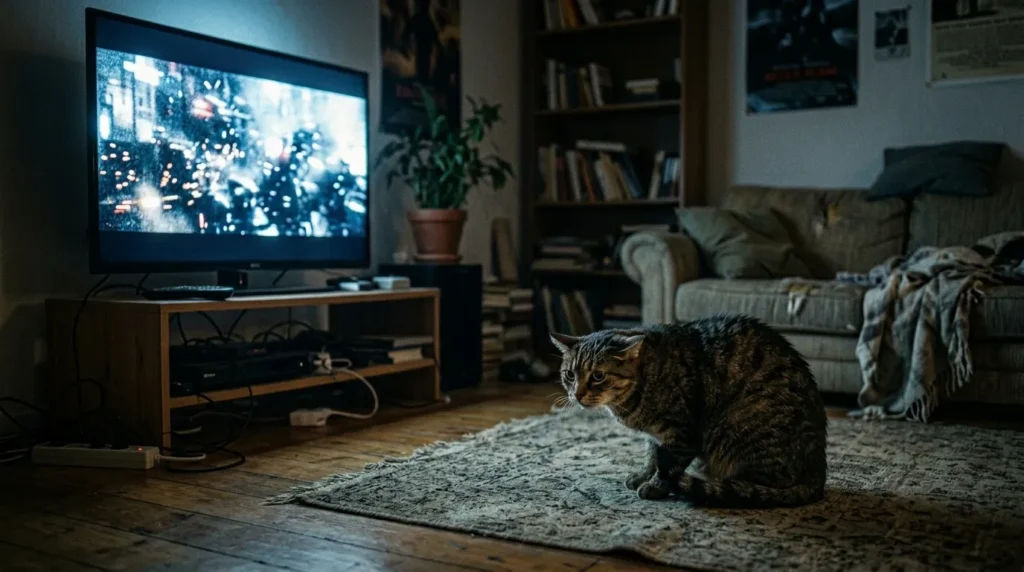
Cats hear significantly more than humans do and process a wider frequency range. Sounds that register as background noise to an owner can be genuinely loud and disorienting to a cat in the same room. Auditory stress from construction noise traffic appliances and even high-volume television is a real and underestimated indoor cat stressor that most owners never identify because they cannot hear the problem themselves.
According to the International Cat Care organization, unpredictable sound is more stressful to cats than consistent sound at the same volume because predictability allows the nervous system to habituate. A washing machine that runs at the same time every day in the same room becomes background. A neighbor’s drill that appears randomly at varying volumes never becomes background and keeps the cat in a sustained state of alert.
Practical management includes giving your cat access to quieter rooms during high-noise periods, adding soft background sound like classical music or a white noise machine to reduce the contrast between silence and sudden loud noise and avoiding placing the cat’s resting areas near appliances that produce unpredictable sounds including washing machines refrigerators and heating units that click and hiss.
If your cat disappears every time you run the dishwasher or vacuum it is not being dramatic. It is responding to something genuinely uncomfortable at a volume you cannot hear. Identify which sounds trigger the retreat and either move the cat’s resting areas away from those sound sources or change the timing so the cat has a predictable schedule to work around. Predictable is always better than random when it comes to sound stress.
Method 5: Resolving Multi-Cat Tension by Finding the Actual Source
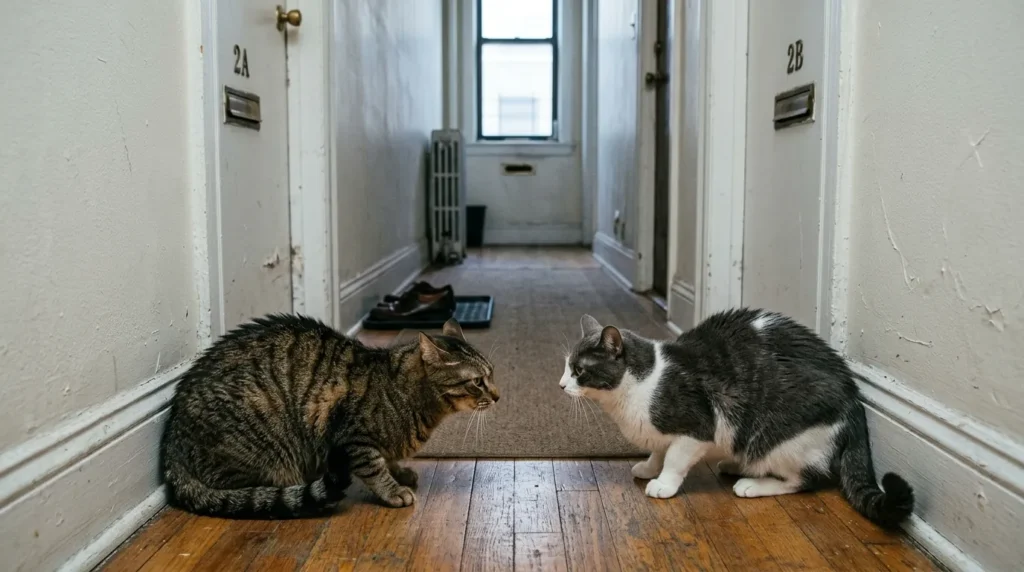
Inter-cat stress in a multi-cat apartment is almost never about the two cats disliking each other in the way humans think of it. It is almost always about resource scarcity or spatial bottlenecks that force cats into proximity they would otherwise avoid. Two cats can coexist peacefully with adequate space and genuinely cannot coexist in the same space if the layout forces them to pass each other to reach anything they need.
 Identify where the tension happens physically. If cats confront each other most often in the hallway between the bedroom and the kitchen the problem is a spatial bottleneck not a personality conflict. Adding a second route such as a raised shelf route along the wall gives the subordinate cat a way to move through the space without ground-level confrontation.
Watch specifically for a cat that eats less than usual, uses the litter box less or avoids certain rooms entirely. These behaviors in a multi-cat home almost always indicate a subordinate cat modifying its behavior to avoid the dominant cat rather than a cat with an individual problem. Separating resources to both ends of the apartment rather than clustering them in one area resolves most of these cases within a week without any direct behavioral intervention.
Method 6: Preparing Your Cat for Predictable Stress Events Before They Happen
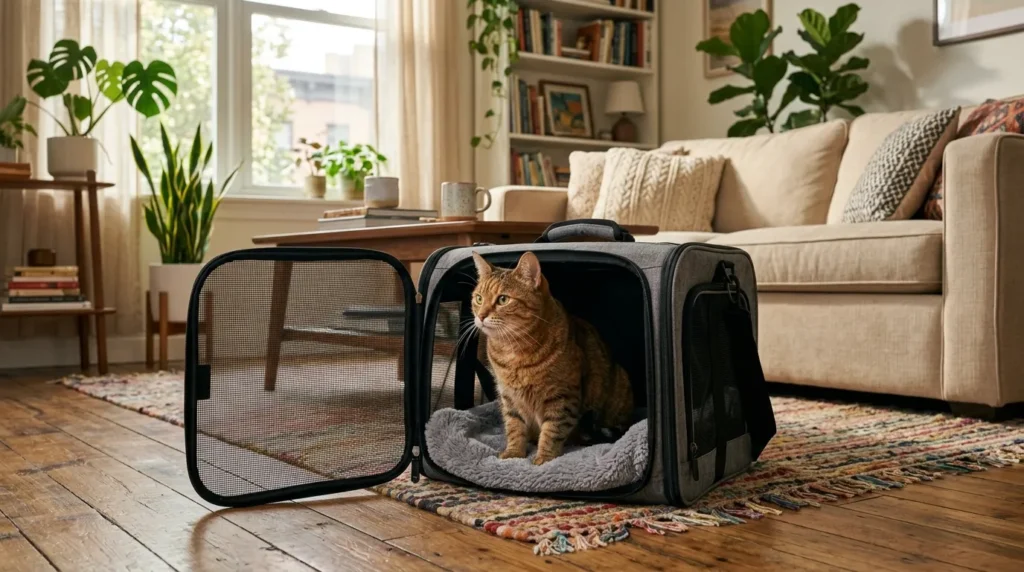
Vet visits are the single most acutely stressful regular event in most indoor cats’ lives and they are almost entirely manageable with the right preparation. Most of the stress does not come from the vet appointment itself. It comes from the carrier appearing suddenly from a closet, the cat being placed inside it against its will and the unfamiliar sounds and smells of the car journey all happening in rapid succession with no warning.
The carrier should live in the apartment permanently rather than appearing only before vet visits. Place it in an area your cat already uses with familiar bedding inside. Feed treats near it and eventually inside it over several weeks until the cat associates the carrier with positive or neutral experiences rather than exclusively with the stress sequence that follows. A cat that walks into its carrier voluntarily experiences the subsequent journey as a manageable event rather than a violation of its sense of safety.
For unavoidable acute stress events like fireworks or thunderstorms prepare a specific retreat space in advance rather than scrambling during the event. A covered crate in an interior room with familiar bedding a worn item of your clothing and access to water gives the cat a contained safe space to process the stressor without also having to manage an unfamiliar environment at the same time.
The Stress Reduction Mistakes That Extend the Problem
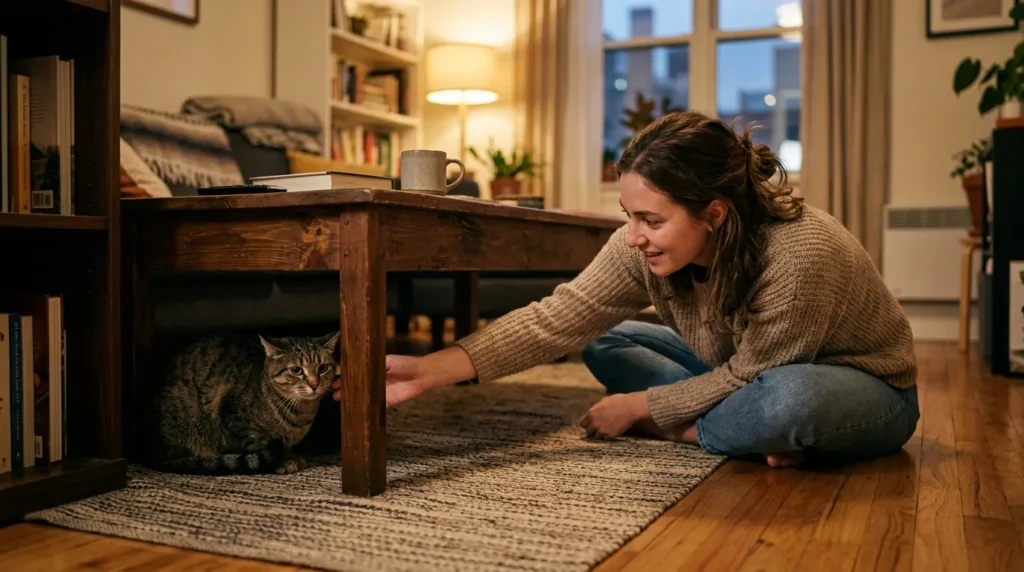
The most consistent mistake is trying to comfort a stressed cat through physical contact when it has not asked for it. Following a cat into its hiding spot picking it up or continuing to stroke it while it shows avoidance signals does not reduce stress. It removes the cat’s primary coping mechanism which is controlled distance and adds physical restraint on top of an already activated stress response.
The second mistake is treating all stress as a single problem with a single solution. A cat that is stressed by a new person in the home needs a different intervention than a cat stressed by a neighbor’s dog barking or a cat stressed by competition with a housemate. Applying a generic enrichment plan to a specific stress source rarely resolves the problem because the root cause remains untouched.
The third mistake is expecting improvement in days when the stress has been building for months. A cat that has been chronically stressed for three months will not fully reset in a week of environmental changes. Progress is visible in three to four weeks of consistent targeted work. Giving up after five days because the cat is still hiding treats the timeline as the problem rather than the strategy.
When Stress Symptoms Require a Vet Visit?
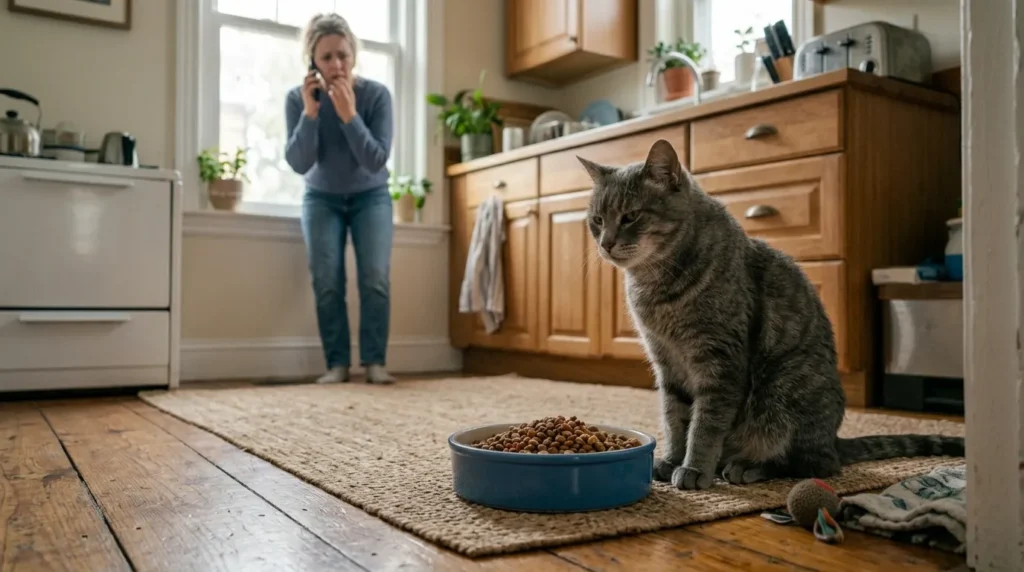
A cat that stops eating entirely for more than twenty-four hours needs veterinary attention regardless of the apparent behavioral cause. Stress and illness produce overlapping symptoms and a vet examination is the only way to distinguish between them accurately.
Watch for any cat showing straining in the litter box with little output especially male cats. Stress-triggered cystitis can progress to a urethral obstruction within hours and an obstruction is fatal without same-day treatment. Do not monitor this one at home.
A cat that has been hiding for more than forty-eight hours combined with reduced appetite and no interest in interaction that was previously normal has moved past temporary stress adjustment into a state that warrants professional assessment. Behavioral and physical causes need to be ruled out before the environment alone can be blamed.
Frequently Asked Questions About Reducing Stress in Indoor Cats
What are the signs that my indoor cat is stressed?
Early signs include a tight loaf posture with tucked limbs, ears rotated slightly backward at rest, reduced appetite and less frequent litter box visits. Advanced signs include hiding for extended periods, over-grooming bald patches and litter box avoidance.
How long does it take to reduce stress in an indoor cat?
Most cats show visible improvement within one to two weeks when the correct stress source has been identified and addressed. Cats that have been chronically stressed for months take three to four weeks of consistent environmental changes to return to a relaxed baseline.
Can stress make an indoor cat physically sick?
Yes. Feline idiopathic cystitis is a bladder condition caused directly by psychological stress and produces symptoms identical to a urinary infection with no bacteria present. If your cat is straining in the litter box with little output see a vet the same day.
Do pheromone diffusers actually help stressed cats?
Pheromone diffusers reduce specific stress behaviors including urine spraying and inter-cat tension over a two to four week period when used correctly. They work best alongside environmental changes rather than as a standalone solution.
My cat is stressed by visitors. What should I do?
Set up a dedicated room the cat can access freely during visits with food water litter and familiar bedding and close that room off from guest traffic. Let the cat emerge on its own schedule rather than bringing guests to find it.
Conclusion
Reducing stress in an indoor cat requires identifying the specific source before applying any solution. The six methods in this article work because each targets a real and distinct cause rather than offering generic enrichment advice. Start today with the one that most closely matches what you have been observing. If your cat avoids a person work on method two. If it hides after household changes work on method three. Small targeted changes produce faster results than large unfocused ones. For help setting up the physical environment that supports a calm cat check out how to make your apartment cat friendly from scratch.
To reduce stress in indoor cats identify the specific trigger before applying any intervention. The six most effective methods are reading stress body language before behaviors escalate, stopping forced handling, managing household changes gradually with a scent-based introduction process, reducing auditory stress from unpredictable noise, resolving multi-cat tension through separate resource placement at opposite ends of the apartment and preparing cats for predictable stress events like vet visits through carrier conditioning. Most cats show measurable improvement within one to two weeks of consistent targeted environmental changes.