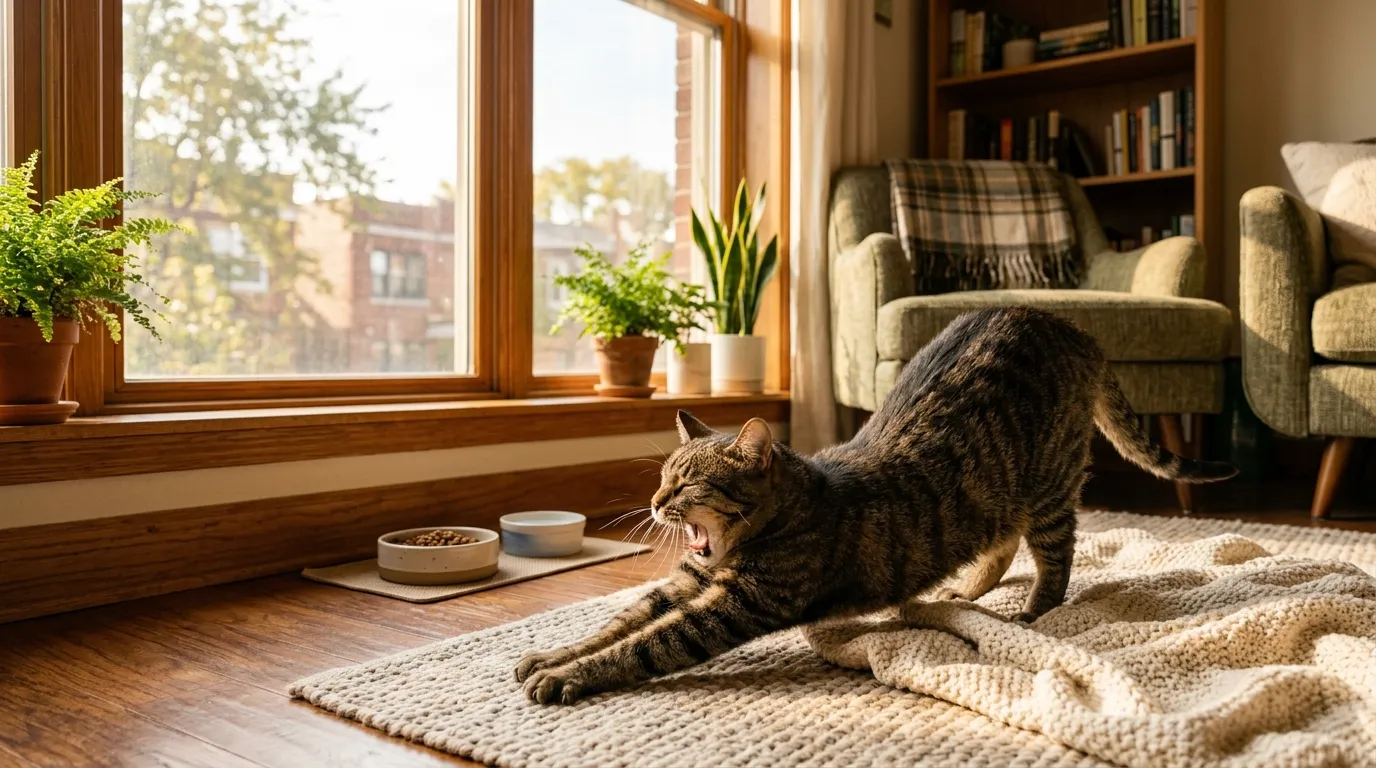
Most indoor cats are not lazy they are bored, under-stimulated, and living without any real structure. I noticed this the hard way when my cat started waking me up at 4am every single morning, not because she was hungry, but because the rest of her day had zero predictability and nighttime was the only time anything interesting happened. Building a consistent indoor cat daily routine fixed it inside two weeks. This guide covers the seven daily habits that make the biggest difference for your cat’s mood, health, and your own sanity.
An indoor cat daily routine should include scheduled meals twice a day, two short play sessions totaling 15 to 20 minutes, a litter box scoop at least once daily, fresh water, and a calm wind-down before bed. Consistency matters more than perfection cats thrive on predictability, and a routine repeated at roughly the same times each day reduces anxiety, prevents most behavior problems, and improves sleep for both of you.
Habit 1: Play Before Breakfast Every Single Morning
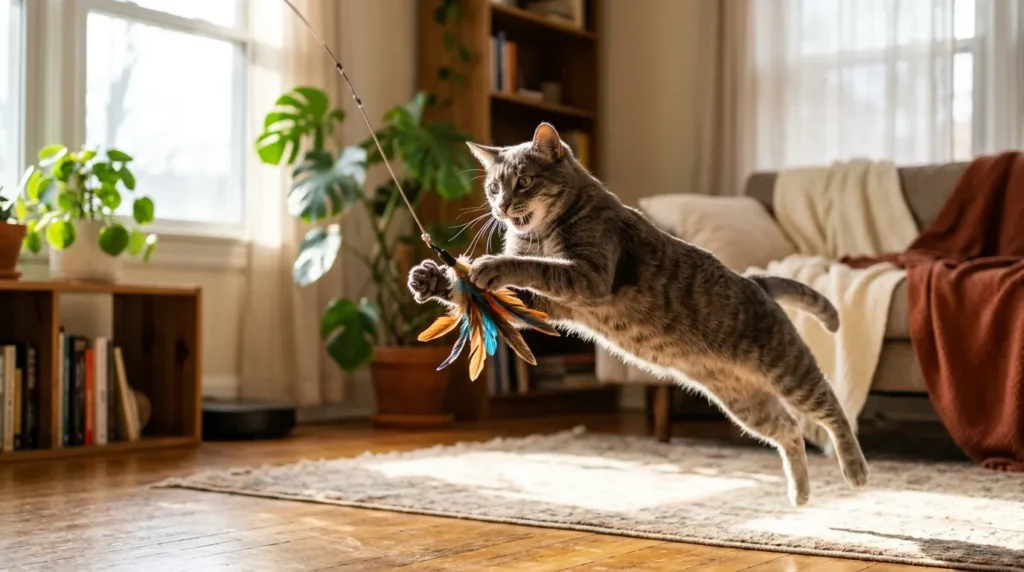
Play before breakfast is the single most impactful habit you can add to your morning, and most owners skip it entirely. The reason it works comes down to your cat’s prey sequence the instinctual cycle of stalk, chase, catch, eat, groom, and sleep that cats are wired to complete multiple times a day. When you replicate that sequence indoors, your cat’s nervous system gets exactly what it is built for.
Spend five to ten minutes with a wand toy or feather teaser before putting the food bowl down. Let your cat chase, pounce, and actually catch the toy then serve breakfast immediately after. Your cat eats, grooms, and settles into a deep nap. That full cycle sets a calm tone for the entire morning and is the reason cats that were waking owners at 4am stop doing it within a week.
The most common mistake here is using a laser pointer as the main play tool. Laser pointers never give your cat a physical catch all the arousal, none of the resolution. That frustrated energy does not disappear; it comes out sideways later. Use something your cat can grab and carry at the end of every session and the morning routine actually completes.
Play before food is not just a nice idea it is the thing that stops most morning behavioral problems cold. Cats that wake owners at 4am, knock things off counters, or yowl at first light are almost always under-stimulated cats whose only outlet is pushing your buttons. A five-minute wand session before breakfast removes the need for all of it. Try it for one week before you try anything else.
Habit 2: Feed on a Schedule Twice a Day, Same Times
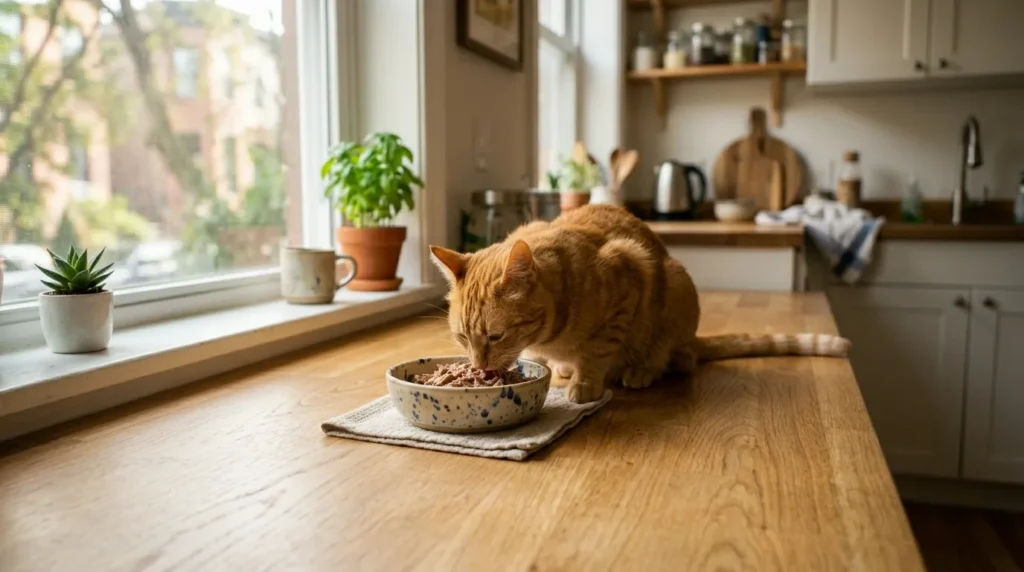
Scheduled meals twice a day outperform free-feeding for almost every indoor cat. Feed at the same times daily morning after play, evening after the second play session and your cat’s entire biology aligns with the routine. Hunger peaks at predictable times, litter box visits become clockwork, and you notice immediately when your cat skips a meal because it actually means something.
Wet food should be the foundation, not a treat. Indoor cats are at higher risk for urinary problems because of their lower activity levels, and wet food delivers the hydration dry food cannot match. High protein, low grain, named meat source as the first ingredient those three things on the label are all you need to check. If you use dry food at all, measure it and put it away between meals.
Calorie management becomes simple once meals are scheduled. You know exactly how much your cat ate and when. A cat that grazes all day on a bowl of dry food left out is a cat whose weight creeps up so slowly you do not notice until the vet mentions it at the annual visit.
Habit 3: Scoop the Litter Box Every Day Without Exception
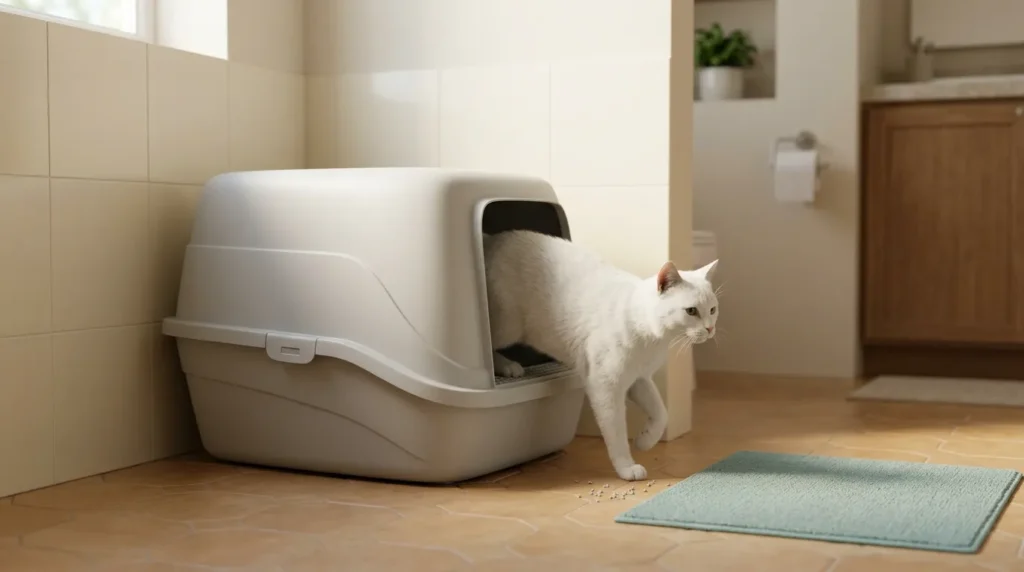
Litter box hygiene is the most skipped habit in the indoor cat daily routine and the one with the fastest, most unpleasant consequences when you let it slide. Scoop at minimum once a day twice if you have more than one cat. A dirty box does not just smell bad; it tells your cat the box is no longer a safe and acceptable option, and cats find alternatives quickly.
The morning scoop right after breakfast is the easiest one to build in because your cat will use the box within twenty minutes of eating it is just how feline digestion works. Add an evening scoop before bed and you have covered the day completely. A full litter change and box wash every one to two weeks keeps things genuinely clean rather than just surface-managed.
One box per cat plus one extra is the rule. Two cats means three boxes minimum. In a small apartment this feels like a lot, but the alternative litter avoidance and the carpet cleaning that follows is a significantly worse trade.
Habit 4: Midday Enrichment for the Hours You Are Away
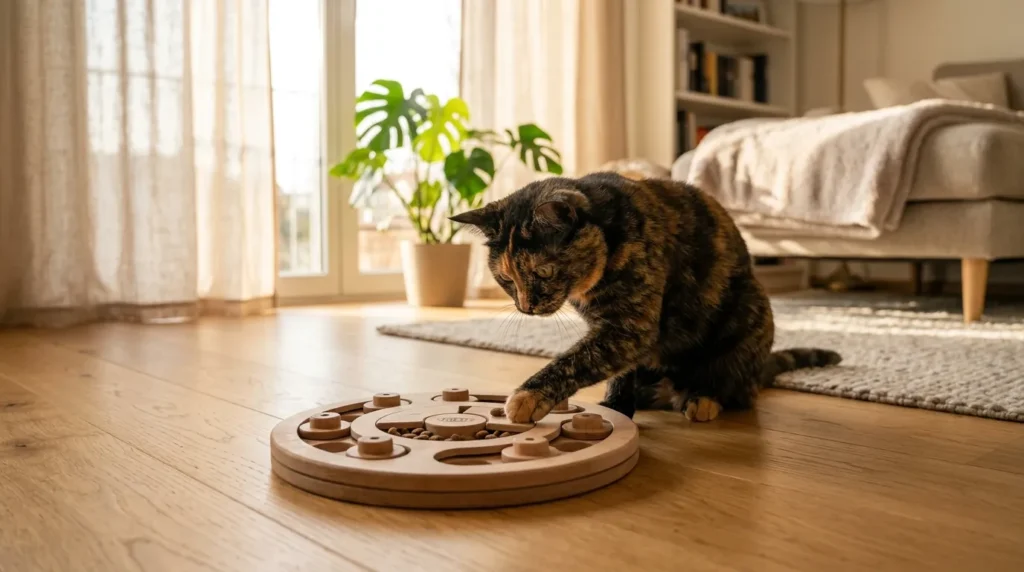
Most indoor cats sleep through the middle of the day, which is completely normal according to the Cornell Feline Health Center, cats sleep between 12 and 16 hours daily. The goal at midday is not to keep your cat awake. It is to give them something interesting to wake up to when they naturally rouse.
Puzzle feeders placed before you leave give your cat a task that mimics hunting without requiring you to be home. Hide a small portion of kibble inside one and put it somewhere new each morning the novelty of the location is half the enrichment. Rotate two or three toys so fresh options are visible when your cat decides to explore. This costs you thirty seconds and makes the hours you are gone significantly less empty.
Window access is the other midday essential. A perch at bird-height near a feeder outside gives your cat the visual stimulation that an unstimulating apartment simply cannot provide on its own. Cats that have a window station to return to throughout the day are measurably calmer in the evenings all that watching and tracking burns real mental energy.
Habit 5: A Second Play Session Before Dinner Every Evening
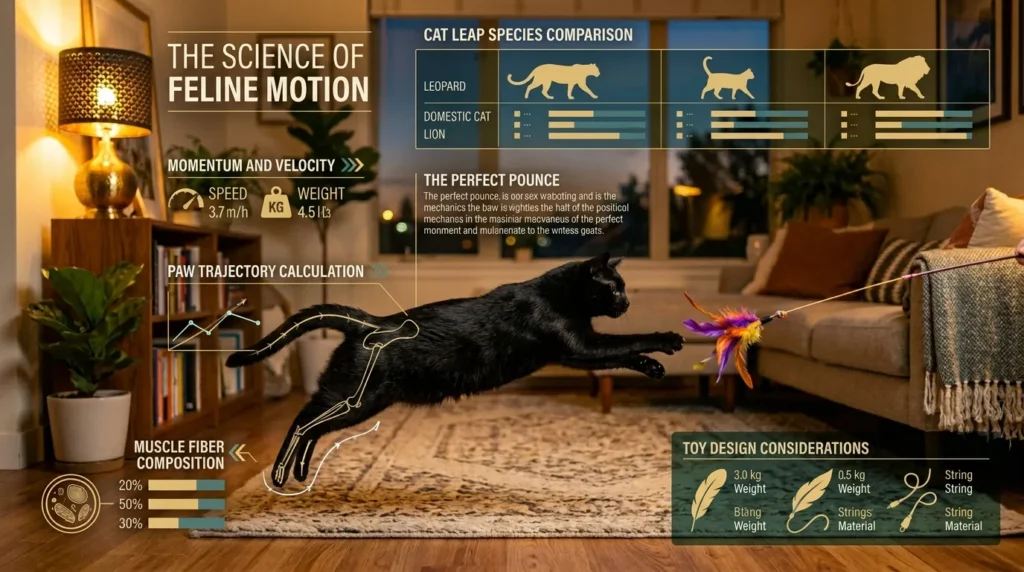
Evening is the second natural activity peak for indoor cats and the session most owners skip when they come home tired. Skipping it is what turns a manageable cat into one that tears around the apartment at 11pm and sits outside the bedroom door yowling at 2am. Ten minutes of active play before dinner is not optional it is the thing that makes the rest of the evening quiet.
Use a wand toy and actually move it like prey erratic, unpredictable, low to the ground, then up, then still. Let your cat catch it several times during the session and end by letting them carry it. Then put the food bowl down immediately. Dinner after play means the prey sequence completes in full: hunt, catch, eat, groom, sleep. Your cat settles within twenty minutes and stays settled.
 After dinner, scatter a few treats around the apartment for a low-energy treat hunt. This keeps your cat gently active without ramping them back up, gives their predatory instinct one final quiet outlet, and extends the evening in a calm direction rather than a chaotic one.
The evening play session does not need to be impressive it needs to be consistent. Five minutes of genuine wand play every evening beats thirty minutes on the weekend every time. Cats do not bank stimulation. They need it daily, and they need the prey sequence to complete. That is the whole formula.
Habit 6: Fresh Water Every Morning Without Fail
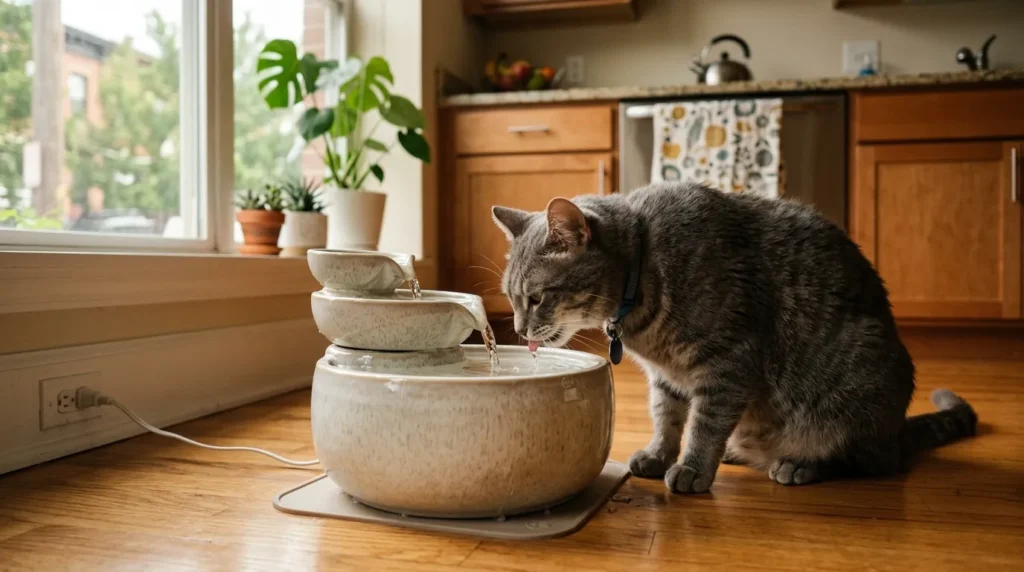
Fresh water daily is one of the smallest habits in the routine and one of the most ignored. Many cat owners top up the bowl rather than emptying and refilling it, which means a cat that is already inclined to avoid still water is drinking from a bowl that has been sitting out since Tuesday. Change it completely every morning takes ten seconds.
Water fountains make a genuine difference for cats that consistently drink too little. Something about moving water triggers the instinct to drink in a way that a still bowl does not it mimics a running stream, which is what cats evolved drinking from. If your cat is a reluctant drinker, a fountain is the single easiest upgrade you can make. The main limitation is the filter maintenance they need cleaning every one to two weeks or they become a bacteria source rather than a solution.
Position the water bowl away from the food bowl. Cats instinctively avoid drinking near their food source because in the wild, prey contaminated water sources. Keeping them separate increases how much your cat drinks without any other changes.
I spent weeks thinking my cat just did not drink much turns out she was avoiding a bowl placed two inches from her food. Moved the water to the other side of the kitchen and she started drinking noticeably more within the same day. It is a small thing that makes a real difference, especially for cats prone to urinary issues.
Habit 7: A Consistent Bedtime Wind-Down Signal
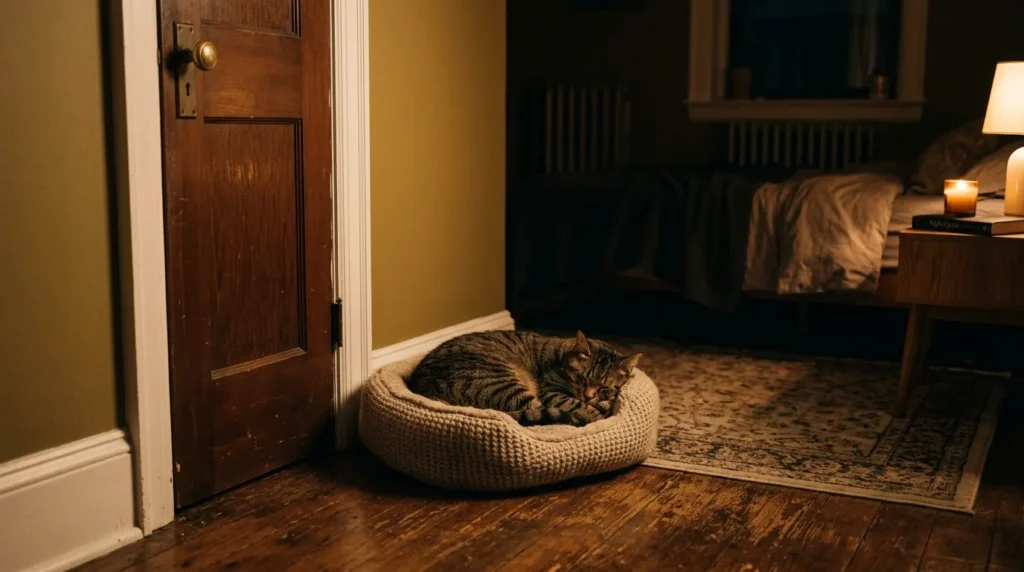
A consistent bedtime cue is the habit most owners do not realize they can train and it is the one that determines whether you sleep through the night or not. Cats pick up on environmental signals faster than most people expect. The same lamp dimmed, the same toy put away, the same moment the food bowl is picked up for the night within a week of consistent signals, most cats start winding down before you even reach the bedroom.
The cue matters less than the consistency. Whatever you choose, do it the same way at the same time every night. Cats that have a clear end-of-day signal settle faster, sleep longer, and are less likely to treat 3am as peak activity hour. The routine tells them the day is done.
Do not feed your cat right before bed if nighttime waking is a problem. A meal too close to sleep means your cat is still digesting and active when you want them settled. Feed dinner at least ninety minutes before your actual bedtime the prey sequence will have completed by then and your cat will be in their natural post-meal sleep phase right when you need them to be.
The Routine Mistakes That Undo Everything

The biggest mistake is treating consistency as optional. A routine that happens three days out of five is not a routine it is an occasionally recurring event, and cats do not build security around those. If your schedule genuinely varies, an automatic feeder handles meals and the play sessions are all that actually require you.
The second mistake is thinking your cat is fine without the routine because they seem calm. Behavioral problems in indoor cats build gradually and quietly the indoor cat that seems perfectly content with zero structure is usually just suppressing it. By the time something goes wrong, the pattern has been there for weeks. A daily routine prevents most problems from developing in the first place.
The third mistake is quitting after two or three days because the cat did not immediately respond. Cats take seven to fourteen days to adjust to a new pattern. Keep going. The results come after the adjustment period, not during it.
When a Routine Change Signals a Health Problem?
A cat that breaks its own established routine is almost always telling you something is wrong physically. A cat that suddenly skips breakfast, stops using the litter box it has visited daily for years, or does not show up for the evening play session it normally sprints to those are signals, not moods.
Litter box avoidance combined with frequent squatting and little or no output is a urinary emergency, especially in male cats. That combination can become fatal within 24 to 48 hours. Do not wait and see go to the vet the same day.
Sudden weight loss, dramatically increased thirst, or a personality shift toward hiding and withdrawal are all worth a vet call. Indoor cats are skilled at masking discomfort until they cannot anymore. The routine gives you the baseline trust it when something in that baseline changes.
This article is for informational purposes only. Always consult your vet if you have concerns about your cat’s health.
Frequently Asked Questions About Indoor Cat Daily Routines
What is a good daily schedule for an indoor cat?
A good indoor cat daily schedule runs like this: morning play before breakfast, litter scoop and fresh water after breakfast, midday puzzle feeder or window enrichment, evening play before dinner, a treat hunt after dinner, and a consistent calm bedtime cue. That structure covers every core physical and behavioral need and takes under thirty minutes of your actual time each day.
How many times a day should I play with my indoor cat?
Twice a day is the minimum once in the morning before breakfast and once in the evening before dinner. Each session should run five to fifteen minutes of active, interactive play where you control the toy. Two shorter sessions beat one long one because they align with your cat’s natural activity peaks at dawn and dusk.
Why does my indoor cat wake me up every morning?
Your cat wakes you up because it has learned that it works. If you have ever gotten up, fed them, or responded to stop the noise your cat connected the meowing to the result. The fix is a pre-bed play session followed immediately by dinner, so the prey sequence completes and your cat sleeps through. Stop responding to early demands entirely to reset the pattern. If waking is sudden and accompanied by other behavioral changes, consult your vet to rule out a medical cause.
Do indoor cats really need a daily routine?
Yes. Cats without predictable daily schedules show higher rates of anxiety, stress-related behaviors like over-grooming and unprovoked aggression, litter box avoidance, and nighttime restlessness. Routine is not a convenience it is a welfare need for an animal whose entire sense of safety comes from territorial predictability.
How do I build a routine if I work long hours?
An automatic feeder handles meals at consistent times without you. A puzzle feeder set out before you leave covers midday enrichment. The only parts that genuinely require your presence are the play sessions five minutes before work and ten minutes after you get home. Fifteen minutes total is enough for an indoor cat to thrive if the rest of the routine holds.
Conclusion
The indoor cat daily routine that works comes down to seven habits done consistently: play before meals, feed on a schedule, scoop the litter box every day, provide midday enrichment, play again before dinner, refresh the water every morning, and give your cat a clear bedtime signal. Start today with the one that has the most immediate impact the morning play session before breakfast. That single change will shift your cat’s baseline mood and behavior faster than anything else. For more ways to keep your cat busy between sessions, take a look at ‘indoor cat enrichment ideas for small apartments.
An indoor cat daily routine includes play before breakfast, two scheduled meals, a litter box scooped at least once per day, fresh water changed every morning, midday enrichment through puzzle feeders or window access, a second play session before dinner, and a consistent bedtime wind-down signal. Cats are most active at dawn and dusk and sleep 12 to 16 hours per day. A predictable daily schedule reduces anxiety, prevents stress-related behavior problems, and makes health changes easier to detect early. Consistency in timing matters more than the specific activities.