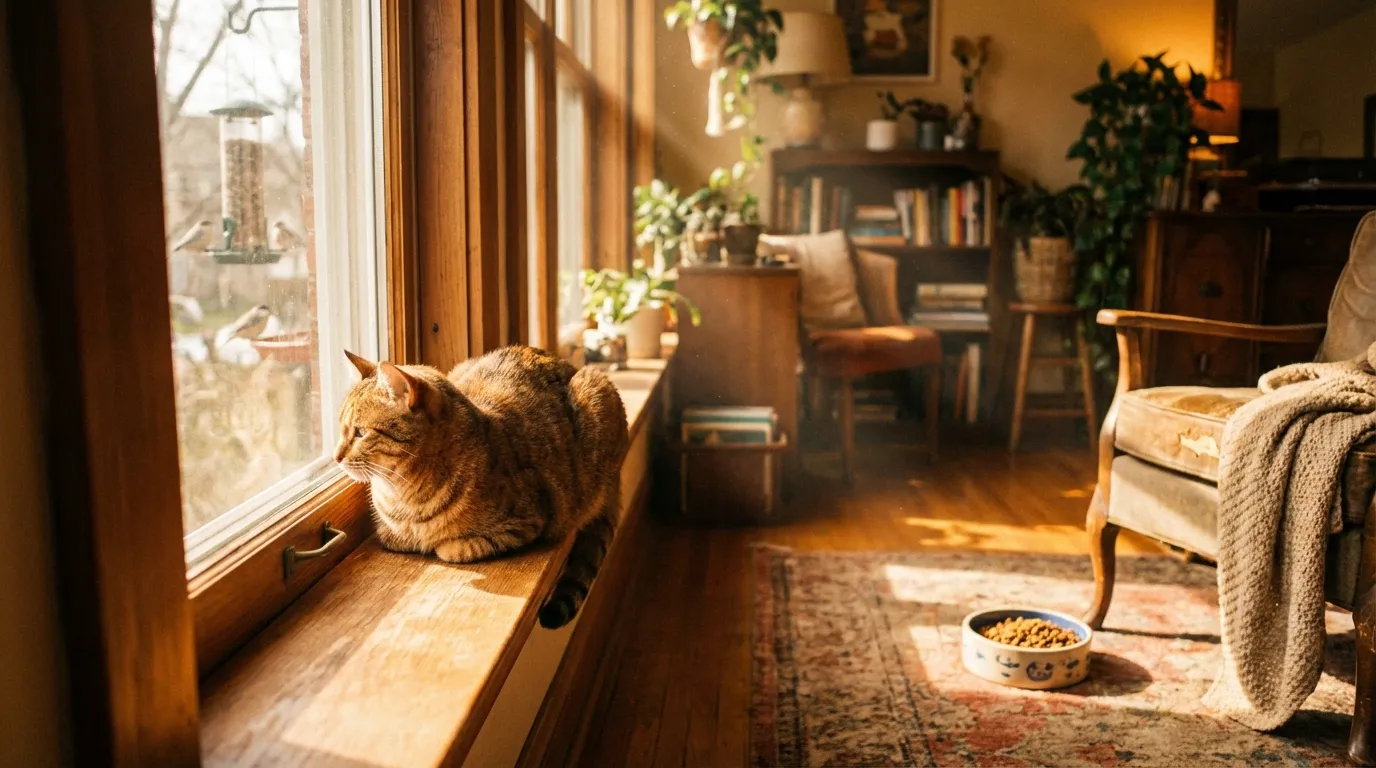
Most cat owners don’t realize something is wrong until the couch is shredded, the 3am yowling won’t stop, or they find a puddle somewhere that definitely isn’t the litter box. I’ve been there I once spent two weeks thinking my cat just wasn’t thirsty, then figured out she’d been avoiding her water bowl because she hated still water. One fountain later, problem solved. Knowing how to take care of an indoor cat properly not just keeping them alive, but actually helping them thrive changes everything. This guide covers food, litter, enrichment, health and the mistakes most owners quietly make before they know better. Indoor cats need a high-protein wet-food diet served twice daily, at least two litter boxes scooped every day and a minimum of 15 minutes of interactive play. They need vertical climbing space, window access and a consistent routine. Most behavioral and health problems in indoor cats trace back to poor diet, a dirty or undersized litter box, or chronic boredom.
Feed Your Indoor Cat Like the Carnivore It Actually Is
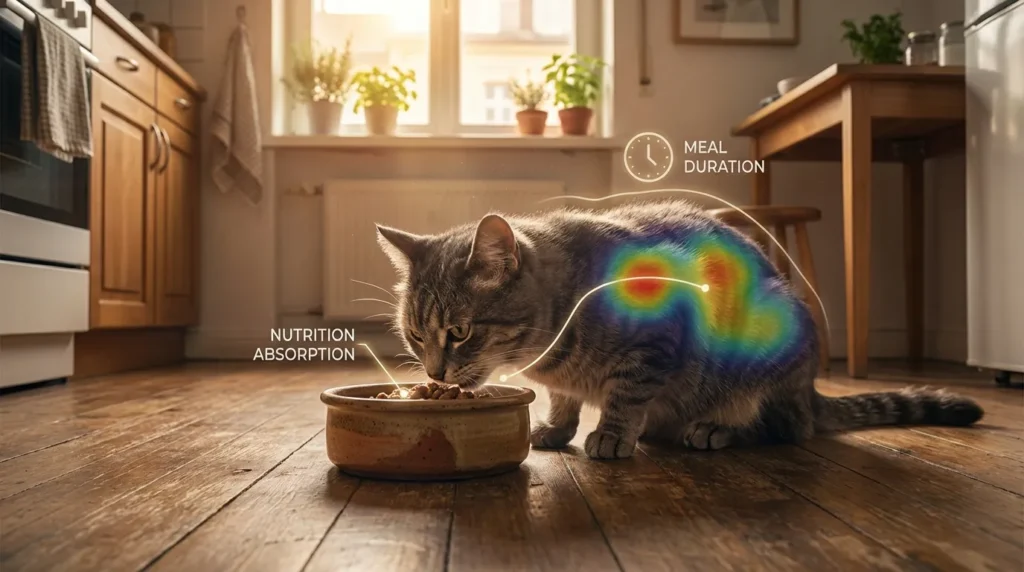 Indoor cats need less total food than outdoor cats, but they need just as much actually more protein. Cats are obligate carnivores, meaning their bodies are built to run on meat. A diet heavy in carbohydrates, which shows up in a lot of dry food, leads to weight gain, poor coat condition and eventually kidney and urinary problems. Wet food should be the foundation, not a treat. It delivers the protein cats require and adds water intake at the same time something most indoor cats are chronically short on. If you use dry food at all, choose one with a named meat as the first ingredient (chicken, turkey, salmon not “meat by-products”) and keep fresh water available in a bowl placed away from the food. Water fountains genuinely work. Still water puts many cats off something about running water triggers their instinct to drink. Feeding adult cats twice a day on a fixed schedule, rather than leaving dry food out all day, is one of the easiest ways to prevent the slow creep of indoor cat obesity. The pet food aisle is full of “indoor formula” bags that are mostly marketing. What actually matters on the label: high protein percentage, a named meat source as the first ingredient and low grain content. If you can’t find those three things, put it back and try the next one.
The Litter Box Setup Most Cat Owners Get Wrong
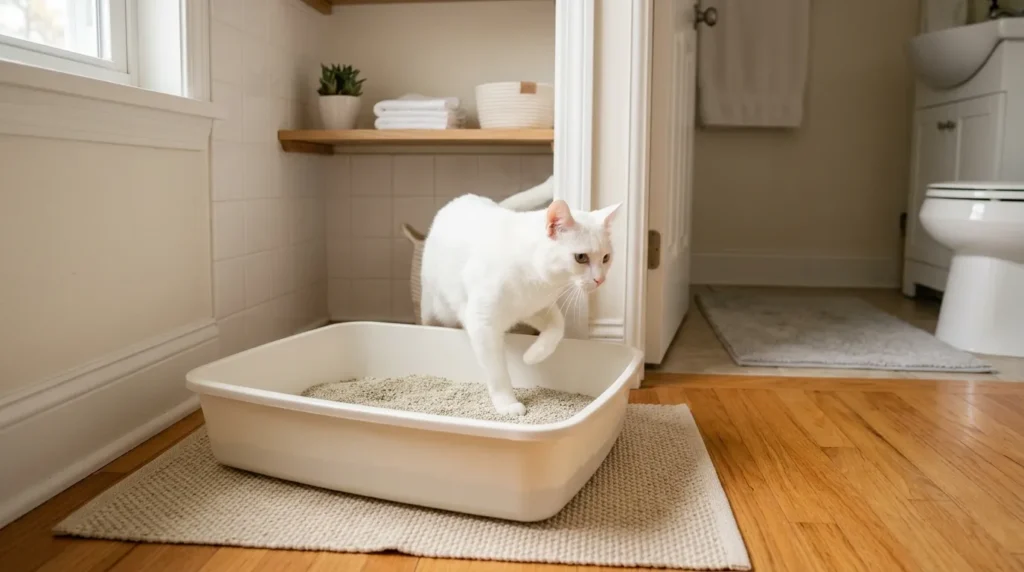 A dirty or poorly placed litter box is the number one reason indoor cats start going elsewhere. The rule is one box per cat, plus one extra. One cat means two boxes, minimum and that’s not optional. Litter box hygiene is where most owners cut corners they later regret. Scoop at least once a day, twice if you can. Do a full clean and litter change every one to two weeks. Unscented, clumping litter works best for most cats; scented varieties are more for the owner’s comfort than the cat’s and can actually drive them away from the box. Size is the thing almost nobody gets right. The box should be at least one and a half times the length of your cat. Most commercial litter boxes sold in pet stores are genuinely too small for an adult cat a large plastic storage tote with one side cut low makes a better litter box than most things marketed as one. It’s bigger, easier to clean and costs less. Location matters just as much as size. Put the box in a quiet, low-traffic spot not next to the washing machine or anywhere that’s going to startle the cat mid-use. A cat that gets frightened while using the box will start associating that spot with stress and then you’ve got a litter avoidance problem on your hands.
How to Keep an Indoor Cat Mentally Stimulated Every Day?
 Mental stimulation is the thing most indoor cat care articles mention and then completely underdeliver on. Boredom is the silent problem behind a lot of behavior issues destructive scratching, nighttime wailing, aggression, obsessive grooming. It all comes back to a brain with nowhere to put its energy. Interactive play is non-negotiable. Use a wand toy or feather teaser and actually play with your cat not just drag it across the floor for at least 15 minutes a day, split into two sessions if possible. Let your cat catch the toy at the end. A cat that never gets to “win” during play gets frustrated and that frustration comes out sideways. Enrichment activities beyond play make a real difference. Puzzle feeders turn mealtime from a 20-second sprint into a legitimate mental exercise. Predatory instinct doesn’t switch off just because a cat lives indoors it needs an outlet every single day. Rotating toys so they feel “new” keeps engagement up; a toy left out for three weeks becomes invisible to most cats. Window access is free enrichment. A perch at bird-eye-level with a bird feeder positioned outside gives your cat hours of stimulation it would otherwise get from patrolling a yard. According to the American Veterinary Medical Association, environmental enrichment is directly linked to reduced behavioral problems in indoor cats. That connection is worth taking seriously. The toys you buy matter less than the time you put in. A $2 bottle cap skittered across a hardwood floor will get more genuine play than a $35 automated gadget running on its own. Cats don’t need novelty they need something that moves like prey. That means you have to be the one controlling it.
Vertical Space and Territory: Why Your Cat Needs to Climb?
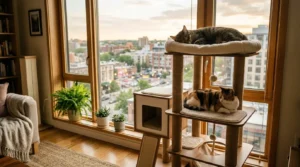 Cats are not floor animals by nature. Height equals safety, ownership of territory and a sense of control all things an indoor cat needs to feel settled. A cat with no vertical options is a cat with nowhere to truly decompress.
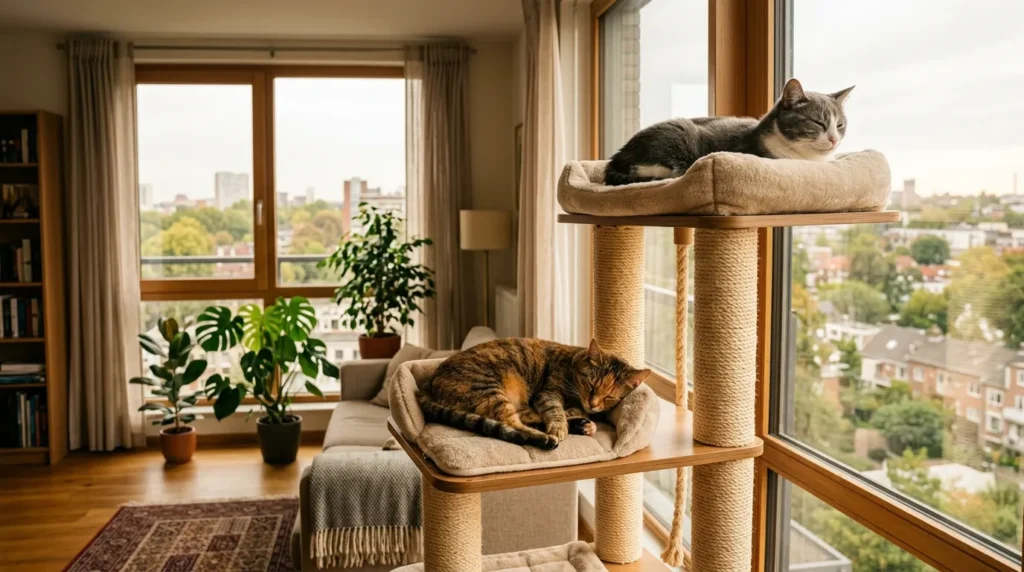
Territorial behavior in indoor cats aggression, excessive scent-marking, resource guarding often traces back to a lack of vertical space rather than personality. A tall cat tree placed near a window solves more behavioral problems than most other purchases combined. It gives your cat a high-value spot to own, something to watch and somewhere to retreat. In small apartments where floor space is limited, wall-mounted shelves and perches work well. The goal is a route your cat can travel at height up, across and back down so they can move through their space without staying at ground level. Enclosed hiding spots at height matter too; a cardboard box or enclosed bed on a shelf gives a cat the option to feel invisible when they need to reset. Multi-cat households need this even more than single-cat ones. When cats can’t escape each other vertically, low-grade tension becomes a permanent fixture. Give every cat a clear escape route upward and a lot of the ambient friction in a multi-cat home quietly disappears.
Grooming, Vet Care and the Health Basics That Actually Matter
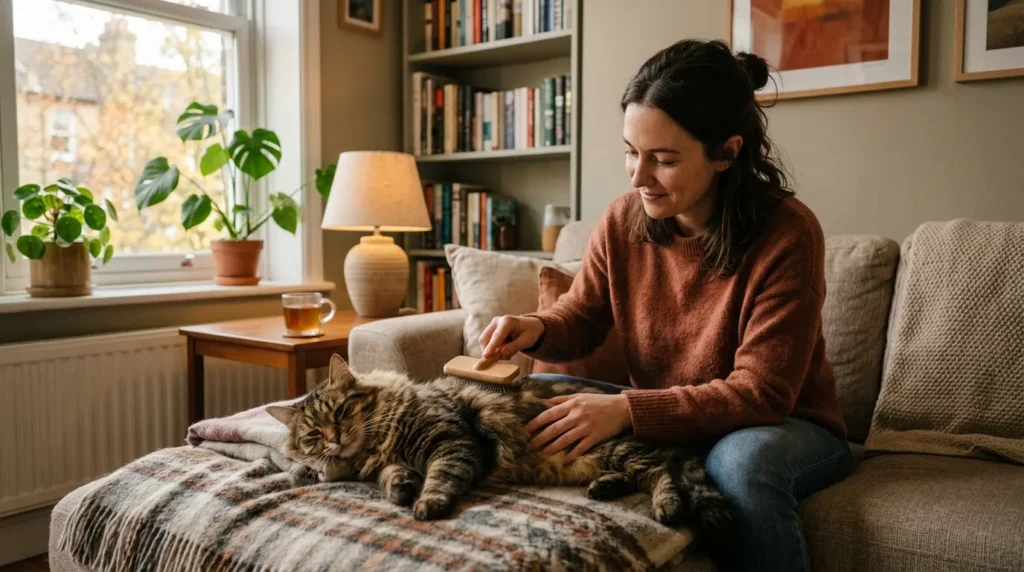 Indoor cats still need regular grooming, even when they look fine. Brushing two to three times a week reduces shedding, prevents hairballs and gives you a hands-on look at your cat’s coat, weight and skin things that can change slowly enough to miss if you’re not paying attention. Short-haired cats need less than long-haired ones, but no cat should go completely without it. Nail trims every two to three weeks keep claws manageable and protect your furniture. Most cats tolerate it well when you start the habit early and keep sessions short. If trimming at home isn’t working for either of you, any vet or groomer can do it quickly. Annual vet visits are the floor, not the ceiling once a year for healthy adults, more often for cats over ten. Keep vaccinations current even for indoor cats; respiratory viruses and certain infections can come in on shoes and clothing. Dental disease is massively underdiagnosed in cats and affects far more than just their mouth ask about it at every annual visit. Spay or neuter your cat if they haven’t been already; it reduces serious health risks and eliminates a range of behavioral problems that have no other easy fix. Indoor cats can look completely healthy while quietly developing kidney disease, diabetes, or dental infections all things that show up gradually and are easy to miss until they’re not. The annual vet visit isn’t paperwork. It’s the one time a year someone who isn’t emotionally attached to your cat gets to look at them with fresh, clinical eyes. Do not skip it.
The Mistakes Indoor Cat Owners Make Most Often
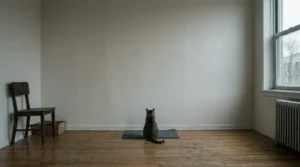 The biggest mistake is treating an indoor cat like a low-maintenance pet. They aren’t. Their entire world is the space you’ve given them, which means every enrichment gap, every dirty litter box, every week without real play your cat absorbs all of it. When something goes wrong, the environment is almost always the first place to look. The second mistake is underestimating how much space and stimulation actually costs when you don’t provide it. A cat confined to a small apartment with nothing to climb, nothing to hunt and no consistent human interaction becomes anxious and then destructive and then difficult to live with. That’s not a personality problem. That’s a setup problem. Feeding only dry food is the third one and the one with the most serious long-term consequences. Indoor cats are already at higher risk for urinary issues because of their lower activity levels. A dry-food-only diet concentrates that risk significantly and the damage can take years to appear, which makes it easy to never connect the two.
When Your Cat’s Behavior Is a Warning Sign, Not an Attitude?
Some problems look like behavior issues but are actually medical ones and confusing the two costs time and makes cats sicker. A cat that suddenly stops using the litter box, eats noticeably less, drinks far more water than usual, or becomes aggressive without a clear trigger those are medical red flags, not personality shifts. Straining in the litter box with little or no output is a medical emergency, especially in male cats. Urinary blockages can become fatal within 24 to 48 hours. If you see this, don’t wait. Sudden weight loss, hiding more than normal, or a dramatic change in vocalization after years of consistency are all signs that something is wrong internally. Cats don’t show pain the way dogs or humans do they go quiet, they withdraw, they stop engaging. If your cat’s personality has shifted, assume a medical cause and rule it out before calling it behavioral. This article is for informational purposes only. Always consult your vet if you have concerns about your cat’s health.
Frequently Asked Questions About Indoor Cat Care
How often should I feed my indoor cat?
Feed adult indoor cats twice a day morning and evening at consistent times. A predictable schedule reduces anxiety and helps regulate digestion. If your cat tends to gulp food and then vomit it back up, splitting meals into three smaller portions using an automatic feeder often solves the problem without any other changes.
How do I keep my indoor cat from getting bored?
Play with your cat for at least 15 minutes a day using an interactive wand or feather toy something you control, not something that runs on its own. Rotate toys weekly so they feel new. Add a window perch with a bird feeder outside. Use puzzle feeders at mealtime. These aren’t complicated or expensive changes, but they make a measurable difference in how settled and content your cat is.
How many litter boxes does an indoor cat need?
One cat needs two litter boxes. The standard rule is one per cat plus one extra. Scoop at least once a day and do a full litter change every one to two weeks. A box that’s too small, too dirty, or in a noisy spot will get avoided and then you’re cleaning carpets and re-washing furniture instead of just scooping a box.
Is it okay to keep a cat indoors all the time?
Yes and indoor cats typically live significantly longer than outdoor ones. Outdoor cats face traffic, predators, disease exposure and extreme weather. The tradeoff is that you’re responsible for meeting all their stimulation, environmental and social needs inside the home. Do that consistently and an indoor cat lives a full, healthy life often well past 15 years.
What are the signs that my indoor cat is unhappy?
Watch for over-grooming, excessive or sudden vocalization, litter box avoidance, unprovoked aggression, or long stretches of flat, withdrawn behavior. A cat that stops engaging isn’t just being aloof that’s usually a signal something is off, whether environmental, social, or medical. If behavioral changes are sudden or severe, consult your vet to rule out a medical cause before assuming it’s behavioral.
How do I stop my indoor cat from scratching the furniture?
Provide at least one tall, sturdy scratching post placed near the furniture your cat is targeting cats scratch where they spend time, so location matters. Rope or sisal material works better than carpet for most cats. Add a horizontal scratcher too, since some cats prefer that angle. Double-sided tape on the furniture surface makes it unpleasant while the cat builds a new habit. Nail caps are a pain-free option if scratching is ongoing.
Conclusion
Taking care of an indoor cat comes down to three things: feed them well, give them a clean and stimulating environment and stay consistent. Start today with the most impactful changes: switch to wet food as the primary diet, scoop both litter boxes daily and block out 15 minutes for real interactive play. Those three things alone will change your cat’s baseline mood and behavior faster than anything else. For more ways to work with the space you have, check out indoor cat enrichment ideas for small apartments most of them cost nothing and take five minutes to set up.
Indoor cats thrive when given a consistent daily routine built around two meals of high-protein wet food, a clean litter box scooped at least once per day, and a minimum of 15 minutes of interactive play. Cats living in apartments and small homes require deliberate access to vertical climbing space, window views, and rotating enrichment activities to satisfy their predatory instinct and prevent anxiety-driven behavioral problems. Indoor cats sleep between 12 and 16 hours per day and are most active at dawn and dusk. Annual veterinary visits, current vaccinations, and regular brushing are essential even for cats with no outdoor access. Indoor cats with their needs consistently met live an average of 12 to 18 years — significantly longer than outdoor cats.