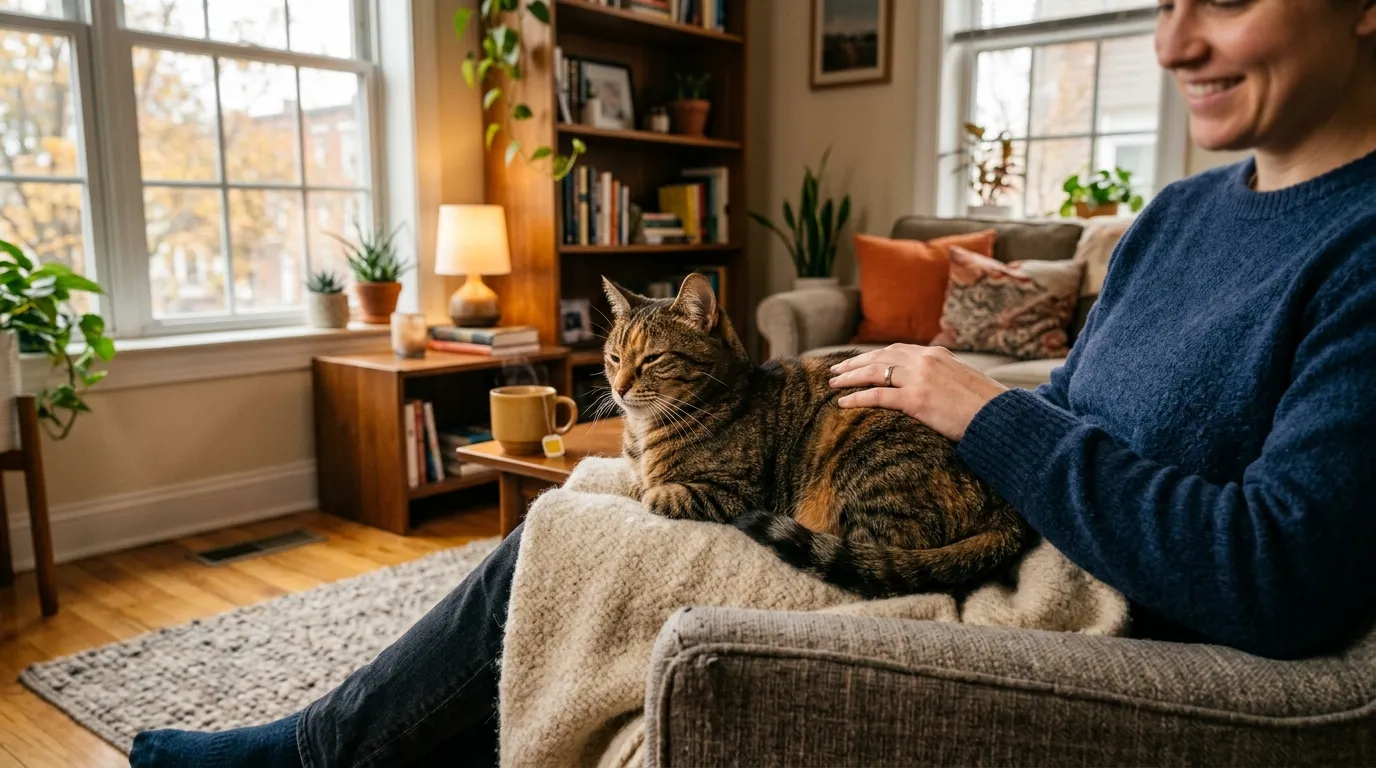
The guilt hits hardest when you have been at work all day and your cat is staring at you from across the room like you owe them something. Most indoor cat owners quietly wonder if they are doing enough not because they do not love their cat, but because nobody ever told them exactly how much attention an indoor cat actually needs. I used to think my cat was just introverted because she would walk away mid-cuddle, until I realized she had already gotten what she came for and I was the one making it weird. Understanding how much attention does an indoor cat need and what kind changes everything. This article covers the real numbers, the warning signs, and how to give your cat what actually counts.
Most indoor cats need 20 to 30 minutes of direct, active attention daily split across at least two sessions. This means interactive play, not just being in the same room. Cats also need passive companionship someone nearby while they rest. The exact amount varies by age, personality, and breed, but under 15 minutes of real engagement per day is not enough for most apartment cats.
1. How Much Attention Does an Indoor Cat Need Each Day
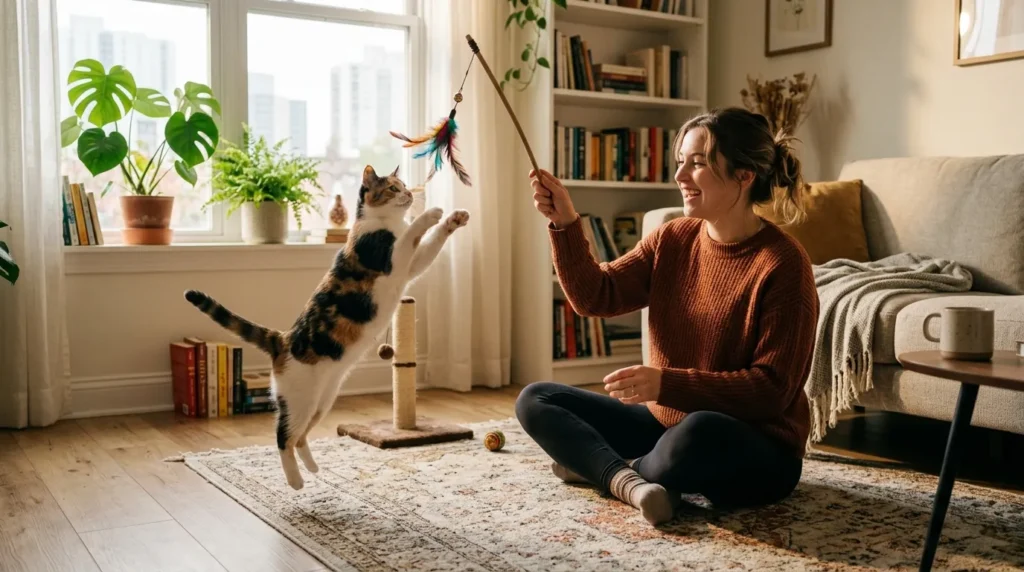
Most indoor cats need a minimum of 20 to 30 minutes of active, focused attention every day and that number should be split into at least two sessions rather than delivered all at once. One long Sunday afternoon play session does not cover a week. Cats need daily interaction the same way they need daily food skipping days creates a deficit that shows up as behavioral problems, not just a mopey cat.
 Active attention means interactive play where you control the toy a wand, a feather teaser, something that moves like prey. It does not mean the cat sitting near you while you scroll your phone, and it does not mean an automated toy running on its own. Those things have value, but they do not replace the kind of engagement that comes from a person actually playing with a cat.
Beyond play, cats also need passive companionship the comfort of having someone in the room, even if nothing is actively happening. Indoor cats that spend 10 or more hours alone in a completely empty apartment every day experience cumulative stress even when they appear fine on the surface. Working from home a few days a week, or simply being in the same room while you work in the evening, provides the ambient presence that matters more than most owners realize.
The 20 to 30 minute figure surprises most people because it feels like not very much. But quality matters more than quantity here. Twenty minutes of genuine wand play the kind where you are actually moving the toy like prey and your cat is stalking, leaping, and catching does more for your cat’s wellbeing than two hours of being sort of near them on the couch.
2. Signs Your Indoor Cat Is Not Getting Enough Attention
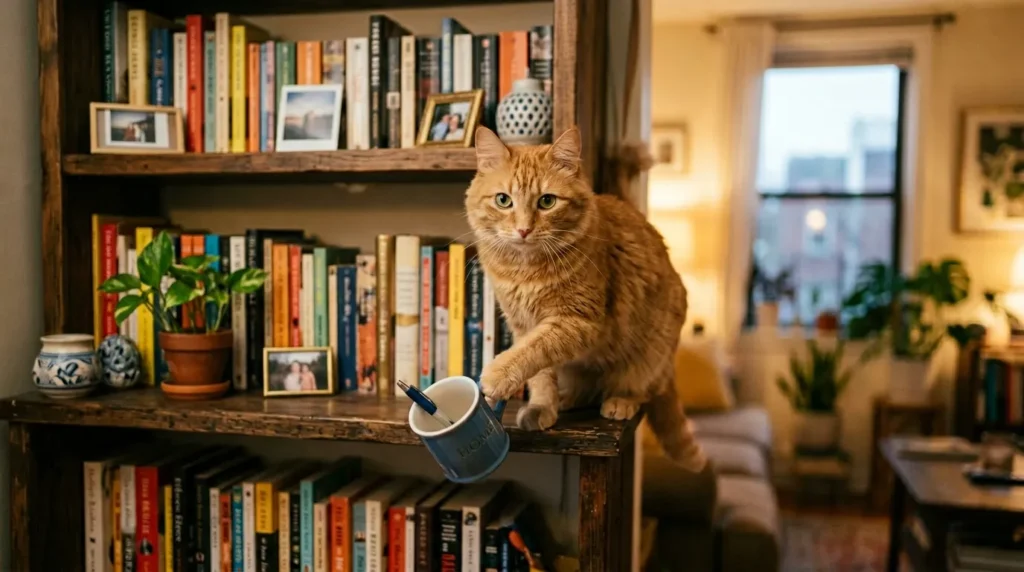
An under-stimulated indoor cat communicates clearly just not in ways that are easy to recognize as attention-seeking until you know what to look for. The most obvious signs are destructive behavior, excessive vocalization, and the 3am zoomies that seem to come from nowhere. These are not personality traits. They are symptoms.
Attention-seeking behavior in cats includes knocking things off surfaces (genuinely just to see what you do), following you from room to room without settling, biting or swatting unprovoked, and over-grooming licking one spot until the fur thins. Over-grooming in particular is a stress response that indicates the cat’s environment is not meeting its needs at a meaningful level.
The subtler signs are easy to miss: a cat that stops greeting you at the door, loses interest in toys that used to engage them, sleeps significantly more than usual, or sits facing a wall for long stretches. None of those look like a cat asking for attention but they are. They are a cat that has stopped trying.
3. What Actually Counts as Quality Attention for a Cat
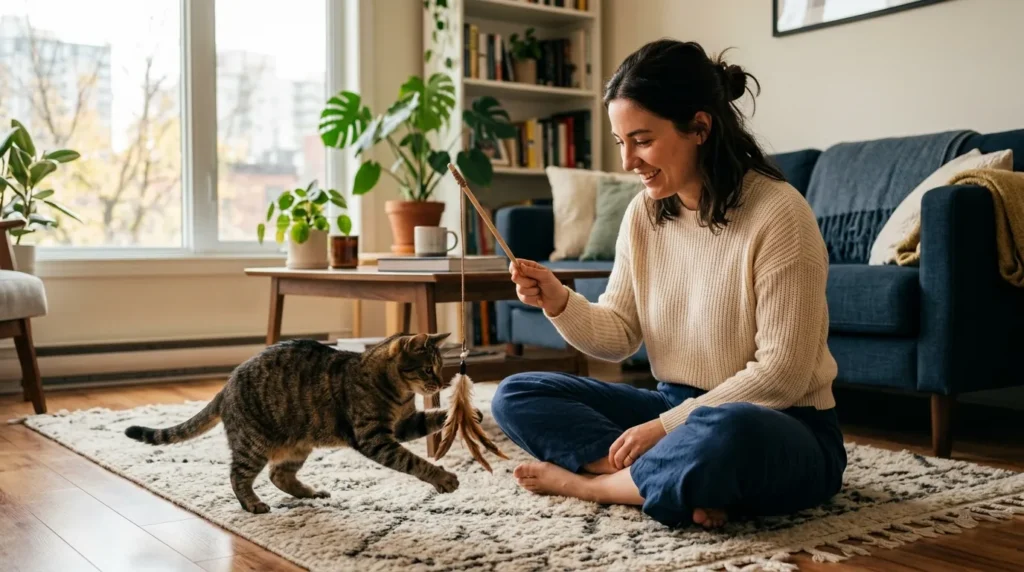
Not all attention counts equally, and this is where a lot of well-meaning owners get it wrong. Sitting in the same room as your cat for six hours while you work does not deliver the same value as fifteen minutes of intentional play. Cats do not need quantity they need specific types of interaction at specific times.
Interactive play is the highest-value attention you can give. It satisfies the prey sequence stalk, chase, catch, eat and burns mental and physical energy in a way nothing else replicates. Use a wand or feather toy you control, not a battery-powered toy running on a timer. The fact that it is you on the other end of the toy is part of what makes it work.
Physical affection counts too, but only on the cat’s terms. Forcing a cuddle or continuing to pet a cat that has gone still or started tail-twitching does not count as positive attention it counts as a stressor. Let your cat initiate contact, end it when they want to, and the interactions you do have will be far more meaningful to them than extended holding sessions that make you feel better but stress them out.
Cats read your energy during playtime. If you are distracted, moving the toy half-heartedly while watching TV, your cat knows. They will walk away inside two minutes. Put the phone down, actually watch the cat, and move the toy like something worth hunting. That shift alone makes sessions twice as engaging for both of you.
4. How Much Attention Indoor Cats Need When You Work Full Time
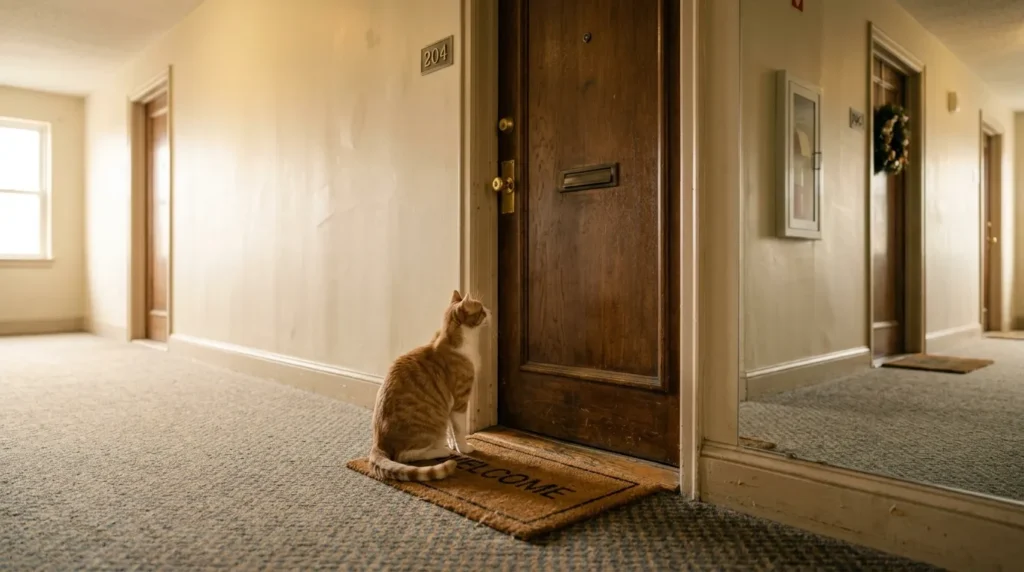
Indoor cats left alone for eight to ten hours a day can thrive but only if the hours you are home are used well. According to the American Association of Feline Practitioners, environmental enrichment is a core welfare need for cats, not an optional extra. The gap your absence creates needs to be filled with both environmental setup and active engagement when you return.
 Before you leave: set out a puzzle feeder, rotate the toys so they feel new, make sure the window perch is accessible with something to watch outside. These things do not require you to be present they just require thirty seconds of setup in the morning. They give your cat mental tasks to return to throughout the day rather than eight hours of uninterrupted staring at the same four walls.
When you get home, the ten minutes of play before dinner matters more than anything else you could do for your cat that evening. It is not about the length it is about the signal. That play session tells your cat the day is over, you are present, and they are going to get what they need. Cats that get consistent evening engagement settle faster, vocalize less at night, and are measurably calmer to live with.
5. Do Indoor Cats Need More Attention Than Outdoor Cats?
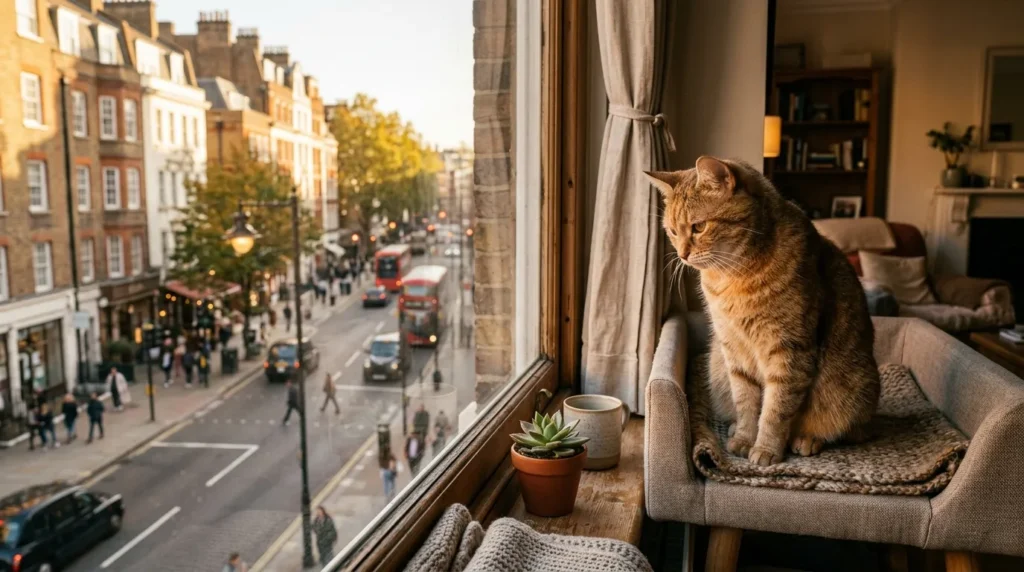
Yes, indoor cats need significantly more deliberate attention from their owners than outdoor cats do. Outdoor cats self-stimulate constantly: they patrol territory, hunt, climb, interact with other animals, and process a changing environment all day. Every one of those activities provides mental enrichment that your indoor cat has to get entirely from you and the space you create for them.
An outdoor cat that barely interacts with its owner is still getting its needs met through the environment. An indoor cat in the same situation is not. The attention gap is not a personality difference it is a structural one. Indoor cats live in a closed, unchanging environment and depend entirely on their owners to make that environment worth living in.
The good news is that the requirement is not actually that high. Twenty to thirty minutes of real engagement daily, a consistent routine, a window with something to watch, and a clean litter box covers most of what an indoor cat needs. The bar is not impossible it just has to be met deliberately rather than accidentally.
6. How Much Attention Kittens vs Senior Indoor Cats Need
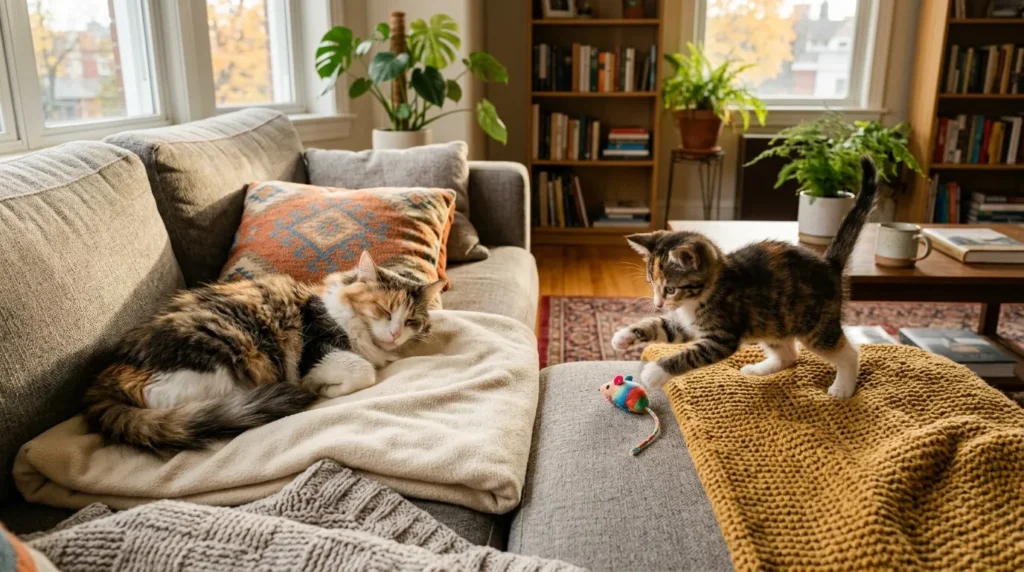
Kittens need significantly more attention than adult cats not because they are more demanding by personality, but because their brains are actively developing and require constant stimulation to develop correctly. A kitten under six months needs multiple short play sessions throughout the day, frequent handling and socialization, and ideally a second kitten or young cat to play with. Solo kittens raised in low-stimulation environments often develop anxiety, hyperactivity, and aggression problems that persist into adulthood.
Adult cats aged one to seven years are the most self-sufficient, but self-sufficient does not mean low-maintenance. The 20 to 30 minute daily engagement rule applies here most directly this is the age range where unmet attention needs turn fastest into destructive behavior.
Senior cats over ten years need softer, shorter interactions. They tire more quickly, may have joint pain that limits play, and often become more vocal about wanting physical closeness lap time, slow blinking, being in the same room. Pay attention to what your senior cat is asking for rather than pushing the same play style that worked at three. The need for connection does not decrease with age it just changes shape.
If you have a kitten and you cannot give them the attention load they need right now, genuinely consider getting a second one. Two kittens raise each other they play, wrestle, and socialize in ways no human can replicate, and they sleep together which means quieter nights for you. The adjustment is real, but so is the payoff.
The Attention Mistakes That Make Indoor Cats Worse, Not Better
The most common mistake is responding to attention-seeking behavior on the cat’s schedule rather than building a consistent one. If your cat yowls and you play with them to stop the noise, you have taught your cat that yowling gets playtime. The behavior escalates because it works. The fix is not ignoring your cat it is delivering attention proactively at set times so the demand behavior never develops in the first place.
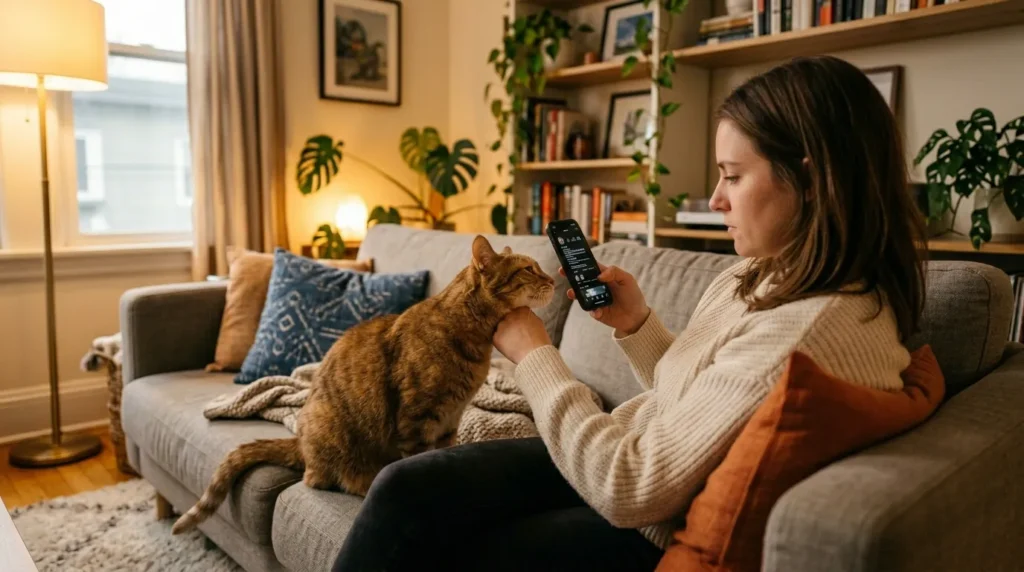
The second mistake is confusing proximity with engagement. Watching TV with your cat nearby feels like quality time. For you, maybe. For your cat, you are just a warm object in the room. Cats need you to be actually present and interactive, even briefly, not just physically close.
The third mistake is forcing affection when the cat is done. A cat that is being held past its comfort point, or petted while showing clear signals to stop flattened ears, tail lashing, turning away is not getting positive attention. It is getting stressed. Read the signals and let them go when they ask. The interactions you have on their terms will be more positive than anything you push through on yours.
When Lack of Attention Becomes a Health Issue
A cat that is chronically under-stimulated and under-attended does not just get bored it gets sick in ways that look behavioral until they are not. Over-grooming that creates bald patches or open sores is a stress response that has crossed from behavioral into physical. It needs a vet visit, not just more playtime.
Stress-related conditions like feline idiopathic cystitis a bladder inflammation directly linked to psychological stress are common in indoor cats living in low-stimulation, low-interaction environments. Watch for straining in the litter box, blood in urine, or frequent trips with little output. These are medical emergencies in male cats especially.
Sudden withdrawal, dramatic personality changes, or a cat that has stopped eating consistently are all signs that something has moved beyond a fixable routine problem. Answer the behavioral question first increase engagement, improve the environment but if symptoms persist beyond a week or include any physical signs, see the vet.
This article is for informational purposes only. Always consult your vet if you have concerns about your cat’s health.
Frequently Asked Questions About Indoor Cat Attention Needs
How much attention does an indoor cat need if I work all day?
A cat left alone during work hours needs at least 20 to 30 minutes of active interaction when you get home ideally split between an evening play session and some calm physical closeness. Before you leave, set out a puzzle feeder and make sure the window perch is accessible. That combination covers most of what your cat needs on a normal working day.
Can indoor cats be left alone for 8 hours?
Yes, adult cats handle eight hours alone reasonably well with proper environmental setup. Kittens under six months and senior cats with health conditions need more monitoring consider a midday check-in from a trusted person or pet sitter if you are regularly gone that long. A second cat as a companion also makes the hours alone significantly easier on both animals.
What happens if I don’t give my indoor cat enough attention?
Under-stimulated indoor cats develop behavioral problems destructive scratching, excessive vocalization, litter box avoidance, and aggression that get worse the longer they go unaddressed. Chronic under-stimulation also creates physical health risks including stress-related bladder conditions. If your cat is showing sudden or severe behavioral changes, consult your vet to rule out a medical cause before assuming it is purely behavioral.
Is one cat enough or do indoor cats need a companion?
One cat can thrive with consistent owner engagement, but two cats make solo ownership significantly easier on both you and the animals. Two cats entertain each other during the hours you are gone, which reduces the total attention burden on you and prevents the build-up of bored, restless energy that causes evening behavioral problems. The adjustment period is real but short.
How do I know if my indoor cat is getting enough attention?
A cat getting enough attention is relaxed, maintains a consistent routine, uses the litter box normally, eats well, and engages with play sessions willingly. Red flags include increased vocalization, destructive behavior, over-grooming, and avoiding you or seeking you out frantically. Content cats are not dramatically needy or dramatically withdrawn they sit somewhere comfortably in the middle.
Conclusion
Indoor cats need 20 to 30 minutes of active, focused attention every day split across at least two sessions, with play as the core activity. Presence alone does not count. The specific type of engagement matters as much as the amount, and consistency matters more than either. Start today with a five-minute wand play session before your cat’s breakfast and a ten-minute session before dinner. Those two changes alone will shift your cat’s baseline within a week. For more ideas on keeping your cat engaged between sessions, check out [INTERNAL LINK NEEDED suggested anchor: ‘indoor cat enrichment ideas that take five minutes or less’].
Indoor cats need 20 to 30 minutes of active, focused attention daily, split across at least two interactive play sessions. Passive proximity being in the same room does not meet this need. Kittens require significantly more stimulation than adult cats, and senior cats need softer, shorter contact. Under-stimulated indoor cats develop behavioral problems including destructive scratching, over-grooming, and litter box avoidance. Stress-related physical conditions like feline idiopathic cystitis are directly linked to low-stimulation indoor environments. Consistent daily engagement is a welfare requirement, not optional enrichment.