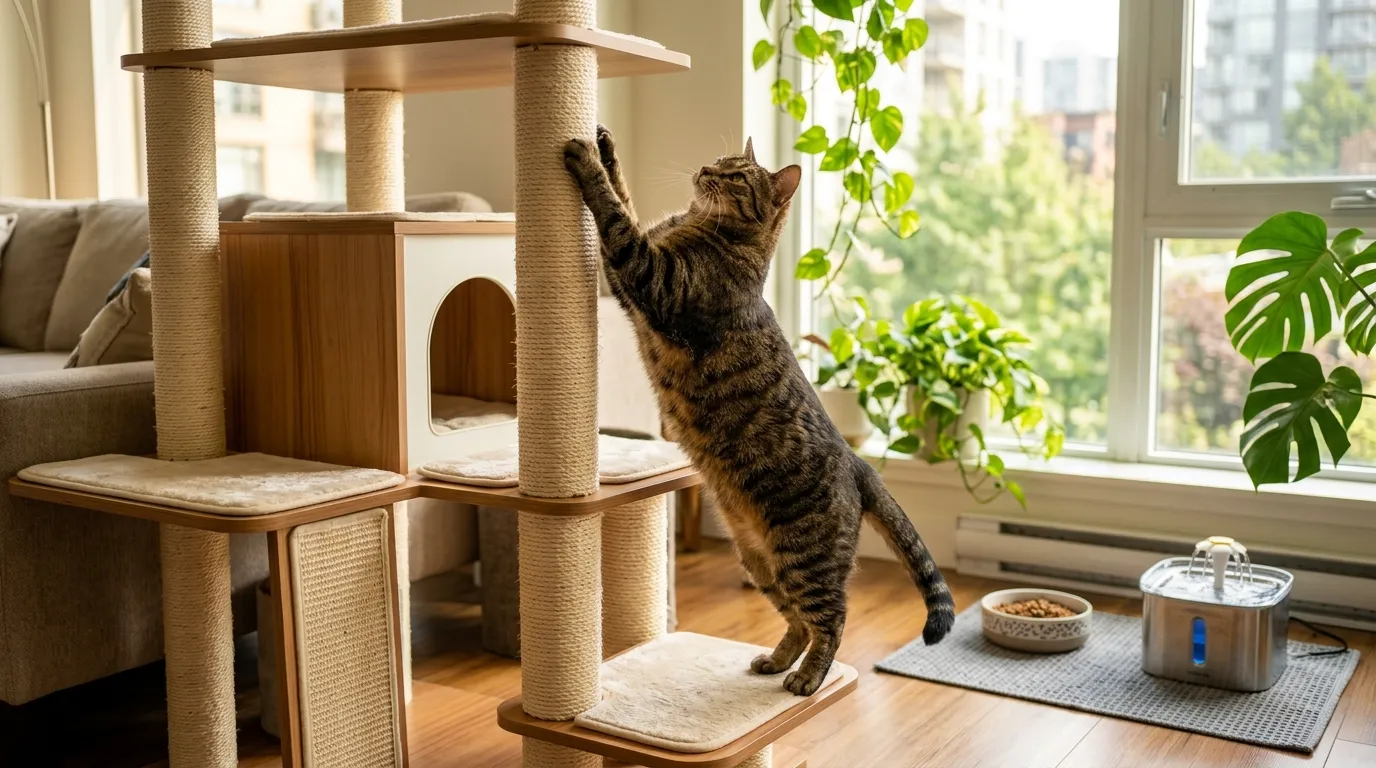
The vet visit that changed how I think about indoor cat health was not dramatic. My cat looked completely fine. She was eating, using her box and acting normal. The blood panel told a different story. Early kidney markers. Caught early enough to manage easily but only because we went in for a routine checkup rather than waiting for something to go wrong. Knowing how to keep an indoor cat healthy means getting ahead of the problems that do not announce themselves until they are serious. This guide covers the seven areas where indoor cats are most vulnerable and what to do about each one before a problem develops.
To keep an indoor cat healthy, focus on six core areas: a high-protein wet food diet with portion control, annual vet visits including dental checks, daily interactive play for weight management, a clean low-stress environment, regular grooming and year-round parasite prevention. Indoor cats live significantly longer than outdoor cats but need deliberate management of obesity, dental disease and stress-related conditions that the indoor lifestyle makes more likely.
How to Keep Indoor Cat Healthy With the Right Diet?
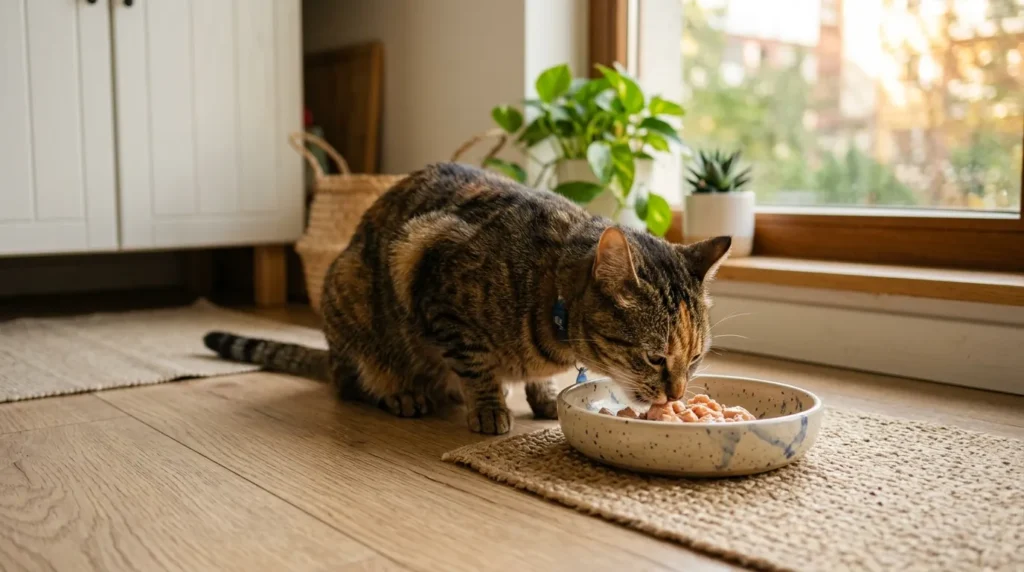
The single biggest health lever for an indoor cat is what goes in the bowl and how much of it. Indoor cats burn significantly fewer calories than outdoor cats because they do not patrol territory, hunt or navigate the physical demands of an outdoor environment. A calorie intake calibrated for an active outdoor cat fed to a sedentary indoor one produces slow steady weight gain that most owners do not notice until the vet mentions it.
Body condition scoring is the tool vets use to assess weight and it is easy to apply at home. Run your hands along your cat’s sides. You should feel the ribs without pressing hard but not see them. A visible waist from above and a slight abdominal tuck from the side indicates healthy weight. A cat where you cannot find the ribs without significant pressure is already overweight regardless of how normal it looks.
Wet food as the primary diet supports urinary and kidney health in ways dry food cannot replicate because of its water content. Indoor cats are at elevated risk for both conditions due to lower activity levels. A diet heavy in dry kibble concentrates the urinary system in ways that set the stage for crystals and blockages over time. The shift to wet food as the main meal is one of the simplest preventive decisions an indoor cat owner can make.
 Measure every meal. This sounds obvious and almost nobody does it. Most owners eyeball portions and consistently overfill the bowl by 20 to 30 percent without realizing it. Use the feeding guide on the food packaging as a starting point and adjust based on your cat’s body condition score every few months. That one habit prevents most indoor cat obesity before it starts.
Step 2: Annual Vet Visits Catch What You Cannot See at Home?
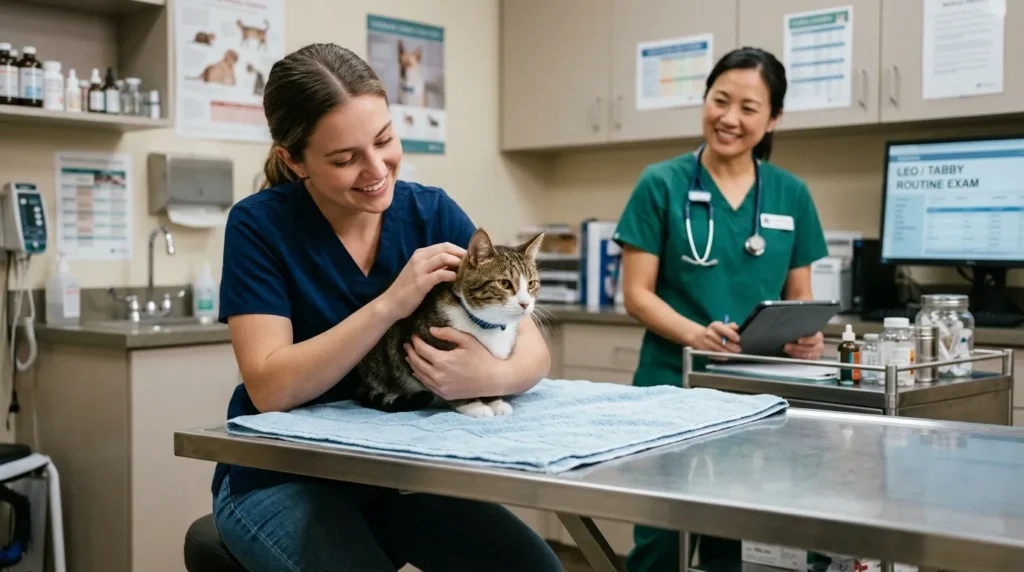
Annual wellness exams for indoor cats are not optional even when the cat appears perfectly healthy. Cats are physiologically wired to mask pain and illness. By the time a cat shows obvious signs of kidney disease, dental infection or hyperthyroidism, the condition has typically been developing for months or years. A physical exam and basic bloodwork once a year catches these conditions at a stage where they are manageable rather than critical.
Dental disease is the most underdiagnosed condition in indoor cats. Studies estimate that over 70 percent of cats show signs of dental disease by age three. Bad breath is the obvious signal but most owners attribute it to food rather than infection. Untreated dental disease causes chronic pain and can contribute to kidney and heart complications over time. Ask specifically about dental health at every annual visit because it does not always come up unprompted.
Cats over ten years old need biannual rather than annual exams. Chronic kidney disease is the leading cause of death in senior cats and the earliest markers appear in bloodwork years before any behavioral or physical symptoms. According to the American Veterinary Medical Association, senior pets benefit significantly from twice-yearly wellness screening. Catching it early changes the entire trajectory of the disease.
Step 3: Weight Management Through Daily Movement
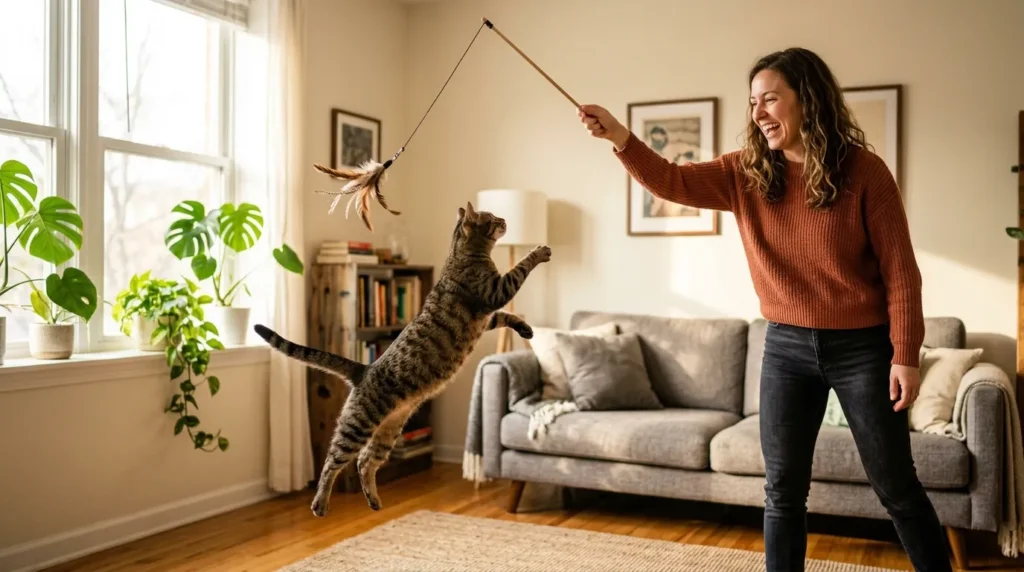
Obesity in indoor cats is not a cosmetic issue. It is a direct pathway to diabetes, joint disease, hepatic lipidosis and a shortened lifespan. A cat just two pounds over its ideal weight carries the equivalent health burden of a significantly overweight human. The indoor lifestyle makes weight management an active responsibility rather than something that takes care of itself.
Feline obesity is defined as body weight more than 20 percent above ideal. The fix is not simply reducing food. It is increasing energy expenditure through daily structured movement alongside portion control. Two play sessions daily totaling fifteen to twenty minutes burns enough calories to make a measurable difference in weight trajectory over months. It also builds muscle mass that improves joint health and metabolic function.
Puzzle feeders extend mealtime from a twenty-second sprint into a ten-minute activity that simultaneously slows eating and burns calories through light movement. Replacing the standard food bowl with a puzzle feeder at one meal per day is one of the easiest weight management tools available and requires no extra time from the owner once it is set up.
Step 4: Dental Care Before It Becomes a Crisis
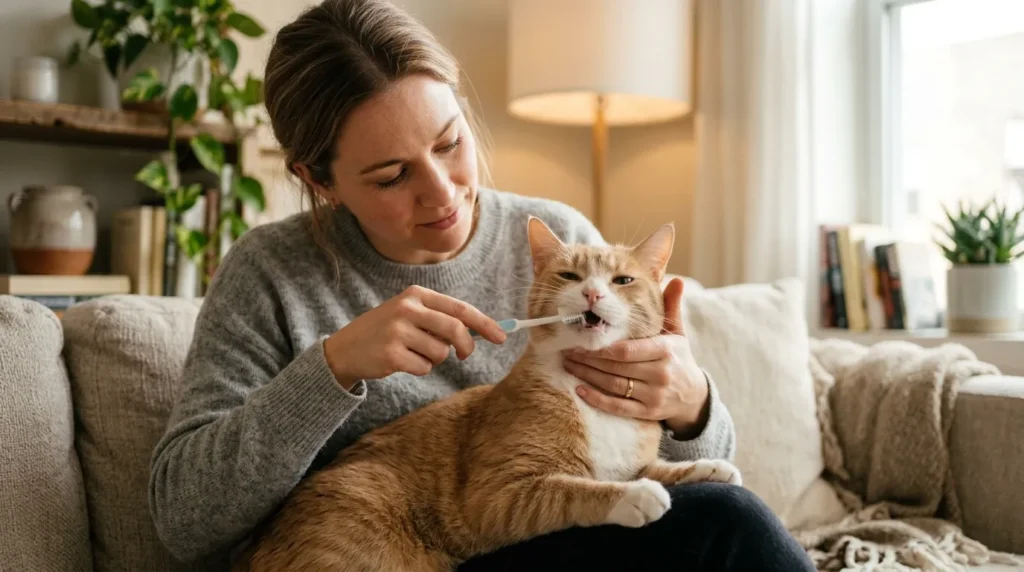
Most indoor cat owners have never brushed their cat’s teeth and most cats over five years old are paying for it silently. Dental disease does not produce dramatic symptoms in cats. It produces a cat that eats a little more slowly, drops food occasionally or holds its head slightly to one side while chewing. These are easy signals to miss and most owners do not connect them to mouth pain until a vet examination reveals significant disease.
Daily tooth brushing with cat-specific toothpaste is the gold standard for periodontal disease prevention. The technique takes about thirty seconds once a cat is accustomed to it. Start by letting the cat lick the toothpaste off your finger for a week before introducing a brush. Patience in the introduction phase produces a cat that tolerates brushing far better than one that was forced into it from the first session.
Dental treats and water additives reduce plaque buildup between brushing sessions but they do not replace brushing or professional cleanings. Think of them as maintenance between sessions rather than a complete solution. Professional dental cleanings under anesthesia once every one to two years keep the baseline manageable in cats where home care is difficult.
 If your cat has genuinely bad breath and you have ruled out diet as the cause, do not wait for the annual visit. Mouth pain in cats escalates quietly and a cat eating through dental infection has been doing so in discomfort for longer than you realize. Book the appointment and ask for a full oral exam. The relief after treatment is visible and fast.
Step 5: Parasite Prevention That Most Indoor Cat Owners Skip
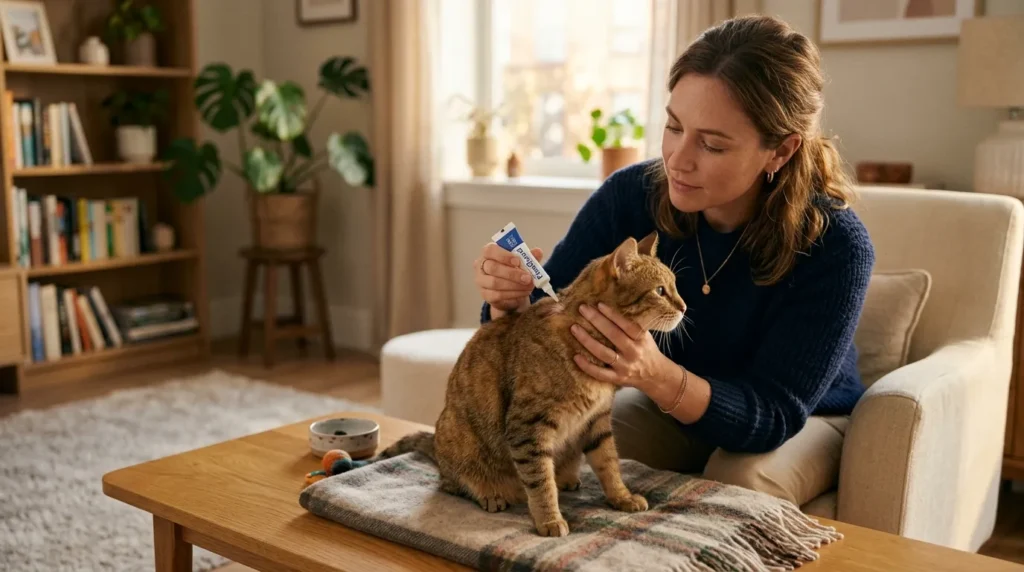
The most common indoor cat owner assumption is that a cat with no outdoor access needs no parasite prevention. This is wrong and it produces preventable problems. Fleas travel indoors on clothing shoes and bags. Mosquitoes enter through window screens or open doors and heartworm is transmitted by mosquito bite. A cat that never leaves the apartment can still acquire fleas heartworm and intestinal parasites through these routes.
Year-round flea and tick prevention for indoor cats requires a product appropriate for cats specifically. Many dog flea products contain permethrin which is toxic to cats even in small amounts. Use only products labeled for cats and approved by your vet. Monthly topical treatments or oral preventives cover the most common exposure risks in apartment settings.
Core vaccinations remain relevant for indoor cats because several viruses can enter the home on surfaces rather than through direct animal contact. The FVRCP vaccine covers feline herpesvirus calicivirus and panleukopenia. These pathogens survive on shoes clothing and hands well enough to reach a cat that never steps outside. Discuss your cat’s specific vaccination schedule with your vet based on its age and health status.
Step 6: Stress Reduction for Long-Term Physical Health
Chronic stress in indoor cats is a direct physical health risk not just a welfare concern. Feline idiopathic cystitis is a bladder condition with no identifiable physical cause that is directly linked to psychological stress in cats. It produces symptoms identical to a urinary infection including straining in the litter box blood in urine and frequent trips with little output. It recurs every time the underlying stress is not addressed and it is significantly more common in indoor cats than outdoor ones.
The stressors that trigger it are often invisible to owners: a new piece of furniture moved into the cat’s established territory, a change in the household routine, a new person spending time in the home or a conflict with another pet. Cats experience environmental change as genuine threat even when the change looks minor to a human observer.
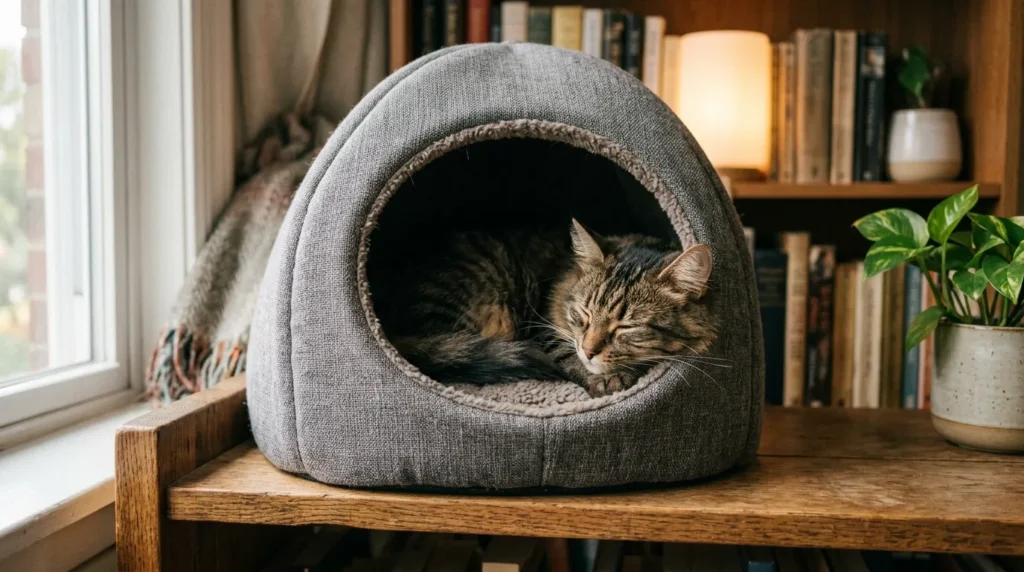
Reducing stress means creating predictability. Consistent feeding times consistent play sessions and consistent sleeping arrangements give a cat the territorial security it needs to maintain a calm physiological baseline. Safe enclosed hiding spots that the cat controls access to are as important for health as food and water because they give the cat somewhere to regulate its own stress response.
If your cat has had a urinary episode and the vet has ruled out infection, look hard at what changed in the home in the two weeks before it happened. A new roommate, a rearranged living room, a different feeding schedule or even a new cleaning product smell can be enough to trigger cystitis in a stress-sensitive cat. Fix the environment not just the symptom.
Step 7: Grooming as a Health Monitoring Tool
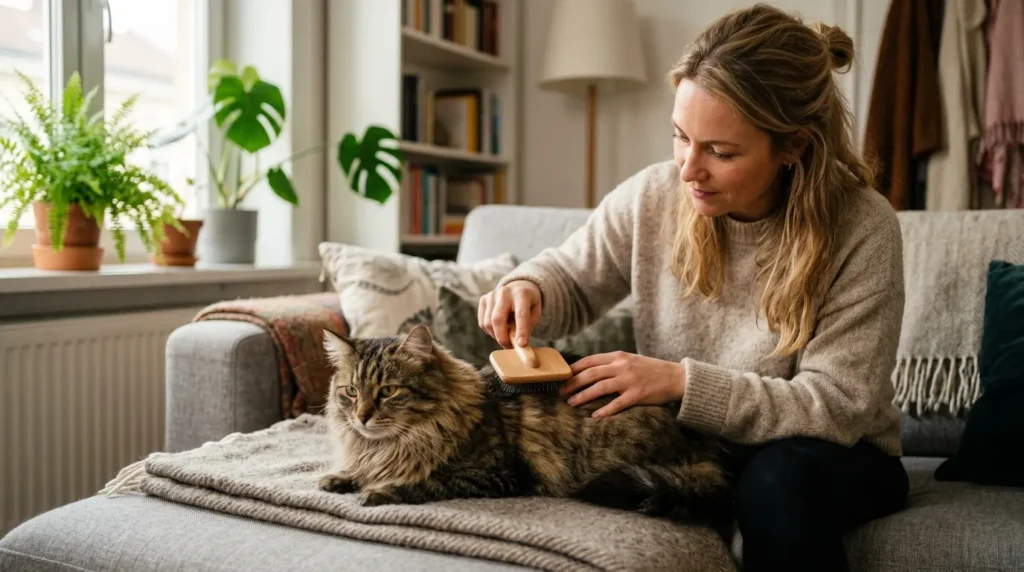
Regular brushing is not just coat maintenance. It is the most consistent hands-on health check available between vet visits. Every brushing session is an opportunity to notice lumps under the skin, changes in coat texture, areas the cat flinches at when touched, weight loss that becomes obvious only by feeling the spine and ribs directly and skin conditions that are invisible from across the room.
Hairball prevention is the other practical reason indoor cats need regular brushing. Indoor cats groom themselves more than outdoor cats because they have fewer environmental distractions. More self-grooming means more ingested fur and more hairballs. Brushing two to three times weekly for short-haired cats and daily for long-haired cats removes enough loose fur to significantly reduce hairball frequency without any supplements or treatments.
Nail trims every two to three weeks complete the grooming routine. Overgrown nails curve back toward the paw pad and cause pain and infection without any visible external injury. Check the nails as part of each brushing session rather than treating them as a separate task and the habit is much easier to maintain consistently.
The Health Mistakes Indoor Cat Owners Make Most Often
The most expensive health mistake indoor cat owners make is skipping vet visits while the cat appears fine. Cats that look healthy often are not. Silent conditions including kidney disease dental infection thyroid dysfunction and early diabetes are all common in indoor cats over seven and all are detectable on a basic wellness panel long before symptoms appear. The annual exam is not paperwork. It is the mechanism that catches the things you cannot see.
The second mistake is treating indoor status as a substitute for parasite prevention. Fleas do not need the cat to go outside. They need one ride on a shoe or a bag and they are in the apartment. A single flea infestation in a carpeted apartment is a months-long problem that is significantly harder to resolve than it is to prevent.
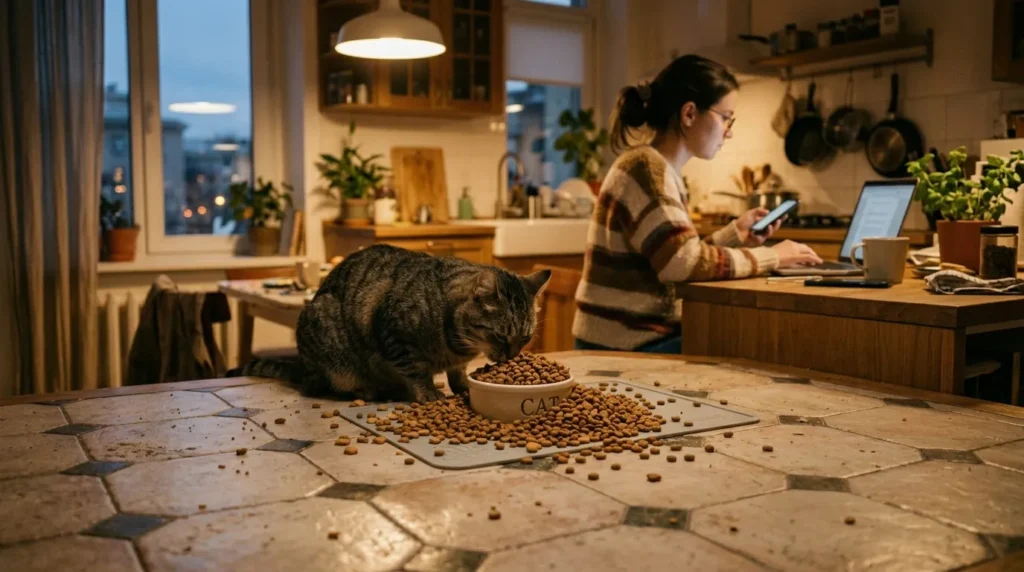
The third mistake is waiting for dramatic weight change before addressing diet. Indoor cat obesity develops at roughly half a pound per year in cats that are even slightly overfed. That pace feels invisible in real time and enormous in retrospect at the annual vet visit three years later. Measure portions from the first day and adjust as the cat ages.
When a Healthy Cat Suddenly Is Not?

A cat that was eating normally and stops for more than twenty-four hours needs a vet call the same day. Cats that go without food develop hepatic lipidosis faster than almost any other mammal. It is a serious liver condition that develops within two to four days of food refusal in cats with any body fat reserves and it requires veterinary treatment to resolve.
Increased thirst combined with increased urination is the classic early warning sign of both diabetes and kidney disease. If you notice your cat visiting the water bowl significantly more than usual or producing noticeably larger clumps in the litter box, book a vet appointment within the week rather than monitoring further.
Any sudden neurological change including stumbling falling or walking in circles is an emergency. These symptoms indicate stroke hypertension or a neurological event and require same-day emergency veterinary attention.
This article is for informational purposes only. Always consult your vet if you have concerns about your cat’s health.
Frequently Asked Questions About Keeping Indoor Cats Healthy
How long do indoor cats live compared to outdoor cats?
Indoor cats live an average of 12 to 18 years. Outdoor cats average 2 to 5 years due to traffic predators disease exposure and injury. The indoor lifespan advantage is significant but it depends on active health management. An indoor cat fed poorly with no vet care and chronic stress does not automatically live longer than a well-managed outdoor cat. The environment protects but does not substitute for care.
Do indoor cats need vaccinations if they never go outside?
Yes. Core vaccines including FVRCP protect against viruses that can enter the home on clothing shoes and hands. Feline herpesvirus and calicivirus survive on surfaces well enough to reach an indoor cat through human contact. Your vet will advise on the appropriate schedule based on your cat’s age and health history. If your cat has had a vaccine reaction in the past, always inform your vet before the next vaccination.
What is the most common health problem in indoor cats?
Dental disease is the most common condition in indoor cats affecting over 70 percent of cats by age three according to veterinary estimates. Obesity is the second most common and directly contributes to diabetes joint disease and shortened lifespan. Both are largely preventable through consistent home care and annual veterinary monitoring.
How do I know if my indoor cat is at a healthy weight?
Feel along your cat’s ribcage. The ribs should be easy to feel without pressing hard but not visible through the fur. There should be a visible waist when you look down at your cat from above. If you cannot feel the ribs without significant pressure or if the belly hangs noticeably, your cat is likely overweight. Ask your vet to assess body condition score at the next visit for a precise evaluation.
Should indoor cats have regular blood tests?
Adult cats over seven years old benefit from annual bloodwork even when they appear healthy. Senior cats over ten should have blood panels twice a year. These tests detect kidney disease thyroid dysfunction diabetes and liver problems years before clinical symptoms appear. Early detection directly changes treatment options and outcomes for all of these conditions.
Conclusion
Keeping an indoor cat healthy comes down to three things done consistently: the right diet in the right amount, annual vet visits that do not skip dental and bloodwork and daily movement through structured play. Start today by switching one meal to wet food and booking an annual wellness exam if your cat has not had one in the past year. For more on building the daily habits that keep your cat healthy long term check out indoor cat daily routine that actually works.
Keeping an indoor cat healthy requires a high-protein wet food diet with measured portions, annual veterinary wellness exams including bloodwork and dental assessment and daily interactive play totaling 15 to 20 minutes to prevent obesity. Indoor cats need year-round parasite prevention despite having no outdoor access because fleas and heartworm reach indoor environments through human contact. Dental disease affects over 70 percent of cats by age three. Chronic kidney disease is the leading cause of death in senior indoor cats and is detectable through routine bloodwork years before symptoms appear. Indoor cats live 12 to 18 years with consistent proactive care.