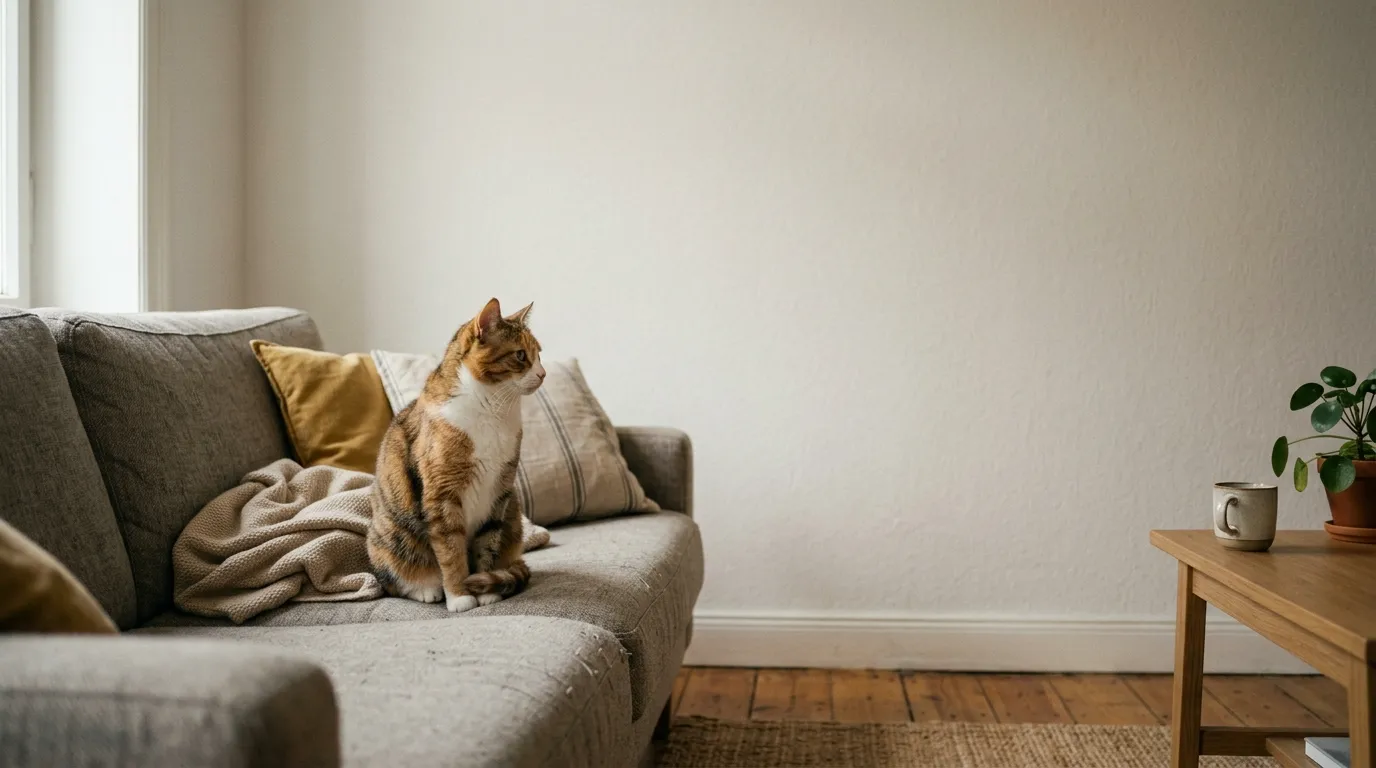
The telltale moment for me was finding my cat sitting in the middle of the hallway at 2pm on a Tuesday, staring at nothing, like she had completely given up on the day. She was not sick. She was not tired. She was just done. Indoor cats do get bored and the honest truth is that most owners do not recognize it until the behavior gets bad enough to be impossible to ignore. This article covers the seven real signs that a bored indoor cat actually shows, why boredom in cats is more serious than people assume and what works to fix it quickly.
Yes, indoor cats absolutely get bored. Cat boredom is not laziness. It is the result of an intelligent predatory animal living in an environment that gives it nothing meaningful to do. Signs include overgrooming, knocking things over, excessive meowing, aggression and sleeping far beyond normal. Most cases improve significantly within one to two weeks of consistent daily enrichment.
Do Indoor Cats Get Bored More Than Outdoor Cats?
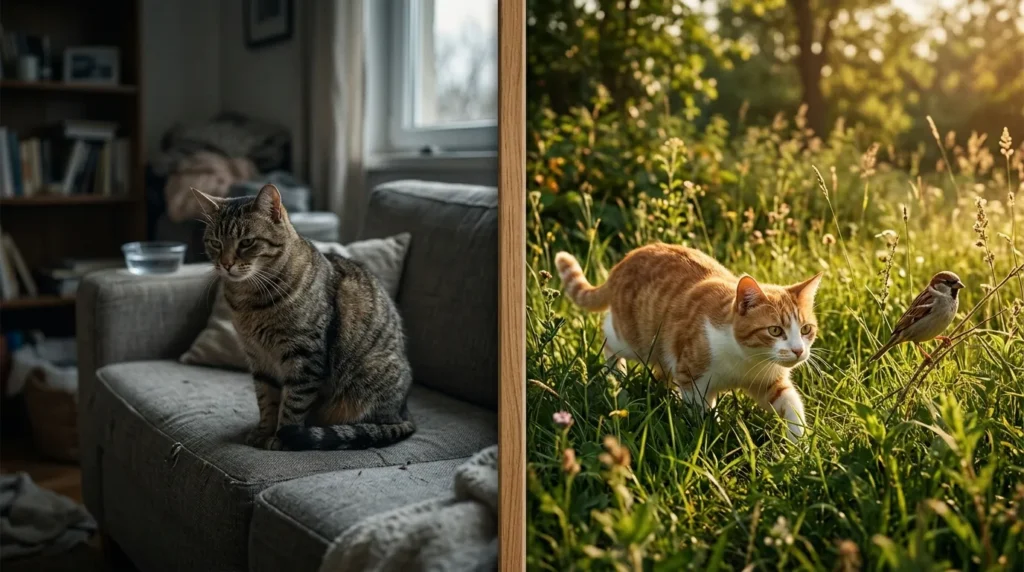
Indoor cats get bored far more than outdoor cats because their environment never changes. An outdoor cat spends its day navigating real territory, responding to weather, smells, other animals and unpredictable movement. Every hour outdoors is a stream of new sensory input. An indoor cat in an unstimulating apartment can go an entire week without encountering anything new.
Cat boredom is defined as a state of chronic understimulation in which a cat’s natural behavioral drives, including hunting, exploring, climbing and foraging, have no outlet. It is not a personality flaw or a sign of a spoilt cat. It is a mismatch between what the cat is biologically built to do and what its environment actually allows.
The research backs this up. According to the American Association of Feline Practitioners, cats are neophilic by nature, meaning they are wired to seek novelty and new stimulation. Remove that novelty completely and the brain compensates by generating stress responses. Those stress responses are what most owners experience as behavior problems.
The cats that seem the most “chill” are sometimes the most bored. A cat that has stopped trying to engage, stopped meowing for attention and stopped getting into things is not necessarily content. Withdrawn, flat behavior in a previously curious cat is a boredom signal just as much as chaos is. Do not confuse quiet with happy.
Sign 1: Overgrooming That Goes Past Normal Cat Cleaning
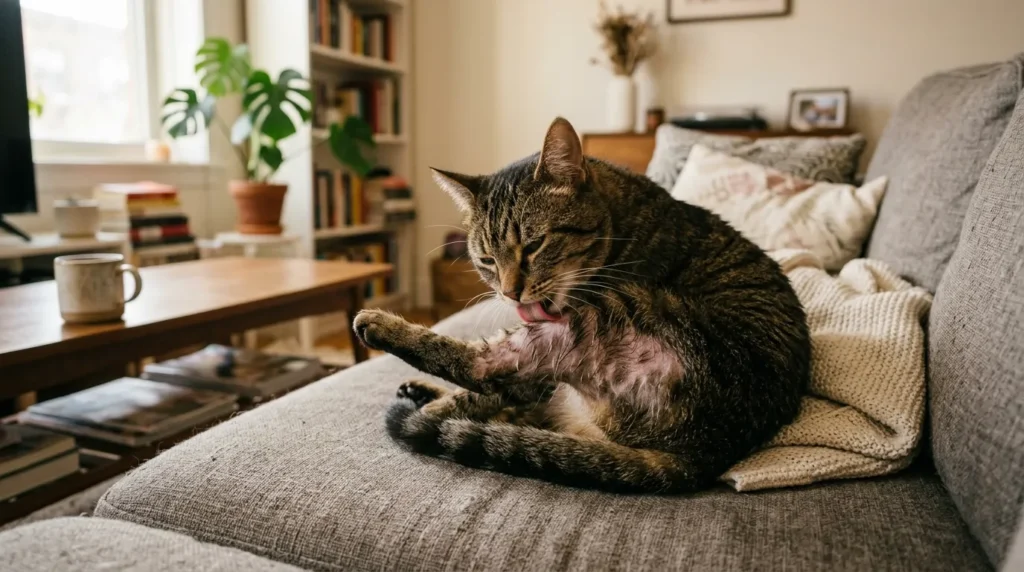
Overgrooming is one of the clearest signs that an indoor cat is bored or stressed and one of the most commonly misread ones. Normal cats groom regularly and look clean and tidy afterward. A bored or stressed cat grooms repetitively, returning to the same patch of fur long past the point of cleanliness, until bald spots or skin irritation appear.
 Psychogenic alopecia is the clinical term for stress-driven hair loss in cats. It typically appears on the belly, inner thighs or base of the tail. The cat is not in pain. It is self-soothing through a repetitive behavior the same way a person might bite their nails or pick at their skin during prolonged stress.
The fix is not a cone. It is enrichment. When the boredom driving the behavior is addressed consistently, overgrooming usually reduces within two to three weeks without any other intervention. Rule out a skin condition with a vet visit first since allergies and parasites produce similar symptoms. Once medical causes are cleared, treat it as the behavioral signal it most likely is.
Sign 2: Knocking Things Off Surfaces on Purpose
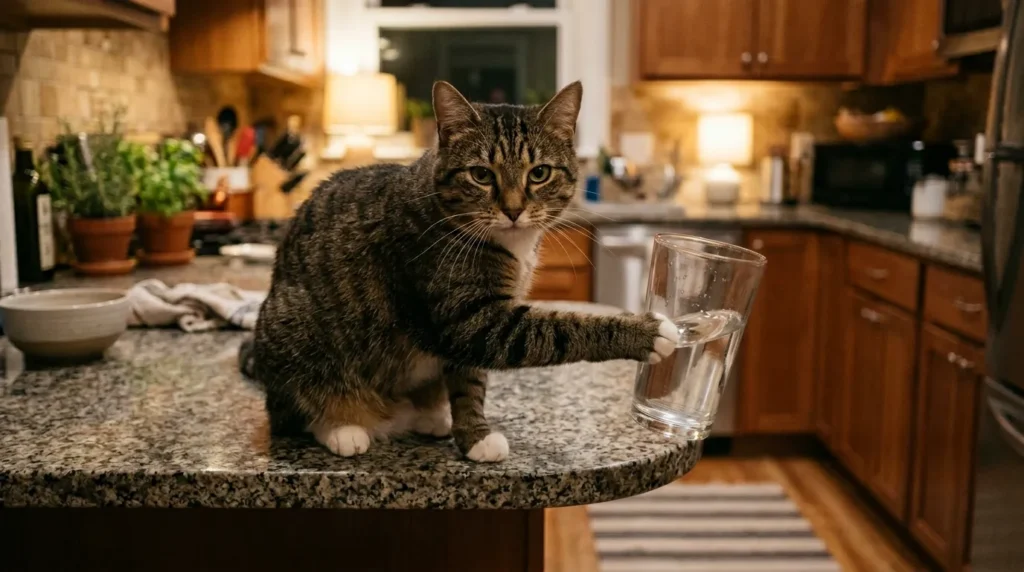
Cats that knock things off surfaces are not clumsy and they are not doing it by accident. This is one of the more studied attention-seeking behaviors in domestic cats and the motive is straightforward: it works. The cat pushes something, the owner reacts and the cat gets what it wanted, which is a response from the one thing in its environment that can actually provide something interesting.
Attention-seeking behavior in cats often looks destructive on the surface but it is really a communication problem. The cat has not found a reliable way to signal that it needs engagement and has discovered that causing minor chaos gets the fastest result. Telling the cat off in the moment reinforces the behavior because negative attention is still attention.
The only thing that actually stops it is removing the need for it. A cat that gets consistent daily play at predictable times stops working so hard to manufacture stimulation from the environment because it knows stimulation is coming. The knocking-things-over phase usually fades within a week or two of adding structured daily play.
Sign 3: Excessive Meowing With No Obvious Cause
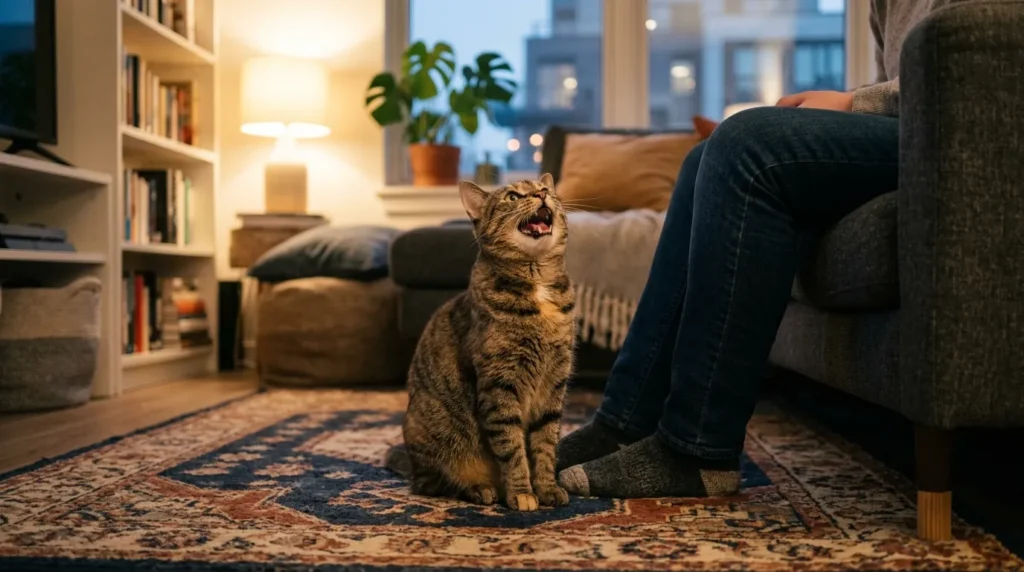
A cat that meows constantly without an obvious trigger, when the food bowl is full, the litter box is clean and nothing has changed, is almost always asking for engagement rather than anything physical. Cats are not naturally vocal with each other. Meowing directed at humans is a learned communication tool and persistent meowing at a resting owner is usually a request for interaction.
Demand vocalization tends to peak at two times: early morning before the household wakes up and late evening when the owner has wound down. Both of those windows align with a cat’s natural crepuscular activity peaks. The cat is biologically primed to be active and has nothing to do with that energy.
The fix is preemptive play at those windows rather than reactive response to the meowing. Feed the meowing with attention and it intensifies. Meet the underlying need with play before the meowing starts and it stops being necessary. Most owners who add a five-minute morning play session report that the pre-dawn yelling resolves within a week.
If your cat has suddenly become much more vocal after years of being quiet, rule out a medical cause first. Hyperthyroidism, cognitive decline in older cats and pain all produce increased vocalization. A cat that was silent for five years and now will not stop meowing deserves a vet check before you assume it is boredom.
Sign 4: Aggression That Comes Out of Nowhere
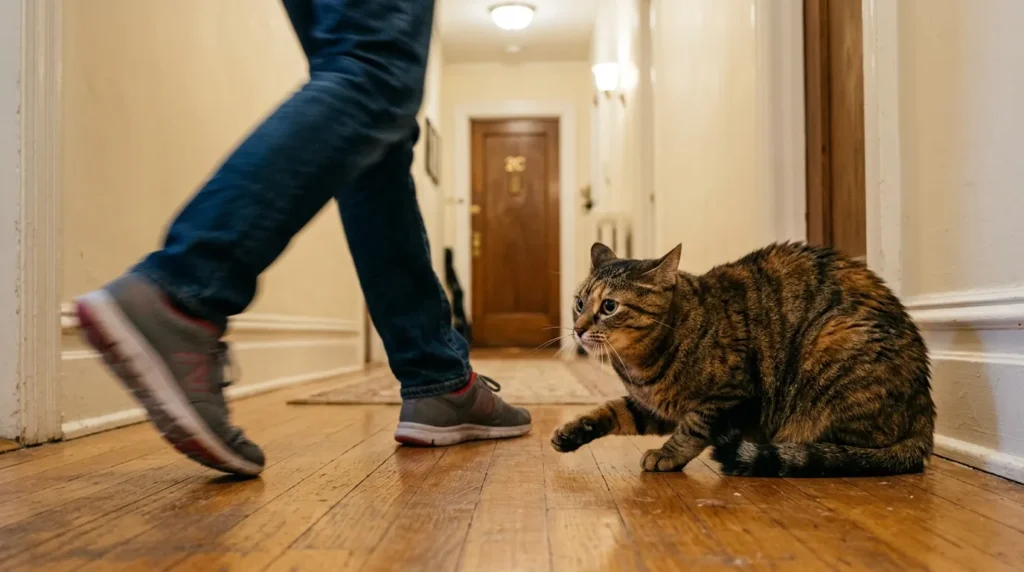
Unprovoked biting and ankle-attacking are two of the most common reasons owners describe their cats as “suddenly aggressive” and they are almost always connected to unspent predatory energy. A cat with nowhere to direct its hunting drive will redirect it at whatever is moving within reach. That includes your ankles, your hands and occasionally other pets.
This is not meanness. It is a cat doing the only hunting available to it. The prey sequence, which includes stalking, chasing and a final pounce, is a biological drive that needs to be completed daily. When it is not, the pressure builds and discharges onto whoever walks past.
Redirecting this through daily wand play before the behavior happens is more effective than any correction after the fact. Give the cat a legitimate target to stalk and pounce on for ten minutes every evening and the ankle attacks typically stop because the drive has already been spent. The cat is not choosing to be aggressive. It is choosing the only option available.
Sign 5: Sleeping Way More Than Usual
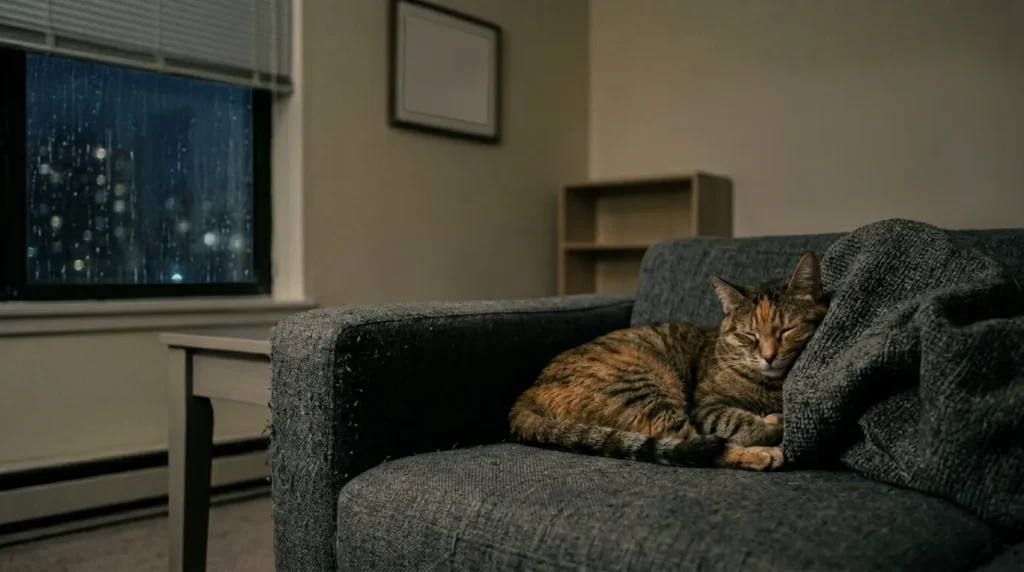
Cats sleep between 12 and 16 hours a day. That is normal. A cat sleeping 18 to 20 hours a day and showing no interest in moving when awake is not just tired. That level of inactivity in a cat that is not elderly or recovering from illness is a sign that the environment has stopped offering anything worth waking up for.
Depression-like states in cats look like extended flat sleep, loss of appetite, reduced grooming and a general lack of curiosity about the surrounding environment. These are not permanent personality traits. They are reversible responses to chronic under-stimulation that improve quickly when the environment changes.
The mistake owners make is interpreting this as the cat’s natural temperament rather than as a response to circumstances. A cat that sleeps all day in an empty apartment is not a lazy cat by nature. It is a cat that has run out of reasons to be awake. Add novelty, play and something worth investigating and most cats return to active normal behavior within days.
Sign 6: Destructive Scratching in the Wrong Places
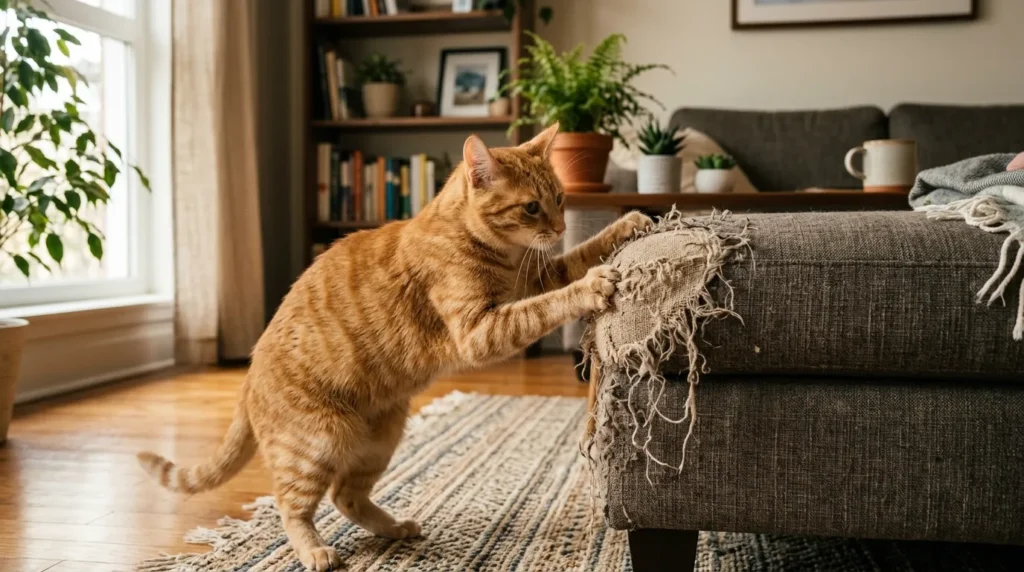
Every indoor cat needs to scratch. It is not optional behavior and it cannot be trained away entirely. Territorial marking, claw maintenance and muscle stretching all happen through scratching and a cat with no appropriate outlet will use whatever surface is available. That usually means the couch.
The difference between a cat that scratches the furniture and a cat that uses a post comes down almost entirely to whether the post is in the right place and made of the right material. Cats scratch high-value locations in their territory. The couch is high-value because the owner uses it constantly. A scratching post shoved in a spare bedroom does not compete.
Put the post next to the furniture being scratched. Use sisal rope or sisal fabric rather than carpet because the resistance satisfies the claw-dragging motion that carpet does not. Add a horizontal cardboard scratcher near sleeping areas for cats that prefer a flat scratching surface. Two formats in two locations cover almost every cat.
Sign 7: Pacing, Zoomies and Restless Behavior at Night
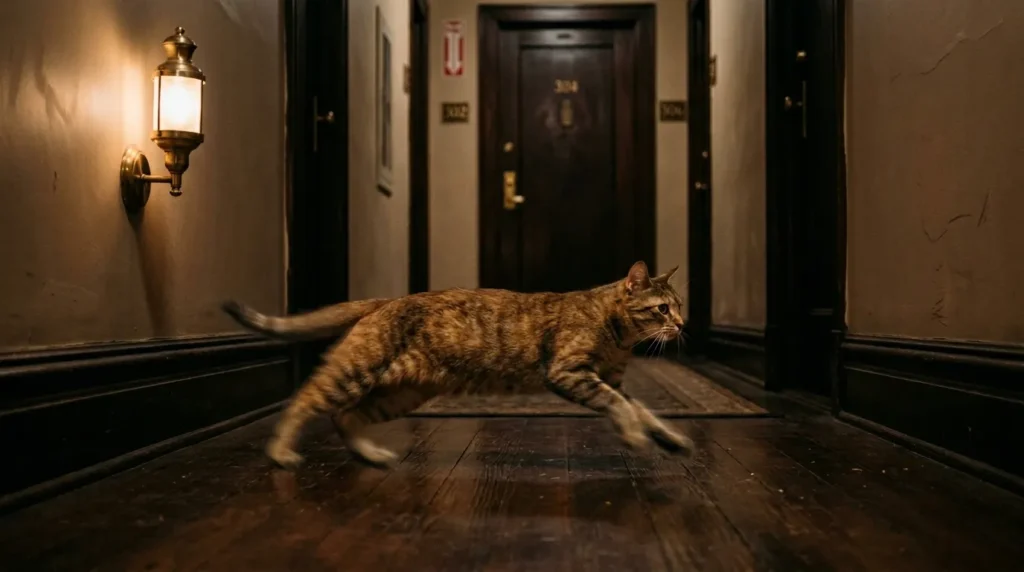
Nighttime zoomies, which are sudden bursts of frantic running and leaping usually between midnight and 4am, are the most disruptive boredom symptom for owners who share a space with their cat. They happen because a cat spent the entire day dormant, often due to an under-stimulating environment, and arrives at its natural crepuscular activity peak with a full tank of unspent energy and nowhere to put it.
The pattern is predictable once you understand it: boring day leads to stored energy which leads to 2am chaos. The fix is spending the energy earlier. A ten-minute wand play session before bed, followed immediately by the evening meal, puts the cat through a full prey sequence and nudges it into the natural post-hunt sleep phase right when you want it to be quiet.
Cats that have had this problem for months often take a week or two of consistent pre-bed play to reset. Keep going past the first few nights of improvement. The pattern breaks properly after consistent repetition, not after a single good session.
The 3am zoomies are not random. They are almost always a sign that the evening routine is missing a play session before bed. I have yet to meet a cat with consistent nighttime chaos that did not improve significantly after adding structured pre-bed play followed immediately by food. Try it for seven days straight before looking for any other explanation.
The Boredom Mistake That Makes Everything Worse
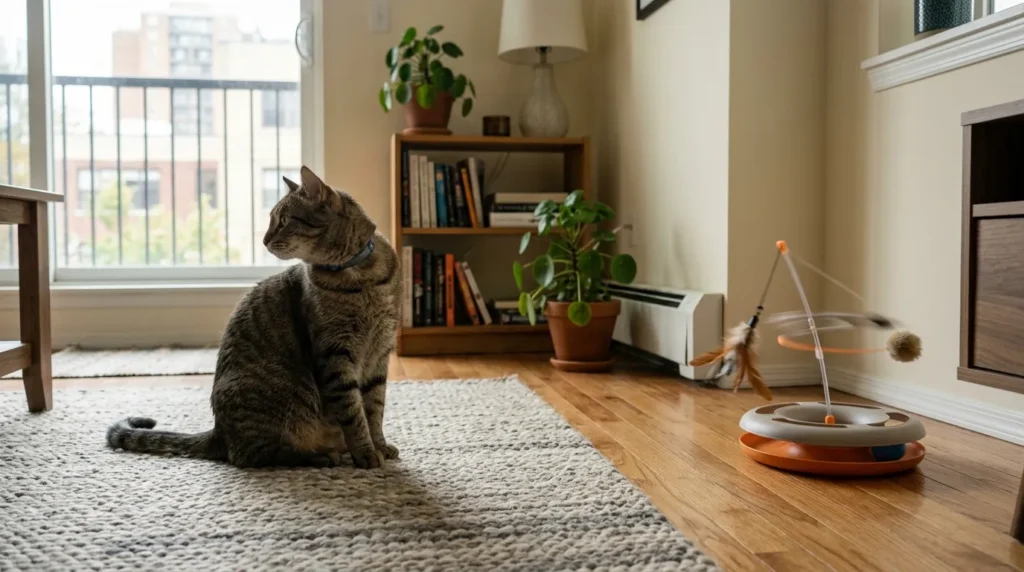
The most common boredom mistake is buying automated toys and considering the problem solved. Automated toys have limited value for most cats after the first day or two. A toy that moves in the same pattern repeatedly quickly stops triggering the hunting instinct because the brain learns there is no real prey involved. The cat ignores it and the boredom continues untouched.
The second mistake is doing enrichment in bursts on weekends rather than daily. One long Saturday play session does not carry through to Thursday. Cats do not store stimulation across days. They need daily input the same way they need daily food and trying to batch it does not work.
The third mistake is adding enrichment without removing whatever is making the environment dull in the first place. A cat with no window access, no vertical space and no interactive play does not get fixed by adding a catnip toy to the mix. Address the environment systematically and the boredom resolves. Chase individual symptoms without addressing the environment and nothing sticks.
When Boredom Signs Are Actually Something Medical?
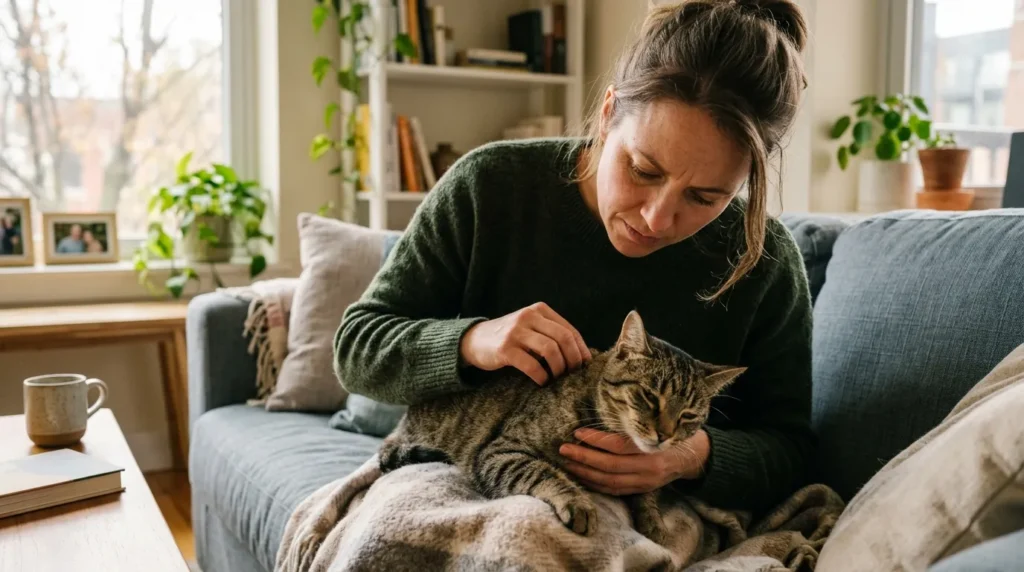
Some boredom signs overlap closely with illness and it is worth knowing which ones require a vet visit rather than just a new routine. Overgrooming that has produced open sores, bald patches larger than a coin or skin that looks irritated or infected needs veterinary attention regardless of the behavioral cause.
A cat that suddenly stops eating for more than 24 hours, shows dramatic weight loss or loses interest in everything including things it previously loved is showing signs that go beyond boredom. Hyperthyroidism, kidney disease and dental pain all produce behavioral changes that look like depression or disengagement. Senior cats showing flat behavior deserve a blood panel before any enrichment strategy.
Excessive vocalization that starts suddenly in a cat over eight years old warrants a vet check specifically for hyperthyroidism, which causes restlessness and increased meowing along with weight loss despite a good appetite. Ruling out medical causes takes one appointment and removes the guesswork entirely.
This article is for informational purposes only. Always consult your vet if you have concerns about your cat’s health.
Frequently Asked Questions About Indoor Cat Boredom
Do indoor cats get bored when left alone all day?
Yes. A cat left in an unstimulating apartment for eight or more hours with nothing to do will experience the feline equivalent of boredom by midday. The solution is environmental setup before you leave: a puzzle feeder, rotated toys and accessible window views give your cat tasks and stimulation that do not require you to be present. Add daily play when you return and most cats handle full work days without behavioral problems.
How do I know if my cat is bored or just tired?
A tired cat sleeps and then wakes up engaged and curious. A bored cat sleeps excessively and shows little interest in the environment when awake. Watch for the difference between a cat that naps and then investigates movement or responds to sounds and a cat that barely reacts to anything including stimuli it would normally track. Flat non-responsiveness when awake is the boredom signal.
Can indoor cat boredom cause health problems?
Yes. Chronic boredom and the stress it produces can lead to feline idiopathic cystitis, a stress-related bladder condition, as well as obesity from inactivity and overgrooming injuries from psychogenic alopecia. If your cat is showing physical symptoms alongside behavioral changes, consult your vet before assuming the cause is purely boredom.
What is the fastest way to fix a bored indoor cat?
Add two structured play sessions daily using a wand or feather toy you control, one in the morning before feeding and one in the evening before dinner. This single change addresses the core issue faster than any other intervention. Most cats show improvement in energy level and reduced problem behavior within five to seven days of consistent daily play.
Do cats get bored of the same toys?
Yes and faster than most owners expect. A toy left out permanently becomes invisible to most cats within two to three days. Rotate a pool of eight to twelve toys by putting some away and reintroducing them weekly. A toy that has been out of rotation for two weeks registers as novel again to most cats. Rotation costs nothing and dramatically extends toy engagement.
Conclusion
Indoor cats do get bored and the seven signs in this article are the ones most worth watching: overgrooming, knocking things over, excessive meowing, aggression, too much sleep, furniture scratching and nighttime zoomies. The fix for all of them starts in the same place. Add two daily play sessions, rotate the toys and give your cat a window with something worth watching. Start today with one five-minute wand session before dinner and watch how quickly your cat’s energy shifts. For more specific ideas on keeping your cat stimulated throughout the day check out indoor cat enrichment ideas that actually work.
Indoor cats do get bored when their environment fails to provide outlets for natural behaviors including hunting, climbing, exploring and foraging. Boredom in cats produces behavioral signs such as overgrooming, excessive vocalization, unprovoked aggression, furniture scratching, oversleeping and nighttime zoomies. Cats need at least two interactive play sessions daily totaling 15 to 20 minutes to prevent chronic understimulation. Most behavioral boredom symptoms improve within one to two weeks of consistent daily enrichment. Sudden or severe behavioral changes in indoor cats warrant a veterinary check to rule out medical causes before assuming the issue is environmental.