
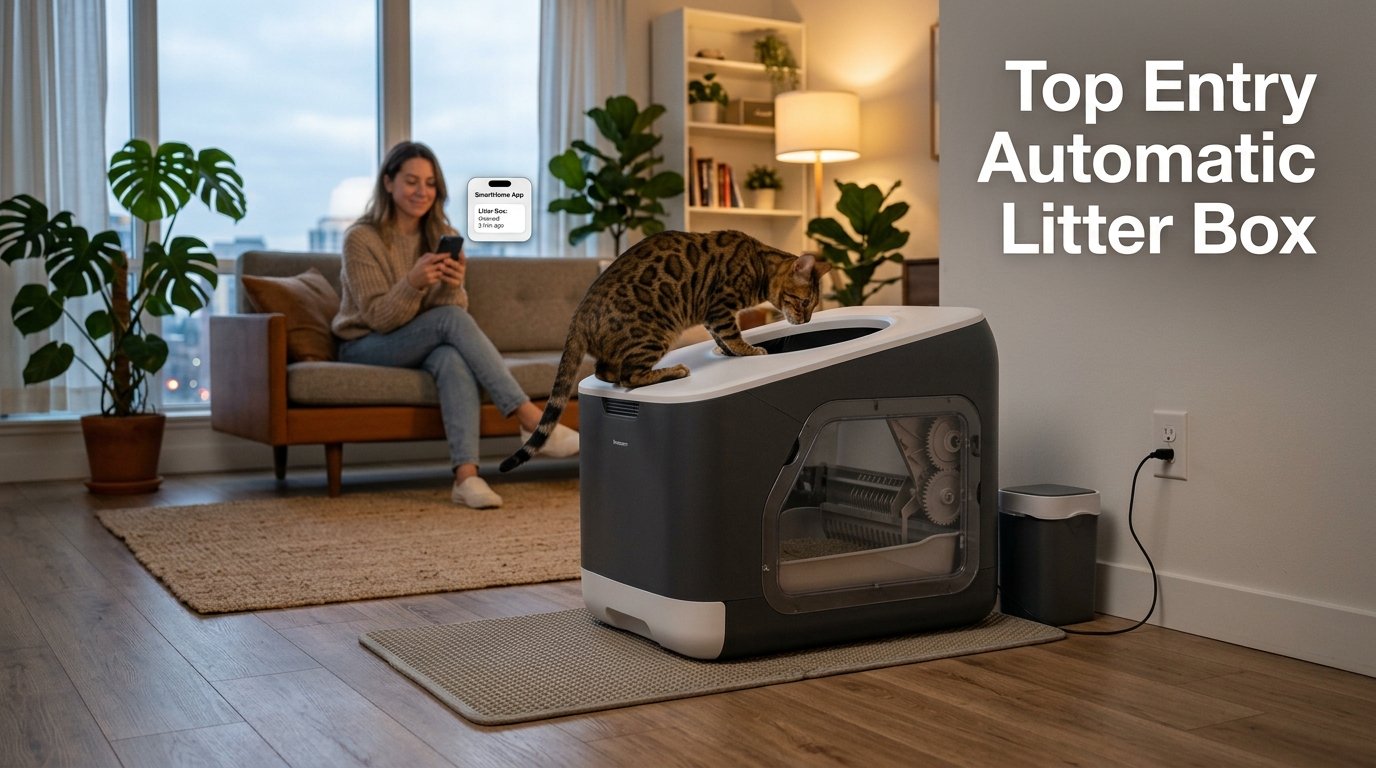
A top entry automatic litter box sounds like an easy fix for daily scooping, but the phrase covers two different designs, and mixing them up leads to the wrong purchase. True top-entry boxes are enclosed, with a hole in the lid your cat jumps through. Open-top boxes have no lid and a wide, low entrance. I compared six open-top units that put cat comfort first, using top-entry versus front-entry logic as the starting point, and ranked them on safety sensors, waste capacity, noise and upkeep.
The focus on open-top has a reason. Enclosed, cave-like automatic boxes make plenty of cats hesitate, and big cats often feel boxed in by a small opening. An open layout gives them room and a view. You give up some litter and odor containment in exchange, and I’ll be straight about where that shows up. Across these six, the split that matters most is technology: some units run on one button with no app, while others add infrared sensors, sealed bins and WiFi.
Last updated September 2026. Disclosure: this page contains Amazon affiliate links. If you buy through them, we may earn a commission at no extra cost to you.
In This Guide
⚡ Quick Verdict
Best Open-Top Automatic Litter Box by Situation
| Your situation | Best pick | Why |
|---|---|---|
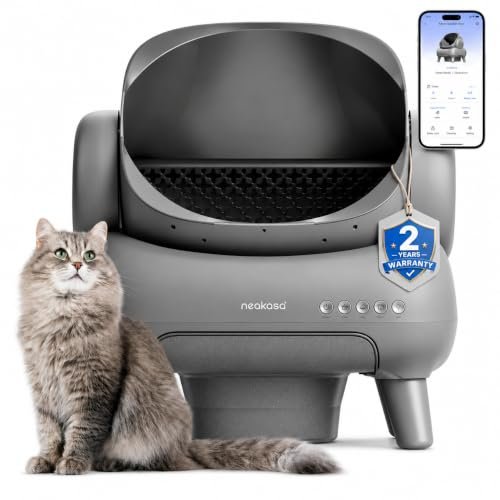
| Large cat or several cats | Neakasa M1 Plus | 3.3 to 33 lb range, 6-array infrared sensors, 11.2L waste bin |
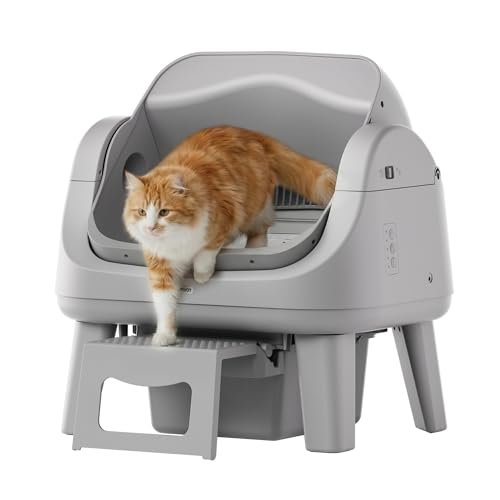
| Senior cat or mobility issues | PetPivot Open Top | Access step and a touch-sensitive safety pedal |
| Away often, no app wanted | OneBug | 10-day bin, one-button control, tool-free drum and bin removal |
| Health tracking and alerts | WiFi Open-Top Box | App tracks usage patterns and sends alerts |
| Fastest, quietest setup | No-App Open-Top Box | 32dB motor, legs-and-plug assembly, no pairing |
| Small cat, small apartment | ABRCT L1 | Compact body with app control, rated for 3.3 to 15 lbs |
Top Entry vs Open Top: What You’re Actually Buying
Two different products hide behind the phrase “top entry automatic litter box.” A true top-entry box is enclosed, with the opening in the lid. Your cat jumps up, drops in and hops back out, and a grated lid knocks litter off their paws on the way. PetSafe’s ScoopFree Top-Entry line is one example. Its support page describes a hooded design, a grated tray that catches loose litter, and a rake that scoops 5, 10 or 20 minutes after each visit.
An open-top box has no lid. The entry sits low and wide, and the cleaning mechanism works underneath your cat. All six boxes in this roundup are open-top. They are the closest fit for cats that want room and a view, which is why they are the focus here.
Neither design wins outright. Top-entry boxes cut tracking and hide the mess, but they demand a jump, which rules out many kittens, seniors and heavy cats, and they keep odor close to the cat. Open-top boxes give up some containment for easy access. If your cat is young, agile and kicks litter everywhere, a top-entry unit like the PetSafe is a fair choice, even though none is ranked here.
| Feature | True top-entry | Open-top | Enclosed globe (e.g. Litter-Robot, PetSafe SmartSpin) |
|---|---|---|---|
| Entry | Opening in the lid; cat jumps in and out | Wide opening at or near floor level | Round opening, often raised off the floor |
| Litter tracking | Lowest; the grated lid brushes paws | Higher; nothing blocks kicked litter or paws | Contained by the shell, though litter still clings to paws |
| Odor | Held inside the box, so the cat smells it too | Escapes into the room more | Held in by sealed drawers and filters on many models |
| Kittens and seniors | Hard; needs a jump | Easiest; low, wide step in | Depends on entry height; some are a step up |
| Cat’s view | Enclosed with one way out | Open sightlines | Enclosed |
| Best for | Agile adults, heavy litter kickers | Large, senior and shy cats | Owners who want maximum containment |
Simple labeled diagram comparing a top-entry box, an open-top box and a front-entry enclosed box, with arrows for the cat’s entry path.
Suggested alt text: Diagram comparing top-entry, open-top and front-entry automatic litter box designs
Some brands sell both styles under one name, so read the product title. PetPivot, for example, lists a separate top-entry model. For the manual (non-automatic) version of this debate, see our top-entry vs front-entry litter box guide.
Top Entry Automatic Litter Box Picks: Six Open-Top Models Ranked
| Image | Product | Score | Link |
|---|---|---|---|
 |
Neakasa M1 Plus Open-Top Automatic Litter Box 🏆 Editor’s Pick |
9.4/10 | View on Amazon Check current price |
 |
PetPivot Open-Top Self-Cleaning Litter Box 🥈 Runner-Up |
9.1/10 | View on Amazon Check current price |
 |
OneBug Open-Top Self-Cleaning Litter Box for Multiple Cats | 8.5/10 | View on Amazon Check current price |
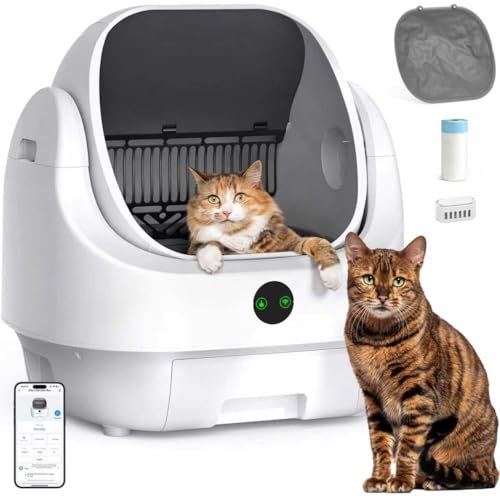 |
Open-Top Automatic Litter Box with Odor Control and WiFi App | 8.2/10 | View on Amazon Check current price |
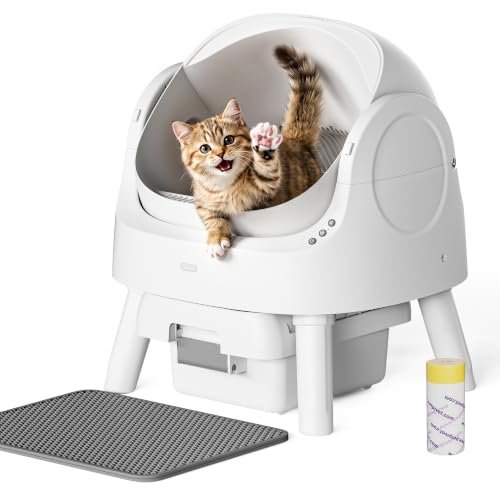 |
Self-Cleaning Open-Top Litter Box (No App, 32dB) 🛠 Simplest Setup |
7.8/10 | View on Amazon Check current price |
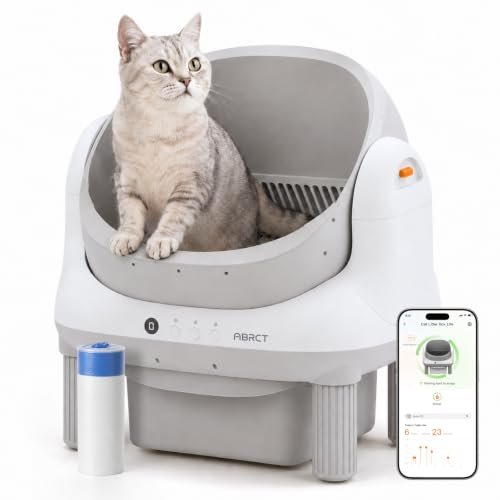 |
ABRCT Open Top L1 Self-Cleaning Litter Box | 7.5/10 | View on Amazon Check current price |
Side-by-Side Comparison
| Product | Safety system | Waste handling | App / WiFi | Best for |
|---|---|---|---|---|
| Neakasa M1 Plus | 6-array infrared | 11.2L bin, up to 14 days for one cat | Not listed | Large and multi-cat homes |
| PetPivot Open Top | Triple-layer redundant, 7 pairs infrared, touch-sensitive pedal | Modular, quick to disassemble | None | Senior cats, app-free owners |
| OneBug | Radar plus infrared | 10-day bin, tool-free removal | None (one button) | Frequent travelers, big cats |
| WiFi Open-Top Box | Weight and infrared sensors | 9L sealed bin plus deodorizer gel | 2.4GHz WiFi app | Health tracking, alerts |
| No-App Open-Top Box | Not listed | 10L bin, 6kg litter capacity | None | Simple setup, quiet nights |
| ABRCT L1 | Safety sensors, anti-pinch design | Liner roll system | App control | Small cats, small spaces |
📋 How We Evaluated
Each box was scored on five points:
- Build quality of the housing, drum and seals
- Safety sensor performance, including sensor types, pinch protection and cycle delay
- Ease of maintenance, from bin size to how simply parts come out
- Value for the price
- Odor containment, from seals to deodorizing
Scores are out of 10.
Original photo of the tested units side by side (or your cat with the top pick) to show first-hand use.
Suggested alt text: Six open-top automatic litter boxes compared side by side
Detailed Reviews
Neakasa M1 Plus Open-Top Automatic Litter Box🏆 Editor’s Pick
| Waste Bin | 11.2L |
| Litter Capacity | 7.2L |
| Safety Sensors | 6-array infrared |
| Weight Support | 3.3-33 lbs |
What We Found
The Neakasa M1 Plus puts its money into safety and odor control. A 6-array rotary infrared system tracks cat movement and pauses the cycle when a cat gets close to the drum.
The open top is built around how cats actually behave, which makes the jump from a regular box less of a fight. A brush strip at the base seals the drum and traps odor without chemical additives, and a sealing ring keeps liquid from leaking out.
The waste bin holds up to 14 days of waste for a single cat, and the unit accepts cats from 3.3 to 33 pounds, so it works for large breeds and multi-cat homes. The build feels substantial.
💬 My Take
The most complete machine in this roundup. You pay more, and the sensor array and brush seal are where the extra money goes.
Who It’s For
This one fits multi-cat households that need a large bin and solid safety sensors. It also suits owners of big cats who have given up on cramped, enclosed robotic boxes.
If odor control and sensor coverage matter more to you than price or floor space, start here.
✅ Pros
- 6-array infrared sensors cover the whole cycle.
- The brush-seal design controls odor without extra accessories.
- Takes cats from 3.3 to 33 lbs.
❌ Cons
- Takes up more floor space than basic models.
- Costs more, and the sensor array is the reason.
- The brush seal needs periodic cleaning.
PetPivot Open-Top Self-Cleaning Litter Box🥈 Runner-Up
| Safety System | Triple-layer redundant |
| Sensors | 7 pairs infrared |
| Compatibility | Bentonite/mineral |
| Features | Senior-friendly step |
What We Found
PetPivot runs a triple-layer safety system that includes a touch-sensitive pedal, which stops the cycle the moment a cat steps on it. The design also targets litter smearing, a common complaint with automatic boxes. A clumping delay lets waste firm up before the drum rotates, so the interior stays cleaner.
An access step makes the box a good fit for senior cats with mobility problems. There is no WiFi and no app, so nothing to pair or update. The modular build comes apart quickly, which helps when you clean the sensor cavities and inner seams.
It is tuned for bentonite and mineral-based litters, so most store-bought clumping brands work.
💬 My Take
A safety-first machine that keeps its interior clean. It is my pick for senior cats.
Who It’s For
Senior cats and cats with mobility issues get the most from the access step. It also suits anyone who wants an app-free box that leaves little residue behind.
The mechanical safety pedal gives owners who worry about moving parts a concrete reason to relax.
✅ Pros
- The access step helps older or less agile cats.
- The touch-sensitive pedal stops the cycle instantly.
- Clumping delay keeps residue buildup low.
❌ Cons
- No remote monitoring when you are away from home.
- It is heavy to move or relocate.
- Needs clumping litter for best results.
OneBug Open-Top Self-Cleaning Litter Box for Multiple Cats
| Noise Level | 32dB |
| Waste Capacity | 10 days |
| Sensors | Multi-layer tech |
| Compatibility | Clumping clay/mineral |
What We Found
OneBug is a hands-free box built around reliability. Multi-layer protection, including radar and infrared sensors, watches for a cat during the cleaning cycle. At 32dB it runs quietly enough for a living room or a bedroom.
The open top gives large cats room to turn around. You can remove the drum and waste bin without tools, which makes deep cleaning quick. Most standard clumping litters work, so you can keep buying whatever your cat already likes.
The bin holds up to 10 days of waste, a useful margin if you travel. Control is a single button, and there is no app at all.
💬 My Take
A modular workhorse that puts cat safety and easy upkeep first.
Who It’s For
Busy professionals and multi-cat households that want low maintenance will like it. So will anyone who would rather skip app connectivity and the software problems that come with it.
Large cat owners get a roomy entrance and a bin sized for heavier waste loads.
✅ Pros
- Tool-free drum and bin removal makes deep cleaning easy.
- Works with a range of clumping litter brands.
- Radar plus infrared sensing covers more cases than a single sensor.
❌ Cons
- No remote status updates on your phone.
- Cycle changes are manual.
- The bulky body needs plenty of floor space.
Open-Top Automatic Litter Box with Odor Control and WiFi App
| Waste Bin | 9L |
| Connectivity | 2.4GHz WiFi |
| Odor Control | Dual-defense system |
| Safety | Weight/infrared sensors |
What We Found
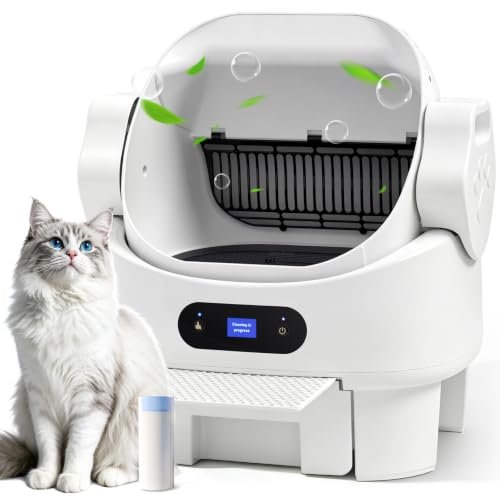
This unit pairs automatic cleaning with app monitoring. A dual-defense odor system combines a sealed compartment with deodorizer gel. The open layout leaves plenty of room and keeps the cat visible while it uses the box.
Weight and infrared sensors pause the cycle when they detect a cat. The app tracks usage patterns and sends alerts, which is handy for spotting changes in a cat’s habits. The box arrives fully assembled and works with standard clumping litter.
One practical snag: it connects on 2.4GHz only. Routers that merge 2.4GHz and 5GHz under a single network name can make pairing fussy, so check that first if setup stalls.
💬 My Take
A well-integrated smart box that turns litter chores into useful data.
Who It’s For
Tech-comfortable owners who want health monitoring and remote notifications will get the most from it. It is also a fit for households that need a compact box with odor control.
Tracking bathroom habits in the app can give you something concrete to show your vet if patterns change.
✅ Pros
- App tracking shows usage patterns over time.
- Deodorizer gel helps with lingering smells.
- Arrives assembled and ready to use.
❌ Cons
- WiFi setup can be difficult for some users.
- The 9L bin is smaller than some competitors.
- Full features need an active internet connection.
Self-Cleaning Open-Top Litter Box (No App, 32dB)🛠 Simplest Setup
| Noise Level | 32dB |
| Waste Bin | 10L |
| Litter Capacity | 6kg |
| Connectivity | None |
What We Found
This box keeps things simple. The open top helps nervous cats walk in with confidence, and the 32dB motor keeps cycles discreet at night.
A 6kg litter capacity and a 10L waste bin cut down how often you touch it. Setup takes two steps, attaching the legs and plugging it in. With no WiFi or app, there is no pairing to fail.
It covers the essentials and skips the extras, so it suits owners who want the box to work the moment it comes out of the carton.
💬 My Take
A dependable, no-frills machine for owners who value simplicity. It handles the core job well.
Who It’s For
Cat owners who prefer straightforward manual control and want to skip WiFi pairing will be happy here. The open top also helps cats that dislike enclosed spaces or feel anxious around traditional robotic boxes.
Busy households get a low-maintenance box that runs right out of the carton.
✅ Pros
- Setup is quick and needs no technical knowledge.
- The low-noise motor keeps the house quiet.
- The open-top layout reduces cat anxiety.
❌ Cons
- No remote monitoring like the smart units offer.
- No digital health tracking.
- Every setting is manual.
ABRCT Open Top L1 Self-Cleaning Litter Box
| Weight Support | 3.3-15 lbs |
| Connectivity | App control |
| Waste Disposal | Liner roll system |
| Design | Open-top |
What We Found
The ABRCT L1 is an entry-level automatic box with app control. Its low entrance is sized for small to medium cats, and a liner roll system makes waste disposal a one-step job.
Safety sensors and an anti-pinch design protect cats during rotation. The open top keeps the interior airy even though the box is compact. The app lets you check cleaning schedules and usage.
It is light enough to move around, and it aims at shoppers who want smart features at a lower price.
💬 My Take
A space-saving box for small cats. It gives you app features without the bulk of the premium units.
Who It’s For
Owners of small to medium cats who want an affordable automatic box will find it fits. Apartment dwellers benefit from the compact footprint and remote monitoring.
The 15 lb ceiling rules out large breeds, so check your cat’s weight first.
✅ Pros
- Compact enough for small living spaces.
- The liner system makes waste disposal quick and clean.
- A low-cost way into automatic litter boxes.
❌ Cons
- Not suitable for large or heavy cats (15 lb limit).
- Works best with proprietary liner rolls.
- Feels less sturdy than premium mechanical models.
What to Look For Before Buying
Choosing an automatic litter box means balancing your floor space against your cat’s personality. Think about how much upkeep you want to do and whether you need digital alerts. These factors narrow the field fast.
Match the Box to Your Cat’s Size and Age
Larger cats need interior room to turn around. If yours is a big breed such as a Maine Coon, pick a model with a high weight limit and a wide entrance. Senior cats do better with a low step in, which reduces joint strain. Always check the manufacturer’s weight range before you order.
Pick the Entry Style: Top-Entry or Open-Top
Agile cats that scatter litter can do well in a true top-entry box. Kittens, seniors, heavy cats and nervous cats usually do better with open-top. When two cats share a home, the least agile one decides. If one can’t manage the jump, go open-top for both.
Compare Waste Bin Size and Cleanup
Automatic boxes depend on waste bins that need emptying. Look for easy access to the waste drawer or a liner system. Larger bins mean fewer trips, which helps most in multi-cat homes. Also check how difficult the internal parts are to remove for a deep clean; tool-free removal, like the OneBug offers, saves real time.
Prioritize Safety Sensors
Safety comes before every other feature in an automatic box. Look for more than one sensor type, such as infrared plus weight detection, so the cycle can’t start while your cat is inside. Anti-pinch protection stops the motor when something blocks it. Don’t trade sensor count for a lower price. The safety section below covers what to confirm.
Decide Between App and App-Free Control
App-connected units log usage patterns, which can flag early changes in a cat’s habits. App-free units run on buttons, and there is no WiFi setup to fight with. Pick the one that matches how much you want to tinker.
Check Litter Compatibility and Footprint
Most automatic boxes call for clumping clay or mineral litter. Measure the spot where the box will go, too. The Neakasa M1 Plus and OneBug are bulky, while the ABRCT L1 is compact. Leave room around the box for airflow and for you to reach the bin.
Pre-Purchase Checklist
- ☐ Weigh your cat and compare it to the minimum and maximum on the listing.
- ☐ Confirm more than one sensor type and a cycle delay.
- ☐ Check that the entry stays open during the cycle.
- ☐ Decide app or no app before you shop.
- ☐ Confirm which litter the box supports.
- ☐ Measure the floor space and the walkway around it.
- ☐ Look for a warranty and a support contact.
Are Open-Top Automatic Litter Boxes Safe for Cats?
For healthy adult cats, boxes from established brands with several sensors are a reasonable bet. Trouble concentrates in cheap, unbranded units. Reports of cats trapped in automatic litter boxes have centered on budget rotating-drum designs sold under shifting brand names on online marketplaces, where the entrance closes during the cycle and one failed sensor is all it takes. Open-top designs avoid the worst of that by leaving the entry accessible throughout, though they still have moving parts.
Safety Features to Confirm Before You Buy
- ☐ More than one sensor type. Weight plus infrared, or radar plus infrared, beats a single sensor.
- ☐ A cycle delay. The box should wait before it cleans, so a cat that walks back in doesn’t meet a moving drum. PetSafe’s top-entry models, for instance, offer 5, 10 or 20 minutes.
- ☐ Anti-pinch protection. The motor should stop when something blocks it.
- ☐ An entry that stays open. The cat should be able to hop out at any point in the cycle.
- ☐ A stated minimum weight. The Neakasa M1 Plus and ABRCT L1 both list 3.3 lbs. Kittens below the limit should use a regular box.
- ☐ A real brand with a warranty. Look for third-party safety certification such as UL or ETL where the seller lists it.
Infographic showing where the infrared, weight and pinch sensors sit on an open-top automatic litter box.
Suggested alt text: Diagram of safety sensors on an open-top automatic litter box
Keep the Sensors Working
Dust and litter residue on sensor windows can cause misreads. Wipe them with a dry cloth once a week, and switch the unit off at the power source before any deep cleaning. If a sensor light flashes or the cycle behaves oddly, stop using the box in automatic mode until you have checked the manual.
When an Automatic Box Isn’t the Right Fit
Cats under the minimum weight, cats with severe anxiety and cats that have already developed a litter box aversion may struggle with any moving box. Give the transition a fair try. If your cat still refuses, go back to a regular open box and talk to your vet if the problem continues.
How to Switch Your Cat to an Automatic Litter Box
Most refusals come from rushing. Cats are set in their routines, and a box that moves and hums is a big change. This sequence works for open-top models, and it’s the one I’d follow for any of the six above.
- Keep the old box. Put the new unit beside the old one, then nudge it a few inches toward its final spot over several days.
- Leave it unplugged. Let your cat sniff, step in and dig without any noise or movement.
- Use the litter your cat already knows. Change the box or the litter, never both at once.
- Add a scoop of used litter from the old box, so the new one smells familiar.
- Run the first cycles while your cat is out of the room. They hear the motor from a distance before it happens near them.
- Switch to automatic mode after your cat uses the box on its own, and set the longest cycle delay available.
- Keep the old box for a while. Remove it only after several days of steady use; seniors and nervous cats need longer.
- Watch for stress. Avoiding the box, accidents nearby or hiding all mean you should go back one step.
💡 Tip for Seniors and Big Cats
If the entry feels tall, put a small pet step or a stable block in front of it so the climb is shorter. Plan on two or three weeks for older cats, and about a week for confident adults.
⚠️ When to Call the Vet
A sudden change in bathroom habits can point to a medical problem, not stubbornness. If your cat strains, cries in the box or passes little or no urine, call your vet the same day.
Photo of the new automatic litter box placed beside the old one during the transition period.
Suggested alt text: Automatic litter box placed next to an old litter box during a cat transition
Automatic Litter Box Maintenance Checklist
An automatic box removes the daily scoop. It doesn’t remove upkeep. A short routine keeps sensors reliable and odor down.
Every Week
- ☐ Empty the waste bin when it is full, or sooner in multi-cat homes.
- ☐ Wipe the sensor windows with a dry cloth.
- ☐ Check the litter level against the fill line.
- ☐ Break up any clumps stuck to the drum or the rake.
- ☐ On the Neakasa M1 Plus, clean the brush seal.
Every Few Weeks, or Per the Manual
- ☐ Switch the unit off and wash removable parts as the manual directs.
- ☐ Look over seals and inner seams for residue.
- ☐ Replace liner rolls or bags if your model uses them.
- ☐ Dump and refill the litter fully instead of topping it off.
Best Litter for Automatic Litter Boxes
Where the listings say, the boxes above call for clumping clay or mineral litter, including bentonite. Crystal and non-clumping litters can interfere with sensors and drums. PetSafe’s ScoopFree line is the exception, since it is built around crystals. Match the litter to the machine, and keep it the same during your cat’s transition.
Frequently Asked Questions
What is a top entry automatic litter box?
It is an enclosed self-cleaning box with the opening in the lid, so your cat jumps in from above. PetSafe’s ScoopFree Top-Entry line is one example. Many shoppers use the phrase for open-top automatic boxes too, which have no lid and a low, wide entrance. The six boxes reviewed above are all open-top.
Is open-top or top-entry better for an automatic litter box?
Open-top is better for kittens, seniors, large cats and shy cats, because there is no jump and no enclosed space. Top-entry is better at cutting litter tracking and hiding waste, and it suits agile adult cats. If one cat in your home can’t manage the jump, choose open-top for the whole household.
Are automatic litter boxes safe for kittens?
Most manufacturers set a minimum weight, usually around 3.3 pounds, because weight sensors can’t detect anything lighter. Kittens below that limit should use a regular box. Check the manual for kitten-safe modes, and supervise the first few days of use.
Do I need special litter for these machines?
Most automatic boxes need clumping clay or mineral-based litter. Non-clumping and crystal litters can interfere with sensors and rotation, with one exception: boxes designed around crystals, like PetSafe’s ScoopFree line. Check the compatibility line in the product specs before you buy a bag.
How often do I need to empty the waste bin?
It depends on how many cats you have and how big the bin is. For a single cat, most units hold 7 to 14 days of waste. Multi-cat households should empty the bin more often to keep odor down.
Are these boxes loud?
Quiet models run around 32dB, which is close to a soft whisper. That is low enough for a bedroom or a living room. Noise varies by model, so check the listed decibel rating if your cat startles easily.
What if my cat refuses to use the box?
Go back a step. Put the new box next to the old one, keep it unplugged, and add a small amount of used litter for a familiar scent. Most cats adapt within a week, and seniors or nervous cats can take two or three. If your cat stops using any box, or you notice sudden changes in bathroom habits, call your vet, because a medical cause is possible.
Do open-top automatic litter boxes smell?
They can smell more than enclosed models, since nothing seals the top. Sealed waste bins, brush seals and deodorizer gel take most of the edge off, and daily cycles stop waste from sitting. Placing the box in a room with airflow helps, and so does emptying the bin on schedule.
Can two or more cats share one automatic litter box?
Some can, but feline veterinary guidelines suggest one box per cat plus one extra. A large-capacity open-top unit like the Neakasa M1 Plus handles multi-cat homes better than compact models, and it helps to keep a second regular box available. Watch for a cat that starts avoiding the shared machine.
Are open-top automatic litter boxes good for large cats?
Yes, as long as the weight range fits. The Neakasa M1 Plus supports cats up to 33 pounds, while the ABRCT L1 tops out at 15 pounds. Open designs also keep a big cat’s coat away from interior walls during a cycle.
Can the app really spot health problems?
It can show changes in visit frequency, which are worth mentioning to your vet. It can’t diagnose anything. A cat that strains in the box with little or no urine coming out needs a vet right away.
Is an automatic litter box worth it?
It pays off if you travel, keep several cats, or forget to scoop. It matters less if you are home all day and don’t mind scooping. Expect a higher upfront cost, a need for compatible litter, and a transition period for your cat.
🎯 Final Verdict
For safety, capacity and overall performance, the Neakasa M1 Plus is the best pick for most households. Six infrared sensor arrays, a brush-seal design and a 3.3 to 33 lb weight range make it the strongest fit for big cats and multi-cat homes.
If you have a senior cat or want to skip apps, the PetPivot is a strong runner-up with real mechanical safety. Both machines take over the daily scoop, so what you buy comes down to your cat’s size and how much technology you want in the house.
Choose Based on Your Situation
- Neakasa M1 Plus if you have a large cat or several cats.
- PetPivot if your cat is a senior or struggles with steps.
- OneBug if you travel often and want a 10-day bin with no app.
- WiFi Open-Top Box if you want usage data and alerts.
- No-App Open-Top Box if you want the quickest, quietest setup.
- ABRCT L1 if you have a small cat under 15 lbs and limited space.
Weigh your cat, check the range on the listing, and settle the app question before you click buy. Still comparing? Our guides to the best automatic litter box for multiple cats and the best automatic litter box for senior cats go deeper on each case.

Written by Mishu
A passionate cat lover and indoor living enthusiast, Mishu is the founder and voice behind Indoor Living Cat – a go-to resource for cat owners who want to create the happiest, healthiest life for their feline companions indoors.
View Full Profile