
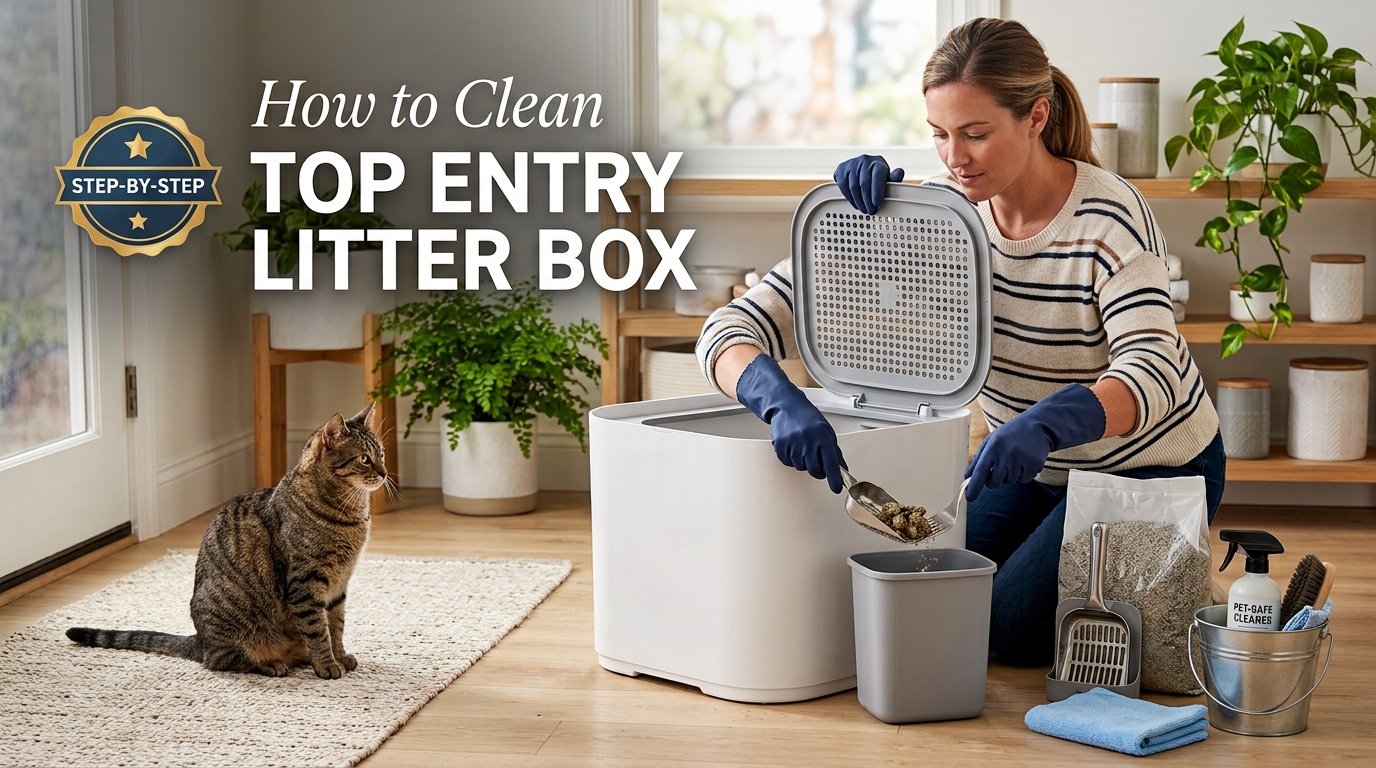
To clean a top entry litter box, scoop it every day, lift the lid once a week to knock litter off the grate and wipe the underside, and empty and wash the whole box with hot water and unscented dish soap every one to two weeks. Most owners keep up with the scooping. The lid and entry grate get skipped, and that’s where dust, dander, and urine splash build up.
Top entry boxes keep litter off your floor better than open pans do. You pay for it in cleanup. You lift a lid, work a scoop through a tight opening, and reach into a deep, enclosed space that holds smell when you fall behind. Below you’ll find the full routine, a schedule, cat-safe cleaners, fixes for the usual problems, and five products that cut down the work, including a stainless steel box and an automatic unit.
Last updated September 21, 2026. Some links on this page are affiliate links, so we may earn a commission if you buy through them, at no extra cost to you. The cleaning advice draws on guidance from PetMD, the ASPCA, and WebMD (linked at the end). It isn’t veterinary advice. Call your vet if your cat’s litter habits change suddenly.
How to Clean a Top Entry Litter Box: The Short Version
Here’s the routine in six lines. The full steps come right after.
- Scoop clumps and solid waste once a day, and twice a day in multi-cat homes.
- Lift the lid and tap or brush stuck litter off the grate and lid underside back into the box.
- Every one to two weeks, empty all the litter and take the box apart.
- Scrub the box, lid, and grate with hot water and unscented dish soap. Add an enzymatic cleaner if urine smell lingers.
- Rinse until no soap residue remains, dry every part fully, and refill with 2 to 3 inches of litter.
- Replace a plastic box about once a year, or sooner if deep scratches or a smell that survives washing show up.
In This Guide
Top Entry Litter Box Cleaning Kit: What You Need
Scatter and smell are two different problems. High walls handle the scatter. The smell comes from urine that soaks into the plastic, the lid, and the entry grate, and only cleaning gets it out. Keep a small kit within reach of the box so a wipe-down takes minutes instead of turning into a Saturday project.
- ☐ Slotted scoop that fits your box’s opening. Some top entry designs limit scoop size and angle, so test yours before you commit to a new one.
- ☐ Disposable gloves, plus a dust mask if litter dust bothers you.
- ☐ Waste bags and a lidded bin.
- ☐ Unscented dish soap and hot water.
- ☐ Enzymatic cleaner or wipes for urine odor, like the Nature’s Miracle wipes reviewed below.
- ☐ Soft sponge or brush. No steel wool.
- ☐ Microfiber cloth or paper towels for drying.
- ☐ Fresh litter and a litter mat.
- ☐ Optional: baking soda for a thin layer under fresh litter.
How to Clean a Top Entry Litter Box Step by Step
Daily upkeep takes a few minutes. A full wash takes 10 to 15 minutes of hands-on work, plus drying time. Keep up the daily part and the weekly part gets much easier.
Daily Scoop and Lid Check
- Put on gloves, then lift or unlatch the lid and set it aside. Working with the lid off gives you a better scoop angle than reaching through the hole.
- Scoop out clumps and solid waste and bag them. Check the corners, because clumps hide there.
- Tap litter off the grate and the underside of the lid back into the box. A dry brush handles stubborn bits.
- Top up to a depth of 2 to 3 inches. Cats tend to dislike a very deep pan, and adding litter as you scoop keeps the depth steady.
- Put the lid back and wash your hands.
Deep Clean: Every One to Two Weeks
Weekly is the safe default, and it’s what PetMD recommends. WebMD says every other week can work for a single cat on clumping litter. Go weekly if you have several cats or use non-clumping litter.
- Move the box to a bathtub, utility sink, or an outdoor spot with a hose, and put on gloves. If your cat might need to go mid-clean, keep a spare tray ready.
- Take off the lid and any removable grate or filter. Check your manual on the filter. Carbon filters usually get replaced, not washed.
- Empty all the litter into a bag, tie it off, and bin it.
- Rinse the box with hot water. Scrub the walls, floor, corners, lid underside, and grate with unscented dish soap and a soft sponge. Skip steel wool and scouring pads, because the scratches they leave hold odor.
- If urine smell lingers, spray an enzymatic cleaner on the surfaces and leave it for the time on the label. Ten to 15 minutes is typical, but follow the bottle.
- Rinse until no soap film remains. Leftover residue can smell odd to your cat.
- Dry every part with a towel or let it air dry. Fresh litter cakes into sticky layers in a damp box.
- Refill with 2 to 3 inches of litter. A thin layer of baking soda under the litter is optional.
- Wipe down the scoop and litter mat, put the box back together, and wash your hands.
Health note: Cat waste can carry bacteria and parasites, including the one behind toxoplasmosis. If you’re pregnant or have a weakened immune system, ask someone else to handle the box when you can, and ask your doctor which precautions fit your situation.
Top Entry Litter Box Cleaning Schedule
| When | What to do |
|---|---|
| Daily | Scoop clumps and waste, tap litter off the grate and lid, and top up the litter. |
| Weekly | Wipe the grate, lid, and rim with an enzymatic wipe. Wash the whole box if you have several cats or use non-clumping litter. |
| Every 1 to 2 weeks | Empty, wash, dry, and refill the box. |
| On the maker’s schedule | Replace the carbon filter if your box has one. On automatic units, empty the waste drawer and wipe the sensors. |
| About once a year | Replace a plastic box, or sooner if it’s deeply scratched or smells after washing. |
How Cleaning Differs by Box Type
| Box type | How to clean it | Watch out for |
|---|---|---|
| Plastic | Warm water, unscented dish soap, and a soft sponge. Add an enzymatic cleaner for urine smell. | Claw and scoop scratches trap odor over time. Replace about once a year. |
| Stainless steel | Wipe with a damp cloth for daily upkeep. For a deep clean, wash with warm soapy water, rinse, and dry. | It’s non-porous, so it resists odor. It’s also heavier to lift and empty. Skip steel wool. |
| Automatic | Empty the waste drawer on schedule, wipe the sensors, and wash only the parts the manual lists as safe to rinse. | Unplug it before cleaning and keep water off the electronics. |
| Carbon-filter lid | Wipe the lid and replace the filter on the maker’s schedule. | Enclosed lids hold smell fast if you skip a scoop. |
Long-Term Care and When to Replace the Box
Once a month, check the entry rim, latches, and any grate for cracks or warping. Chips and gouges in plastic hold bacteria. On an automatic unit, clean the sensors regularly so the safety check keeps working. Then look at the box itself, because plastic wears out. Most plastic boxes reach that point in 6 to 12 months in busy homes, and stainless steel lasts longer.
- • Run a finger along the floor of the box. If it feels rough or etched, scratches are trapping bacteria and urine residue.
- • The smell comes back within a day or two of a full wash.
- • Your cat hesitates at the opening, hops out fast, or starts going elsewhere. Rule out a health problem first, since painful urination is a common reason cats avoid the box.
What to Use to Clean a Top Entry Litter Box (and What to Skip)
Residual chemical smell can put a cat off the box entirely. Fragrance covers odor for you and adds a new one for your cat. That’s why the best cleaners are boring ones.
| Cleaner | Verdict | Notes |
|---|---|---|
| Hot water and unscented dish soap | Best default | PetMD says hot water alone often does the job. Soap loosens grime on the walls and floor. Rinse until no residue is left. |
| Enzymatic cleaner | Best for urine odor | It breaks down the organic residue in urine instead of masking it. Follow the label for contact time. |
| Diluted white vinegar and baking soda | Fine for mineral buildup | Some pet brands suggest a 50/50 mix with water and a 15 to 20 minute soak. Rinse well. |
| Diluted bleach | Use rarely | PetMD and PetSmart advise against it, and many cats hate the smell. If your vet asks you to disinfect, dilute per the label, rinse repeatedly, and dry fully. Never mix bleach with ammonia or vinegar. |
| Ammonia-based cleaners | Avoid | Urine contains ammonia, so the smell can draw a cat back to mark the spot. |
| Strongly scented or phenol-based cleaners | Avoid | Scent puts cats off, and some scented products are toxic if inhaled. Pine-scented disinfectants often contain phenols. |
| Steel wool and scouring pads | Avoid | They scratch plastic, and scratches hold odor for good. |
Enzymatic products earn their place for one reason. Cat urine leaves organic residue behind, and enzymes digest it. If the box still smells after a wash, an enzymatic wipe or spray is the next step before you replace anything. Our guide to cleaning a litter box without the smell goes deeper on odor.
5 Products That Make Top Entry Litter Box Cleaning Easier
Each product below goes after a different piece of the cleanup problem: litter tracking, surface odor, awkward reach, scratch-prone plastic, and daily labor. Specs come from the manufacturers’ listings, so check the current Amazon page for sizes and features before you buy. One flag: the automatic box (number 4) has an open top. It’s the pick for cats that can’t or won’t climb.
| Product | Type | Best for | Cleaning effort | Trade-off |
|---|---|---|---|---|
| 1. Arm & Hammer Premium | Plastic top entry, grated surface, Microban | Litter trackers and homes with dogs | Wipe the grate, wash every 1 to 2 weeks | Replace about yearly. Check entry size against your cat. |
| 2. Amazon Basics Large | Plastic top entry, filtered lid | Large cats on a budget | Lift the lid, scoop, wash | Plastic needs regular deep cleaning. |
| 3. Nature’s Miracle Wipes | Enzymatic scrubbing wipes, 30 count | Grate, lid, and walls between washes | Quick wipe-down | Doesn’t replace a full wash. |
| 4. Self Cleaning Open-Top | Automatic, app control | Busy owners, seniors, and kittens | Empty drawer, wipe sensors | Not top entry. Clumping litter only. Needs Wi-Fi. |
| 5. SOUJOY Stainless Steel | 304 stainless steel, top entry, 37 L | Large cats and long-term hygiene | Wipe or wash the smooth surface | Heavier than plastic. Check the entry size. |
|
1
|
Arm & Hammer Premium Top Entry Litter Box |
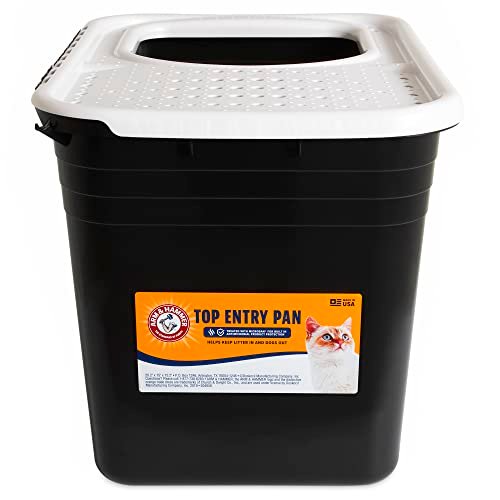
Litter tracking is the problem the Arm & Hammer Premium Top Entry Litter Box goes after. A grated surface sits at the entrance and knocks granules off paws as your cat climbs out, so they drop back inside instead of following your cat across the floor. High walls add privacy and stop kicked litter, and the wide top opening fits larger cats. Microban protection inhibits the growth of odor-causing bacteria on the plastic. That helps between washes. It doesn’t replace them.
The box is made with recycled materials and works with litters like pine and clumping clay. Its enclosed shape also keeps curious dogs out of the waste, which counts in multi-pet homes. Because it’s plastic, plan to replace it about every twelve months, since scratches from claws and scoops hold odor that washing can’t reach. The high walls also stop urine from spilling over the edge, so it suits cats that dig hard.
How This Can Solve Your Problem
- ✓ Grated surface catches litter from paws to cut tracking
- ✓ Microban protection inhibits odor-causing bacteria growth on the box
- ✓ High walls prevent urine spills and keep dogs out
Important Considerations
- • Replace about every twelve months for best results
- • Check your cat’s size against the entry dimensions
- • Works best with clumping or pellet litters
- • Wipe the grate weekly so stuck granules don’t build up
|
2
|
Amazon Basics Large Top Entry Litter Box with High Sides and Filter |
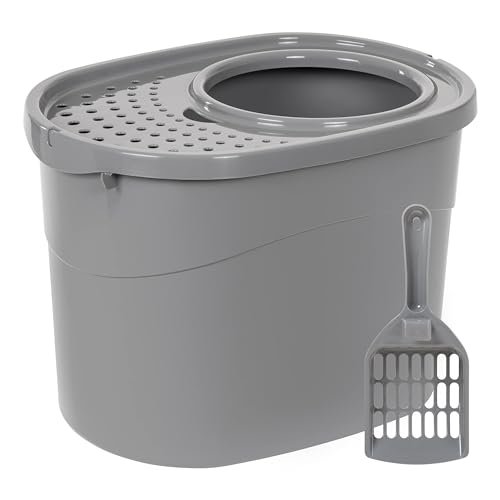
This is the no-frills pick. The high sides contain spraying and scatter, a filtered lid traps airborne particles, and the top entry keeps litter off the floor far better than an open tray. The lid lifts off, so checking for clumps takes seconds. The grey finish blends into most rooms.
Size is the main draw. A large box gives your cat room to turn without stepping in clumps, and it holds more litter between full changes. You still need to scoop every day. The BPA-free plastic comes with a matching scoop that stores on the unit, so you’re never hunting for it. It’s a straightforward choice for owners who care most about clean floors and don’t want extra features.
How This Can Solve Your Problem
- ✓ High sides contain spraying and litter scatter
- ✓ Filtered lid helps control odors
- ✓ On-board scoop storage keeps the tool within reach
Important Considerations
- • Make sure the large size fits your space
- • Lift the lid to check litter levels and clumps
- • Plastic needs regular deep cleaning to stay fresh
|
3
|
Nature’s Miracle Litter Box Scrubbing Wipes (30 Count) |
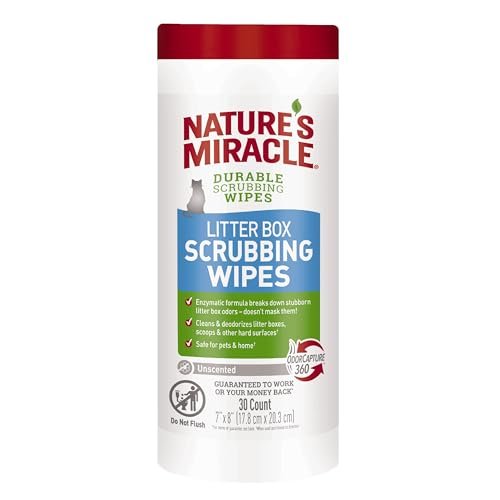
Nature’s Miracle Scrubbing Wipes handle the surfaces a scoop can’t reach: the entry grate, the lid, the rim, and the walls. The enzymatic formula breaks down the organic residue in urine that causes odor, which matters for keeping a sanitary litter box environment. Nature’s Miracle also lists OdorCapture 360 technology for lingering scents on the pack.
Use them between washes. A quick wipe of the grate and lid every few days stops dust and dander from caking up around the entry. The formula is marketed as safe for pet households, but let surfaces dry before your cat climbs back in. The 30-count pack covers regular use. These wipes don’t replace the weekly wash, and they’re a poor fit for soaking a heavily soiled box.
How This Can Solve Your Problem
- ✓ Enzymatic formula breaks down urine odor on contact
- ✓ OdorCapture 360 technology targets lingering scents
- ✓ Cuts the time a lid and grate wipe-down takes
Important Considerations
- • Follow the label for contact time and use
- • Keep the pack sealed so the wipes stay moist
- • Best for surface cleaning and odor removal, not a full wash
|
4
|
Self Cleaning Open-Top Automatic Litter Box with App Control |
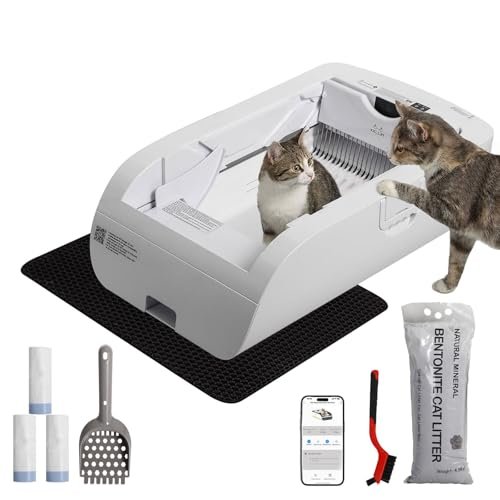
This is the exception on the list: it’s an open-top box, not a top entry one. That makes it a better fit for kittens and senior cats with mobility issues, who may struggle to climb into a high entry. Infrared and gravity sensors hold the cleaning cycle until your cat has fully left, and the app lets you schedule cleans and watch usage trends over Wi-Fi. Waste goes into a sealed drawer, and an active-oxygen deodorizer handles escaping smell.
A built-in battery backup keeps it running for up to 24 hours during a power cut, according to the listing. The base is non-stick and the unit comes apart, so wiping it down takes minutes. It sifts and reuses clean litter, which trims litter costs, and it works with most small-particle clumping litters. The starter kit includes a mat, a scoop, and waste bags. Automatic doesn’t mean maintenance-free. Empty the drawer on schedule and wipe the sensors regularly.
How This Can Solve Your Problem
- ✓ Automatic cleaning cuts daily scooping
- ✓ Infrared and gravity sensors pause cycles while your cat is in the box
- ✓ App control allows remote scheduling and usage tracking
Important Considerations
- • Not suitable for crystal or non-clumping litters
- • Needs Wi-Fi for full app features
- • Some cats dislike the noise, so watch how yours reacts
|
5
|
SOUJOY Stainless Steel Cat Litter Box with Lid, Extra Large Top Entry |
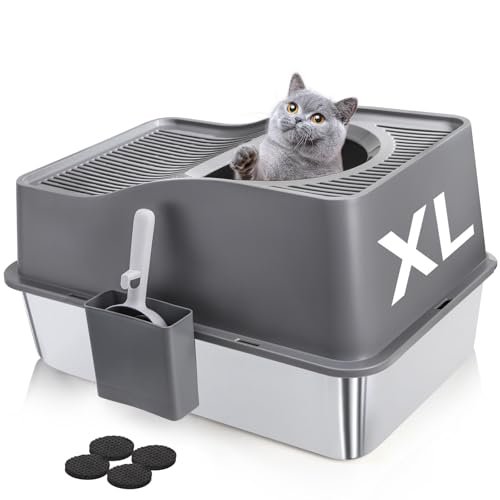
The SOUJOY Stainless Steel Litter Box is the hygiene pick. The 304 stainless steel is non-porous, so it doesn’t soak up urine odor the way scratched plastic does, and it stands up to daily paw scratches. The 37-liter capacity gives large cats room and stretches the time between full litter changes. High walls stop urine spills, which helps with cats that stand to pee. The smooth surface wipes clean with a damp cloth.
The lid is removable, so you can run the box enclosed or semi-enclosed depending on what your cat tolerates. Buckle installation makes taking it apart for scooping and washing quick. An anti-leakage design keeps the floor around it dry, and stainless steel won’t crack the way plastic can. The trade-off is weight. A full 37-liter box is heavy to lift and empty, so plan for that.
How This Can Solve Your Problem
- ✓ Stainless steel doesn’t absorb odor over time
- ✓ Extra-large capacity means longer gaps between full changes
- ✓ High walls prevent urine spills and litter scatter
Important Considerations
- • Stainless steel is heavier than plastic
- • Check the entry size against your cat
- • Wipe it regularly to keep the surface smooth and clean
Top Entry vs Front Entry Litter Box: Which Is Easier to Clean?
Top entry wins on scatter and privacy. Front entry wins on scooping access and on comfort for older cats. Neither is easier to clean across the board, so match the box to your cat first and your cleaning habits second.
| Factor | Top entry | Front entry or open-top |
|---|---|---|
| Litter scatter | Least. High walls and a grated lid catch most of it. | More, especially with cats that dig hard. |
| Scooping | Lift the lid first. Some designs limit scoop size and angle. | Direct access from the front or top. |
| Odor | Enclosure traps smell. It builds fast if you skip a scoop. | Air flows freely, but smell spreads into the room. |
| Grate and lid cleaning | Extra parts to wipe and wash. | Fewer parts to clean. |
| Checking your cat’s output | Harder to see clump size and volume. | Easy to see at a glance. |
| Seniors, kittens, arthritis | Often a struggle, since the entry can sit 14 to 16 inches up on some models. | Better, especially with a low-entry cutout. |
| Best for | Diggers, sprayers, homes with dogs. | Older cats, kittens, and cats that dislike covered boxes. |
For a fuller breakdown, read our top entry vs front entry litter box guide.
Will Your Cat Use a Top Entry Litter Box?
Most cats adapt, and many shy cats like the privacy. Some never do. Judge your cat before you judge the box.
Cats That Usually Struggle
- • Senior cats and cats with arthritis. The ASPCA notes that geriatric cats or cats with physical limitations may have a hard time with top-entry boxes or high sides.
- • Kittens. A tall entry can be too much to climb. Measure the entry height before you buy.
- • Overweight cats. Climbing in and dropping down takes more effort than walking through a front opening.
- • Cats in tense multi-cat homes. With one exit at the top, a cat inside can feel cornered by another.
How to Introduce a Top Entry Box
- Put the new box where the old one sat.
- Add fresh litter plus a scoop or two of used litter from the old box, so it smells familiar.
- Take the lid off for the first few days, then put it back once your cat is using the box.
- Leave the old box available while your cat learns.
- Praise or reward your cat when it uses the new box.
- Give it a couple of weeks. If your cat still refuses or starts going elsewhere, go back to a front-entry or low-entry box.
If your cat suddenly stops using any box, book a vet visit. Painful urination is a common cause of litter box avoidance, and it needs treatment, not a new box.
Key Factors in Choosing the Right Solution
Picking a litter box means trading your cat’s comfort against your own cleaning habits. Size, material, and how much daily work you’ll actually do decide most of it.
Material Durability
Plastic is affordable and light, and it wears. Scratches from claws and scoops turn into grooves that trap odor. Stainless steel is non-porous, resists scratches, and doesn’t hold onto smells, so it’s the better long-term buy for hygiene if you can absorb the higher price and the extra weight. Plastic still works when you replace it on schedule.
Size and Accessibility
A common rule of thumb is a box about 1.5 times your cat’s length. Large cats need room to turn, and the entry hole has to clear their head and shoulders. For senior cats, choose a low-threshold or open-top design. A cramped box leads to accidents outside the tray. In multi-cat homes, the usual guidance is one box per cat plus one extra.
Automation vs. Manual
Manual boxes are simple and cost less, but they need daily effort from you. Automatic boxes save time and handle waste on their own. They also take more space, need a power source, and don’t suit every cat, since some dislike the noise. They still need regular cleaning. Choose based on your schedule and budget.
Quick Buying Checklist
- ✓ Removable lid or latch for easy access
- ✓ Smooth interior without deep seams where residue collects
- ✓ Entry opening that clears your cat’s head and shoulders, at a height your cat can manage
- ✓ A scoop that fits through the opening if you plan to scoop with the lid on
- ✓ Replacement filters available, if the box uses one
Top Entry Litter Box Prevention Tips
Preventing mess and odor is easier than cleaning it up. Small changes stop litter tracking before it starts.
Control Litter Scatter
Put a litter mat right beside the entry point. Mats with deep grooves or raised edges catch the most, and rubber ones are easier to wipe than fabric. Heavier litter also travels less. Shake the mat out regularly so it keeps working.
Manage Odor Early
After each deep clean, spray the empty base with an enzymatic cleaner and let it dry before you refill. That breaks down bacteria before they leave a permanent smell. If your lid takes a carbon filter, replace it on the maker’s schedule for a second layer of defense.
Choose the Right Litter
Skip heavily perfumed litter. WebMD notes that most veterinarians advise against scented litters and deodorizers, since cats can find them overwhelming. If your cat accepts a litter, stick with it. Cats are particular.
Pick a Good Spot
Place the box in a quiet, ventilated spot away from food and water. Enclosed boxes hold smell, so give them airflow.
Monitor Cat Behavior
Watch for signs of litter box aversion. If your cat avoids the box, it may be too dirty or the cleaner may smell wrong. Frequent scooping prevents the buildup that causes avoidance. The enclosed design also makes it easy to miss changes, so glance inside with the lid off each time you scoop. Call your vet if you see straining, crying, blood, frequent trips with little output, or accidents outside the box.
Top Entry Litter Box Smells or Stuck Litter? Quick Fixes
| Problem | Likely cause | Fix |
|---|---|---|
| Smell returns within a day or two of washing | Scratched or porous plastic holding odor | Replace the box. Consider stainless steel. |
| Smell is strongest when you lift the lid | Waste sitting in enclosed air, or a spent filter | Scoop daily, twice in multi-cat homes, and replace the carbon filter. |
| Litter stuck to the grate and lid | Dust, dander, and damp or fine litter | Tap it off after each scoop and wipe weekly with an enzymatic wipe. |
| Urine smell on outer walls or the floor | Splash from spraying or standing pees, or a missed spot | Wipe with an enzymatic cleaner and add a mat. If it’s new behavior, ask your vet. |
| Cat avoids the box after cleaning | Strong cleaner scent or ammonia residue | Rinse longer, switch to unscented soap, and keep a second box available. |
| Musty smell after a wash | Box wasn’t fully dry before refilling | Dry every part completely before you add litter. |
Persistent odor with a clean box usually points to the plastic itself. Our guide to getting rid of litter box smell covers more fixes.
Common Mistakes When Cleaning a Top Entry Litter Box
Most litter problems trace back to a handful of simple errors. Fix these and you’ll save time and cut odor.
Neglecting the Entry Point
Many people focus on the litter and forget the grate and lid. That area collects dust and dander, and smell leaks out of it. Wipe it every time you scoop, and give it an enzymatic wipe weekly.
Using the Wrong Cleaning Agents
Ammonia-based cleaners are the worst offender. Urine contains ammonia, so a cleaner that smells like it can draw a cat back to the same spot. Use pet-safe, enzymatic cleaners for odor, and mild unscented soap for the rest.
Overfilling the Litter
Too much litter spills over the sides and weakens the containment a top entry box is supposed to give you. It also makes scooping harder. Stick to 2 to 3 inches.
Refilling a Damp Box
Litter cakes onto wet plastic and forms sticky layers that are hard to scoop. Let everything dry first.
Scrubbing with Abrasive Pads
Steel wool and scouring pads scratch plastic, and those scratches hold odor for good. A soft sponge does the same job without shortening the box’s life.
Forgetting the Box Because It’s Covered
Out of sight can turn into out of mind. A covered box hides a full pan, so set a daily reminder on your phone if you keep missing it.
Quick Summary
- A plastic top entry box with a grated surface and Microban protection that cuts tracking and surface odor. Good for larger cats and homes with dogs. See the Arm & Hammer box
- A budget-friendly, high-sided box with a filtered lid and a scoop that stores on the unit, made for large cats and clean floors. See the Amazon Basics box
- Enzymatic wipes that break down urine odor on the grate, lid, and walls between full washes. See the Nature’s Miracle wipes
- An open-top automatic box with sensors and app control. It isn’t top entry, but it suits seniors and kittens and cuts daily scooping. See the automatic box
- A premium stainless steel box that resists odor absorption and gives large cats plenty of room. See the SOUJOY box
Frequently Asked Questions
How do I clean a top entry litter box?
Scoop daily, tap litter off the grate and lid, and wipe those parts weekly. Every one to two weeks, empty the box and wash it with hot water and unscented dish soap. Use an enzymatic cleaner for lingering urine smell, rinse well, dry every part, and refill with 2 to 3 inches of litter.
How often should I clean a top entry litter box?
Scoop at least once a day, and twice in multi-cat homes. Wash the whole box weekly, which is PetMD’s recommendation. WebMD says every other week can work for one cat on clumping litter. Replace a plastic box about once a year.
How do I scoop a top entry litter box?
Lift or unlatch the lid and scoop with it off. It gives you a better angle than reaching through the hole. If your box lets a scoop pass through the opening, test that your scoop fits before relying on it. Tap litter off the grate and lid back into the box.
What causes top entry litter box odors?
Urine soaked into the plastic, waste sitting in enclosed air, and residue on the lid and grate cause most smells. Scratched plastic is a common culprit, because scratches trap bacteria that washing can’t reach. Stainless steel resists this since it’s non-porous.
Can I use vinegar to clean a top entry litter box?
Yes. Diluted white vinegar works for mineral buildup and mild odor. Some pet brands suggest a 50/50 mix with water and a 15 to 20 minute soak, then a thorough rinse. Never mix vinegar with bleach.
Can I use bleach to clean a top entry litter box?
Skip it for routine cleaning. PetMD and PetSmart advise against bleach, and many cats dislike the smell. If your vet asks you to disinfect the box, dilute per the label, rinse repeatedly, and dry fully. Never mix bleach with ammonia or vinegar.
How do I stop litter from sticking to the lid and grate?
Tap the lid and grate over the box after every scoop and wipe them weekly with an enzymatic wipe. Damp litter and dust stick more, so keep the box dry between cleanings. A litter mat outside the entry catches what falls.
Do top entry litter boxes smell more than open ones?
They can. The enclosure traps smell, and it builds quickly if you skip a scoop. Daily scooping, a carbon filter on the lid if it takes one, and a weekly wipe of the lid and grate keep it under control.
Are top entry litter boxes bad for senior cats?
Often, yes. The ASPCA notes that geriatric cats or cats with physical limitations may have a hard time with top-entry boxes. Some models sit 14 to 16 inches high at the entry. A low-entry or open-top box is the safer choice for cats with arthritis.
How do I get my cat to use a top entry litter box?
Place it where the old box was, add a scoop of used litter for scent, and take the lid off for the first few days. Keep the old box available and reward your cat. Give it a couple of weeks, then switch back if your cat refuses.
How often should I replace a top entry litter box?
Replace plastic boxes about once a year, or sooner if you see deep scratches or the smell returns within a day or two of washing. Stainless steel lasts longer.
Which solution is best for the top entry litter box?
It depends on your cat and your routine. Stainless steel is the best long-term pick for odor control and durability. The Amazon Basics box is a solid budget option. Enzymatic wipes help with any box. For cats that can’t climb, the open-top automatic unit fits better.
How long does it take to clean a top entry litter box?
Daily scooping takes a few minutes. A full wash takes 10 to 15 minutes of hands-on time, plus drying.
Is it worth investing in a top entry litter box?
Yes, if your cat can climb and you’re tired of litter on the floor. High walls cut scatter and urine spills, and stainless steel models last longer than plastic. If your cat is older, a kitten, or refuses covered boxes, skip it.

Written by Mishu
A passionate cat lover and indoor living enthusiast, Mishu is the founder and voice behind Indoor Living Cat – a go-to resource for cat owners who want to create the happiest, healthiest life for their feline companions indoors.
View Full Profile