
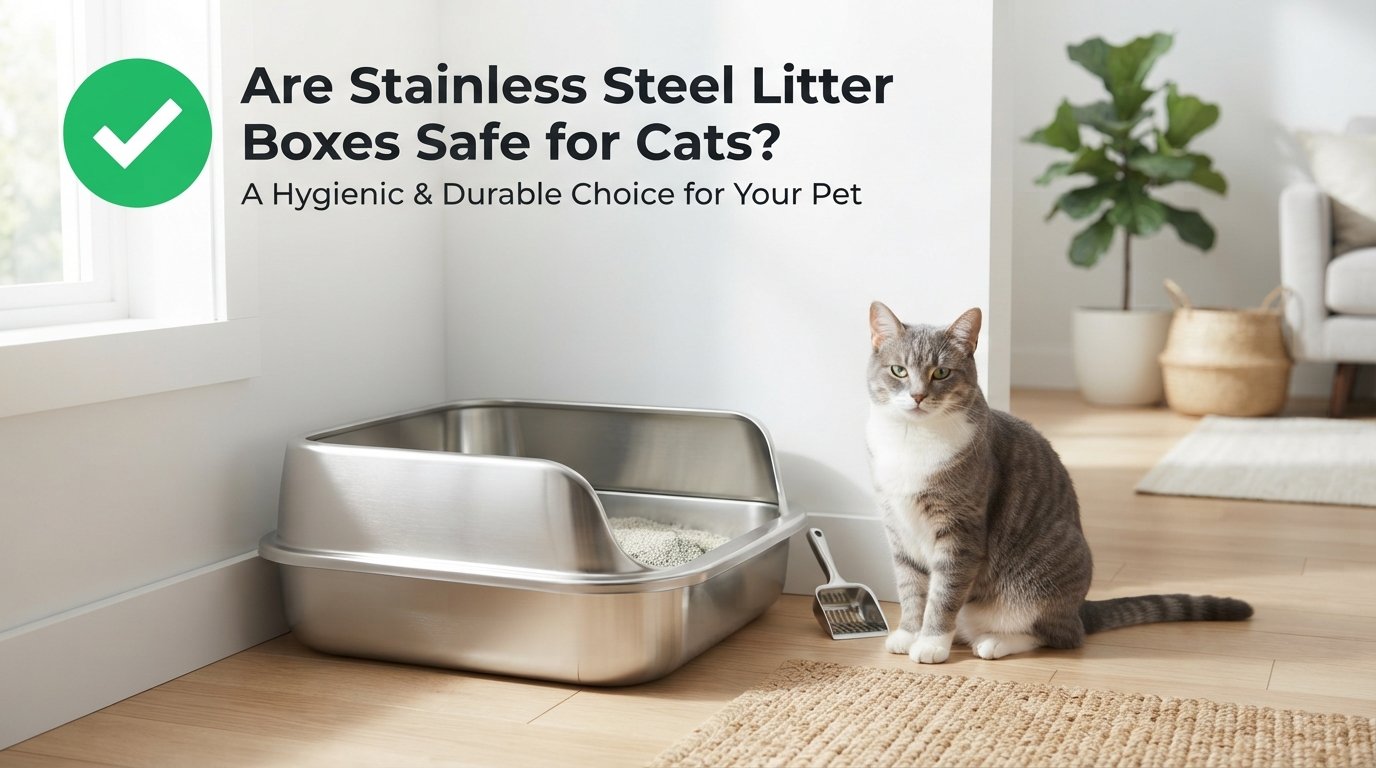
Are stainless steel litter boxes safe for cats? Yes, and the switch usually starts the same way. A plastic box gets scratched, the scratches trap odor, and no amount of scrubbing fixes it. Your cat notices the smell before you do. A rough surface or a box that’s too small can turn a healthy cat into one that avoids the litter box entirely. I tested several stainless steel models side by side, checking their edges, base weight, and how they held up under daily wear. The material never failed. What decides whether your cat actually uses the box is the design wrapped around it, and that’s where most buying guides stop being useful.
Quick Answer
Stainless steel litter boxes are good for cats of nearly every age, including kittens and seniors, as long as the design fits the cat. The surface is non-porous, so it doesn’t hold urine odor the way scratched plastic does. Check for rolled edges, a stable base, room to turn around, and an entry height your cat can manage without straining.
✓ Safe for kittens and adult cats
✓ Doesn’t absorb urine odors
✓ Resists bacterial buildup better than scratched plastic
✓ Easier to deep clean and sanitize
✓ Lasts much longer than most plastic litter boxes
Stainless Steel vs Plastic Litter Boxes
Plastic still dominates pet store shelves because it’s cheap, not because it’s better. Line the two up side by side and the gap shows up fast.
| Feature | Stainless Steel | Plastic |
|---|---|---|
| Odor retention | Very low | Absorbs odors as scratches build up |
| Scratches | Highly resistant | Scratches easily from claws and scoops |
| Cleaning | Wipes clean, clumps release fast | Waste sticks inside scratches |
| Expected lifespan | Many years with basic care | Usually replaced every 1 to 2 years |
| Weight | Heavier, stays put during digging | Light, can shift or tip |
| Upfront cost | Higher, pays off over years | Lower, but you’ll buy it again |
| Daily maintenance | Quick scoop and wipe | Often needs a deeper scrub |
For a full side by side breakdown, including price and long term cost, see our guide on whether stainless steel litter boxes beat plastic in real households.
Pros and Cons of Stainless Steel Litter Boxes
Steel solves real problems, but it isn’t the right call for every household. Here’s the honest list before you spend the money.
Pros
- Doesn’t trap odor the way scratched plastic does
- Resists bacteria buildup between deep cleanings
- Shrugs off scratches from claws and metal scoops
- Wipes down fast, no deep scrubbing needed
- Lasts years instead of getting swapped out every season
- Heavier base means less tipping and sliding while your cat digs
Cons
- Costs more upfront than a basic plastic pan
- Feels cold to bare paws in an unheated room or garage
- Metal amplifies scratching and digging sounds for the first week or two
- Cheap, unfinished models can have sharp or rough seams
- A full box is heavier to carry and dump during liner changes
- Some cats need a slow introduction before they trust the new surface
None of the cons are dealbreakers on their own. Most disappear within two weeks once your cat gets used to the feel and sound of the new box. The one that doesn’t fade on its own is cost, so weigh that against how often you’re currently replacing plastic.
Key Takeaways
- Quality stainless steel is safe and good for cats of nearly any age.
- It doesn’t absorb odor the way plastic does once scratched.
- The smooth surface cuts daily cleaning time noticeably.
- Size the box to your cat before you shop for extra features.
- Senior cats and kittens do better with a lower entry point.
- Open boxes give better airflow; enclosed models give more privacy.
- A well-built stainless steel box can outlast three or four plastic ones.
- Weigh the higher upfront cost against how often you replace plastic now.
Are Stainless Steel Litter Boxes Safe for Cats?
Yes. Stainless steel is one of the easiest litter box materials to keep clean because it doesn’t absorb moisture or odor the way plastic eventually does. Most pet-grade stainless steel is made from 430 or 304 grade steel. Both resist rust under normal use, though 304 grade handles moisture and daily washing slightly better over the long run. After months of scooping, plastic boxes develop fine scratches you can barely see. Those marks trap waste, bacteria, and smell that no amount of soap fully removes. Steel doesn’t wear down the same way, so the surface stays smooth for years instead of months.
Food-grade stainless steel also doesn’t leach chemicals into litter or off-gas the way some cheap plastic bins can, especially bins that were never rated for food or pet contact in the first place. That’s a real advantage if your cat has a sensitive nose or you’ve noticed a “new plastic” smell that never quite goes away on a bargain box.
That said, the material alone doesn’t guarantee a good box. A pan that’s too small, has an unfinished edge, or forces an arthritic cat to climb over a 10-inch wall isn’t a safe fit no matter what it’s made of. Judge the whole design, not just the label.
Why Many Cat Owners Switch to Stainless Steel
Odor control tops the list. Plastic soaks up urine slowly, and after a year or two, washing doesn’t fully clear the smell. Steel is non-porous, so waste sits on top until you scoop it away. That single difference makes daily cleaning faster and cuts down on the ammonia smell that builds up in small rooms. Cats that spray or stand while urinating benefit most from a high sided stainless steel litter box, since the taller walls catch what a low pan would miss.
Durability is the second reason. Cats dig every single day, and plastic scratches fast under those claws. Steel shrugs off that wear, so the box you buy this year still looks and smells fine three years from now. If lingering smell has been your main complaint with plastic, a box built for stainless steel odor control solves it faster than any deodorizer.
The Cat Acne Connection
Feline chin acne gets blamed on scratched plastic food bowls a lot, and some vets point to bacteria trapped in those tiny grooves as one likely cause. There isn’t solid research tying litter box material to skin problems the same way bowls are studied. But if your cat already deals with chin or belly acne, removing one more bacteria-friendly surface from the house isn’t a bad move, even if the litter box connection stays unproven.
When Stainless Steel May Not Be the Best Choice
The material rarely causes problems. Bad design does. Very tall sides can discourage a senior cat with stiff joints. A cramped pan makes large breeds uncomfortable, and some cats simply dislike the sound their claws make against metal for the first week or two. An enclosed box adds privacy some cats want, but it can feel like a trap to a cat that likes to see the room while it digs. Match the box to your cat’s habits, not to the highest rating.
What About Whisker Fatigue?
Whisker fatigue usually comes up around food and water bowls, not litter boxes, but the mechanics are the same. If your cat’s whiskers brush both walls of a narrow steel pan every time it turns to dig, that constant contact can make the box feel unpleasant even when nothing else is wrong. Wide, open designs avoid this. If your cat sniffs a new steel box, steps in, and steps right back out without digging, check the width before you assume it’s the material itself.
What I Look For Before Recommending One
- Smooth rolled edges with no sharp metal seams.
- Enough room for the cat to turn around and dig.
- A stable base that doesn’t wobble or slide during use.
- An entry height suited to the cat’s age and mobility.
- A finish that wipes clean without scrubbing.
The five picks below meet those standards in different ways. Some focus on accessibility, others on privacy or extra room for bigger cats. Here’s what each one does well, where it falls short, and which cat it fits best.
How We Judged Each Pick
Every box in this guide, and every box on our full best stainless steel litter box list, gets tested against the same short checklist. Flashy features don’t score points here. What matters is how the box performs once it’s sitting in your home and your cat starts using it every day.
Material is only part of the decision. A well-built steel box should be easy to scoop, comfortable for the cat, and simple to keep clean week after week. If the design stresses the cat out or makes cleaning harder, the steel construction doesn’t fix that.
Review Criteria
- Build quality: Smooth edges, solid construction, and durable stainless steel.
- Ease of cleaning: How easily litter and waste release from the surface.
- Cat comfort: Interior space, entry height, and everyday usability.
- Odor control: Whether the design helps reduce lingering smells.
- Overall value: Features offered compared with the asking price.
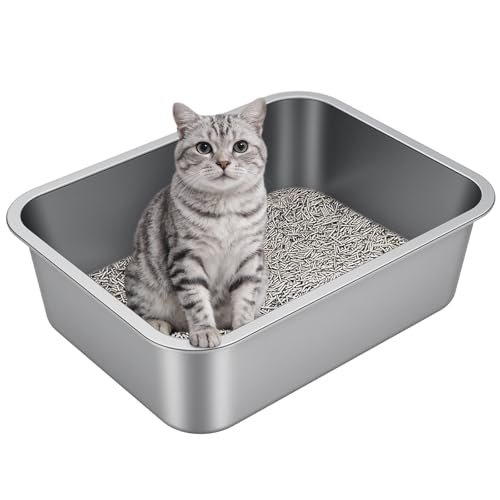 |
The Idymere keeps things simple, and that’s the appeal. Nothing about the design overreaches. The pan feels solid, the rounded edges are finished well, and the higher walls keep kicked litter inside the box instead of on your floor. Cleaning is where it stands out. Clumps release easily off the smooth metal, so you spend less time scraping than you would with an old plastic tray. Because steel doesn’t hold urine odor, the box still smells fresh after repeated cleanings, not just the first few. Best For
My opinion: If you want a dependable stainless steel litter box without paying for extras you won’t use, this is an easy pick. It balances durability, odor control, and daily convenience well. |
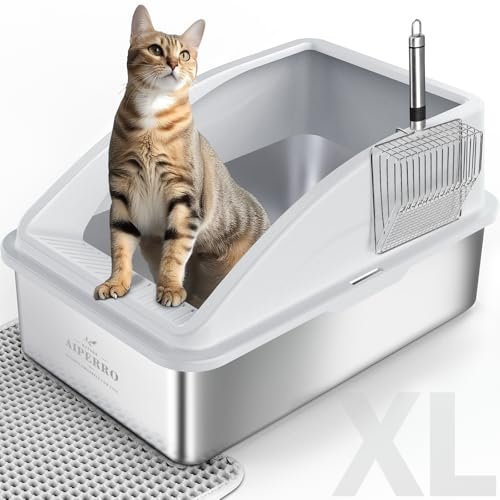 |
This one pairs a steel base with an enclosed hood for cats that want privacy. The cover cuts down on tracked litter and gives shy cats a quieter spot to do their business, away from foot traffic or other pets. The interior is genuinely roomy, which matters for bigger cats, and the metal base stays cleaner than a plastic equivalent would over the same stretch of time. If you’re shopping specifically for a large stainless steel litter box, this model is worth putting on your shortlist. Best For
My opinion: Not the right fit for a senior cat with mobility issues, but active adult cats adapt to the enclosed design fast, usually within a week. |
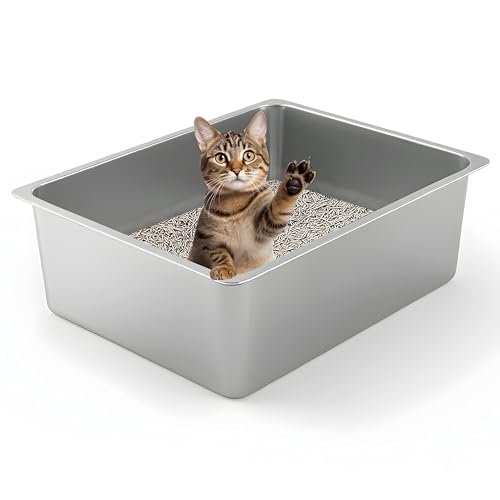 |
Of everything in this guide, the Kirecoo strikes the best balance between simple and practical. The open top gives cats room to move, and the tall sides cut down on litter scatter without making the entrance hard to reach. Clumps release cleanly off the steel finish, so daily scooping takes noticeably less time. If your cat won’t go near an enclosed box but you still want better odor control than plastic gives you, this open stainless steel litter box style is worth a close look. Best For
My opinion: If someone asked me for one stainless steel litter box that fits the widest range of households, I’d point to this one first. |
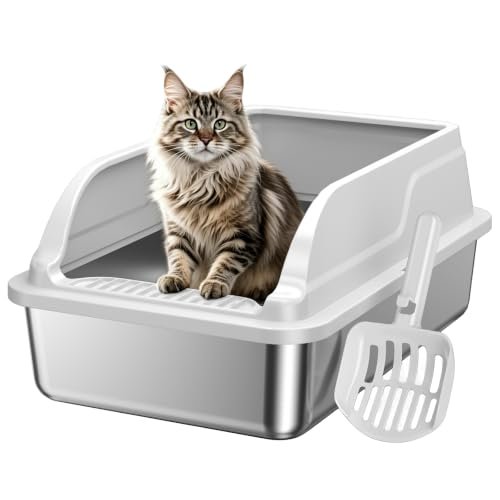 |
Most litter boxes are built for a healthy adult cat, full stop. The KISENG breaks from that. Its low front entry lets senior cats, kittens, or a cat recovering from surgery step in without climbing a wall first. For a cat with arthritis, that small change matters more than any other spec on the box. The rest of the walls stay tall enough to contain scattered litter, so you’re not trading accessibility for mess. The tray resists scratches, cleans fast after scooping, and the base stays put during use. Best For
Pros
Things to Consider
My opinion: If accessibility is your top concern, this is the strongest option in the guide. It solves a real problem without giving up the cleaning benefits that make steel worth choosing in the first place. |
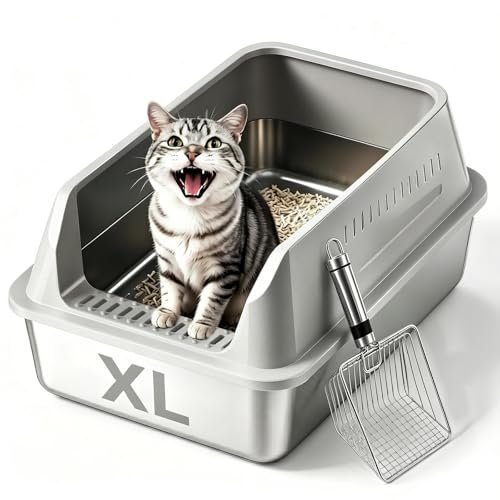 |
A genuinely spacious enclosed box is harder to find than you’d think. Most covered models lose usable floor space once the lid goes on. This XL version avoids that trap, giving larger cats room to stand, dig, and turn around while still keeping the privacy some cats need. The steel base keeps odor from soaking in and makes deep cleaning simple. Owners of Maine Coons, Ragdolls, or other big breeds will notice the extra elbow room compared with a standard enclosed box. Best For
Pros
Things to Consider
My opinion: Owners of large cats usually struggle to find an enclosed box that doesn’t feel cramped. This one solves that without giving up the hygiene benefits steel offers. |
Common Problems With Stainless Steel Litter Boxes (And Fixes)
Even a well-made box hits a few bumps in the first week or two. None of these are reasons to give up on steel. Most solve themselves fast.
| Problem | Likely Cause | Fix |
|---|---|---|
| Cat avoids the new box | Unfamiliar sound or feel underfoot | Add extra litter depth and place it next to the old box for a week |
| Digging sounds louder than usual | Metal carries sound more than plastic | Use 2 to 3 inches of litter to muffle the noise |
| Box feels cold to the touch | Steel loses heat faster than plastic | Keep the box away from drafts or cold floors in winter |
| Litter sticks to the pan | Litter depth too shallow or clumping litter is old | Keep litter at the recommended depth and stir it daily |
| Cat sniffs then backs out without digging | Pan too narrow, whiskers brush both sides | Switch to a wider open pan instead of a narrow or enclosed one |
How to Choose the Right Stainless Steel Litter Box?
Picking a stainless steel litter box isn’t about grabbing the highest-rated one. Your cat’s size, mobility, and habits should drive the decision. A box that works great for an energetic young cat can frustrate a senior with stiff joints. For a full breakdown of every litter box style we cover, start with our indoor cat litter box guide.
| If your cat… | Choose… |
|---|---|
| Has arthritis or mobility issues | Low-entry stainless steel box |
| Scatters litter everywhere | High-sided model |
| Prefers privacy | Enclosed design |
| Is a large breed | Extra-large interior |
| Backs out of narrow pans | Wide, open, low-sided model |
| Has skin sensitivities or chin acne | Any smooth, non-porous steel design |
Don’t Forget These Details
- Measure your available floor space before buying.
- Pick a box at least 1.5 times your cat’s body length. Not sure of the exact number? Our litter box size guide breaks it down by cat weight.
- Look for rounded edges instead of raw, unfinished metal.
- Check that replacement liners or accessories are available.
- Think about how easy the box will be to empty and wash every week.
- Confirm the steel grade (304 or 430) if odor resistance is your top priority.
Keeping a Stainless Steel Litter Box Clean
Maintenance is where steel earns its keep. Since the surface doesn’t absorb moisture or odor, most cleaning takes a few minutes, not a full scrub session. A consistent routine keeps the box smelling fresh and keeps your cat from hesitating at the door. For the full step by step routine, see our guide on how to clean a stainless steel litter box.
Daily scooping removes waste before odor builds up. Steel resists staining, but leaving waste sitting for days still creates smell. A simple routine stretches the life of both the litter and the box.
Weekly Cleaning Routine
- Scoop waste at least once every day.
- Top off litter as needed throughout the week.
- Empty all litter every one to two weeks.
- Wash the box using warm water and mild soap.
- Dry the pan completely before adding fresh litter.
Cleaning Products to Avoid
Steel is tough, but it doesn’t need harsh chemicals. Bleach, abrasive scrubbers, and steel wool wear down the finish over time and can leave the surface open to spotting. Mild dish soap, warm water, and a soft cloth handle routine cleaning fine. Worried about rust spots showing up down the line? We cover exactly when and why that happens in our piece on whether stainless steel litter boxes rust.
Frequently Asked Questions
Are stainless steel litter boxes better than plastic?
For most households, yes. Stainless steel doesn’t absorb odor, resists scratches, and lasts far longer than plastic. Picking the right size and design still matters just as much as the material.
Are stainless steel litter boxes good for cats, or just easier for owners?
Both. Less bacteria on the surface and no trapped odor is a direct benefit for your cat, not just less work for you. The bigger benefit for owners is time saved on scrubbing, but the cat gets a cleaner surface either way.
What are the main pros and cons of a stainless steel litter box?
The pros: no trapped odor, scratch resistance, easy cleanup, and a much longer lifespan than plastic. The cons: higher upfront cost, a cold feel in unheated rooms, louder digging sounds at first, and extra weight when you’re carrying a full pan to dump it.
Can kittens safely use a stainless steel litter box?
Yes, as long as the entry is low enough for them to climb in without jumping. Many owners start kittens on a low-entry model, then move up to a larger box as the kitten grows.
Can a cat’s claws get caught on a stainless steel litter box?
It’s rare with a well-finished box. The risk shows up on cheap models with rough or unfinished seams along the edges or drainage holes, not on the flat scooping surface itself. Run your hand along every seam before you trust the box with a kitten or an older cat.
Do stainless steel litter boxes reduce odor?
Yes. The non-porous surface stops waste from soaking into the material the way it often does with older, scratched plastic litter boxes.
Will litter stick to stainless steel?
Most clumping litters release far more easily from steel than plastic. Keeping litter at the recommended depth also helps prevent sticking.
Are stainless steel litter boxes noisy?
Digging can sound slightly louder on metal at first, but most cats adjust within a week or two. Once litter covers the bottom of the pan, the sound difference is minor.
How often should I replace a stainless steel litter box?
Unlike plastic, steel can last for years with basic care. Most owners only replace it when their cat outgrows the size or they want a different design.
Is an enclosed or open stainless steel litter box better?
It depends on the cat. Some prefer the privacy of an enclosed box, others want the open airflow of an uncovered one. Watch how your cat reacts and let that guide the choice.
Can large cats comfortably use stainless steel litter boxes?
Yes, as long as you pick an XL model with real interior space. Large breeds need enough room to turn around without brushing the sides.
Do stainless steel litter boxes rust?
Quality stainless steel resists rust under normal household use. Drying the box fully after washing helps protect the finish for years.
Do stainless steel litter boxes work in multi-cat homes?
Yes, if you size and count the boxes correctly. The general rule is one box per cat plus one extra, and an XL steel pan handles heavier daily use better than plastic.
Are stainless steel litter boxes worth the higher price?
If you want a box that stays cleaner, controls odor better, and lasts longer than plastic, most owners find the extra cost pays off over time. We break down the full math in are stainless steel litter boxes worth it, but the short answer is yes for most multi-year owners.
Final Verdict
Stainless steel litter boxes are safe and good for cats in most homes. The non-porous surface cuts odor, simplifies cleaning, and resists the scratches that shorten a plastic box’s life. The material was never the risk. Choosing a design that fits your cat’s size, mobility, and habits is what actually decides whether the switch works.
Whether you need a low-entry model for a senior cat, an enclosed box for privacy, or an XL pan for a big breed, the right stainless steel litter box makes daily cleaning easier and gives your cat a more comfortable place to go.

Written by Mishu
A passionate cat lover and indoor living enthusiast, Mishu is the founder and voice behind Indoor Living Cat – a go-to resource for cat owners who want to create the happiest, healthiest life for their feline companions indoors.
View Full Profile