
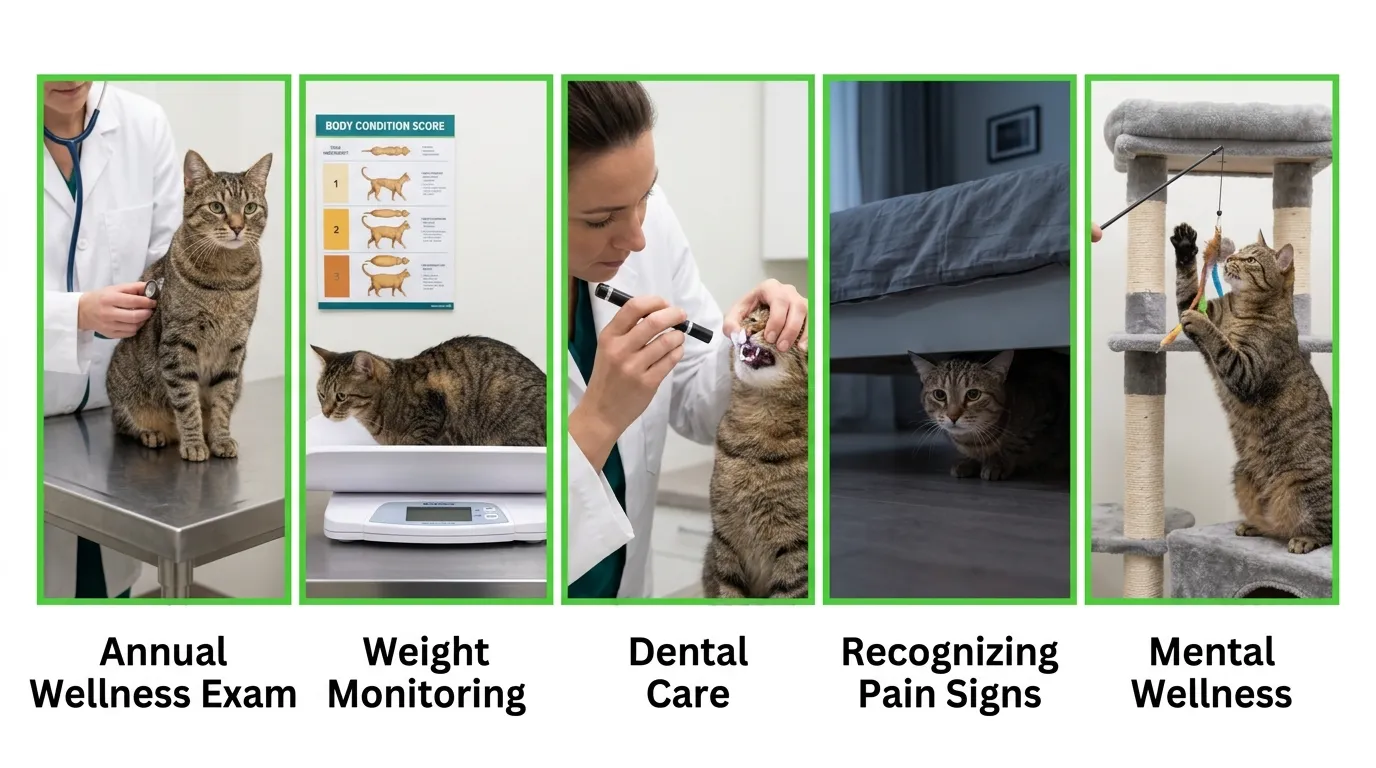
Indoor cat health is one of the areas where being an informed owner genuinely extends your cat’s life and most owners do not realize how much is in their control.
Indoor cat health is the practice of maintaining a cat’s physical and mental wellbeing through preventive veterinary care, weight management, dental hygiene, early illness detection and an enriched daily environment. Indoor cats live significantly longer than outdoor cats on average, with typical lifespans of 12 to 18 years according to the Cornell Feline Health Center, but that longer lifespan comes with a specific set of health risks that require active management.
My own cat was eating and behaving normally right up until a routine annual exam revealed early-stage kidney disease. The bloodwork caught it two years before any visible symptoms would have appeared. That finding changed her diet, her supplement routine and ultimately added years to her life.
This guide covers everything relevant to indoor cat health: lifespan, preventive care, hidden illness signs, weight management, dental care, mental wellness and senior health monitoring. Every section connects to a deeper resource for the specific topic you need most right now.
The foundation of good indoor cat health is an annual vet wellness exam with bloodwork, core vaccinations maintained on schedule, daily portion-controlled feeding to prevent obesity and active monitoring of litter box habits, appetite and behavior for early illness signals. Cats hide pain and sickness instinctively. The owner who catches changes early is the one whose cat lives longest.
Indoor Cat Health and Lifespan: Why Indoor Cats Live Longer?
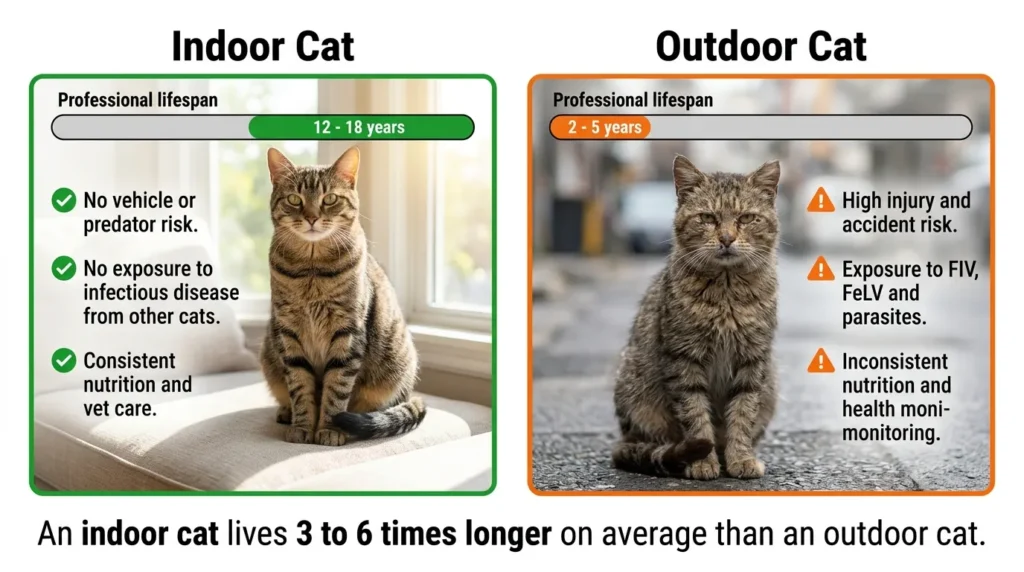
Indoor cats live dramatically longer than outdoor cats and the reasons are specific and preventable. Outdoor cats face vehicle strikes, predator attacks, infectious diseases spread through contact with other cats and inconsistent nutrition. Indoor cats are protected from all of these. The lifespan difference is not subtle.
Knowing indoor cat lifespan how long do they live gives you the baseline expectation: 12 to 18 years for a well-cared-for indoor cat is standard. Some indoor cats with good genetics and consistent preventive care reach 20 years. The upper range is achievable when health is managed proactively rather than reactively.
The health risks that indoor cats face are not dramatic. They are gradual. Obesity, dental disease, chronic kidney disease and stress-related conditions develop slowly over years and are often invisible until they are advanced. This is precisely why proactive monitoring matters more for indoor cats than for outdoor ones who self-select against illness by the environments they navigate.
| Owner’s Tip
Indoor cats live long enough that the health decisions you make in years one through five compound significantly by year ten. The owner who skips annual vet exams to save money in the early years typically faces much larger bills when a condition that was invisible in year three is diagnosed at an advanced stage in year eight. Annual bloodwork for a middle-aged indoor cat costs less than one emergency visit for a condition that bloodwork would have caught early. |
Preventive Health Care for Indoor Cats: Exams, Vaccines and Testing
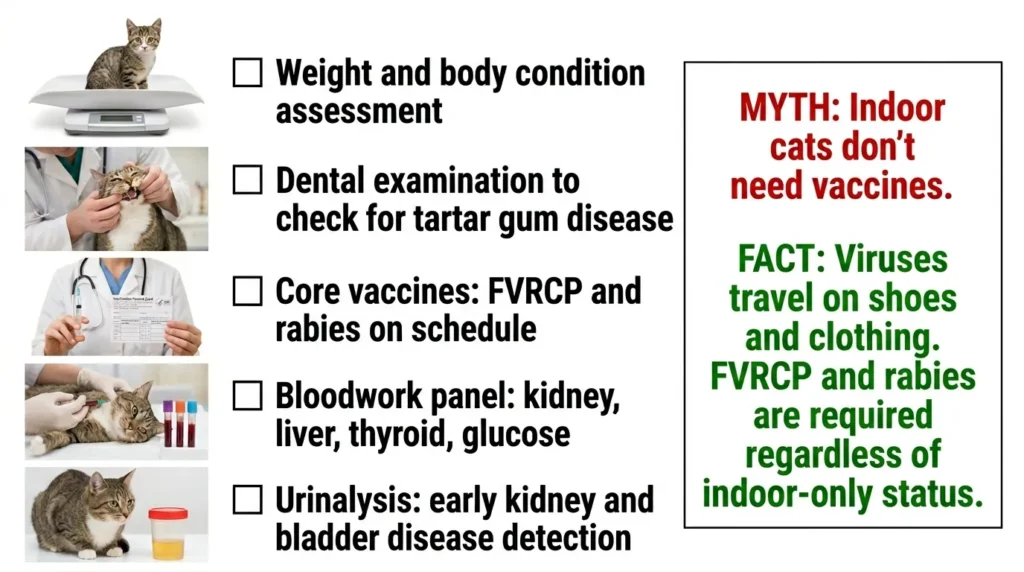
Preventive care is the single highest-return investment in indoor cat health. An annual wellness exam with bloodwork catches the conditions that cats are actively hiding: early kidney disease, hyperthyroidism, diabetes and dental disease are all detectable through routine testing before a single visible symptom appears.
Knowing do indoor cats need vaccinations is one of the most common misconceptions among apartment cat owners. The answer is yes. Viruses like feline herpesvirus and calicivirus travel on human clothing and shoes and can reach a strictly indoor cat without any direct contact with other animals. Core vaccines for indoor cats are FVRCP and rabies. Both are required regardless of whether the cat ever goes outside.
The preventive care schedule that supports long indoor cat health:
- Annual wellness exam for adult cats ages 1 to 7. This includes physical examination, weight assessment and dental check.
- Semi-annual exams for senior cats over 8 years. Age-related conditions accelerate and six months is a long time when a disease is progressing.
- Annual bloodwork from age 5 onward. Earlier if your vet recommends it based on breed or weight history.
- FVRCP booster every 1 to 3 years as advised by your vet based on the vaccine type used.
- Rabies vaccination on the schedule required by your state. Many US states require annual rabies vaccination regardless of indoor-only status.
- Parasite prevention year-round. Fleas enter on clothing. Heartworm is transmitted by mosquitoes that enter through windows and screens.
How to Tell If Your Indoor Cat Is Sick? Signs Owners Miss
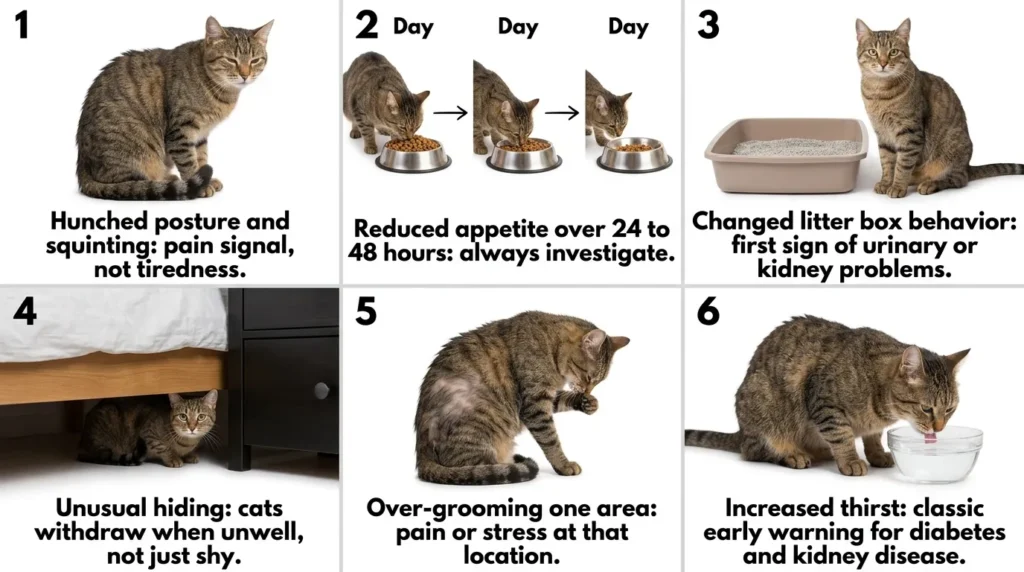
The most important indoor cat health skill an owner can develop is reading subtle behavioral changes before they become obvious symptoms. Cats evolved to hide illness and pain because showing weakness in the wild makes an animal vulnerable. Your indoor cat carries that same instinct even though the evolutionary reason no longer applies.
Knowing how to tell if cat is in pain requires watching for changes from your cat’s normal baseline rather than looking for dramatic distress signals. The subtle signs that most owners miss are the ones that matter most: slight changes in posture, reduced grooming, eating slightly less than usual or using the litter box more or less frequently than the established pattern.
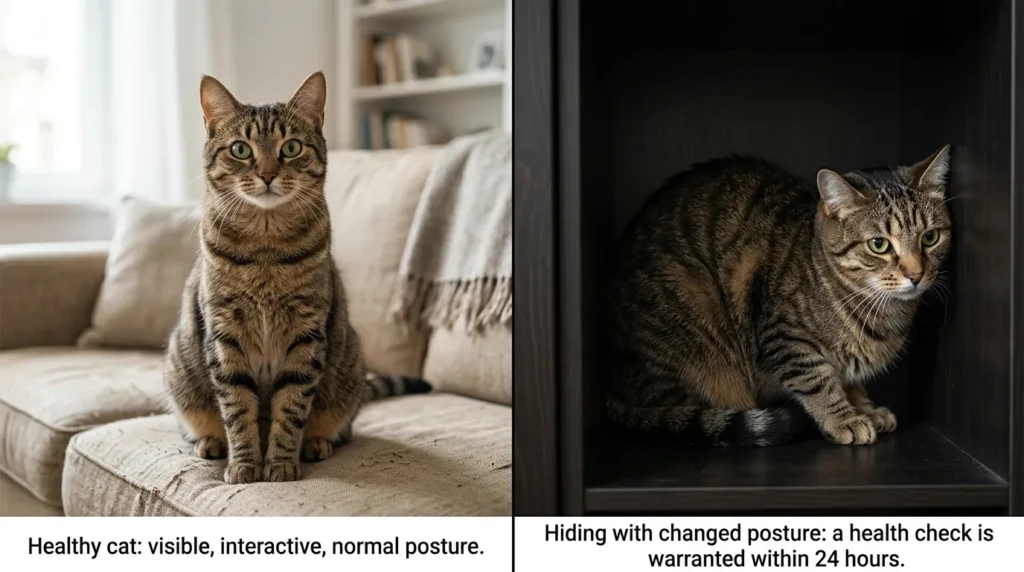
The six changes that should always prompt a vet call within 24 to 48 hours:
- Not eating for more than 24 hours. Cats can develop hepatic lipidosis within 48 to 72 hours of food refusal.
- Changed litter box behavior: going more often, straining, crying in the box or avoiding it entirely.
- Hiding in unusual locations for more than one day.
- Sudden increase in thirst combined with increased urination: early diabetes and kidney disease signal.
- Stumbling, circling or loss of coordination: same-day emergency vet visit required.
- Any visible mass, swelling or wound that was not there previously.
| Owner’s Tip
The litter box is the most reliable daily health monitor you have. A cat that suddenly starts using the box more frequently is often experiencing urinary discomfort. A cat that stops using it may have a blockage or severe pain making the position unbearable. I check the litter box every time I scoop and treat any deviation from the normal pattern as worth paying attention to. The litter box tells you things about your cat’s health that no amount of casual observation does. |
Indoor Cat Weight Management: Preventing the Most Common Health Problem
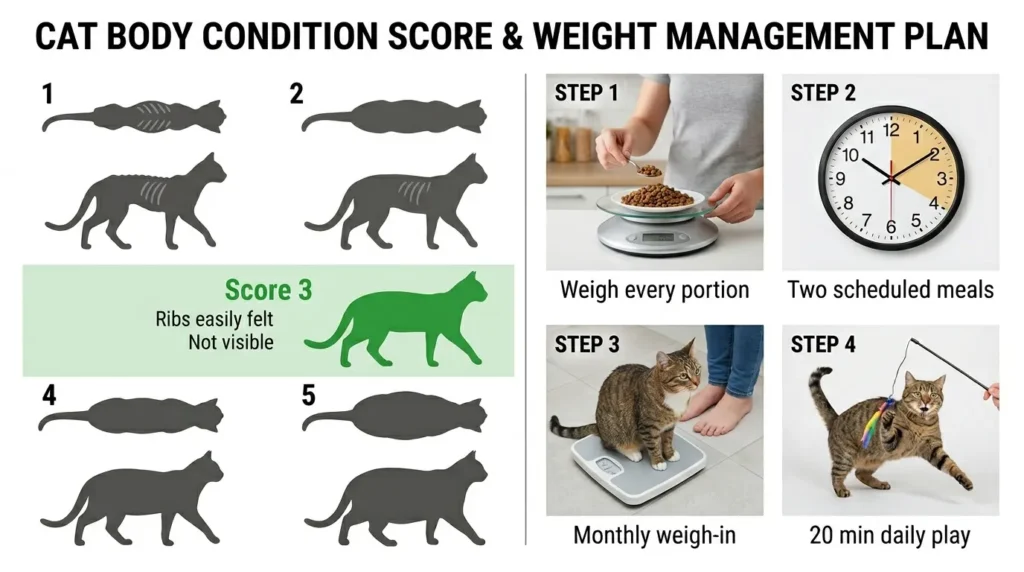
Obesity is the most common and most preventable indoor cat health problem in the United States. Approximately 60 percent of US cats are overweight or obese according to the Association for Pet Obesity Prevention. An overweight indoor cat has significantly higher risk of diabetes, arthritis, heart disease, urinary tract problems and liver disease.
Knowing how to keep indoor cat at healthy weight starts with measuring every meal on a kitchen scale rather than estimating by cup or scoop. This single change addresses overfeeding, which is almost always the cause of gradual weight gain in indoor cats. An indoor cat needs approximately 20 to 30 calories per pound of ideal body weight per day, significantly less than owners typically estimate.
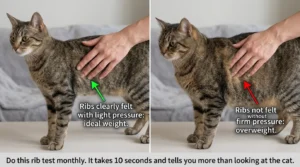 The body condition score test is the most practical weight monitoring tool available without a vet visit. Run your hands along your cat’s ribcage with light pressure. In a healthy-weight cat you should feel each rib clearly without pressing hard. The ribs should not be visible but they must be immediately palpable. If you have to press firmly to feel them, your cat is overweight.
If your cat is already overweight, feed based on ideal body weight not current weight. This is the rule most owners reverse. Feeding a 14-pound cat that should weigh 10 pounds based on its current 14-pound weight maintains the excess weight permanently.
Indoor Cat Dental Health: The Problem Most Owners Discover Too Late
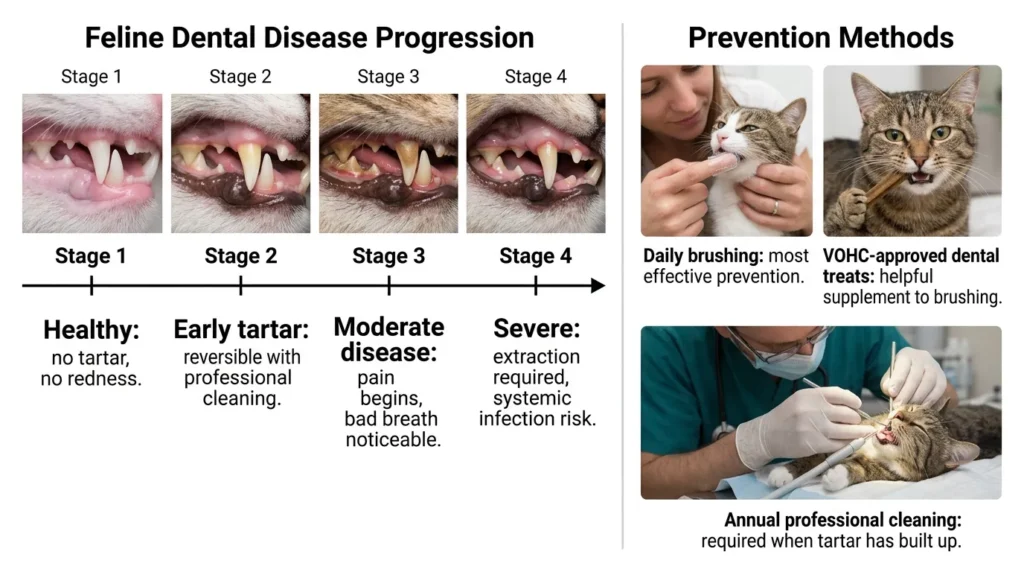
Dental disease affects approximately 70 percent of cats by age three according to the American Veterinary Dental Society. Most indoor cat owners discover their cat has dental disease at a vet visit when tartar buildup and gum inflammation are already causing daily pain that the cat has been silently tolerating.
Indoor cats are particularly susceptible to dental disease because they do not have the mechanical tooth-cleaning that comes from chewing prey in the wild. A dry kibble diet provides minimal dental benefit despite the common claim that it cleans teeth. The only genuinely effective prevention is daily or near-daily toothbrushing with cat-safe enzymatic toothpaste.
Signs of dental disease that cats rarely show until it is advanced:
- Dropping food while eating or eating only on one side of the mouth.
- Bad breath beyond the normal mild fish smell.
- Pawing at the mouth or shaking the head while eating.
- Reduced appetite or reluctance to eat hard food.
- Visible brown or yellow tartar at the gumline, especially on the back teeth.
- Red or swollen gumline, particularly where the gum meets the tooth.
Ask your vet to check your cat’s teeth at every annual exam. If a professional dental cleaning under anesthesia is recommended, take it seriously. Untreated dental disease causes chronic pain, difficulty eating and bacterial spread that can affect the kidneys and heart over time.
Indoor Cat Mental Wellness: How Stress Affects Physical Health?
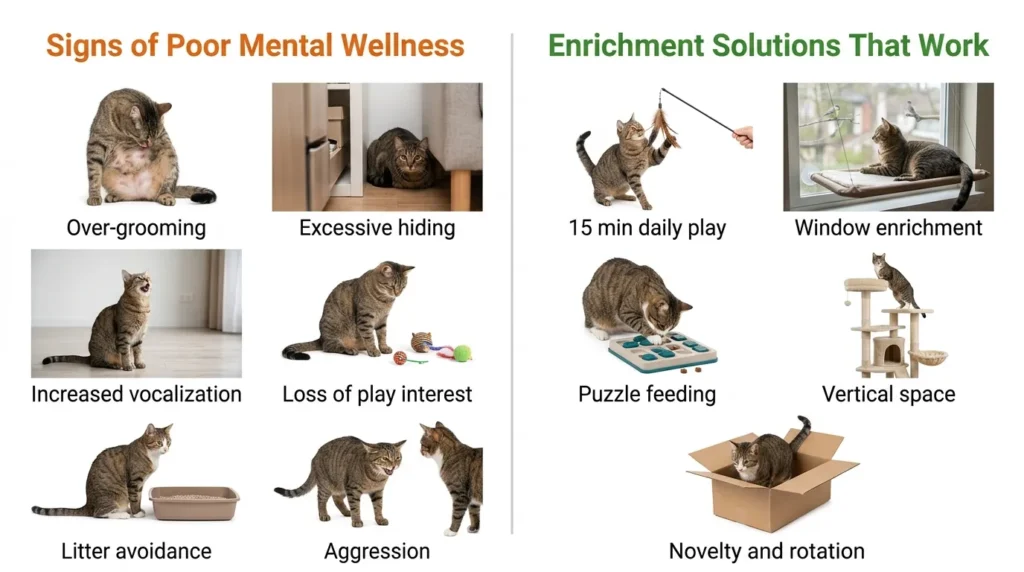
Mental wellness is a genuine indoor cat health concern and one that most owners underestimate until it produces a physical symptom. Stress and boredom in indoor cats directly cause physical health problems: feline idiopathic cystitis, over-grooming leading to skin lesions, gastrointestinal upset and immune suppression that makes the cat more vulnerable to infection.
Knowing do indoor cats get depressed requires understanding that cats do not experience depression the way humans do but they absolutely experience chronic stress and understimulation that produce behavioral and physical changes that look similar. A cat that sleeps more than 16 to 18 hours daily, loses interest in play, grooms obsessively or hides more than usual is communicating that its environment is not meeting its needs.
The connection between enrichment and physical health is not theoretical. The American Association of Feline Practitioners explicitly links environmental enrichment to reduced rates of urinary tract disease in indoor cats. Daily interactive play reduces the hormonal stress load that triggers bladder inflammation in susceptible cats.
The mental wellness minimum for every indoor cat:
- 15 to 30 minutes of active wand toy play per day. Not passive battery toys. Active human-led play.
- Window access with an outdoor view. A window perch with a bird feeder outside is one of the highest-value enrichment investments available.
- Vertical space through a cat tree or wall shelves. Height gives cats a sense of territorial control that reduces background anxiety.
- Toy rotation every 3 to 4 days. Novelty maintains engagement in cats that have become desensitized to familiar objects.
Senior Indoor Cat Health: What Changes After Age 7?
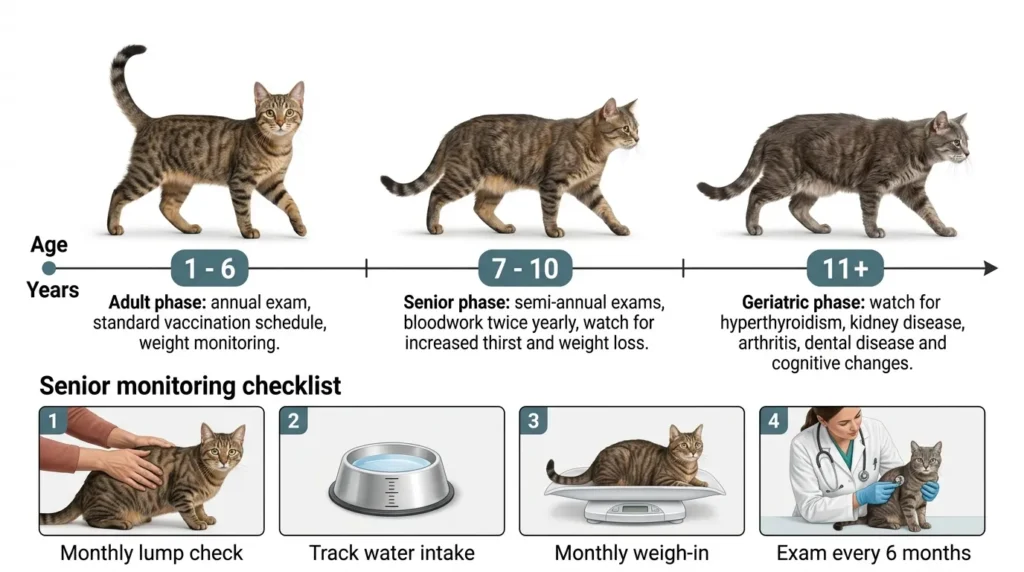
Indoor cat health changes significantly after age 7 and the monitoring that worked for a 3-year-old cat is not sufficient for a 9-year-old one. Senior cats develop conditions slowly and silently. The owner who catches hyperthyroidism, kidney disease or diabetes at an early stage through regular testing gives their cat years of additional quality life.
Knowing why does indoor cat sleep so much helps owners distinguish normal senior rest patterns from concerning lethargy. Cats over age 10 genuinely sleep more than younger cats. However a sudden increase in sleep combined with reduced appetite, weight loss or increased thirst is not normal aging. It is a symptom that warrants a vet call.
The most common health conditions in senior indoor cats and their early signs:
- Chronic kidney disease: increased thirst and urination, gradual weight loss, reduced appetite. Affects 35 percent of cats over age 12.
- Hyperthyroidism: weight loss despite good or increased appetite, increased thirst, hyperactivity or restlessness.
- Diabetes: increased thirst and urination, weight loss, sweet-smelling breath.
- Arthritis: reluctance to jump, stiffness after rest, avoiding stairs or elevated spots previously used regularly.
- Dental disease: typically advanced by senior stage if not managed earlier, causing chronic pain and reduced eating.
Senior indoor cats benefit from twice-yearly vet visits not once yearly. At this age six months is a long enough period for a condition to progress from early to advanced. The investment in more frequent monitoring is consistently less expensive than the treatment of conditions caught late.
Everything We Cover on Indoor Cat Health: Your Full Resource Library
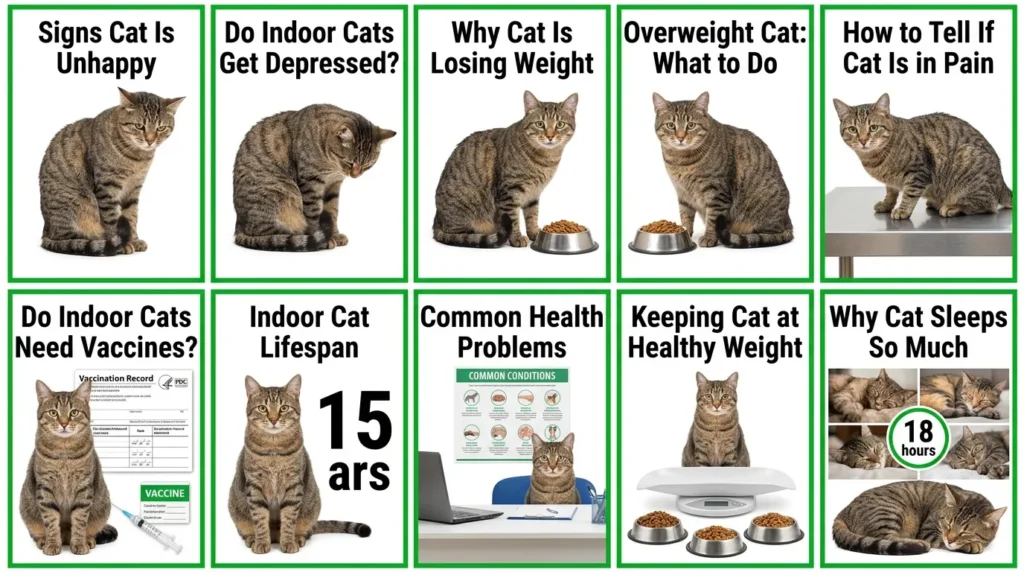
Find the one that matches your most immediate concern and start there.
Signs Your Indoor Cat Is Unhappy or Unwell
Cats communicate physical and emotional distress through behavioral changes that are easy to miss if you do not know what to look for. This article provides a specific list of observable changes organized by category: feeding behavior, litter box use, social behavior, grooming and posture. It also explains which signs need a vet visit within 24 hours versus which can be monitored over a few days.
Learn to read your cat’s signals in our article on signs indoor cat is unhappy.
Do Indoor Cats Get Depressed?
This question deserves a direct answer grounded in feline behavioral science rather than speculation. This article examines what chronic stress and understimulation actually look like in cats, how to distinguish them from illness, and the specific enrichment changes that reliably improve a cat’s behavioral health within two weeks.
Get the full honest answer in our article on do indoor cats get depressed.
Why Is My Indoor Cat Losing Weight?
Unexplained weight loss in an indoor cat is almost always a medical signal and it requires a vet visit rather than a diet change. This article covers the eight most common causes of weight loss in indoor cats ranked by frequency, the diagnostic tests that identify each one and what the treatment timeline looks like for the conditions most commonly found.
Find the cause in our guide to why is my indoor cat losing weight.
My Indoor Cat Is Overweight: What to Do
Indoor cat obesity has a specific solution and it is simpler than most owners expect. This article provides the exact calorie calculation method, the portion reduction protocol for safe weight loss and the timeline for measurable results. It also covers the common mistake of reducing food too aggressively and the dangerous condition that results from it.
Get the complete weight loss plan in our article on indoor cat overweight what to do.
How to Tell If Your Cat Is in Pain
Pain in cats presents through subtle postural and behavioral signals that owners frequently misread as the cat being antisocial or sleepy. This article provides a specific checklist of pain indicators organized by body system and explains the importance of reporting behavioral changes to your vet even when your cat appears otherwise functional.
Learn the specific signals in our article on how to tell if cat is in pain.
Do Indoor Cats Need Vaccinations?
This is one of the most persistent misconceptions in cat ownership and this article addresses it directly with the specific scientific reasoning. It covers which vaccines are core for indoor cats regardless of lifestyle, how the viruses actually enter a home and what the vaccination schedule looks like for adult indoor cats on a standard maintenance schedule.
Get the definitive answer in our guide on do indoor cats need vaccinations.
Indoor Cat Lifespan: How Long Do They Really Live?
Indoor cat lifespan varies significantly based on genetics, health management and the quality of preventive care provided. This article examines the research on what extends indoor cat longevity, what the realistic upper ranges look like with good care and the specific health practices that consistently separate cats that reach 18 or 20 years from those that decline earlier.
Understand the full picture in our guide to indoor cat lifespan how long do they live.
Common Health Problems in Indoor Cats
This article is the deep companion to what this guide covers at a high level. It examines the ten most common health conditions in indoor cats with specific early warning signs, diagnostic approaches, treatment outlines and prevention strategies for each. It is the most comprehensive single reference for understanding what your indoor cat is statistically most likely to face across its lifespan.
Study the full condition list in our guide to common health problems in indoor cats.
How to Keep an Indoor Cat at a Healthy Weight
Weight management for indoor cats requires three specific systems working together: accurate portion measurement, a consistent meal schedule and daily active play. This article provides the exact calorie calculation framework, a step-by-step guide to transitioning from free feeding to scheduled meals and the monthly monitoring routine that keeps weight stable long-term.
Build your weight management system using our guide to how to keep indoor cat at healthy weight.
Why Does My Indoor Cat Sleep So Much?
Cats sleep 12 to 16 hours per day as a baseline and most owners find this concerning before they understand it is normal. This article explains the physiology behind feline sleep patterns, how sleep needs change across life stages and the specific sleep pattern changes that indicate a health problem rather than normal rest.
Get the complete explanation in our article on why does indoor cat sleep so much.
| Owner’s Tip
Every article in the library above is written to go directly from this overview into the specific answer you need. IndoorLivingCat.com covers the full range of indoor cat health topics specifically for apartment and small-home owners who cannot always get to a vet at short notice and need to know what they are looking at before they call. The most important thing I can tell you about all of these health topics together: cats hide illness. The owner who knows their cat’s normal baseline is the owner who catches the deviation early. Build that baseline by paying attention consistently, not just when something seems wrong. |
The Most Common Indoor Cat Health Mistakes Owners Make
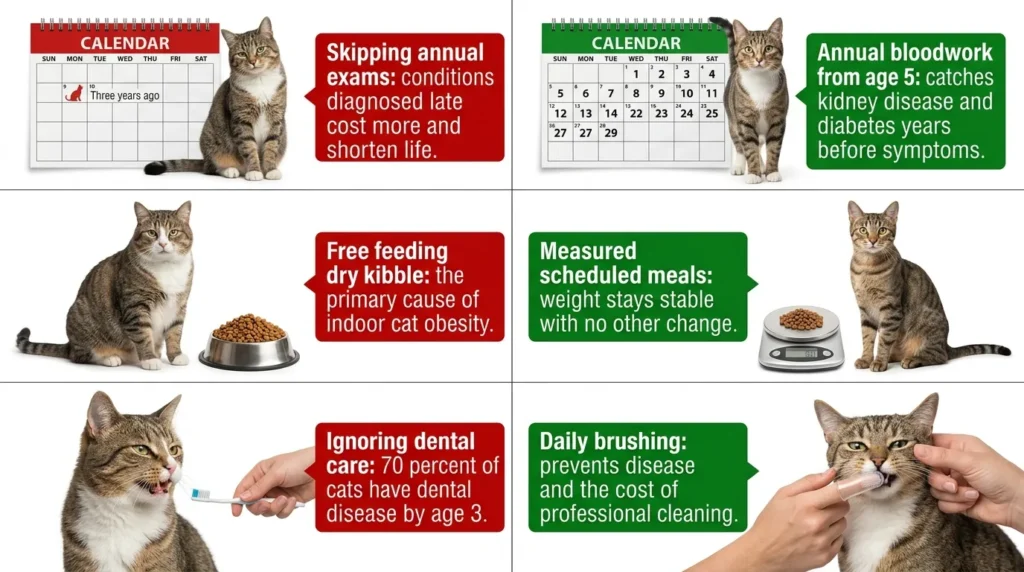
The most common indoor cat health mistake is skipping annual veterinary exams because the cat seems healthy. Cats are experts at appearing healthy until they are not. The conditions that shorten indoor cat lives most frequently are ones that have no visible symptoms in their early stages: kidney disease, hyperthyroidism and diabetes are all treatable and manageable when caught through bloodwork but are life-limiting when caught only after symptoms appear.
The second most common mistake is ignoring dental health until bad breath is obvious. By the time bad breath is noticeable the cat has typically been in chronic low-grade dental pain for months. Dental disease is the most consistently undertreated condition in indoor cats despite being one of the most preventable.
The third mistake is attributing behavioral changes to personality rather than health. A cat that suddenly hides more, eats less or uses the litter box differently is communicating a physical change not a mood. Owners who recognize this distinction and act on it are the ones whose cats get timely diagnoses rather than delayed ones.
Frequently Asked Questions About Indoor Cat Health
How often does my indoor cat need a vet visit?
Adult indoor cats between ages 1 and 7 need one wellness exam per year minimum. From age 5 onward, annual bloodwork should accompany the exam. Cats over 8 years old benefit from two wellness exams per year because age-related conditions can progress significantly in six months. Kittens under one year need multiple visits in the first year for vaccinations and development monitoring. Always consult your vet for the schedule that fits your cat’s specific health history.
How do I know if my indoor cat is overweight?
Run your hands along your cat’s ribcage with light pressure. You should feel each rib clearly without pressing hard. The ribs should not be visible but they must be immediately palpable. From above you should see a visible waist narrowing behind the ribs. If the ribs require firm pressure to feel and no waist is visible your cat is overweight. Weigh your cat monthly on a bathroom scale for a consistent numeric baseline. A gradual increase of more than 10 percent of body weight over six months warrants a vet conversation.
What does it mean if my indoor cat is suddenly drinking a lot more water?
Increased thirst combined with increased urination is the classic early warning sign of both diabetes and chronic kidney disease. It can also indicate hyperthyroidism in cats over 8. Any sudden increase in water intake that persists for more than two days warrants a vet call within the week. Do not wait for additional symptoms. Both diabetes and kidney disease are most manageable when caught at the increased-thirst stage rather than later. This article is for informational purposes only. Always consult your vet for a diagnosis.
Why is my indoor cat sleeping much more than usual?
Cats sleep 12 to 16 hours daily as a normal baseline and this increases to 16 to 18 hours in healthy senior cats. Sleeping within that range is not a concern. A sudden increase in sleep beyond your individual cat’s established pattern, particularly when combined with reduced appetite, less grooming or reluctance to move, is a health signal worth investigating. The combination of more sleep plus any other behavioral change is what distinguishes normal rest from illness-related lethargy.
When should my cat hiding be a reason to call the vet?
Call your vet if your cat is hiding in an unusual location and it has been more than 24 hours, if hiding is combined with not eating or not using the litter box or if you cannot coax the cat out of hiding with food or play. A cat that hides occasionally in familiar spots for a few hours is within normal behavior. A cat that stays hidden, refuses food and is unresponsive to interaction for more than one day is experiencing something that requires investigation.
Do indoor cats still need flea and parasite prevention?
Yes. Fleas travel into apartments on human clothing, visiting bags and through window screens. Mosquitoes enter through window gaps and screens and are the transmission vector for heartworm, which has documented cases in indoor-only cats. Indoor cats are significantly less exposed than outdoor cats but the risk is not zero and the consequences of a missed infestation or heartworm infection are serious. Discuss year-round prevention with your vet for the specific products appropriate for your cat and your geographic region.
Conclusion
Good indoor cat health over a 15 to 18 year lifespan comes down to three consistent practices: annual wellness exams with bloodwork from age 5 onward, daily monitoring of litter box use and eating patterns for early illness signals and portion-controlled feeding to prevent obesity. These three habits address the conditions that most commonly shorten indoor cat lives.
If you are starting from scratch on indoor cat health management, begin with the annual exam. Book it today if your cat has not been seen in the last 12 months. Our article on common health problems in indoor cats gives you the complete condition reference that makes every vet conversation more informed and more productive.
Indoor cats live 12 to 18 years on average, significantly longer than outdoor cats. They require annual wellness exams with bloodwork from age 5 and semi-annual exams after age 8. Core vaccines including FVRCP and rabies are required even for indoor-only cats. Obesity affects approximately 60 percent of US indoor cats and is the most common preventable health problem. Dental disease affects 70 percent of cats by age 3. Early illness signs include litter box behavior changes, reduced appetite, increased thirst and unusual hiding lasting more than 24 hours.