
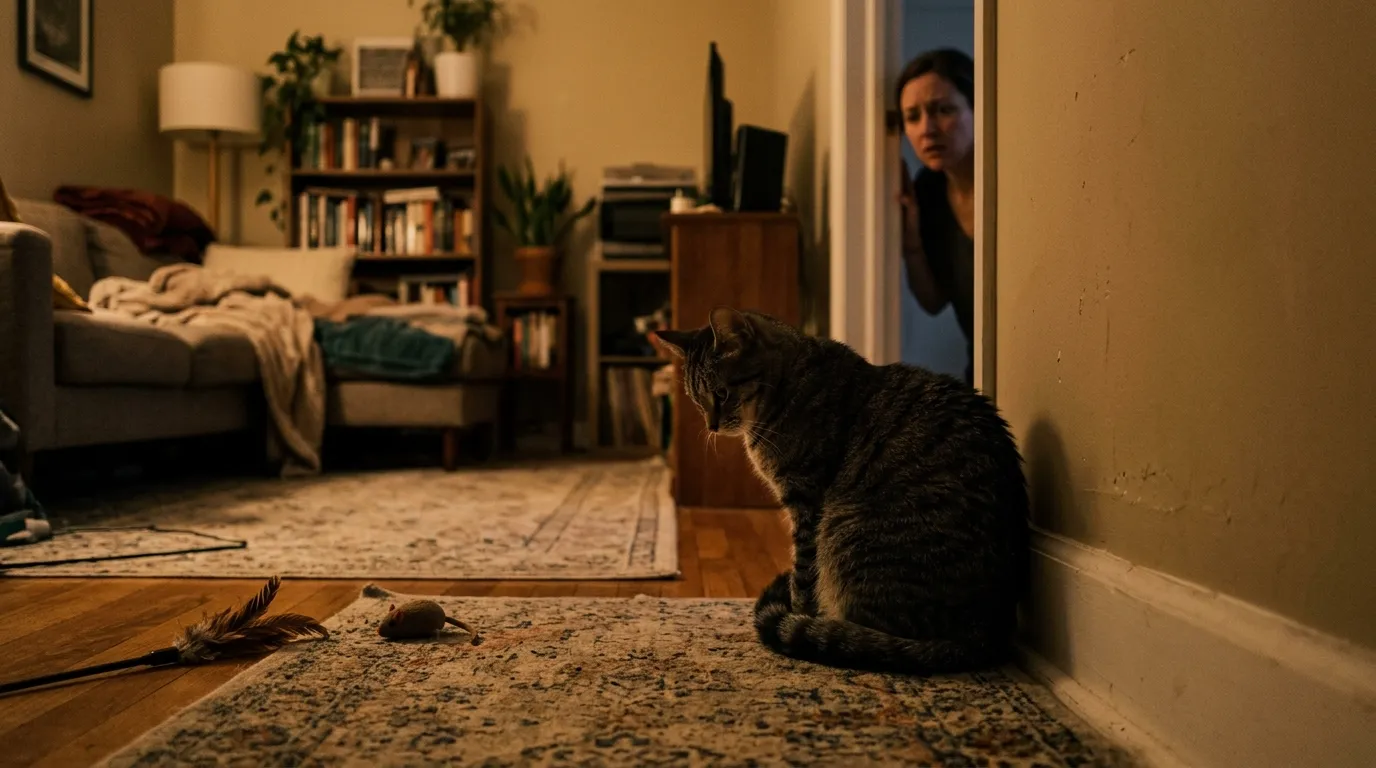
Signs your indoor cat is unhappy rarely show up as one dramatic moment. They show up as your cat quietly not greeting you at the door anymore. I noticed this with my own cat when she stopped meeting me every evening, a small change that traced back to a drop in her daily play time after my work schedule shifted. The routine change was invisible to me. To her, it was genuinely stressful. Cats are skilled at masking discomfort, so by the time a sign is obvious, the pattern has often been building for weeks. This guide covers every reliable sign of unhappiness in indoor cats, the causes owners tend to miss, and what actually fixes each one.
The most reliable signs your indoor cat is unhappy are hiding more than usual, reduced play and interest in interaction, changes in appetite or grooming, litter box avoidance, shifts in vocalization, and sudden clinginess. Changes from your cat’s own normal baseline matter more than comparing them to other cats. Rule out medical causes before assuming behavioral ones.
Why Indoor Cats Are More Vulnerable to Unhappiness Than Outdoor Cats
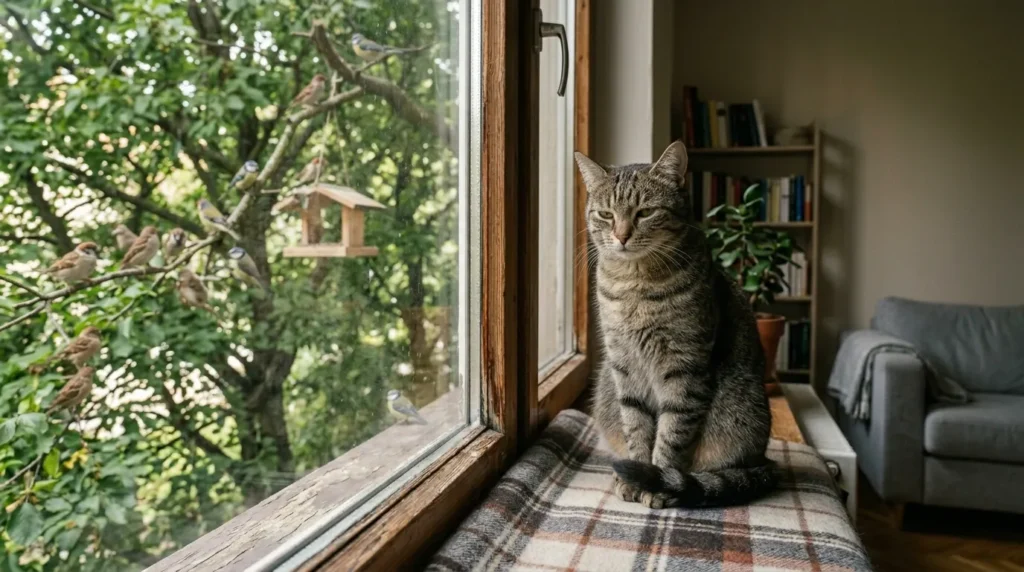
Indoor cats live without the hunting, territory patrolling, and unpredictable sensory input their biology expects daily. An outdoor cat runs into dozens of small environmental changes between dawn and dusk: scents, sounds, weather shifts, other animals, real movement. All of that keeps a nervous system calibrated. An apartment cat’s day contains almost none of it, and that gap in stimulation is one of the main drivers of feline depression and low-level chronic stress.
Cats are also picky about routine. Something that looks minor to you, a new work schedule, rearranged furniture, a new pet, can knock out the predictable structure your cat depends on to feel safe. In a small apartment, these disruptions have nowhere to go, because the cat cannot leave the space that changed. How apartment living shapes a cat’s daily stress baseline gets covered in more depth there, especially how limited square footage interacts with a cat’s need for territory.
Put sensory deprivation and routine sensitivity together, and indoor cats end up far more exposed to unhappiness than outdoor cats, whose environment naturally supplies the variability their brains need. A 2020 Ceva Animal Health survey of US households found close to 60 percent of cats showed signs of stress or anxiety at some point. Indoor-only cats made up a large share of that number.
Quick Checklist: Is Your Indoor Cat Unhappy?
Run through this before you read further. If two or more of these have held steady for three days or longer, treat it as a real signal and keep reading.
- Hiding more than usual, or avoiding rooms they used to use freely
- Ignoring toys or games that used to get an instant reaction
- Eating noticeably more or less than their normal portion
- New bald patches, mats, or a coat that has gone dull
- Accidents outside the litter box, or reluctance to enter it
- Meowing a lot more, or going unusually quiet
- Flattened ears, a tucked or thrashing tail, or pinned whiskers
- Scratching, biting, or hissing during handling they used to tolerate
- Sleeping through the hours they used to be active
- Destroying furniture or scratching well past normal claw maintenance
- Following you constantly and struggling to settle when you leave the room
Any weight loss, vomiting, diarrhea, or refusal to eat for more than 48 hours moves straight to a vet visit, no matter how many boxes above you checked.
The 11 Signs Your Indoor Cat Is Unhappy
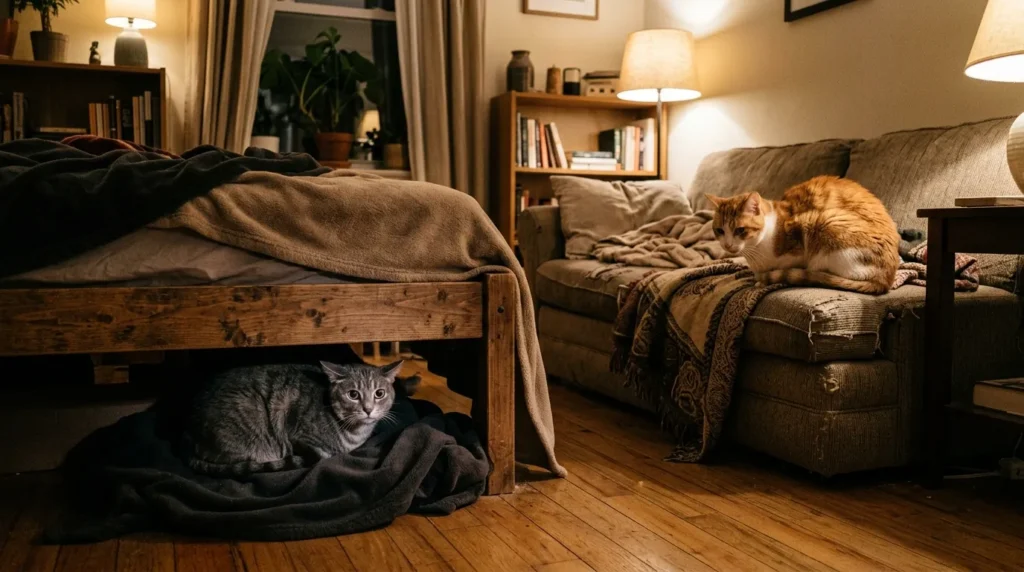
Sign 1: Hiding or withdrawal from interaction. A cat that suddenly spends most of the day under a bed, in a closet, or in a spot they used to ignore, is telling you something. Cats hide when they feel unsafe or unwell. One day of hiding after a specific stressor, a loud noise, a storm, is normal. Hiding that lasts several days is worth investigating.
Sign 2: Reduced or absent play behavior. An unhappy cat stops chasing toys that used to grab their attention and stops starting play with you the way they once did. This is one of the more reliable signs, because play reflects confidence and emotional wellbeing. A cat that has pulled back from play has pulled back from something that actually matters to them.
Sign 3: Changes in appetite. Both eating less and stress-driven overeating signal emotional disruption. A cat eating well under their normal portion is often dealing with stress, pain, or illness. A cat eating more than usual with no food change may be using food to cope with boredom or anxiety. If you are unsure whether a change in eating reflects a real shift, comparing it against your cat’s usual daily feeding routine makes the pattern easier to spot.
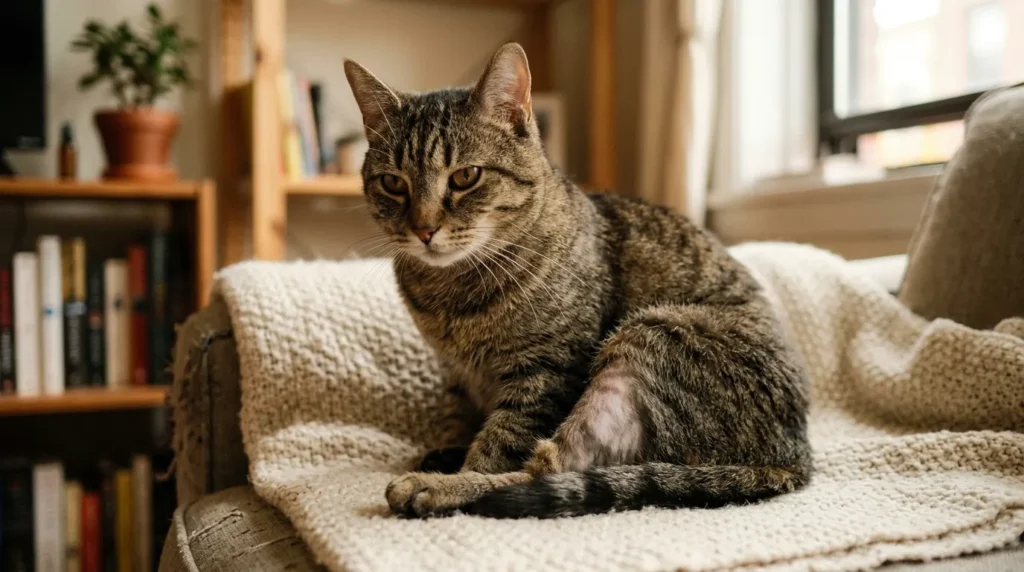
Sign 4: Grooming changes. An overgrooming cat licks or chews patches of fur thin or bald, a sign of stress serious enough to need physical self-soothing. An undergroomed cat with a dull, unkempt coat has either stopped caring for themselves or cannot physically manage it, and both need attention. A healthy indoor cat keeps a consistently clean, glossy coat.
Sign 5: Litter box avoidance or inappropriate elimination. A cat that stops using a box they used reliably is communicating something real. Inappropriate elimination outside the box is one of the most commonly reported signs of stress and unhappiness in cats, and it is also a symptom of several medical conditions. Never punish this. It is a signal, not a choice. Stress-related accidents tend to cluster near doors, windows, or spots that carry your scent, which is a useful clue when you are trying to tell stress apart from a dirty box or a urinary problem.
Sign 6: Vocalization changes. A cat suddenly vocalizing much more than usual, especially at night, may be expressing distress, disorientation, or loneliness. A cat that has gone quiet after being talkative may be shutting down emotionally. Both directions, louder or quieter, matter against your cat’s own normal.
Sign 7: Body language signals. A tucked tail held that way for a while, ears flattened or rotated back, whiskers pinned against the face, and dilated pupils in a lit room all point to active stress, not contentment. A tail that flicks or thrashes side to side signals irritation or agitation rather than fear, which is a different problem with a different fix: back off and remove whatever is triggering it instead of trying to soothe. A relaxed cat carries a loosely upright tail, forward ears, and soft round eyes. Once you know the difference, the contrast between a content cat and a stressed one is easy to spot.
Sign 8: Increased aggression or irritability. A cat that has grown reactive to touch, more likely to scratch or bite during interactions they used to enjoy, or hostile toward other pets, is often communicating pain or stress. Sudden aggression in a previously gentle cat almost always has a cause worth finding, not a personality flaw to manage around.
Sign 9: Lethargy or a sharp increase in sleep. Indoor cats sleep a lot by nature, but a cat sleeping through their normal active windows, barely interacting with anything, is showing a real shift from healthy rest patterns. Paired with appetite changes, this needs a vet visit to rule out physical illness before you address it behaviorally.
Sign 10: Destructive behavior or excessive scratching. Scratching furniture well past normal claw maintenance, or other persistent destructive habits, often means frustration or an unmet need for outlet. Owners tend to read this as bad behavior instead of communication, which makes it one of the more overlooked signs of unhappiness in indoor cats.
Sign 11: Sudden clinginess or attention-seeking. Not every unhappy cat pulls away. Some do the opposite: following you room to room, meowing at closed doors, wedging themselves onto your lap during every call, or panicking a little when you pick up your keys. This pattern shows up most in single-cat households and often points to separation anxiety rather than general stress. A 2020 survey put the rate of separation-related problems in cats at around 13 percent, and cats who bonded strongly with one person early in life are more prone to it. The fix looks different from hiding: short, low-drama practice separations, a consistent departure routine, and enrichment that keeps them occupied while you are out, rather than more direct handling.
Normal Behavior vs Signs of Unhappiness: Quick Reference
Not every change is a red flag. Here is how to tell a normal fluctuation from something that needs attention.
| Behavior | Normal | Sign of Unhappiness |
| Hiding | A few hours after a loud noise or new visitor | Several days straight, avoiding all contact |
| Sleeping | 12 to 16 hours a day, active during normal windows | Sleeping through active windows, low interaction when awake |
| Vocalizing | Occasional meows tied to hunger or greeting | Sudden increase, especially at night, or unusual silence |
| Grooming | Regular, even coat maintenance | Bald patches, or a dull coat with no grooming at all |
| Litter box use | Consistent use of the same box | Avoidance, accidents outside the box |
| Social behavior | Seeks attention on their own schedule, settles when alone | Constant following, distress when you leave the room |
Causes Owners Often Miss
Boredom and routine disruption cover most cases, but a handful of specific triggers get overlooked because they do not look like an obvious problem from the outside.
Loss of a companion. Cats form real attachments to other pets and to people. When a bonded animal or person leaves the household through death, a move, or a breakup, a cat can show weeks of withdrawal, reduced appetite, and searching behavior, checking spots where the companion used to sleep or sit. This grief response looks almost identical to depression from boredom, and the fix is different: time, consistency, and extra one-on-one attention rather than more toys.
A new pet or a new baby. Anything that changes the household’s social structure competes for a cat’s sense of territory and routine. A slow, supervised introduction beats a fast one every time. Cats that lose access to their usual resting spots or feel their resources are suddenly shared often show stress signs within days.
Multi-cat competition. In homes with more than one cat, stress often comes from resource pressure rather than boredom: not enough litter boxes, food bowls too close together, or one cat blocking access to a favorite window. The standard guideline is one litter box per cat plus one extra, placed in separate locations, not lined up in a row.
Separation anxiety. Covered above under clinginess, but it is worth naming as its own cause. Cats that were adopted as kittens and bonded tightly to one person, or that have never been left with a sitter, run a higher risk. Litter box accidents and destructive scratching that only happen while you are out point here rather than to general boredom.
Moving or rearranging furniture. Cats build a mental map of safe paths and escape routes. Moving furniture or moving house erases that map overnight. Keep at least one familiar object, a bed, a scratching post, in the same spot during any change to give your cat one fixed point while everything else resets.
The Difference Between Boredom, Stress, and Medical Unhappiness
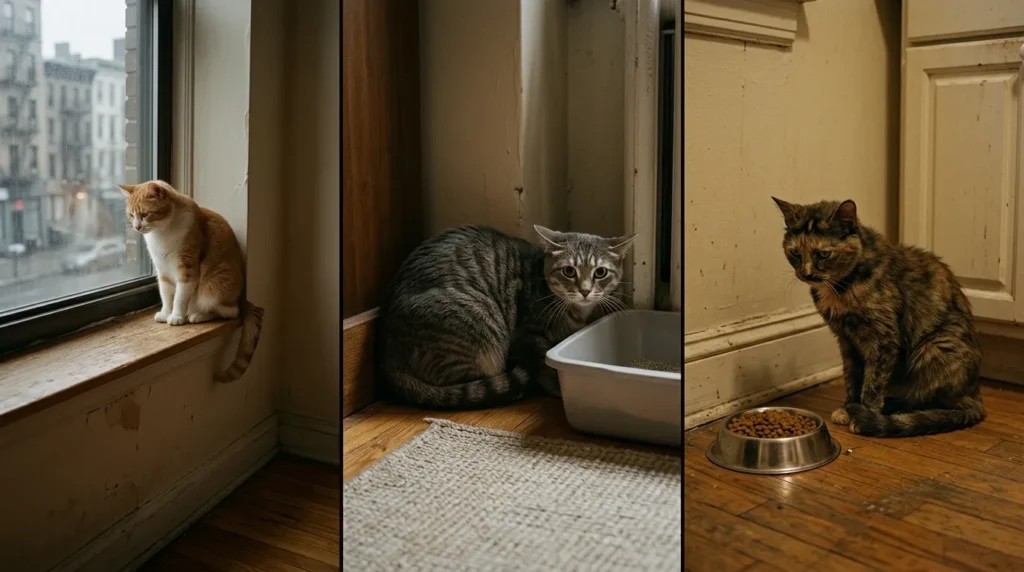
Boredom-related unhappiness usually looks like low engagement, not obvious distress. The cat is present, eating normally, and physically healthy, but shows little interest in play, skips grooming, and spends more time sitting and staring than exploring. Enrichment changes fix this within one to two weeks.
Stress-related unhappiness produces louder signals: hiding, aggression, inappropriate elimination, overgrooming, or vocalization changes tied to a specific trigger. Find the stressor and change it, and the signs usually clear up within days to a few weeks, depending on severity. Chronic stress can also show up physically, not just behaviorally: vomiting, diarrhea, and a weakened immune system are documented effects of prolonged stress in cats, which is one more reason not to write off a “moody” cat without a closer look.
Medical unhappiness is the category to rule out first. Pain and illness produce behavioral changes that look identical to psychological distress from the outside. A cat that has stopped eating, lost noticeable weight, or developed a dull coat while hiding persistently needs a vet exam before any behavioral fix. The full picture of what illness looks like in indoor cats, and how it shows up as behavior before any obvious physical symptom, is covered in this guide on indoor cat health.
| Sign Type | Most Likely Cause | Next Step |
| Hiding or reduced play, weight stable | Boredom or routine change | Enrichment additions, play sessions |
| Hiding with aggression, litter box avoidance | Stress trigger in environment | Identify and modify the stressor |
| Constant following, distress when left alone | Separation anxiety | Practice separations, consistent departure routine |
| Weight loss, appetite change, dull coat | Medical cause | Vet visit before any behavioral changes |
| Persistent hiding over one week | Stress or medical | Vet visit to rule out physical cause |
| Overgrooming creating bald patches | Stress or dermatological | Vet visit for diagnosis |
How to Address Signs Your Indoor Cat Is Unhappy Right Now
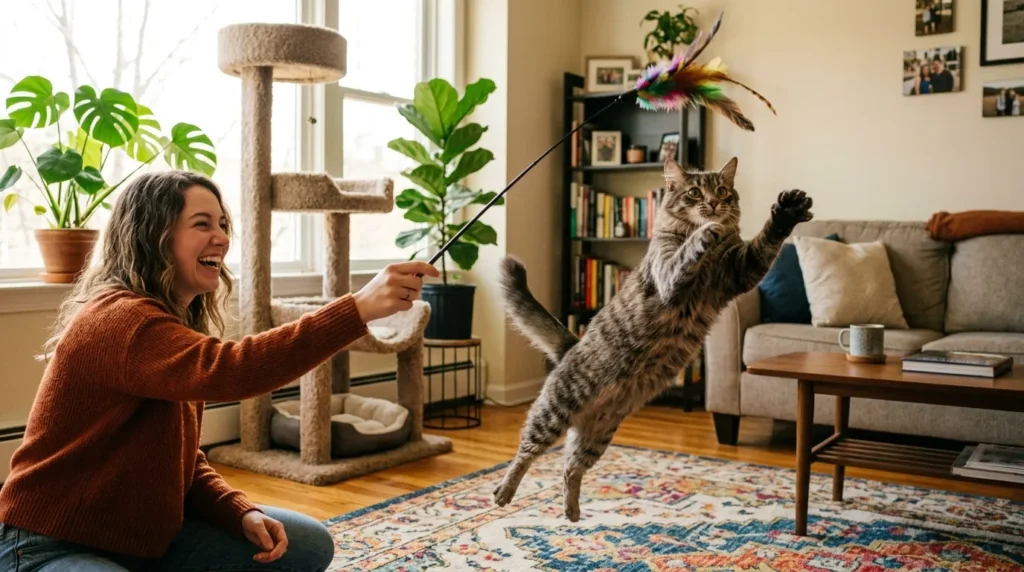
The most effective fix for boredom and stress-related unhappiness is structured daily play. Two sessions of ten to fifteen minutes with a wand toy that moves unpredictably mimics the hunt-catch-eat cycle. That is real mental and physical engagement, and it beats a tablet playing bird videos by a wide margin. Owners who add consistent daily play usually see visible improvement in mood and engagement within three to five days.
Adding vertical territory makes a real difference in apartments specifically. A cat that can climb, look down on the room from height, and move between levels gets a genuinely richer environment than one stuck at floor level. Wall shelves, a tall cat tree near a window, and a window perch all add high-value territory without eating up floor space. For setups that work in apartment-sized rooms without taking them over, this guide on indoor cat enrichment covers the approaches that hold up best over time.
Routine stability is the other piece. Cats that eat on schedule, get predictable play sessions, and see minimal surprise changes in their environment carry lower baseline stress than cats whose routines shift often. If your own schedule has changed recently in a way that disrupted your cat’s routine, rebuilding that predictability in feeding and play is often the single biggest fix available to you.
A few more tools worth trying, matched to the cause:
- Synthetic pheromone diffusers (Feliway is the common brand) can lower baseline anxiety for stress-driven signs like hiding or litter box avoidance. They are not a fix on their own, but they help alongside enrichment and a stable routine.
- A catio or leash training gives an indoor cat controlled access to outdoor sensory input, real air, sounds, and smells, without the risks of free roaming. This helps most with the sensory-deprivation side of boredom rather than stress from a specific trigger.
- Puzzle feeders turn a routine meal into a short foraging task, which is useful for cats who overeat from boredom or need an outlet while you are out of the house.
- Short practice separations help clingy or anxious cats specifically: leave for five minutes with a treat puzzle out, come back calm, then stretch the gap over days and weeks.
Insight The fastest improvement I have seen in a genuinely unhappy indoor cat comes from play right before the evening meal. Play for ten minutes, then feed immediately after. That sequence replicates the hunt-catch-eat pattern cats are built for, and the change is usually noticeable within a week. It costs nothing and takes less time than most people spend scrolling before dinner.
Common Mistakes When Dealing With an Unhappy Indoor Cat
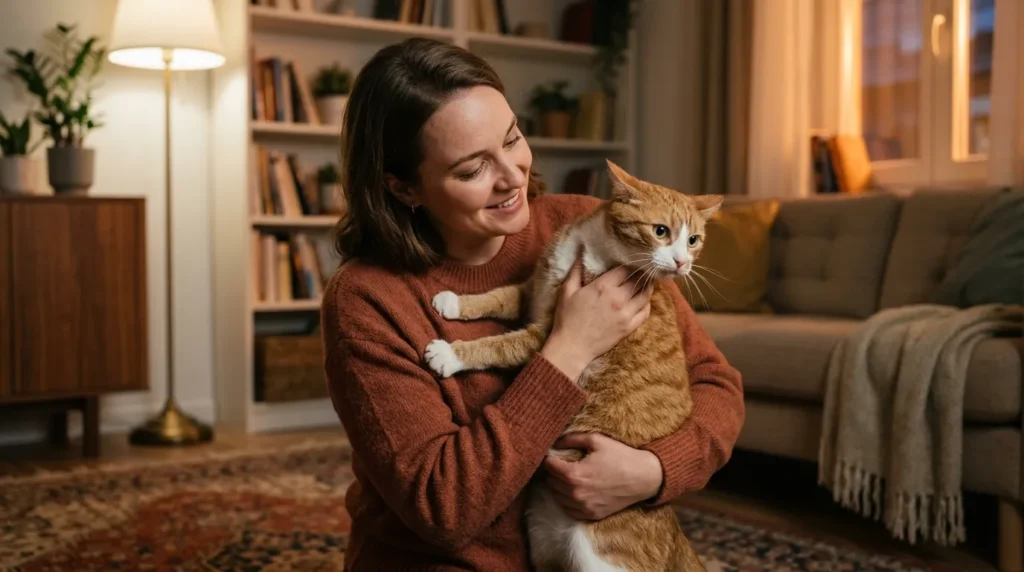
The most common mistake is forcing interaction with a cat that is already showing withdrawal signs. When a cat hides or avoids contact, the instinct is to go pick them up and comfort them. That almost always backfires, because it takes away the cat’s control over contact and adds to the stress instead of easing it. Sit quietly in the same room and let the cat approach on their own schedule.
The second mistake is treating unhappiness as a personality trait instead of a signal. Some owners adjust their expectations rather than dig into the cause when a cat gets quieter over time. Gradual changes, normalized over months, sometimes mean low-grade stress has gone unaddressed long enough to become the cat’s new baseline. Recognizing shifts in indoor cat behavior early stops that baseline from resetting downward.
The third mistake is addressing the behavior without ruling out medical causes first. A cat with new inappropriate elimination, overgrooming, or appetite changes needs a vet check before any enrichment plan, because a behavioral fix will not help a cat whose unhappiness has a physical cause.
A fourth mistake, specific to clingy or anxious cats, is punishing the neediness or forcing sudden independence, closing doors on a distressed cat or ignoring the following behavior outright. That reads as abandonment to a cat already worried about being left, and it usually makes the anxiety worse, not better.
When the Signs of Unhappiness Need a Vet Visit Rather Than a Behavioral Fix
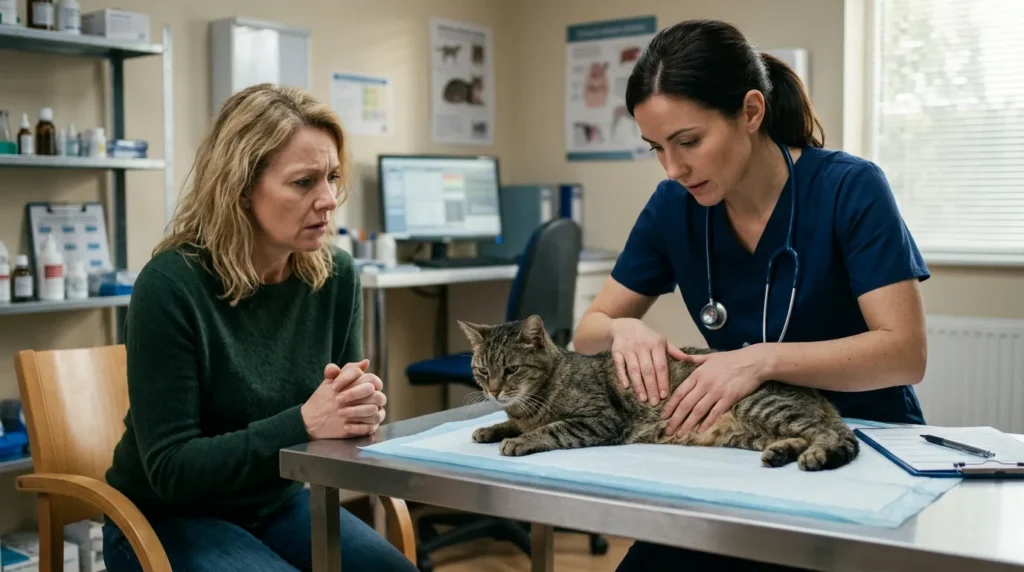
Some sign combinations call for a vet visit rather than a wait-and-see approach. Hiding combined with visible weight loss over two to three weeks, appetite changes alongside more thirst and more trips to the litter box, vomiting or diarrhea that lasts more than a day, or any coat deterioration alongside behavioral changes, all point to a medical cause that environment changes will not fix.
According to the American Association of Feline Practitioners, behavioral changes are often the earliest sign of a medical condition, showing up before any obvious physical symptom does. Cats hide pain by instinct, so owners frequently chalk up a behavior change to mood when the real driver is physical.
Book a vet visit within a few days for any of these: hiding that lasts more than a week, refusing food for more than 48 hours, unexplained weight loss of more than half a pound over three to four weeks, overgrooming that has left bald or raw patches, sudden dramatic aggression in a previously gentle cat, or new clinginess in a senior cat, which can point to cognitive decline rather than mood.
This article is for informational purposes only. Always consult your vet if your cat shows signs that concern you.
Frequently Asked Questions About Signs an Indoor Cat Is Unhappy
How do I know if my indoor cat is unhappy or just tired?
A tired cat rests with relaxed body language, keeps a normal appetite and play interest when awake, and bounces back after sleeping. An unhappy cat shows a persistent shift across several areas at once, eating less, playing less, and hiding more, consistently across days rather than just crashing after an active session. A shift lasting three or more days is the more reliable signal.
Can indoor cats get depressed from boredom?
Yes. Chronic understimulation produces behavior that vets describe as consistent with feline depression: reduced engagement, a flattened affect, appetite changes, and withdrawal. Cats need daily hunting-cycle activity to stay emotionally regulated, and an apartment without structured enrichment does not supply that on its own.
My indoor cat started hiding suddenly, is that a sign of unhappiness?
Sudden hiding after a specific stressor, a loud noise, a visitor, a new pet, is a normal stress response that usually clears within a day or two. Hiding that lasts more than three to five days without an obvious trigger needs investigation, first for physical illness, then for an environmental stressor you can fix.
Why is my indoor cat meowing so much more than usual?
More vocalizing often signals a need the cat cannot meet alone: hunger, loneliness, pain, or disorientation. In senior cats it can point to cognitive changes rather than mood, especially if the meowing happens mostly at night. At any age it often means a routine got disrupted or play and stimulation dropped off. If it started suddenly with no clear cause, book a vet visit to rule out pain before assuming it is behavioral.
Can cats become clingy instead of withdrawn when they are unhappy?
Yes, and it is one of the more overlooked signs. A cat that suddenly follows you everywhere, meows at closed doors, or struggles to settle when you leave the room is often showing separation anxiety rather than general stress. It shows up most in single-cat households and cats that bonded strongly with one person as kittens. Short practice separations and a consistent departure routine tend to help more than extra attention.
Can cats grieve the loss of a companion pet or a person?
Yes. A cat that loses a bonded pet or a family member can show weeks of reduced appetite, withdrawal, and searching behavior around spots the companion used to occupy. The signs overlap heavily with boredom-related unhappiness, but the timeline usually tracks with the loss, and extra one-on-one attention tends to help more than new toys.
Do pheromone diffusers like Feliway actually help an unhappy cat?
They can help with stress-driven signs specifically, hiding, litter box avoidance, tension between multiple cats, but they work best alongside consistent play and a stable routine, not as a standalone fix. They will not resolve boredom from a lack of enrichment or a medical issue on their own.
Can rearranging furniture make my indoor cat unhappy?
Yes, and it surprises most owners. Cats build a mental map of safe paths, hiding spots, and escape routes. Moving furniture disrupts that map and can trigger short-term hiding or irritability. Most cats adjust within a few days. Keep at least one familiar resting spot unchanged during any rearrange to soften the transition.
How quickly can an indoor cat recover from unhappiness once I make changes?
Boredom-related unhappiness usually improves within one to two weeks of consistent enrichment and structured play. Stress-related unhappiness resolves faster once you find and remove the specific stressor, rather than adding enrichment alongside it. If nothing improves within two to three weeks, book a vet visit to rule out an underlying medical cause.
One Change Today Makes a Real Difference Tomorrow
When you spot signs your indoor cat is unhappy, take them seriously instead of waiting to see if they pass. Rule out medical causes for anything that has lasted more than a week or comes with a physical change. For behavioral and boredom-related unhappiness, add structured daily play right away and let your cat set the pace of interaction instead of forcing it. Those two changes cover the most common causes of indoor cat unhappiness, and most cats respond within a week.
Signs an indoor cat is unhappy include persistent hiding or withdrawal, reduced play engagement, appetite changes in either direction, litter box avoidance, overgrooming or coat deterioration, vocalization changes, body language signals including flattened ears and a tucked or thrashing tail, sudden aggression, and unusual clinginess or separation anxiety. Indoor cats are more vulnerable to unhappiness than outdoor cats because apartment environments lack the sensory stimulation and hunting activity their biology requires. Overlooked causes include grief over a lost companion, a new pet or baby in the household, multi-cat resource competition, and moving or rearranging furniture. Changes from a cat’s individual normal baseline over three or more days matter more than comparing to other cats. Medical conditions, including physical stress responses like vomiting and diarrhea, must be ruled out before attributing behavioral signs to boredom or stress. Structured daily play of 10 to 15 minutes twice a day, paired with vertical territory and routine stability, is the most consistently effective fix for boredom-related indoor cat unhappiness, while short practice separations work best for clingy or anxious cats.

Written by Mishu
A passionate cat lover and indoor living enthusiast, Mishu is the founder and voice behind Indoor Living Cat – a go-to resource for cat owners who want to create the happiest, healthiest life for their feline companions indoors.
View Full Profile