
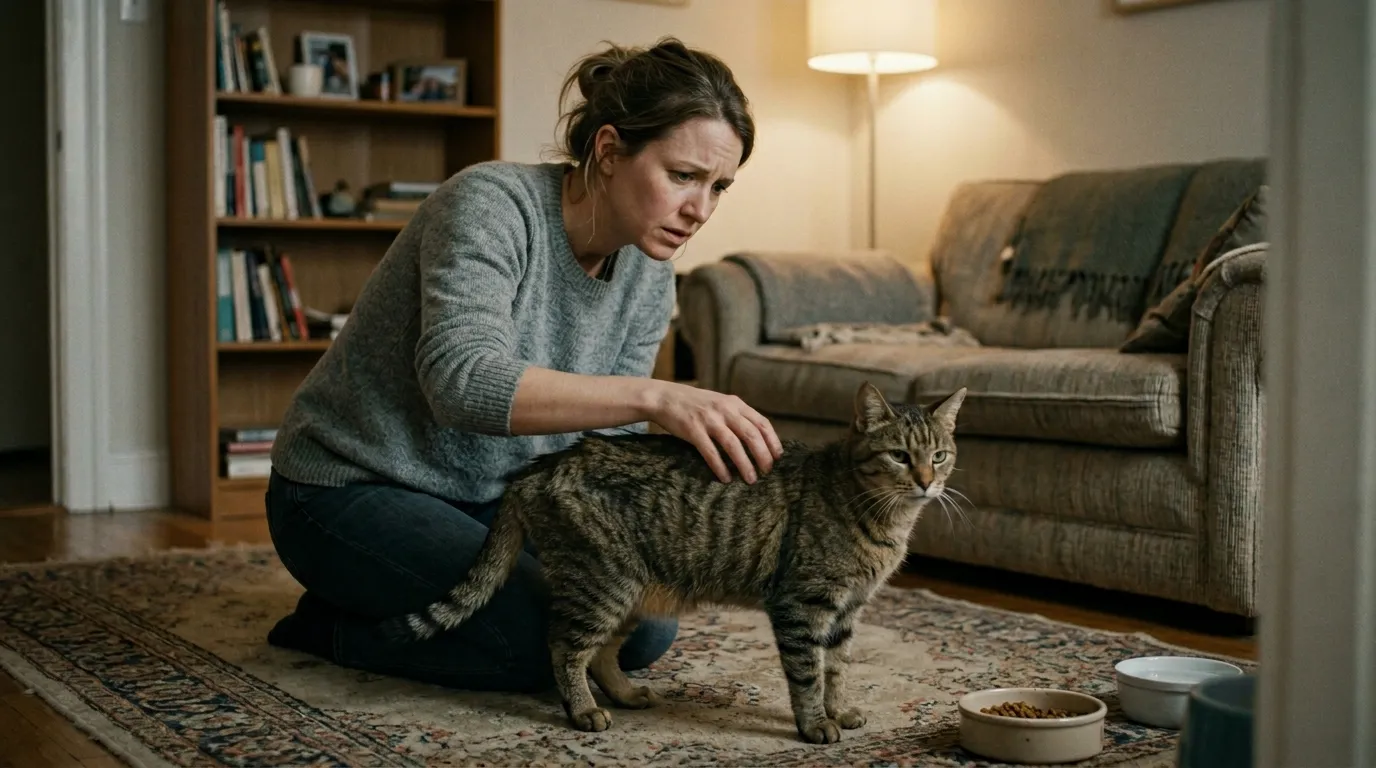
You pet your cat and something feels different. The spine sits more prominent under your hand, the ribs come up easier, the hipbones show slightly where they didn’t before.
Why is my indoor cat losing weight? Unintentional weight loss in cats almost always has a physical cause, and it gets harder to treat the longer it runs unaddressed. My cat lost nearly a pound over six weeks with no obvious change in appetite or behavior. A pound is roughly ten percent of her body weight, a real clinical loss even though she still seemed active. The cause was early hyperthyroidism, caught only because I weighed her on a kitchen scale out of habit. This guide covers the eight most common causes in indoor cats, the serious ones that don’t make most lists, and exactly which signs mean a vet visit today versus a feeding fix this week. This article is part of our broader indoor cat health series, itself part of our full indoor cat care guide, if you want the wider picture beyond weight loss alone.
Indoor cats lose weight most often from hyperthyroidism in older cats, diabetes, chronic kidney disease, dental pain, intestinal parasites, stress-related appetite drops, or blocked food access in multi-cat homes. Cancer, most commonly lymphoma, is less frequent but is a real cause worth ruling out in older cats with unexplained loss. Any loss over five percent of body weight in four weeks needs a vet visit. Loss combined with increased thirst or a dropping appetite needs an appointment that same week.
| Cause | Eating pattern | Other signs to watch |
|---|---|---|
| Food access problems | Bowl empties, but cat is displaced by others | Only in multi-cat homes |
| Hyperthyroidism | Eats ravenously, still loses weight | Vocalizing at night, hyperactivity, thirst |
| Dental disease | Sniffs food, walks away, prefers soft food | Bad breath, drooling, pawing at mouth |
| Diabetes | Normal or increased appetite | Thirst, frequent urination |
| Chronic kidney disease | Appetite drops slowly over months | Thirst, urination, mostly cats over 10 |
| Intestinal parasites | Eats normally, still loses weight | Loose stool, visible worms possible |
| IBD or malabsorption | Eats normally or more, still loses weight | Chronic loose stools, occasional vomiting |
| Stress-driven appetite loss | Appetite drops after a household change | Hiding, over-grooming, litter box changes |
How to Tell If Your Indoor Cat Is Actually Losing Weight
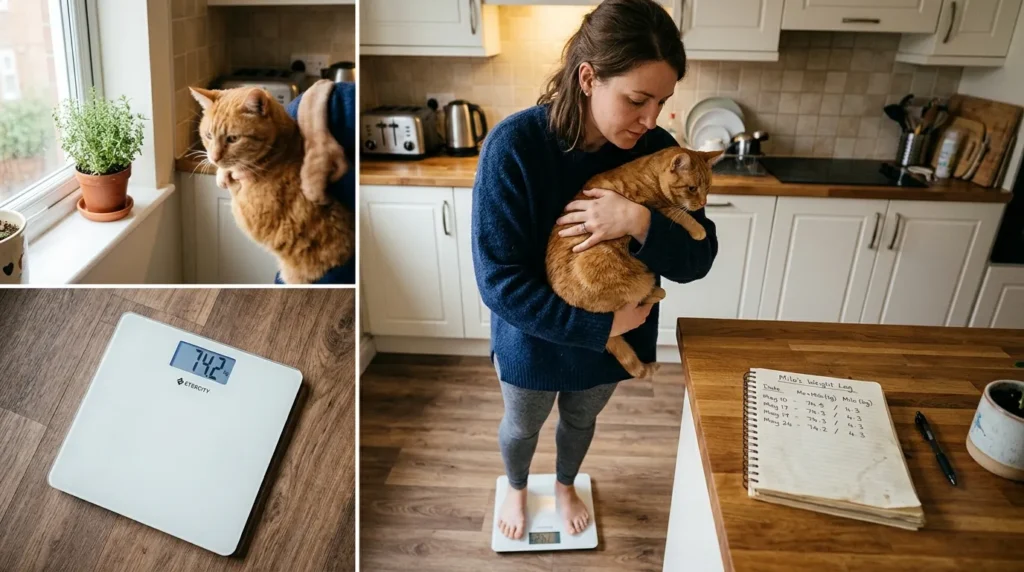
Body condition score is the most reliable home check for cat weight. Run your fingers along the ribcage. At a healthy weight you should feel the ribs easily without pressing, but not see them poking through. Run your fingers along the spine from neck to tail. Individual vertebrae should be palpable, not sharp ridges. Look at your cat from above. A healthy cat shows a slight waist behind the ribs, not a barrel shape and not the sharp hourglass of an underweight cat.
The most practical home method is a monthly weigh-in with a bathroom scale. Hold your cat and step on the scale, note the combined number, then weigh yourself alone and subtract. A domestic cat averages eight to twelve pounds, so half a pound of change between monthly readings is a four to six percent shift, worth flagging. Loss across two or three straight monthly readings deserves a look even if her appetite seems fine.
Indoor cats lose muscle before fat loss becomes visible, which is why owners often notice a texture change under their hand before they notice thinning by eye. A cat that feels bonier when petted, despite looking about the same size, has likely been losing lean muscle for weeks already. Weight tracking fits naturally into the kind of monthly routine covered in this guide on indoor cat health, which walks through what else to check during that same monthly pass.
Why Is My Indoor Cat Losing Weight? The 8 Most Common Causes
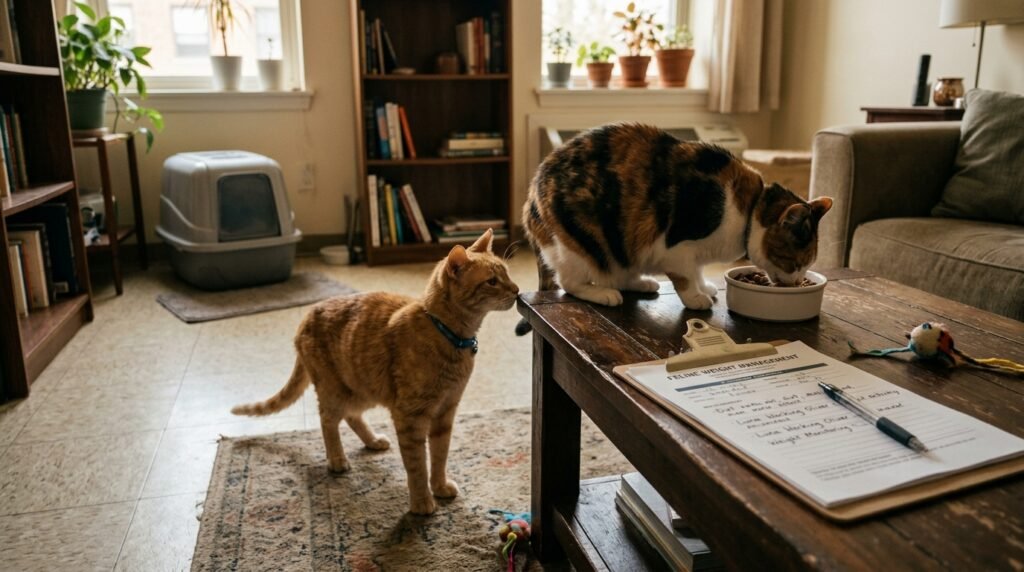
Cause 1: Food access problems in multi-cat households. A cat in a shared home may eat far less than you think, because a dominant cat finishes portions first or guards the bowl. The losing cat approaches, eats a little, and gets displaced before finishing. Owners miss this because they see every cat visit the bowl and assume equal access. Separate feeding stations in different rooms fix it completely.
Cause 2: Hyperthyroidism. This is the most common medical cause of weight loss in indoor cats over eight, and the pattern is distinctive. The cat eats ravenously but still loses weight, because an overactive thyroid burns through calories faster than food can replace them. Other signs include night vocalizing, hyperactivity, increased thirst, and a coat that looks less kept. A thyroid hormone blood test confirms or rules it out, and treatment works well when caught before muscle loss sets in.
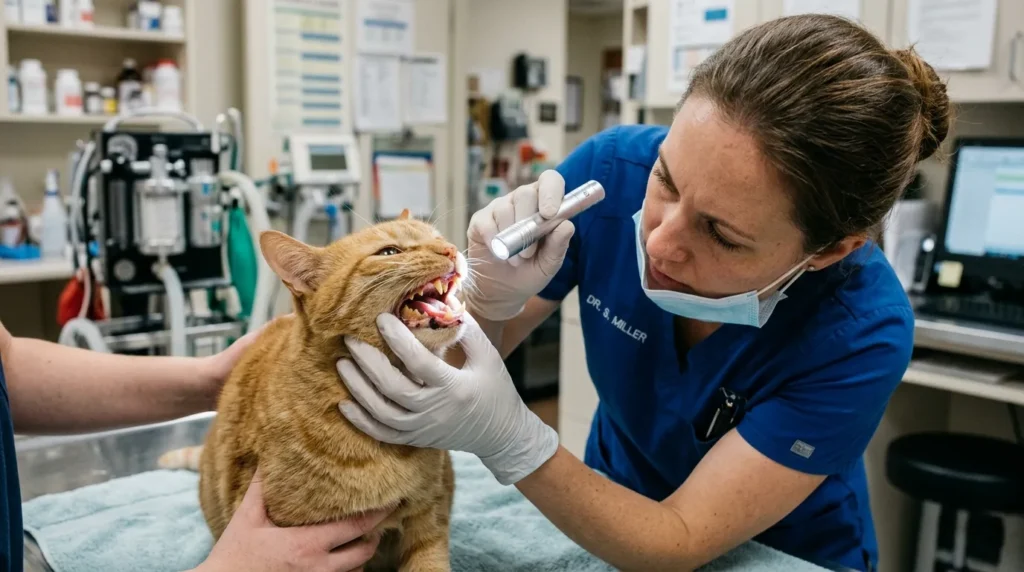
Cause 3: Dental disease and oral pain. A cat with sore teeth or inflamed gums stops eating hard kibble because chewing hurts. She may approach the bowl, sniff, and walk away, or suddenly prefer soft food after years of eating dry food without complaint. Owners rarely spot the dental problem directly, since most cats resist an at-home mouth check. Weight loss that resolves after a dental cleaning under anesthesia confirms this was the driver.
Cause 4: Diabetes mellitus. Feline diabetes produces the classic combination: weight loss with increased thirst and urination, even while the cat eats normally or more than usual. Overweight, sedentary indoor cats carry higher risk. The body can’t process blood sugar properly, so cells can’t access the energy in the food and muscle wasting follows. Insulin management with a prescription high-protein diet gives good outcomes when caught at a moderate stage.
Cause 5: Chronic kidney disease. Very common past age ten, and it develops so slowly that owners often chalk the early signs up to normal aging. The kidneys lose filtering ability, and the resulting nausea reduces appetite over time. Loss here tends to be slow and steady across months rather than sudden. Increased thirst and urination alongside gradual loss in a senior cat points here until bloodwork says otherwise.
Cause 6: Intestinal parasites. Even a strictly indoor cat can pick up worms or giardia from soil on your shoes, a new item brought inside, or contact with another animal. Parasites steal nutrients directly, so the cat eats enough but absorbs too little to hold weight. A fecal exam diagnoses this in one visit, and treatment is straightforward.
Cause 7: Inflammatory bowel disease or malabsorption. The intestinal lining gets inflamed and loses its ability to absorb nutrients well. The cat may eat normally, even more due to persistent hunger, but the food passes through without full nutrient uptake. Chronic loose stools, occasional vomiting, and gradual loss despite eating are the pattern. Diagnosis needs bloodwork and sometimes a biopsy, and it responds to diet changes and medication.
Cause 8: Stress-driven appetite reduction. A new pet, a move, a schedule change, even rearranged furniture, can drop a stress-sensitive cat’s appetite enough to cost real weight over several weeks. Indoor cats have no outdoor escape valve for stress, so the effect is amplified. Recognizing stress signals in your indoor cat’s daily behavior makes this cause much easier to catch early. Stress-driven loss usually resolves once the stressor is identified and the environment settles, alongside a vet check to rule out anything medical running underneath it.
Cancer and Other Serious Causes That Don’t Make Most Lists
Lymphoma is the most common cancer diagnosed in cats, and weight loss is one of its earliest and most consistent signs, especially when it involves the intestines. Unlike hyperthyroidism, appetite with intestinal lymphoma varies. Some cats keep eating normally or even more, others eat less, and the weight comes off either way because the tumor interferes with nutrient absorption or digestion. Chronic vomiting or diarrhea alongside the weight loss raises suspicion further. Diagnosis needs bloodwork, imaging and usually a biopsy or needle sample from an affected area, not a blood test alone.
Cats that test positive for feline leukemia virus or feline immunodeficiency virus carry a higher lifetime risk of lymphoma and other cancers, which is one more reason a strictly indoor cat that was ever exposed to an unknown cat’s history, a shelter background, a stray taken in, a multi-cat household with an untested cat, is worth testing for FeLV and FIV if that hasn’t already been done.
None of this means every thin older cat has cancer. Hyperthyroidism, kidney disease and dental problems account for far more cases than cancer does. But cancer belongs on the list, because owners who’ve only read about the common causes sometimes stop investigating too early when the first round of tests comes back inconclusive. If bloodwork and a physical exam don’t explain ongoing weight loss, ask your vet directly whether imaging or a biopsy makes sense as the next step.
The Indoor-Specific Factors That Make Weight Loss Harder to Catch
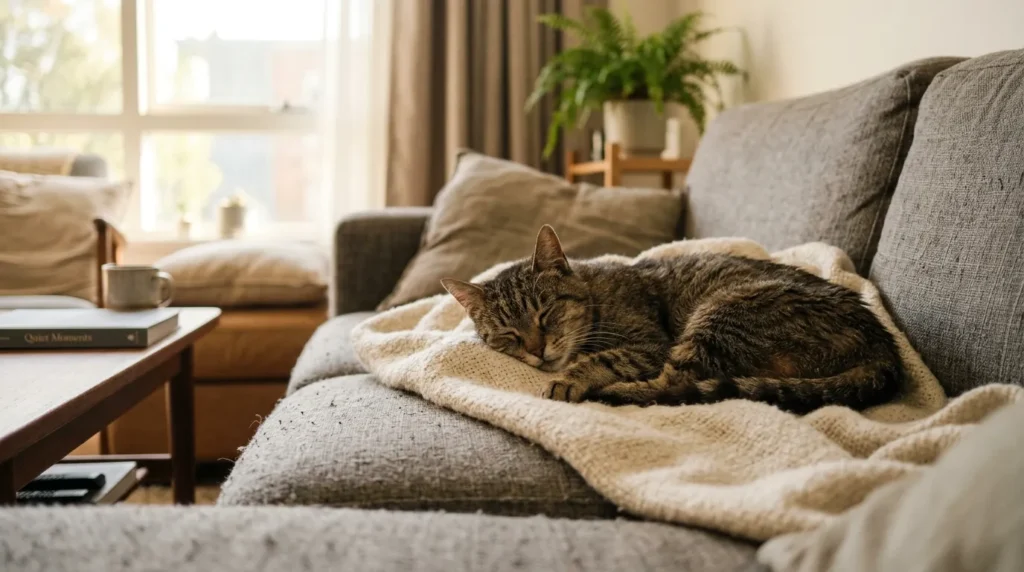
Indoor cats lose weight more quietly than outdoor cats, for two reasons. First, indoor cats are usually less active, so there’s no exercise context for muscle loss to stand out against. A cat that naps most of the day keeps napping most of the day whether she’s losing weight or not, and the behavior gives you no warning sign. Second, owners in small apartments see their cats constantly, which oddly makes gradual change harder to notice than the occasional glance an outdoor cat’s owner gets.
Hepatic lipidosis is a life-threatening complication that hits indoor cats harder than outdoor ones, because an indoor cat that stops eating from stress or illness has no foraging fallback. When a cat goes without food for more than two to three days, the body starts breaking down fat stores faster than the liver can process, and the resulting liver failure moves fast. Any indoor cat that hasn’t eaten in 48 hours needs a same-day vet call, not a wait-and-see approach.
Environment plays a bigger role indoors than most owners assume. Setting up an apartment that meets your cat’s space and routine needs cuts down on the background stress that drives Cause 8 above, and a stable routine, feeding times, litter box location, resting spots, gives a stress-sensitive cat fewer reasons to skip meals.
Insight: Monthly weighing is the most underused tool in indoor cat health monitoring. Most owners have no idea what their cat weighed six months ago, so there’s no baseline to compare against when something feels off. Spend thirty seconds on a bathroom scale once a month and write the number down. That log tells your vet more than any description of how your cat “seems” at an appointment.
How to Help Your Indoor Cat Regain Weight Safely
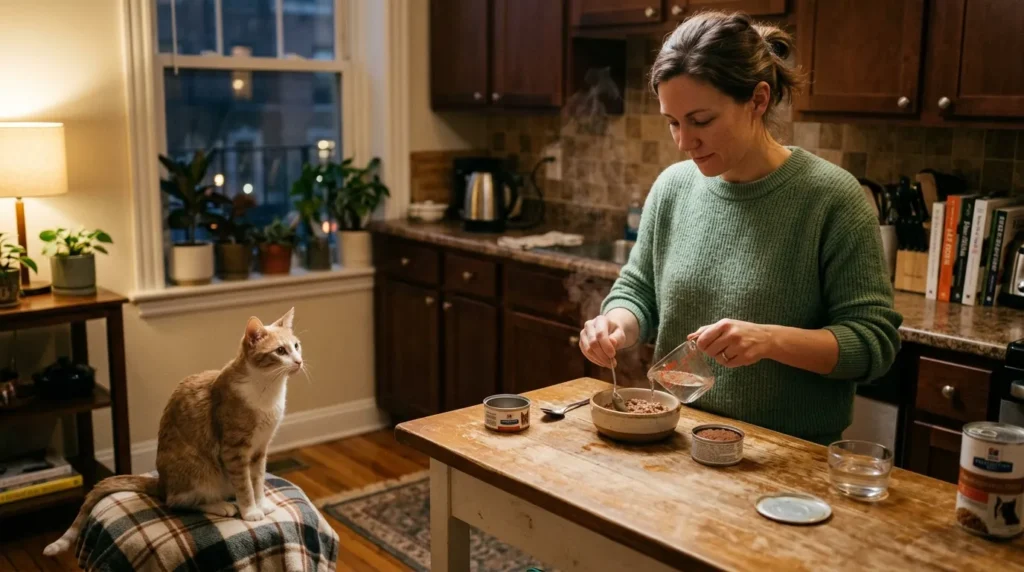
Weight recovery always starts with finding and treating the underlying cause. Adding calories without fixing the cause doesn’t work. A cat with hyperthyroidism keeps losing weight no matter how much food you offer, until thyroid levels come under control. A cat with dental pain won’t eat more food until the pain is gone. That’s why a vet visit comes before any recovery feeding plan, not after.
Once the cause is treated or managed, a few practical steps help:
- Switch to high-quality wet food, which packs more protein and moisture per portion than most dry food
- Offer smaller meals more often through the day instead of two large ones
- Warm wet food slightly to boost aroma and make it more appealing
- Add plain shredded cooked chicken or a splash of low-sodium broth to encourage eating
Cats recovering from illness often need a taste incentive before their appetite fully normalizes. For cats whose appetite stays stubbornly low even after the underlying cause is treated, vets sometimes prescribe an appetite stimulant such as mirtazapine, available as a pill or a gel applied to the ear. That’s a vet decision, not something to try on your own, since dosing depends on the cat’s weight and the condition driving the loss.
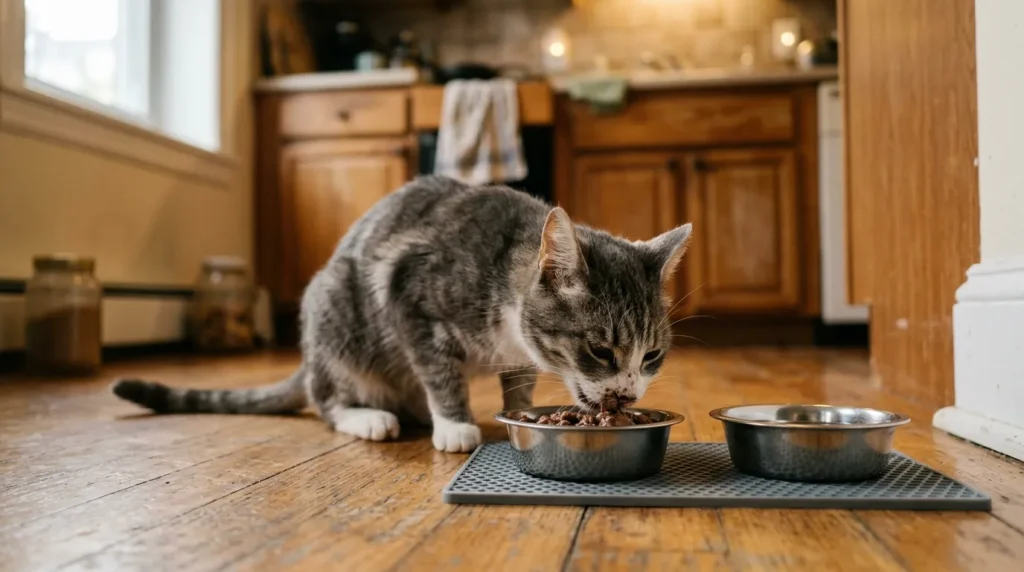
Feeding structure matters just as much as what’s in the bowl. Multiple small meals keep calories available through the day and close the overnight gap that can let a recovering cat’s appetite slide backward. For exact daily calorie targets and portion math for a cat under her ideal weight, this guide on how to feed an indoor cat properly breaks it down in practical terms.
Common Mistakes When an Indoor Cat Is Losing Weight
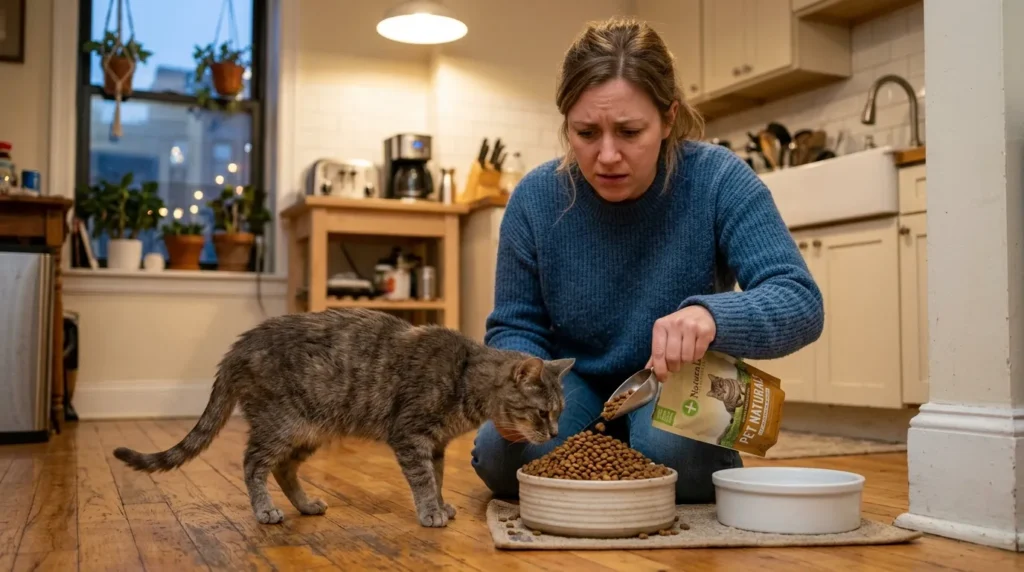
The most common mistake is waiting to see if things self-correct. Owners who notice a slightly bonier cat often watch for a month or two before acting, and the underlying condition keeps progressing the whole time. A cat down five percent of body weight over four weeks is showing a trend that rarely reverses on its own. The earlier you catch it, the easier the treatment.
The second mistake is assuming intake is fine because the bowl empties. In multi-cat homes, food disappears because one or two cats ate it all, not because everyone got a fair share. In single-cat homes, owners often overestimate how much actually got eaten versus pushed around or left at the bottom. Weighed portions with removal after thirty minutes give you real intake data that watching the bowl never will.
The third mistake is switching to a high-calorie food before getting a diagnosis, which can mask symptoms or worsen a condition that needs a prescription diet instead. A cat developing kidney disease who gets a high-protein recovery formula meant for post-illness cats may end up with more kidney stress, not less. Get vet guidance before any major diet change, especially once weight loss looks medical.
Litter box output is another signal worth tracking alongside weight, since changes in urination or stool often show up before a diagnosis does. Keeping an eye on your indoor cat’s litter box habits gives you a second data point that, paired with monthly weigh-ins, catches conditions like diabetes and kidney disease earlier.
When Weight Loss in Your Indoor Cat Is a Same-Day Emergency

| What you see | What to do |
|---|---|
| Hasn’t eaten in 48 hours | Call the vet today, hepatic lipidosis risk |
| Vomiting or diarrhea more than twice in 24 hours | Prompt exam, don’t wait for a routine slot |
| Weight loss plus total lethargy, hard to rouse | Emergency vet visit now |
| Weight loss plus much more drinking than usual | Appointment within two to three days |
The last combination, weight loss with a big jump in water intake, is the signature presentation of both hyperthyroidism and diabetes. Both get harder to manage the longer they run. Per the Cornell Feline Health Center, hyperthyroidism affects roughly 10 percent of cats over age ten, and it responds best when treated before significant muscle wasting sets in.
This article is for informational purposes only. Always consult your vet if your indoor cat is showing unexplained weight loss or changes in appetite.
Frequently Asked Questions About Indoor Cat Weight Loss
Why is my indoor cat losing weight but still eating normally?
Weight loss with a normal or increased appetite usually points to hyperthyroidism, diabetes, or intestinal malabsorption including IBD or intestinal lymphoma. The cat is eating, but either burning calories too fast or not absorbing nutrients well enough to hold weight. All of these need blood testing, a fecal exam, and sometimes imaging to tell apart, and none resolve without vet treatment.
How much weight loss in an indoor cat is cause for concern?
A confirmed loss of five percent or more of body weight over four weeks warrants a vet visit. For a ten-pound cat, that’s half a pound. For an eight-pound cat, it’s just over six ounces. Monthly weighing gives you the baseline to catch this threshold instead of guessing by appearance, which usually catches loss much later.
How many days can a cat go without eating before it’s dangerous?
Two to three days without food puts a cat at risk for hepatic lipidosis, a fast-moving liver condition. By 48 hours of not eating, call your vet the same day rather than waiting. This risk is higher in overweight cats, but it can happen to any cat that stops eating.
Can cancer cause weight loss in cats?
Yes. Lymphoma is the most commonly diagnosed cancer in cats and frequently causes weight loss, especially when it affects the intestines. It’s less common than hyperthyroidism, kidney disease or dental problems, but it’s worth raising with your vet directly if initial bloodwork doesn’t explain ongoing loss, particularly in cats over ten.
Can stress alone cause significant weight loss in indoor cats?
Yes, sustained stress can drop appetite enough to cause real weight loss over several weeks, especially in stress-sensitive cats. Stress should only get the blame after medical causes are ruled out through bloodwork and a physical exam. Assuming stress without ruling out disease delays treatment for conditions that need it.
Why is my senior indoor cat losing weight?
Senior cats past ten most often lose weight from chronic kidney disease, hyperthyroidism, or dental disease, all three become far more common after that age. Cancer, especially lymphoma, becomes more common in this age group too. Senior cats also lose muscle from reduced protein synthesis even with normal food intake, a pattern called feline cachexia that’s separate from disease-driven loss. Bloodwork twice a year starting at age seven or eight catches these earlier than an annual visit alone.
My indoor cat lost weight after we got a second pet. What should I do?
Weigh both cats separately for three to four weeks to set a current baseline, and feed them in separate closed rooms so the original cat gets her full measured portion every time. If her weight stabilizes with guaranteed access, food competition was the cause. If loss continues anyway, book a vet visit to rule out a stress-linked medical issue.
Is weight loss different in kittens than in adult cats?
Yes. A kitten losing weight or failing to gain steadily is a faster-moving concern than the same pattern in an adult, since kittens have far less reserve and parasites, infections and congenital issues progress quickly at that age. Any kitten not gaining weight on a normal growth curve needs a vet visit within days, not weeks.
What appetite stimulants do vets use for cats that won’t eat?
Mirtazapine is the most commonly prescribed option, given as a pill or a gel rubbed on the inner ear, and it’s used alongside treatment for the underlying cause rather than as a standalone fix. Dosing depends on weight and condition, so this is a vet-directed medication, not something to source or dose on your own.
Weight Loss Is a Signal, Act on It Promptly
When your indoor cat is losing weight, her body is telling you something is wrong. Almost none of the causes on this list are safe to just watch. Start today: get a current weight on a bathroom scale and write it down. If loss has already shown up, book a vet appointment this week instead of waiting to see if it stabilizes. Every condition on this list, including the less common ones like cancer, responds better to early treatment than to treatment after the loss turns severe. This guide is one part of the full indoor cat health picture under our broader indoor cat care resource.

Written by Mishu
A passionate cat lover and indoor living enthusiast, Mishu is the founder and voice behind Indoor Living Cat – a go-to resource for cat owners who want to create the happiest, healthiest life for their feline companions indoors.
View Full Profile