
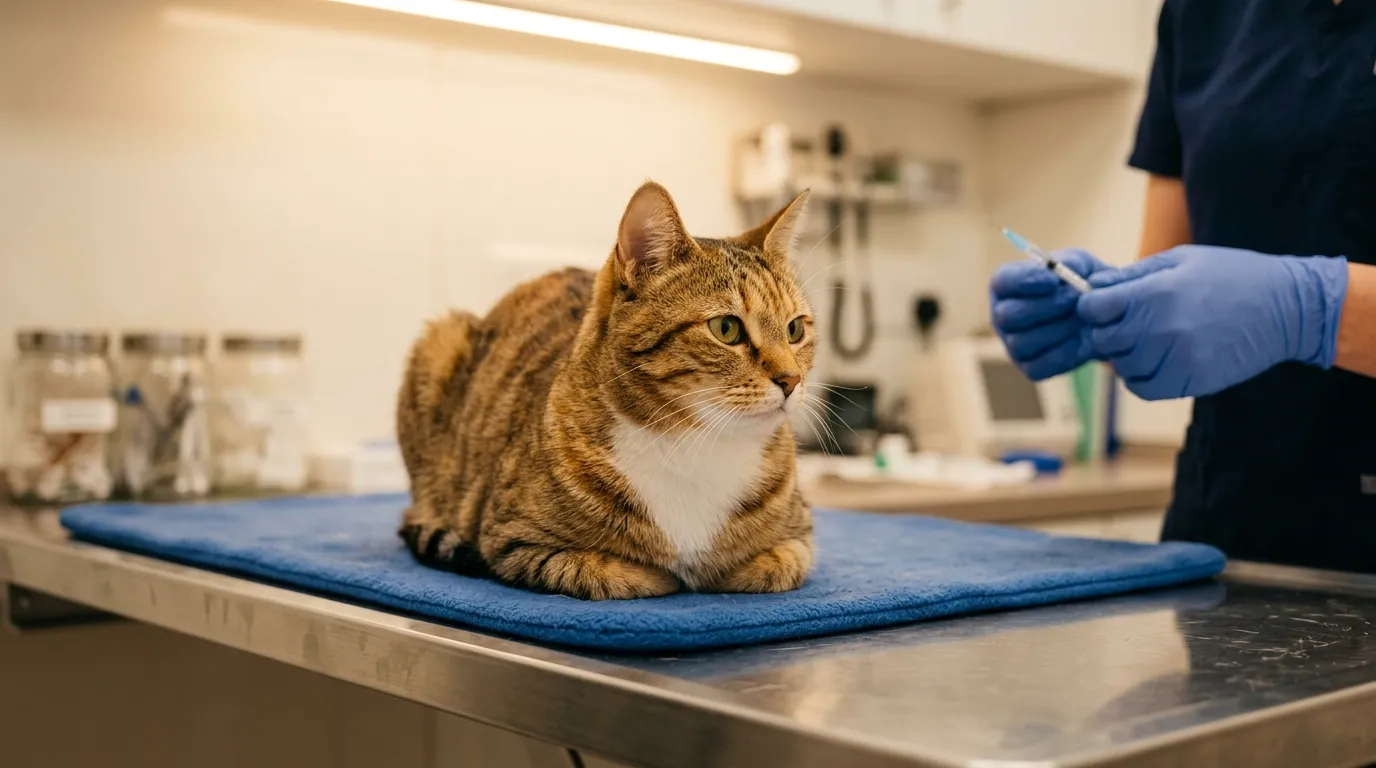
My cat never set a paw outside for three full years, and I genuinely believed she was untouchable by disease. Then a friend visited carrying their cat’s carrier, set it down on my floor, and two weeks later my cat had a runny eye and was sneezing. That was the moment I stopped wondering whether indoor cats need vaccinations and started making the appointment. If you’ve been putting it off because your cat lives entirely indoors, this article walks you through exactly which vaccines she needs, why the exposure risk is real, what a stress-free vaccination schedule looks like, and roughly what it all costs.
Quick Answer: Do Indoor Cats Need Vaccinations?
Yes. The AAHA/AAFP Feline Vaccination Guidelines list core vaccines for cats that apply to every cat, regardless of lifestyle. Every indoor cat needs the FVRCP vaccine and a rabies shot. These protect against diseases that reach your cat through your shoes, an open window, or the occasional escape through the front door. Whether she needs anything beyond that, like FeLV, depends on her age and household. The table further down breaks that down by name.
Why Indoor Cats Still Need Vaccinations, Even Without Going Outside?
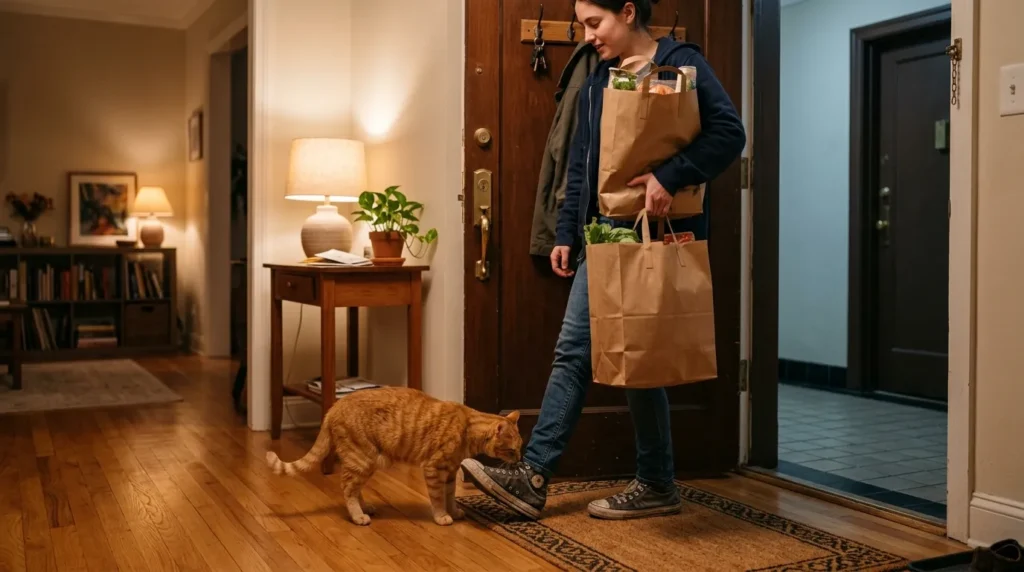
Your indoor cat doesn’t need to meet another animal for a virus to find her. The biggest threat comes through your own front door, carried in on your shoes, your clothing, and your hands. You touch surfaces all day, and your cat investigates everything you bring home.
Vets call this indirect exposure, and it’s how most indoor cats actually encounter dangerous pathogens. Feline panleukopenia is extremely stable on environmental surfaces and can survive for months without a live host. Your cat doesn’t need direct contact with another cat for this to become a real problem.
There’s a second reason. An indoor cat who has never been vaccinated has never met these viruses, so her immune system has nothing to recognize them with. If one gets in, she’s meeting it cold. Vaccination is the only preparation she gets, which makes it more important for her, not less.
Insight: Think of vaccines the way you think of smoke detectors. You don’t install them because you expect a fire today. You install them so that when something does go wrong, you’ve already handled it.
Core vs. Non-Core Vaccines: What’s the Difference?
Vets split feline vaccines into two categories, and knowing the difference helps you understand why your vet recommends what she recommends. Core vaccines are ones every cat should get, no matter how she lives. Non-core vaccines are ones your vet adds based on specific risk factors, like boarding, breeding, or a multi-cat household with unknown health histories.
| Vaccine | Core or Non-Core | Who Actually Needs It |
| FVRCP | Core | Every cat, including indoor-only |
| Rabies | Core | Every cat; legally required in most U.S. states |
| FeLV | Core for kittens, risk-based for adults | All kittens under 1 year; adults with any outdoor access history or multi-cat exposure |
| FIV | Not available in North America | The vaccine was discontinued in 2017 and isn’t recommended. Prevention means keeping her indoors and testing any new cat before introductions. |
| Bordetella | Non-core | Cats going into shelters, catteries, or frequent boarding |
| Chlamydophila felis | Non-core | Multi-cat households with an active outbreak or known exposure |
For a purely indoor, single-cat home, FVRCP and rabies cover the real risk. Your vet will only push FeLV or the non-core options if something about your cat’s situation genuinely calls for it.
Understanding your cat’s full indoor cat health picture, including nutrition, weight, and dental care, helps your vet make sharper calls about which vaccines fit her actual risk level.
The Core Vaccines Every Indoor Cat Actually Needs
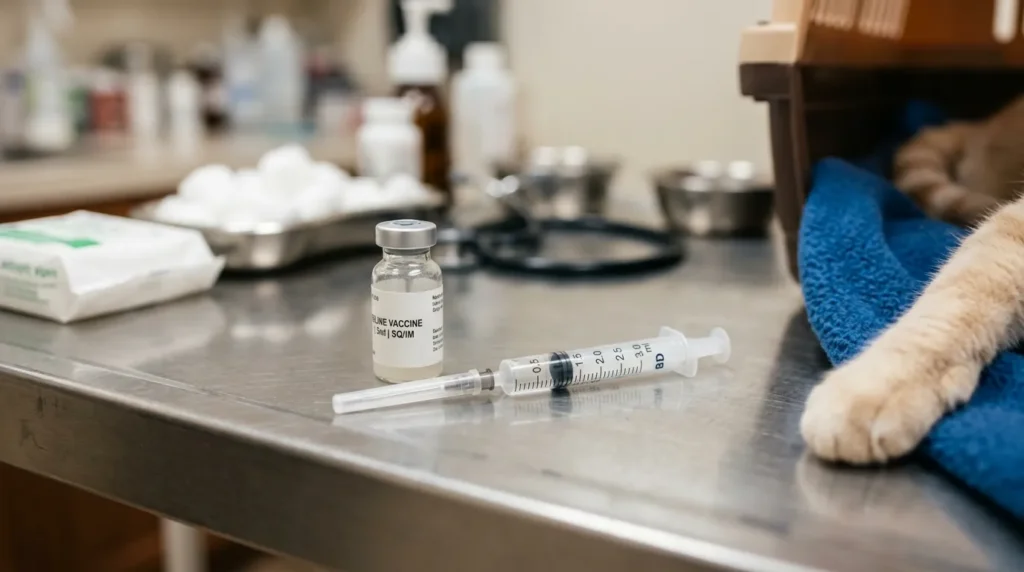
Two vaccines are non-negotiable: the FVRCP vaccine and the rabies vaccine for indoor cats. FVRCP combines three diseases into one injection: feline panleukopenia, feline herpesvirus, and calicivirus. They spread through respiratory droplets, direct contact and contaminated surfaces, so your cat doesn’t need to meet another cat to be exposed.
The rabies shot is required in most U.S. states, regardless of your cat’s lifestyle. Bats get into homes through gaps and chimneys more often than people expect, and a single contact creates a genuine risk. There’s no treatment once symptoms appear in an unvaccinated animal.
FeLV, feline leukemia virus, is considered core for kittens under one year old. Once your cat is an adult with a stable, strictly indoor life, your vet decides each year whether she still needs it based on her history and household.
What Each Core Vaccine Protects Against?
| Disease | How It Reaches an Indoor Cat | What You May See |
| Panleukopenia (feline distemper) | Contaminated shoes, hands, bedding and surfaces; it survives in the environment for months | Vomiting, diarrhea, lethargy, refusing food; often fatal in unvaccinated kittens |
| Herpesvirus (rhinotracheitis) | Respiratory droplets and shared surfaces; a carrier cat can flare up again later under stress | Sneezing, eye discharge, squinting, congestion |
| Calicivirus | Respiratory droplets and shared surfaces | Sneezing, mouth ulcers, drooling, sometimes limping |
| Rabies | A bite or scratch from an infected animal, such as a bat that gets indoors | Behavior change, aggression, paralysis; fatal once symptoms start |
| FeLV (kittens) | Close contact, mutual grooming, bites, or from the mother | Anemia, weak immunity, repeated infections; some cats show nothing at first |
Indoor Cat Vaccination Schedule, Step by Step
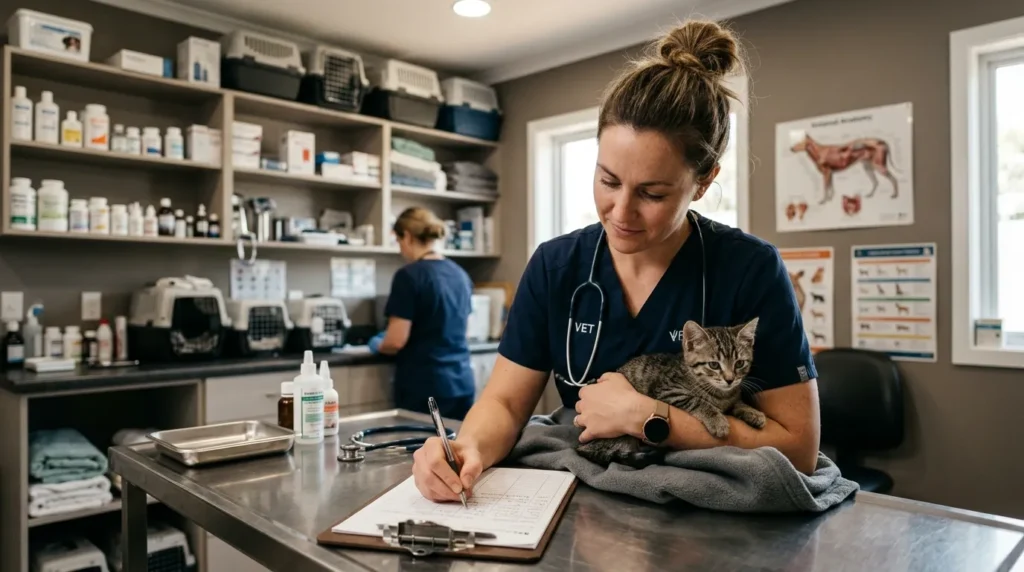
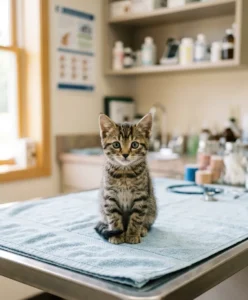
Kittens need a series of FVRCP doses starting at six to eight weeks old, repeated every three to four weeks until at least sixteen weeks. Some vets give the last dose a little later, between sixteen and twenty weeks. Maternal antibodies interfere with early vaccines, which is why the spaced series exists in the first place. Skip one dose and you can leave a window of vulnerability right when the mother’s protection runs out.
| Age | What Happens |
| 6 to 8 weeks | First FVRCP dose |
| 9 to 11 weeks | Second FVRCP dose |
| 12 to 15 weeks | Third FVRCP dose; first FeLV dose if recommended |
| 16 weeks | Final FVRCP dose; rabies vaccine (timing depends on the product and local law); second FeLV dose if started |
| 1 year | FVRCP booster and rabies booster |
| Every 3 years | FVRCP booster for adults |
| Every 1 to 3 years | Rabies booster, timing depends on your state and the vaccine your vet uses |
Adult indoor cats need an FVRCP booster every three years once the initial series and the one-year booster are done. Rabies follows a one-to-three-year cycle depending on local law and the specific vaccine your vet stocks. One annual wellness visit is enough to keep everything current and let your vet catch anything else worth knowing.
Adult Cats With No Vaccine Records
Adopted an adult with no paperwork? Your vet will usually treat her as unvaccinated and give two FVRCP doses three to four weeks apart, plus rabies. Don’t guess based on how healthy she looks. A shelter or rescue can often supply records, so ask before the first visit.
Do Senior Indoor Cats Still Need Vaccines?
Usually yes. Age alone isn’t a reason to stop core vaccines. Cats with a chronic illness, like kidney disease or hyperthyroidism, are a case-by-case call, and your vet may adjust which shots she gets and how often. Rabies stays tied to local law either way. Bring the full health picture to the appointment rather than skipping it.
What you feed your cat and how well-nourished she stays plays a real role in how strongly her immune system responds to a vaccine. A cat on a poor diet won’t build the same protection from the same shot. Solid indoor cat care habits go hand in hand with keeping her vaccine record current.
How Much Do Indoor Cat Vaccines Actually Cost?
Prices swing by region and clinic, but here’s what most U.S. cat owners can expect to pay. Treat these as rough planning numbers, not quotes, and always confirm with your own vet.
| Item | Typical Cost Range |
| FVRCP kitten series (3 to 4 doses) | $75 to $160 total |
| FVRCP adult booster | $20 to $45 per visit |
| Rabies vaccine | $15 to $40 per dose |
| FeLV kitten series (2 doses) | $50 to $90 total |
| Wellness exam fee | $40 to $75 per visit, often bundled with vaccines |
Low-cost and nonprofit clinics, plus community vaccine events, often run well under these numbers. If cost is the thing keeping you from booking, ask your vet’s office about payment plans or search for a local low-cost clinic before you skip the appointment entirely.
How Disease Actually Reaches an Indoor Cat

Open windows are a real exposure route most cat owners never think about. Calicivirus travels in respiratory droplets, so a stray sitting right outside your window screen can put your cat at risk without any physical contact. The screen keeps animals out. It doesn’t stop airborne particles.
Here’s a quick rundown of the exposure routes that catch most indoor-cat owners off guard:
- Shoes, clothing, and hands that picked up a virus outside and carried it in
- Open windows and screened porches where droplets from a nearby cat can drift through
- Shared hallways and elevators in apartment buildings
- Vet clinic and grooming waiting rooms, where other animals pass through the same space
- A new pet, foster animal, or visiting friend’s cat brought into the home
- An accidental escape through a door held open too long
- Bats and other wildlife that get inside through gaps, chimneys or open windows
Cats living in apartment buildings, where shared hallways and elevators bring neighbor pets close by, face more contact surfaces than cats in standalone homes. And cats escape. One rushed delivery, one distracted guest, one door held open a second too long, and your indoor cat is outside with zero protection. Cats who spend their time near windows, especially ones with enrichment-focused perches and furniture that encourage window watching, sit closer to airborne particles from passing strays than you might assume.
Vaccines Aren’t the Only Prevention
Vaccines don’t cover parasites. Mosquitoes and fleas come indoors too, and many vets recommend year-round flea control and heartworm prevention even for indoor-only cats. Ask about both at the same visit.
Are Cat Vaccines Actually Safe?
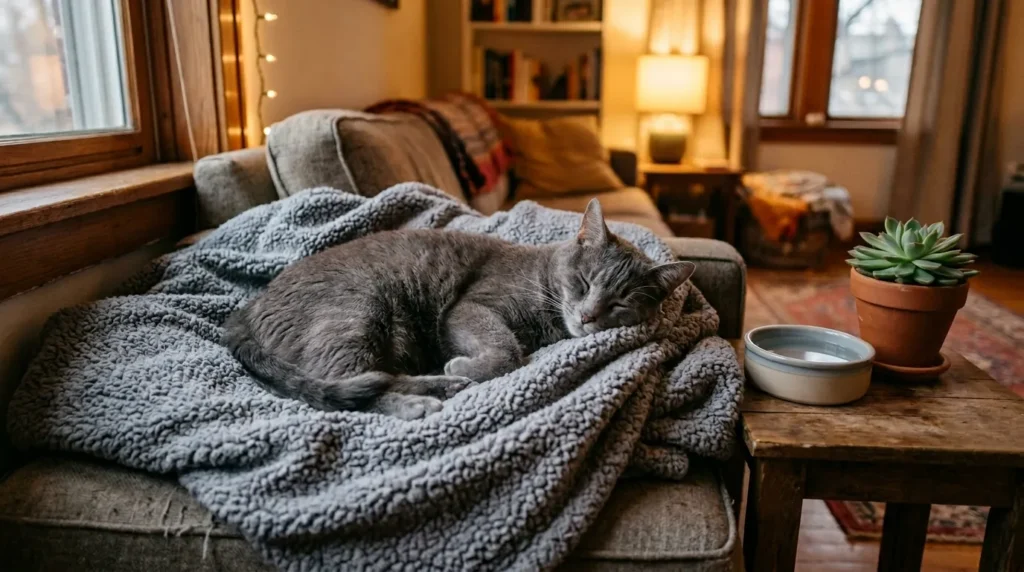
Most cats bounce back from a vaccine visit within 24 hours. Mild tiredness and a small tender spot at the injection site are common, and they usually mean the immune system is responding. Expect them and don’t panic.
| What You Might See | Normal or Worth a Call? |
| Sleepiness or low energy for a day | Normal |
| Small, soft lump at the injection site for a few days | Normal |
| Reduced appetite for 24 to 48 hours | Normal, call if it lasts longer |
| Facial swelling, hives, or vomiting soon after the shot | Call your vet right away |
| Lump still present after 3 months, larger than 2 cm, or growing after 1 month | Needs a biopsy. This is the 3-2-1 rule. |
Feline Injection-Site Sarcoma, or FISS, sometimes comes up as a concern. It’s real, and it’s rare. Vets now give vaccines low on the limbs rather than between the shoulder blades, which allows a much wider surgical margin if anything ever develops. AAFP guidance typically puts FVRCP in the right front leg, rabies in the right back leg and FeLV in the left back leg, and a good vet will note which went where.
The risk math here isn’t close. Panleukopenia kills most unvaccinated kittens who catch it. A sore leg for a day isn’t a meaningful trade-off against that.
How to Prepare for Your Indoor Cat’s Vaccine Appointment
Most of the stress comes from the car ride and the carrier, not the needle. A little prep makes the visit calmer for both of you.
- Leave the carrier out for a week. Put a blanket and a treat inside so it stops predicting a trip to the vet.
- Bring her records. That includes previous vaccine dates, any reactions and the name of her last clinic.
- Write down your questions. FeLV, titers, parasite prevention and cost are the usual ones.
- Tell the vet if she’s been sick. A cat with a fever or active illness may need to wait.
- Cover the carrier on the way. A towel over the top keeps the clinic less overwhelming.
- At home, give her a quiet room. Fresh water, a warm bed and no handling near the injection site for a day.
- Check the site daily for a week, then weekly until three months have passed.
[IMAGE PLACEHOLDER: cat calmly sitting in an open carrier with a blanket inside, ready for a vet trip | Suggested alt text: “preparing an indoor cat for a vaccine appointment with an open carrier” | Suggested filename: cat-carrier-prep-vet-visit.webp]
Can Titer Testing Replace a Vaccine Booster?
Some owners ask about titer testing instead of an automatic booster, especially for FVRCP. A titer test is a blood draw that measures how much antibody your cat still has circulating from her last vaccine. If the level is high enough, some vets will hold off on the booster for another year and retest later.
It’s a reasonable option to discuss, with a few catches. First, titers usually cost more than the vaccine itself, often $80 to $200 depending on the lab. Second, the panleukopenia result is the most reliable one. Herpesvirus and calicivirus antibody levels don’t track protection as well, so a good panleukopenia titer doesn’t prove she’s covered for all three. Third, most U.S. jurisdictions don’t accept a rabies titer in place of a legally required rabies vaccine, so this route really only applies to FVRCP. Talk to your vet before assuming titers are the cheaper or simpler path. For a lot of indoor cats, the booster itself is still the faster and less expensive choice.
Is Vaccinating an Indoor Cat Legally Required?
Rabies vaccination is required by law in most U.S. states, and that requirement almost never carves out an exception for indoor-only cats. Local ordinances vary on the exact interval. Some allow a three-year vaccine, others require annual or one-year boosters depending on the product used, so check with your city, county, or vet’s office for the rule where you live. If your cat has a medical condition that makes vaccination risky, ask your vet whether your area allows a medical exemption letter. FVRCP and FeLV aren’t typically law-mandated, but they’re standard medical practice recommended by veterinary bodies like AAHA and AAFP for every cat’s protection.
Boarders, groomers and many apartment landlords also ask for proof of vaccination, so keep a copy of the record on your phone.
The Mistake That Puts Most Indoor Cats at Risk
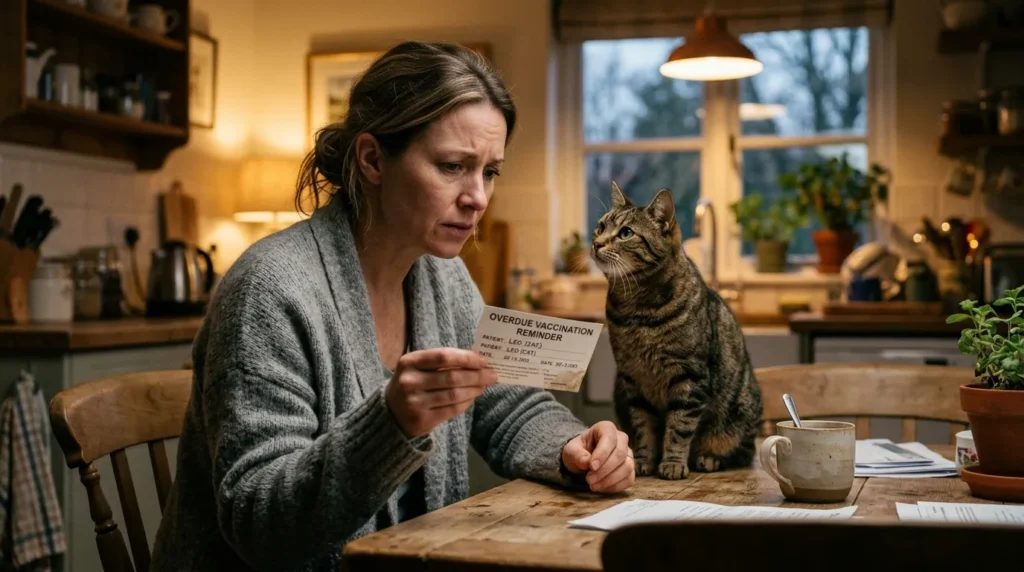
The most common mistake is letting years pass without a booster because the cat seems perfectly fine. Indoor cats don’t show obvious signs of risk the way outdoor cats do. Everything looks normal right up until it doesn’t. A lapsed vaccine is easy to miss, and the cost shows up later. If you bring a new pet home, board her while you travel, or take her to a groomer, your cat walks in with reduced or no protection.
Alongside vaccines, watching her litter box habits is one of the most reliable early-warning systems indoor cat owners have. A cat who is coming down with something often shows subtle behavior changes before anything more obvious appears. Keeping track of indoor cat behavior patterns makes it far easier to notice when something is genuinely off.
If her vaccines have lapsed for years, your vet may restart the full kitten series with two doses spaced three to four weeks apart instead of a single booster. Staying current saves time, money, and stress.
Insight: The single most practical thing you can do when you leave the vet today is set a calendar reminder three years out. Not a mental note. An actual phone alert. That one habit is the difference between cats who stay protected and cats who quietly fall through the cracks.
Indoor Cat Vaccination Checklist
Keep this short list handy for every vet visit:
- Confirm your cat’s current FVRCP and rabies status before the appointment
- Ask whether FeLV still makes sense given her age and household
- Set a calendar reminder for the next FVRCP booster (typically 3 years) and rabies booster (1 to 3 years)
- Note the injection site and date in case anything needs monitoring later
- Watch the site for 3 months using the 3-2-1 rule
- Bring vaccine records to any boarding, grooming, or new-vet appointment
- Ask about flea and heartworm prevention at the same visit
When Missing Vaccines Becomes Urgent
If your cat hasn’t been vaccinated in over three years, don’t wait for the next routine appointment. Call your vet this week. An unvaccinated cat that encounters a new animal, needs emergency boarding, or requires any medical procedure has no protective buffer and no time to build one.
Watch for sneezing, eye discharge, sudden appetite loss, vomiting or mouth sores in any unvaccinated cat. These can point to calicivirus, herpesvirus or panleukopenia, and they move fast. Keeping up with regular grooming sessions gives you natural opportunities to check for these physical signs between vet visits. Providing mental stimulation and enrichment also helps you notice when your cat’s behavior shifts in ways that matter.
This article is for informational purposes only. Always consult your vet if you have concerns about your cat’s health.
Frequently Asked Questions
What vaccines do indoor cats need?
Every indoor cat needs FVRCP (panleukopenia, herpesvirus and calicivirus) and rabies. Kittens under one year also get FeLV. Adults get FeLV only if your vet sees a risk, such as past outdoor access or a multi-cat home with unknown histories.
Do indoor cats really need a rabies vaccine if they never go outside?
Yes. Rabies vaccination is legally required in most U.S. states regardless of indoor or outdoor status. Bats and other wildlife get into homes through gaps, chimneys, and open windows more often than most people realize. A single exposure is potentially fatal, and there’s no treatment once symptoms appear. Your local law and your vet both require this one.
How often do indoor cats need booster shots?
Adult indoor cats need FVRCP every three years once their initial series is complete. Rabies follows a one-to-three-year cycle depending on your state’s laws and the specific vaccine your vet uses. Your annual wellness exam covers both checks, and your vet will tell you exactly what’s due that visit.
Do indoor cats need yearly vaccinations?
Not every vaccine every year. Most adults get FVRCP every three years and rabies every one to three years. The yearly part is the wellness exam, which catches dental, weight and kidney changes that a booster schedule never will.
What happens if I skip my indoor cat’s vaccines for a few years?
Her immunity may lapse entirely. Your vet may restart the kitten series with two doses spaced three to four weeks apart, which means extra appointments and extra cost compared to simply staying current.
Do kittens need different vaccines than adult indoor cats?
Yes. Kittens need a primary FVRCP series starting at six to eight weeks, repeated every three to four weeks until at least sixteen weeks old. FeLV is also core for kittens under one year. Adult indoor cats shift to a three-year booster cycle for FVRCP once their initial series and one-year booster are both complete.
Do senior indoor cats still need vaccines?
Usually, yes. Age alone isn’t a reason to stop core vaccines. If she has a chronic illness, your vet will adjust the plan case by case. Rabies stays tied to local law.
I adopted an adult cat with no vaccine records. What now?
Your vet will usually treat her as unvaccinated and give two FVRCP doses three to four weeks apart, plus rabies. Ask the shelter or previous owner for records first, since that may save you a round of shots.
Can my indoor cat get sick from the vaccine itself?
Mild tiredness and a sore injection site for 24 to 48 hours are normal. Serious reactions are rare. Any lump that forms at the injection site and remains after one month, grows, or exceeds two centimeters should be checked by a vet. Those are the signs worth watching for, not general tiredness after the appointment.
How much does it cost to vaccinate an indoor cat?
A full kitten series usually runs $125 to $250 total across FVRCP and rabies, sometimes more with FeLV added. Adult boosters are cheaper, typically $35 to $85 per visit including the exam fee. Low-cost clinics and community vaccine clinics often charge less. See the cost table above for a full breakdown.
Can I skip the FeLV vaccine if my cat is strictly indoor and my only pet?
Often, yes, once she’s past kitten age and has no history of outdoor access or exposure to unknown cats. This is exactly the kind of call your vet makes each year based on her actual lifestyle, not a blanket rule. If you ever plan to bring home another cat with an unknown history, mention that before the decision is made.
Is there a vaccine for FIV?
Not in North America. The FIV vaccine was discontinued in 2017 and isn’t recommended. The best protection is keeping your cat indoors and testing any new cat before you introduce her.
Can I vaccinate my cat at home?
It isn’t a good idea. A vet exam comes first, since a sick cat shouldn’t be vaccinated, and a rabies shot only counts legally when a veterinarian gives it. Home injections also make it harder to place the injection site correctly.
Is a titer test cheaper than just getting the booster?
Usually not. Titer testing for FVRCP typically costs $80 to $200, while the booster itself usually costs $20 to $45. Titers are useful if you want to avoid over-vaccinating or your cat has had a prior reaction, but they aren’t a legal substitute for the rabies vaccine in most places.
Do indoor cats need vaccines before boarding or grooming?
Yes, nearly always. Most boarders and groomers ask for proof of current FVRCP and rabies, and some also require a recent exam. Ask what they need at least a week ahead so you aren’t scrambling for a same-day appointment.
Indoor cats need core vaccinations including the FVRCP vaccine and the rabies vaccine, as outlined in the AAHA/AAFP Feline Vaccination Guidelines. FVRCP protects against feline panleukopenia, herpesvirus, and calicivirus. Rabies vaccination is legally required in most U.S. states for all cats, including indoor-only cats. Kittens receive FVRCP doses every three to four weeks starting at six to eight weeks until at least sixteen weeks old. Adult indoor cats need FVRCP boosters every three years and a rabies booster every one to three years. FeLV is core for kittens and risk-based for adults. The FIV vaccine was discontinued in North America in 2017. Titer testing can sometimes replace an FVRCP booster but usually costs more and isn’t a substitute for rabies vaccination. Total cost for a kitten series typically runs $125 to $250; adult boosters run $35 to $85 per visit. Indoor cats face exposure through owner clothing, open windows, vet clinic waiting rooms, and occasional escapes.

Written by Mishu
A passionate cat lover and indoor living enthusiast, Mishu is the founder and voice behind Indoor Living Cat – a go-to resource for cat owners who want to create the happiest, healthiest life for their feline companions indoors.
View Full Profile