
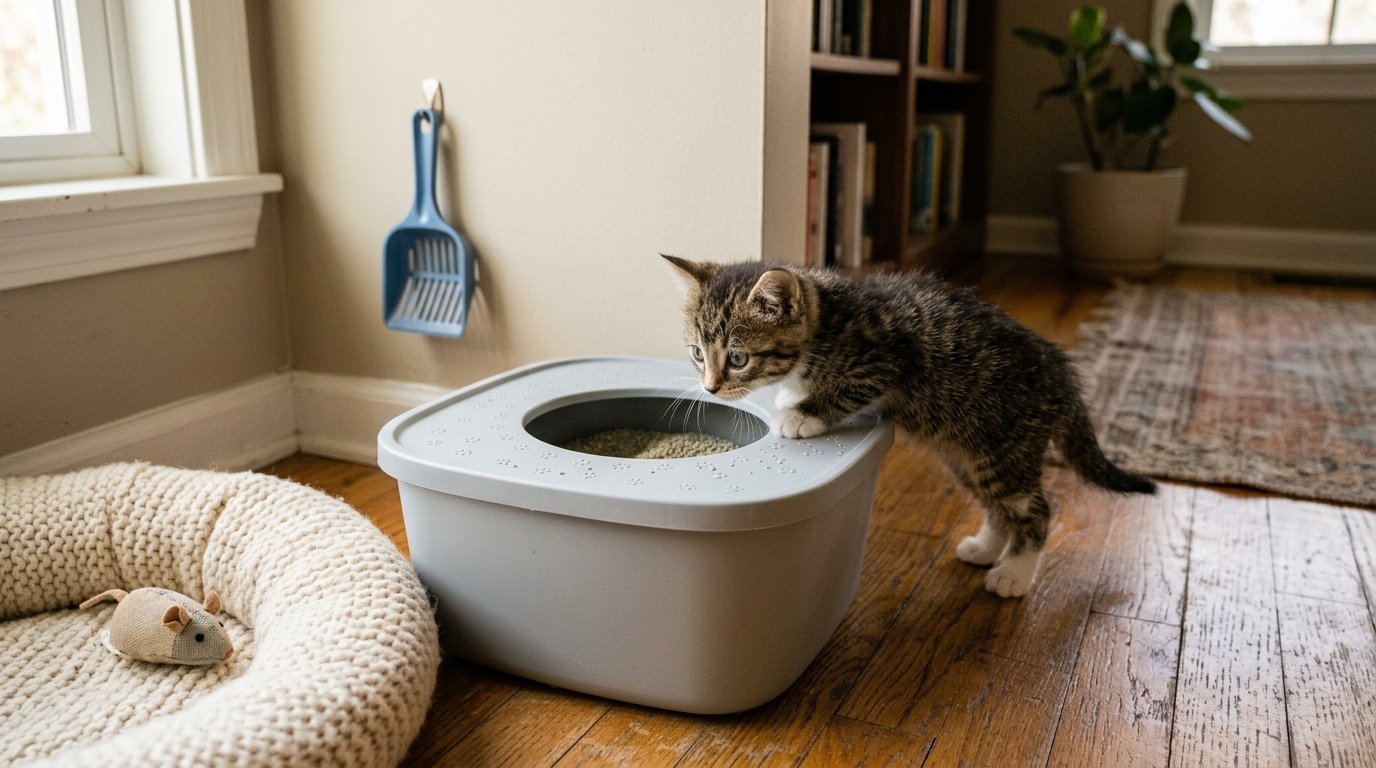
My 10-week-old kitten couldn’t clear a 9-inch entry hole without help for the first two weeks. That’s the part most buying guides skip. A top entry litter box for kittens can cut down on tracking and keep a curious dog out, but only once your kitten is actually big enough and coordinated enough to use one safely.
Below, I compare five top-entry boxes and, more importantly, walk through when a kitten is actually ready for one, what to use before that point, and which of these five models makes the easiest transition. The short answer for most households: the Arm & Hammer Premium box wins on odor control, but wait until your kitten is confidently jumping onto furniture before you switch.
⚡ Quick Verdict
⚠️ Is Your Kitten Actually Ready for a Top Entry Litter Box?
This is the question every one of these product listings skips, and it matters more than color or price. All five boxes below have entry openings between roughly 9 and 10.5 inches. That’s fine for an adult cat. For an 8-week-old kitten, it’s a wall.
Run through this before you buy:
- Jump test. Watch your kitten jump onto a couch, bed, or counter without hesitating and without needing a running start. Kittens usually hit that milestone somewhere between 12 and 16 weeks, though it varies by breed and by individual kitten. Until then, a top-entry box asks for more coordination than a young kitten has.
- Size check. Hold your kitten next to the box and compare shoulder height to the entry opening. If clearing it means scrambling or using the lid edge to climb, wait a few more weeks.
- Litter type. Kittens under about 4 months should use a non-clumping litter, paper, wood, or corn-based, since a kitten that grooms clumping clay litter off its paws can end up swallowing it. This applies no matter which box style you use, but it’s worth checking before you fill any of these five boxes for a young kitten.
- Watch, don’t assume. The first few times, stay in the room. A kitten that can climb in but can’t climb back out on its own is a kitten stuck in the dark with nowhere to go. That’s a design failure you want to catch immediately, not after the fact.
If your kitten fails any of these checks, don’t force it. Use a low, open starter pan for now and treat a top-entry box as the next step, not the first one.
Starter Box vs. Top Entry Box: What to Use and When
| Factor | Low-Entry Starter Pan | Top Entry Box |
|---|---|---|
| Best age | From weaning up to roughly 12 to 16 weeks | Once jumping onto furniture confidently |
| Typical entry height | Low sides, often under 4 inches on one side | 9 to 10.5 inches on the boxes in this review |
| Litter tracking | Higher, litter clings to open paws | Lower, lid design catches paws on exit |
| Fall risk if used too early | Minimal | A kitten can get stuck trying to climb out |
| Dog-proofing | Weak, most dogs can reach it | Strong once the kitten can use it independently |
The move that works for most households: keep a low, open pan going while your kitten grows, place a top-entry box next to it once your kitten clears the jump test, and let your kitten choose between the two for a week before removing the old pan.
List of Top Entry Litter Box For Kittens
| Image | Product | Score | Link |
|---|---|---|---|
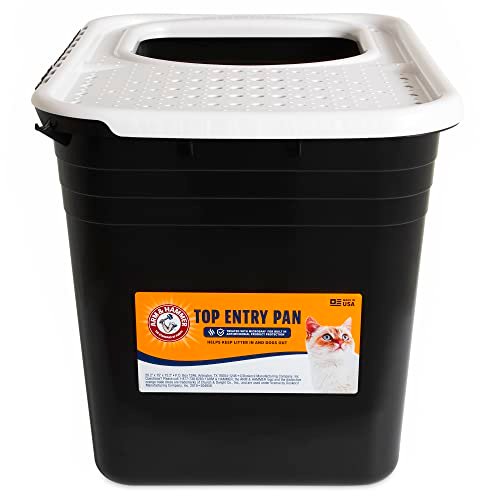 |
Arm & Hammer Premium Top Entry Litter Box with Filter to Cle 🏆 Editor’s Pick |
9.4/10 | View on Amazon Free Shipping & 30-Day Returns |
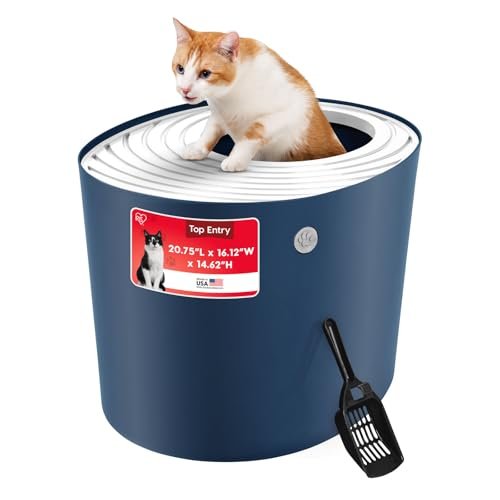 |
IRIS USA Top Entry Cat Litter Box, Hooded Privacy, Large, Na | 8.9/10 | View on Amazon Free Shipping & 30-Day Returns |
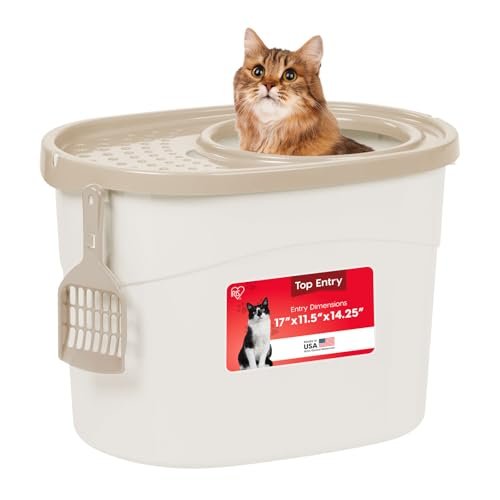 |
IRIS USA Top Entry Cat Litter Box, Hooded Privacy, Large, Be 🥈 Runner-Up |
8.8/10 | View on Amazon Free Shipping & 30-Day Returns |
 |
IRIS USA Top Entry Cat Litter Box, Hooded Privacy, Large, Gr 🥈 Runner-Up |
8.5/10 | View on Amazon Free Shipping & 30-Day Returns |
 |
Amazon Basics Large Cat Litter Box with High Sides, Top Entr 💵 Budget Pick |
8.2/10 | View on Amazon Free Shipping & 30-Day Returns |
📋 How We Evaluated
Scores weigh four things: how well the lid design catches litter on exit, how the plastic holds up to daily scooping, how easy the box is to break down for a full clean, and how forgiving the entry opening is for a kitten that’s still growing into an adult body. A box built for a 12-pound adult cat isn’t automatically a good fit the day you bring a kitten home, and that gap shows up in the scores below.
Detailed Reviews
Arm & Hammer Premium Top Entry Litter Box with Filter to Cle🏆 Editor’s Pick
| Material | Recycled plastic |
| Protection | Microban antimicrobial |
| Entry | Wide top entry |
| Compatibility | All litter types |
What We Found
Microban is built into the plastic here, not sprayed on as a coating, so it keeps fighting odor-causing bacteria as the surface wears. That matters more with a kitten in the house, since kittens tend to have softer, more frequent stools while their gut settles into solid food.
The entry runs wide rather than narrow, which gives a growing kitten a bit more margin than the round 9.25-inch openings on the IRIS boxes below. The grate on the lid does a solid job pulling litter off paws, and the recycled plastic shell has held up fine under daily scooping. High walls stop even an enthusiastic digger from flinging litter over the side.
It works with pellet and clumping litter alike, so you’re not locked into one type as your kitten grows out of the non-clumping litter phase.
💬 My Take
The strongest pick here for odor control, and the wider entry makes it a little easier on a kitten that’s still building coordination.
Who It’s For
Owners worried about odor, especially during the messier weeks of kitten digestion, and anyone raising a larger-breed kitten who’ll need the extra room sooner rather than later.
Wait until your kitten passes the jump test in the safety section above. The entry is wide, but it’s still a vertical climb.
✅ Pros
- Microban protection is built into the plastic, not a coating.
- Recycled materials for a smaller footprint.
- Wide entry is easier on a growing kitten than a round hole.
❌ Cons
- Costs more than the basic models here.
- Lid grate takes a minute to scrub properly.
- Heavier than the budget options, which helps stability but adds bulk when moving it.
IRIS USA Top Entry Cat Litter Box, Hooded Privacy, Large, Na
| Dimensions | 20.75 x 16.12 x 14.62 inches |
| Origin | Made in USA |
| Entry | 9 x 10.5 inches |
| Maintenance | Easy-clean smooth interior |
What We Found
This is the biggest box in the lineup at 20.75 by 16.12 inches, and the extra room pays off as your kitten grows into an adult cat instead of aging out of the box within a year. The 9 by 10.5 inch entry is rectangular rather than round, which several kittens seem to navigate more easily than the circular openings on the beige and gray IRIS models.
Build quality is where this one earns its price. The recyclable plastic feels noticeably thicker than the beige version, and the smooth interior wipes clean fast. The lid lifts off completely for a full scrub, which you’ll want to do every couple of weeks regardless of which litter you’re using.
Navy and white also happens to look less like a piece of medical equipment sitting in your laundry room, which matters if guests use that bathroom too.
💬 My Take
Worth the extra size if you’d rather buy once. Your kitten will grow into this box instead of out of it.
Who It’s For
Owners who want one litter box that lasts from kittenhood into adulthood instead of upgrading twice. Good for larger breed kittens too, Maine Coons and similar mixes outgrow a small box fast.
If your kitten tracks litter constantly, this lid handles it better than most. Just confirm the jump height works before you switch away from a starter pan.
✅ Pros
- Sized to last from kitten into adulthood.
- Thicker plastic than the budget options.
- Rectangular entry is easier for some kittens than a round hole.
❌ Cons
- Navy shows dust more than lighter colors.
- Biggest footprint of the five, needs more floor space.
- Lid fits tight when new and loosens up after a few weeks of use.
IRIS USA Top Entry Cat Litter Box, Hooded Privacy, Large, Be🥈 Runner-Up
| Dimensions | 20.5 x 14.75 x 14.38 inches |
| Entry Size | 9.25 inch diameter |
| Material | Plastic |
| Included Accessory | Scoop with hook |
What We Found
The round 9.25-inch entry here is the tightest opening in this lineup, and it’s the one place where a smaller kitten benefits most from waiting until it’s a little older and steadier on its feet. Once a kitten clears that hurdle, the rest of the box performs well. The textured lid holes catch a real amount of loose litter before it hits your floor.
Plastic feels sturdy for the price, and the built-in scoop hook is a small feature that saves you from digging through a cabinet every time you clean. Footprint stays compact at 20.5 by 14.75 inches, which works in a bathroom or laundry closet without eating into your walking space.
Beige hides dust and litter dust better than white, though it’s not as scuff-resistant as the black version reviewed elsewhere in our lineup.
💬 My Take
A solid, affordable box once your kitten is past the round-entry hurdle. Not the first box I’d buy for an 8-week-old.
Who It’s For
Households transitioning a kitten that’s already 4 to 5 months old and jumping confidently. It also works well in multi-pet homes where keeping a dog out of the litter matters as much as keeping litter off the floor.
If you’re still raising a very young kitten, hold off on this one and revisit it once the jump test passes.
✅ Pros
- Textured lid noticeably cuts down tracking.
- Built-in scoop hook keeps cleaning tools handy.
- Sturdy for the price point.
❌ Cons
- Round 9.25-inch entry is the tightest fit in this review.
- Beige shows less scuffing than white but more than black.
- No built-in odor filter.
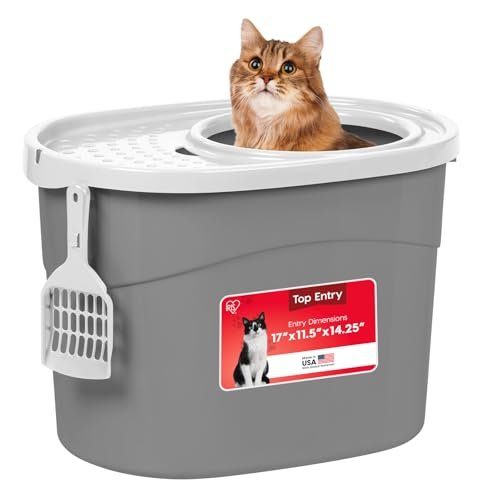
IRIS USA Top Entry Cat Litter Box, Hooded Privacy, Large, Gr🥈 Runner-Up
| Dimensions | 20.5 x 14.75 x 14.38 inches |
| Color | Gray and White |
| Feature | Textured lid |
| Design | Enclosed top-entry |
What We Found
Functionally, this is close to identical to the beige model above, same footprint, same entry style, and the same textured lid doing the same job of catching loose litter. The gray and white finish is the difference that matters most here, since it hides everyday grime better than beige without going as dark as the black version.
High walls keep spray contained, and the enclosed shell gives a kitten a private space once it’s actually big enough to use it. Plastic wipes down fast, and the whole unit sits stable on tile, which matters once a growing kitten starts putting real weight into its jumps.
This is the one I’d pick over the beige version purely on color, assuming price is close to equal.
💬 My Take
Same performance as the beige model, better at hiding daily grime. A fine pick once your kitten clears the entry height.
Who It’s For
Owners who want the same performance as the Budget Pick with a color that shows less daily wear. Works well in multi-pet homes for keeping a dog away from the box.
Same caveat as the beige version: this isn’t a first box for a very young kitten. Introduce it once your kitten is jumping onto furniture on its own.
✅ Pros
- Textured lid reduces litter tracking well.
- Gray and white hides everyday grime better than plain beige.
- Compact footprint fits small rooms.
❌ Cons
- Same tight 9.25-inch round entry as the beige model.
- Not a fit for kittens still under the jump-test threshold.
- Lid can be a little stiff to remove when new.
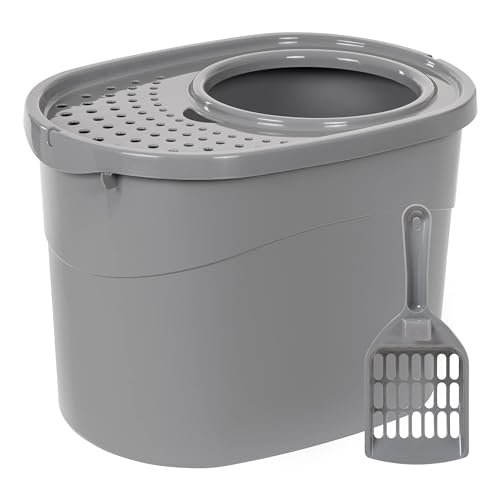
Amazon Basics Large Cat Litter Box with High Sides, Top Entr💵 Budget Pick
| Material | BPA-free plastic |
| Dimensions | 20.5 x 14.75 x 14.38 inches |
| Feature | On-board scoop storage |
| Lid | Filtered top-entry |
What We Found
This is the cheapest box in the review, and it still covers the basics well. BPA-free plastic feels a touch thinner than the IRIS lineup, but it hasn’t cracked or warped under regular use. High walls handle spray from a kitten that digs with more enthusiasm than technique.
The filtered lid adds odor control the plain IRIS models don’t have, which helps in a small apartment with limited airflow. On-board scoop storage is a small touch that keeps the scoop from disappearing into a closet. The removable top makes daily scooping quick.
The one real ongoing cost is the carbon filter, which needs replacing every so often, something to factor into the price if you’re comparing this against the unfiltered options.
💬 My Take
The best value pick if you just want the basics covered and don’t mind replacing a filter now and then.
Who It’s For
Budget-conscious owners who want a dependable box without extra features they won’t use. A reasonable second box too, once you know your kitten has adjusted well to top-entry style.
Skip this as a first box for a very young kitten and treat it as an upgrade once the starter pan phase is over.
✅ Pros
- Lowest price in this comparison.
- On-board scoop storage.
- Filtered lid adds odor control the IRIS boxes lack.
❌ Cons
- Plainest design of the five.
- Filter is a recurring cost.
- Plastic feels thinner than the IRIS models.
What to Look For Before Buying
A litter box for a kitten isn’t the same purchase as one for an adult cat. The right choice depends on age, size, and how much your kitten still has to grow, not just which box looks best in your bathroom.
Match the Entry to Your Kitten’s Age
All five boxes here run entry openings between 9 and 10.5 inches. Fine for a kitten that’s jumping onto furniture already, too much for one that isn’t. Run the jump test from the safety section above before buying, not after.
Get the Litter Type Right First
Kittens under about 4 months should stick to non-clumping litter, paper, wood, or corn-based, since ingesting clumping clay during grooming carries a real health risk. Confirm your chosen litter works with the box’s filter or lid design before you commit to a bag.
Size for the Adult Your Kitten Will Become
A box that’s the right size for an 8-week-old kitten will be too small by 8 months. Buying a starter pan now and a larger top-entry box like the Navy/White IRIS model for later often costs less than replacing an undersized box twice.
Value Odor and Tracking Control
Enclosed top-entry designs contain odor better than open pans, and a textured lid or filter adds another layer. This matters more with a kitten in the house, since young kittens go more often and their stools are softer until their digestive system settles.
Check Stability
A growing kitten jumps with more force than it realizes. Confirm the box sits flat and doesn’t rock or tip when weight lands on the lid. A wobbly box teaches a kitten to avoid it, which is the opposite of what you want during training.
Verify Ease of Cleaning
Look for a removable lid so daily scooping stays quick. Smooth interior surfaces wipe clean faster than textured ones. On-board scoop storage is a small feature that keeps your tools where you need them.
How to Transition a Kitten to a Top Entry Box
- Keep the current low-entry pan in place. Don’t remove it the day the new box arrives.
- Set the top-entry box next to it, lid off, litter inside, so your kitten can explore the base without the height challenge yet.
- Once your kitten uses the base comfortably for a few days, add the lid back on.
- Watch the first five to ten uses with the lid on. Confirm your kitten climbs out on its own every time, not just in.
- Leave both boxes down for about a week. Remove the starter pan only once your kitten is choosing the top-entry box consistently on its own.
If your kitten backslides, urinating outside either box, avoiding the new one entirely, or showing signs of stress, go back a step. There’s no prize for switching early.
Frequently Asked Questions
At what age can kittens use a top entry litter box?
Most kittens are ready somewhere between 12 and 16 weeks, once they’re jumping onto furniture like a couch or bed without hesitating. Age alone isn’t the test. Coordination and confidence are what actually matter, and those vary kitten to kitten.
Can a kitten get stuck in a top entry litter box?
Yes, if the entry is too high or narrow for the kitten’s current size. A kitten that can climb in but struggles to climb back out is a real risk, not a minor inconvenience. Supervise the first several uses of any new box.
What litter is safe for kittens?
Non-clumping litter, paper, wood pellet, or corn-based, is the safer choice until roughly 4 months old. Kittens groom frequently and can swallow clumping clay litter stuck to their paws or fur, which risks a blockage.
Do kittens need a low-entry box before a top entry one?
In most cases, yes. A low, open pan works for the weeks right after weaning, when a kitten doesn’t yet have the height or coordination for a vertical entry. Move to a top-entry design once your kitten passes the jump test described above.
How often should I clean a top entry box for a kitten?
Scoop daily, more often than that if your kitten is still on soft food and having frequent, loose stools. Deep clean with mild soap and water every two to four weeks.
Will a covered box scare my kitten?
Some kittens hesitate at first. Leaving the lid off for a few days while your kitten gets used to the base usually solves it. Forcing a nervous kitten into a fully enclosed box on day one tends to backfire.
Can a top entry box keep a dog away from a kitten’s litter?
Yes, for most dogs, once the kitten is actually using the box independently. Until then, you’re stuck choosing between a box the kitten can access and one that keeps the dog out, which is exactly why the transition period matters.
🎯 Final Verdict
For most households raising a kitten, the Arm & Hammer Premium top entry litter box is the strongest pick. Built-in Microban protection and a wider entry than the round IRIS openings make it a more forgiving choice as your kitten grows.
If budget matters more than odor tech, the Amazon Basics model covers the essentials for less. Either way, don’t skip the readiness check near the top of this guide. The best top entry litter box for kittens is worthless if your kitten can’t safely get in and out of it yet.

Written by Mishu
A passionate cat lover and indoor living enthusiast, Mishu is the founder and voice behind Indoor Living Cat – a go-to resource for cat owners who want to create the happiest, healthiest life for their feline companions indoors.
View Full Profile