
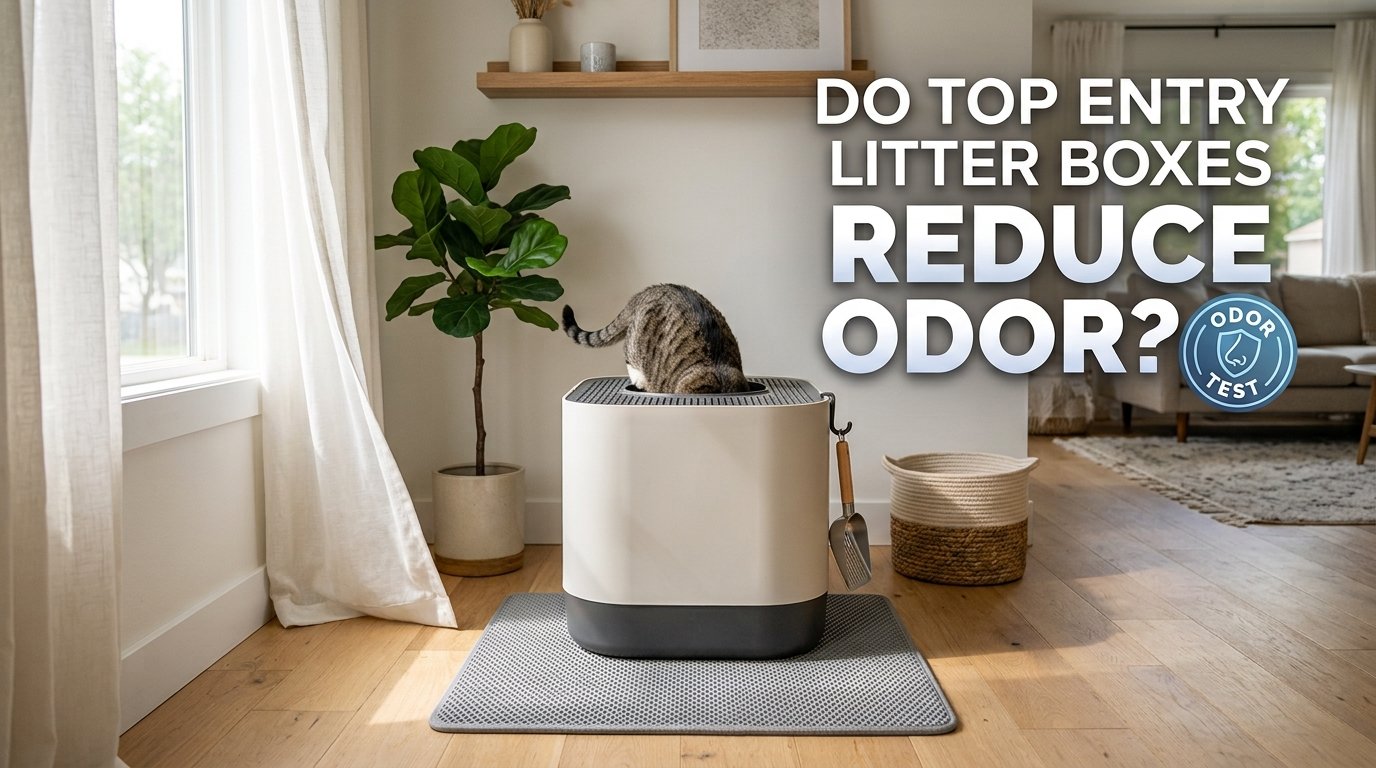
Litter on your socks at 6 a.m. is the whole reason top entry boxes exist. A cat steps out through a hole in the lid instead of walking off an open pan, and loose granules fall off its paws before they ever hit your floor. That solves the tracking problem. But there’s a second question owners ask almost as often: does a top entry design actually cut down on smell, or does it just hide the mess better? The answer is both, with a catch. A top entry litter box traps odor inside its walls the same way it traps litter, which helps your room but can turn the box itself into a stronger smell if you skip a day of scooping. This guide breaks down five models worth considering, answers the odor question in detail, and covers who should skip the design entirely.
Do Top Entry Litter Boxes Reduce Odor?
Yes, more than an open pan, but the effect depends entirely on how often you scoop.
The mechanism is simple. A top entry box has four solid walls and a lid, so ammonia and waste smell stay inside the unit instead of spreading into the room the second your cat steps away. An open pan has no such barrier. Air moves freely across the surface, which lets smell air out gradually, but it also means anyone walking past the box smells it immediately.
That containment cuts both ways. Because air doesn’t move through a top entry box the way it does an open pan, waste smell has nowhere to go except back up through the entry hole. Leave clumps in there for two or three days and the box becomes a small, sealed chamber of ammonia that hits you the moment you lift the lid. Scoop daily and most owners notice the room itself smells noticeably cleaner than it did with an open box. Skip a day or two and you can end up with the opposite problem: a room that smells fine until you get close to the box.
A few features make the containment work without the buildup problem:
- Grated or textured lids that trap litter while still letting some air move through the vent holes
- Antimicrobial plastic treatments, like Microban, which slow the bacteria that cause most of the smell instead of just containing it
- Carbon filters, sold separately or built into higher-end models, which absorb ammonia rather than just trap it
- Enough interior height and litter depth that waste doesn’t sit exposed near the entry hole
None of the five boxes below claim to eliminate odor entirely, and no box actually does. What top entry does reliably is keep smell contained to the unit instead of the room, as long as you keep up with scooping.
List of Top Entry Litter Box
An open litter pan gives a cat nowhere to shed litter except straight onto your floor. Top entry designs close that gap by routing the exit through a grated lid instead of a low front wall. The grate catches loose granules from paws, the height keeps other pets and toddlers out, and the enclosed shape holds odor inside the unit rather than the room. Five models stand out for getting that balance right.
Top Entry vs. Front Entry: Quick Comparison
Before picking a specific model, it helps to know what you’re trading away by going with a top entry design in the first place. Here’s how the three common styles stack up.
| Feature | Top Entry | Covered Front Entry | Open Pan |
|---|---|---|---|
| Tracking control | Best. The grate cleans paws on the way out. | Moderate. Litter can still cling on the walk out. | Worst. Nothing stops litter transfer. |
| Odor containment | Strong, if scooped daily | Moderate | Weak. Smell spreads into the room right away. |
| Good for senior or arthritic cats | No. Requires a jump. | Usually. Most sit low to the ground. | Yes. Easiest entry of the three. |
| Keeps dogs and toddlers out | Yes | Sometimes, depends on hood height | No |
| Privacy for shy cats | High | High | Low |
Solutions For Top Entry Litter Boxes
Finding the right top entry litter box means weighing your cat’s size against how much floor space you actually have. Every model here handles tracking well. Where they differ is odor control, entry width, and price. The reviews below cover what each one gets right and where it falls short.
|
1
|
IRIS USA Top Entry Cat Litter Box, Hooded Privacy, Large, Gray/White |
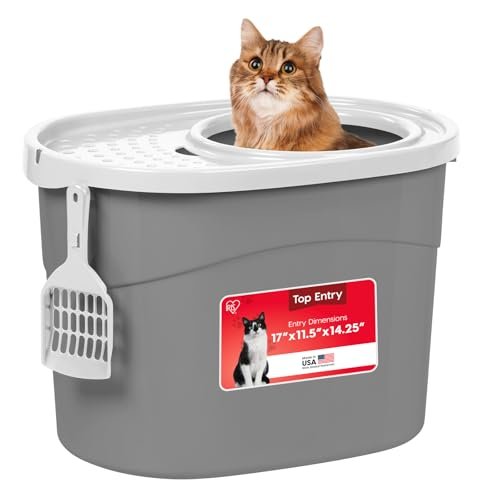
This box solves one specific problem: paws dragging litter onto your floor. The lid has a raised, textured surface, and a cat has to walk across it to get out. Granules knock loose in the process and drop back into the litter instead of following the cat into the hallway. That’s the whole trick, and it works well enough that most owners notice fewer stray pieces within the first week. The hood also gives a cat real privacy, and the tall side walls keep spray contained even from cats that dig with enthusiasm.
It’s a strong pick if you’ve got a dog that likes to investigate the litter box, since the raised entry sits above most dogs’ easy reach. The plastic is basic but holds up fine to daily scooping and doesn’t crack under normal use. It fits into tight corners, bathrooms, and laundry rooms without eating up much floor space. A mid-size cat gets enough room to turn around inside; a big Maine Coon might feel snug.
How This Can Solve Your Problem
- ✓ Textured lid knocks litter off paws before your cat reaches the floor.
- ✓ Height keeps curious dogs out of the litter.
- ✓ Tall walls stop spray from reaching the floor.
Important Considerations
- • Cats need to jump in and out, which won’t suit older or arthritic cats.
- • You’ll need to pop the lid off for a deep clean.
- • The interior can feel tight for larger breeds.
|
2
|
IRIS USA Top Entry Cat Litter Box, Hooded Privacy, Large, Beige |
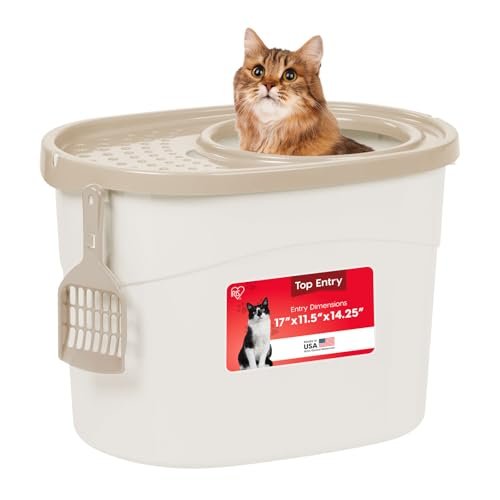
The beige version works the same way as IRIS USA’s gray model, just dressed for a different room. Holes in the lid catch litter as your cat exits, so less of it ends up tracked across the house. The fully enclosed shape also keeps waste and smell out of sight, which matters if the box lives in a living room or hallway instead of somewhere tucked away. Tall walls handle spray from cats that pee standing up.
The included scoop hangs on a side hook, so you’re not digging through a drawer every time you need it. Build quality is solid, it wipes down easily, and it holds up to daily use. It’s compact enough for a studio apartment, and while other pets get shut out, your cat still has room inside to move without feeling boxed in. If floor mess and hidden access are your two biggest complaints about your current setup, this covers both.
How This Can Solve Your Problem
- ✓ Scoop and hook included, so cleaning tools stay put.
- ✓ Lid holes cut down on tracked litter.
- ✓ Neutral color works in most rooms.
Important Considerations
- • Light color shows stains faster than darker plastic.
- • Some cats take a few days to learn the top entry.
- • Large cats may find the entry hole snug.
|
3
|
Amazon Basics Large Cat Litter Box with High Sides, Top Entry, Odor Control |
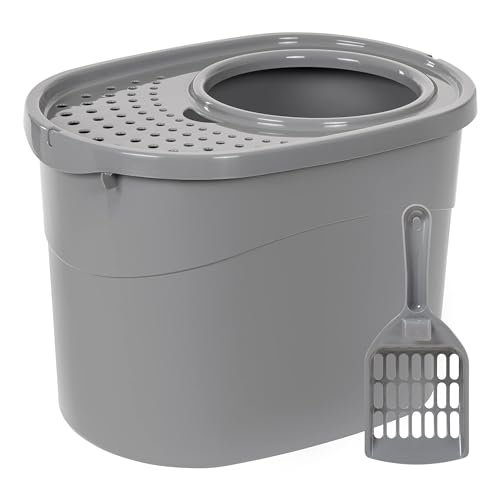
Amazon Basics keeps this one simple: a filtered lid, high sides, and BPA-free plastic. Litter gets filtered off a cat’s paws on the way out, which is the main draw of any top entry box, and the tall walls stop spraying cats from hitting the wall behind it. Nothing about the design is fancy, but it does the core job without extra parts to break down the line.
The lid pops off fully, so scooping and refilling are quick and there’s nowhere for the scoop to get stuck. A built-in spot for storing the scoop means it’s always where you left it. The box has enough footprint for most cats to move around, and it works fine in apartments or bigger homes alike. If you want the basic top entry setup without paying for filters or antimicrobial coatings, this is the one to check first.
How This Can Solve Your Problem
- ✓ BPA-free plastic built for daily, long-term use.
- ✓ Lid lifts off completely for fast scooping.
- ✓ Onboard scoop storage keeps cleanup simple.
Important Considerations
- • Odor builds up fast if you skip more than a day of scooping.
- • Hinges wear down faster under heavy, multi-cat use.
- • Takes up more floor space than smaller front entry boxes.
|
4
|
Arm & Hammer Premium Top Entry Litter Box with Filter to Clean Paws |
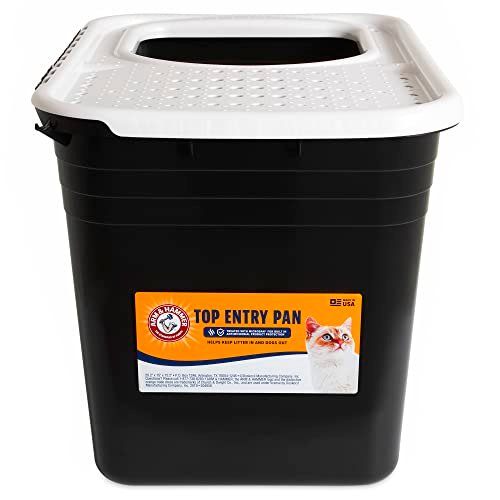
Arm & Hammer built this one around odor first. The plastic is treated with Microban, which slows the bacteria that cause most litter box smell instead of just masking it after the fact. The entry is wider than the two IRIS models above, so bigger cats don’t have to squeeze through. A grated surface on the lid handles tracking the same way the others do.
It’s rated to work with clumping clay, crystal, and pine litter, so you’re not locked into one product to keep it functioning. Tall walls give a cat privacy and keep spray contained, which matters more the more cats share a household. It costs more than the Amazon Basics option, and that difference mostly buys the antimicrobial treatment and the recycled-material build. Daily scooping is still straightforward since the top comes off easily.
How This Can Solve Your Problem
- ✓ Microban treatment slows bacterial odor at the source.
- ✓ Wide entry fits larger cats comfortably.
- ✓ Works with clay, crystal, or pine litter.
Important Considerations
- • Tall sides can be hard for older or stiff cats to clear.
- • Plastic can still hold smell if it’s not washed periodically.
- • Costs more than basic top entry models.
|
5
|
IRIS USA Large Top Entry Cat Litter Box, Hooded Privacy, Beige/White |
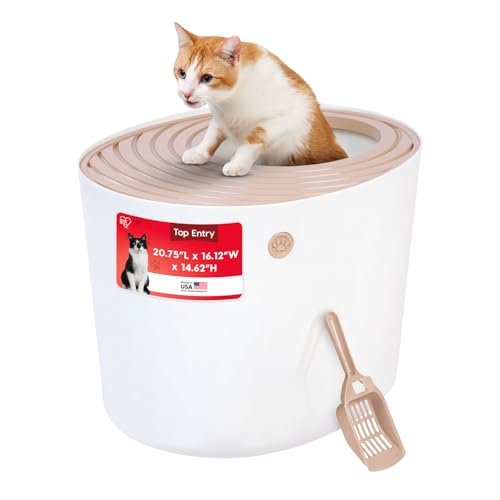
This is IRIS USA’s biggest top entry model, and the extra room is the whole point. Cats that felt cramped in the standard IRIS box get real space to turn around here. The entry point still traps litter in the lid grooves the same way, and the enclosed shape keeps both the mess and the smell out of view.
A side hook holds the included scoop, so cleanup doesn’t turn into a search. The size makes it a good fit for bigger cats or households where more than one cat shares a box, though you’ll want the floor space to match. It’s easy enough to pick up and clean underneath, which matters more than people expect once litter starts to gather around the base.
How This Can Solve Your Problem
- ✓ Extra interior room suits bigger cats.
- ✓ Included scoop stores on a side hook.
- ✓ Enclosed shape hides both mess and smell.
Important Considerations
- • Two-tone plastic won’t match every decor.
- • Jumping in and out still isn’t ideal for every cat.
- • Lid grooves need a weekly brush-out to keep trapping litter.
Are Top Entry Litter Boxes Safe for Senior or Arthritic Cats?
Jumping is the deal breaker for a lot of older cats. A healthy adult clears the lip of a top entry box without thinking twice. A cat with arthritis, hip dysplasia, or extra weight has to land on unstable litter after every jump, and that impact adds up over months of daily use.
Watch for these signs that your cat is struggling with a top entry design:
- Hesitating at the entry hole before going in
- Crying or grunting on the jump up or down
- Accidents near the box instead of inside it
- Avoiding the box altogether and going elsewhere
If you see any of that, the fix isn’t to force the adjustment period longer. Switch to a front entry or open pan with a low lip, ideally under three to four inches. You’ll lose some of the tracking and odor control benefits, but a cat that’s comfortable using the box beats a clean floor next to a cat that’s avoiding it. A step or small platform next to a top entry box helps borderline cases, though it won’t fix real joint pain.
As a rule, top entry works best for cats between roughly one and ten years old with no diagnosed mobility issues. Past that, check with your vet before assuming your cat can still handle the jump.
How to Solve Top Entry Litter Box Effectively
If your cat keeps tracking litter through the house, changing the box itself usually fixes it faster than any mat or vacuum routine ever will. A top entry design forces the exit through the lid instead of the floor, and that one change does most of the work. Here’s how to make the switch without stressing your cat out.
- Choose the right spot: Pick a quiet corner with room above the box for your cat to jump comfortably. Skip loud areas like next to the washing machine.
- Go slow if your cat is nervous: Set the new box next to the old one for a few days first. Leave the lid off at first so your cat gets used to the new footprint before dealing with the top entry.
- Match the litter to the box: Clumping litter sticks to paws less than lightweight or dusty formulas, which means less for the lid to catch in the first place.
- Scoop every day: An enclosed box holds smell in, so skipping days shows up fast the second you lift the lid.
- Clean the lid weekly: Grated lids clog with dust and litter fragments over time. Wipe or vacuum it so it keeps catching particles instead of just letting them through.
- Watch how your cat handles the jump: If they hesitate or seem unsteady, add a small step or stool next to the box.
Key Factors in Choosing the Right Solution
The right box depends on your cat’s age and habits more than any spec sheet. Balance containment against comfort, and don’t assume the box with the most features is automatically the best fit for your household.
Cat Size and Mobility
Check that your cat can turn around fully inside the box, not just squeeze in. If your cat is older or has any joint stiffness, skip the jump requirement entirely. A top entry box that’s technically too small gets used less, no matter how good the odor control is.
Litter Compatibility
Grated lids work better with heavier litter that doesn’t crumble into dust. Crystal or pine pellets need lid holes wide enough to let particles through, so check that before switching litter types along with the box.
Ease of Cleaning
You’ll be in this box daily. A lid that lifts off in one motion beats one with fiddly latches, because boxes that are annoying to clean are the ones that get scooped every other day instead of every day, and that’s exactly when the smell shows up.
Odor Control Features Worth Paying For
Not every top entry box handles smell the same way. A few features are worth the extra cost if odor is your main concern:
- Antimicrobial plastic, like Microban, slows the bacteria that cause ammonia smell instead of just trapping it
- Carbon filter attachments, built-in or add-on, actively absorb odor instead of containing it
- Deeper litter beds, around 2 to 3 inches, give waste more material to bury into, which cuts down on exposed smell near the entry
- Wide entry holes reduce how much waste tracks up near the exit, where smell hits you first when you lift the lid
Aesthetic and Space
Measure the space before you buy. Top entry boxes run taller than open pans, so check clearance under tables or inside closets if that’s where it’s going. A neutral color helps the box blend in if it has to stay somewhere visible.
Top Entry Litter Box Prevention Tips
Most litter scatter problems come down to volume and habit, not the box itself. These habits keep a top entry box working the way it’s supposed to.
- Place a mat underneath: Even with a top entry box, a mat catches any stray particles that fall off the lid, adding a second layer of protection for your floors.
- Keep litter depth consistent: Don’t overfill. About 2 to 3 inches is usually enough. Too much makes it easier for cats to kick litter out when they jump.
- Use a tracking-resistant litter: Low-tracking or heavier formulas stick to paws less, which means less debris for the lid to catch in the first place.
- Deep clean monthly: Empty the box completely and wash the interior with mild soap to stop residue from building up into persistent smells.
- Check for damage: Inspect the lid and walls periodically. Cracked plastic traps waste and bacteria, and it gets harder to keep clean. Replace the unit if it’s heavily scratched or damaged.
Common Mistakes When Solving Top Entry Litter Box
Many owners buy a new box but never adjust their cleaning or placement habits to match it. That leads to a frustrated cat and lingering messes. Avoid these errors and your new setup will actually solve the tracking problem long term.
- Ignoring the cat’s comfort: If your cat stops using the box, they’re telling you the entry is too difficult. Don’t force it; offer a ramp or switch to a lower-profile box.
- Skipping daily maintenance: Enclosed boxes trap odor. Skip scooping and the smell builds fast, which can push your cat to avoid the box entirely.
- Using the wrong litter type: Fine, dusty litter clogs the grated lid, which makes the box harder to clean and cuts its anti-tracking effect.
- Placement in high-traffic areas: Cats need privacy. A busy hallway makes them feel exposed, which leads to stress and accidents outside the box.
- Underestimating size needs: A box that’s too small leads to messes. Choose the largest size that fits your space so your cat can actually move around inside.
- Neglecting the lid: The lid is the whole anti-tracking system. Skip cleaning it and it stops working.
Quick Summary
- The IRIS USA gray model traps litter with a textured lid and gives your cat a private, dog-proof enclosure. It’s the most balanced pick for a typical household.
Get this Solution - The beige IRIS USA box adds an included scoop and hook, so cleaning tools stay organized while the lid holes cut down on tracked litter.
Get this Solution - Amazon Basics is the budget option, with durable BPA-free plastic and a filtered lid that prevents tracking without extra bells and whistles.
Get this Solution - Arm & Hammer is the pick if odor is your main problem, thanks to Microban plastic and a wide entry that fits larger cats.
Get this Solution - The large IRIS USA model gives bigger cats or multi-cat households the extra interior room they need, without giving up litter containment.
Get this Solution
Frequently Asked Questions
Do top entry litter boxes reduce odor?
Yes, more than an open pan, because the walls and lid keep smell inside the unit instead of the room. That only holds up if you scoop daily. Skip a few days and the sealed shape works against you instead.
What causes litter tracking?
Loose granules stick to a cat’s paws when it steps out of an open box. A top entry design forces the exit through a hole in the lid, which knocks most of that litter loose before it reaches the floor.
Are top entry litter boxes bad for cats?
Not for most healthy adult cats. They’re a poor fit for seniors, arthritic cats, or anything overweight enough to struggle with the jump. Watch your cat’s behavior for the first week after switching and adjust if they’re hesitating or avoiding the box.
How long does it take a cat to adjust to a top entry box?
Most cats adjust within a few days when you introduce it gradually, lid off first, then fully assembled. A cat that still avoids it after two weeks is telling you the design doesn’t work for them.
What’s the best litter for a top entry box?
Clumping clay generally works best, since it doesn’t crumble into dust the way lightweight litters do. If you use crystal or pine, check that the lid holes are wide enough to let the pieces fall through.
Which top entry litter box is best overall?
It depends on what you’re solving for. The IRIS USA gray model is a solid all-around pick, Amazon Basics is the budget option, and the Arm & Hammer box is worth the extra cost if odor control is your main concern.

Written by Mishu
A passionate cat lover and indoor living enthusiast, Mishu is the founder and voice behind Indoor Living Cat – a go-to resource for cat owners who want to create the happiest, healthiest life for their feline companions indoors.
View Full Profile