Your cat moves fast. The moment you open that carrier, they are already behind the stove, inside the cabinet, and halfway up the curtains. The apartment cat proofing checklist most owners wish they had finished before day one covers more than just moving a plant or two. I learned this personally when I found my cat sitting calmly inside the front-loading dryer one afternoon door wide open, totally unbothered, while I had been searching for ten minutes. That was the moment I went room by room with a serious eye. This guide covers every hazard, every renter-friendly fix, and every spot most cat owners skip, so your apartment is actually ready before your cat is.
A thorough apartment cat proofing checklist targets five zones: electrical cords, toxic plants, kitchen and bathroom hazards, window and balcony barriers, and enrichment setup. Most fixes are renter-friendly and take under two hours total. Do this before your cat arrives not after.
Room-by-Room Apartment Cat Proofing: Start at Floor Level
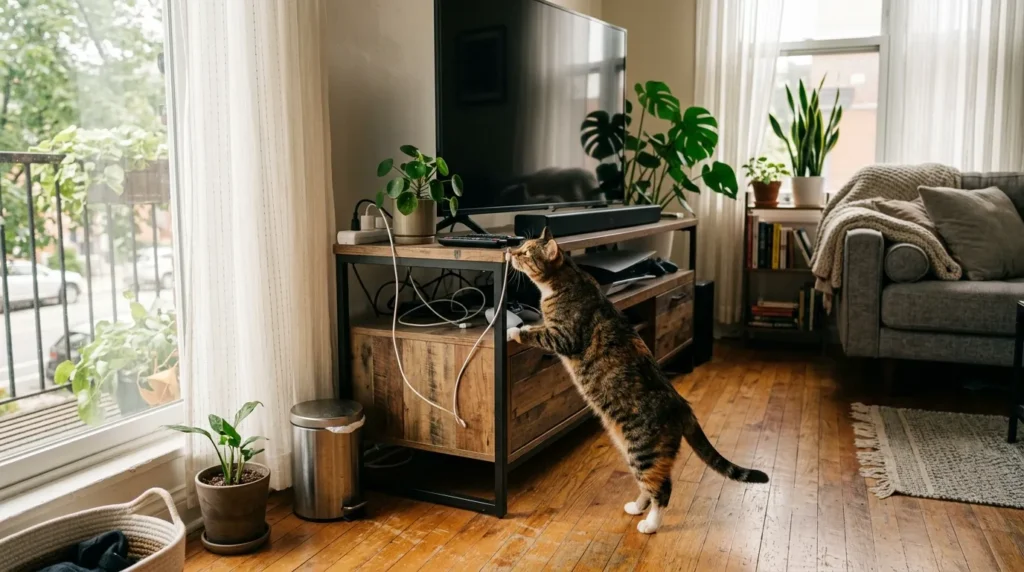
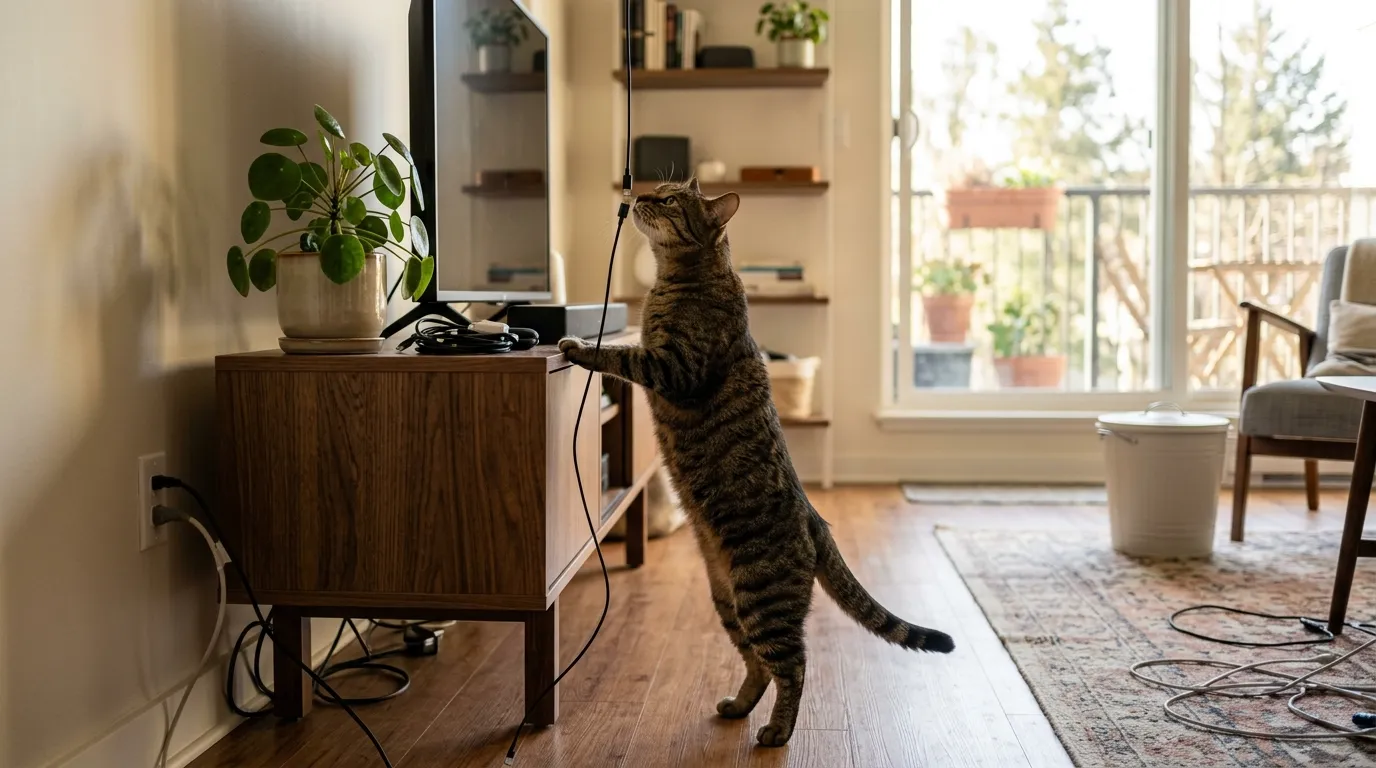
Get on the floor before your cat does. This sounds dramatic but it is the most effective thing on any apartment cat proofing checklist. From floor level you will see the dangling cord behind the TV, the gap under the stove big enough for a kitten to disappear into, and the small objects that fell and were forgotten months ago.
Work through rooms in this order: living room, kitchen, bathroom, bedroom, balcony. Each one has its own category of hazard and you will miss things if you treat them all the same. The kitchen has the most dangerous hazards. The bathroom has the most overlooked ones.
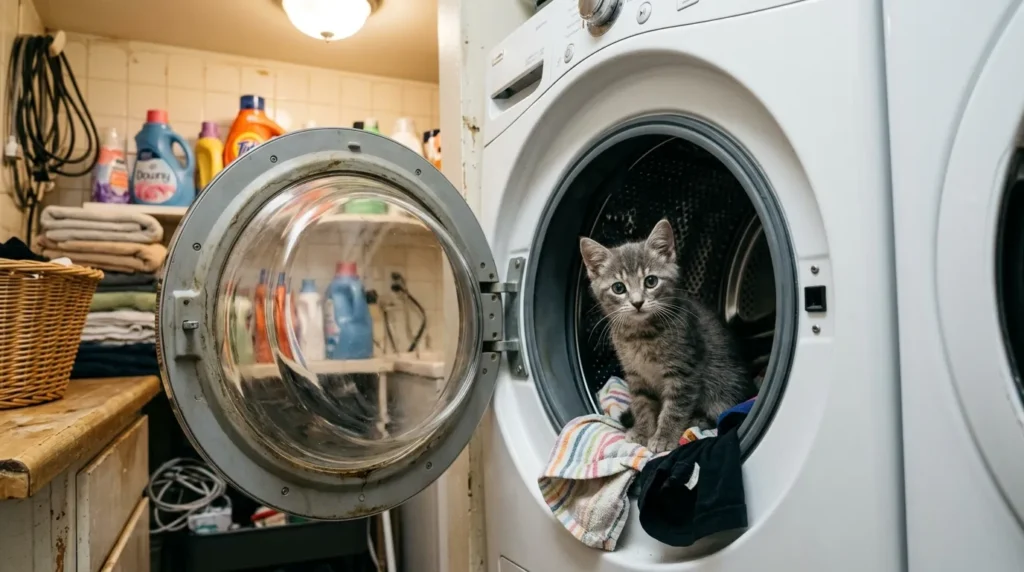
The laundry area trips people up every time. Cats climb into front-loading washers and dryers and curl up inside because it is warm and enclosed. Check inside every single time before you run a cycle. Keep those doors shut between uses. It is not a small risk.
In the kitchen, use childproof cabinet latches on lower doors adhesive versions stick firmly and peel off cleanly when you move out. Store trash inside a cabinet with a latch, or buy a can with a locking lid. Cats that get into the trash once will try again every day after that.
Electrical Cords and Small Objects That Lead to Emergency Vet Visits
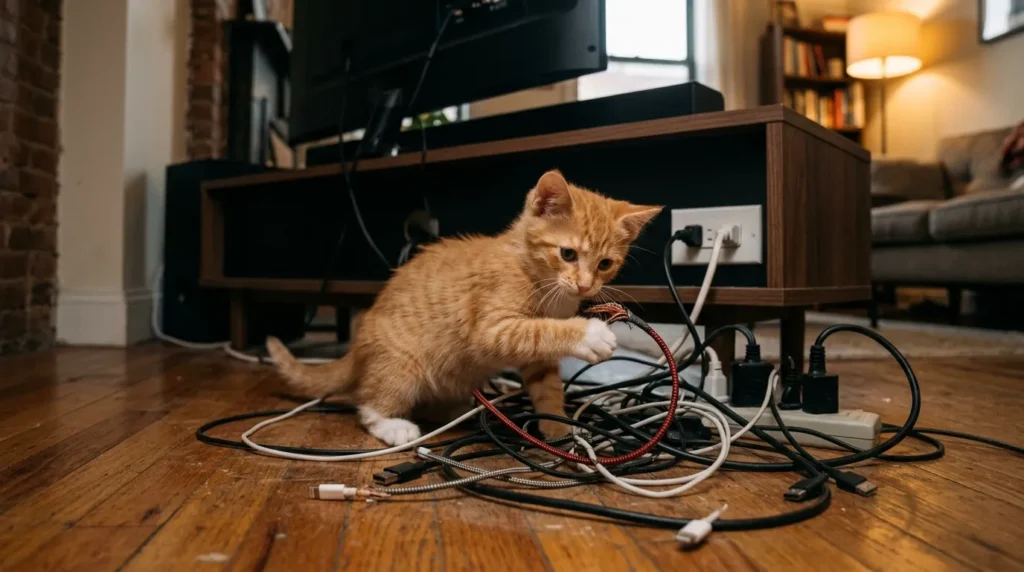
Dangling cords are the hazard most owners see and still underestimate. A cat does not need to be hungry or destructive to chew through a live phone charger they do it because the texture triggers their hunting instinct. A kitten that bites through an active cable can suffer electrical burns to the mouth, internal damage, or cardiac arrest. Bundle all cables with cord sleeves or spiral cable wrap and route them behind furniture wherever possible.
Pick up every small object from low surfaces before your cat arrives. Rubber bands, hair ties, twist ties, and plastic bags are all common swallowing hazards. String and dental floss are especially dangerous because cats swallow them reflexively they cannot stop once they start and a string that gets looped around intestines is a surgical emergency. These do not look like toys to you, but your cat does not have that context.
Blind cords and curtain pull cords are almost always overlooked. A cat can get tangled and strangle in seconds. Loop them up using a cord cleat mounted high on the wall. Takes two minutes.
Insight Cord covers are cheap and take ten minutes to install. The one thing most people skip is blind cords not phone chargers. If your apartment has blinds with dangling looped cords, deal with those first. That is the one that genuinely scares me for kittens.
Balcony and Window Safety: The Apartment Cat Risk Nobody Takes Seriously Enough
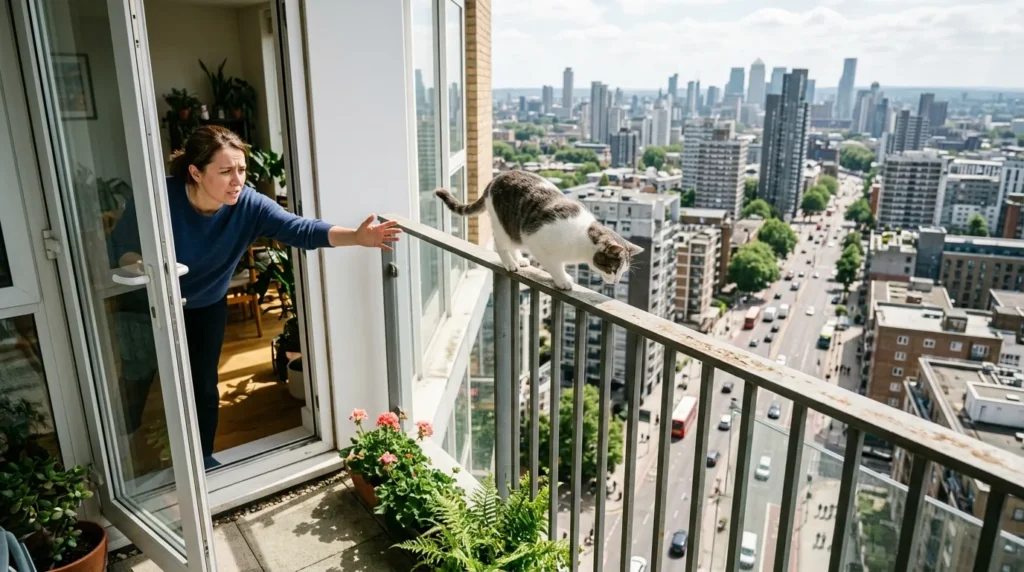
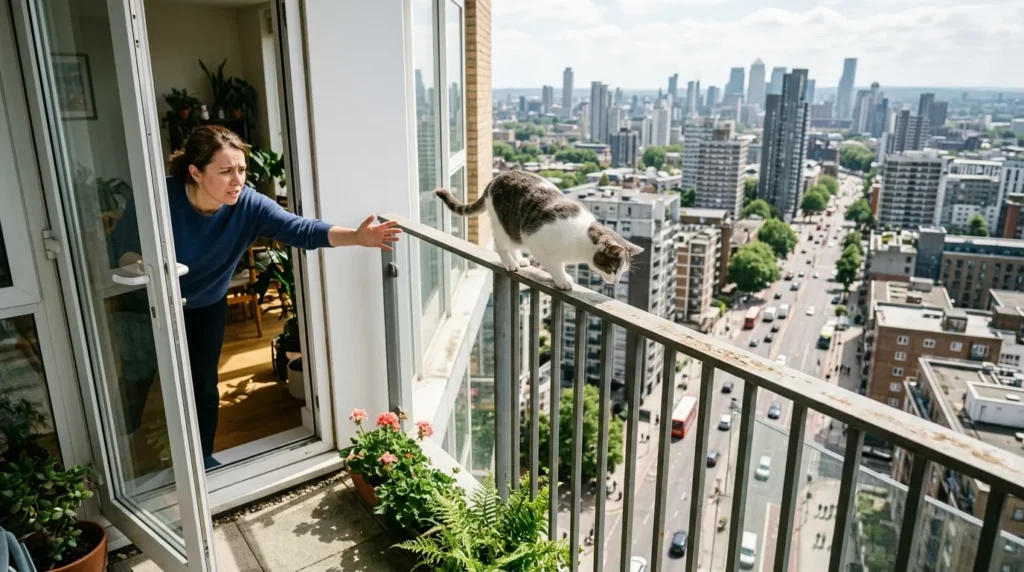
Cats are not immune to falling. They misjudge jumps, get startled by sudden sounds, and lose footing on wet or narrow railings. High-rise syndrome is a real documented phenomenon in veterinary medicine. Every window you open without a secure screen is a genuine risk. Fit window screens with latch locks on any window your cat has access to. Tension-mounted screens require no drilling and are fully renter-safe.
For balconies, reinforced cat balcony netting is the only real solution. Standard pigeon netting is too weak and has gaps wide enough for a determined cat to push through or get a limb caught in. Look specifically for cat-rated mesh with frames that mount using adhesive or tension systems your landlord will approve. Measure your balcony before ordering balcony dimensions vary a lot in apartment buildings. If you want the bigger picture of making apartment life genuinely good for your cat beyond just safety, this guide on living with a cat in an apartment is worth reading through it covers the full setup from a renter’s perspective.
Toxic Plants and Kitchen Dangers Most Apartment Owners Miss
Lilies will kill your cat. That is not an overstatement. True lilies Easter lily, tiger lily, daylily, Asiatic lily cause acute kidney failure in cats within 24 to 72 hours of even small pollen exposure. There is no safe amount. Remove every lily from your apartment entirely. Not to the balcony. Out of the home.
| Remove These Plants | Safe Replacements |
| Lilies (all varieties) | Spider plant |
| Pothos | Catnip |
| Philodendron | Bamboo palm |
| Aloe vera | Peperomia |
| Tulips | Air plants (Tillandsia) |
| Azalea | Areca palm |
The ASPCA maintains a full toxic plant database at bookmark it and check any new plant before you bring it home. In the kitchen, essential oils, medications, onions, garlic, grapes, and chocolate all go in locked or high cabinets. None of these need to be at counter level and none of them are worth the risk. Keeping up with indoor cat health basics helps you stay ahead of these risks before they become emergencies.
Enrichment and Vertical Space: How to Stop Your Cat From Destroying Everything?
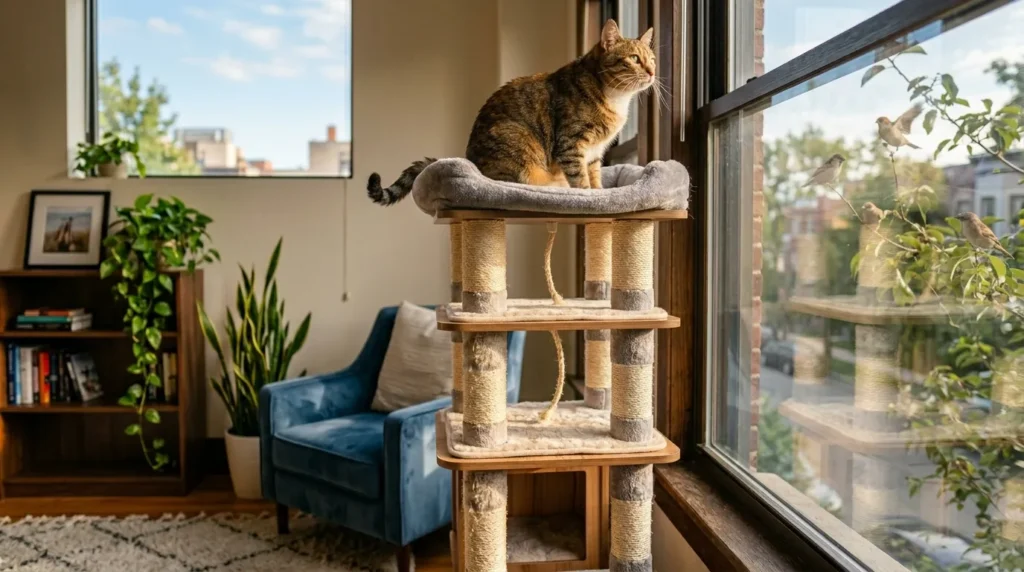
A bored cat is a destructive cat. That is not misbehavior it is a cat using its brain exactly the way it was designed to. If you do not give your cat a reason to climb, scratch, and chase, it will find its own reasons. Your sofa arm, your houseplants, and your blinds are all good enough for that purpose.
Vertical climbing space changes the entire dynamic of a small apartment. Mount cat shelves at staggered heights across one wall so your cat can move room-to-room without touching the floor. Cats instinctively want elevated vantage points give them a legal one and they stop repurposing your curtain rod. Place scratching posts directly next to the furniture your cat already targets. This is not a punishment you are just giving them a better option in the exact spot they already like.
Play before bed matters more than most people think. Ten to fifteen minutes of active wand or chase play followed immediately by a meal, mimics the hunt-catch-eat-sleep cycle. Cats that follow this pattern at night stop the 3am zoomies within a week. For practical ideas on setting up indoor cat enrichment that works in a small space, there is a lot of room-specific guidance worth working through. When you are ready to invest in actual furniture, cat furniture built for indoor cats has solid options that work without taking up half the room.
Insight The biggest enrichment mistake in apartments is buying one cat tree and leaving it in the corner. Cats want to move across a space. Even one wall shelf above the sofa changes how your cat uses the whole room. That single addition stopped my cat from clawing the curtains within three days.
Common Mistakes People Make With an Apartment Cat Proofing Checklist
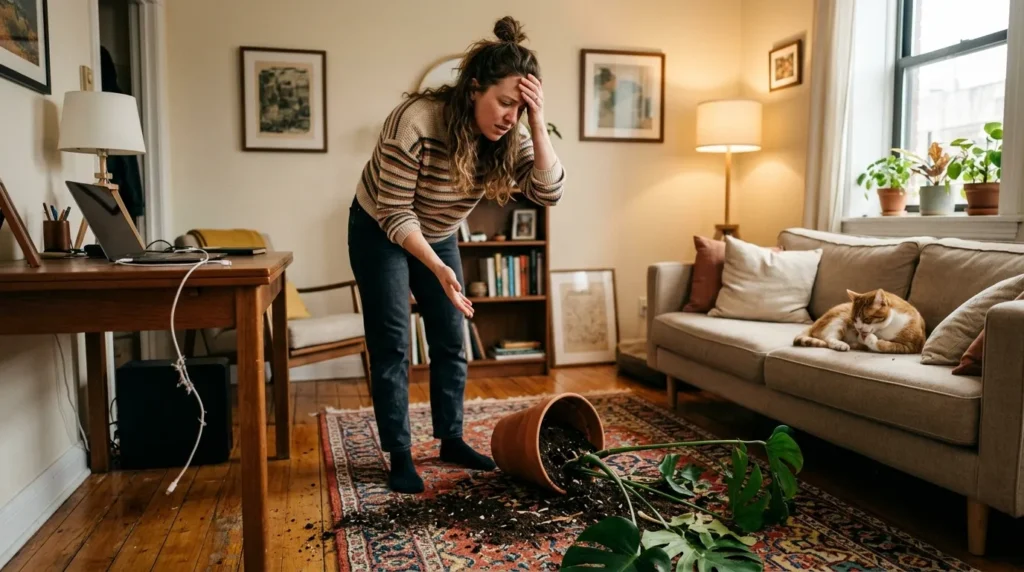
The most common mistake is cat proofing only the visible spaces and skipping the ones you use but rarely think about. The bathroom and laundry area are where the most serious hazards live washing machines, toilet bowls, cleaning chemicals, and medications and they are the most frequently missed. Cats explore every inch of a new space within the first day.
The second mistake is waiting until after the cat arrives. Going through your complete apartment cat proofing checklist after your cat is already exploring means you will be doing it under pressure, you will miss things, and you will have a cat actively getting into whatever you have not secured yet. Do the walkthrough the day before your cat comes home. Every step is faster without a cat underfoot.
The third mistake is treating it as a one-time task. Cats grow, habits change, and new items appear in apartments constantly. Walk through your checklist again after any major change new furniture, a new plant, a new roommate, a move. What was safe six months ago might not be now.
Frequently Asked Questions About Apartment Cat Proofing
How long does it actually take to cat proof an apartment?
Most apartments take two to three hours if you work through one room at a time with a list in hand. Do it in a single focused session before your cat arrives. Trying to cat proof around a curious cat that is already exploring the space easily doubles the time and means you will miss things.
What is the single most dangerous hazard in an apartment for cats?
Lilies are the deadliest because even minimal pollen contact causes kidney failure fast, with a very narrow treatment window. After plants, unsecured electrical cords and open balconies are the highest risk. Address those three before anything else on your list.
Can I cat proof a rental apartment without drilling or damaging walls?
Yes, and most renter-friendly solutions cost less than permanent ones. Tension-mounted window screens, adhesive cabinet latches, cord covers, removable wall anchors for furniture, and adhesive balcony netting frames all work without leaving damage. Check your lease before anything goes on a wall, but most of these require nothing structural.
Do I really need to cat proof the bathroom?
Yes, especially for kittens. Keep the toilet lid down kittens can fall in and struggle to get out. Store medications, cleaning products, and laundry pods in high or locked cabinets. Keep the washing machine door shut between uses. Understanding indoor cat care habits means bathroom safety becomes automatic rather than something you have to think about each time.
How do I handle balcony cat proofing if my landlord is strict?
Adhesive and tension-mounted cat netting systems exist specifically for renters. Most use anchor points that stick to railings or use compression to hold without drilling. Read your lease carefully most prohibit permanent alterations, but tension systems are typically fine. Take photos before installation and after removal to document zero damage.
When should I call a vet after a possible toxic exposure?
Immediately, do not wait to see if symptoms develop. If you see your cat interact with any toxic plant, ingest a chemical, or chew through a live cord, call your vet or the ASPCA Animal Poison Control Center at (888) 426-4435 right away. This article is for informational purposes only. Always consult your vet if you have concerns about your cat’s health.
Your Apartment Is Ready Now Keep It That Way
Go through your apartment cat proofing checklist once before your cat arrives and you will sidestep most of the panic that hits new cat owners in those first days. Focus on cords, lilies, balcony access, and the laundry area first those are where serious injuries happen fastest. Add enrichment and vertical space and your cat will have a reason to engage with the safe parts of your apartment instead of the dangerous ones. Revisit your checklist whenever something changes in your space.
An apartment cat proofing checklist should cover electrical cord safety, toxic plant removal, kitchen and bathroom hazards, balcony and window barriers, and enrichment setup. Lilies cause kidney failure in cats within 24 to 72 hours and must be fully removed from the home. Renter-friendly solutions include tension-mounted window screens, adhesive cabinet latches, and reinforced cat balcony netting. Indoor cats need at least 15 minutes of active play daily and vertical climbing space to prevent destructive behavior. Cat proofing should be completed before the cat arrives and reviewed after any major change to the apartment.