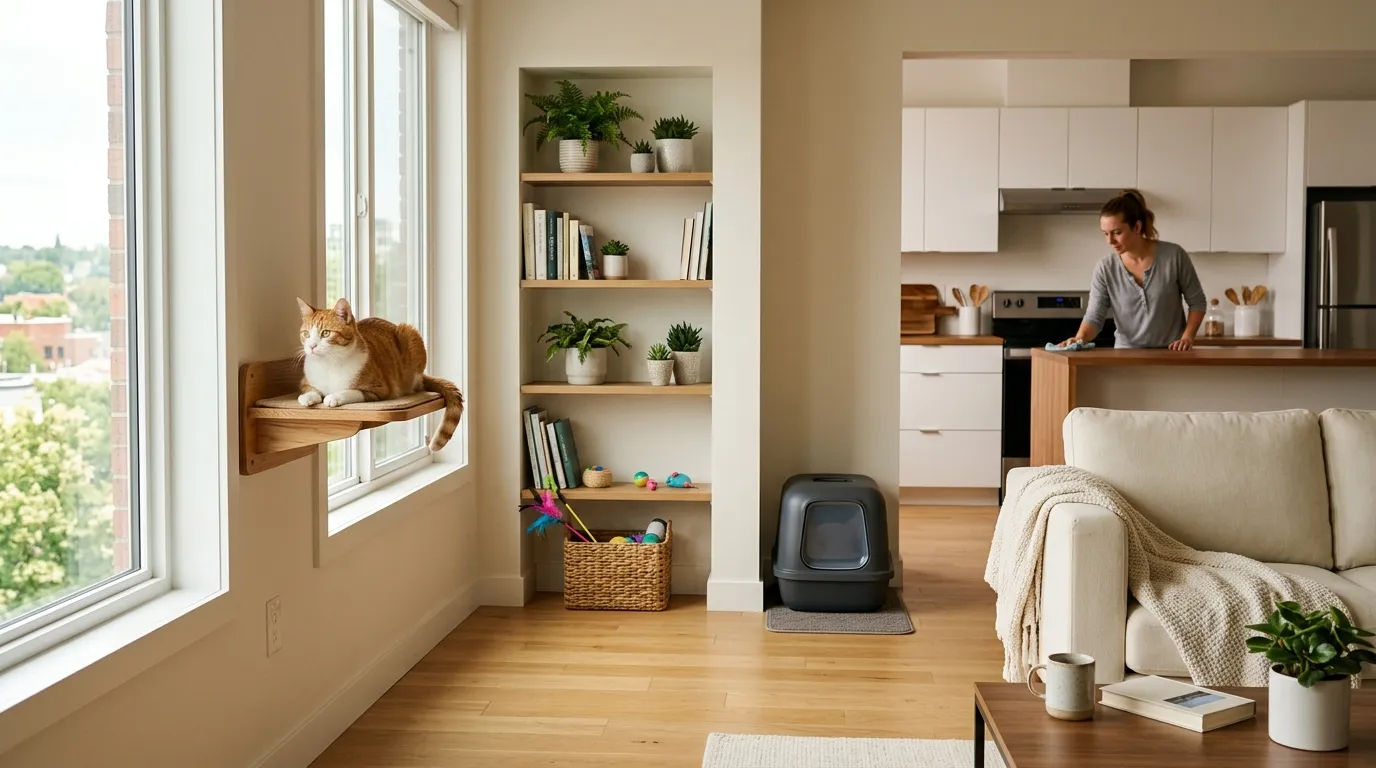
How to keep apartment clean with cat is a problem that sneaks up on you slowly. The first week your cat moves in everything seems fine. By week three there is a fine layer of fur on the couch you cannot explain and a smell near the litter box that greets you every time you open the front door. The fur multiplied. The litter scattered. You started noticing the smell only when guests arrived and saw it on their faces before you smelled it yourself. Knowing how to keep apartment clean with cat is mostly a systems problem rather than a willpower problem and the system has three parts: litter management, hair containment and air quality. Get all three running daily and most owners describe their apartments as genuinely clean rather than managed chaos. This article gives you the complete working system.
Keep an apartment clean with a cat by scooping the litter box every single day without exception, brushing the cat two to three times per week to intercept shed fur before it reaches furniture and surfaces and running a HEPA air purifier continuously near the litter station. Those three habits handle ninety percent of all cat-related apartment cleanliness issues. Everything else is maintenance on top of a working foundation.
The Litter Box Is the Whole Game — Solve This First
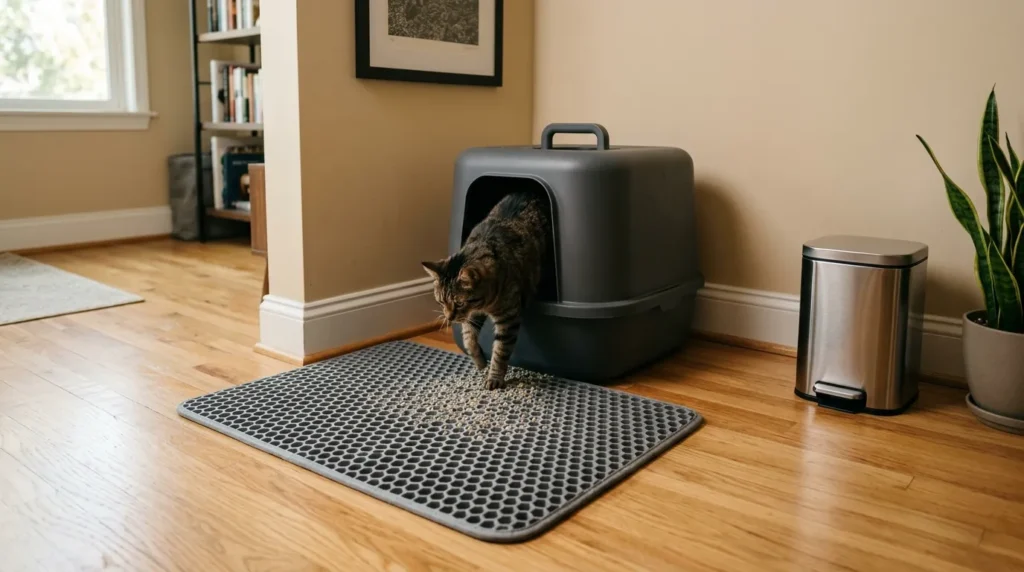
Litter is the primary source of both odor and mess in any apartment with a cat and it compounds in a small space faster than in a large one simply because there is less air volume to dilute the smell and less floor distance for scattered granules to get lost in. How to keep apartment clean with cat starts here. Scoop every single day. Not most days. Not when you notice it. Every day without exception in the morning before anything else. A box scooped daily never develops the ammonia buildup that produces the smell visitors notice before you do.
A large multi-layer litter mat positioned directly in front of the box catches granules on the cat’s paws before they travel. Most cats exit the box and take four to six steps before the mat releases the tracked litter. A mat that extends at least eighteen inches from the box entrance in the direction of travel catches ninety percent of what would otherwise reach your floors. The mat needs to be shaken out over the trash every two to three days rather than vacuumed in place because embedded granules require agitation to release from most mat surfaces.
Litter type determines how much tracking you manage daily. Fine clay litter produces the highest tracking volume because the small granules lodge in paw pads and travel far from the box. Pellet litters made from pine, wood, tofu or compressed paper produce significantly less tracking because the larger granules fall off paws within the first step rather than traveling. The tradeoff is that some cats need a transition period before accepting pellet litter rather than the fine clay texture they are accustomed to. Mix pellets with existing clay at increasing ratios over two weeks and most cats adapt without significant resistance.
Brushing the Cat Is Cheaper Than Vacuuming
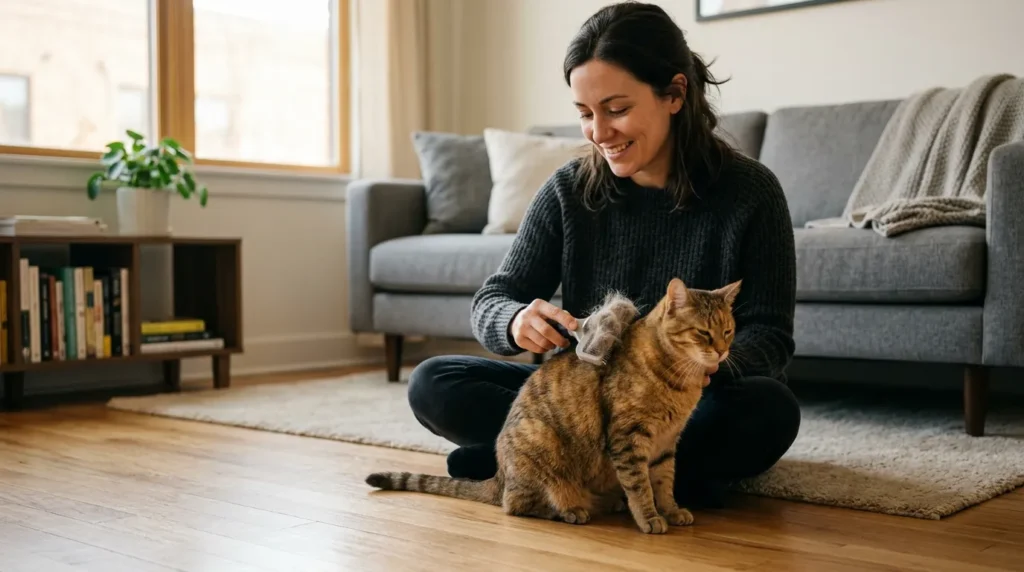
Brushing a cat two to three times per week intercepts shed fur at the source before it reaches the couch, the floors, the bed and your dark clothing. A single thirty-minute brushing session on a medium-shedding cat removes the same volume of fur that would otherwise distribute itself across the entire apartment over the following four to five days. That relationship is not an exaggeration. Catching it at the brush is four orders of magnitude easier than removing it from a dozen different surfaces after it has settled and embedded in fabric fibers.
A deshedding tool designed specifically for the cat’s coat length produces noticeably more removal per session than a standard slicker brush. Short-haired cats benefit from a rubber grooming glove or a rubber bristle brush that grips undercoat as well as surface fur. Long-haired cats need a wide-tooth comb followed by a deshedding tool to reach the dense undercoat where most of the loose fur accumulates before shedding. Match the tool to the coat type and the same thirty minutes produces double or triple the fur removal compared to a mismatched tool.
Grooming also carries direct benefits for the cat’s physical condition that connect to apartment cleanliness in less obvious ways. A well-groomed coat sheds less overall because regular brushing distributes skin oils and reduces the matting and breakage that accelerate loose fur production. Regular grooming also means the owner sees the cat’s skin condition frequently enough to notice early signs of parasites or irritation that would otherwise worsen and contribute to behavioral stress.
Air Quality Is the Invisible Half of Apartment Cleanliness
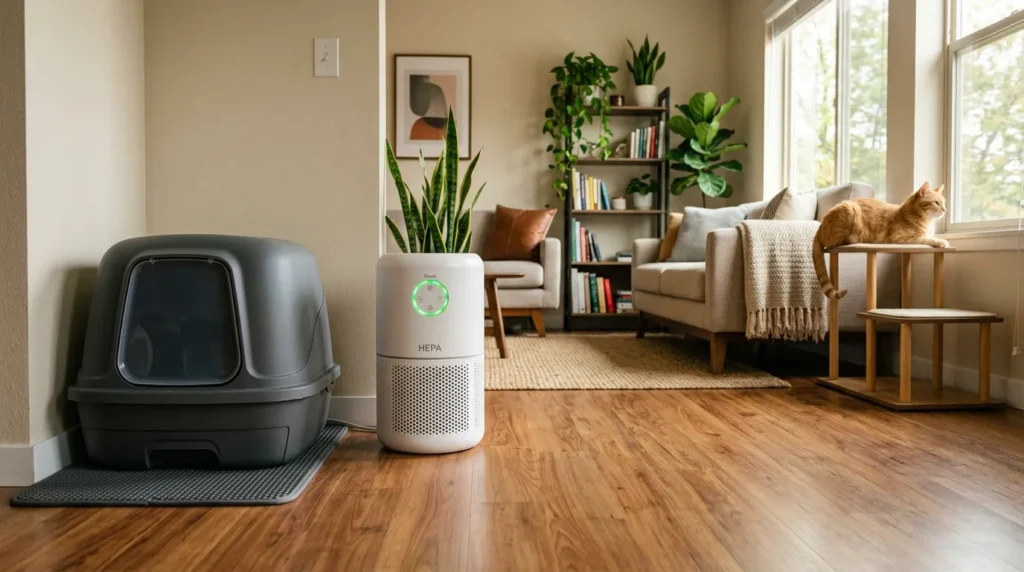
A HEPA air purifier running continuously near the litter station addresses both dander and odor simultaneously and produces results that no amount of surface cleaning can replicate because it treats the air itself rather than surfaces the problem has already landed on. In a small apartment with limited air volume a cat’s dander circulates constantly through the entire space. A purifier with a HEPA filter captures airborne dander particles and a carbon filter layer addresses volatile organic compounds from litter waste. That combination eliminates the ambient cat smell that you stop noticing but visitors definitely notice.
Place the purifier within three feet of the litter station rather than in the center of the room. The litter station is the primary point source of both odor and airborne particles and treating it at the source rather than downstream in the room produces better results with a smaller unit. A secondary unit in the bedroom where the cat sleeps handles the dander that accumulates in bedding and prevents the morning waking up to an air quality change that cat owners in unfiltered bedrooms experience without realizing the cause.
The Daily Cleaning Routine That Takes Under Ten Minutes
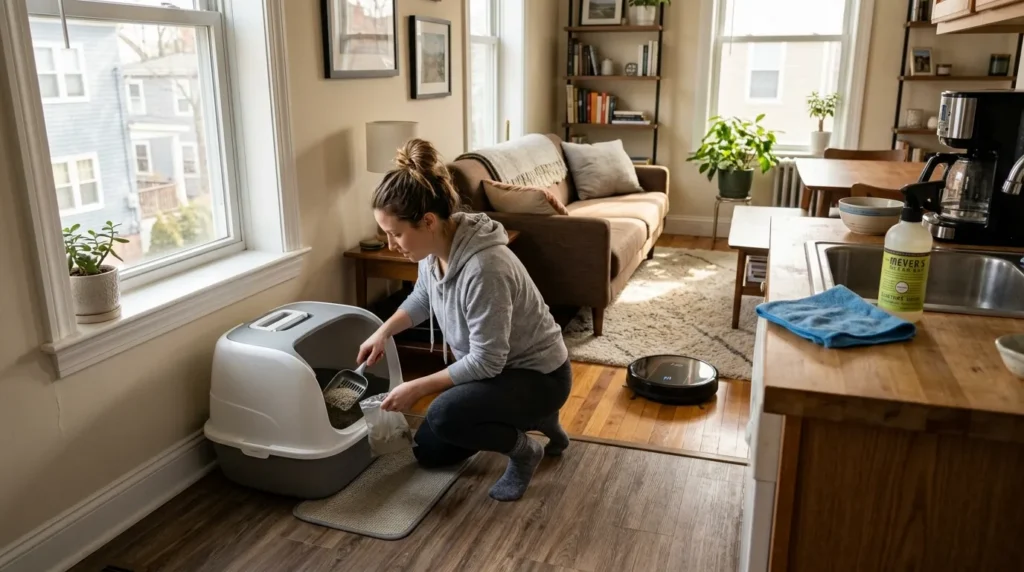
How to keep apartment clean with cat sustainably is a ten-minute morning habit rather than a reactive deep-cleaning session every few weeks. The morning circuit runs in the same order every day: scoop the litter box, shake the litter mat over the trash, wipe the kitchen and bathroom counters because cats walk across both, empty and refill the food and water bowls and run a quick robot vacuum pass or hand vacuum along the baseboards where fur settles.
A robot vacuum set to run every morning while you shower handles the ongoing fur accumulation on hard floors without requiring any additional time investment. The limitation of robot vacuums is that they do not address fur embedded in upholstered furniture or on bedding. A rubber lint roller or grooming glove dragged across the couch and bedding once daily takes ninety seconds and removes the surface fur before it works its way deeper into the fabric where it becomes significantly harder to extract.
The weekly version of this routine adds a full floor vacuum and mop, a washing of the cat’s bedding and blankets on hot to kill any dust mites or dander accumulated in the fabric and a full empty-wash-dry cycle of the litter box rather than just scooping. A litter box that receives only daily scooping without monthly deep cleaning develops a layer of crystallized waste residue on the interior surfaces that no amount of scooping removes and that contributes persistent odor regardless of how fresh the upper litter layer is. Deep clean it once a month with warm water and unscented dish soap and the odor baseline resets completely.
The Mistake That Keeps the Apartment Smelling Like a Cat
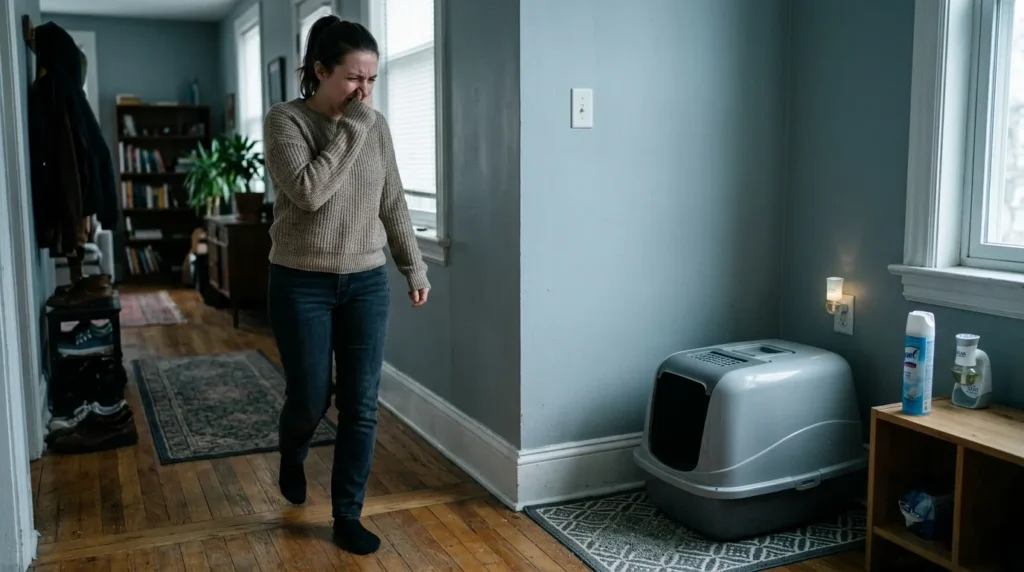
The mistake that keeps apartments smelling like a cat despite genuine cleaning effort is using scented products to mask odor rather than eliminating the odor source. Scented litters, plug-in air fresheners and fabric sprays layer a synthetic smell over the underlying biological odor rather than breaking down the organic compounds that produce it. In a small apartment that masking approach fails within hours because the organic source is continuously producing more odor and the masking layer depletes faster in a confined space.
Enzyme-based cleaners break down the organic compounds in cat waste at the molecular level rather than covering them. Apply enzyme cleaner to any surface where a litter accident has occurred rather than a general all-purpose spray. General cleaners remove the visible surface deposit but leave the odor compounds embedded in porous surfaces like grout, concrete subfloor and fabric fibers where they continue producing smell for weeks. Enzyme cleaners require a wet contact time of ten to fifteen minutes rather than an immediate wipe to fully break down the compound.
Insight The single investment that transformed my apartment from cat-smelling to just apartment-smelling was a HEPA purifier beside the litter station and nothing else changed. I had been scooping daily and brushing regularly but the air itself was the problem I had not addressed. The difference was noticeable in forty-eight hours. If you have not tried continuous purification near the box yet that is where to start before buying any other cleaning product.
Frequently Asked Questions
Why does my apartment still smell like cat even after cleaning?
The organic compounds that produce cat odor absorb into porous surfaces like concrete subfloor, grout and fabric fibers where surface cleaning cannot reach them. Enzyme-based cleaners break these compounds down at the molecular level. Apply enzyme cleaner to all accident sites and run a HEPA plus carbon filter air purifier continuously near the litter station. Those two changes address the sources that surface cleaning misses.
How do I stop cat litter from getting everywhere in a small apartment?
Switch to larger granule litter such as pine or wood pellets which tracks less than fine clay because larger pieces fall off paw pads within the first step rather than traveling. Add a large honeycomb-style mat extending eighteen inches from the box entrance in the exit direction. Those two changes together reduce tracking by eighty to ninety percent compared to fine clay litter without a mat.
How often should I vacuum when I have a cat in an apartment?
Daily robot vacuum passes on hard floors handle the ongoing fur accumulation without additional time investment. A manual vacuum of carpets and upholstered furniture twice per week prevents fur from embedding into fabric fibers where it becomes significantly harder to remove. A lint roller or rubber grooming glove across the couch surface daily removes surface fur before it works deeper into the upholstery.
Can I use scented litter to manage cat odor in my apartment?
Scented litter masks rather than eliminates odor and many cats find heavily scented litters aversive enough to avoid the box altogether. If a cat avoids a scented litter box the resulting litter accidents create the exact odor problem the scented litter was meant to prevent. Use unscented litter with daily scooping and a carbon filter air purifier instead. That combination manages odor more effectively and does not risk litter box avoidance.
Conclusion
How to keep apartment clean with cat requires three daily habits rather than hours of cleaning: scoop the litter box every morning without exception, brush the cat two to three times weekly to intercept fur before it reaches every surface and run a HEPA air purifier continuously near the litter station. Add a large litter mat and switch to lower-tracking pellet litter and the physical mess reduction is significant. Start today with the scoop. Nothing else compounds as fast in a small apartment as a missed scooping day. Managing a litter setup well is the foundation everything else in a clean cat apartment builds on.
Keeping an apartment clean with a cat requires three daily practices: scooping the litter box every morning to prevent ammonia buildup, brushing the cat two to three times per week to intercept shed fur before it reaches furniture and floors and running a HEPA plus carbon filter air purifier continuously within three feet of the litter station. A large honeycomb litter mat extending eighteen inches from the box entrance reduces litter tracking by eighty to ninety percent. Low-tracking pellet litter produces less scatter than fine clay. Enzyme cleaners rather than scented sprays break down the organic compounds that cause persistent cat odor in small apartments.