
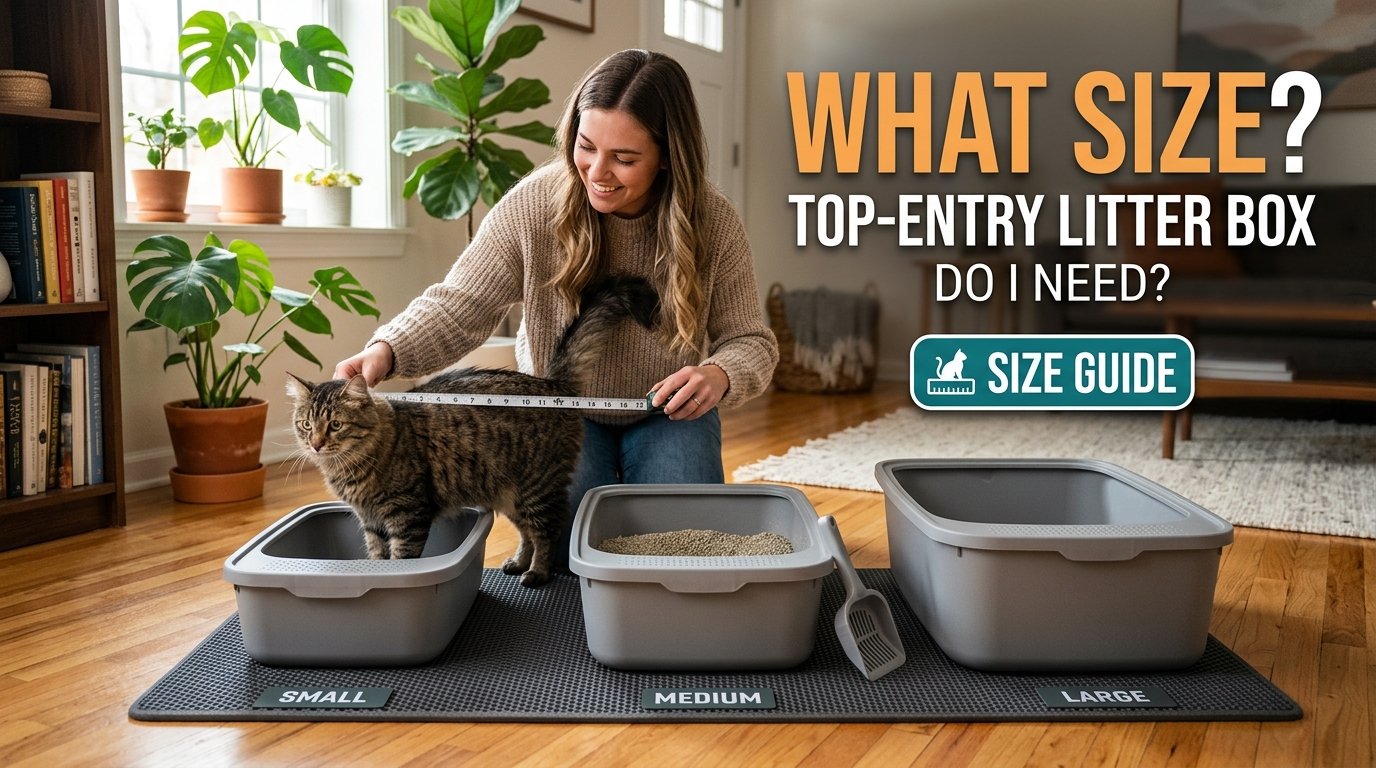
Litter granules on your socks at 6 a.m. That’s usually the moment people start looking at top entry litter boxes. The idea is simple: a cat climbs in through a hole in the lid instead of walking through an open door, so the litter clinging to its paws gets knocked loose before it ever reaches your floor. It works. But it only works if the box is the right size for the cat using it. Buy one that’s too small and you trade a tracking problem for a bigger one: a stressed cat, missed clumps, and litter box avoidance. This guide covers sizing first, then walks through five specific models, how to set one up, and the mistakes that send owners back to an open box within a month.
What Size Top Entry Litter Box Do I Need?
Start with your cat, not the box. The standard rule vets and behaviorists use is that a litter box should be at least 1.5 times your cat’s body length, measured from the tip of the nose to the base of the tail (not including the tail itself). For an average 10-inch cat, that’s a 15-inch box at minimum. For a 20-inch Maine Coon, you’re looking at 30 inches, which is bigger than most top entry boxes on the market. That gap is the number one reason cats reject these boxes: the outside looks big, but the usable floor space inside is smaller than it appears.
How to Measure Your Cat in Under a Minute
- Wait until your cat is lying down and relaxed, ideally asleep.
- Use a soft measuring tape and run it from the tip of the nose to the base of the tail (skip the tail, it doesn’t count).
- Multiply that number by 1.5. That’s your minimum box length.
- Check the box’s interior floor dimensions, not the outer shell measurements listed on the box, since molded corners and litter-catching ridges eat into usable space.
Size Guide by Cat Weight
| Cat Weight | Approx. Body Length | Minimum Box Length | Entry Hole Diameter |
|---|---|---|---|
| 8-12 lbs (kitten/small cat) | ~12 in | ~18 in | 8-9 in |
| 10-13 lbs (average cat) | ~15-17 in | ~22-25 in | 9-9.5 in |
| 14-18 lbs (large cat) | ~18-20 in | ~27-30 in | 10-11 in |
| 18 lbs+ (Maine Coon, Ragdoll, broad-shouldered breeds) | 20 in+ | 30 in+ | 12-13.5 in |
These figures come from general veterinary and behavior guidance on litter box sizing, not from a single manufacturer. Treat them as a floor, not a ceiling — bigger is almost always better received by the cat.
Watch the Entry Hole, Not Just the Box
This is the part standard sizing charts skip, because it’s specific to top entry boxes. A box can be plenty long and still fail a broad-shouldered cat if the entry hole is too narrow. The IRIS USA large models, for example, ship with a 9.25-inch diameter entry hole on a 20.5-inch-long box. That’s fine for a 10-pound domestic shorthair. It’s tight for an 18-pound Maine Coon, who has to compress its shoulders to get through. Some corner-style top entry boxes widen the opening to 13.5 inches specifically to fit large breeds and kittens without a squeeze. If your cat is broad through the chest and shoulders, check the entry diameter before you check the overall footprint.
When a Top Entry Box Is the Wrong Call, Regardless of Size
Size isn’t the only variable. A top entry box asks a cat to jump up and drop down, twice a day at minimum. That’s a problem for a few groups no matter how well you size the box:
- Senior cats and cats with arthritis: jumping and landing puts weight through joints that may already hurt. A vet visit to rule out joint pain is worth it before you commit to this style.
- Kittens under a few months old: they often can’t clear the lip yet. Start them on an open box and switch later if you want the tracking benefits.
- Overweight cats: extra weight makes the jump harder on joints and the squeeze through the entry hole tighter.
- Cats recovering from surgery or injury: ask your vet before asking them to climb.
If any of these apply, a low-entry or open box will serve your cat better than a bigger top entry model. No box solves a mobility problem by being roomier inside.

[Image placeholder: illustration of measuring a cat from nose to base of tail]
List of Top Entry Litter Box
An open box lets litter fly out with every step and every dig. A top entry box forces the cat through a filtered lid on the way out, so most of what sticks to its paws falls off before it hits your floor. It also puts a wall between the box and any dog in the house who thinks the litter is a snack. Once you’ve sized the box correctly for your cat, here are five models worth comparing.
Solutions For Top Entry Litter Boxes
The right box depends on what your household actually needs. Some homes need maximum odor control. Others need a box that fits a corner or survives a big cat’s daily use. Here’s how five models compare before the full breakdown.
| Model | Outer Dimensions | Entry Hole | Best For |
|---|---|---|---|
| IRIS USA Top Entry (Gray/White) | 20.5″ L x 14.75″ W x 14.5″ H | 9.25″ diameter | Small to average cats, multi-pet homes |
| IRIS USA Top Entry (Beige) | 20.5″ L x 14.75″ W x 14.38″ H | 9.25″ diameter | Owners who want tool storage built in |
| Amazon Basics Top Entry, High Sides | Large; check current listing for exact measurements | Filtered lid opening (size varies by listing) | Larger cats needing extra vertical room |
| Arm & Hammer Premium Top Entry | Wide-body; check current listing for exact measurements | Wide entry, grated surface | Apartments, odor-sensitive households |
| IRIS USA Large (Beige/White) | 20.5″ L x 14.75″ W x 14.5″ H | 9.25″ diameter | Owners who want a neutral color that blends with decor |
Dimensions for the Amazon Basics and Arm & Hammer models vary between size and color listings; confirm the exact interior measurements on the product page against the sizing table above before buying.
|
1
|
IRIS USA Top Entry Cat Litter Box, Hooded Privacy, Large, Gray/White |
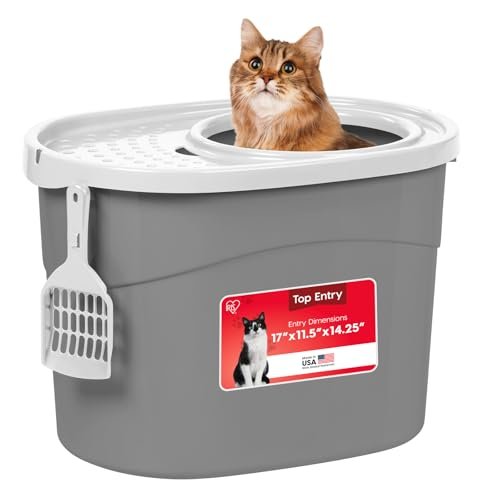
This box tackles tracking with a textured lid instead of a smooth one. Loose granules stuck to a cat’s paws catch in the texture on the way out, so they fall inside the box instead of onto your floor. At 20.5 by 14.75 inches with a 9.25-inch entry hole, it suits an average-size cat, roughly 10 to 13 pounds, comfortably. A Maine Coon will feel the squeeze at that entry width. The enclosed shape also traps odor better than an open pan, which matters more in small rooms than large ones.
The elevated entry does double duty as a dog barrier. Most dogs won’t jump up and through a 9-inch hole to reach the litter, so this works well if you’re managing a cat-and-dog household and dealing with a dog that treats the litter box like a snack bar. The footprint is small enough for a laundry room corner or a narrow bathroom gap. Cleaning is straightforward: the lid pops off, you scoop, you’re done. It won’t suit a senior cat that struggles to jump, and the plastic will need periodic scrubbing to stay odor-free, but for a healthy, average-size cat it does what it says.
Where It Helps
- ✓ Textured lid catches litter before it reaches your floor
- ✓ Enclosed shape helps contain odor in small rooms
- ✓ 9-inch entry keeps most dogs out
Worth Knowing First
- • Cats need to jump to enter; not ideal for seniors or kittens
- • 9.25-inch entry is tight for cats over roughly 15 pounds
- • Plastic needs regular deep cleaning to stay odor-free
|
2
|
IRIS USA Top Entry Cat Litter Box, Hooded Privacy, Large, Beige |
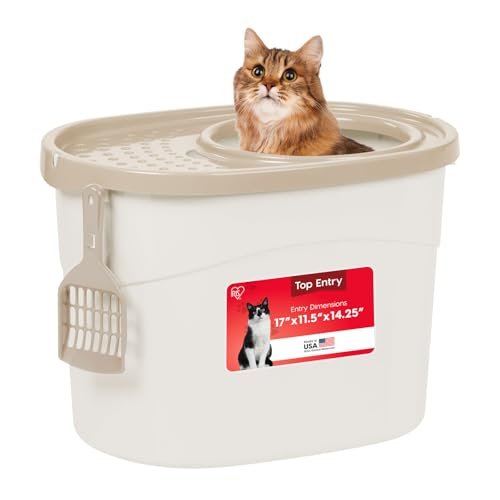
Same core mechanics as the gray/white version, with one real upgrade: the scoop hooks directly onto the side of the pan instead of getting lost behind a hamper. Small thing, but if you’ve ever hunted for a scoop with litter on your hands, you’ll get why it matters. The holes in the lid catch stray particles the same way the textured version does, and the high walls hold in both spray and smell.
The tall sides give more privacy than a low-walled pan, which helps cats that get nervous mid-business. That’s worth noting if you have a skittish or easily-startled cat, since privacy often matters to them as much as space does. Same dimensions as the gray/white model (20.5″ L x 14.75″ W x 14.38″ H, 9.25″ entry), so the same sizing limits apply: fine for an average cat, snug for a large one. Beige shows dirt and stains faster than darker colors, so factor that into cleaning frequency.
Where It Helps
- ✓ Scoop hooks onto the pan so it’s never missing
- ✓ Lid holes trap litter before it reaches the floor
- ✓ Tall walls contain spray and odor
Worth Knowing First
- • Scoop hook needs a specific spot to sit right
- • Beige shows stains sooner than darker finishes
- • Same 9.25-inch entry, so large-breed cats may struggle
|
3
|
Amazon Basics Large Cat Litter Box with High Sides, Top Entry, Odor Control |
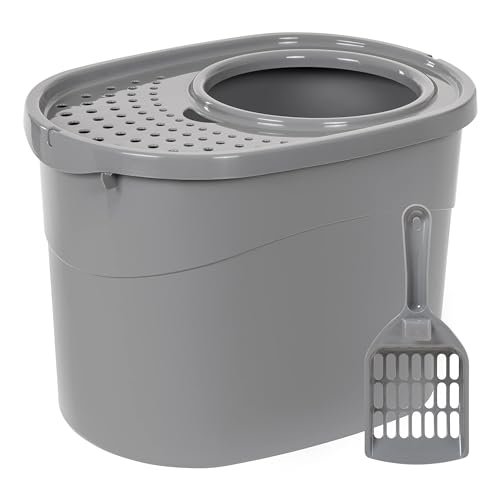
This one leans on height rather than a special lid texture. The high sides are the real feature: they stop spray at the source instead of relying on the lid to catch overflow, so if your cat is a wall-sprayer, this design addresses the actual behavior. The filtered top entry still knocks loose litter off paws on the way out, so you get both problems covered at once.
Built from BPA-free, recyclable plastic, which matters if you’re replacing the box yearly as most vets recommend. The top lifts off entirely for scooping and inspection rather than hinging partway, so you can see the whole interior at once. An onboard scoop mount keeps supplies in one place. Because it’s labeled “large,” check the interior floor space against your cat’s measurement from the sizing table above before buying; “large” varies by brand, and the exact interior dimensions aren’t always listed clearly on the product page.
Where It Helps
- ✓ High sides stop spray at the wall, not just the lid
- ✓ Filtered lid still catches loose litter on exit
- ✓ BPA-free plastic, easy to replace yearly
Worth Knowing First
- • Full lid removal means two hands, not one
- • Needs real floor space; measure before you buy
- • Gray finish shows dust between cleanings
|
4
|
Arm & Hammer Premium Top Entry Litter Box with Filter to Clean Paws |
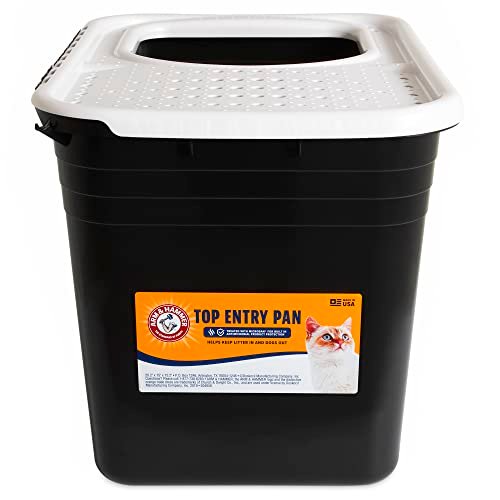
Arm & Hammer builds this one around Microban, an additive baked into the plastic that slows odor-causing bacteria growth on the surface. That’s a different approach from a carbon filter or a lid design: it targets the smell at the material level instead of just containing it. The wide top entry is meant to fit larger cats without the squeeze some competitors run into, and the grated lid surface does the same paw-cleaning job as the other models here.
It’s made from recycled materials, which is worth knowing if that factors into your buying decision. It handles pine, crystal, and clumping litter without issue, so you’re not locked into one litter type. Microban’s antibacterial effect fades over the life of the plastic rather than lasting forever, so this isn’t a box you keep for five years and expect the same odor performance on year one. Replace it on the same 12-month cycle recommended for any plastic litter box.
Where It Helps
- ✓ Microban additive slows bacterial odor at the source
- ✓ Wide entry fits larger cats more comfortably
- ✓ Works with pine, crystal, or clumping litter
Worth Knowing First
- • Microban’s effect fades with the plastic’s age, not permanent
- • Grated surface needs a real scrub, not just a rinse
- • Top entry is still a jump; not for cats with mobility limits
|
5
|
IRIS USA Large Top Entry Cat Litter Box, Hooded Privacy, Beige/White |
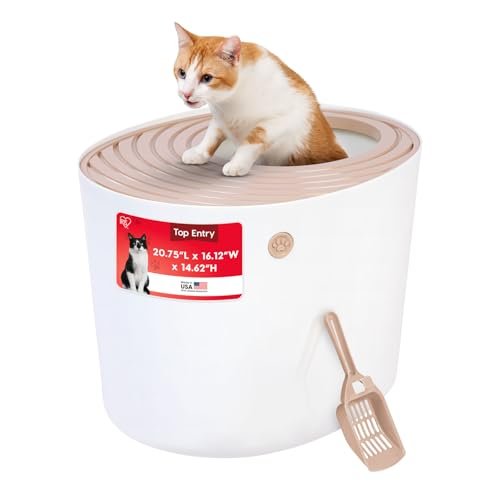
Functionally, this is close to the beige model above (same 20.5″ x 14.75″ x 14.5″ shell, same 9.25″ entry, same grooved lid), with a beige/white finish that reads a bit more like furniture and a bit less like a pet appliance. If the look of the box matters as much as the function, this is the one to pick between the two beige options; the mechanics don’t differ.
The included scoop hooks onto the side, same as the other IRIS models, so you’re not digging through a cabinet every time you clean. High walls contain spray well, and the interior fits most cats under about 15 pounds without crowding. Two-tone finishes show hair and dust more than a solid dark color, so plan on wiping the exterior down more often if that bothers you. It ships as “Made in USA,” which some buyers weight as a quality signal for durability over time.
Where It Helps
- ✓ Grooved lid keeps litter from escaping the box
- ✓ Hook-on scoop keeps cleanup tools handy
- ✓ Enclosed shape adds privacy for shy cats
Worth Knowing First
- • Two-tone finish shows hair and dust faster
- • Still requires a jump to enter
- • Same 9.25-inch entry limit as the other IRIS models
Top Entry vs Front Entry Litter Box: Which Fits Your Cat’s Size?
This is the comparison most people run before they buy either style, so here’s the short version by category.
| Factor | Top Entry | Front Entry (Open or Hooded) |
|---|---|---|
| Litter tracking | Low — lid strips litter off paws | Higher, especially with open boxes |
| Accessibility | Requires jumping; hard for seniors/kittens | Walk-in, easiest for all ages |
| Large-breed fit | Limited by entry hole diameter | No entry constraint, only pan size |
| Dog-proofing | Strong — most dogs can’t reach the hole | Weak unless behind a barrier |
| Multi-cat households | Can feel like a trap to a nervous cat | More escape routes, less ambush risk |
If your cat is young, healthy, and average-sized or smaller, a top entry box solves tracking and dog access at the same time. If you’ve got a senior cat, a kitten, a cat over 15 pounds, or a multi-cat household with any tension between cats, an open or low-entry hooded box is the safer default. You can always switch later.
How to Solve Top Entry Litter Box Issues Effectively
Switching to a top entry box changes your routine more than people expect going in. Here’s how to handle the three problems that come up most.
Manage the Transition Period
Some cats balk at jumping into a new box on day one. Set it next to the old box first, in the same spot your cat already trusts. Over a week or two, nudge it toward the new location a few inches at a time. Don’t force the cat through the hole; let them investigate on their own schedule.
Maintain the Grated Lid
The lid is doing the real work here, not the pan. Dust and fine litter build up in the grooves over time and the mechanism stops catching anything once it’s clogged. Vacuum or wipe it down weekly.
Monitor Litter Depth
Top entry boxes need consistent litter depth, around 3 to 4 inches, to absorb moisture properly. Too shallow and the bottom gets messy fast; the lid can only catch so much if the litter itself isn’t managing waste well. Check the corners for missed clumps regularly since the reduced opening makes it easier to overlook them.
Key Factors in Choosing the Right Solution
Not every top entry box fits every household. Weigh your cat’s physical needs against your home’s layout before you buy.
- Size, first: use the sizing table above before anything else. A box that’s the wrong size undoes every other feature it has.
- Cat agility: senior cats and cats with joint issues may struggle with a high jump entry. Look for a wider or lower entry point, or skip top entry altogether.
- Odor control features: filters, high walls, and antimicrobial additives like Microban each work differently. In a small apartment, prioritize active odor control over passive containment.
- Dimensions and footprint: even a compact model needs real floor space. Measure the corner or laundry spot before ordering.
- Cleaning ease: a fully removable lid speeds up scooping and deep cleaning. Built-in scoop storage is a small feature that saves real time.
- Material durability: stick to BPA-free plastic, and plan to replace the box roughly every 12 months regardless of brand.
Top Entry Litter Box Prevention Tips
Preventing scatter and odor beats fixing them after the fact. A few habits keep the box working the way it’s supposed to.
Scoop Daily
Scoop at least once a day. Clumps left sitting stick to the bottom and start smelling within hours, not days.
Clean the Lid on a Schedule
A clogged lid stops trapping litter entirely, so it’s not optional maintenance. Wipe or vacuum the grooves weekly.
Replace the Box Yearly
Plastic absorbs odor over time even with regular cleaning. Most vets recommend a full replacement around every 12 months, sooner if you notice a lingering smell after a fresh scoop.
Match Litter to the Box
Heavy pellets slide past a grated lid without getting caught. Fine, dust-heavy litter clogs the holes. A medium clumping litter usually works best with the filtering mechanisms these boxes rely on.
Common Mistakes When Solving Top Entry Litter Box Problems
Most recurring problems trace back to one of five setup mistakes.
- Buying too small: a cramped box gets litter kicked out during normal movement, and cats avoid boxes they can’t turn around in comfortably. Size it using the table earlier in this article, not just the label on the box.
- Ignoring the lid: the lid is the whole mechanism. A clogged or dirty lid lets litter through as if the box were an open pan.
- Trusting odor control forever: filters wear out and antimicrobial surfaces have a limited lifespan. No box stays odor-proof without maintenance.
- Placing it in a busy hallway: foot traffic stresses cats and knocks more litter loose when people bump the box. Put it somewhere quiet and stable.
- Using the wrong litter texture: very fine or dusty litter clogs lid holes fast. Match the litter to what the box’s filtering design was built for.
Top Entry Litter Box Setup Checklist
- ☐ Measured your cat nose to tail base and multiplied by 1.5
- ☐ Checked interior floor space, not just outer box dimensions
- ☐ Confirmed the entry hole fits your cat’s shoulder width
- ☐ Ruled out jumping as an issue (age, weight, joints)
- ☐ Chosen a litter texture that matches the lid’s filtering holes
- ☐ Placed the box in a quiet, low-traffic spot
- ☐ Set a weekly reminder to clean the lid
Quick Summary
- This IRIS USA model uses a textured lid to trap litter effectively. It’s a solid pick for multi-pet homes that need to keep dogs out.
Get this Solution - Same box with an on-board scoop hook for organization. High walls hold in odor and spray better than an open pan.
Get this Solution - Amazon Basics leans on high sides for spray control plus a filtered lid for tracking. BPA-free plastic, built for bigger cats.
Get this Solution - Arm & Hammer uses Microban to fight odor at the material level. A wide entry and recycled build make it a good fit for larger cats.
Get this Solution - A beige and white finish that keeps waste out of sight. The grooved lid handles tracking as well as the other IRIS models.
Get this Solution
Frequently Asked Questions
What size top entry litter box do I need?
Measure your cat from nose to the base of the tail, then multiply by 1.5 for the minimum box length. A 12-inch cat needs at least an 18-inch box. Beyond length, check the entry hole diameter separately; most standard models run 9 to 9.5 inches, which is too tight for cats over roughly 15 pounds.
What causes litter tracking in the home?
Litter sticks to a cat’s paws on the way out of the box. An open box has no mechanism to catch it, so it drops wherever the cat walks next.
Can a Maine Coon or other large cat use a top entry litter box?
Yes, but the standard 9.25-inch entry hole on most models is tight for a broad-shouldered breed. Look for a model with a wider entry, 12 to 13.5 inches, or size up to a box specifically marketed for large cats. Interior floor space matters as much as the entry width here.
Is a top entry litter box safe for senior cats or kittens?
Not usually. Both groups can struggle with the jump in and out, and seniors with arthritis may avoid the box entirely if it hurts to use. A low-entry or open box is the safer default until mobility isn’t a concern.
How long does it take to fix a litter tracking problem?
Switching to a correctly sized top entry box shows results the first time your cat uses it. You’ll notice less scatter immediately, since the reduction comes from the lid design, not from a break-in period.
Is it worth investing in a top entry litter box?
For a healthy, average-size or smaller cat, yes. It cuts daily floor cleaning noticeably and adds privacy and odor control most open boxes don’t offer. For seniors, kittens, or cats over about 15 pounds, weigh the accessibility tradeoffs first.

Written by Mishu
A passionate cat lover and indoor living enthusiast, Mishu is the founder and voice behind Indoor Living Cat – a go-to resource for cat owners who want to create the happiest, healthiest life for their feline companions indoors.
View Full Profile