
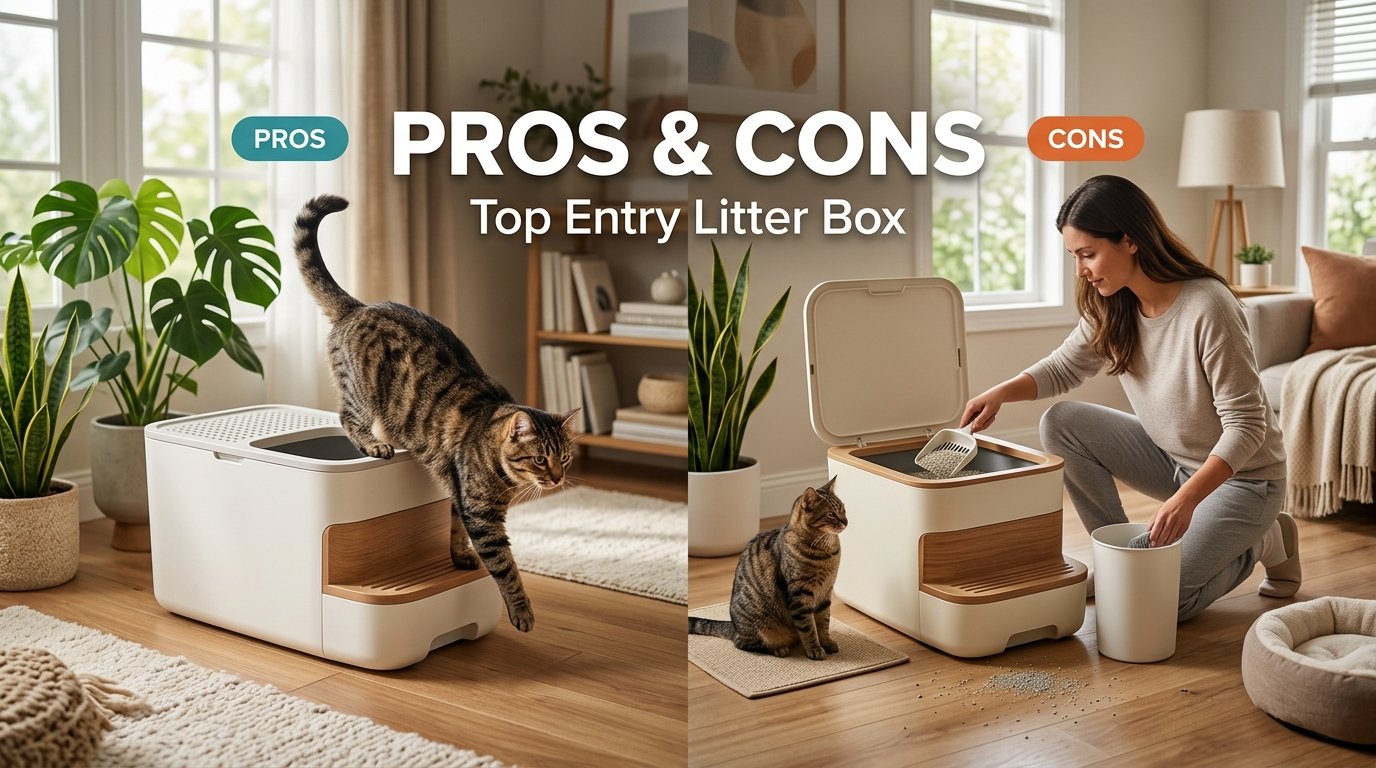
A top entry litter box keeps most of the litter your cat flings out of the pan and off your floor. It also stops most dogs cold. The trade is that your cat has to jump in and out, and a covered box smells fast if you skip a day of scooping. Below are the pros and cons of top entry litter box designs, who should skip one, and five models to compare. A top entry cat litter box isn’t right for every cat, so the cons get as much space as the pros.
Quick Answer: Is a Top Entry Litter Box Worth It?
Yes, if your cat is young or middle-aged, healthy, and a determined kicker, or if a dog keeps raiding the box. No, if your cat is a senior, has arthritis, is a kitten under a few months old, or is a large breed that struggles to fit through the opening. Litter tracking drops noticeably with the grooved lid. It doesn’t hit zero.
- ✓ Best for: heavy diggers, homes with dogs, small apartments, cats that spray upward
- ✗ Skip it if: your cat is older than about 10, has joint pain, is recovering from surgery, or has ever avoided a covered box
Jump to: Pros and cons | Top entry vs front entry | Who should buy one | Top 5 models | How to switch your cat | FAQ
Pros and Cons of Top Entry Litter Box Designs
Traditional open pans let cats kick granules across the floor, and they do nothing to keep a curious dog out. A top entry design fixes both by making the cat climb over a high wall and through a hole in the lid. That one change explains nearly every benefit and nearly every drawback on the list.
| Pros | Cons |
|---|---|
| Grooved lid knocks litter off paws | Cat must jump, which rules out many seniors |
| High walls contain kicked litter and spraying | Odor builds up inside if you skip scooping |
| Blocks most dogs from the litter (and the “snacks”) | Scooping through the lid or opening is awkward on some models |
| Extra privacy for shy cats | Some cats feel trapped, especially in multi-cat homes |
| Small footprint compared with a hooded box plus mat | Large or heavy cats can find the opening tight |
| Cheap. Many models cost under $50 | Still needs a litter mat, because tracking drops but never stops |
Pros of a Top Entry Litter Box
- Less litter on the floor. The cat has to step across a textured lid on the way out. Those grooves pull granules off paws before they reach your carpet.
- Spray containment. Cats that back up and spray hit a tall wall, not your baseboard. An open pan can’t do that.
- Dog resistance. A dog has to reach through a hole roughly 9 inches wide on many models. Most can’t, and the ones that can have a much harder time. A small or very determined dog may still get a snout in, so don’t treat it as a lock.
- Privacy. Some cats relax in an enclosed space. Shy cats and cats in busy households often prefer it.
- Lower cost. Compare a $30 to $40 top entry pan with a $100 or more self-cleaning box. If you only need tracking control, this is the cheap fix.
Cons of a Top Entry Litter Box
- The jump. A box that stands about 14.5 inches tall asks your cat to hop that high, then drop down to exit. A healthy adult manages fine. A 13-year-old with stiff hips won’t, and a cat that’s in pain about the box will start going elsewhere.
- Trapped-cat feeling. With one exit, a cat can get cornered by another cat. If you have two or more, watch for ambushes at the opening.
- Odor and dust. A lid holds smell in, and dust rises with each dig. Daily scooping matters more here than with an open pan.
- Scooping and deep cleaning. Scooping through the hole is a pain on boxes without a removable lid. Every box on our list has a lid that comes off, and you’ll use it.
- Size limits. Big cats need a wide opening and a pan long enough to turn around in. Some large breeds simply won’t fit comfortably in the standard-size models.
- Tracking isn’t eliminated. Litter still lands on the lid and sometimes gets flicked outside. Put a mat down.
Worth saying plainly: a cat that suddenly stops using any box, or strains, cries, or passes small amounts of urine, needs a vet visit before you blame the litter box.
Top Entry vs Front Entry vs Open Litter Box
If you’re weighing designs, this is how the three common types stack up. Our full breakdown is in top entry vs front entry litter boxes.
| Feature | Top entry | Front entry (hooded) | Open pan |
|---|---|---|---|
| Litter tracking | Lowest of the three | Medium | Highest |
| Dog access | Hard for most dogs | Easy for many dogs | Easy |
| Senior or arthritic cats | Poor | Good with a low door | Best |
| Odor control | Good if scooped daily | Good if scooped daily | Depends on scooping |
| Privacy | High | High | Low |
| Ease of scooping | Fair, lid off is easiest | Fair | Easiest |
Who Should (and Shouldn’t) Use a Top Entry Litter Box
A good fit if:
- ✓ Your cat is a healthy adult that jumps onto counters without hesitation
- ✓ Your cat digs hard and kicks litter several feet
- ✓ A dog treats the litter box as a buffet
- ✓ You live in an apartment and sweep litter daily
- ✓ Your cat is already comfortable in covered boxes
Look elsewhere if:
- ✗ Your cat is a senior, arthritic, overweight, or recovering from surgery
- ✗ You have a kitten too small to make the jump safely
- ✗ Your cat is a big breed such as a Maine Coon and the opening looks tight
- ✗ Several cats share the box and one bullies the others
- ✗ Your cat has a history of avoiding enclosed spaces
Not sure? Set up the new box next to your existing one and see which your cat picks. It costs you nothing but floor space for a couple of weeks.
5 Top Entry Litter Boxes Compared
Picking the ideal top entry cat litter box means checking how each one handles tracking, odor, and access for your specific cat. The five below cover the two most common budget brands. Sizes and features vary between color and scoop bundles, so confirm the exact dimensions on the listing before you order.
| # | Model | Best for | Standout feature |
|---|---|---|---|
| 1 | IRIS USA Top Entry, Gray/White | Heavy litter kickers | Textured lid, tall walls |
| 2 | IRIS USA Top Entry, Beige | Everyday use, tidy storage | Scoop hook, wide entry |
| 3 | Amazon Basics Large, High Sides | Odor-conscious buyers | Filtered lid, onboard scoop storage |
| 4 | Arm & Hammer Premium Top Entry | Smell control | Microban protection, grated lid |
| 5 | IRIS USA Large, Beige/White | Bigger cats | Extra interior room |
For reference, IRIS USA’s large top entry listings show outside dimensions of roughly 20.5 inches long by 14.75 inches wide by 14.5 inches tall, with a 9.25 inch entry opening and room for up to 20 pounds of litter. Other IRIS versions run a little wider, so check yours.
|
1
|
IRIS USA Top Entry Cat Litter Box, Hooded Privacy, Large, Gray/White |
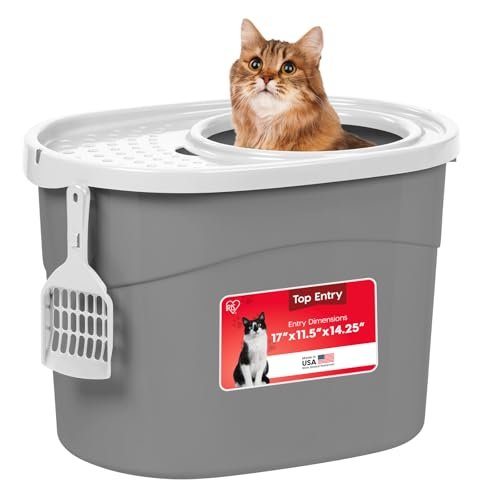
The IRIS USA Top Entry Cat Litter Box goes after tracking first. The textured lid acts as a trap for granules stuck to your cat’s paws, and because the entry sits up high, your cat has to climb out and shake some of that debris back into the pan. Floors around a standard tray usually gather grit. Here, most of it stays put.
The hooded shape also blocks spray from reaching walls and baseboards, and the enclosed space gives cats a sense of cover in a busy house. The plastic body is light and wipes clean, and it fits in tight spots like a laundry room or bathroom corner. If a dog keeps investigating the box, the top opening is a real deterrent, since most dogs can’t work their way in. Cleaning is simple: lift the lid, scoop, wipe.
Pros
- ✓ Textured lid traps litter particles
- ✓ Enclosed design contains waste and spray
- ✓ Elevated entry keeps out most curious dogs
Cons
- • Cat has to be able to jump comfortably
- • Large footprint may not fit tiny closets
- • Lid comes off completely for deep cleaning, so you need somewhere to set it
|
2
|
IRIS USA Top Entry Cat Litter Box, Hooded Privacy, Large, Beige |
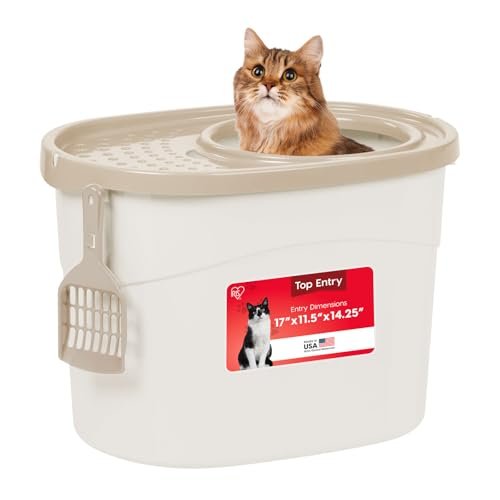
Same core design as the Gray/White model, in a color that blends into most living rooms and hallways. It comes with a scoop that hangs from the side of the box, so you’re not hunting for it at 7 a.m. The wide entry makes it easier for a cat that’s new to top entry boxes to figure out where to go.
Pick this one if color matters to you and you want the simplest version of the IRIS layout. [Add your own note here: how long you’ve used it, and whether your cat took to it on day one or day five.]
Pros
- ✓ Scoop hook keeps the scoop attached to the box
- ✓ Wide entry helps first-time top entry cats
- ✓ Neutral color suits most rooms
Cons
- • Same jump requirement as every top entry box
- • Light colors show scratches and stains over time
- • No odor filter, so daily scooping is the only odor control
|
3
|
Amazon Basics Large Cat Litter Box with High Sides, Top Entry, Odor Control |
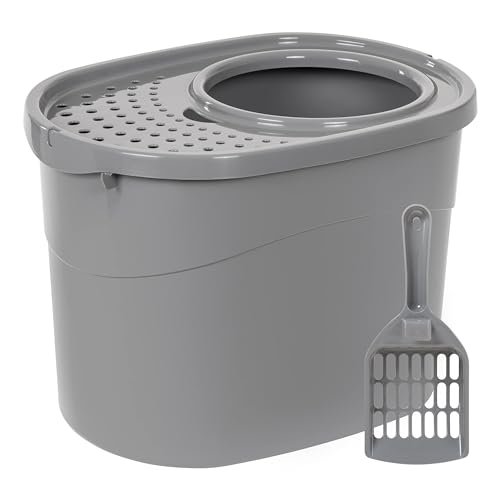
This is the pick for people whose main complaint is smell. It has a filtered lid and a spot to store the scoop on the box, and the listing describes the plastic as BPA-free. High sides help with spraying and scatter.
A filter only helps if you keep up with it. Replace it on the schedule the maker gives, and treat it as a backup to scooping, not a replacement. [Add your own note here: how the filter held up after a few weeks.]
Pros
- ✓ Filtered lid for odor control
- ✓ Onboard scoop storage
- ✓ High sides for scatter and spray
Cons
- • Filters need replacing, which is a small ongoing cost
- • High sides make it a tough jump for older cats
- • Check the listing for exact interior size before buying for a big cat
|
4
|
Arm & Hammer Premium Top Entry Litter Box with Filter to Clean Paws |
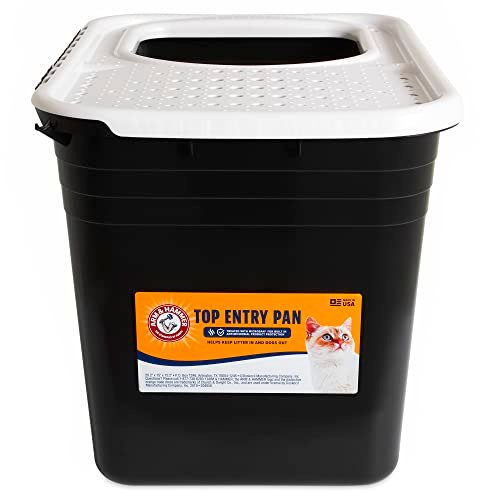
Arm & Hammer pairs a grated lid with Microban antimicrobial protection on the box surface. Microban treats the plastic itself, so it helps limit odor-causing bacteria on the pan. It doesn’t neutralize urine that’s already in the litter, so you still scoop every day.
High walls and the grated lid keep the space tidy and mostly dog-proof. It’s the more polished-looking option of the five, and it suits households where the box sits in a visible spot.
Pros
- ✓ Microban protection on the plastic
- ✓ Grated lid cleans paws
- ✓ High walls contain spray and scatter
Cons
- • Antimicrobial coating doesn’t replace scooping
- • Filter refills add to the running cost
- • Confirm dimensions on the listing for large cats
|
5
|
IRIS USA Large Top Entry Cat Litter Box, Hooded Privacy, Beige/White |
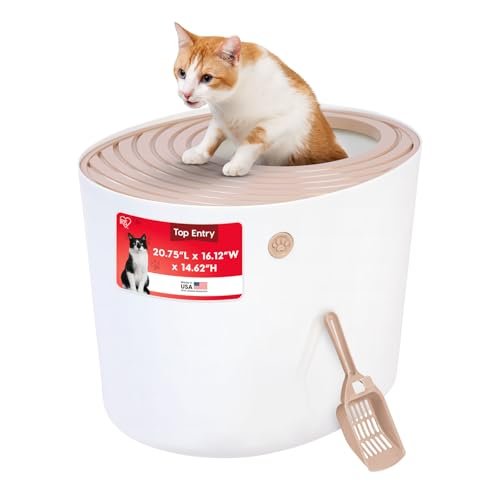
If your cat is on the bigger side, this is the roomier IRIS option. Extra interior space means your cat can turn around and dig without hitting the walls, and a cramped box is one of the fastest ways to get a cat to go on the rug instead. The top entry design still contains odors and keeps litter off your floors.
Measure your cat nose to tail base, then compare it against the interior length on the listing. The base should be about 1.5 times your cat’s length.
Pros
- ✓ More interior room for larger cats
- ✓ Contains odors and scatter
- ✓ Same easy-clean lid as other IRIS models
Cons
- • Takes more floor space than the standard size
- • Still a jump, so not for seniors
- • Very large breeds may still want a bigger box
How to Switch Your Cat to a Top Entry Litter Box
Most switching problems come from rushing. Plan on one to two weeks, and expect some cats to take longer.
- Check your cat’s health and mobility. Senior cats and cats with joint issues may struggle to jump. Ask your vet if you’re unsure.
- Pick a quiet spot. Choose a low-traffic corner away from the washing machine and the front door. Clear furniture from the jump path so your cat doesn’t slip.
- Put the new box next to the old one. Don’t take the old box away yet. Let your cat sniff around the top opening on their own terms.
- Start with the lid off, if needed. A cat that hesitates often does better using the open base for a few days, then getting the lid back on.
- Use familiar litter. Switching box and litter at once doubles the change. Keep the litter the same until your cat is settled.
- Remove the old box after your cat uses the new one consistently. Wait until you’ve seen at least a week of reliable use.
What to Look For Before You Buy
All top entry boxes aim to cut mess. The differences show up in sizing, lid design, and how easy the box is to clean. Use the checklist and factors below.
Quick checklist
- ☐ Box base is about 1.5 times your cat’s nose-to-tail-base length
- ☐ Entry opening is wide enough for your cat’s shoulders and hips
- ☐ Lid comes off fully, or hinges out of the way
- ☐ Lid has deep grooves, not a smooth surface
- ☐ Plastic feels thick and doesn’t flex under pressure
- ☐ You have room for the box plus a litter mat
Interior Volume
Your cat has to stand up and turn a full circle. A cramped box leads to litter kicked out of the opening and accidents on the floor.
Lid Texture and Grip
The lid does the work. Deep grooves or a rough grate pull litter off paws. A smooth lid does nothing for tracking, and you’ve paid for a top entry design you aren’t getting.
Ease of Maintenance
Look at how the lid attaches. If it’s fiddly, you’ll scoop less often and the box will smell. A lid that lifts off in one motion, or a hinge that stays clear while you work, is worth paying a few dollars more for.
Durability and Materials
Thin, brittle plastic cracks under a heavy cat’s landing. Check reviews for cracked corners and warped lids. If a BPA-free or recycled-content claim matters to you, confirm it on the manufacturer’s page, not just the retailer’s.
Best Litter for a Top Entry Litter Box
Litter choice affects tracking and odor more than most owners expect. Fine, light, dusty litter rises and escapes. Heavier clumping formulas and larger pellets stay put.
| Litter type | Tracking | Dust | Note |
|---|---|---|---|
| Heavy clumping clay | Low to medium | Choose low-dust | Weighs more, so the box gets heavy to lift |
| Fine, lightweight clumping | Higher | Often higher | Escapes through lid grooves more easily |
| Pellets (wood, paper) | Low | Low | Some cats dislike the texture |
| Crystal / silica | Low | Low | Pricier, and not every cat accepts it |
Fill to a depth of two to three inches. Less than that and your cat hits the bottom while digging. More than that and litter gets kicked up the walls.
How to Keep a Top Entry Litter Box Clean and Odor-Free
The lid holds smells in, and it holds them in your cat’s face too. Cleaning habits matter more with a covered box than an open one.
- Scoop daily. Enclosed boxes trap smells, and a cat that finds the box unpleasant will find somewhere else to go.
- Wipe the lid weekly. Clogged grooves stop cleaning paws. A toothbrush works well for the slots.
- Deep clean every two to four weeks. Empty the box, wash with mild unscented soap and warm water, and dry it fully before refilling. Skip strong-smelling cleaners, since cats notice them.
- Use a litter mat. Even the best top entry box lets a few grains through. A mat catches strays before they reach your flooring.
- Check for drafts and noise. A startled cat leaps out fast and scatters litter, lid or no lid.
- Watch after the switch. If your cat hesitates, remove the lid temporarily and reintroduce it later.
- Replace the box about once a year. Scratches in the plastic hold bacteria and odor.
Common Top Entry Litter Box Mistakes
Ignoring Cat Mobility
Forcing a senior or arthritic cat into a top entry box is the most common mistake. Jumping becomes painful, and cats avoid pain. Put your cat’s comfort ahead of a cleaner floor.
Buying Too Small
Some owners pick the smallest model to save space. A box that’s too small stops proper digging and turning, so litter flies out of the hole or your cat skips the box. Measure your cat and make sure the base is 1.5 times longer.
Skipping Daily Scooping
Out of sight, out of mind. But odors concentrate quickly in a covered space, and a smelly box sends cats looking for a cleaner spot.
Using the Wrong Litter
Fine, dusty, or lightweight litters escape through the opening more easily. Go for heavier pellets or a low-dust clumping formula.
Changing Everything at Once
New box, new litter, new location. Cats notice all three. Change one thing at a time.
Troubleshooting: Cat Won’t Use the Top Entry Box
| Problem | Likely cause | What to try |
|---|---|---|
| Cat sniffs and walks away | Unfamiliar shape, or the jump feels awkward | Remove the lid for a few days, keep the old box available |
| Peeing next to the box | Pain from jumping, smell, or a medical issue | See a vet, then try an open pan or a lower entry box |
| Litter still on the floor | Clogged lid, light litter, cat exiting too fast | Clean the grooves, switch to heavier litter, add a mat |
| Box smells despite scooping | Old scratched plastic or the wrong litter | Deep clean, then replace the box if the smell returns within days |
| Cat gets stuck or squeezes through | Opening too small for your cat | Move up to a larger model or a different design |
Quick Summary
- The IRIS USA Gray/White model uses a textured lid and high walls to trap litter and keep dogs out of the box.
Get this Solution - The IRIS USA Beige version adds a scoop hook and a wide entry, which keeps upkeep simple.
Get this Solution - Amazon Basics has a filtered lid and onboard scoop storage, aimed at people who want odor control on a budget.
Get this Solution - Arm & Hammer offers Microban protection, high walls, and a grated lid for a tidy, mostly dog-proof setup.
Get this Solution - The large IRIS USA box gives bigger cats extra room while still containing odors and scatter.
Get this Solution
Bottom line on the pros and cons of top entry litter box designs: they cut tracking and block dogs, and they’re a poor fit for older or stiff cats. If your cat can jump, buy one and scoop daily. If your cat can’t, stay with an open or low-entry box.
Disclosure: some links on this page are affiliate links. If you buy through them we may earn a commission at no extra cost to you. Product details come from manufacturer listings and can change, so confirm specs before you order. This article isn’t veterinary advice. If your cat changes litter habits suddenly, talk to your vet.
Frequently Asked Questions
What are the pros and cons of a top entry litter box?
Pros: less litter tracking, contained spraying, dog resistance, and more privacy. Cons: your cat has to jump, odors build up if you skip scooping, some cats feel trapped, and large or older cats may struggle.
Do cats like top entry litter boxes?
Many do, especially healthy adult cats that like privacy. Others dislike the enclosed feel or the jump. The only reliable test is putting one next to the old box and watching which your cat picks.
Are top entry litter boxes good for older cats?
Usually not. Arthritis and stiff joints make jumping painful, and a cat in pain may stop using the box. Seniors do better with a low-entry or open box.
Are top entry litter boxes good for kittens?
Not for very young kittens. A high wall is hard for a tiny kitten to climb. Start with a low open pan and move to top entry once your kitten jumps confidently.
Does a top entry litter box reduce litter tracking?
Yes. The grooved lid pulls granules from paws as your cat climbs out. It won’t stop all tracking, so a litter mat underneath still helps.
Do top entry litter boxes keep dogs out?
Most of the time. The elevated opening is hard for a dog to reach through. Small, persistent dogs sometimes manage, so watch for it during the first few weeks.
Do top entry litter boxes smell?
They can. Covered boxes trap odor, so daily scooping and a regular deep clean matter more than with an open pan. A filter helps a bit but isn’t a fix.
How do I get my cat to use a top entry litter box?
Place it next to the old box, keep the same litter, and remove the lid at first if your cat hesitates. Cats usually adapt within a few days to two weeks.
How big should a top entry litter box be?
The base should be about 1.5 times your cat’s length, and the opening should clear your cat’s shoulders and hips. Big cats usually need a large model.
Is a top entry litter box worth it?
For healthy adult cats that scatter litter, or homes with a dog raiding the box, yes. Many models cost under $50. For seniors, kittens, or very large cats, no.
Are top entry litter boxes better than hooded boxes?
For tracking and dog control, yes. For senior cats and ease of access, hooded boxes with a front door are easier. See our top entry vs front entry comparison for details.
How often should I clean a top entry litter box?
Scoop daily. Wipe the lid weekly and deep clean the whole box every two to four weeks.

Written by Mishu
A passionate cat lover and indoor living enthusiast, Mishu is the founder and voice behind Indoor Living Cat – a go-to resource for cat owners who want to create the happiest, healthiest life for their feline companions indoors.
View Full Profile