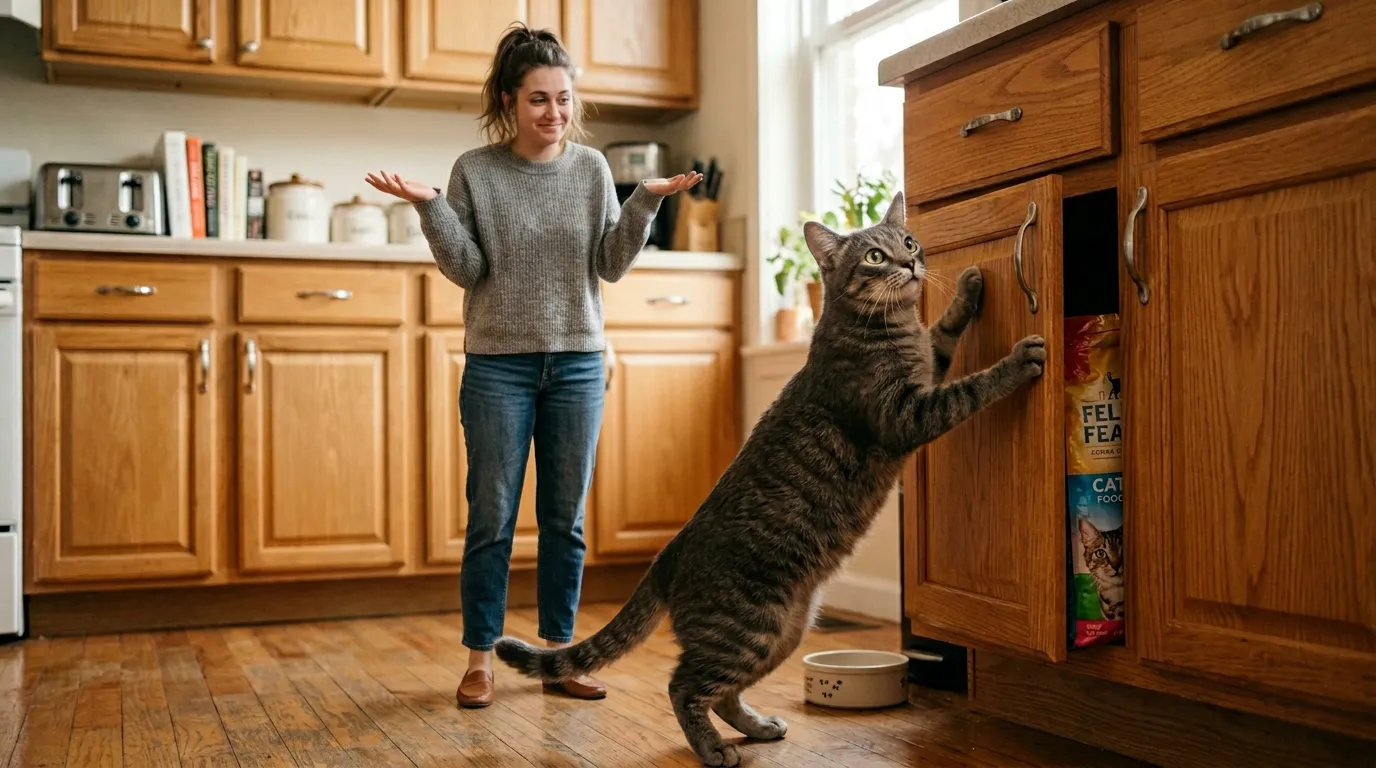
Your indoor cat follows you to the kitchen every single time you walk in, meows at the bowl before it is even empty and acts like every meal you serve might be their last. Understanding Why Is My Indoor Cat Always Hungry matters because the answer ranges from completely harmless boredom to a medical condition that needs a vet visit this week. I noticed something telling when I started tracking my cat’s actual behavior more carefully she only stopped begging after I added a ten-minute play session before meals, not after I increased her food. That single observation pointed directly at boredom as the driver rather than genuine hunger. This guide covers every real cause from behavioral to medical so you know exactly what you are dealing with and what to do next.
An indoor cat that always seems hungry is usually experiencing boredom, a learned begging habit or meals that do not satisfy their natural hunting instinct. However, if the hunger comes with weight loss, increased thirst or changes in litter box use, those combinations point to medical causes like hyperthyroidism, diabetes or intestinal parasites that need a vet visit promptly.
The Difference Between Real Hunger and Behavioral Hunger in Indoor Cats
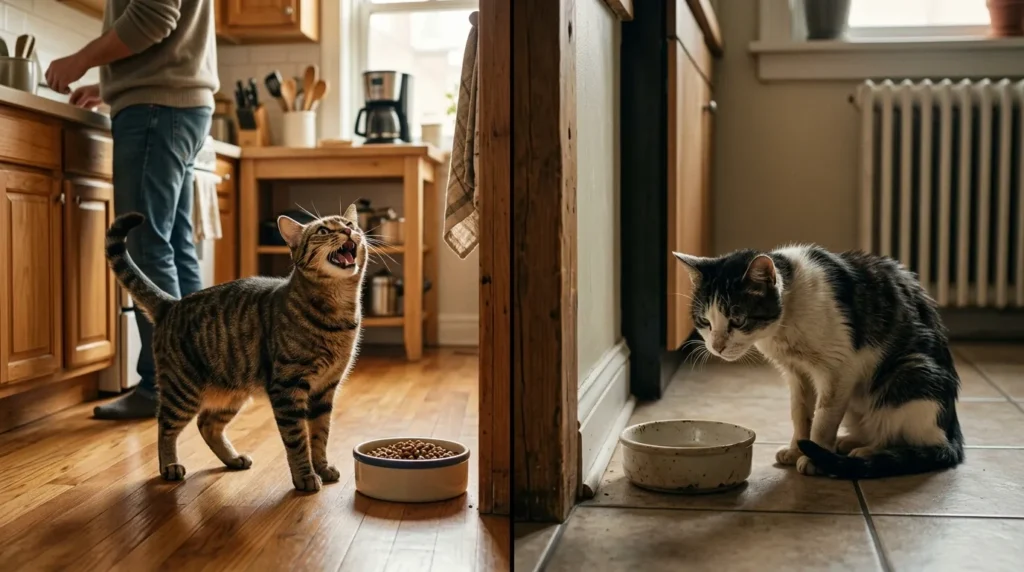
Real hunger and behavioral hunger look different when you know what to watch for and separating the two is the first step toward solving the problem rather than guessing at it. Real hunger in a medically compromised cat usually comes with physical evidence visible weight loss, a coat that looks dull or unkempt, changes in energy level and changes in how much water your cat drinks or how often they use the litter box.
Behavioral hunger in an otherwise healthy indoor cat produces dramatic begging, kitchen-following and meowing at the bowl without any of those physical changes. The cat maintains a healthy weight, has a clean coat and normal energy despite acting like it has not eaten in days. This is the most common version in apartment cats and it has behavioral and dietary solutions rather than medical ones.
Use this quick self-check before anything else:
| What You Observe | Most Likely Cause | Next Step |
| Begging constantly but weight is stable | Behavioral boredom or habit | Enrichment and schedule changes |
| Eating more than usual and losing weight | Medical vet visit needed | Book vet appointment within a few days |
| Eating more, drinking more, using litter box more | Medical possible diabetes or hyperthyroidism | Book vet appointment promptly |
| Eating more but thin despite eating | Medical possible parasites or malabsorption | Vet visit and fecal exam |
| Begging stops after play or attention | Behavioral boredom or attention-seeking | Enrichment routine changes |
Why Indoor Cats Are More Prone to Acting Always Hungry?
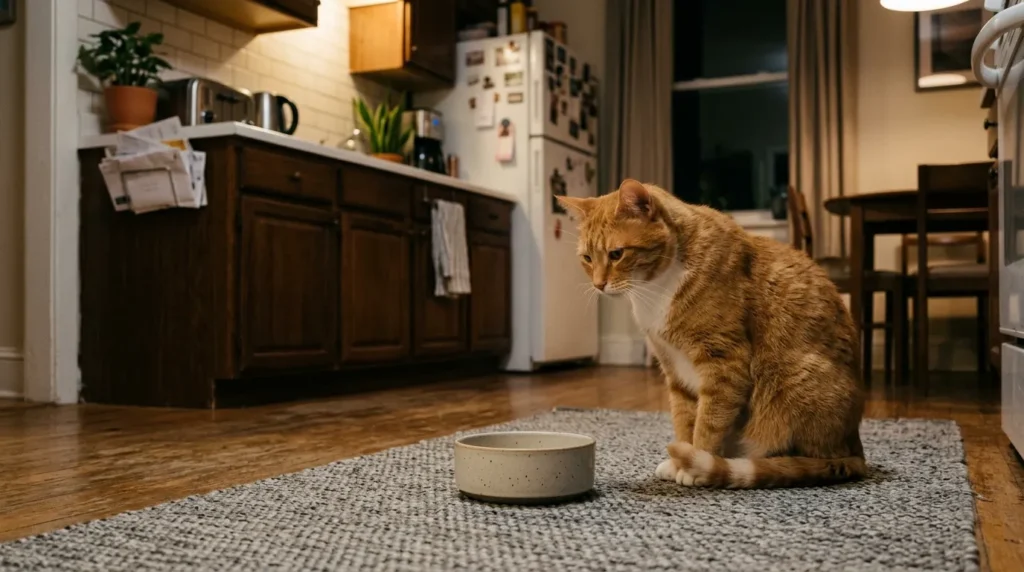
Indoor cats are more prone to constant food-seeking behavior than outdoor cats because their natural predatory instinct has no outlet. A wild or outdoor cat hunts eight to twelve small prey items per day and the physical and mental effort of hunting produces genuine satisfaction before each meal. Your apartment cat skips the hunt entirely and goes straight to the bowl and that missing middle step leaves them behaviorally unsatisfied regardless of how many calories they consumed.
Boredom compounds this significantly. In a small apartment with limited environmental change, food becomes the most reliable source of stimulation and novelty in the cat’s day. The kitchen and the bowl become focal points because those are the locations where interesting things happen regularly. Many indoor cat owners report that their cat’s constant food-seeking behavior reduces dramatically when daily play sessions and environmental enrichment are added not because the cat was starving but because the food focus was filling a stimulation void.
The connection between how unstimulating an apartment environment is and how food-obsessed your cat becomes is direct. This is why addressing the environmental side of your cat’s life matters as much as the feeding side when your indoor cat always seems hungry. For practical ideas on what actually works in small apartment spaces to address this, this guide on indoor cat enrichment covers the specific tools and routines that replace food-seeking with genuinely satisfying mental activity.
Why Is My Indoor Cat Always Hungry? The 8 Real Causes

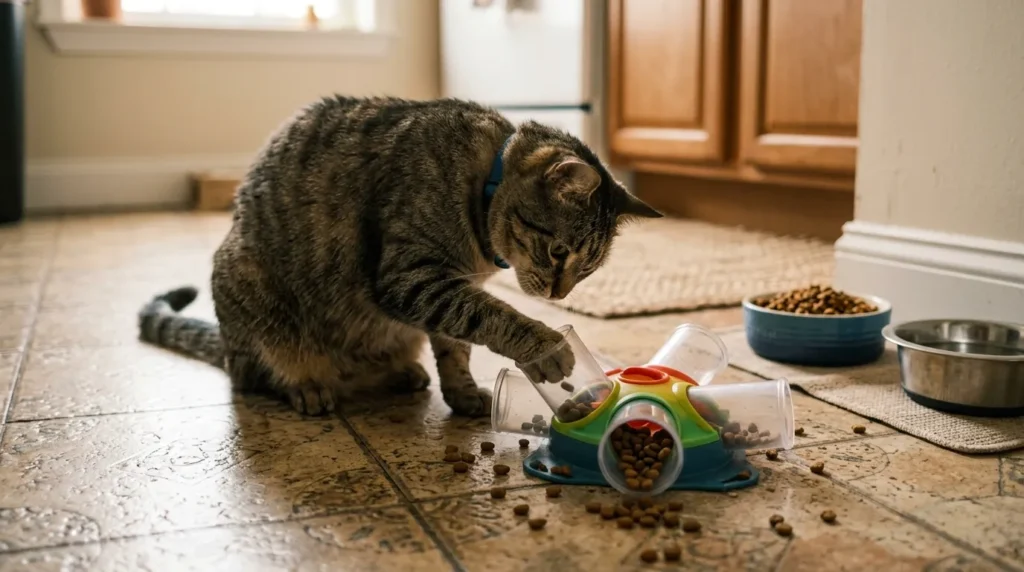
Cause 1: Boredom and inadequate mental stimulation. This is the most common cause in healthy indoor cats. When there is nothing to engage a cat’s hunting instinct, food becomes the primary focus of their day. Puzzle feeders, wand toy sessions before meals and window perches with outdoor views address the root cause rather than the symptom.
Cause 2: Learned begging behavior. If responding to meowing at the bowl has ever produced food outside of scheduled meal times, your cat has learned that the behavior works. The meowing intensifies over time as the cat tests how much drama is needed to trigger the food response. Ignoring begging consistently and redirecting to play breaks this cycle within one to two weeks.
Cause 3: Meals that do not satisfy the hunting cycle. Cats are designed to hunt, catch, eat, groom and sleep. When food appears without hunting effort the eating phase does not carry the same psychological satisfaction. Playing actively for ten to fifteen minutes before every meal and feeding immediately after produces a more satisfied cat on the same number of calories.
Cause 4: Low-quality food with poor nutrient density. Cheap cat foods with high filler content deliver calories without adequate protein and fat to satisfy a cat’s natural dietary requirements. A cat can eat the correct calorie total and still feel hungry if the macronutrient profile does not match what their body needs. High-protein wet food or quality kibble with named meat as the first ingredient produces noticeably better satiety.
Cause 5: Meals spaced too far apart. A cat’s stomach empties in roughly eight to ten hours. A single daily meal or meals spaced twelve or more hours apart creates genuine hunger gaps that drive food obsession behavior. Splitting the same daily calorie total across three meals instead of two often resolves persistent begging without changing the total food amount.
Cause 6: Hyperthyroidism is the most common medical cause in cats over eight years old and the classic presentation is a cat that eats ravenously and still loses weight. The thyroid gland overproduces hormones that accelerate metabolism faster than food can compensate. Other signs include hyperactivity, a poor coat, increased thirst and occasional vomiting. This condition responds very well to treatment when caught early.
Cause 7: Diabetes mellitus produces the same trio repeatedly increased hunger, increased thirst and increased urination usually alongside gradual weight loss despite eating more than usual. Overweight or previously obese indoor cats have higher diabetes risk. A blood glucose test at the vet confirms or rules this out quickly.
Cause 8: Intestinal parasites. Even strictly indoor cats can acquire worms or giardia through contaminated soil on shoes, new items brought into the home or contact with other animals. Parasites steal nutrients directly so the cat eats more but absorbs less, staying thin and hungry despite consistent food intake. A simple fecal exam at the vet diagnoses this and treatment is straightforward.
Insight The quickest diagnostic tool you have at home costs nothing. Weigh your cat once a week for three weeks by holding them and stepping on a bathroom scale then subtracting your own weight. A cat that is begging dramatically but maintaining stable weight almost certainly has a behavioral cause. A cat losing weight despite eating more has a medical one. That data is worth more than any amount of guessing.
Practical Solutions That Actually Resolve the Constant Hunger Behavior
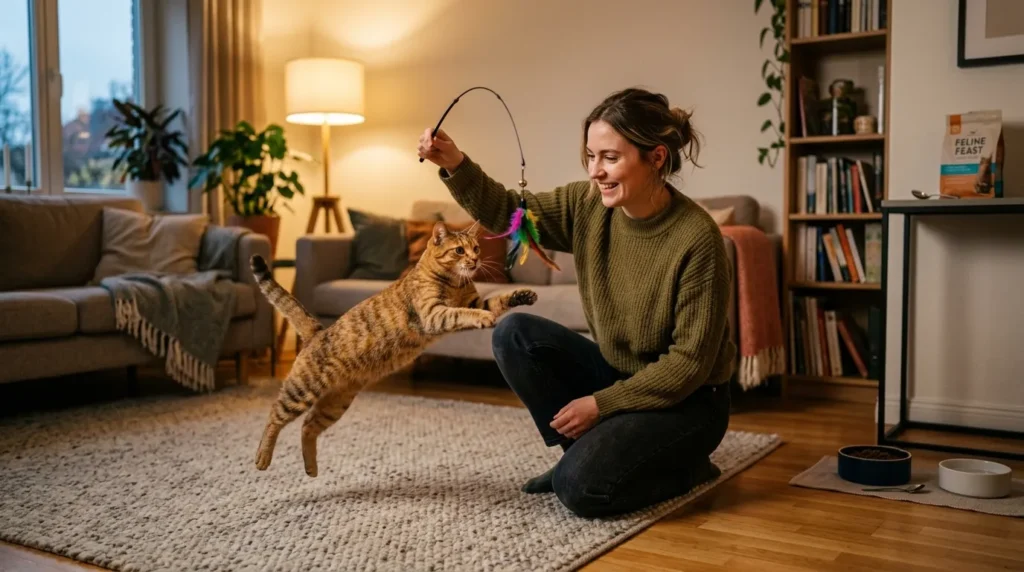
The fastest behavioral fix is pre-meal play. Play actively for ten to fifteen minutes immediately before every meal and feed your cat the moment play ends. This mimics the hunt-catch-eat-groom-sleep cycle that produces genuine satisfaction in cats and most owners see the inter-meal begging reduce meaningfully within five to seven days of consistent practice. The play does not need to be elaborate a wand toy moved unpredictably across the floor is enough to trigger the hunting sequence.
Switching from free feeding to measured scheduled meals is the second critical change for cats where boredom eating is the driver. Structuring when food appears rather than leaving it always available removes the constant food-focus from your cat’s environment and redirects their attention to other stimuli between meal times. The detailed calorie calculations and portion math for making this switch correctly without underfeeding or overfeeding your specific cat are covered in this guide on how to feed an indoor cat properly.

Upgrading food quality addresses the nutrient-density problem for cats that eat appropriately sized portions but still act unsatisfied. Look for a wet food or kibble where a named protein such as chicken, salmon or turkey is listed as the first ingredient and where the guaranteed analysis shows a minimum of 30 percent protein on a dry matter basis. The difference in satiety between a quality protein-first food and a filler-heavy food is real and noticeable within a few weeks of switching.
Insight If your cat begs for food specifically in the hour before their scheduled meal time, that is normal anticipatory behavior and not a sign you are underfeeding them. The begging you need to address is the persistent all-day food-seeking that happens regardless of when the last meal was. Those two patterns have different causes and different fixes.
Common Mistakes That Make the Constant Hunger Worse
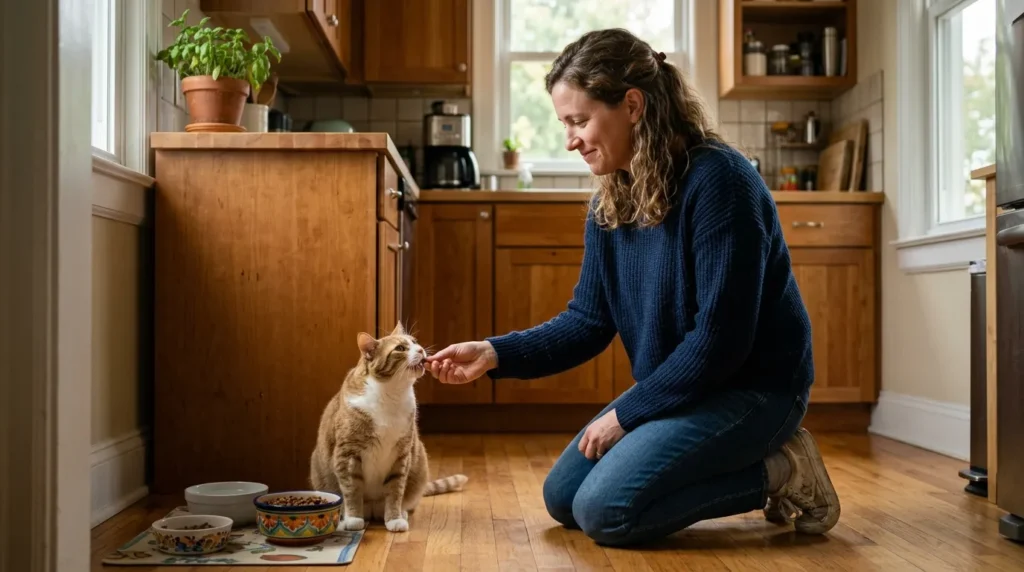
The most common mistake is feeding outside of scheduled meal times in response to begging. Every time meowing at the bowl produces food, the behavior is reinforced and it intensifies over the following days. What starts as occasional begging becomes constant from the cat’s perspective because the strategy has been proven to work. Ignoring begging consistently is genuinely difficult but it is the only thing that breaks the learned behavior pattern permanently.
The second mistake is increasing portion size when begging continues. If your cat is at a healthy weight and the food already meets their calorie needs, adding more food does not address the root cause and adds unnecessary calories. The persistent hunger behavior in healthy-weight cats almost always requires an enrichment or schedule change rather than a feeding amount change.
The third mistake is assuming all constant hunger behavior is behavioral and never checking for a medical cause. Hyperthyroidism in particular develops gradually enough that the increased appetite can appear slowly over months before owners recognize the pattern as abnormal. A cat that has become noticeably more food-focused over the past six months alongside any other subtle changes in weight or energy warrants a vet check even if you suspect it is behavioral.
When the Constant Hunger Points to Something That Needs a Vet Visit?
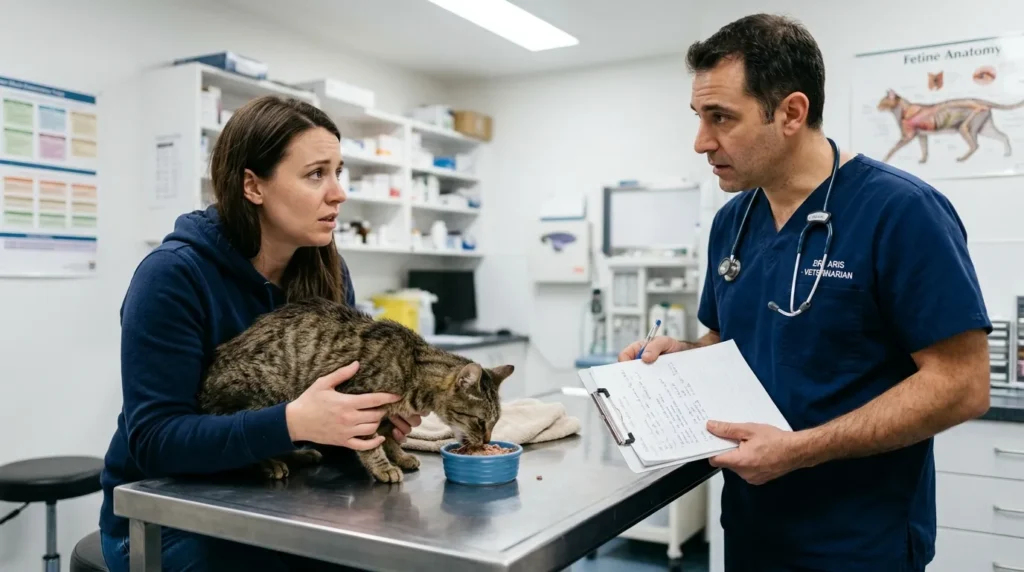
Three specific combinations require a vet visit rather than a behavioral fix: increased hunger alongside weight loss, increased hunger alongside increased thirst and increased urination, and increased hunger alongside a change in coat quality or energy level. Any one of these combinations points toward a medical cause where home management changes will not address the underlying problem and where early treatment produces significantly better outcomes than delayed treatment.
According to the Cornell Feline Health Center, hyperthyroidism affects approximately 10 percent of cats over ten years old and is one of the most common endocrine disorders in older cats. The condition is highly treatable with medication or radioactive iodine therapy when caught before significant weight loss has occurred. A simple blood panel that takes minutes at the vet’s office confirms or rules out both hyperthyroidism and diabetes simultaneously.
Polyphagia is the medical term for excessive appetite and when it appears with any of the warning combinations above it is a symptom rather than a behavior problem. Do not delay a vet visit to try behavioral fixes first if you see weight loss, increased thirst or coat deterioration alongside the constant hunger. This article is for informational purposes only. Always consult your vet if your cat shows unexplained weight loss, excessive thirst or sudden changes in appetite.
Frequently Asked Questions About Indoor Cats That Always Seem Hungry
Why does my indoor cat act like they are starving right after eating?
A cat that begs immediately after finishing a meal is usually experiencing one of two things genuine hunger from an insufficient portion or learned attention-seeking behavior. Weigh your cat monthly and check whether they are gaining or losing weight to determine which applies. If weight is stable and portions match your cat’s calorie needs, the post-meal begging is behavioral and a pre-meal play session usually resolves it within a week.
Is my indoor cat hungry or just bored?
If your cat’s weight is stable and there are no other symptoms, boredom is the most likely explanation. The practical test is adding a ten-minute wand toy play session before the next meal and observing whether the inter-meal begging reduces over the following three days. Boredom-driven hunger behavior almost always responds to enrichment changes. Genuine hunger from a medical cause does not.
Why is my cat always hungry but staying thin or losing weight?
This specific combination is a red flag for medical causes rather than behavioral ones. Hyperthyroidism, diabetes and intestinal parasites all cause increased appetite alongside weight loss or failure to gain weight despite eating more. A vet visit with bloodwork and a fecal exam is the appropriate first response when hunger and thinness appear together.
Can poor quality cat food make my indoor cat always hungry?
Yes. Foods with high filler content and low protein deliver calories without the nutrient density that satisfies a cat’s biological requirements. A cat eating an inadequate food can meet their calorie target and still experience genuine hunger signals because the amino acid and fat profiles are insufficient. Switching to a high-protein wet food or quality kibble with a named protein as the first ingredient often resolves persistent hunger within two to three weeks.
Should I feed my indoor cat more if they always seem hungry?
Only if a vet has confirmed the current portion is genuinely insufficient for your cat’s ideal body weight and calorie needs. For cats at a healthy weight that still beg constantly, adding more food adds calories without addressing the cause and leads to gradual weight gain. The fix is almost always enrichment, schedule changes or food quality improvement rather than more food.
The Answer Is Usually Simpler Than You Fear
When your indoor cat always seems hungry the cause is most often boredom, a learned habit or meals that skip the hunting step their biology expects. Add a play session before every meal starting today and switch to measured scheduled meals if you are currently free-feeding. If you notice weight loss, increased thirst or coat changes alongside the constant hunger, skip the behavioral fixes and go straight to the vet. Most cases resolve completely within two to three weeks of consistent changes to enrichment and routine. For the full picture of how to keep an indoor cat genuinely content in a small space, this guide on indoor cat health covers the daily habits that prevent most of the problems apartment cat owners face over time.
Indoor cats that always seem hungry are most commonly experiencing boredom, learned begging behavior or meals that do not satisfy their natural hunting instinct. Boredom-driven hunger resolves with pre-meal play sessions of 10 to 15 minutes and enrichment tools like puzzle feeders. Medical causes including hyperthyroidism, diabetes and intestinal parasites all produce increased appetite alongside weight loss, increased thirst or changes in coat quality. A cat losing weight despite eating more needs a vet visit and blood panel within a few days. Switching from free feeding to two to three scheduled measured meals per day and upgrading food protein quality resolves most behavioral hunger cases within two to three weeks.