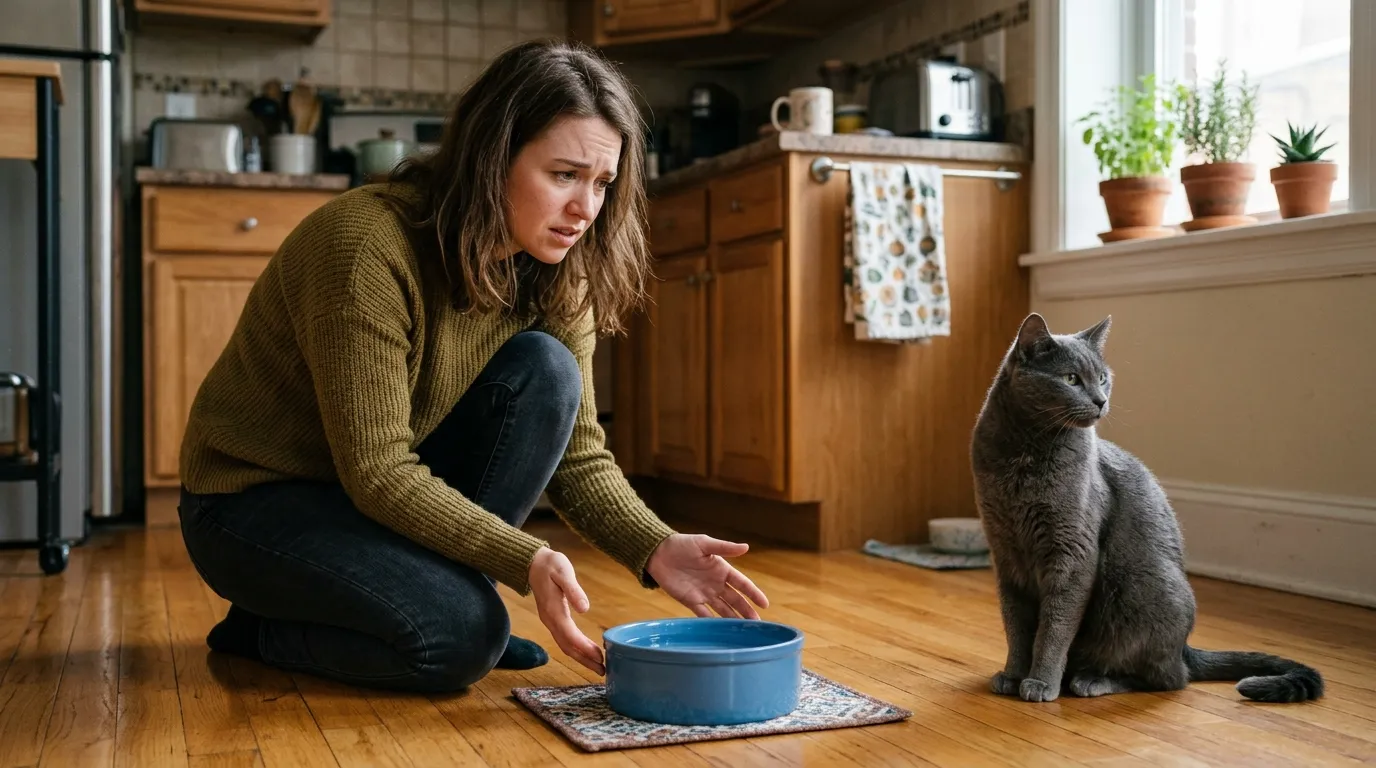
Your indoor cat walks past the water bowl every single day like it is not there and you know low hydration causes real problems over time. Learning how to get indoor cat to drink more water is one of the most practical things you can do for their long-term health because the consequences of chronic low water intake urinary crystals, bladder disease and kidney stress develop slowly and quietly until they become expensive emergencies. I learned this the hard way when my cat had a urinary blockage scare at four years old despite eating regularly and appearing completely healthy. Switching to primarily wet food and adding a moving water fountain resolved her water intake problem within a week. This guide covers every change that actually works from bowl placement to food strategy to flavor tricks so you can fix this before it becomes a crisis.
To get your indoor cat to drink more water, switch to wet food as the primary diet, add a cat water fountain since most cats prefer moving water, and place multiple wide shallow bowls in quiet spots away from the litter box. Most cats increase water intake noticeably within a few days of these combined changes.
Why Indoor Cats Struggle with Low Water Intake More Than Outdoor Cats?
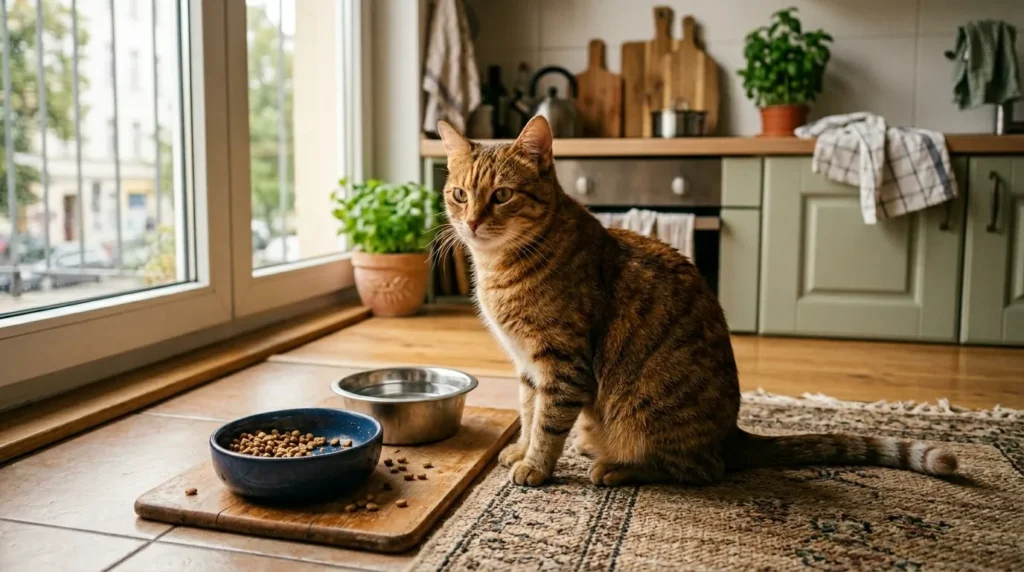
Indoor cats have a low thirst drive by biological design. Their wild ancestors lived in desert environments and evolved to get most of their water from prey rather than from standing water sources. A wild cat eating small animals gets approximately 70 percent of their daily water needs from the moisture in that food. Your indoor apartment cat eating dry kibble is getting only 8 to 10 percent moisture from food and is supposed to compensate entirely through voluntary drinking but their biology does not create the thirst signals strong enough to drive that compensation reliably.
The result is chronic low-level dehydration that most owners never detect because cats rarely show obvious thirst symptoms the way dogs do. Concentrated urine from insufficient water intake creates the ideal conditions for struvite and calcium oxalate crystal formation in the bladder and over time this progresses to feline lower urinary tract disease (FLUTD), bladder stones or kidney stress that requires veterinary intervention.
Indoor cats compound this risk through lower activity levels compared to outdoor cats. Physical movement stimulates thirst in most mammals and a sedentary apartment cat that barely moves between the sofa and the food bowl generates far less natural thirst drive than a cat hunting, exploring and patrolling territory outdoors.
How to Get Indoor Cat to Drink More Water? The 9 Changes That Work
The most effective approach is combining several changes rather than trying one thing and waiting. Here is what actually produces results, ranked by impact:
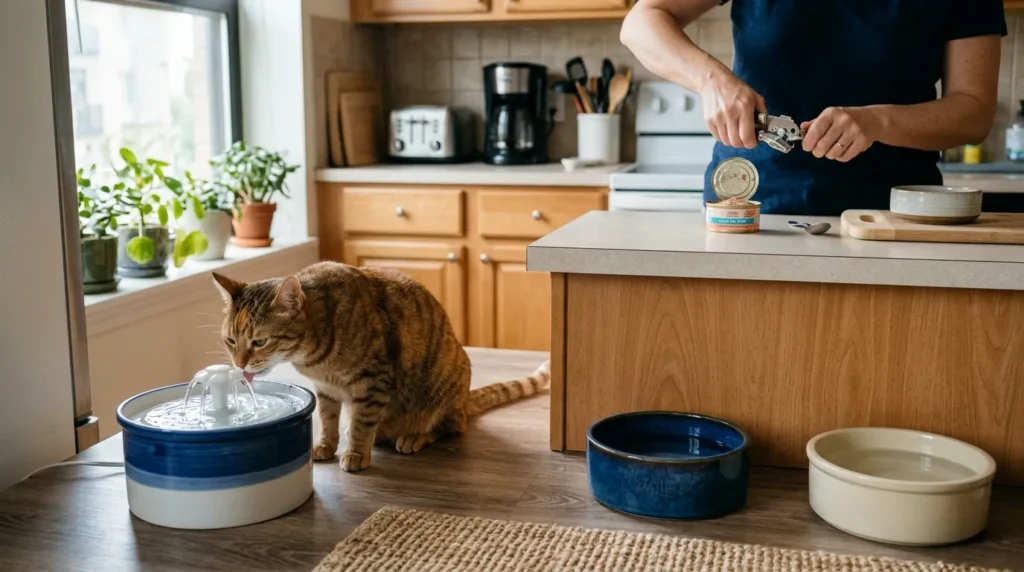
- Switch to wet food as the primary diet. Wet food contains 70 to 80 percent moisture by weight and it is the single biggest change you can make. A cat eating primarily wet food may double their total daily moisture intake without drinking any more water than before. Even replacing one dry food meal per day with wet food produces a meaningful improvement. The connection between diet type and hydration specifically for indoor apartment cats is covered in detail in this guide on how to feed an indoor cat properly it includes the practical calculation for how much wet versus dry food to use for your specific cat’s needs.
- Add a cat water fountain. Still water looks and smells stale to most cats within hours of being poured. Moving water triggers the drinking response more reliably because it signals freshness and safety to a cat’s instincts. Most cat owners report that their cat’s voluntary water consumption increases significantly within the first three to five days of introducing a fountain. Choose a model with a filter and clean it weekly a fountain with algae buildup is worse than no fountain.
- Place multiple water bowls in different rooms. One bowl near the food or litter box is the default setup for most owners and it is one of the least effective configurations possible. Cats avoid drinking near their litter box because predator-tracking instinct associates that area with vulnerability. Cats also prefer not to drink directly beside their food. Place three to four wide shallow bowls in quiet corners throughout the apartment and you will almost certainly see your cat using at least one of them regularly.
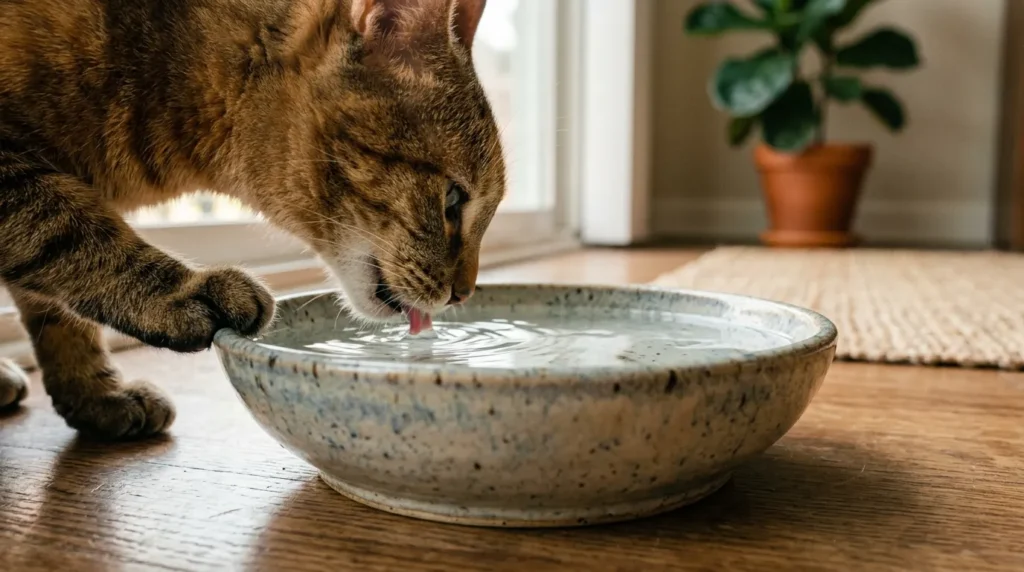
- Use wide shallow bowls with a full water level. Cats dislike deep narrow bowls because their whiskers touch the sides while drinking this is called whisker fatigue and it causes genuine discomfort that discourages drinking. Wide shallow ceramic or glass bowls filled to near the brim allow cats to drink without their whiskers making contact. Ceramic and glass also hold no residual odor or plastic taste that can put cats off. Plastic bowls develop micro-scratches over time that harbor bacteria and leave an off-taste that many cats detect and avoid.
- Refresh water two to three times per day. Cats are extraordinarily sensitive to water quality. Water that has been sitting in a bowl for twenty-four hours at room temperature in an apartment develops a flat taste and absorbs airborne odors that most cats reject without the owner realizing the water is the problem. Rinsing the bowl with hot water and refilling with fresh water at each meal time costs ten seconds and makes a measurable difference in how much your cat actually drinks.
- Add flavor to make water more appealing. A small amount of low-sodium chicken or tuna broth added to a water bowl dramatically increases palatability for most cats. Use broth made without onion or garlic and in small quantities a tablespoon in a full bowl adds enough scent and flavor to attract cats that ignore plain water entirely. Freezing broth into small ice cubes creates a slow-melting hydration treat that many cats enjoy pawing at and licking.
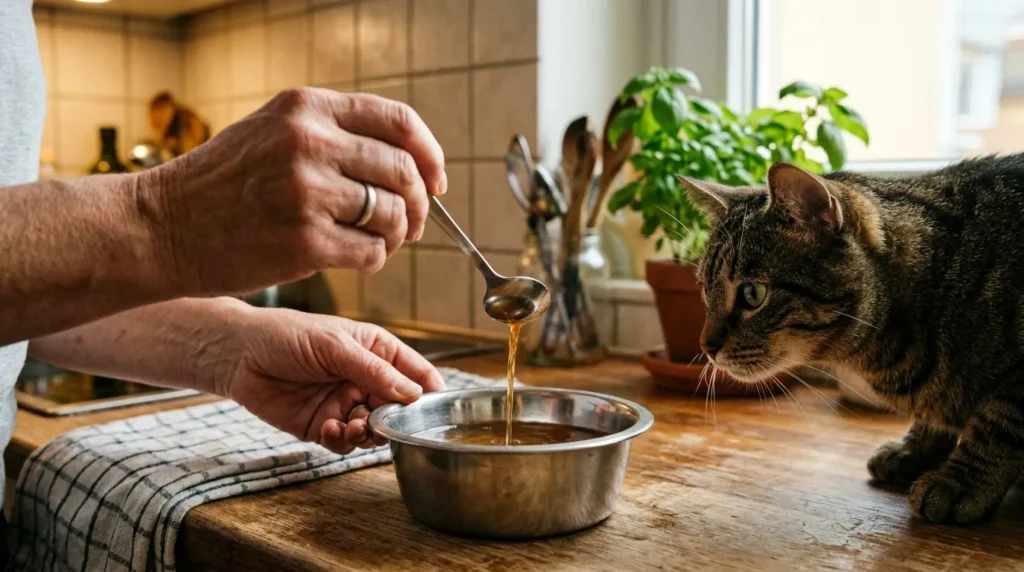
- Add extra water directly to food. For cats that eat wet food, stir one to two tablespoons of warm water into the food at each meal to create a broth-like gravy consistency. Most cats accept this readily and it meaningfully increases total fluid intake per meal. For cats still on dry food, soaking the kibble in warm water for a few minutes before serving softens it and adds moisture without requiring a complete diet change overnight.
- Try filtered or bottled water. Municipal tap water contains chlorine and in some areas fluoride or minerals at levels that cats detect by taste and smell even when humans cannot. Switching to filtered or room-temperature bottled water resolves the problem for a subset of cats that genuinely refuse tap water. It is worth testing for a week before investing in a fountain if you suspect water quality is the specific deterrent.
- Raise the water bowl slightly for senior cats. Older cats with arthritis or neck stiffness often avoid drinking because bending down to a floor-level bowl causes discomfort they cannot communicate. An elevated water station at three to four inches above floor level removes this barrier completely and increases voluntary drinking in senior cats almost immediately.
Insight The fountain versus bowl debate misses the point for most apartment cats. What matters is that the water is in multiple locations, always fresh and not near the litter box. Some cats prefer a fountain. Some prefer a bowl filled to the brim. Try both for a week each and watch which one your cat actually uses. Your cat’s preference matters more than which option feels more intuitive to you.
How Much Water Does Your Indoor Cat Actually Need Each Day?
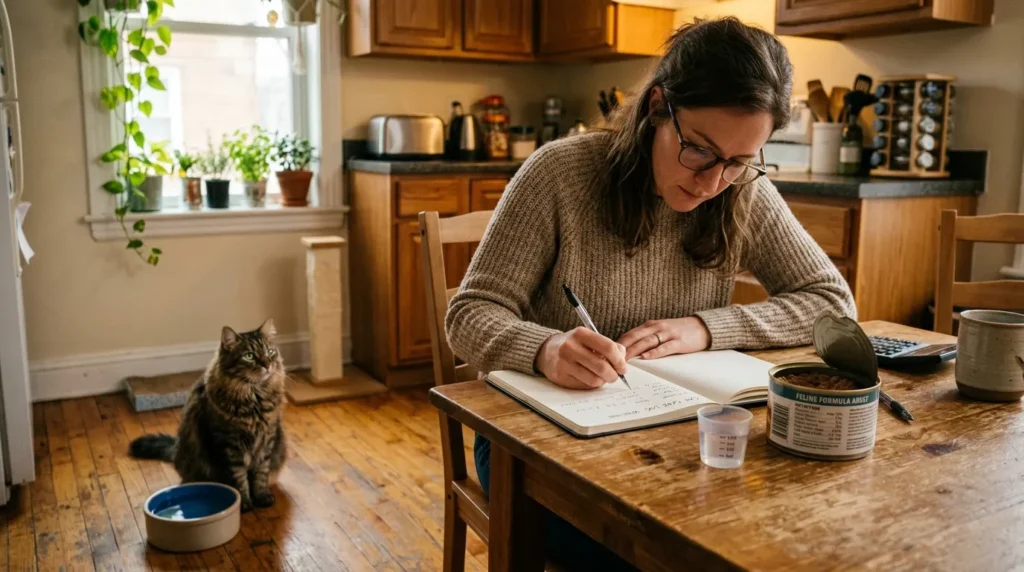
An indoor cat needs approximately four ounces of water per five pounds of body weight per day as a general guideline. A ten-pound cat needs roughly eight ounces about one cup of total daily fluid. This total comes from both drinking and food moisture combined, which is why wet food makes such a large difference to the math.
A cat eating wet food exclusively at 80 percent moisture content will meet most of that daily requirement through food alone and needs very little supplemental drinking. A cat eating only dry kibble at 10 percent moisture needs to drink nearly their entire daily water requirement independently, which rarely happens with a cat whose thirst drive is naturally low.
Track your cat’s hydration roughly by monitoring the litter box. A well-hydrated cat produces larger urine clumps with a paler color when you change the litter. A cat producing small dark concentrated clumps consistently is chronically under-hydrated regardless of whether the water bowl appears to be drinking down.
Understanding the full picture of total moisture intake including how food type interacts with daily water needs connects directly to the broader health picture for indoor cats. This guide on indoor cat health covers the specific urinary and kidney health risks of chronic low moisture intake in apartment cats and what preventive habits make the biggest difference long-term.
Insight The most underrated hydration tip I have found is placing a water bowl near where your cat already spends most of their time not near the kitchen. Most cats have a sofa or window perch they return to repeatedly throughout the day. A water bowl six feet from that spot gets used. A water bowl across the apartment does not.
Common Mistakes That Keep Indoor Cats Chronically Dehydrated
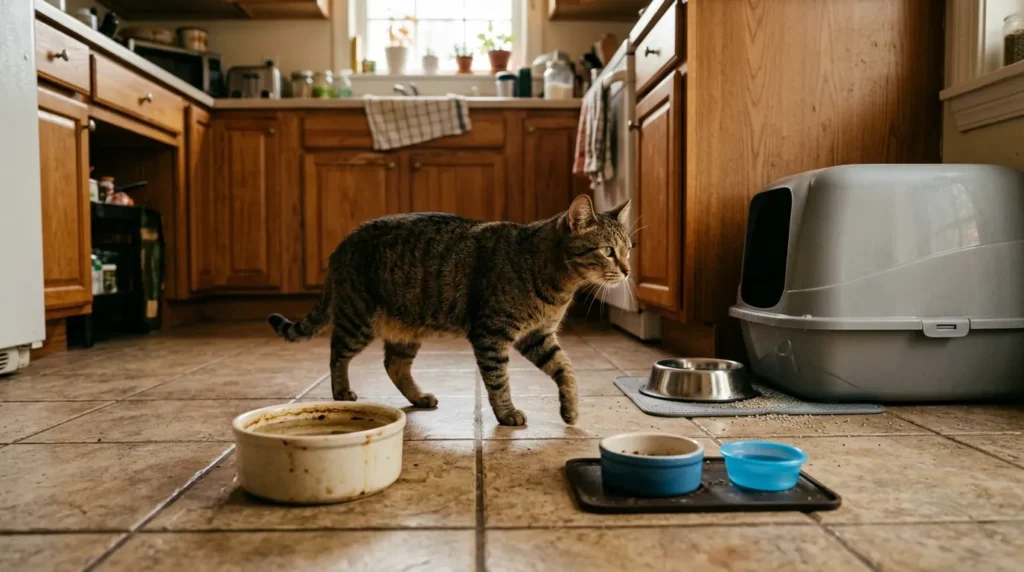
The most common mistake is placing the single water bowl next to the food bowl out of convenience. This creates a concentrated feeding zone that most cats prefer to leave between meals and the water bowl gets ignored along with the food residue smells and activity near that spot. Move water away from food and litter and most cats immediately begin using it more.
The second mistake is cleaning the bowl only when it looks dirty. Water bowls develop bacterial biofilm on the interior surface within 24 to 48 hours even when the water looks clear. That biofilm produces an odor cats detect easily and avoid. Rinsing the bowl thoroughly with hot water once per day and fully washing it with mild soap every two to three days keeps it genuinely fresh rather than just visually clean.
The third mistake is offering only one water station in a small apartment. Cats are more likely to drink when water is conveniently nearby wherever they happen to be. One bowl requires active intent to seek out. Three bowls placed in the living room, bedroom and kitchen create incidental drinking opportunities throughout the day that add up significantly by evening.
When Low Water Intake Signals a Health Problem Worth Investigating?
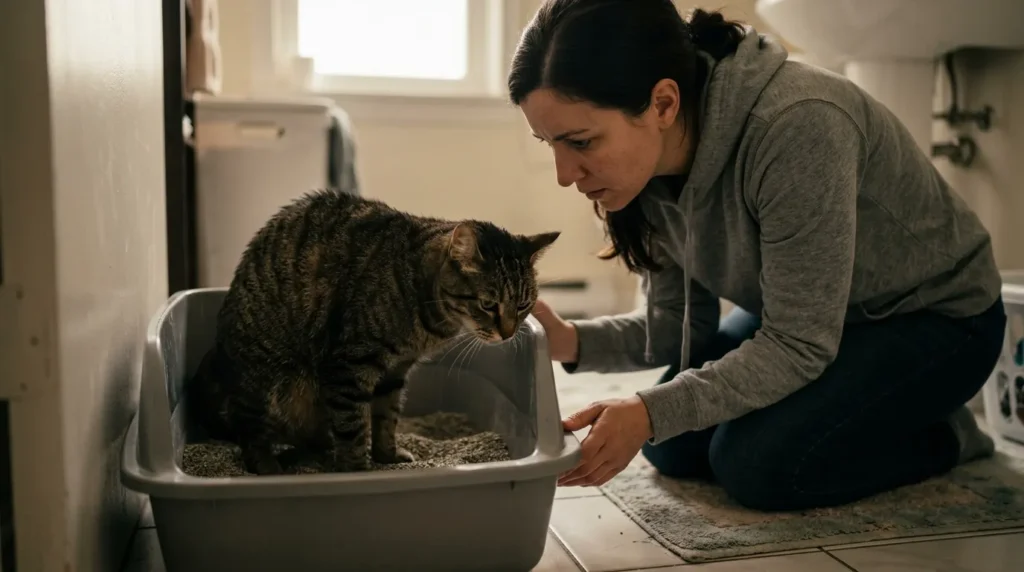
Normal low water intake in an otherwise healthy cat responds to the practical changes in this article within one to two weeks. Signs that something beyond simple preference is happening include sudden changes in drinking behavior in either direction, visible straining or crying in the litter box, blood in the urine, urinating outside the litter box or producing no urine for more than twelve hours.
Male cats are at higher risk for complete urinary blockages than female cats because of anatomical differences and a blockage is a life-threatening emergency requiring immediate veterinary care. A male cat that has been straining in the litter box and producing nothing for four to six hours needs emergency treatment that night rather than a wait-and-see approach.
According to the Cornell Feline Health Center, FLUTD affects approximately one to three percent of cats seen at veterinary clinics and diet changes increasing moisture intake are among the primary preventive recommendations. This article is for informational purposes only. Always consult your vet if your cat shows signs of urinary difficulty, changes in litter box behavior or sudden changes in water consumption.
Frequently Asked Questions About Getting Indoor Cats to Drink More Water
Will a cat water fountain actually make my cat drink more?
Yes for most cats. Moving water triggers the drinking response more reliably than still water because it signals freshness and safety to cats’ instincts. Many owners report their cat’s water intake doubles or triples within the first week of introducing a fountain. Introduce it gradually place it unplugged first for a day or two so your cat gets used to it before the motor turns on.
How do I know if my indoor cat is dehydrated?
The skin tent test is the most accessible home check: gently pinch the skin at the back of your cat’s neck. If it snaps back immediately the cat is well-hydrated. If it returns slowly or holds a tent shape your cat is dehydrated and a vet visit is appropriate. You can also check gum moisture healthy gums feel slippery and wet, not tacky or dry. This article is for informational purposes only. Always consult your vet if you suspect dehydration.
Can I add tuna water or broth to my cat’s water bowl?
Yes and it works well for many reluctant drinkers. Use tuna packed in water not oil and low-sodium chicken broth without onion or garlic. A tablespoon per bowl is sufficient you want to add scent and interest not change the flavor dramatically. Rotate between plain water and flavored water so your cat stays comfortable with both.
Should I use filtered water for my cat’s water bowl?
For cats that consistently ignore tap water despite fresh daily changes, filtered or bottled water is worth trying for a week. Some cats detect chlorine or mineral content in municipal water by smell even when humans cannot. Filtered water costs little and resolves the problem for a meaningful percentage of cats that simply prefer it.
Where is the best place to put a cat water bowl in an apartment?
Away from both the litter box and the food bowl and ideally near where your cat already spends most of their time. Quiet corners in the living room, bedroom or near a favorite resting spot work better than the kitchen feeding area. Multiple stations throughout the apartment dramatically increase how much an indoor cat drinks over the course of a day.
Start With Two Changes Today
Getting your indoor cat to drink more water is almost entirely a setup problem rather than a cat behavior problem. The biggest single change is switching to wet food so that most of the daily moisture requirement comes from food rather than drinking. The second most impactful change is adding a fountain or multiple fresh water stations away from the litter box and food. Make those two changes this week and your cat’s hydration picture will look noticeably different within a few days.
Indoor cats need approximately four ounces of water per five pounds of body weight daily and cats eating only dry kibble with 10 percent moisture rarely meet this requirement through voluntary drinking alone. Wet food with 70 to 80 percent moisture content is the most effective way to increase total daily fluid intake. Cat water fountains increase voluntary drinking for most cats within three to five days of introduction. Multiple wide shallow ceramic or glass water bowls placed away from the litter box and food bowl significantly increase incidental drinking throughout the day. Water should be refreshed two to three times daily and bowls fully cleaned every two to three days to prevent bacterial biofilm that cats detect and avoid.