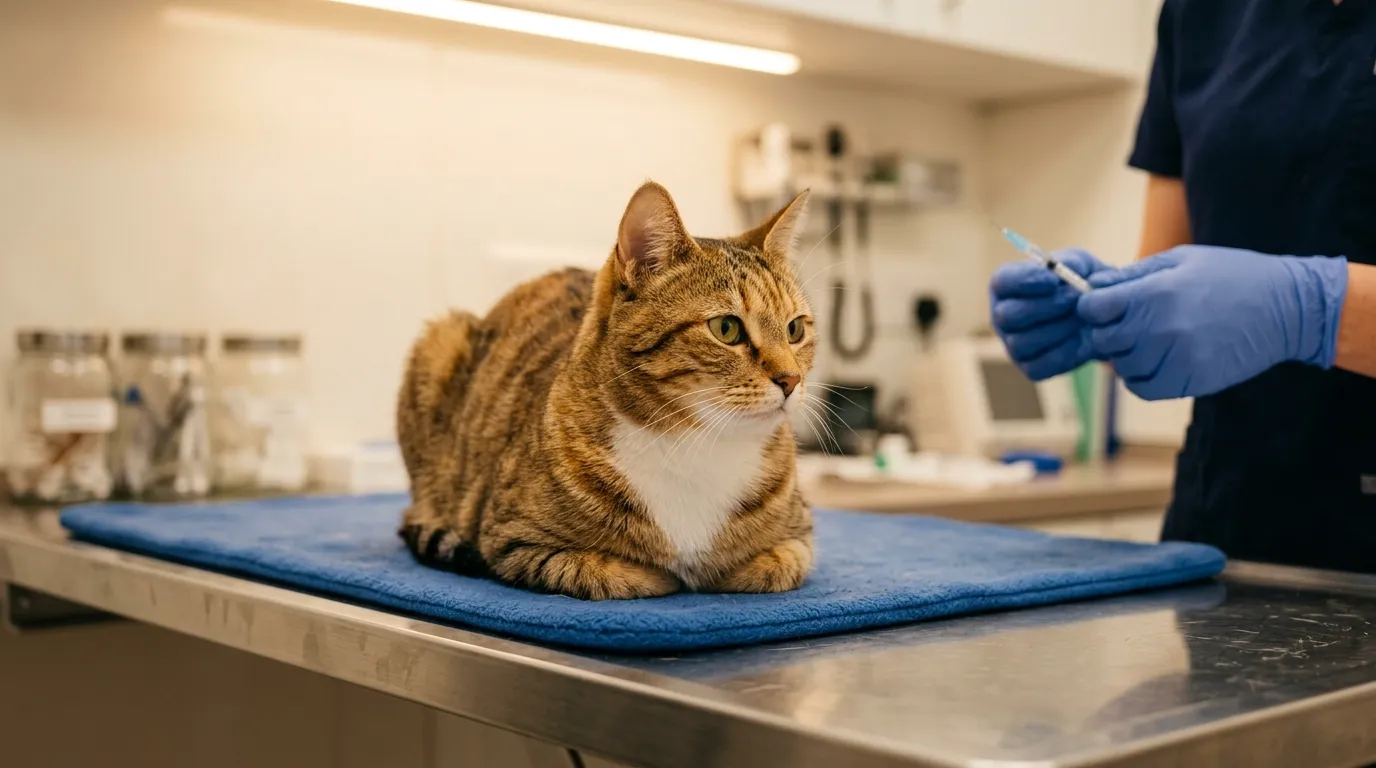
My cat never set a paw outside for three full years and I genuinely believed she was untouchable by disease. Then a friend visited carrying their cat’s carrier, set it down on my floor, and two weeks later my cat had a runny eye and was sneezing. That was the moment I stopped wondering whether do indoor cats need vaccinations and started making the appointment. If you have been putting it off because your cat lives entirely indoors, this article will walk you through exactly which vaccines she needs, why the exposure risk is real and what a simple, stress-free vaccination schedule looks like.
Do indoor cats need vaccinations? Yes, without exception. The AAHA/AAFP Feline Vaccination Guidelines confirm that core vaccines for cats apply to all cats regardless of lifestyle. Every indoor cat needs the FVRCP vaccine and a rabies shot. These protect against diseases that reach your cat through your shoes, open windows and the occasional escape through the front door.
Why Indoor Cats Still Need Vaccinations, Even Without Going Outside?
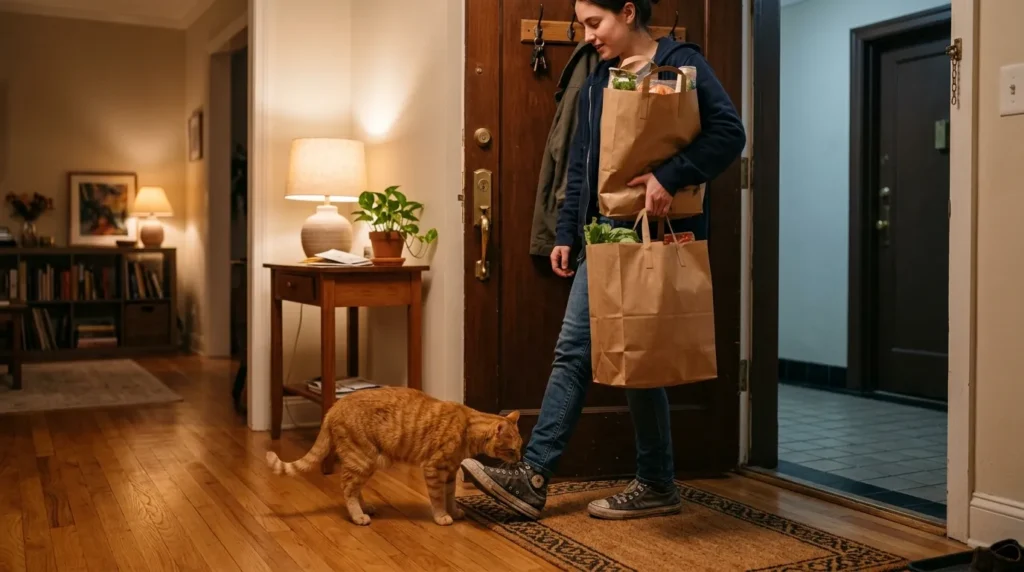
Do indoor cats need vaccinations because of what they might encounter on the street? Not exactly. The biggest threat comes through your own front door, carried in on your shoes, your clothing and your hands. You touch surfaces all day, and your cat investigates everything you bring home.
Indirect exposure is the medical term for this route of transmission and it is exactly how most indoor cats encounter dangerous pathogens. Viruses like feline panleukopenia are remarkably stable on environmental surfaces and can survive for months without a live host. Your cat does not need to physically meet another animal for this to become a real problem.
Indoor cats also tend to have lower natural immunity than outdoor cats because they never encounter the low-level environmental exposure that would keep their immune responses active. That actually makes vaccination more important for them, not less. Their entire immune education comes from whatever vaccines they have received.
Insight: Think of vaccines the way you think of smoke detectors. You do not install them because you expect a fire today. You install them because when something goes wrong, you want to have already handled it.
The Core Vaccines Every Indoor Cat Actually Needs
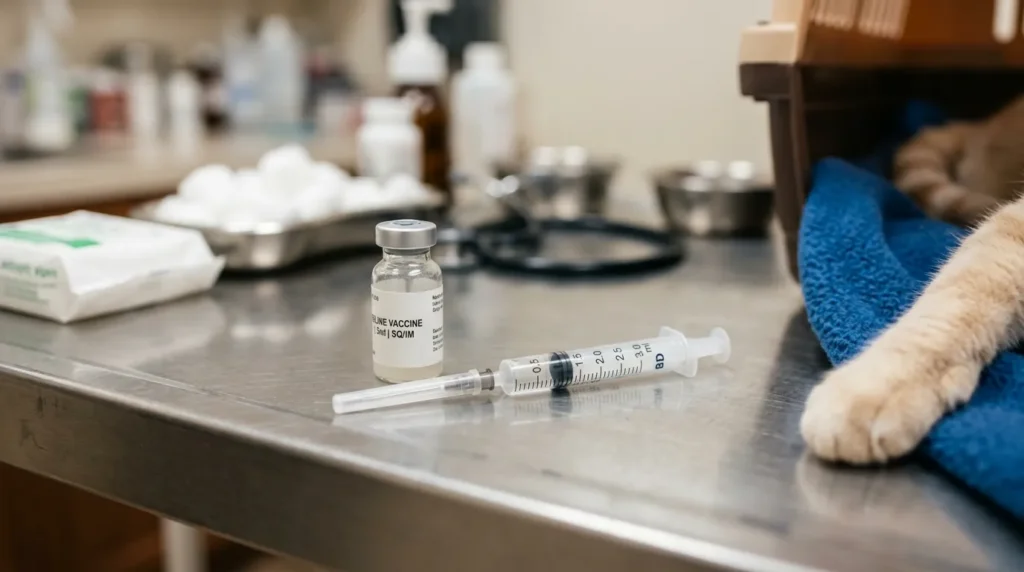
Two vaccines are non-negotiable for every indoor cat: the FVRCP vaccine and the rabies vaccine for indoor cats. FVRCP combines three diseases into a single injection: feline panleukopenia, feline herpesvirus and calicivirus. All three spread through the air and on surfaces, which means no direct contact with another cat is needed for exposure to occur.
| Vaccine | Diseases Covered | Recommended For |
| FVRCP | Panleukopenia, Herpesvirus, Calicivirus | All cats, including indoor-only |
| Rabies | Rabies virus | All cats; legally required in most U.S. states |
| FeLV | Feline Leukemia Virus | Core for kittens under 1 year old |
The rabies shot is not optional in most U.S. states regardless of your cat’s lifestyle. Bats enter homes through gaps and chimneys more often than people expect, and a single contact creates a genuine risk. FeLV is considered a core vaccine for kittens under one year old. Once your cat is an adult with a stable indoor life, your vet will decide each year whether she still needs it.
Understanding your cat’s full indoor cat health picture, including nutrition, weight and dental care, helps your vet make more accurate decisions about which vaccines fit her actual risk level.
What the Indoor Cat Vaccination Schedule Actually Looks Like?
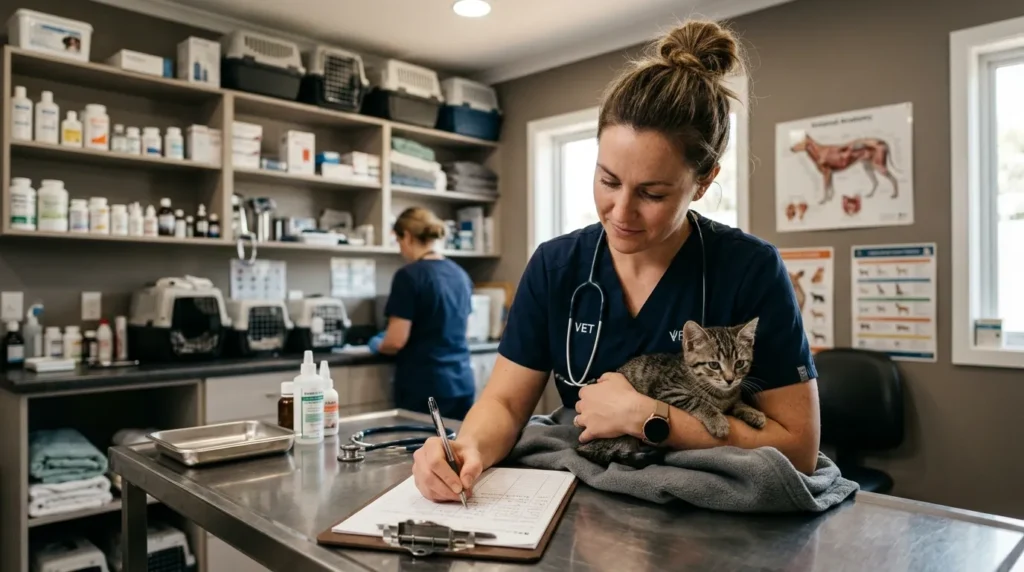
Kittens need a series of FVRCP doses starting at six to eight weeks old, repeated every three to four weeks until they reach sixteen weeks. Maternal antibodies from the mother interfere with early vaccines, which is why the spaced series exists. Skipping even one dose can leave a window of vulnerability right when the mother’s protection runs out.
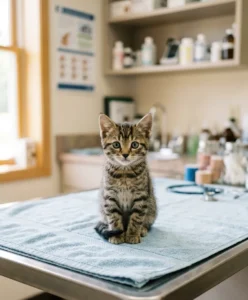
Adult indoor cats need an FVRCP booster every three years once the initial series is complete. Rabies follows a one-to-three year cycle depending on your local laws and the vaccine type your vet uses. One annual wellness visit is genuinely enough to keep everything current and let your vet catch anything else worth knowing.
What you feed your cat and how well-nourished she stays plays a real role in how strongly her immune system responds to vaccines. A cat on a poor diet will not build the same level of protection from the same shot. Solid indoor cat care habits go hand in hand with keeping her vaccine record current.
How Disease Actually Reaches an Indoor Cat?

Open windows are a real exposure route that most cat owners never consider. Calicivirus travels in respiratory droplets, meaning a stray sitting directly outside your window screen can put your cat at risk without any physical contact at all. The screen keeps animals out, not airborne particles.
Cats living in apartment buildings, where shared hallways and elevators bring neighbor pets close by, face more contact surfaces than cats in standalone homes. Every vet visit also places your cat in a waiting room with other animals. These moments are low-risk but not zero-risk, and an unvaccinated cat has no buffer at all.
 And cats escape. One rushed delivery, one distracted guest, one door held open a second too long and your indoor cat is outside with no protection. Cats who spend their time near windows, especially ones with enrichment-focused perches and furniture that encourage window watching, are also closer to airborne particles from passing strays than you might assume.
Are Cat Vaccines Actually Safe? What You Need to Know
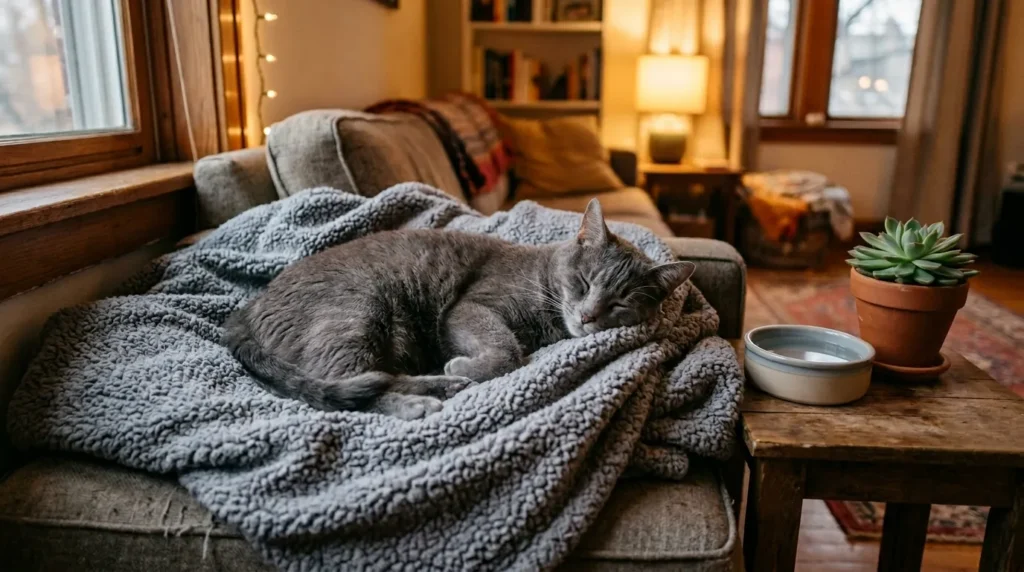
Most cats bounce back from a vaccine visit within 24 hours. Mild tiredness and a small tender spot at the injection site are normal and they signal that the immune system is responding correctly. These are not warning signs. They are the vaccine working.
Feline Injection-Site Sarcoma, or FISS, sometimes comes up as a concern. It is real but genuinely rare. Vets now administer vaccines in the lower limbs rather than between the shoulder blades, which allows for a much wider surgical margin if anything ever develops. The 3-2-1 rule your vet may mention is worth remembering: any lump that is still there after three months, larger than two centimeters or actively growing after one month needs a biopsy.
The risk math is not close. Panleukopenia kills most unvaccinated kittens who contract it. A sore leg for a day is not a meaningful trade-off against that reality.
The Mistake That Puts Most Indoor Cats at Risk

The most common mistake is letting years pass without a booster because the cat seems perfectly fine. Indoor cats do not show obvious signs of risk the way outdoor cats do. Everything looks normal right up until it does not. A lapsed vaccine is not a minor inconvenience. If you bring a new pet home, board her while you travel or take her to a groomer, your cat goes in with zero protection.
Alongside vaccines, watching her litter box habits is one of the most reliable early-warning systems indoor cat owners have. A cat whose immunity has lapsed may show subtle changes in behavior before anything more obvious appears. Keeping track of indoor cat behavior patterns makes it far easier to notice when something is genuinely off.
Once immunity lapses significantly, your vet may restart the full kitten series with two doses spaced three to four weeks apart instead of one booster. Staying current saves time, money and stress.
Insight: The single most practical thing you can do when you leave the vet today is set a calendar reminder three years from now. Not a mental note. An actual phone alert. That one habit is the difference between cats who stay protected and cats who quietly fall through the cracks.
When Missing Vaccines Becomes Urgent?
If your cat has not been vaccinated in over three years, do not wait for the next routine appointment. Call your vet this week. An unvaccinated cat that encounters a new animal, needs emergency boarding or requires any medical procedure has no protective buffer and no time to build one.
Watch for sneezing, eye discharge, sudden appetite loss or mouth sores in any unvaccinated cat. These can indicate calicivirus or herpesvirus exposure and they move quickly. Keeping up with regular grooming sessions gives you natural opportunities to check for these physical signs between vet visits. Providing mental stimulation and enrichment also helps you notice when your cat’s behavior shifts in ways that matter.
This article is for informational purposes only. Always consult your vet if you have concerns about your cat’s health.
Frequently Asked Questions
Do indoor cats really need a rabies vaccine if they never go outside?
Yes. Rabies vaccination is legally required in most U.S. states regardless of indoor or outdoor status. Bats and other wildlife enter homes through gaps, chimneys and open windows more often than most people realize. A single exposure is potentially fatal and there is no treatment once symptoms appear. Your local law and your vet both require this one.
How often do indoor cats need booster shots?
Adult indoor cats need FVRCP every three years once their initial series is complete. Rabies follows a one-to-three year cycle depending on your state’s laws and the specific vaccine your vet uses. Your annual wellness exam covers both checks and your vet will tell you exactly what is due that visit.
What happens if I skip my indoor cat’s vaccines for a few years?
Her immunity may lapse entirely. Your vet will likely restart the kitten series with two doses spaced three to four weeks apart. That means extra appointments and extra cost compared to simply staying current. This article is for informational purposes only. Always consult your vet if you have concerns about your cat’s health.
Do kittens need different vaccines than adult indoor cats?
Yes. Kittens need a primary FVRCP series starting at six to eight weeks, repeated every three to four weeks until sixteen weeks old. FeLV is also core for kittens under one year. Adult indoor cats shift to a three-year booster cycle for FVRCP once their initial series and one-year booster are both complete.
Can my indoor cat get sick from the vaccine itself?
Mild tiredness and a sore injection site for 24 to 48 hours are normal. Serious reactions are rare. Any lump that forms at the injection site and remains after one month, grows or exceeds two centimeters should be checked by a vet. These are the signs worth watching for, not general tiredness after the appointment.
Indoor cats need core vaccinations including the FVRCP vaccine and the rabies vaccine, as confirmed by the 2020 AAHA/AAFP Feline Vaccination Guidelines. FVRCP protects against feline panleukopenia, herpesvirus and calicivirus. Rabies vaccination is legally required in most U.S. states for all cats, including indoor-only cats. Kittens receive FVRCP doses every three to four weeks starting at six to eight weeks until sixteen weeks old. Adult indoor cats need FVRCP boosters every three years and a rabies booster every one to three years. Indoor cats face exposure through owner clothing, open windows, vet clinic waiting rooms and occasional escapes.