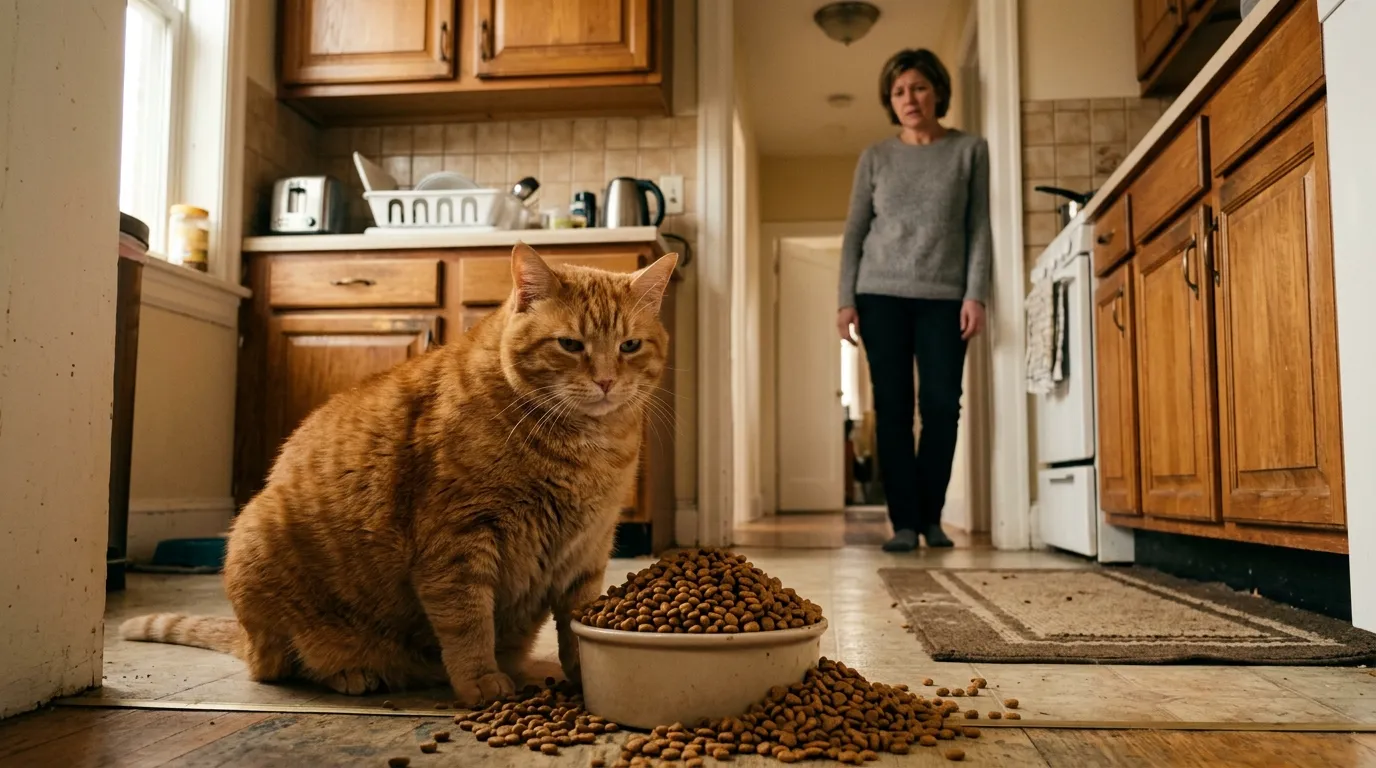
You put the bowl down full and refill it when it gets low and your cat seems fine but something in the back of your mind wonders if this is actually the right way to do it. The question of whether Should I Free Feed My Indoor Cat is one of the most common feeding questions apartment cat owners search for and the answer is more specific than most people expect. I thought free feeding was the kind, low-stress option until my vet pointed at the scale and said my cat had gained nearly two pounds in a year on an unchanged diet the only thing that changed was that I had started leaving the bowl perpetually full. This guide covers exactly what free feeding does to an indoor cat’s health over time and when it might still work for specific situations.
For most indoor cats, free feeding is not recommended because sedentary apartment cats will overeat without activity to compensate and weight gain follows within months. Scheduled meals of two to three measured portions per day give you control over calorie intake, make it easy to spot health changes and produce calmer cat behavior between meals.
What Free Feeding Actually Means and Why It Feels So Natural?
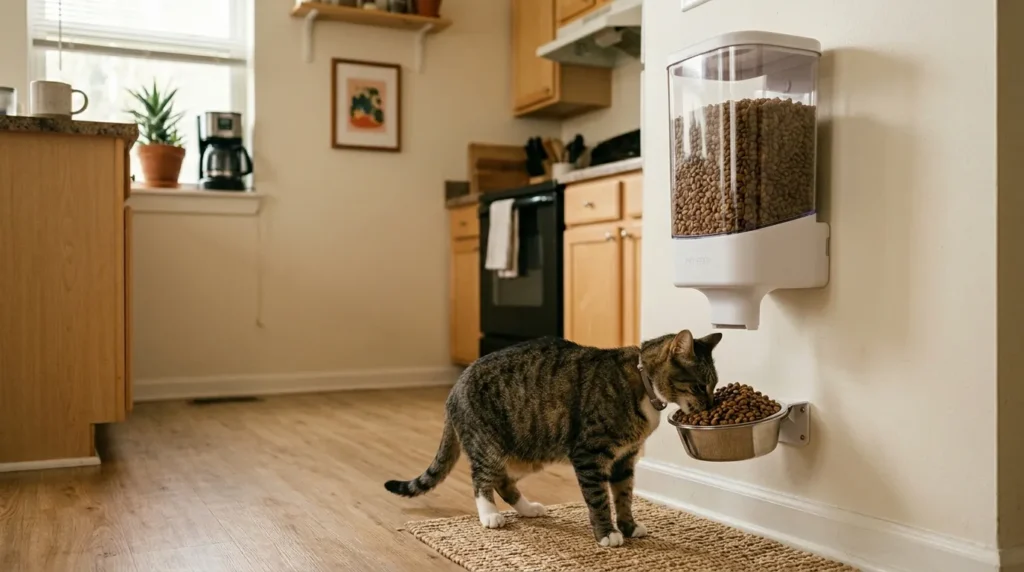
Free feeding means leaving food available at all times so your cat can eat whenever they choose. Most free-fed cats eat dry kibble because wet food spoils within a few hours at room temperature and cannot be left out safely. The appeal is obvious: fill the bowl once or twice a day, never worry about your cat going hungry and eliminate the structure of timed meals from your routine.
The reason it feels natural is that it loosely mimics how cats eat in the wild multiple small meals spread across the day based on hunting opportunities rather than scheduled portions. This is a real behavioral instinct. The difference is that wild cats expend significant energy hunting before every meal and indoor apartment cats do not. The calorie math that works when a cat hunts eight to twelve times per day breaks down completely when food is always twelve inches away on the kitchen floor.
Free feeding is defined as continuous food access with no portion control or meal timing. It is the opposite of scheduled or meal feeding where a measured portion is offered at specific times and removed after thirty to forty-five minutes. Most veterinary nutritionists recommend scheduled feeding for indoor cats specifically because low activity levels cannot compensate for the excess calories that unlimited access creates.
Should I Free Feed My Indoor Cat If They Seem to Self-Regulate?
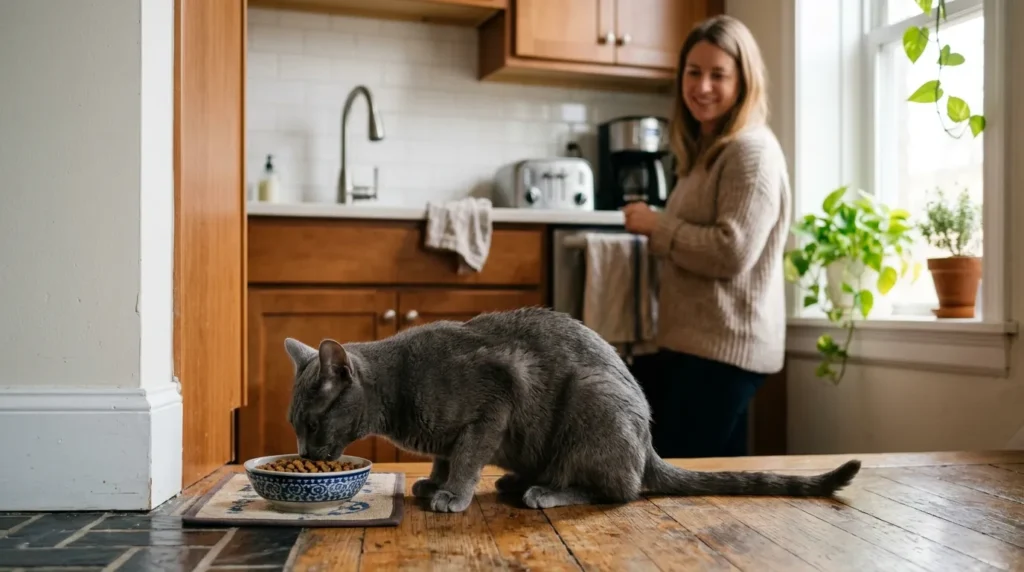
Some cats genuinely do self-regulate. They eat small amounts throughout the day and maintain a healthy weight on free-fed dry food for years without issue. These cats exist and they tend to be naturally lean with high baseline anxiety that actually suppresses appetite rather than driving boredom eating. They are significantly more common among outdoor cats that burn real calories throughout the day and noticeably less common among neutered indoor apartment cats.
The honest test for whether your cat self-regulates is the body condition score check rather than visual appearance alone. Run your fingers firmly along your cat’s ribs from the spine outward. You should be able to feel individual ribs without pressing hard but they should not be visibly protruding. If you cannot feel individual ribs without significant pressure, your cat has excess body fat. If your cat passes this test and has maintained the same weight for a full year on free-fed food, they may genuinely self-regulate.
If your cat has gained any weight in the past year while on free-fed food, self-regulation is not happening and continuing the approach will produce further weight gain over the next year. Body weight in cats does not plateau naturally at a mildly overweight level the way owners often hope it tends to continue increasing slowly as long as unlimited food access continues.
The 5 Real Risks of Free Feeding Indoor Cats in Small Apartments
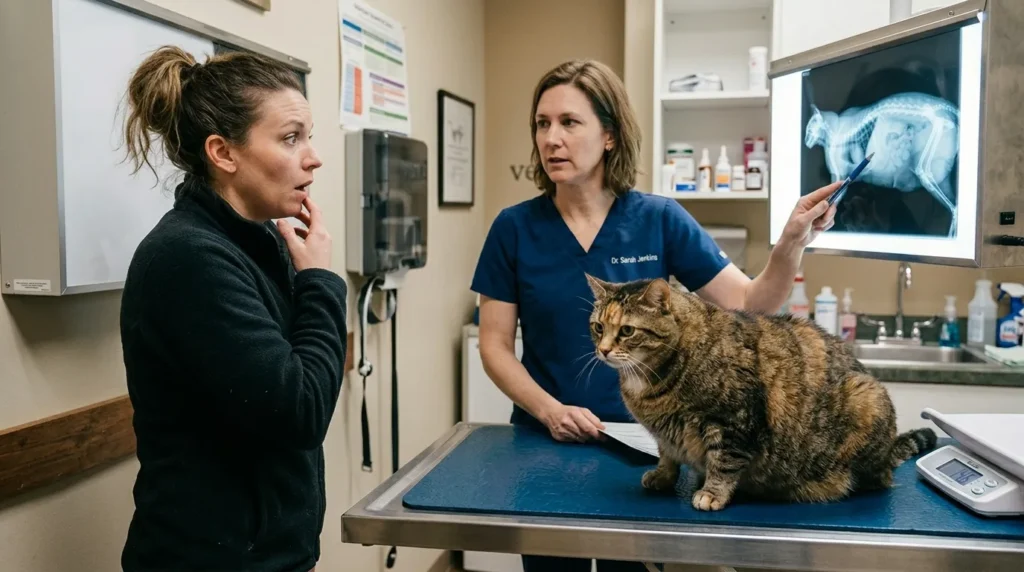
Free feeding an indoor apartment cat carries five specific health risks that owners typically do not connect to feeding method until a vet raises them:
Cat obesity is the most immediate and measurable consequence. According to the American Association of Feline Practitioners, obesity affects approximately 60 percent of indoor cats in the United States and is the most preventable nutritional disease in companion animals. A neutered indoor cat on free-fed dry food can gain half a pound to a pound annually without any obvious change in their daily appearance. Over five years that compounds into a cat that is significantly overweight with genuine health consequences.
Diabetes risk increases substantially in overweight cats. Feline diabetes is directly linked to obesity in a way that closely mirrors type 2 diabetes in humans excess body fat reduces insulin sensitivity and the pancreas compensates until it cannot keep up. Indoor cats fed free choice dry food have significantly higher rates of feline diabetes than meal-fed cats at comparable weights.
Urinary tract disease connects to free-fed dry food through two mechanisms. First, dry kibble is low in moisture and cats drinking from a bowl rarely compensate fully for the hydration that wet food provides. Second, dry food typically has higher mineral concentrations that contribute to crystal formation in cats prone to lower urinary tract disease (FLUTD). Indoor cats are already at higher risk of FLUTD than outdoor cats due to lower activity and higher sedentary stress.
Appetite monitoring becomes impossible with free feeding because there is no baseline of normal consumption to compare against. A cat that is developing kidney disease, dental pain or nausea often reduces food intake significantly before any other symptom appears. If food is always available and partially consumed you cannot tell whether your cat ate normally or ate half their usual amount because the bowl always looks approximately the same.
Behavioral food obsession paradoxically increases in some free-fed cats rather than decreasing. When food is always present but attention and stimulation are limited in a small apartment, some cats fixate on the food bowl as the primary environmental variable in their day. This drives excessive eating beyond hunger and reinforces a food-centered anxiety pattern that structured meal feeding resolves within two to three weeks of consistent implementation.
When Free Feeding Can Work and Who It Is Actually Right For?
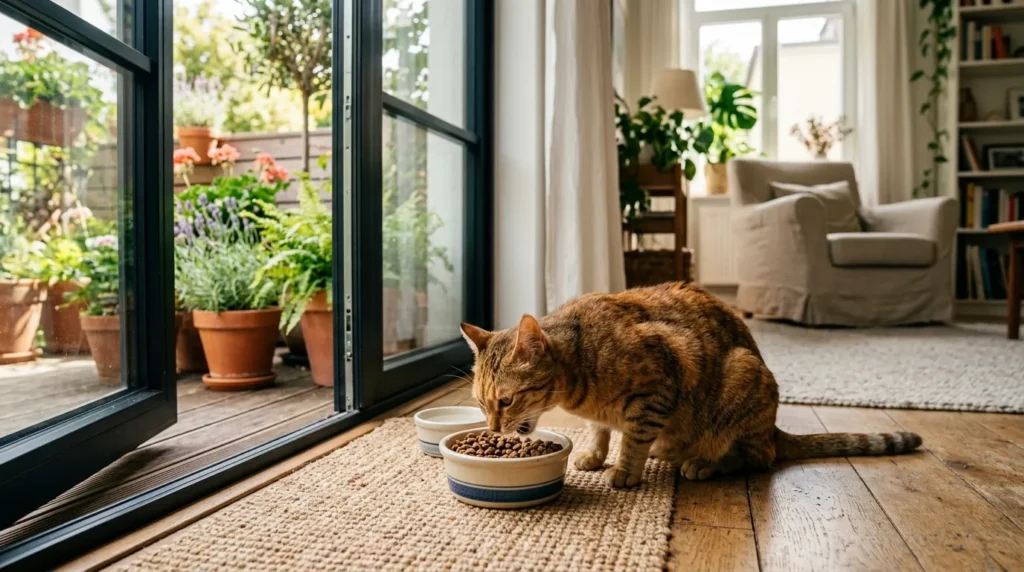
Free feeding works best in two specific situations. The first is a cat that has been tested with the body condition score assessment and maintained a healthy weight for a documented twelve months on free-fed food. The second is a multi-cat household where one cat is underweight and needs constant access to calories while the other cats are already at a healthy weight and need portion limits though this situation almost always calls for microchip-activated feeders rather than a shared open bowl.
Kittens under six months represent a partial exception. Young kittens have very small stomachs and very high calorie needs relative to their size and can benefit from having food available more frequently than a standard two-meal schedule allows. However even kittens do better with three to four scheduled meals rather than unlimited access because unlimited access from kittenhood establishes the habit of eating beyond hunger that follows them into adulthood.
Insight If you are committed to trying free feeding, the only honest way to assess whether it is working is a monthly weight check at home. Buy an inexpensive bathroom scale, weigh yourself holding your cat and then weigh yourself alone. The difference is your cat’s weight. Track it monthly. Three consecutive months of stable weight is the minimum evidence that free feeding is sustainable for your specific cat.
How to Transition from Free Feeding to Scheduled Meals Without Causing Harm?
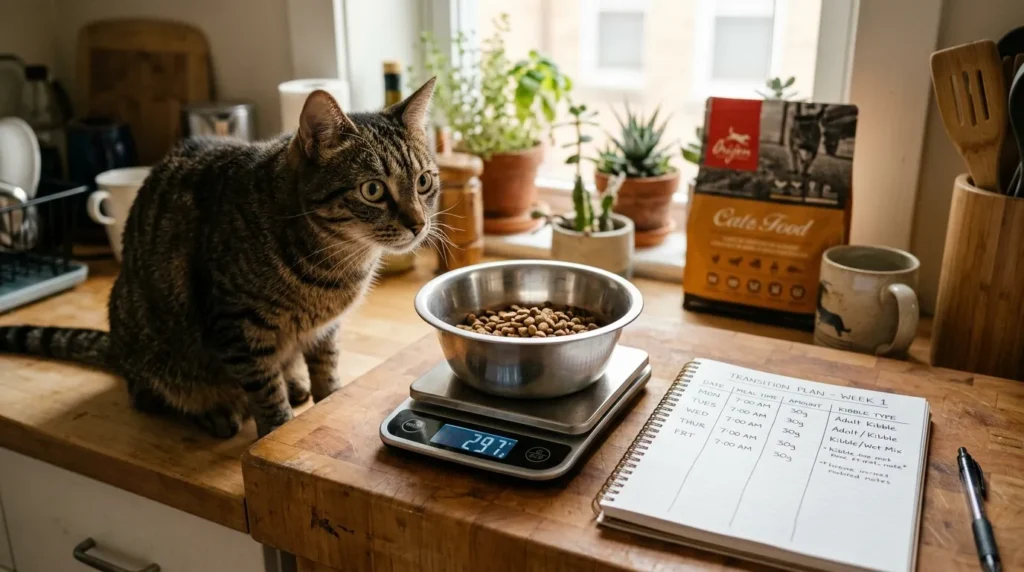
Transitioning from free feeding to scheduled meals requires a gradual approach specifically to avoid hepatic lipidosis, a serious liver condition that develops when cats stop eating suddenly or dramatically reduce intake too fast. Cats that have been eating freely for months or years cannot simply have their food removed and replaced with a measured portion at set times because some will refuse the new schedule for long enough to trigger this condition.
Start by measuring how much your cat currently eats in a full day by weighing the food you put in the bowl and measuring what is left after 24 hours. This gives you the actual daily consumption baseline. Then reduce the daily amount by ten percent per week rather than cutting to the target portion immediately. Simultaneously introduce specific meal times by putting the food down at the target time and removing the bowl thirty to forty-five minutes later. After two to three weeks of this gradual structure most cats accept the schedule without significant resistance.
The full process of calculating the right daily calorie target, dividing it into appropriate meal portions and adjusting for wet versus dry food is something this guide on how to feed an indoor cat properly covers in detail that makes the transition specific rather than guesswork. That practical math is what separates a successful transition from one where your cat loses weight too fast or gains weight because the portions were eyeballed rather than calculated.
Insight The hardest part of transitioning from free feeding is the first three days when your cat learns that meowing at the empty bowl does not produce food at arbitrary times anymore. It feels genuinely cruel. It is not. Cats adapt to scheduled feeding within a week in nearly every case and the improvement in behavior and body condition that follows makes the short adjustment period completely worth it.
Multi-Cat Households and Free Feeding: Why It Gets Complicated Fast?
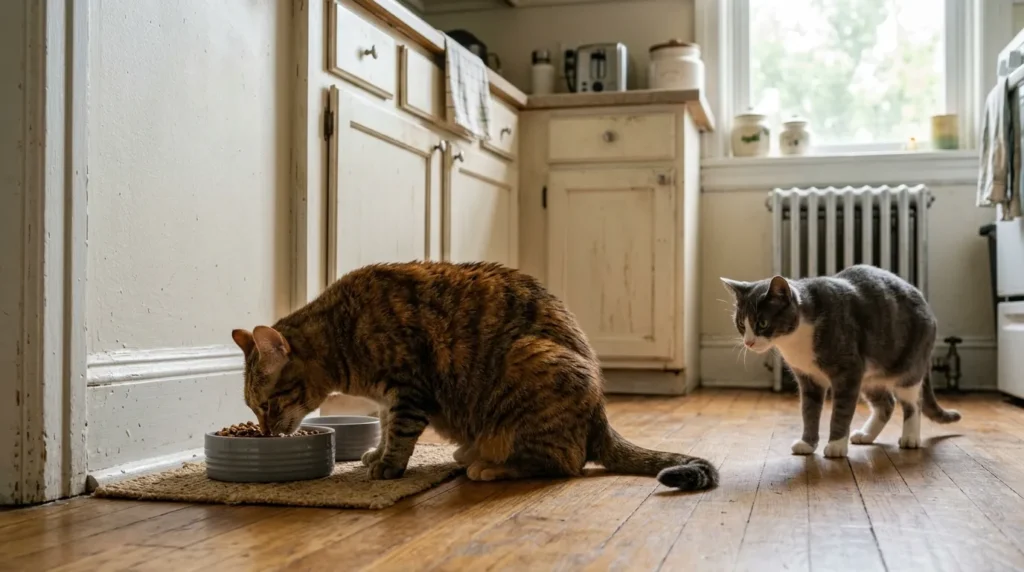
Multi-cat apartments make free feeding significantly more complicated because food-dominant cats eat more than they need and food-submissive cats eat less. The dominant cat gains weight while eating from the always-available bowl and the timid cat may be chronically underfed without the owner realizing it because the bowl is always apparently full regardless of who ate what.
This is one of the clearest situations where free feeding actively works against the health of both cats. The dominant cat cannot be trusted to leave food for the other cat and the submissive cat will not push past the dominant cat consistently enough to get adequate nutrition from a shared open bowl.
Separate feeding stations in different rooms with scheduled meal times solve this cleanly. Both cats eat their measured portions at the same time in different locations where neither can monitor or interfere with the other’s meal. The fuller picture of how social dynamics between cats in small apartments affect eating behavior is covered in this guide on indoor cat behavior particularly how resource guarding plays out differently in confined spaces than it does in larger homes.
Common Mistakes When Deciding Whether to Free Feed an Indoor Cat
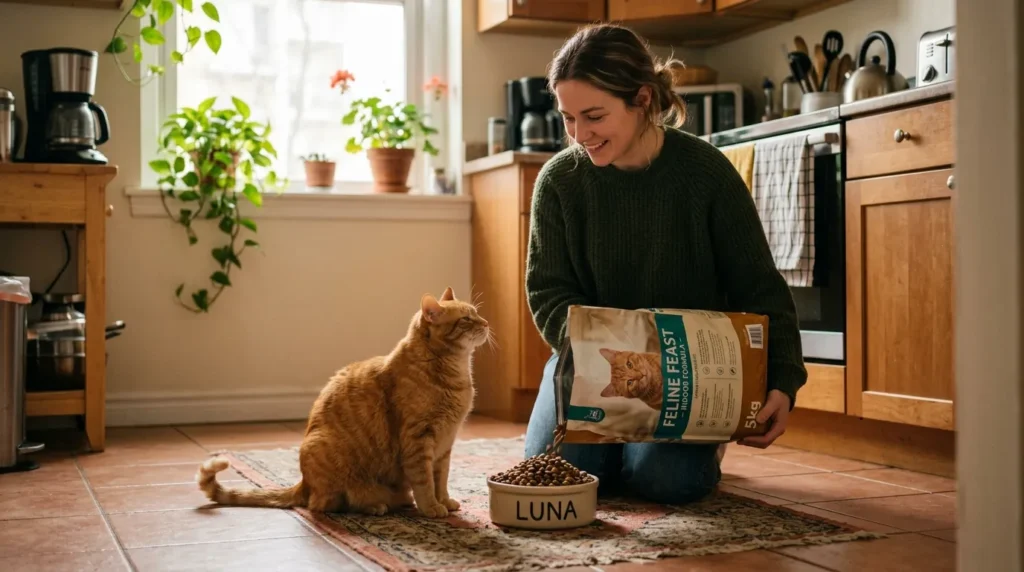
The most common mistake is using a cat’s apparent contentment as evidence that free feeding is working. A cat that is gaining weight slowly on free-fed food looks and acts happy until the weight reaches a level where physical consequences appear reduced mobility, difficulty grooming, increased lethargy. By that point the habit is established over years and the reversal is slower. Happy does not mean healthy when the health problem is developing gradually beneath a pleasant surface.
The second mistake is assuming that switching to a higher-quality dry food will fix the problem of free feeding. Premium food with better ingredients still delivers excess calories when available without limit. The feeding method is the variable that matters for weight management not just the food quality. A measured portion of mid-range food produces better weight outcomes than unlimited access to premium kibble.
The third mistake is restarting free feeding after a few weeks of scheduled meals because the transition feels hard. The adjustment period is real and uncomfortable for both owner and cat. Getting through it fully takes two to three weeks. Returning to free feeding before that adjustment completes means starting the discomfort again from the beginning every time and never reaching the stable, calm scheduled feeding routine that resolves the begging behavior permanently.
When Eating Pattern Changes Signal a Health Problem?
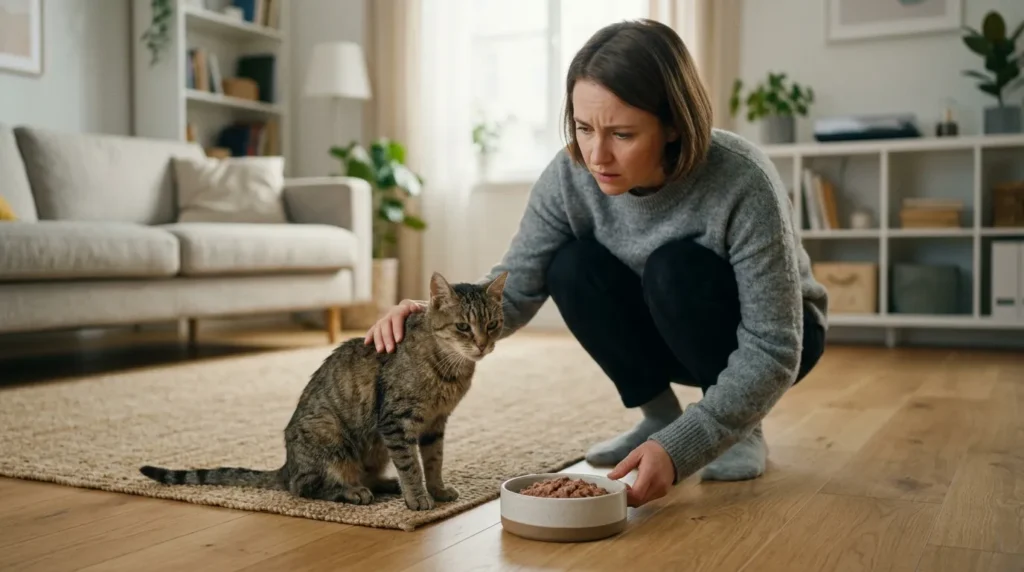
Scheduled feeding makes health problems visible weeks earlier than free feeding does. When you know your cat normally finishes their morning meal within twenty minutes and one morning they ignore it completely, that deviation is immediately apparent. With free feeding, the same reduction in appetite goes undetected for days or longer because the bowl always appears to contain approximately the same amount of partially eaten food.
Cats that stop eating for more than 48 hours are at risk of hepatic lipidosis regardless of the reason for the appetite loss. This timeline is much shorter than most owners expect and significantly shorter than the equivalent risk period in dogs. Cats that are already overweight face this risk at a lower threshold a very overweight cat may develop hepatic lipidosis faster than a lean cat because fat cells around the liver mobilize rapidly when food intake drops.
If your cat misses two consecutive meals completely or shows a marked reduction in food interest for more than 48 hours, a vet visit is appropriate before the problem compounds. Appetite loss is almost always a symptom of something else rather than a preference change.
This article is for informational purposes only. Always consult your vet if your cat shows sudden changes in appetite or unexplained weight loss.
Frequently Asked Questions About Free Feeding Indoor Cats
Is free feeding bad for indoor cats?
For most indoor apartment cats, yes. Low activity levels mean indoor cats cannot burn the excess calories that constant food access delivers. The result is gradual weight gain that develops into obesity, increased diabetes risk and urinary health problems over time. Free feeding works for the minority of cats that genuinely self-regulate but that group is significantly smaller among neutered indoor cats than most owners assume.
Can I free feed dry food but not wet food?
You can leave dry food out but this does not make free feeding safe for weight-prone indoor cats. Dry food has the highest calorie density of any common cat food format and cats grazing on it throughout the day easily exceed their daily calorie needs without a single obvious overeating episode. If you prefer less structure, a timed feeder that dispenses a measured daily total across three to four automated portions is a better middle ground than a perpetually full bowl.
How do I stop free feeding without stressing my cat?
Reduce the daily amount by ten percent per week rather than cutting to the target portion immediately. Introduce specific meal times during that gradual reduction so your cat adjusts to both changes simultaneously rather than facing a sudden schedule shift and a sudden calorie cut at the same time. Most cats accept the transition fully within two to three weeks when the reduction is gradual.
My cat lost weight after I stopped free feeding is that normal?
A modest weight loss of half a pound to one pound in the first month after transitioning from free feeding to scheduled meals is often appropriate if your cat was mildly overweight. Weight loss exceeding one to two percent of body weight per week is too fast and can trigger hepatic lipidosis. Weigh your cat weekly during the transition and slow the portion reduction if loss is happening faster than that rate. This article is for informational purposes only. Always consult your vet before starting a weight loss plan for your cat.
Does free feeding cause behavioral problems in indoor cats?
For some cats, yes. Indoor cats with limited stimulation sometimes develop food-centered anxiety when food is always present because the bowl becomes their primary focus rather than an incidental part of their routine. Scheduled meal times give the day predictable structure that reduces overall anxiety in many indoor cats within a few weeks of consistent implementation.
The Answer for Most Indoor Cats Is Clear
For the majority of neutered indoor apartment cats, free feeding leads to gradual weight gain that compounds into genuine health problems over a few years. Two to three measured meals per day at consistent times removes that risk and produces calmer, more settled cat behavior as a bonus. The transition takes two to three weeks of minor discomfort. Start today by measuring what your cat currently eats in 24 hours and that number becomes the starting point for your gradual reduction to a healthy daily portion.
Free feeding means leaving food available at all times with no portion control or meal timing. For most indoor cats, free feeding is not recommended because low activity levels mean they cannot compensate for unlimited calorie access and weight gain follows within months. Approximately 60 percent of indoor cats in the United States are overweight according to veterinary research. Scheduled meals of two to three measured portions daily give owners control over calorie intake and make appetite changes visible early. Transitioning from free feeding should happen gradually over two to four weeks to avoid hepatic lipidosis. Multi-cat apartments with one shared bowl are especially problematic because dominant cats eat more than their share while submissive cats may be chronically underfed.