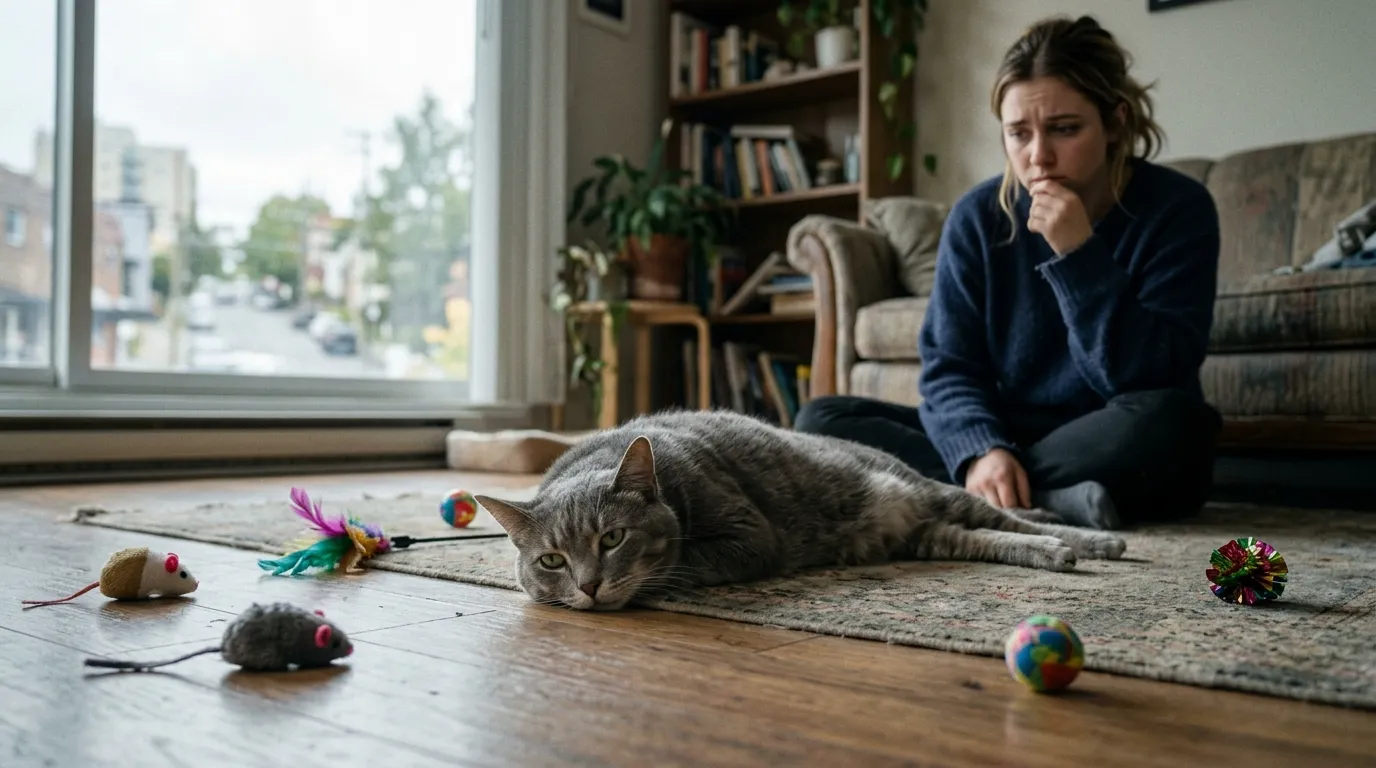
Your indoor cat has been noticeably quieter lately, barely touches their toys and spends most of the day sleeping in a corner rather than following you around and now you are wondering whether do indoor cats get depressed. The answer is yes indoor cats do get depressed, or more precisely they develop a depression-like state driven by chronic understimulation, routine disruption or environmental changes that their instincts cannot process through normal outlets. I noticed this with my own cat after I switched to working from home full-time and then back to an office schedule within the same year both transitions produced visible behavioral shifts that I initially attributed to the weather before recognizing the pattern. This guide covers every reliable sign, every common cause and the specific changes that reverse the condition in most indoor cats within one to two weeks.
Yes, indoor cats get depressed in the form of a low-mood behavioral state caused most often by boredom, lack of mental and physical stimulation, routine disruption or loss of a companion. Signs include hiding, reduced play, appetite changes, overgrooming and vocalization shifts. Most cases improve significantly with structured daily play and enrichment changes within one to two weeks.
Can Indoor Cats Get Depressed? What Science and Vets Actually Say

Veterinary behaviorists do not diagnose cats with clinical depression in the same way the condition is defined in humans but they consistently recognize a depression-like behavioral state in cats that produces nearly identical observable changes in appetite, sleep, grooming, play and social engagement. The distinction is less important than the practical reality: when indoor cats display this state, their quality of life is genuinely reduced and the condition responds to the same enrichment and routine interventions that address human low mood.
Indoor cats are more susceptible to this state than outdoor cats by a measurable margin. An outdoor cat’s environment continuously provides the unpredictable sensory input, hunting opportunities and territorial activity that a cat’s nervous system requires to stay calibrated. An indoor apartment cat’s environment does not. Without intentional enrichment, a small apartment offers the same sights, sounds and experiences every single day of a cat’s life and that environmental monotony produces behavioral flattening over time in a species designed for constant low-level novelty.
Feline depression is defined here as a sustained low-mood behavioral state in cats characterized by withdrawal, reduced activity and engagement and changes from an individual cat’s established baseline. It is a response to environmental conditions rather than a biochemical malfunction and that distinction is important because it means environmental interventions are genuinely corrective rather than just palliative.
The 10 Signs That Your Indoor Cat May Be Depressed
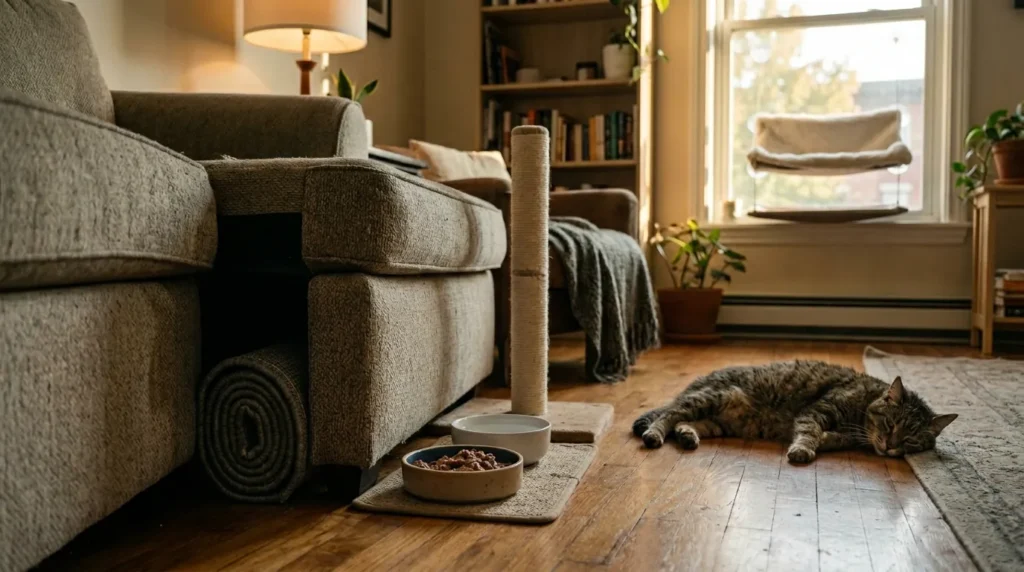
Sign 1: Persistent hiding or withdrawal. A cat that retreats to a single tucked-away spot and stays there through their normally active periods is communicating that something in their experience has shifted. One day of hiding after a stressor is normal. Three or more consecutive days without improvement is the signal worth addressing.
Sign 2: Reduced interest in play. A depressed indoor cat stops initiating play and stops engaging with toys that previously held their interest. This is particularly diagnostic because play engagement reflects emotional resilience and confidence in cats its absence is a direct window into their state.
Sign 3: Appetite changes. Both eating less than usual and eating more in response to boredom or stress indicate emotional disruption. A cat on an unchanged feeding schedule that suddenly eats significantly less or dramatically more without any other explanation is worth monitoring closely.
Sign 4: Increased sleep or lethargy. Indoor cats naturally sleep twelve to sixteen hours per day but a cat sleeping through their entire crepuscular active windows with no play or interaction in the hours after dawn and before dusk is sleeping beyond healthy rest into avoidance.
Sign 5: Grooming neglect or overgrooming. A dull or unkempt coat signals that the cat has stopped maintaining themselves, which in cats is a significant emotional indicator because grooming is normally a source of self-regulation and comfort. Overgrooming that produces thinned or bald patches signals anxiety-based self-soothing that has become compulsive.
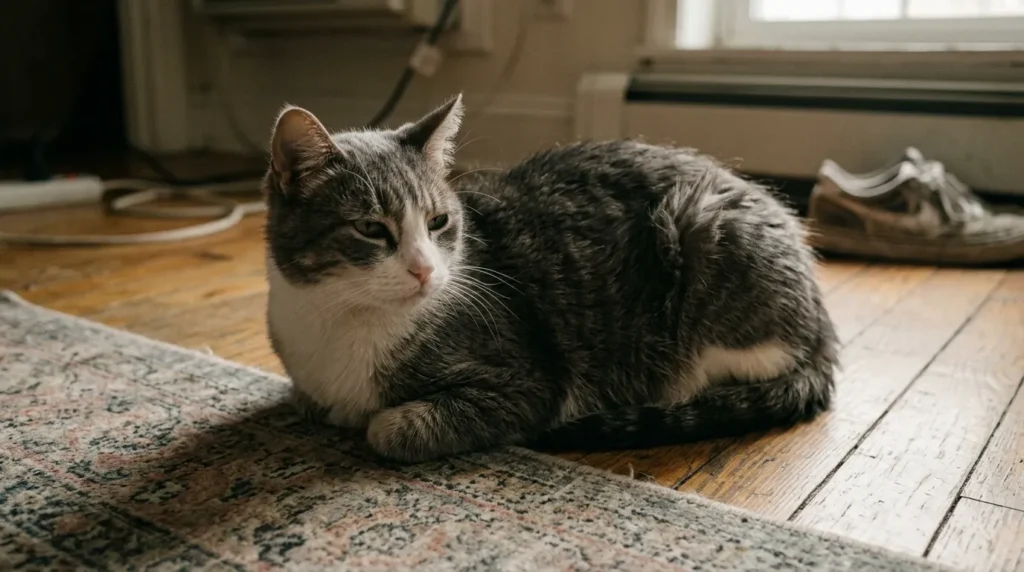
Sign 6: Litter box avoidance or inappropriate elimination. A cat that stops using a litter box they previously used reliably is often communicating stress or emotional distress rather than a preference issue. This sign also overlaps with medical conditions and always warrants a vet check.
Sign 7: Vocalization changes. Increased yowling particularly at night, unusual persistent meowing or conversely a previously vocal cat going unusually quiet both signal that something has changed. Night vocalization in particular often represents disorientation or loneliness in cats that have lost a companion or experienced a routine change.
Sign 8: Aggression or increased irritability. A cat that becomes reactive to touch during normally comfortable interactions or more hostile toward other pets may be communicating pain or sustained stress rather than a personality shift. Sudden irritability without obvious cause points to an underlying emotional state worth investigating.
Sign 9: Reduced social engagement. A cat that previously sought contact and now actively avoids it, or one that sits near the owner but does not initiate any of the typical social behaviors, has withdrawn in a way that communicates low emotional state rather than independence.
Sign 10: Destructive behavior or excessive scratching. A cat channeling frustrated energy into furniture destruction beyond normal claw maintenance is often expressing the outlet that enrichment and hunting activity are supposed to provide but are not.
Why Do Indoor Cats Get Depressed: The Real Causes?
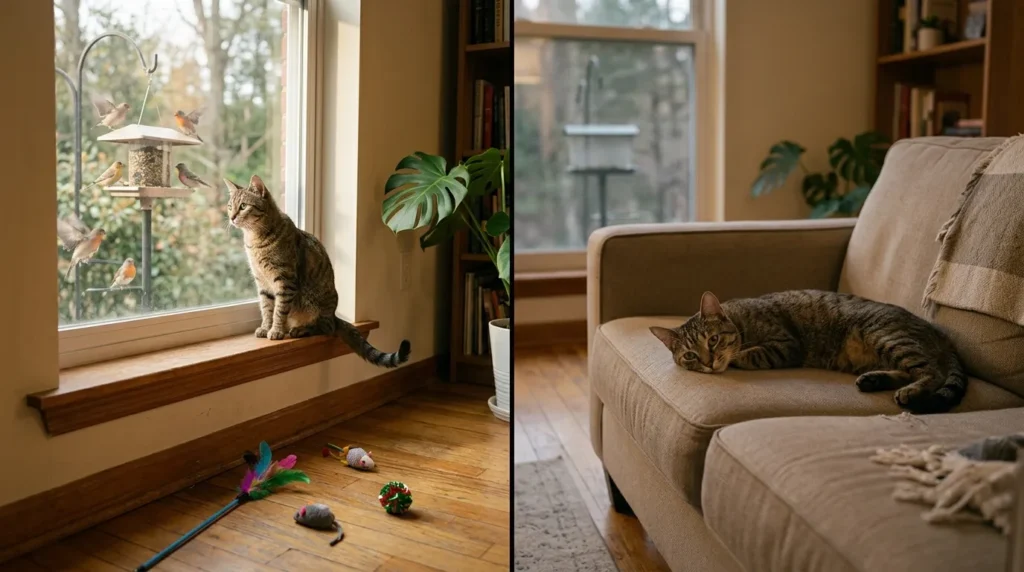
Chronic understimulation is the most common cause and the most correctable one. A cat in a small apartment without structured daily play, without vertical climbing space and without any environmental variety experiences a form of sensory poverty that their nervous system was not built to handle long-term. The hunting cycle that outdoor cats complete multiple times per day stalk, pounce, catch, eat, groom, sleep has no equivalent in a home where food appears in a bowl twice a day and nothing else happens.
Routine disruption is the second major cause. Cats are more routine-dependent than most owners realize and changes that seem minor from a human perspective a new work schedule, a move to a different apartment, new furniture placement or even a change in when meals are served can destabilize the predictable structure a cat relies on for security. The confined apartment environment amplifies this because the cat cannot separate the disrupted space from their safe space.
Loss of a companion produces one of the most acute forms of depression-like behavior in cats. A cat that has bonded closely with another pet or a specific human who is no longer present may show all ten signs listed above simultaneously and the condition can persist for weeks without intervention. Senior cats that have lost long-term companions are particularly vulnerable to this form.
Medical pain and illness produce behavioral changes that are functionally identical to emotional depression from the outside. A cat in chronic pain withdraws, stops playing, stops grooming and stops eating for reasons that have nothing to do with emotional state and everything to do with physical discomfort. This is why ruling out medical causes before attributing behavioral changes to depression is always the correct sequence. For the specific physical conditions that produce depression-like behavioral changes in indoor cats and how to identify whether a behavioral shift may have a medical driver, this guide on indoor cat health covers the overlap between physical illness and behavioral presentation in detail.
How to Reverse Depression-Like Behavior in Indoor Cats?
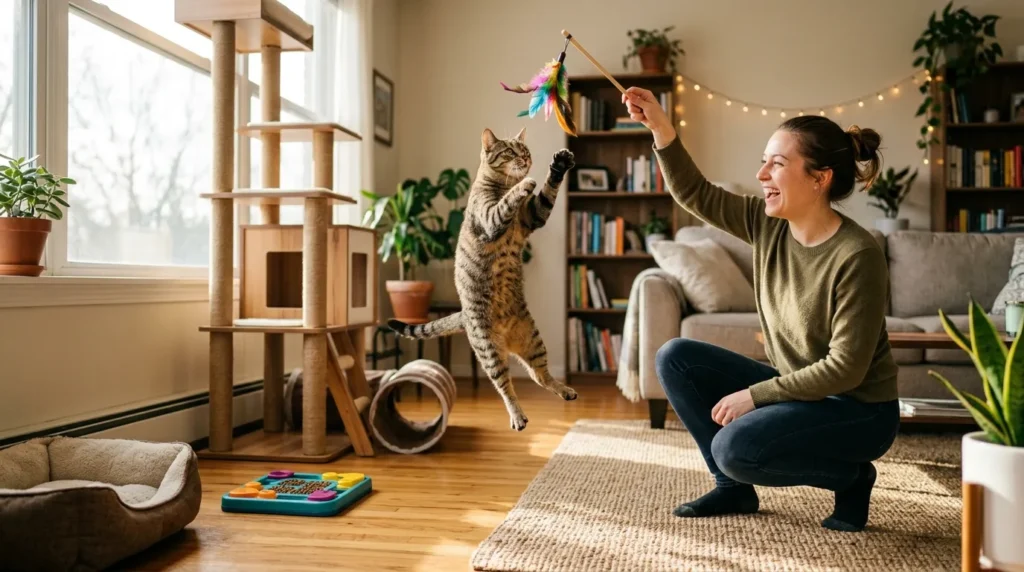
Structured daily play is the single most effective intervention and the one that produces the fastest visible results. Two sessions of ten to fifteen minutes each using a wand toy that moves unpredictably engage the full hunting sequence that indoor cats are biologically built around. The critical piece is immediacy feed your cat right after the play session ends to complete the hunt-catch-eat cycle. Most owners who implement this consistently report visible behavioral improvement within three to five days.
Vertical territory additions address the environmental poverty problem directly. A cat tree placed near a window with an outdoor view, wall-mounted shelves or a window perch transforms the spatial experience of even a small apartment because cats define territory vertically as much as horizontally. A cat that can survey their space from height, access multiple levels and observe outdoor movement through a window occupies a genuinely richer environment on the same floor plan. For specific enrichment setups and furniture configurations that work well in apartment-sized spaces, the practical guide on indoor cat enrichment covers what actually moves the needle for apartment cats rather than just listing every toy on the market.
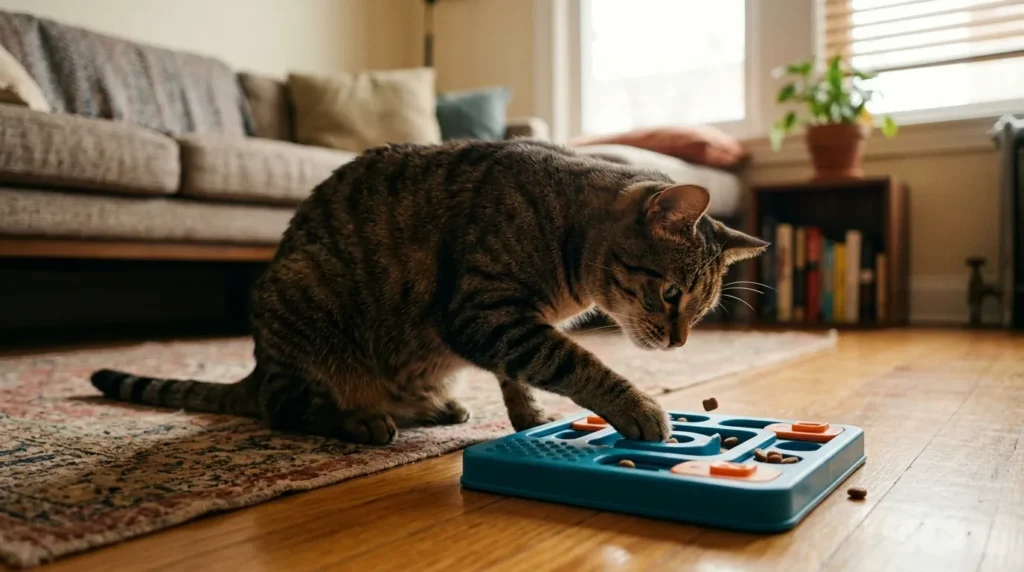
Puzzle feeders turn every meal into a mental stimulation event instead of a passive consumption moment. A cat that works a puzzle for fifteen minutes to eat their portion has engaged their problem-solving, hunting and paw-coordination abilities in a way that a bowl of food can never replicate. Many owners report that switching to puzzle feeders for at least one daily meal reduces between-meal boredom behavior noticeably within a week.
Routine stability is the other lever. Once you identify what changed before the depression-like behavior appeared, restoring predictability in feeding times, play session timing and owner presence patterns gives the cat’s nervous system the structure it needs to settle. For cats that have lost a companion, adding a second cat is sometimes appropriate but should be approached slowly with proper introduction protocol rather than as an immediate replacement a poorly introduced second cat adds stress rather than companionship.
Insight The play-before-meal sequence is not optional for a genuinely depressed indoor cat it is the core of the fix. Play for twelve minutes, feed immediately. Your cat’s brain needs to connect effort to food the way their instincts expect. Doing this twice a day consistently for two weeks is worth more than any toy you could buy. Most owners who commit to it tell me they cannot believe how quickly the cat they knew comes back.
Common Mistakes That Keep Indoor Cats in a Low-Mood State
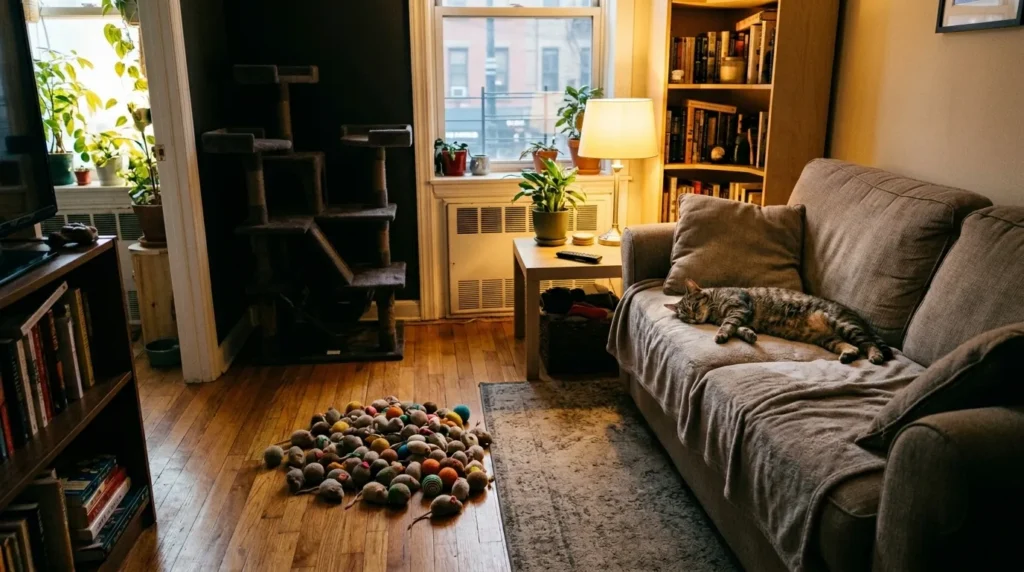
The most common mistake is buying toys rather than changing behavior. A pile of new toys in a corner does nothing for a depressed indoor cat if the owner never actively plays with those toys. Cat toys do not engage a cat independently with anything like the effectiveness of a human-directed wand toy session because the toy alone cannot replicate the unpredictable movement of prey. Active participation from the owner is what makes play therapeutic rather than just available.
The second mistake is placing enrichment additions in suboptimal locations. A cat tree in a dark corner of a bedroom produces a fraction of the engagement of a cat tree next to a living room window with an outdoor view. Window access to bird and squirrel activity provides hours of passive stimulation that genuinely occupies a cat’s brain in a way that staring at a wall does not.
The third mistake is implementing partial fixes rather than addressing the full picture simultaneously. Adding a puzzle feeder without adding play sessions and without stabilizing the routine improves things marginally rather than fully. Depression-like states in indoor cats usually have multiple contributing factors and the recovery is faster and more complete when all contributing factors are addressed at the same time.
When Depression-Like Behavior Needs a Vet Visit?
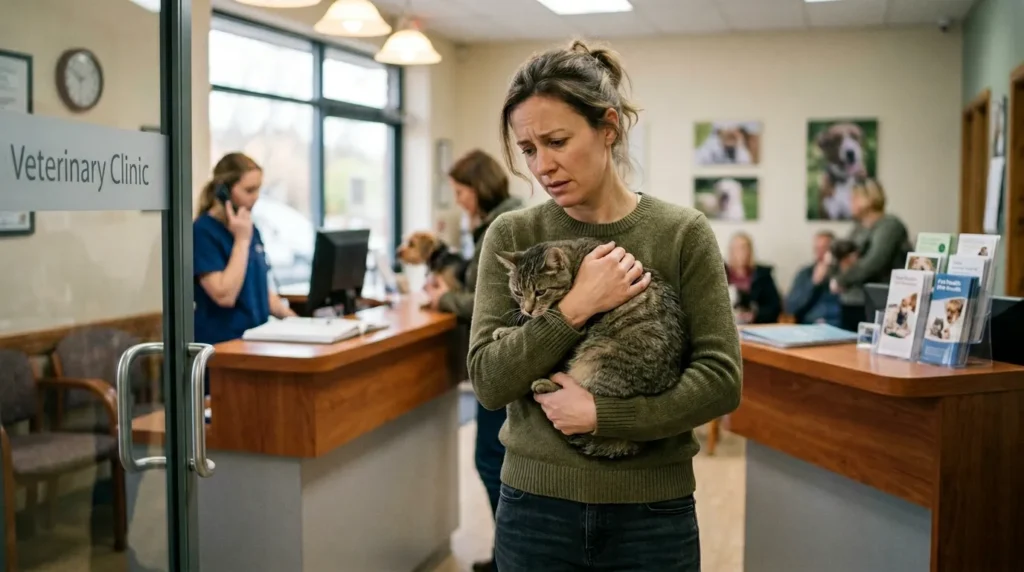
Environmental fixes work for depression driven by behavioral and environmental causes. They do not work for depression driven by physical pain or illness and attempting behavioral interventions first on a medically ill cat delays the treatment that would actually help. Specific combinations require a vet visit rather than enrichment changes: hiding or withdrawal combined with visible weight loss, appetite refusal lasting more than 48 hours, coat deterioration alongside reduced grooming or inappropriate elimination that began alongside the behavioral changes rather than predating them.
According to the American Association of Feline Practitioners, behavioral changes including withdrawal, appetite shifts and activity reduction are among the earliest and most consistent clinical indicators of illness in cats. A cat showing these signs for more than one week without any recent identifiable environmental cause should be examined before an owner concludes the issue is purely behavioral.
This article is for informational purposes only. Always consult your vet if your cat shows persistent behavioral changes alongside any physical signs such as weight loss, coat changes or litter box irregularities.
Frequently Asked Questions About Indoor Cat Depression
Do indoor cats get depressed from being alone all day?
Yes, single indoor cats that spend eight or more hours alone daily without environmental enrichment are at higher risk of developing depression-like behavioral states driven by loneliness and understimulation. Timed automatic feeders, puzzle feeders loaded before you leave, cat TV playing during the day and a window perch with an outdoor view significantly reduce solo daytime boredom. The evening play session before the last meal is particularly important for cats that are home alone during the day.
How long does cat depression last once I start making changes?
Most indoor cats show noticeable improvement within seven to fourteen days of consistent enrichment and structured play changes. Cats that have experienced loss of a companion may take four to six weeks before behavioral normalization is complete. If behavioral improvement is not visible within two to three weeks of consistent environmental changes, a vet visit to rule out a contributing medical cause is appropriate.
Can a second cat help a depressed indoor cat?
Sometimes yes but not always. A compatible second cat provides social stimulation and play that a single indoor cat cannot get from a human owner alone. However a poorly matched or poorly introduced second cat adds stress that worsens the original cat’s state. If considering a second cat as a solution, a slow introduction protocol over two to three weeks is non-negotiable. This article is for informational purposes only. Consult your vet before making significant changes to a depressed cat’s environment.
Why does my indoor cat seem more depressed in winter?
Reduced natural light during winter months affects serotonin regulation in cats similarly to the way seasonal affective patterns affect humans. Indoor cats with limited window access experience less light exposure than cats in summer and the associated behavioral flattening is a recognized pattern. A window perch in the brightest room of the apartment and consistent play sessions regardless of weather help maintain stable engagement through winter months.
What is the fastest way to help a depressed indoor cat today?
Play with them for fifteen minutes using a wand toy before their next meal, then feed immediately when play ends. That single sequence addresses the hunt-catch-eat biological requirement that most indoor cats never get to complete and produces a visible mood shift in most cats within the first few sessions. Repeat it at every meal for one week and assess whether the broader behavioral picture is improving.
Start With Play and Build From There
Indoor cats do get depressed and the condition is both real and reversible in most cases. The starting point is daily structured play followed immediately by food twice per day, every day, without exception. Add vertical territory near a window, introduce a puzzle feeder for at least one meal and rule out medical causes if behavioral changes persist beyond two weeks or include physical signs. Most cats come back to their previous selves faster than owners expect once the environmental conditions that their biology needs are genuinely in place. Building that environment thoughtfully is exactly what this guide on indoor cat care addresses across feeding, play, grooming and daily routine.
Indoor cats do get depressed in the form of a low-mood behavioral state caused by chronic understimulation, routine disruption, loss of a companion or underlying medical conditions. Signs include persistent hiding, reduced play engagement, appetite changes, excessive sleep, grooming neglect or overgrooming and vocalization shifts. Most cases improve within 7 to 14 days of structured daily play sessions of 10 to 15 minutes twice per day followed immediately by feeding. Adding vertical territory near a window and puzzle feeders for at least one daily meal addresses the environmental poverty that drives indoor cat depression. Behavioral changes lasting more than one week alongside physical signs require a veterinary examination to rule out medical causes.