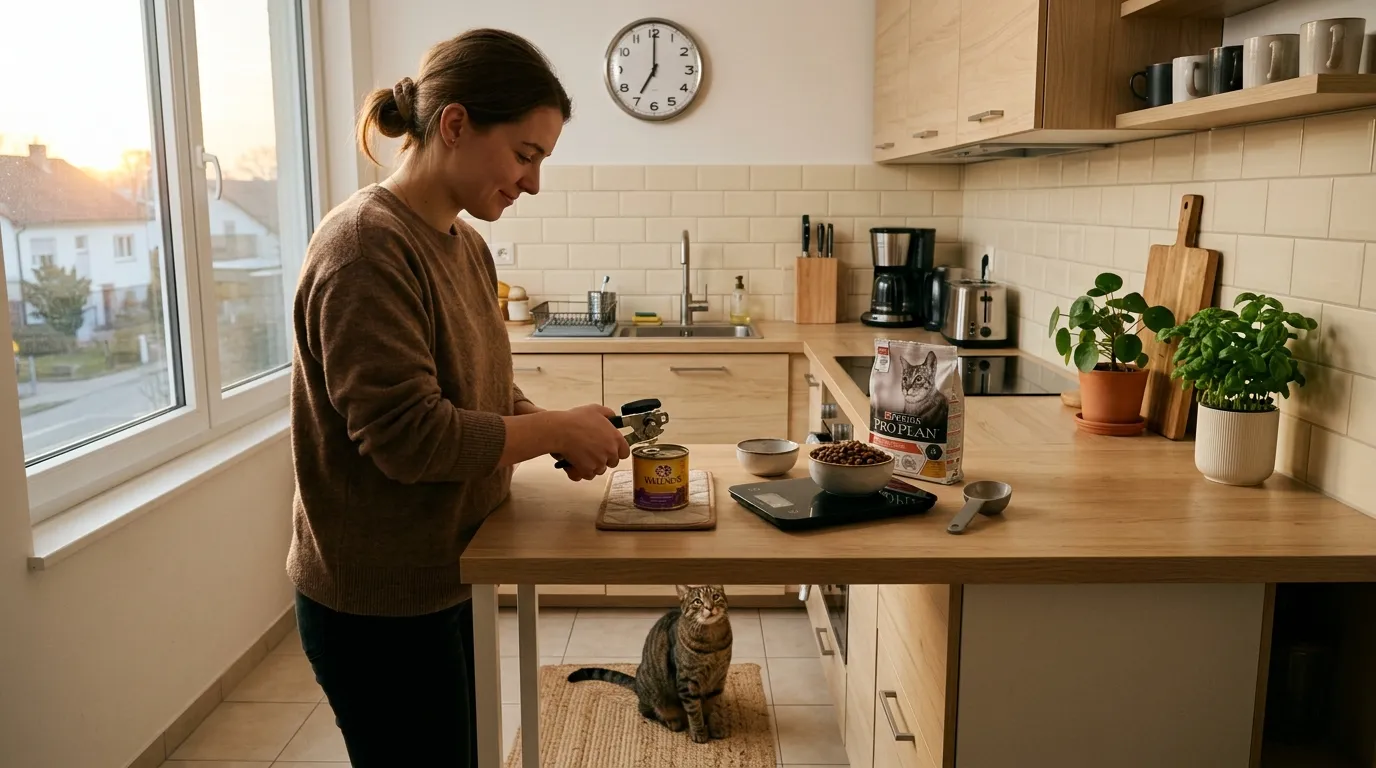
Your indoor cat is a creature of routine and nothing shapes their day more than when and how you feed them. Getting the best feeding schedule for indoor cats right is not about picking arbitrary times it is about understanding how a cat’s biology, activity level and hunger cycle work together so every meal lands at the right moment. My cat used to pace the kitchen from 4am onward and I could not figure out why until I shifted her last meal forty-five minutes later and the problem stopped completely. The right schedule does that it makes your cat calmer, more settled and easier to live with in a small apartment. This guide covers the exact timing, age-based structure and daily routine that works for most indoor cats.
The best feeding schedule for indoor cats is two to three measured meals per day at consistent times roughly six to eight hours apart. Morning around 7am and evening around 7pm works for most adults. Kittens need three to four meals daily. Never free-feed dry food all day in a small apartment it leads to weight gain faster than most owners expect.
Why Indoor Cats Need a Structured Schedule More Than Outdoor Cats Do?
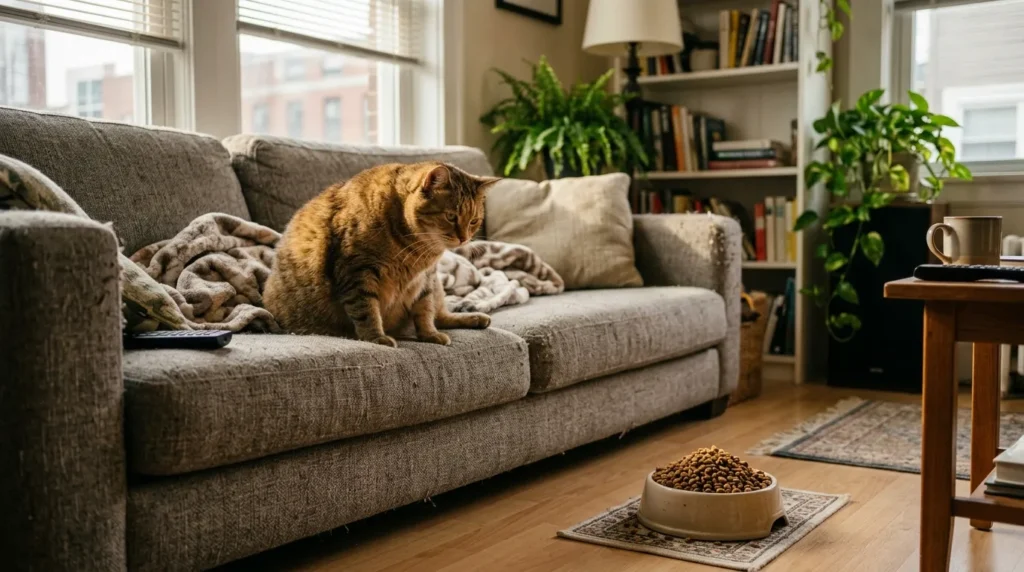
A structured indoor cat feeding schedule matters more for apartment cats than for outdoor cats because outdoor cats regulate their intake through physical activity that burns real calories throughout the day. Indoor cats have no equivalent mechanism. They eat when food is available and boredom drives them to the bowl as often as genuine hunger does.
Without a schedule, a sedentary indoor cat on free-fed dry food will typically graze beyond their calorie needs within months. The weight gain happens slowly enough that most owners do not notice it until the vet mentions it at the annual checkup. A timed schedule prevents this entirely because you control exactly how many calories are consumed and when.
Consistent meal timing also produces a behavioral benefit most owners do not anticipate. Indoor cats that eat on a reliable schedule become measurably calmer between meals because they learn that food is predictably coming and stop monitoring the kitchen and their owner constantly for cues. That anxiety-reduction alone makes structured feeding worth building even before you consider the weight management benefits.
The Best Feeding Schedule for Indoor Cats by Age and Life Stage
The right meal timing and frequency shifts at each life stage because a kitten’s nutritional demands are completely different from an adult’s and a senior cat’s digestion works differently again. Here is the age-based structure that aligns with current veterinary guidance:
| Life Stage | Age | Meals Per Day | Meal Timing | Key Focus |
| Young kitten | Under 12 weeks | 4 to 6 | Every 3 to 4 hours | Growth support, prevent hypoglycemia |
| Kitten | 3 to 6 months | 3 to 4 | Every 5 to 6 hours | Controlled growth, portion awareness |
| Adolescent | 6 to 12 months | 3 | Every 6 hours | Transitioning toward adult pattern |
| Adult neutered indoor | 1 to 10 years | 2 to 3 | Every 6 to 8 hours | Weight maintenance, consistency |
| Senior | 7 to 10 years | 2 to 3 | Every 6 to 8 hours | Easier digestion, appetite monitoring |
| Geriatric | 11 years and older | 3 to 4 | Every 4 to 6 hours | Smaller portions, kidney and muscle support |
Kittens under six months need the most frequent meals because their stomachs are small and their calorie-per-pound requirements are two to three times higher than adult cats. A kitten that skips meals for too long risks blood sugar drops that cause weakness and lethargy. Four meals from weaning through six months is the safe standard for indoor kittens with no access to prey.
Senior cats aged seven and older often do better with three smaller meals than two standard adult ones. Smaller portions digest more easily and help maintain consistent energy levels throughout the day as metabolism becomes less efficient. Geriatric cats at eleven and older may need four meals as their appetite becomes less reliable and kidney function requires more frequent hydration through wet food.
Sample Daily Feeding Schedules That Work for Apartment Cat Owners
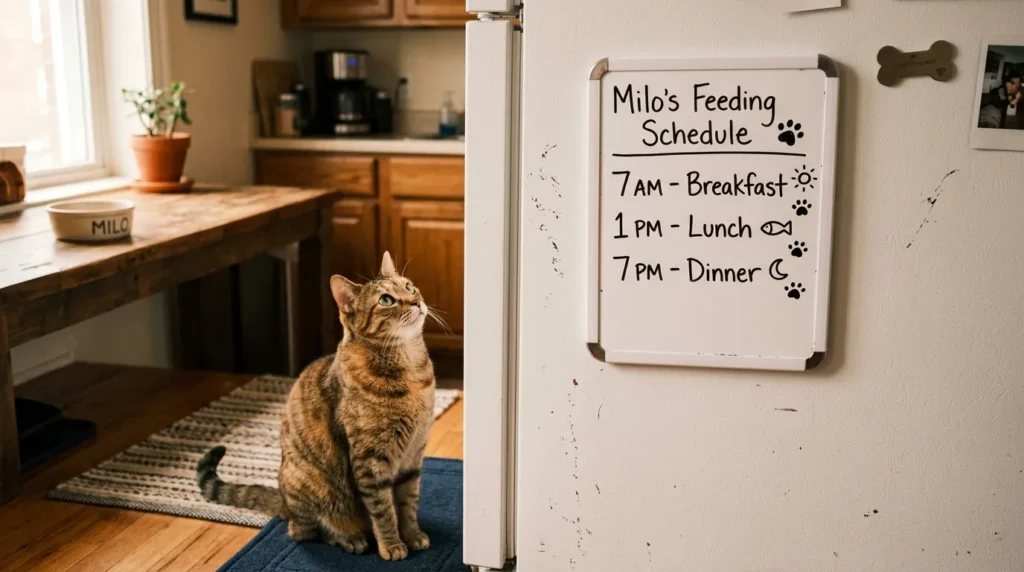
A practical daily schedule for a typical adult indoor cat on two meals: 7am when you wake up and 7pm before your evening wind-down. That twelve-hour spacing keeps hunger signals low throughout the day without the prolonged gap that makes cats anxious and vocal through the night.
For a three-meal schedule which works well for cats that beg persistently between two meals: 7am, 1pm using a timed feeder if you work outside home and 7pm. This compresses the longest gap from twelve hours to six and almost completely eliminates hunger-driven behavior between meals.
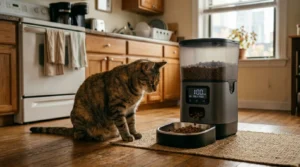
The timing of the last evening meal matters significantly for overnight calm. Cats are crepuscular by nature and most active at dusk. A full evening meal right before your bedtime satisfies that post-dusk activity peak and makes your cat significantly less likely to wake you before dawn demanding breakfast. Playing actively for ten to fifteen minutes immediately before the evening meal mimics the natural hunt-catch-eat cycle and produces noticeably calmer overnight behavior within a week of consistent practice.
Insight If you work long hours and cannot be home for a midday meal, a timed feeder set for 1pm handles the gap reliably. The important thing is that your cat hears the feeder go off at the same time every day rather than waiting for you to appear. Once cats realize food comes from the feeder at a specific time rather than from your movements in the kitchen, the 5am wake-up calls stop almost entirely.
How Meal Timing Connects to Portion Size and Weight Control?
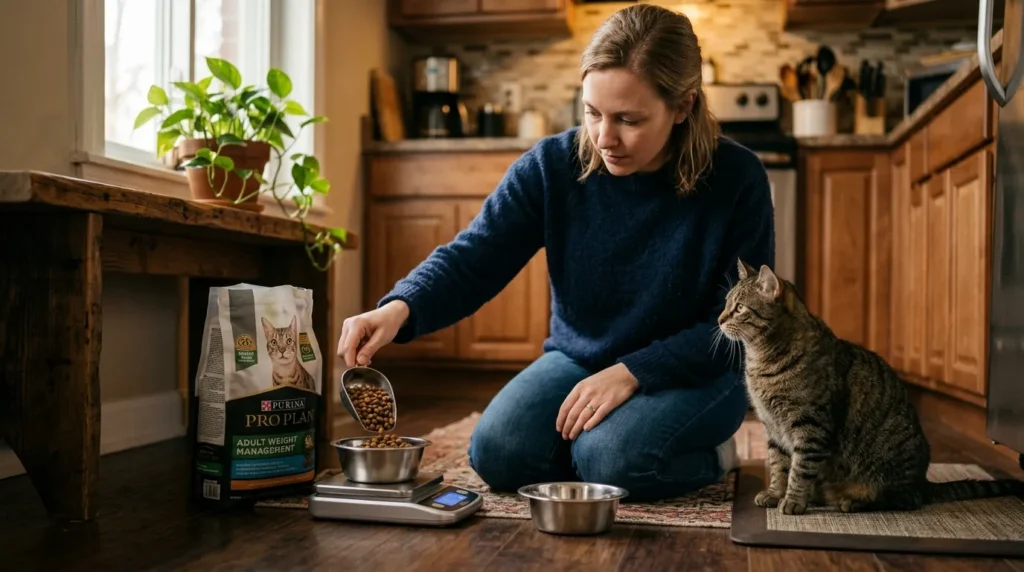
Portion control is only possible within a structured schedule because free-fed food cannot be accurately measured. When you commit to two or three scheduled meals you can calculate the daily calorie target, divide it by meal count and know exactly what goes in the bowl each time. This precision is what actually produces weight management results rather than switching between different foods hoping for a different outcome.
For a typical ten-pound neutered adult indoor cat, the daily calorie target sits between 200 and 250 calories depending on activity level. Divided across two meals that is 100 to 125 calories per meal. Divided across three meals it is roughly 70 to 85 calories per meal. Those amounts look small in the bowl especially dry food but they are nutritionally appropriate for a cat that spends most of their day on a sofa. Knowing the math prevents the visual impulse to add more because the portion looks insufficient.
The full breakdown of how to calculate daily calorie needs, translate them to wet and dry food portions and adjust by age and weight is covered in detail in this guide on how to feed an indoor cat properly it is the most practical reference for putting the schedule into actual numbers your specific cat needs.
The Best Feeding Schedule for Indoor Cats That Use Wet and Dry Food Together
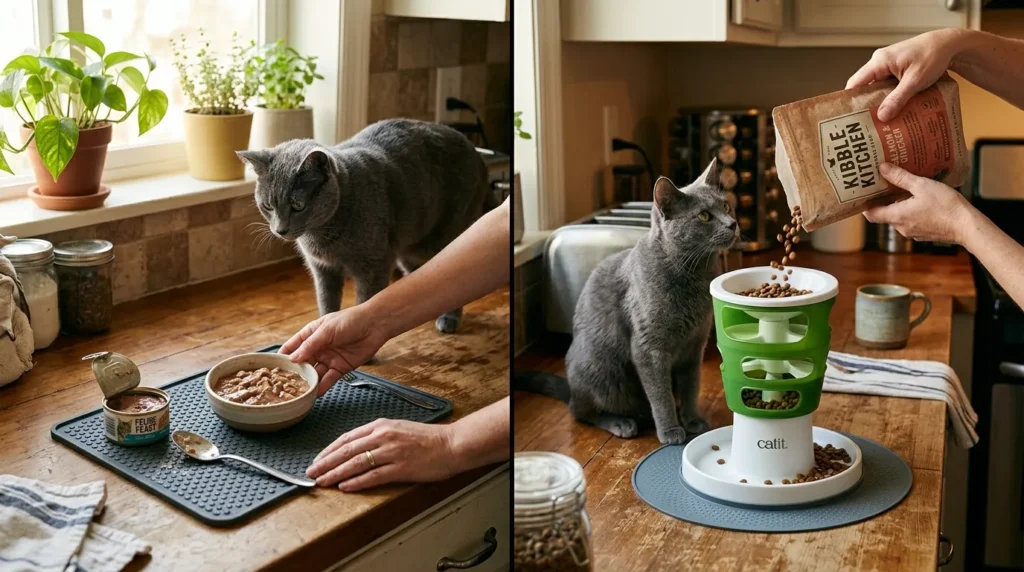
Combination feeding works particularly well for indoor apartment cats when each food type is assigned a specific role in the daily schedule rather than being mixed or alternated randomly. Wet food works best at the structured morning and evening meals because it delivers higher hydration and protein and must be consumed within a few hours before it spoils. Dry food fits naturally into the midday slot where it can be used in a puzzle feeder to slow eating and provide the mental stimulation that sedentary indoor cats benefit from.
That structure gives your cat the urinary health and satiety benefits of wet food at the primary meals while using the midday dry food portion for enrichment rather than just convenience. Indoor cats that have access to puzzle feeders during the day show measurably less boredom-driven behavior in the hours before the evening meal. This connection between feeding structure and mental activity is why how you offer the food matters as much as what time you offer it. For cats spending long hours alone in a small apartment, this connection between mealtime structure and overall daily wellbeing is covered in this guide on indoor cat enrichment particularly the section on food-based enrichment tools that work within scheduled feeding.
According to the Cornell Feline Health Center, indoor cats consuming primarily dry food drink significantly less water than cats eating wet food and this chronic low moisture intake contributes to urinary tract problems over time. Scheduling wet food as the primary meal type rather than an occasional treat directly addresses this risk in a practical way that requires no supplements or special products.
Insight When combining wet and dry food in a daily schedule, keep them at separate meal times rather than mixing them in the same bowl. Wet food masks the dry kibble’s smell and texture which actually reduces how much your cat engages with the puzzle feeder element. Separate meals make each food type more appealing in its own right.
Adjusting the Schedule for Senior Indoor Cats and Multi-Cat Households
Senior cats aged seven and older need a feeding schedule adjustment even if they appear healthy and eating normally because their digestion becomes less efficient and their calorie requirements shift. Most healthy senior indoor cats do well on three smaller meals rather than two standard-sized ones. The smaller portions are easier to process and help maintain steadier energy levels through the day without the dip that comes from one large meal being metabolized too quickly.
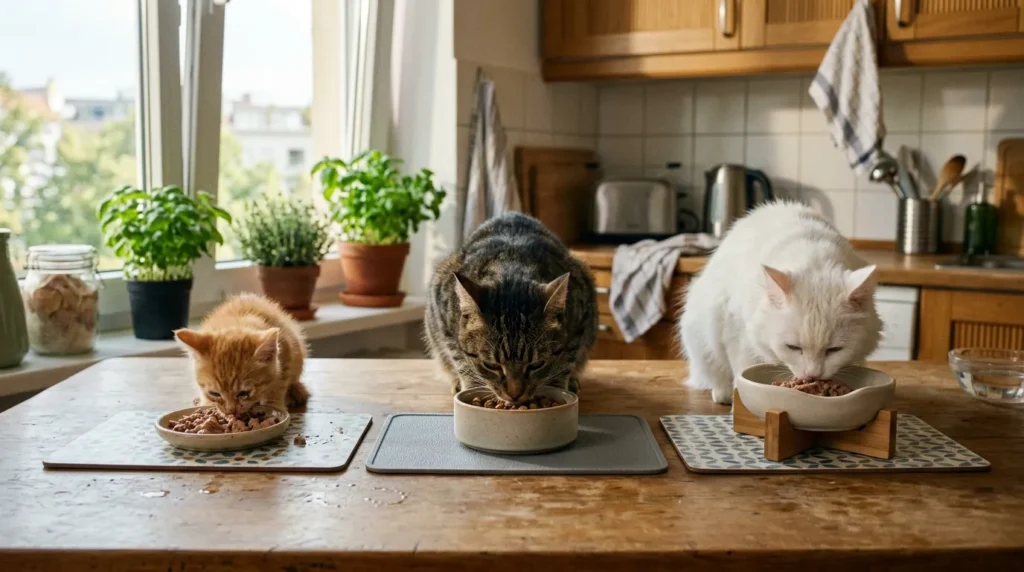
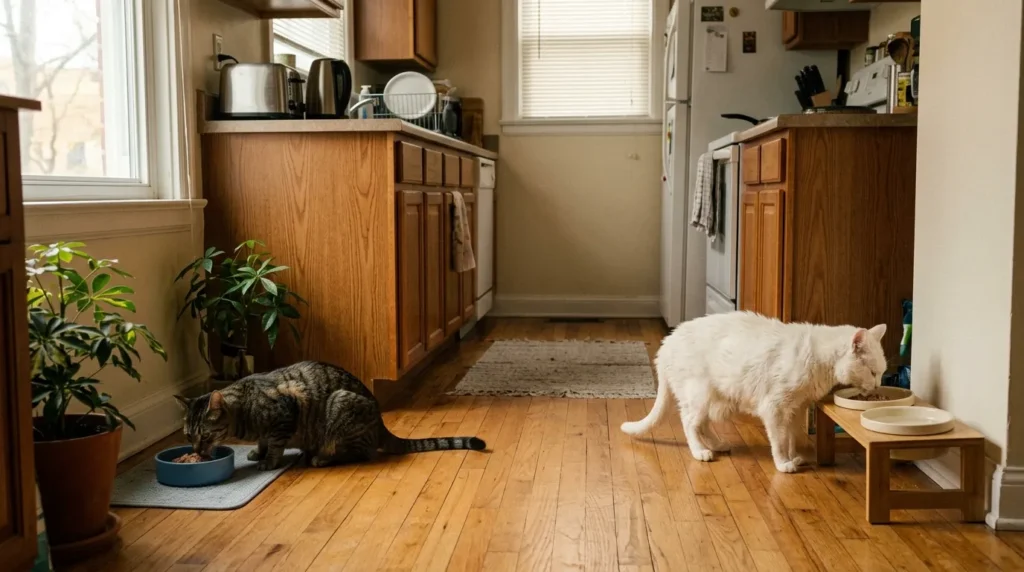
For multi-cat apartments, the schedule adjustment is spatial rather than temporal. Feed each cat at a separate station in a different location at the same time rather than from a shared bowl. Cats that eat side by side often eat faster than they would alone due to social competition and the faster eater typically finishes both portions if one cat leaves their bowl early. Separate stations eliminate this without requiring you to supervise every meal. Understanding how cat behavior shapes feeding habits in shared spaces is something this guide on indoor cat behavior covers in the context of resource management and social stress in small apartments.
Common Feeding Schedule Mistakes That Undermine the Routine

The most common schedule mistake is inconsistency in timing. Feeding at 7am one morning and 9:30am the next because your weekend schedule differs from your weekday one teaches your cat that mealtime is unpredictable. Cats respond to this by starting food-seeking behavior earlier and earlier each day until the anxiety is present all morning rather than just in the last twenty minutes before the expected meal. Consistent timing within thirty minutes of the target time each day produces the most settled indoor cat behavior.
The second mistake is responding to begging between scheduled meals by offering food. This creates a direct reinforcement loop where begging produces food and the behavior intensifies over the following week. The right response to between-meal begging is distraction through play rather than an early meal or a treat. A five-minute wand toy session redirects the energy and does not establish the reward pattern.
The third mistake is using a rigid schedule without ever reassessing it. A schedule that worked when your cat was two years old may need adjustment at seven and again at eleven as metabolism, activity and digestive efficiency all change. Weigh your cat monthly and watch for gradual weight creep or weight loss as the signal to revisit portion sizes and meal timing rather than waiting for the annual vet visit to discover a problem.
Insight The weekend schedule drift problem is real and easy to fix. Set a phone alarm for both meal times seven days a week until the routine is completely automatic. Your cat will start appearing at the feeding station a few minutes before the alarm goes off within two to three weeks. That anticipatory behavior tells you the schedule has become their internal clock too which is exactly what you want.
When Changes in Eating Habits Signal Something Worth Investigating?
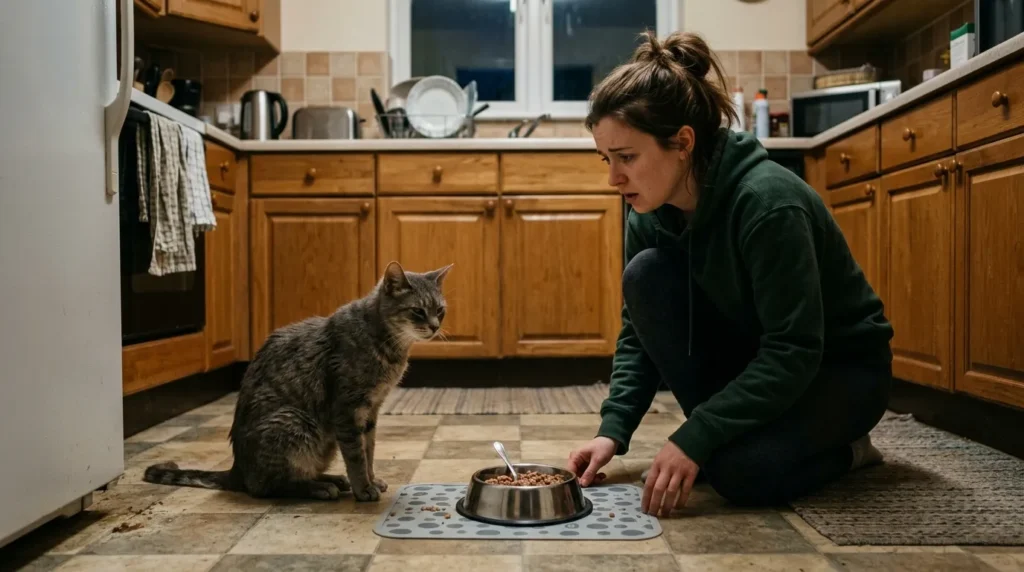
A cat that reliably finishes every meal and then suddenly leaves food in the bowl for two or more days in a row is showing you something worth paying attention to. Single skipped meals happen stress, a hot day, a new smell in the apartment and are not concerning on their own. A pattern of reduced appetite over several days is different.
Sudden appetite increase paired with visible weight loss is a classic early sign of hyperthyroidism in cats over eight years old. The cat eats more than usual but loses weight because the condition accelerates metabolism faster than food can compensate. Diabetes presents similarly. Both conditions are treatable when caught early but deteriorate significantly if missed for months.
Watch specifically for these warning combinations: reduced appetite plus increased water consumption, weight loss with normal or increased appetite and vomiting immediately after eating on more than two occasions in a week. Any of these alongside a change in eating pattern needs a vet visit within a few days rather than a schedule adjustment.
This article is for informational purposes only. Always consult your vet if your cat shows changes in appetite, weight or eating behavior.
Frequently Asked Questions About the Best Feeding Schedule for Indoor Cats
What is the ideal gap between meals for an indoor cat?
Six to eight hours between meals is ideal for most adult indoor cats. This timing aligns with how long it takes the stomach to empty and prevents both the prolonged hunger that causes anxious behavior and the too-frequent meals that cause some cats to become selective eaters. For a two-meal schedule twelve hours apart is the maximum gap before hunger signals become disruptive for most cats.
Is it okay to vary meal times on weekends?
Variation of up to thirty minutes from the regular time is generally fine. Shifts of two or more hours consistently undermine the schedule’s effectiveness because your cat begins experiencing genuine hunger well before the delayed meal arrives and spends that extra time in anxious food-seeking behavior. If your weekend differs significantly from your weekday routine, a timed feeder set for consistent times seven days a week solves the problem completely.
Should I feed wet food in the morning or evening?
Both meals ideally but if you can only manage one wet food meal per day the evening meal is the better choice. Evening wet food satisfies the post-dusk hunger peak that aligns with cats’ crepuscular nature and the higher moisture intake before overnight reduces urinary concentration. Morning wet food has the advantage of a guaranteed fresh start to the day’s hydration.
My indoor cat finishes their meal in two minutes and then begs immediately what does that mean?
Fast eating followed by immediate begging usually means either the portion is genuinely too small for your cat’s calorie needs or the food type has low satiety value. Calculate whether the daily calorie total matches your cat’s ideal weight range before assuming the portion is right. If calories are correct, add a puzzle feeder for the dry food portion to extend meal time and increase satiety through slower consumption.
Can I leave wet food out all day for my indoor cat?
No. Wet food left out at room temperature becomes unsafe to eat within two to four hours and most cats reject it well before that point as it dries out and loses palatability. Wet food requires scheduled meal timing by design. If your indoor cat needs midday feeding while you are away, use dry food in a timed feeder for that meal and reserve wet food for the morning and evening meals you can supervise.
Build the Schedule Today and Stick to It
The best feeding schedule for indoor cats is two to three meals at consistent times every day with portions calculated by calorie target rather than visual amount. Start with morning and evening meals twelve hours apart and add a midday timed feeder portion if your cat shows hunger-driven behavior between those two meals. Adjusting timing to match your cat’s natural crepuscular peak at dusk makes the biggest difference to overnight calm. For the full picture of how proper indoor cat care connects daily feeding structure to long-term health, that guide covers the routine habits that prevent most of the common problems apartment cat owners face.
The best feeding schedule for indoor cats is two to three measured meals per day at consistent times six to eight hours apart. Adult indoor cats do best with meals at 7am and 7pm as a minimum and benefit from a midday third meal via timed feeder. Kittens under six months need three to four meals daily. Senior cats aged seven and older do better on three smaller meals for easier digestion. Wet food should be served at scheduled meals only due to spoilage risk. Free-feeding dry food all day causes weight gain in most sedentary indoor apartment cats within months of starting.