
Your cat starts meowing the moment you walk toward the kitchen, paws at your leg while you eat and wakes you up at 5am demanding breakfast that is still two hours away. Learning how to stop cat begging for food is genuinely one of the most practical skills you can develop as an indoor cat owner because this behavior gets worse over time if the underlying cause is not addressed and the cause is almost always something you can fix. I noticed this clearly when my cat’s begging intensity doubled in the weeks after I started occasionally giving treats to stop the meowing during dinner I had accidentally trained her that persistence pays off. This guide covers every cause and every fix so you can solve this properly rather than managing it forever.
To stop cat begging for food, switch to scheduled measured meals at consistent times, ignore begging completely without any eye contact or verbal response and replace free-fed access with timed meals or puzzle feeders. Most cats reduce begging significantly within seven to fourteen days when these changes happen simultaneously and consistently across everyone in the household.
Why Cats Beg for Food: The Real Causes Behind the Behavior?

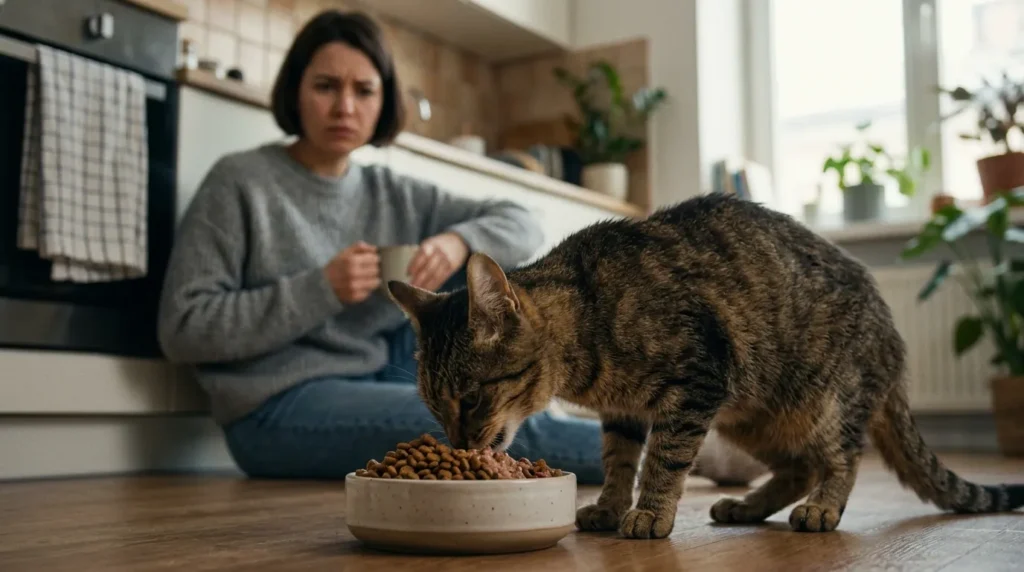
Cat begging for food is almost always learned behavior rather than genuine hunger and that distinction matters enormously because it points directly at the solution. A cat that meowed once during dinner and received any response at all, whether food, eye contact, a verbal reaction or even a gentle push away, learned that meowing during dinner produces attention. That association is established with a single reinforcement and strengthens every time the pattern repeats.
Indoor cats are significantly more prone to food-seeking behavior than outdoor cats because boredom removes every other source of stimulation and environmental change from their day. A cat in a small apartment that never hunts, never patrols territory and has nothing to do between meals redirects that behavioral energy toward the one consistently interesting event in their day food. What looks like constant hunger is often boredom-induced begging that would disappear with adequate daily stimulation even without changing the feeding schedule.
Medical causes produce genuine polyphagia rather than learned behavior and the distinguishing feature is weight loss alongside increased appetite. A cat begging dramatically but maintaining a stable healthy weight almost certainly has a behavioral and environmental cause rather than a medical one. A cat begging dramatically and losing weight needs a vet visit before any behavioral intervention.
How to Stop Cat Begging for Food? The 8 Changes That Actually Work
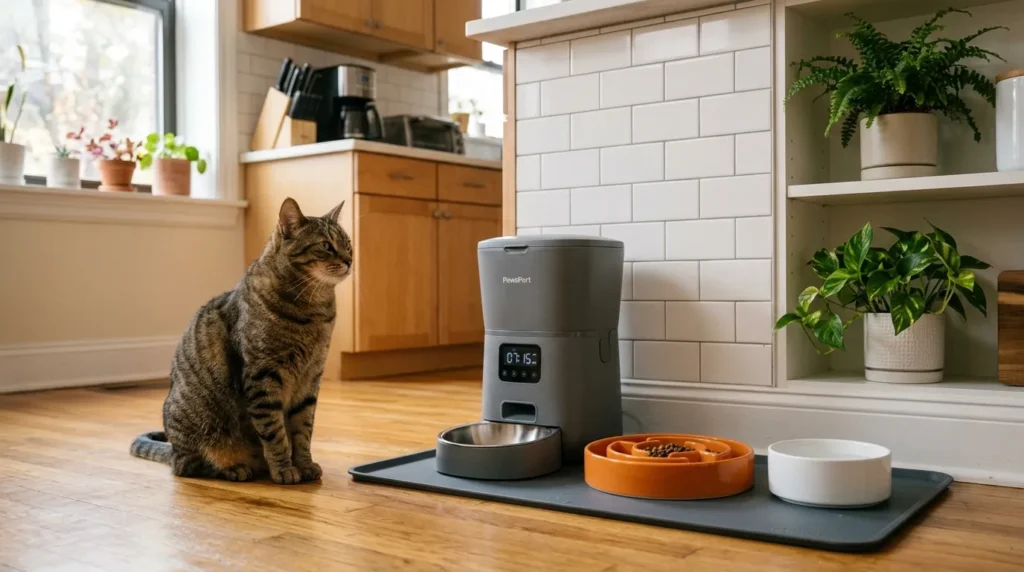
Change 1: Switch to scheduled measured meals immediately. Free feeding is the foundation of most persistent begging behavior. When food is always available your cat never experiences the meal as an event and never learns to wait for one. Two to three measured meals at consistent times per day creates a predictable structure where your cat waits for the scheduled meal rather than monitoring you for signs of food all day.
Change 2: Ignore begging with zero response. This is the hardest change and the most important one. Zero response means no eye contact, no speaking, no moving away, no pushing the cat down and no giving in. Any response at all tells your cat that the begging produced a reaction and they will continue. Consistent zero response extinguishes learned begging behavior within one to two weeks for most cats.
Change 3: Expect an extinction burst and stay consistent through it. An extinction burst is the temporary intensification of begging that happens in the first three to seven days after you stop responding to it. Your cat escalates because the strategy that previously worked is no longer producing results and they are testing whether more persistence will restore the reward. This phase is uncomfortable but it is a sign the process is working and it passes if you stay consistent.
Change 4: Use a timed automatic feeder for at least one daily meal. Automatic feeders break the connection between your movements and food delivery. Your cat stops monitoring you because they learn that food comes from the machine at a specific time regardless of what you are doing. Many indoor cat owners report that their cat completely stops kitchen-shadowing within a week of consistent automatic feeder use and waits by the feeder instead. This guide on how to feed an indoor cat properly covers how to integrate automatic feeders into a complete daily feeding structure with the right portion sizes for your cat’s weight.
Insight The most common mistake people make with automatic feeders is placing them in the kitchen near where food previously came from you. Put the feeder in a different room or a different part of the apartment. Your cat needs to associate food with the feeder’s location not your kitchen presence. That spatial separation is what makes the behavior shift happen faster.
Puzzle Feeders and Enrichment: The Boredom Side of Begging
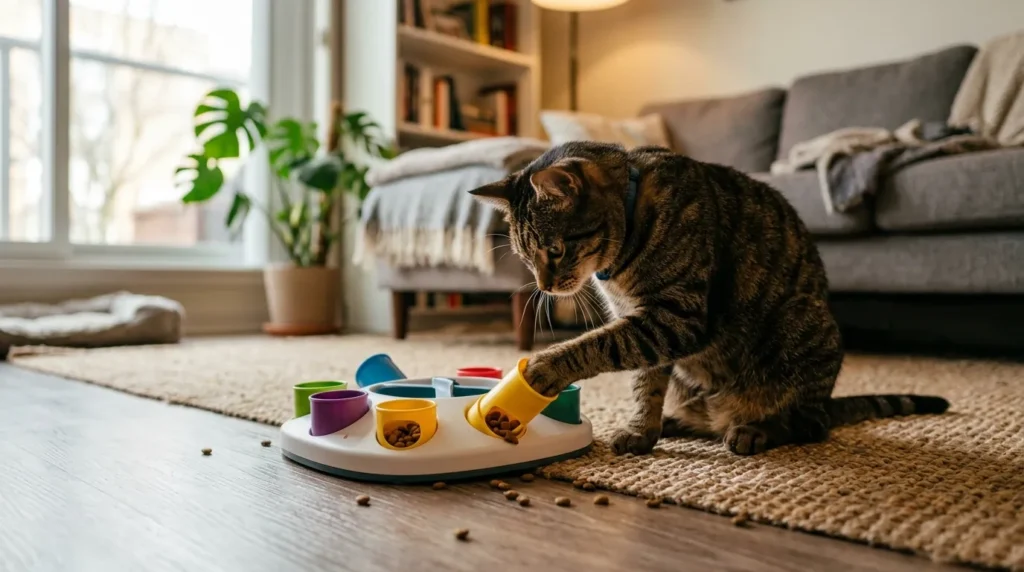
Puzzle feeders address the boredom side of begging directly by making your cat work mentally and physically for their food rather than eating passively from a bowl. A cat that spends twenty minutes working a puzzle feeder at mealtime feels genuinely satisfied in a way that eating the same amount of food from a bowl in two minutes does not produce. The mental effort triggers the satisfaction that the hunting cycle is supposed to create and reduces the food-fixation that drives begging behavior throughout the day.
Lick mats work similarly for wet food by spreading the meal across a textured surface that takes several minutes to fully lick clean rather than eating from a bowl in seconds. A cat that takes eight minutes to finish a lick mat portion feels more satisfied on the same calorie content than one that finished the same amount in thirty seconds and then immediately started begging for more.
The connection between daily enrichment activity and food-seeking behavior reduction is direct and consistent: bored indoor cats beg more and stimulated indoor cats beg less regardless of whether feeding amounts change. Adding two wand toy play sessions per day of ten to fifteen minutes each reduces food begging in most indoor cats within a week because the energy that was going into begging goes into play instead. For a full range of enrichment tools that work specifically for apartment cats, this breakdown on indoor cat enrichment covers the specific setups that replace food-seeking with genuinely satisfying activity.
How Food Quality and Meal Structure Affect Begging Behavior?
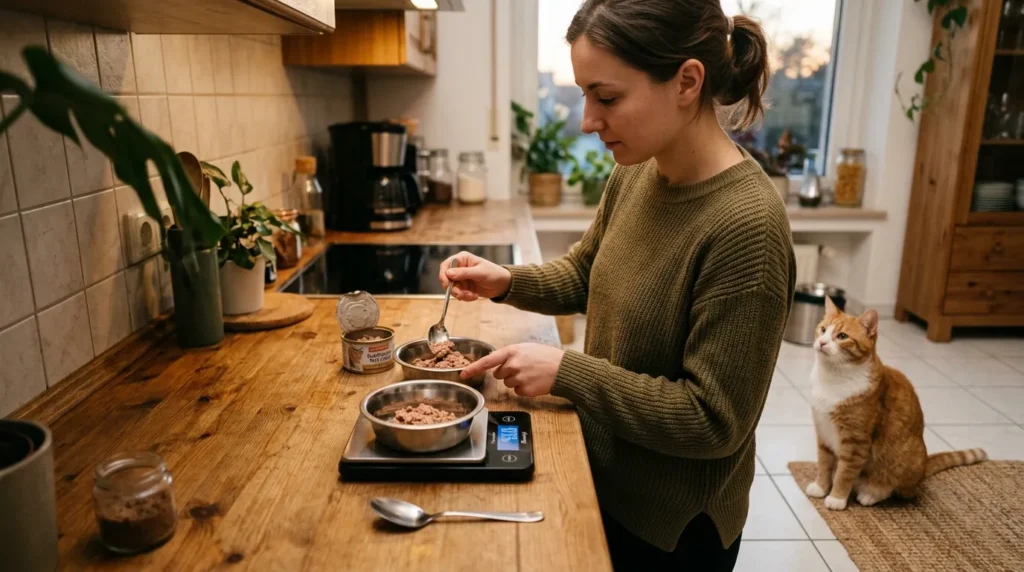
Low-quality dry food with high carbohydrate content leaves cats physically hungry after eating an apparently adequate portion because the macronutrient profile does not match what a cat’s metabolism is designed to use. Cats are obligate carnivores designed to run on protein and fat and a food that is predominantly carbohydrate fills the stomach volume without providing the amino acid profile that sends genuine satiety signals. Switching to a higher-protein wet food or quality dry food with a named protein as the first ingredient often reduces begging within two to three weeks without any other changes because the cat actually feels satisfied after eating.
Meal frequency also matters. A cat fed once per day experiences genuine hunger in the last several hours before the next meal and that hunger drives food-seeking behavior that looks indistinguishable from learned begging. Splitting the same daily calorie total across three meals rather than two removes those hunger gaps and produces a calmer cat between meals without increasing total food intake at all.
How to Handle Night-Time and Early-Morning Begging Specifically?

Early-morning begging is one of the most disruptive forms of this behavior and it has a specific cause and fix. Cats are crepuscular and most active at dawn and dusk. When feeding has consistently happened at a time connected to your waking up your cat learns to wake you up because your waking leads to food. The solution is to use a timed automatic feeder set for your target morning meal time so that food appears at a specific clock time regardless of whether you are awake.
Once your cat learns that your presence in the morning does not produce food and the feeder does, the pre-dawn waking behavior stops in most cases within one to two weeks. The critical mistake people make is responding to the early-morning begging even once after implementing the feeder because a single successful wake-up restarts the association and you have to begin the extinction process again.
Do not feed your cat when they wake you up and do not increase the automatic feeder time to match whenever they start waking you. Set the feeder for your actual target time and hold that time consistently regardless of when the begging starts.
Insight If your cat’s early-morning begging starts before 5am even after you implement an automatic feeder, the issue is often that the evening meal is too early. Move the last meal of the day thirty to forty-five minutes later than where it currently sits. That shift in the evening meal timing typically pushes the early-morning hunger threshold back by a similar amount and buys you back that extra sleep window.
Common Mistakes That Make Cat Food Begging Worse Over Time

The most common mistake is inconsistency following the new rules six days a week and then giving in once on the seventh day because the meowing becomes genuinely unbearable. That single response resets the extinction process because it confirms to your cat that persistence eventually produces results. The begging will actually intensify after that reset because the cat has just received the strongest possible reinforcement that waiting long enough works.
The second mistake is scolding or verbally correcting the begging. “No” and “stop it” count as attention from your cat’s perspective. Any verbal response tells your cat that the behavior produced a reaction from you and they will repeat the behavior that generated the reaction. The correct non-response is complete stillness and silence followed by calmly leaving the room if the begging continues.
The third mistake is only changing one variable at a time when begging is severe. Switching to scheduled meals alone helps but does not address the boredom component. Adding puzzle feeders alone helps but does not address the learned behavior component. The combination of scheduled meals plus consistent non-response plus daily enrichment plus at least one automatic feeder works faster and more completely than any single change applied in isolation.
When Begging Behavior Signals a Medical Issue Worth Investigating?
Behavioral fixes work for begging driven by learned behavior and boredom. They do not resolve begging driven by a medical condition that is genuinely increasing appetite and the two can look almost identical from the outside. The distinguishing factor is weight: a cat that is begging more and losing weight simultaneously has a medical cause that behavioral changes will not address.
Hyperthyroidism in cats over eight years old, diabetes in overweight cats, intestinal parasites in cats of any age and inflammatory bowel disease all produce increased food-seeking alongside other changes that a vet can identify through straightforward bloodwork and a fecal exam. According to the American Veterinary Medical Association, annual wellness exams for adult cats and biannual exams for senior cats exist precisely to catch these conditions before the symptoms become severe.
Watch specifically for these combinations alongside increased begging: visible rib prominence or weight loss over two to four weeks, increased water intake and urination, vomiting after meals more than once per week and a coat that looks unkempt without grooming. Any of these alongside intensified begging warrants a vet visit within a few days rather than a behavior modification plan.
This article is for informational purposes only. Always consult your vet if your cat shows sudden changes in appetite alongside weight loss or other symptoms.
Frequently Asked Questions About Stopping Cat Begging for Food
How long does it take to stop cat begging for food once I start ignoring it?
Most cats show meaningful reduction in begging within seven to fourteen days of consistent non-response combined with scheduled meals. The first three to seven days may involve an extinction burst where begging temporarily intensifies before it decreases. Consistency across everyone in the household determines how quickly this resolves a single person occasionally giving in restarts the entire timeline.
Why does my cat beg right after finishing their meal?
Immediate post-meal begging usually signals one of three things: the portion is genuinely insufficient for your cat’s calorie needs, the food type has low satiety value due to poor protein content or the begging is a learned habit that the end of a meal triggers as a conditioned routine. Verify your cat’s daily calorie target matches their ideal body weight and upgrade to a higher-protein food if portion math is correct.
Will my cat stop begging if I switch to an automatic feeder?
For most cats yes within one to two weeks because the automatic feeder breaks the association between your presence and food delivery. Your cat learns to wait by the feeder rather than monitor you. The feeder works faster when you place it in a different location from where you previously served meals so the cat develops a completely new feeding behavior pattern rather than just waiting in the same spot for you to activate a machine.
Is my cat actually hungry or just begging out of habit?
If your cat’s weight is stable at a healthy level and they are receiving the correct daily calorie amount the begging is almost certainly habit and boredom rather than genuine hunger. The body condition test is the most reliable quick check: you should be able to feel your cat’s ribs without pressing hard but not see them. A cat at ideal body weight on an adequate portion is not physically hungry between meals regardless of how convincingly they argue otherwise.
Can playtime really reduce food begging in indoor cats?
Yes consistently. Indoor cats that get two ten-to-fifteen minute active wand toy sessions per day show measurably reduced food-seeking behavior compared to sedentary cats on identical diets. The play session before the evening meal mimics the hunt-catch-eat cycle and produces genuine post-play satisfaction that reduces the hunger and boredom that drive between-meal begging. This article is for informational purposes only. Always consult your vet if you have concerns about your cat’s appetite or weight.
Begging Stops When You Remove Every Reason to Beg
To stop cat begging for food the core changes are: scheduled meals at consistent times so begging between meals produces nothing, complete non-response to begging so the behavior stops being reinforced and daily enrichment so boredom stops fueling the behavior in the first place. Apply all three consistently for two weeks and most indoor cats settle into a genuinely calmer routine. Understanding how your cat’s overall daily care habits connect to behavior patterns is something this guide on indoor cat behavior covers particularly how feeding structure and enrichment interact in apartment cats to either amplify or reduce problem behaviors.
Cat begging for food is primarily learned behavior reinforced when owners respond to meowing with food or attention. Stopping it requires three simultaneous changes: switching to scheduled measured meals two to three times daily, ignoring all begging behavior with zero eye contact or verbal response and adding daily enrichment through puzzle feeders and interactive play sessions. Most indoor cats reduce begging significantly within seven to fourteen days when all three changes are applied consistently by everyone in the household. An extinction burst where begging intensifies for three to seven days is normal before the behavior decreases. Begging accompanied by weight loss requires a veterinary visit to rule out hyperthyroidism, diabetes or intestinal parasites.