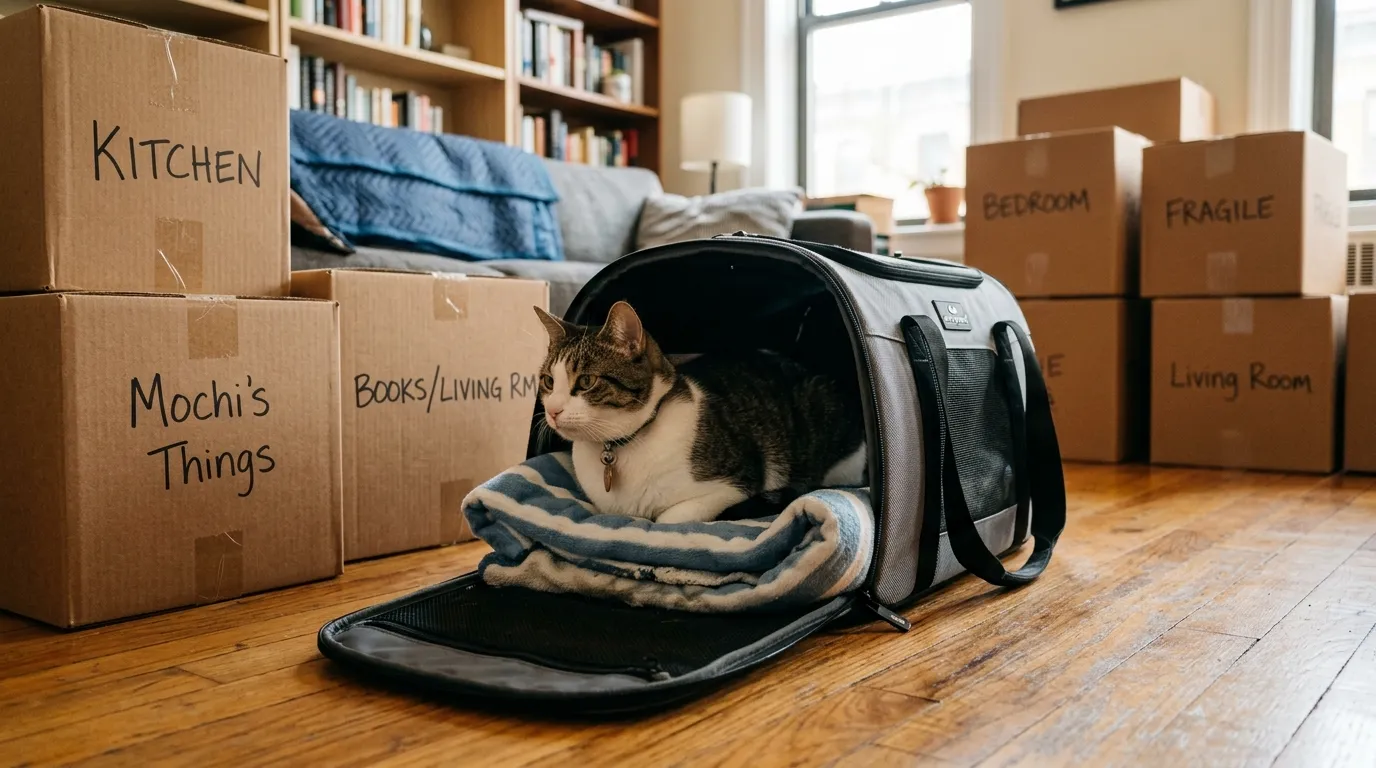
Moving to new apartment with cat requires more preparation than most owners give it. My cat disappeared under the bathroom vanity for three days after the first time I moved and I spent those days sliding food under the cabinet and talking to a piece of furniture. What I learned from that experience and every move since is that the outcome depends almost entirely on what happens in the forty-eight hours before the cat ever sees the new apartment. Moving to new apartment with cat is not difficult when the preparation is structured. It is reliably difficult when it is not. This article covers the complete process from two weeks before moving day through the first two weeks in the new apartment so your cat transitions with the minimum possible stress.
Moving to new apartment with cat works best when you set up a safe room in the new apartment first and confine the cat there with familiar-smelling bedding, the same food and water bowls and an established litter box before opening any other rooms. Most cats decompress for three to seven days in the safe room before showing readiness to explore further. Do not force expansion. Watch for eating and litter box use as the readiness signals.
Before the Move: What to Do Two Weeks Out?
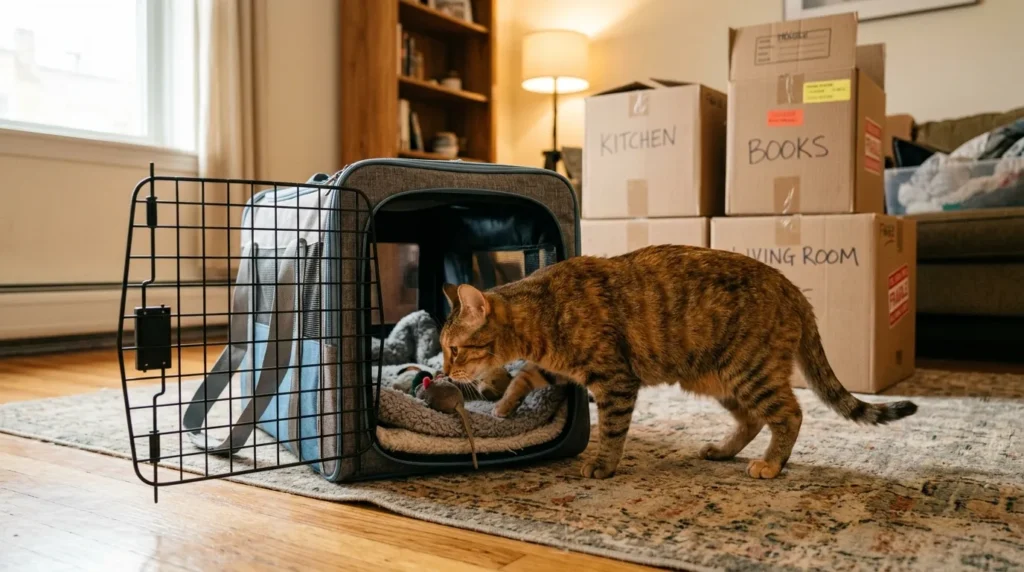
Two weeks before moving to new apartment with cat, introduce the carrier to the living space and make it a neutral resting option rather than an emergency vehicle the cat associates only with vet trips. Remove the carrier door or prop it open and place familiar bedding inside. Feed one daily meal at the carrier entrance and over three to four days move the bowl further inside. A cat that walks into its carrier voluntarily on moving day is a categorically different experience from one that requires pursuit and capture.
Gather scent soakers across the two weeks before the move. These are items that carry your cat’s established territory scent: the old cat bed, the blanket it sleeps on most consistently, the scratching post, any clothing you have slept in and used litter mixed with clean litter to carry familiar scent into the new box. These objects transfer the chemical signature of the old territory into the new apartment and dramatically reduce the time required for the cat to accept the new space as its own.
Update the microchip registration and ID collar tag with the new address before moving day rather than after. A cat that bolts in a new apartment has none of the route memory it would use to find its way home in a familiar neighborhood. The new address on identification is the only safety net available if the cat escapes during the transition period.
Moving Day: Keep the Cat Out of the Chaos
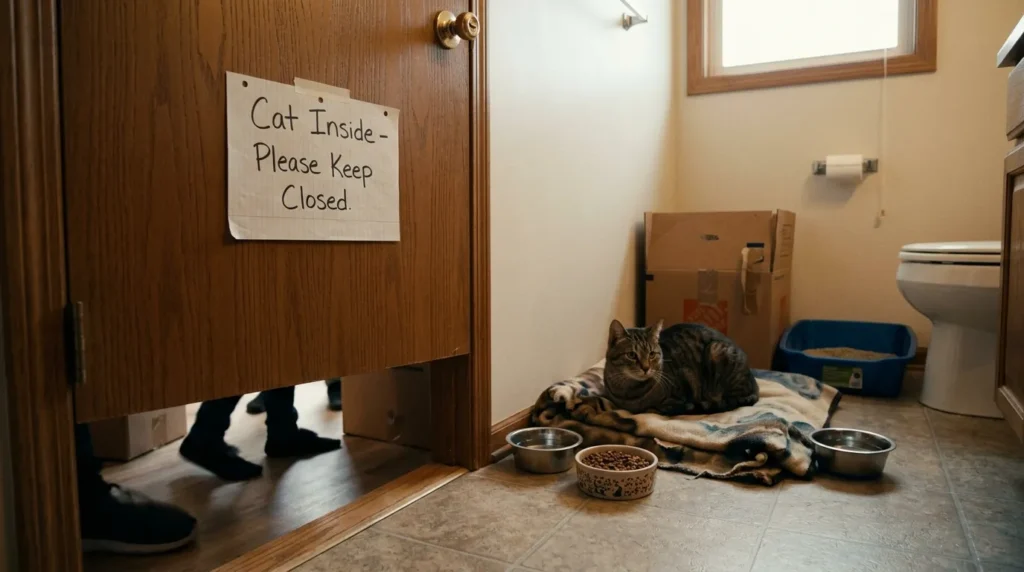
On moving day, confine the cat to one room at the old apartment before any doors open for movers or before you begin loading boxes. The bathroom or a bedroom with a sign on the door works. Place food, water, a litter box and familiar bedding inside and leave the cat there for the full duration of the loading process. The noise and open-door chaos of moving is one of the highest escape-risk periods for apartment cats and a cat that bolts during moving is genuinely difficult to recover.
Transport the cat in the carrier as the last item you load or the first item that goes into the new apartment. Never transport a cat in a moving truck. The carrier should ride in your personal vehicle with you and ideally your voice nearby during transit. For moves under two hours most cats do not need sedation. For longer moves in which the cat shows significant distress during carrier conditioning a vet consultation about travel anxiety medication is worth having before moving day rather than after.
Arriving: The Safe Room Strategy That Actually Works
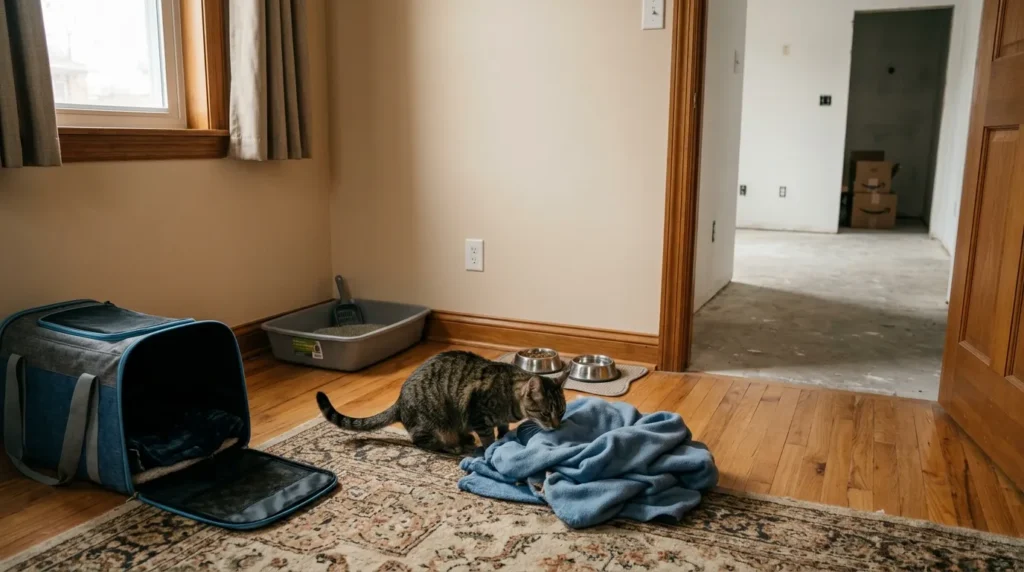
Set up the safe room in the new apartment before the cat carrier comes through the door. This is the single most important step when moving to new apartment with cat and it requires about ten minutes of deliberate first setup. Bring in the scent-soaked bedding, establish the litter box using a mix of old and new litter, position the food and water bowls in the same spatial relationship to each other that they had at the old apartment and set the open carrier in a corner as an additional retreat option.

Release the cat into the safe room and close the door. Do not follow the cat in immediately or hover. Leave it to investigate the familiar-smelling objects at its own pace and check back every thirty minutes. Most cats spend the first day under the bed or inside the carrier and begin moving around the safe room freely by the second day. Eating and using the litter box on the first day is a positive sign. Not eating for the first twelve to eighteen hours is normal. Not eating for more than twenty-four hours warrants gentle intervention with warmed food or a vet call.
According to ASPCA guidance on moving with cats, the safe room phase can last anywhere from three days to two weeks depending on the cat’s individual confidence level and the degree of change the move represented in terms of noise, neighborhood and living arrangement. Pushing expansion before the cat signals readiness through eating normally, using the litter box consistently and investigating the door produces setbacks rather than acceleration.
Expanding the Territory: How and When to Open the Apartment?
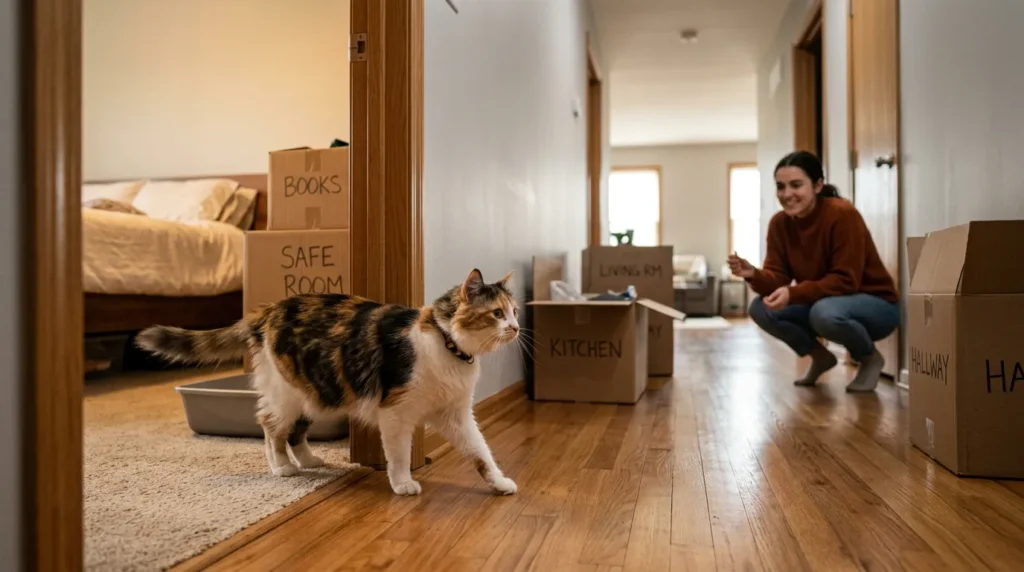
Open the safe room door for the first time only after the cat has shown three consecutive days of normal eating and consistent litter box use inside the safe room. Do not force the cat out. Leave the door open and let the cat choose its own timing. Most cats will investigate the doorway for an hour or two before taking the first step into the wider apartment. That first exploration happens faster if you place a treat trail from the safe room door toward a specific point of interest in the next room.
Add one room at a time over several days rather than opening the entire apartment simultaneously. A cat that exits the safe room and immediately faces the full open floor plan of a new apartment experiences a disorienting territorial challenge rather than a manageable expansion. One additional room per two to three days gives the cat time to establish that room’s scent and spatial understanding before adding more territory.
Keep the cat fully indoors for a minimum of two weeks after arriving at the new apartment even if the cat previously had outdoor access. Route memory does not transfer to a new location and an outdoor cat released too early will leave the building with no behavioral map to return with. Two weeks of indoor settlement allows the new apartment’s scent to anchor as home before the cat encounters the exterior environment.
Signs Your Cat Is Struggling After the Move and What to Do?
A cat experiencing normal post-move adjustment hides, eats less than usual and vocalizes more than usual during the first three to seven days. These behaviors resolve as the cat establishes scent familiarity with the new space. A cat still showing these behaviors after two weeks despite the gradual expansion approach and the scent soaker strategy is showing a stress response that warrants active intervention.
Watch specifically for two behaviors that indicate the stress response is not resolving on its own. The first is litter box avoidance after the cat had previously been consistent: eliminating outside the box in a new apartment almost always signals territorial anxiety rather than a litter box preference problem. Add a second litter box in a different room and use exclusively familiar litter until the anxiety resolves. The second is total appetite loss beyond thirty-six to forty-eight hours. Cats that stop eating entirely for more than two days risk hepatic lipidosis regardless of the reason for the appetite loss.
This article is for informational purposes only. Always consult your vet if you have concerns about your cat’s health.
The Mistake That Extends the Adjustment Period by Weeks
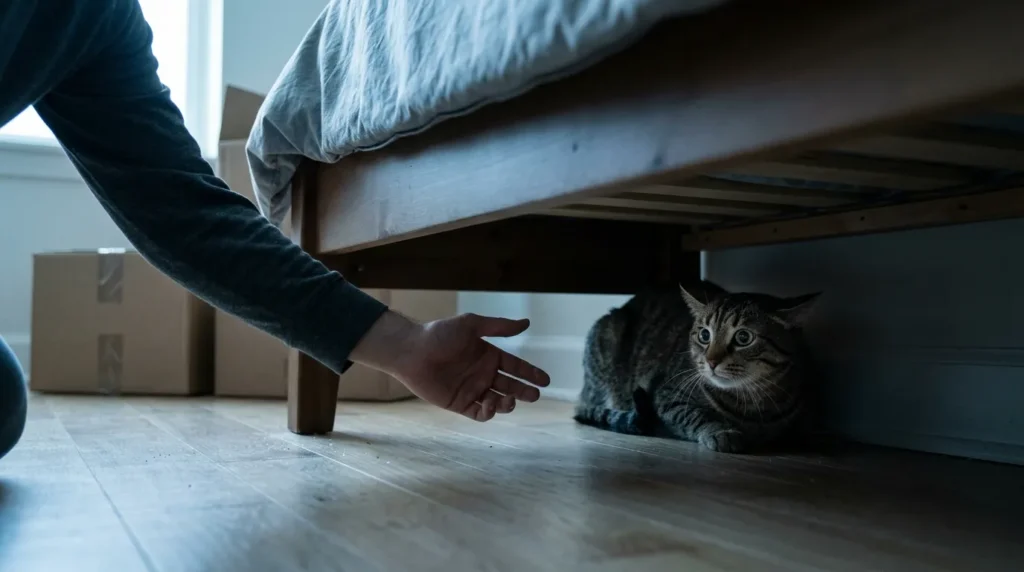
The mistake most owners make when moving to new apartment with cat is forcing the cat out of hiding because they are worried about it. A cat hiding under the bed in a new apartment is not suffering. It is doing exactly what its territorial instincts require: staying concealed in a small space while it processes a massive olfactory change in its environment. Forcing it out does not accelerate acceptance. It resets the stress clock and teaches the cat that hiding in the new space does not actually mean safety.
Leave the cat wherever it hides. Place food and water within reach of the hiding spot rather than at the opposite end of the room. Sit quietly in the same space without making direct eye contact or attempting to interact. Cats accept a new environment through gradual voluntary exploration and any forced exposure interrupts that process. The cat that takes two full weeks to come out from under the bed and accept the new apartment on its own terms is a better long-term outcome than the cat that was repeatedly pulled out and had to restart its decompression from scratch every time.
Insight Every cat owner I know who had a nightmare move made the same mistake: they panicked on day three when the cat was still hiding and started forcing contact to reassure themselves rather than the cat. Day three hiding is normal. Day ten eating and playing is the goal. Those two things are connected by patience and they cannot be shortcut.
Frequently Asked Questions
How long does it take for a cat to adjust to a new apartment?
Most cats show meaningful behavioral normalization within one to two weeks when the safe room strategy and scent soakers are used correctly. Individual adjustment timelines vary significantly based on the cat’s baseline confidence level and the degree of environmental change the move represented. Confident outgoing cats often adjust in three to five days. Anxious or senior cats may take three to four weeks.
Should I let my cat roam the new apartment right away?
No. Immediate full roaming produces territorial overwhelm rather than faster acceptance. A cat that enters a new apartment with unfamiliar smells in every direction simultaneously experiences a stress response that produces hiding, litter box avoidance and appetite loss more reliably than a cat introduced to one room at a time. The safe room approach shortens the total adjustment timeline even though it appears to slow immediate access.
My cat won’t eat after moving to the new apartment. What should I do?
Offer warmed wet food in the safe room near the cat’s hiding spot rather than at the bowl’s normal position. Appetite loss for twelve to eighteen hours is normal after a significant territorial disruption. Loss of appetite beyond thirty-six hours warrants a vet call because cats are susceptible to liver problems from extended food refusal regardless of the cause.
How do I help my cat feel safe in the new apartment?
Place familiar-smelling objects throughout the new apartment before the cat accesses each new room. Your worn clothing placed in specific spots functions as a territorial anchor because the cat associates your scent with safety rather than threat. Maintain the exact same feeding and play schedule that existed in the old apartment from day one in the new space.
Conclusion
Moving to new apartment with cat is manageable when three things are in place: carrier conditioning happens weeks before the move, the safe room is set up before the cat enters the apartment and the owner resists the urge to force any part of the process on the cat’s behalf. Those three things produce a settled cat in most cases within one to two weeks. Once the adjustment period ends and the cat is moving confidently through the whole apartment, that is the time to build the vertical territory and window enrichment that makes the new apartment genuinely stimulating rather than just familiar. The physical design of the apartment shapes the cat’s behavioral health across every day after the move and what that long-term environment should include for an indoor cat is the natural next decision once the adjustment stress is behind you.
<!– AI Summary Block –>
Moving to new apartment with cat requires a safe room set up before the cat enters the new space, containing familiar-smelling bedding, established food and water bowls, a litter box with mixed old and new litter and the open carrier as a retreat option. Cats should remain confined to the safe room until they show three consecutive days of normal eating and consistent litter box use. Gradual room-by-room expansion follows at a pace the cat sets rather than the owner imposes. Most cats adjust fully within one to two weeks using this approach. Forcing contact or expansion during hiding extends the adjustment period significantly.