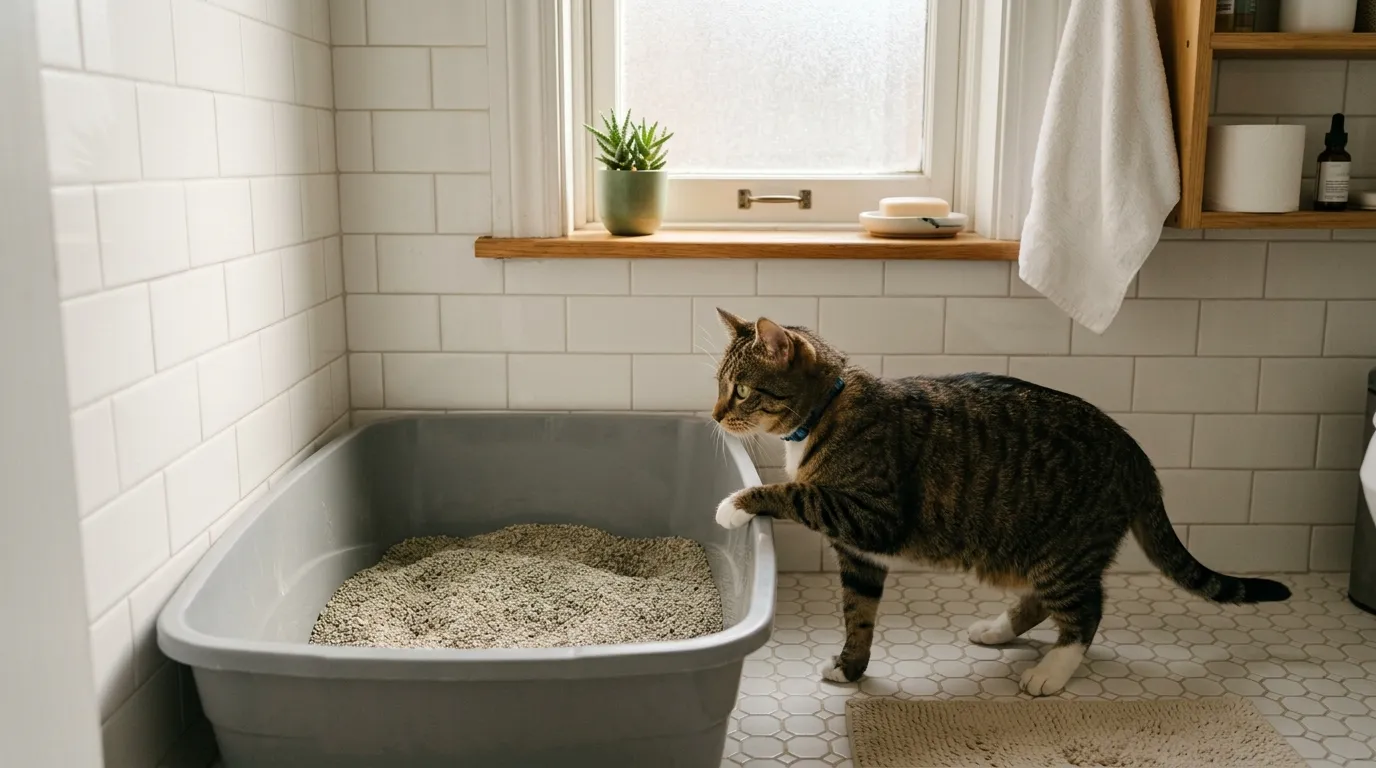
Nothing derails indoor cat ownership faster than picking the wrong litter box. Your cat starts avoiding it, finds a corner of your bedroom rug instead and you spend the next month trying to figure out what went wrong. I learned this the hard way when I bought a covered box because it looked tidy on a shelf, only to find my cat refusing to go near it within the first week. The truth is that knowing how to choose a litter box for your indoor cat is one of the most practical decisions you will make and the rules are simpler than the pet store aisle makes them look. This guide covers size, type, placement, litter depth and the mistakes that drive even cooperative cats away.
Choose a large open rectangular litter box that is at least one and a half times the length of your cat from nose to tail. Place it in a quiet low-traffic spot away from food and water. Use one box per cat plus one extra. Scoop daily and do a full litter change every one to two weeks with unscented clumping litter.
Why Litter Box Size Is the Most Important Decision You Make?
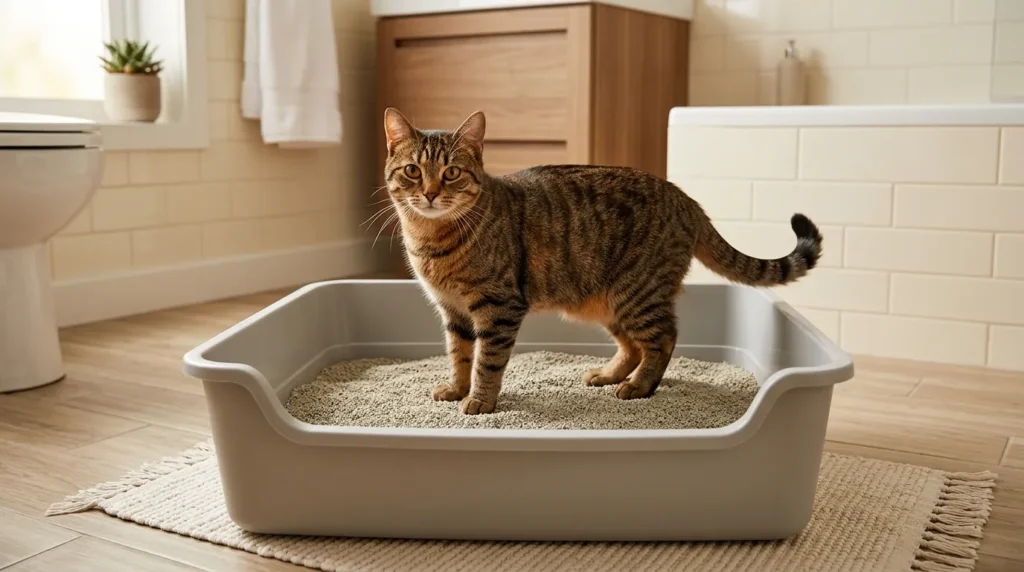
The most common litter box mistake owners make is buying one that is too small. Most commercial litter boxes sold in pet stores are sized for the owner’s aesthetic preferences rather than the cat’s actual physical needs. A properly sized litter box should be at least one and a half times the length of your cat from the tip of its nose to the base of its tail.
Litter box size determines whether your cat can comfortably turn around, dig and cover its waste without feeling cramped. A cat that feels squeezed into a box will start eliminating outside it, not because of attitude but because the box has become physically uncomfortable to use. For an average adult cat that means a box at least 22 to 24 inches long.
Here is a simple size reference based on cat size:
| Cat Size | Minimum Box Length |
| Kitten under 6 months | 16 to 18 inches |
| Average adult cat | 22 to 24 inches |
| Large breed (Maine Coon, Ragdoll) | 26 to 30 inches |
| Senior cat with joint issues | 20 to 24 inches with low entry |
If you cannot find a commercial box large enough, a large plastic storage tote with one side cut down to create a low entry point works better than most marketed litter boxes and costs significantly less.
Insight The storage tote hack is genuinely the best litter box upgrade most cat owners have never tried. A 66-quart storage tote gives your cat more usable space than almost any dedicated cat product on the market. Cut one short end down to about three inches for easy entry and you have a perfect litter box for under fifteen dollars.
How to Choose Litter Box for Indoor Cat? Open vs Covered?
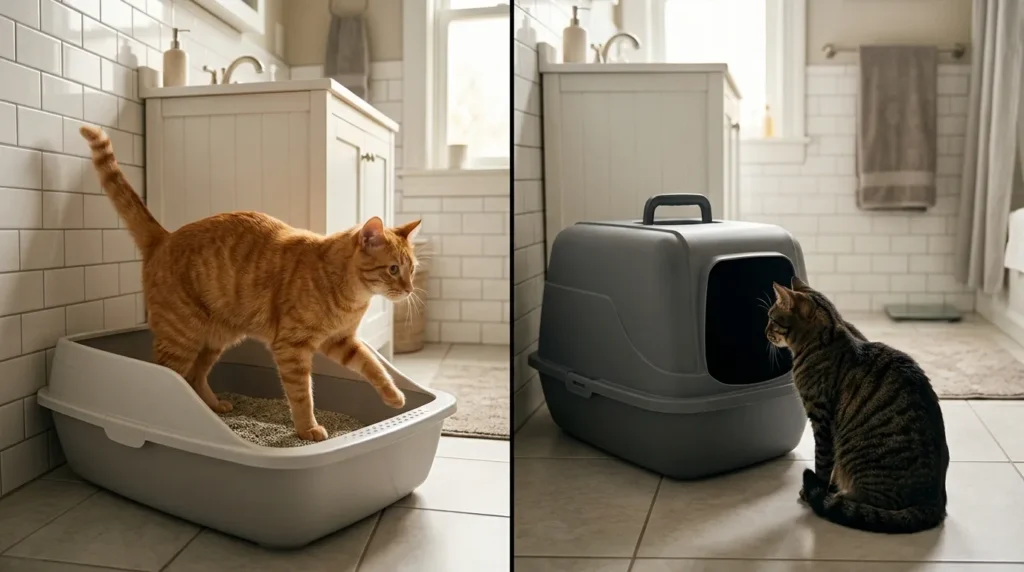
Most cats prefer open litter boxes over covered ones. This is not a matter of opinion but of behavioral research. Covered boxes trap odors inside the enclosed space where the cat is trying to eliminate, concentrate ammonia that bothers the cat far more than it bothers the owner and create a confined space where the cat cannot monitor its surroundings for threats while in a vulnerable position.
Covered boxes appeal to owners because they hide the contents and contain litter scatter. The problem is that every ventilation benefit the owner gains comes at a direct cost to the cat’s comfort. The odor that dissipates quickly in an open box concentrates inside a covered one. Your cat smells everything far more acutely than you do and what smells mildly unpleasant to you registers as genuinely overwhelming to your cat in an enclosed space.
The one exception where a covered box can work is a cat that genuinely seeks privacy and still uses the covered box willingly without any signs of stress or avoidance. Test this by offering both types side by side and observing which one gets used more frequently. The cat will tell you directly through its behavior which it prefers.
The 4 Main Types of Litter Boxes and Which Fits Your Cat?
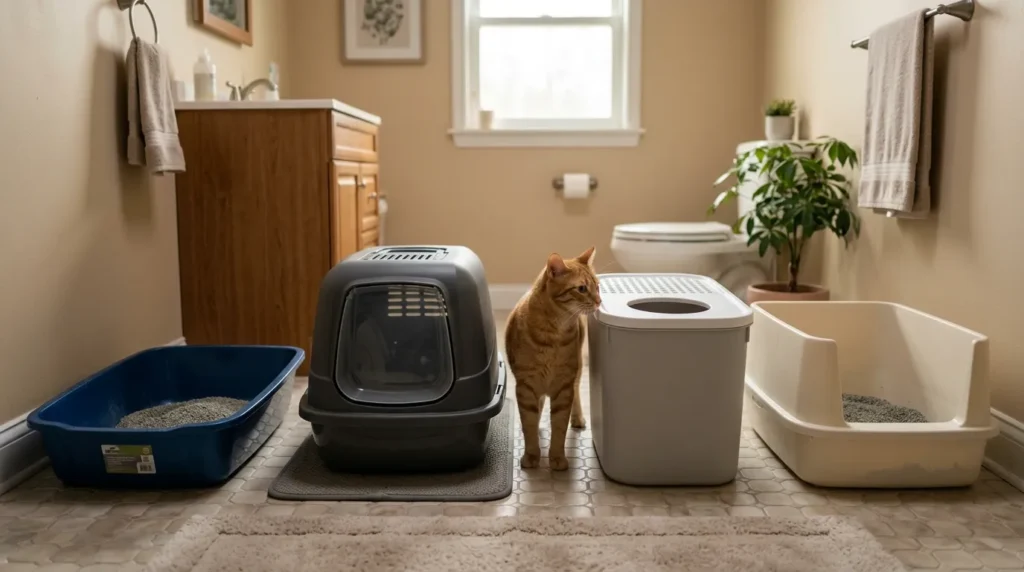
The four main litter box types each serve a different cat or owner need. Understanding which one fits your specific situation prevents the trial-and-error cycle that wastes money and frustrates both you and your cat.
The open high-sided litter box is the best starting choice for most cats. The high sides contain litter scatter and urine from high-pee-ers while keeping the box fully ventilated and visually open so the cat never feels trapped. Look for a box with sides at least seven to eight inches tall with one lower entry side for easy access.
The top-entry litter box works well for young agile cats in small apartments where litter scatter is a significant problem. The entry through the top naturally prevents litter from being kicked out and contains tracking on the grate surface. However it is genuinely difficult for senior cats, arthritic cats, large breeds and any cat with mobility limitations. Never use a top-entry box as the only option for a cat over ten years old.
Self-cleaning automatic litter boxes reduce daily scooping and provide superior odor control through sealed waste compartments. They also track usage patterns through companion apps which makes them useful health monitoring tools. The honest limitation is that some cats refuse to use them after encountering the noise and movement of the cleaning cycle. Always keep at least one manual box available during the transition period. According to the Ohio State University Indoor Pet Initiative, the most important factor in any litter box choice is whether the cat will willingly use it repeatedly, not which type seems most convenient to the owner.
Corner boxes and furniture-style enclosures work in apartments where aesthetics and space management matter. They must still meet the size and ventilation requirements that make any box acceptable to a cat. A beautiful furniture piece that is too small or too enclosed fails the cat regardless of how well it fits the decor.
Litter Box Placement Rules That Most Owners Get Wrong
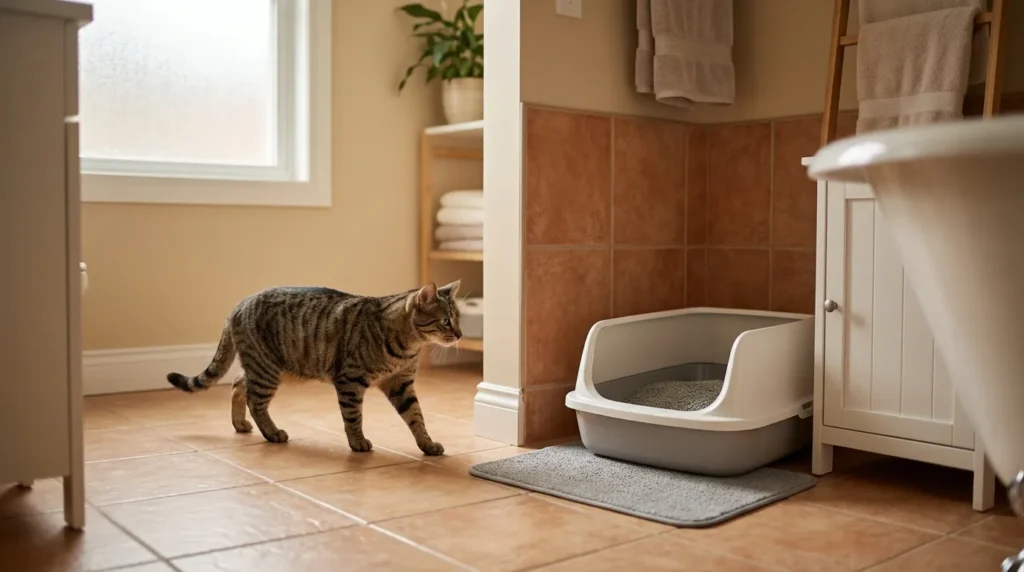
Placement determines whether your cat uses the litter box even when you have chosen the right size and type. A correctly sized open box in the wrong location gets avoided as reliably as the wrong box in any location. The placement rules are straightforward and they matter every single day.
Place the litter box in a quiet low-traffic spot where your cat will not be startled during use. Cats are physiologically vulnerable during elimination and their nervous system responds to sudden sounds or movement by associating the litter box location with threat. A box next to the washing machine, in a busy hallway or near the front door creates exactly this problem. The cat learns to associate the box with stress and starts looking for alternatives.
Keep the litter box away from food and water bowls at all times. Cats instinctively avoid eating near their elimination area, a behavioral pattern rooted in the need to avoid contaminating food sources. A cat that has both its feeding station and litter box in the same corner of an apartment kitchen will often reduce its use of one or both.
The N plus one rule applies to placement as well as number. Two litter boxes placed side by side in the same corner count as one litter box in a cat’s territorial perception. Place them in genuinely different locations in the apartment. For a single cat that means one box in the bathroom and one in a bedroom or hallway. For multiple cats spread boxes across different rooms entirely so no cat can monitor all boxes simultaneously from one position.
For more detail on the full litter box setup including depth of litter and cleaning schedules check out our complete guide to indoor cat litter box setup and maintenance.
What Litter to Use and How Deep to Fill the Box?
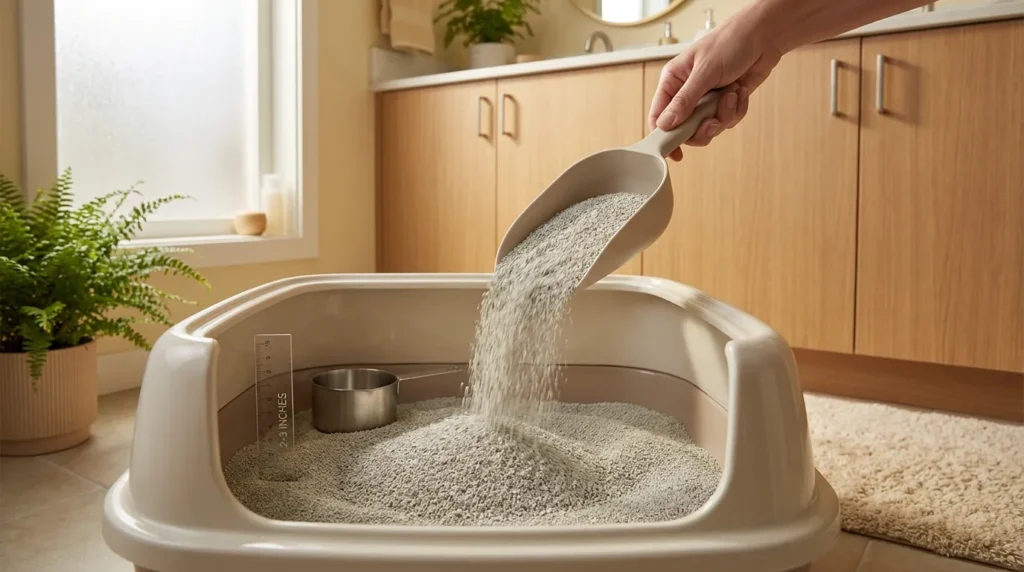
The best litter for most indoor cats is unscented fine-grained clumping clay litter filled to a depth of two to three inches. This is not a brand preference. It reflects what cats choose when given options in controlled preference studies. Cats are descended from desert-dwelling animals and their instinct is to dig in fine sandy substrate. Fine-grained unscented clumping clay matches that instinct more closely than any other type.
Scented litters are formulated to manage odor for the owner’s comfort. They create the opposite problem for the cat. Cats have scent receptors significantly more powerful than humans and an artificial fragrance that smells pleasant to you registers as overwhelming chemical intrusion to your cat’s nose in the enclosed space of a litter box. Many litter avoidance cases resolve completely when the owner switches from scented to unscented litter.
Two to three inches of litter gives cats enough depth to dig and cover effectively without wasting litter through excessive displacement. Less than two inches means the cat hits the box bottom while digging which many cats find aversive. More than four inches causes cats to sink and shift uncomfortably on a loose unstable surface, particularly older or heavier cats.
Insight: If your cat has been avoiding the litter box and you have not changed anything obvious recently, check the litter first. Switching brands often means switching formulas, particle sizes or scents even within the same category. Cats notice these changes immediately and vote with their paws by going elsewhere. When trying a new litter always run it alongside the old one in a separate box for at least a week before fully switching.
The Litter Box Mistakes That Cause Most Avoidance Problems
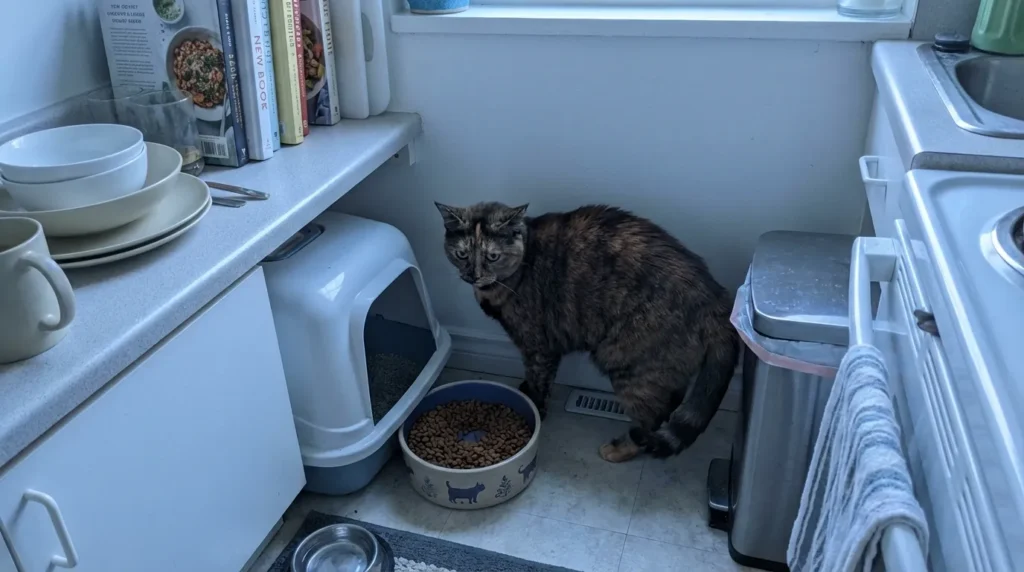
The most damaging mistake is choosing a box that is too small and never realizing it. Most commercial cat litter boxes marketed for adult cats are too short for an average adult cat to use comfortably. Owners buy them because they are labeled for adult cats and never make the connection between the undersized box and the increasing elimination problems that develop over months.
The second mistake is cleaning the box too infrequently. Cats require a clean litter box the same way humans require a clean toilet. A box that is not scooped daily accumulates odor and texture changes that make it progressively less acceptable. Many cats that appear to have litter avoidance problems are actually reacting to a box that has not been cleaned frequently enough. Scoop every day without exception and do a full litter change every one to two weeks.
The third mistake is replacing the litter box too rarely. Plastic litter boxes develop microscratches from regular use and daily scooping. These scratches trap odor-causing bacteria that no amount of cleaning fully removes. The box itself starts to smell to your cat even when it appears clean to you. Replace plastic litter boxes every six to twelve months regardless of how clean they look.
When Litter Box Avoidance Means a Vet Visit?
Litter box avoidance that appears suddenly in a cat with a previously reliable history is a medical signal until proven otherwise. Cats that start eliminating outside the box or visiting the box frequently with little or no output may have a urinary tract infection, kidney disease, bladder crystals or diabetes rather than a behavioral problem. Answer the behavioral possibilities first by checking box cleanliness, size and placement but book a vet appointment within the same week if the avoidance is sudden or recent.
Watch specifically for a cat that makes multiple trips to the litter box within an hour and produces little or nothing each time. In male cats this pattern can indicate a urinary obstruction which becomes fatal without same-day emergency treatment. Do not wait or monitor this pattern at home.
A cat that cries while in the litter box, has blood in its urine or repeatedly squats outside the box immediately after leaving it is showing signs of pain during elimination that require veterinary assessment regardless of the apparent litter box setup.
This article is for informational purposes only. Always consult your vet if you have concerns about your cat’s health.
Frequently Asked Questions About Choosing a Litter Box
What size litter box does an indoor cat need?
The box should be at least one and a half times the length of your cat from nose to tail base. For an average adult cat that means a box at least 22 to 24 inches long. Most commercial boxes are too small. A large storage tote with one low-entry side cut down works better than most marketed options.
Is a covered or open litter box better for cats?
Open boxes are better for most cats. Covered boxes trap odors inside the enclosed space, making the experience unpleasant for cats whose sense of smell far exceeds ours. Some cats tolerate covered boxes but most prefer the ventilation, visibility and exit options that an open box provides.
How many litter boxes does a single indoor cat need?
One cat needs two litter boxes minimum. The rule is one per cat plus one extra placed in genuinely different locations. Two boxes side by side in the same spot count as one box in a cat’s perception. Separate placement prevents the scenario where one dirty box leaves the cat with no acceptable option.
What is the best litter to use in an indoor cat’s litter box?
Unscented fine-grained clumping clay litter filled to two to three inches deep is the best choice for most cats. Scented litters bother cats significantly more than owners realize because cats have a far more powerful sense of smell. If your cat has a respiratory condition, consult your vet about a low-dust litter formula before switching.
How often should I clean the litter box?
Scoop at least once daily without exception. Do a full litter change every one to two weeks. Wash the box with mild soap and water during each full change. Replace plastic boxes every six to twelve months because scratches in the plastic trap bacteria that no cleaning fully removes.
Conclusion
Choosing the right litter box for your indoor cat comes down to three decisions made correctly: get the right size, choose an open design and place it somewhere genuinely quiet and private. Start today by measuring your cat and checking whether your current box meets the one-and-a-half-times rule. If it does not, a storage tote upgrade costs fifteen dollars and often resolves litter avoidance within days. For the complete setup guide covering litter depth, cleaning schedules and multi-cat arrangements check out our detailed resource on indoor cat litter box setup.
To choose a litter box for an indoor cat, select an open rectangular box at least one and a half times the cat’s length from nose to tail, typically 22 to 24 inches for an average adult. Use one box per cat plus one extra placed in separate quiet locations away from food and water. Fill with unscented fine-grained clumping clay litter to a depth of two to three inches. Scoop daily, do a full litter change every one to two weeks and replace plastic boxes every six to twelve months. Most cats prefer open boxes over covered ones due to better ventilation and visibility.