
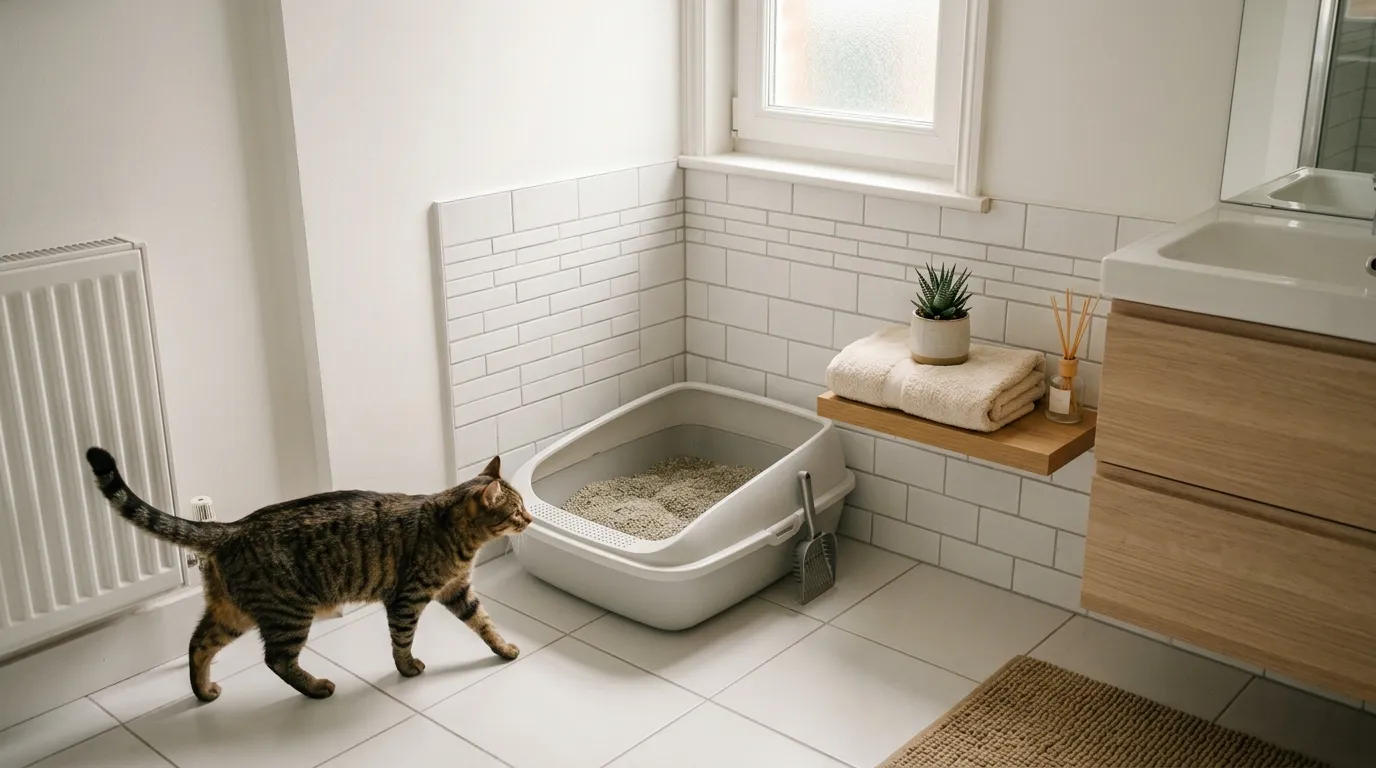
Finding the right spot for a litter box in a small apartment is one of those problems nobody warns you about before you get a cat. You are working with limited square footage, a landlord you do not want to disappoint and a cat with specific preferences you are still figuring out. I discovered this firsthand when I moved into a studio and placed my cat’s litter box in the only logical spot I could see. She refused to use it for three days. The location was the problem and once I moved it everything resolved immediately. Knowing where to put a litter box in a small apartment saves you that learning curve. This article covers eight real placement options by Where to Put Litter Box in Small Apartment.
The best place for a litter box in a small apartment is a quiet bathroom corner away from the door and ventilated by a fan or window. Second best is an unused closet floor with the door propped open. Both locations give your cat privacy, escape routes and airflow. Avoid high-traffic areas, spots next to food bowls and any location where a door can accidentally shut your cat out.
Why Litter Box Placement Matters More Than the Box Itself?
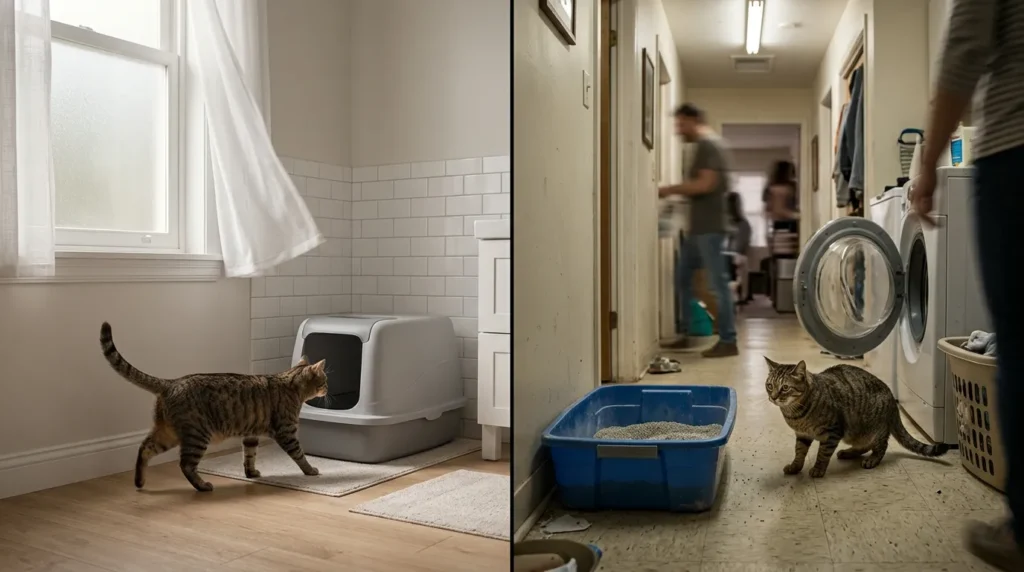
Litter box placement in a small apartment determines whether your cat uses the box consistently or starts looking for alternatives in your laundry pile. If you’re wondering where to put litter box in small apartment, the right location gives your cat three things it needs every time it eliminates: privacy, a clear escape route and low ambient noise. Miss any one of these and even a perfectly clean correctly sized box gets avoided.
Cats are physiologically vulnerable during elimination. Their nervous system reads the surrounding environment for threat while they are in the box. A spot where your cat can see the room entrance, hear activity or feel trapped by walls on all sides registers as unsafe even when nothing is actually wrong.
Litter box placement is especially critical in small apartments because the margin for error is smaller. In a large house a poorly placed box just means the cat uses a different room. In a studio the cat has nowhere else to go and the consequences show up on your floor.
Insight: The fastest way to diagnose a placement problem is to watch where your cat hesitates. A cat that approaches the box and then walks away without using it is almost always responding to something in the immediate environment. Watch for where it looks before leaving. That gaze direction tells you exactly what is bothering it.
The 8 Best Spots for a Litter Box in a Small Apartment
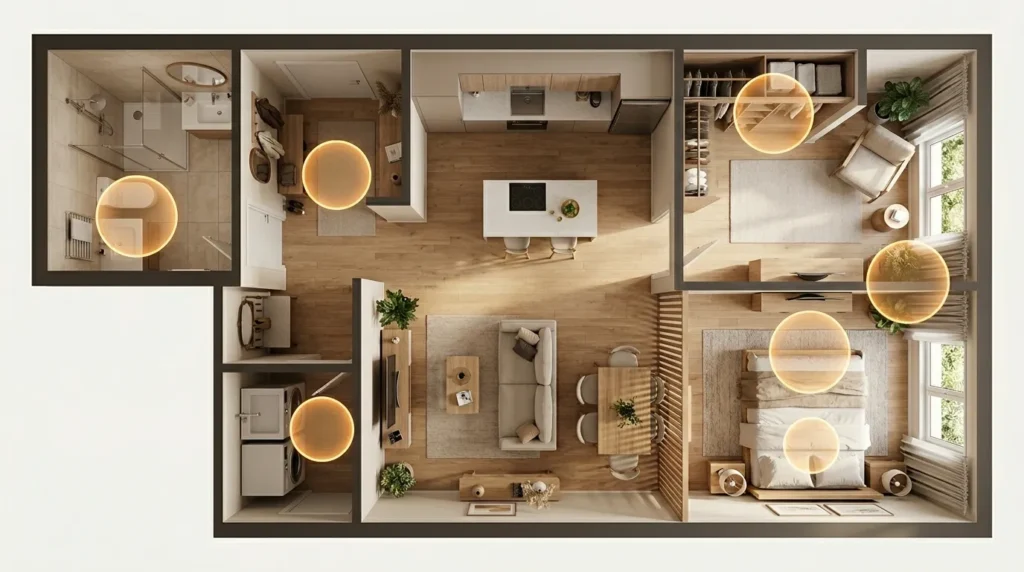
Here are the eight most practical litter box locations for small apartments ranked from most to least recommended. Each one works when set up correctly and fails when specific conditions are ignored.
- Bathroom corner (best overall) This is the top choice for most small apartment owners. Bathrooms offer tile floors for easy cleanup, built-in ventilation from exhaust fans and a naturally lower traffic level than the rest of the apartment. Place the box in a corner away from the door so your cat can see anyone entering without being startled. If you’re thinking about where to put litter box in small apartment, this setup consistently performs the best when accessibility is maintained. Leave the bathroom door open at all times or install a pet door if privacy is a concern.
- Unused closet floor A linen closet or hall closet works well when you prop the door permanently open or cut a cat-sized entry in the lower panel. The enclosed space contains litter scatter and gives maximum privacy. The risk is poor airflow so add a small clip-on USB fan inside or leave a consistent gap for air circulation. Never use a clothing closet because the litter dust settles on fabrics stored above.
- Hallway nook or architectural dead space Most small apartments have at least one awkward corner, a recessed wall section or a space behind a door that serves no practical purpose. These dead zones make excellent litter box spots because they are naturally low traffic and easy to screen with a curtain on a tension rod. The box becomes visually invisible while remaining fully accessible.
- Under a console table or entryway bench The space under a console table in an entryway or living room can accommodate a litter box when screened by a simple curtain or decorative panel. This works especially well with a high-sided box that contains scatter. Position the table against a wall so three sides are enclosed and the open entry side faces a low-traffic direction.
- Behind a room divider or bookshelf A freestanding bookshelf or decorative room divider creates a natural partition in studio apartments where bathroom access is shared or limited. Place the box behind the divider against the wall furthest from the main living zone. The cat gets privacy and the owner gets a visual separation that feels designed rather than improvised.
- Laundry area with caution The space beside or behind a washer or dryer works only when the machines are not running during the cat’s peak elimination times. Cats that get startled by a spin cycle while in the box associate the location with threat and start avoiding it permanently. If your laundry cycles run during evening hours when your cat is most active this location fails reliably.
- Bedroom corner (guest room preferred) A quiet corner of a bedroom works well for cats that spend significant time in that room. The familiar scent of the owner is a genuine comfort signal for many cats. The limitation is odor proximity to where you sleep. A guest room is significantly better than a main bedroom for this reason unless your cat shares your bed and already has a strong scent association with the room.
- Under a bed frame with clearance The space under a platform bed with sufficient clearance can house a litter box in a studio where space is genuinely exhausted. Use a low-profile open box and ensure the cat can enter and exit without crouching uncomfortably. This is the lowest-ranked option because the enclosed nature of the space traps odor and makes scooping awkward but it functions when nothing else is possible.
Where to Put Litter Box in Small Apartment Without Making It Obvious?
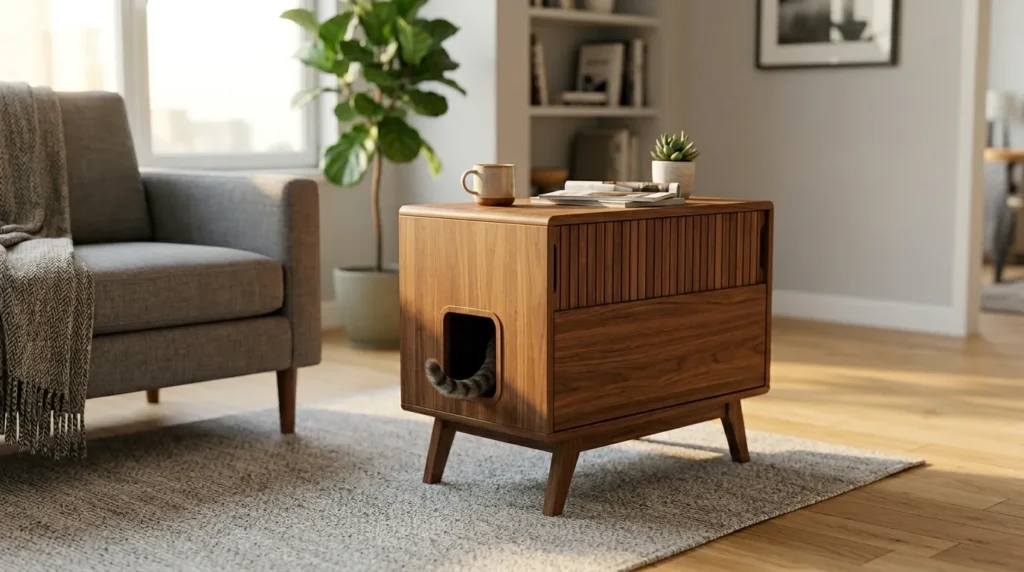
Hiding a litter box in a small apartment without compromising your cat’s access or comfort is entirely possible with the right approach. The key is that every hiding method must preserve three non-negotiable conditions: your cat can enter and exit freely at any time, the interior is ventilated and you can scoop without disassembling anything.
Furniture-style enclosures are the most popular solution for apartment owners who care about aesthetics. These are cabinets, side tables or benches with a cat door built into the side or front. The box sits inside on the base. Your cat uses it exactly as it would an open box. From across the room it looks like a piece of furniture. The limitation is that you must check interior dimensions carefully because many enclosures are too small for the box size your cat actually needs.
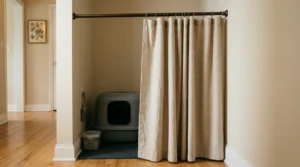
A tension rod with a simple linen curtain costs under fifteen dollars and screens any corner or closet opening without drilling. The curtain falls naturally in front of the box and parts easily when your cat walks through. Change the curtain every month or so because it absorbs ambient odor faster than you expect. This is the fastest practical hiding solution for apartments where furniture enclosures are outside the budget.
The IKEA cabinet hack deserves mention because it appears constantly in apartment cat communities for good reason. A basic cabinet with the back removed, a cat-door hole cut in the side panel and the door left permanently cracked or replaced with a curtain creates a custom enclosure for under fifty dollars. Just ensure the interior is at least twenty-two inches deep so the box fits without the cat bumping the walls during use.
The N Plus One Rule in a Small Apartment
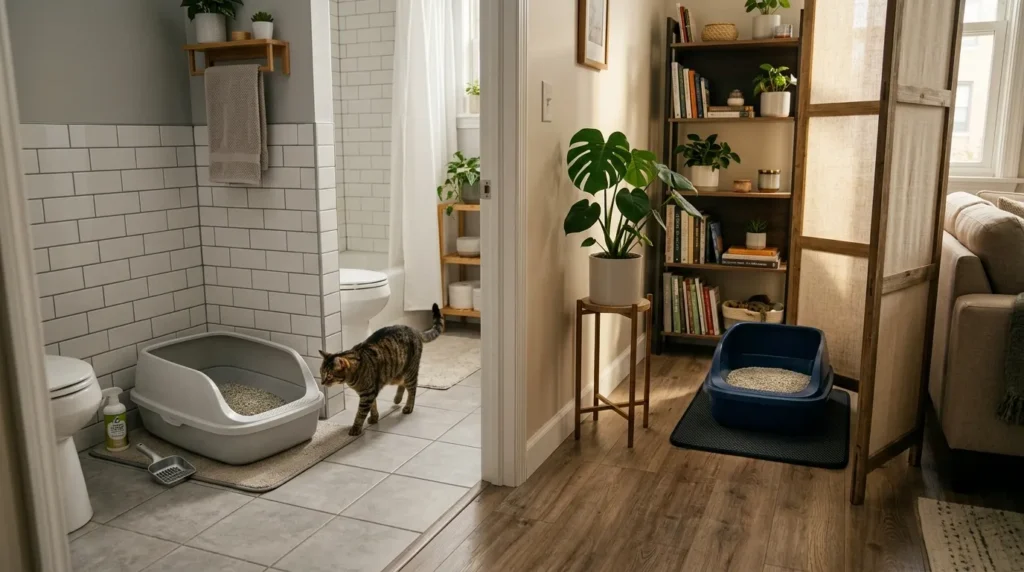
The N plus one rule means one litter box per cat plus one extra regardless of apartment size. One cat needs two boxes. Two cats need three. This feels impossible in a studio until you realize that two boxes placed far apart in a small space still count as two separate options for your cat. The distance matters more than the square footage between them.
Never place multiple boxes side by side in the same location. Your cat treats adjacent boxes as a single resource. Two boxes next to each other in the bathroom give your cat no more choice than one box. Place one in the bathroom and one in a completely different zone of the apartment even if that zone is only fifteen feet away.
According to the Ohio State University Indoor Pet Initiative, cats in multi-cat households need boxes spread across genuinely separate territories to prevent one cat from guarding access to all boxes simultaneously. This territorial dynamic applies even in small apartments and separating the boxes by room rather than by feet resolves it effectively.
For a full breakdown of litter box setup including box size and litter depth check out our complete guide to indoor cat litter box setup.
Odor Control in a Small Apartment Without Chemical Cover-Up
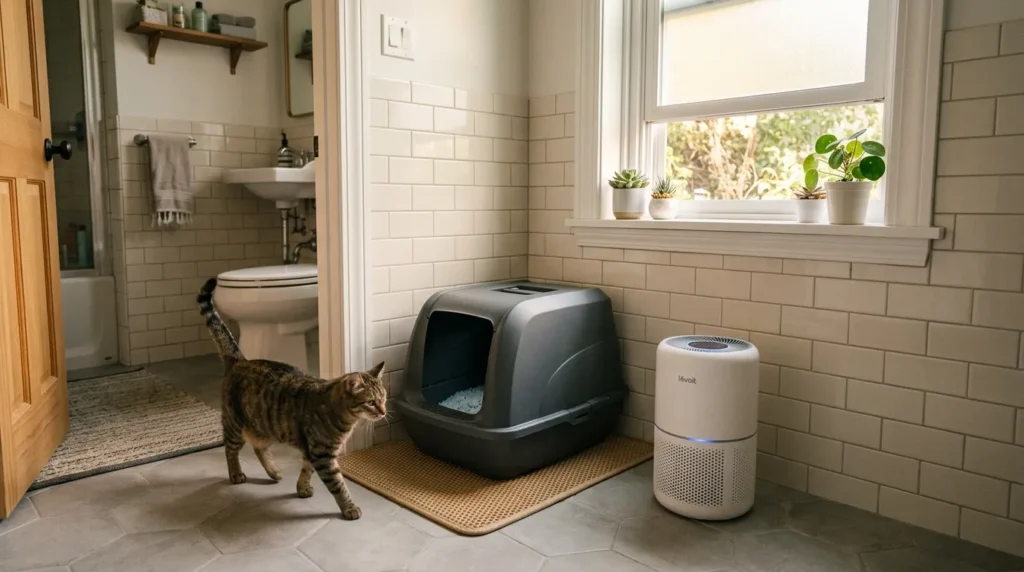
Odor control in a small apartment starts with the box itself rather than with air fresheners. Daily scooping is the single most effective odor management tool available and it costs nothing beyond thirty seconds of your time. A box that is scooped every day smells significantly less than a box scooped every three days regardless of the litter type or the enclosed furniture around it.
Ventilation is the second most important factor. A bathroom with an exhaust fan running for ten minutes after you scoop removes more odor than any scented product. A closet with a small clip-on USB fan running on low keeps air moving through the space so odor does not concentrate into a wall of smell when you open the door.
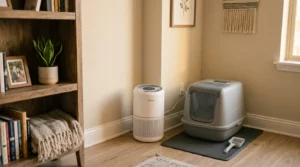
A small HEPA air purifier placed within three feet of the litter box removes airborne particles continuously rather than masking odor with fragrance. The limitation is cost but entry-level models under fifty dollars work adequately for a single-cat studio. Avoid plug-in air fresheners near the litter box area because the artificial scent bothers cats far more than it helps owners. Your cat smells the freshener as an overwhelming chemical intrusion in the space where it needs to feel most comfortable.
Insight: The single most underused odor solution in small apartments is a litter mat placed directly in front of the box. Cats track litter on their paws from the moment they step out of the box and that tracked litter is a major source of the stale smell that builds in carpeted areas. A textured mat catches the litter before it spreads and takes thirty seconds to shake out. That one item eliminates a significant portion of the ambient odor problem in most studios.
The Placement Mistakes That Cause Litter Box Avoidance
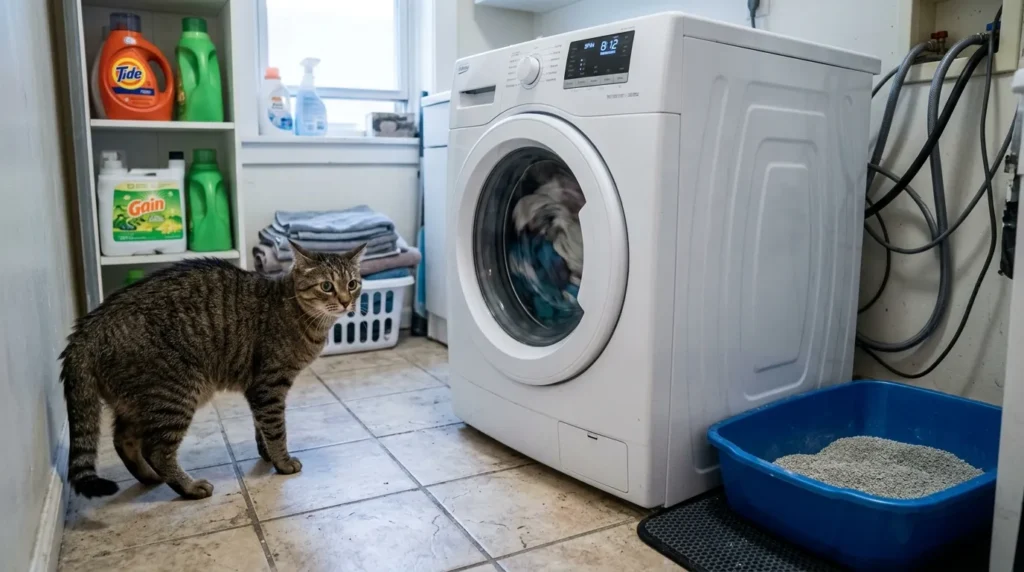
The most expensive placement mistake is putting the litter box next to a noisy appliance. Washing machines, dryers and dishwashers run unpredictably and loudly. A cat startled mid-elimination by a spin cycle associates that box location with danger permanently. Moving the box after this happens often resolves avoidance but the association lingers for weeks so a gradual introduction to the new location works better than an abrupt switch.
Placing the box next to the food or water bowls is the second most common mistake and one of the easiest to fix. Cats instinctively avoid eliminating near their food source. This is not a preference but a biological drive rooted in the need to avoid contaminating the food supply. Even in a studio where space is tight the food station and the litter box need to be on opposite sides of the room at minimum.
The third mistake is placing the box in a dead-end spot where the cat can be approached from behind without warning or cornered by another pet during use. A cat that cannot see the room entrance while in the box or that can be ambushed by a dog or second cat while eliminating starts seeking alternative locations immediately. Always ensure the box opening faces outward toward the room rather than toward a wall.
When Litter Box Avoidance Needs a Vet Visit?
A cat that suddenly stops using its litter box after using it reliably for months has either developed a problem with the location or a medical condition and you need to rule out the medical cause first. Urinary tract infections, kidney disease and bladder crystals all produce litter box avoidance that looks identical to a placement or behavior problem from the outside. Always check box cleanliness and location first but book a vet appointment within the same week if the avoidance is sudden and recent.
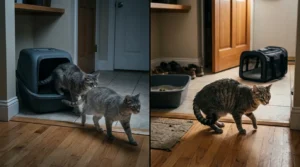 Watch specifically for a cat making repeated trips to the box within a short time while producing little or no output. In male cats this pattern indicates a potential urinary obstruction which becomes fatal without same-day emergency treatment. Do not wait or monitor this at home.
A cat that eliminates right beside the box rather than inside it is almost always responding to a placement or size problem rather than a medical one. It is trying to use the right general area but something about the box itself is wrong. In that case check the box size first and then reconsider the location.
This article is for informational purposes only. Always consult your vet if you have concerns about your cat’s health.
Frequently Asked Questions About Litter Box Placement in Small Apartments
Where is the best place to put a litter box in a small apartment?
The bathroom corner is the best location for most small apartments. It offers natural ventilation, tile floors for easy cleanup and low foot traffic. Keep the bathroom door permanently open or install a pet door. The box should face outward so your cat can see room entrances and exit without feeling cornered.
Can I put a litter box in a closet?
Yes if the door stays propped open or has a cat-door cutout at the bottom. Poor airflow is the main risk so add a small fan inside or ensure consistent air gap. Never use a clothing closet because litter dust settles on stored fabrics.
How do I hide a litter box in a studio apartment?
A tension rod with a simple curtain costs under fifteen dollars and screens any corner effectively. Furniture-style enclosures that look like side tables work well but require checking that the interior dimensions are large enough for your specific cat. The IKEA cabinet hack is the most cost-effective custom solution for apartments on a tighter budget.
How many litter boxes do I need in a small apartment?
One cat needs two boxes minimum placed in separate locations. Two cats need three boxes spread across genuinely different zones of the apartment. Adjacent boxes in the same spot count as one resource in your cat’s perception and do not satisfy the need for separate territorial access to elimination sites.
What should I avoid when placing a litter box in an apartment?
Avoid spots next to washing machines, dryers or dishwashers due to unpredictable noise. Avoid placing the box next to food or water bowls. Avoid dead-end corners where the cat cannot see room entrances or exit freely. If your cat is showing sudden avoidance after a placement change consult your vet to rule out medical causes before assuming it is behavioral.
Conclusion
Finding where to put a litter box in a small apartment comes down to three priorities: quiet location, clear escape route and separation from food. Start with the bathroom corner and add a litter mat in front of the box immediately. Those two decisions alone resolve most small apartment litter problems within the first week. If you are setting up for the first time or want to optimize your existing setup check out our full guide to indoor cat litter box setup including box size and litter depth for every detail that affects whether your cat actually uses the box you provide.
The best place for a litter box in a small apartment is a quiet bathroom corner with ventilation from an exhaust fan or open window, kept permanently accessible with the door open or a pet door installed. Second-best is an unused closet floor with consistent airflow. The box must be away from food bowls, noisy appliances and dead-end corners where the cat cannot monitor room entrances. One cat needs two boxes in separate locations. Two cats need three boxes spread across genuinely different apartment zones. Daily scooping and a litter mat in front of the box prevent most odor problems in compact living spaces.