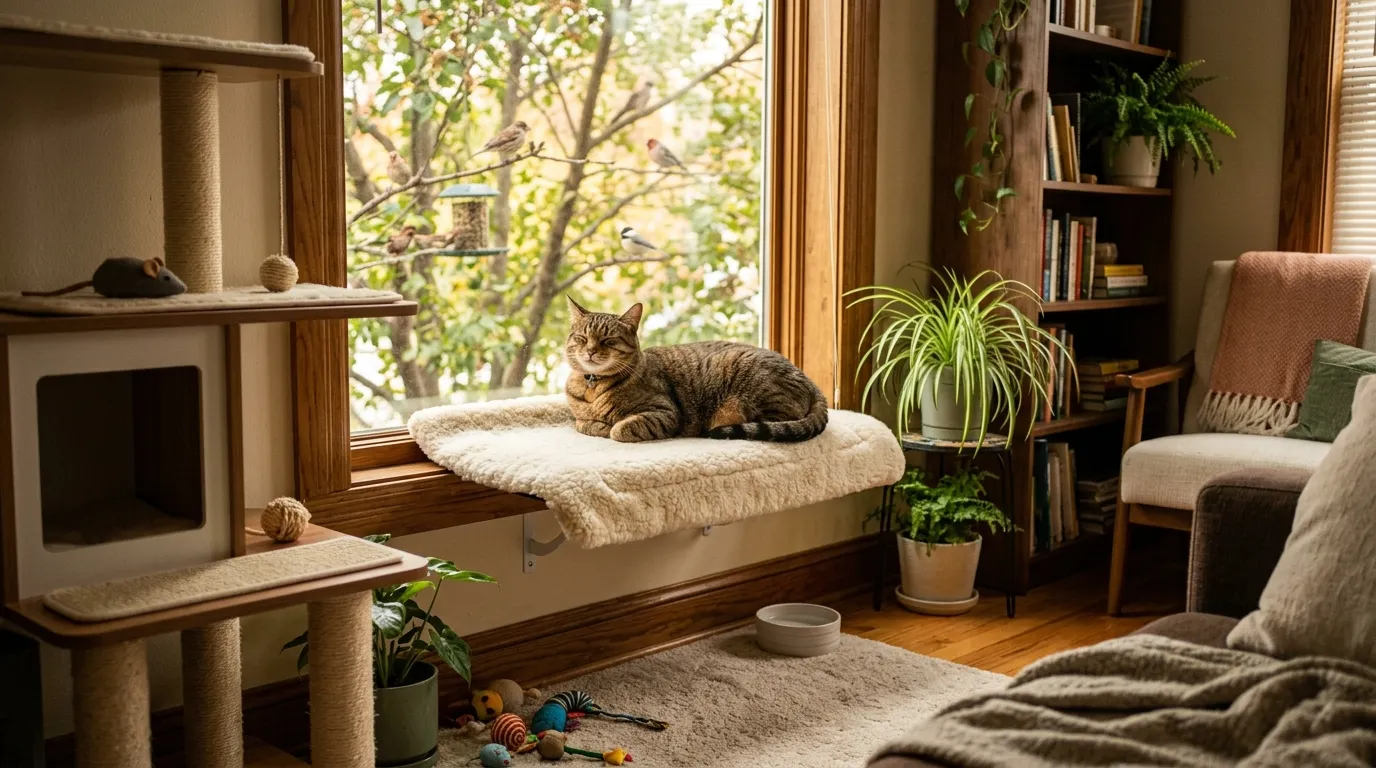
Does an indoor cat need a companion is the question most owners start asking around month three when the guilt sets in. You leave for work, picture your cat sitting alone in a silent apartment for eight hours and wonder whether you are failing them by not getting a second cat. I felt that guilt with my first cat for almost a year before I understood that she was not lonely in the way I was projecting onto her. She was bored on specific days when enrichment fell short but that had nothing to do with needing another cat. Does an indoor cat need a companion is a genuinely important question and the honest answer is that most cats do not but the nuance matters and getting it wrong in either direction has real consequences. This article gives you the complete picture.
Most indoor cats do not need a feline companion. Cats are naturally solitary and territorial animals and a well-enriched single-cat home with daily play, window stimulation and consistent human interaction produces a happier cat than a poorly-matched two-cat household with competition over resources. The exception is young social cats under two years old whose owners are away for long hours with minimal enrichment alternatives.
Does Indoor Cat Need a Companion or Just Better Enrichment?
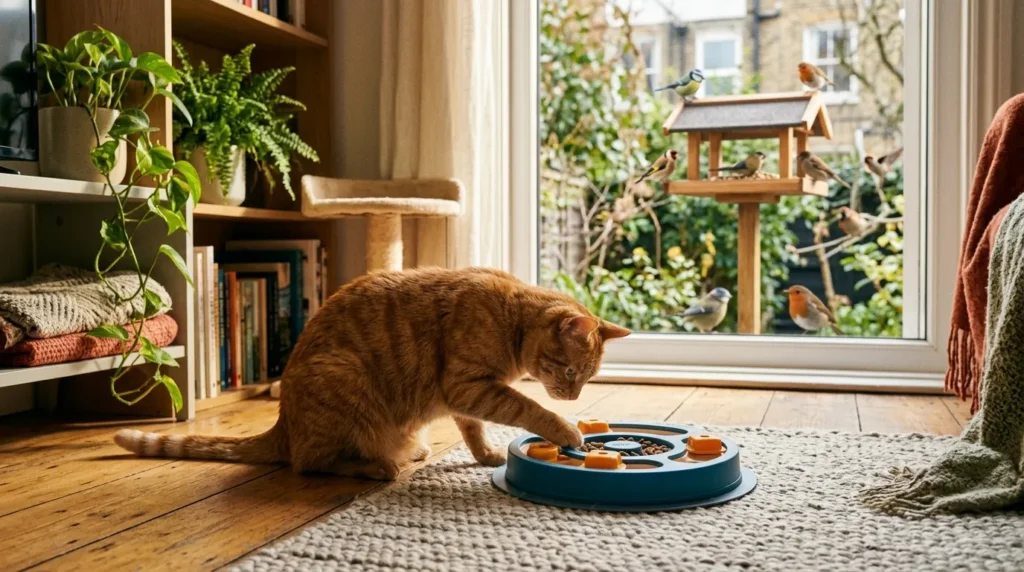
Does an indoor cat need a companion is frequently the wrong question because what most owners are actually observing is not loneliness but under-stimulation. A cat that paces, vocalizes persistently or follows its owner from room to room is not necessarily missing another cat. It is expressing unmet behavioral needs that a second cat would not solve and might actively worsen.
Feline social structure is fundamentally different from dog social structure. Domestic cats descend from a solitary wildcat species that neither hunted in groups nor required social partners for psychological stability. The domestic cat forms bonds with humans and can tolerate or even enjoy the company of other cats under the right conditions but it does not experience the structural social distress that a pack animal experiences in isolation.
The behavioral problems most owners attribute to loneliness are almost entirely addressable through enrichment. A cat that receives two daily interactive play sessions timed to its natural activity peaks, has access to a window station with bird activity and uses puzzle feeders for meals is a behaviorally satisfied animal. Adding a second cat to an under-enriched environment produces two stressed animals rather than one satisfied pair. Everything that addresses the genuine behavioral needs of an indoor cat living without outdoor access addresses the apparent loneliness before the question of a companion becomes relevant.
When a Second Cat Actually Helps?
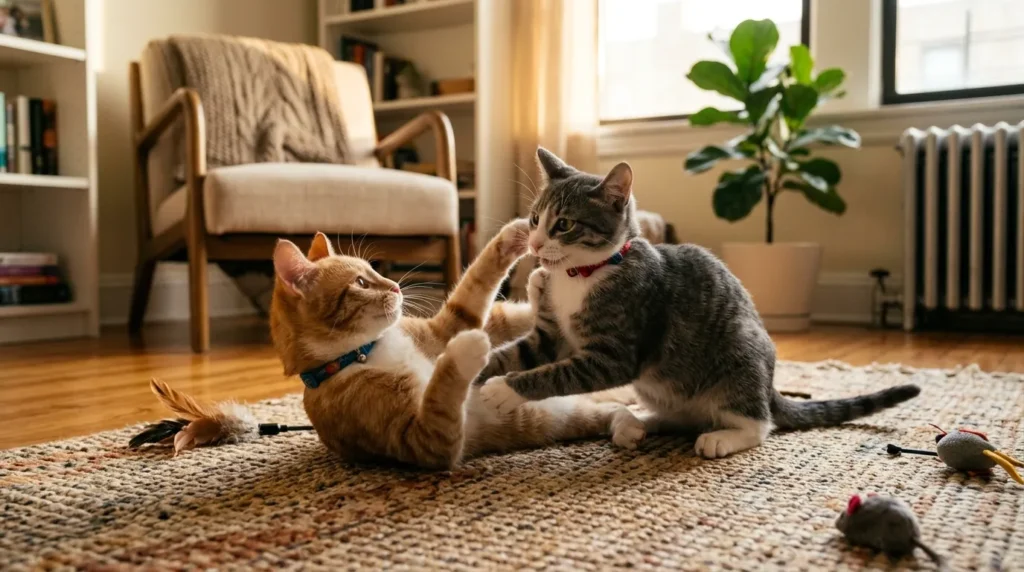
A second cat genuinely helps in three specific situations. The first is a kitten or cat under two years old with high social energy whose owner is away for eight or more hours daily and cannot provide midday enrichment breaks. Young cats have predatory play energy that peaks at a rate adult cats and most owners cannot fully match through scheduled sessions alone. A same-age companion provides ongoing play discharge throughout the day that owners simply cannot replicate.
The second situation is a cat that has lost a bonded companion and shows sustained behavioral changes after the loss. Reduced appetite, reduced grooming and prolonged seeking behavior in the spaces the other cat used are real indicators of grief rather than under-stimulation. These differ from boredom behaviors in that they do not respond to enrichment increases and they follow directly from a specific loss.
The third situation is a genuinely social cat whose behavior testing or history clearly shows preference for feline company rather than tolerance of it. Some individual cats seek out physical contact with other cats, rest pressed against them voluntarily and show visible behavioral uplift in their presence. These cats are the minority but they exist and for them a compatible companion is a genuine welfare improvement.
When a Second Cat Makes Things Worse?
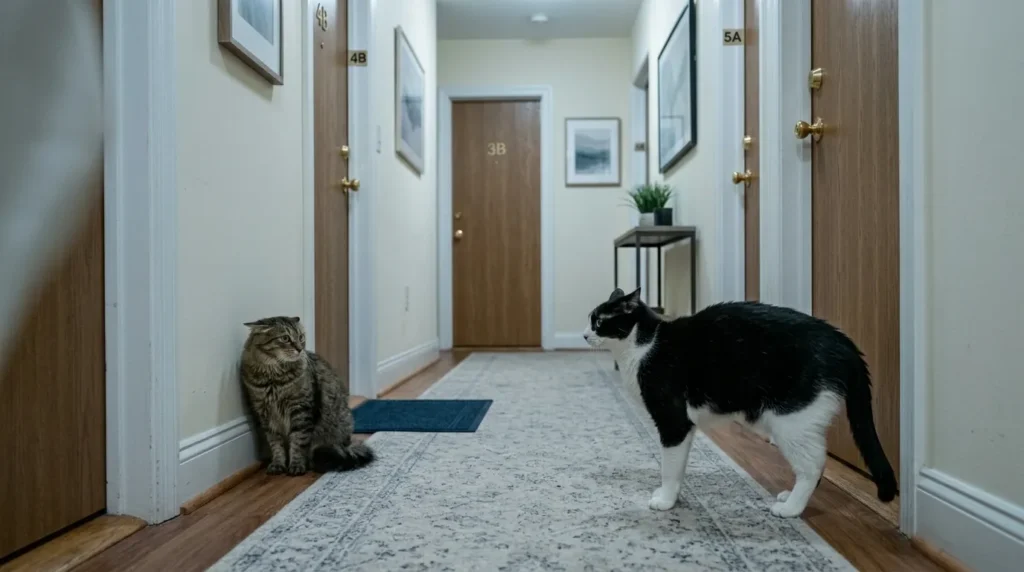
A second cat makes things worse for any adult cat over three years old that has lived as an only cat in a stable territory. These cats have established their spatial routine, scent map and resource access over years of single-cat occupancy. Introducing a stranger into that established territory does not halve the cat’s resources in the mathematical sense but it does so in the behavioral one. The resident cat experiences permanent loss of exclusive territorial claim to every resting spot, feeding station and litter box in the apartment.
Intercat tension in a shared space does not always look like fighting. Two cats that never fight but spend their days avoiding each other, seeking elevated separation and choosing different rooms are experiencing chronic low-grade stress that affects both their immune function and behavioral stability. This outcome is extremely common when an adult territorial cat receives a companion it did not need or choose and the owner has interpreted their initial avoidance as temporary adjustment when it is actually permanent.
Apartment living amplifies this risk significantly. A two-bedroom apartment provides approximately the same usable territory as a single outdoor cat’s minimum comfort zone. Two cats sharing that space without adequate vertical territory, separate feeding stations and enough hiding spots to create genuinely separate zones produces behavioral competition even between cats that might coexist comfortably in a larger space. Understanding the specific behavioral demands of a shared small space for cats helps clarify how much the physical layout of the home determines whether two cats live together successfully or miserably.
Signs Your Single Cat Is Genuinely Fine Alone
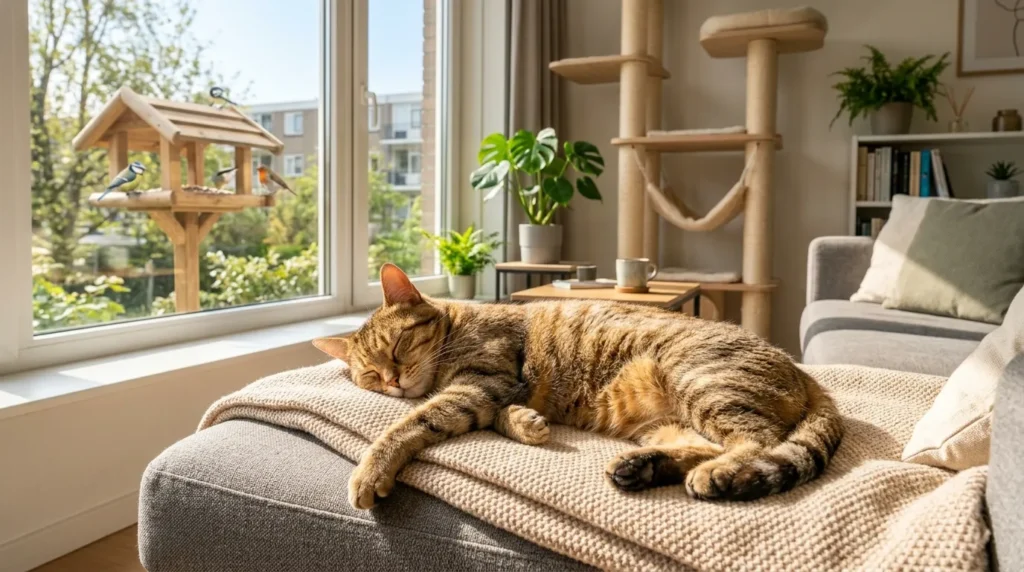
Most single indoor cats give clear behavioral signals that they are satisfied with their social arrangement when their environment and daily routine are adequate. A cat that greets you at the door with an upright tail and alert expression, eats consistently without anxiety, grooms itself regularly and sleeps deeply throughout the day is not lonely. Those behaviors indicate a cat whose stress levels are low and whose basic needs are met.
A well-stimulated single cat typically rests twelve to sixteen hours per day in loose comfortable postures rather than in the tight curled defensive posture of a chronically stressed animal. It investigates novelty when new items appear in the apartment, engages with play sessions consistently and uses its litter box without avoidance. These are all behavioral indicators of a cat experiencing its environment as safe and sufficient.
The owner’s feeling of guilt about leaving the cat alone is not a reliable indicator of the cat’s experience. Owners are social mammals who experience isolation as distressing and project that experience onto their cats. The cat’s actual behavioral report is more accurate than the owner’s intuitive projection. If the behavioral signals read as settled your cat is settled regardless of how the empty apartment looks to you.
What to Do Before Deciding on a Second Cat?
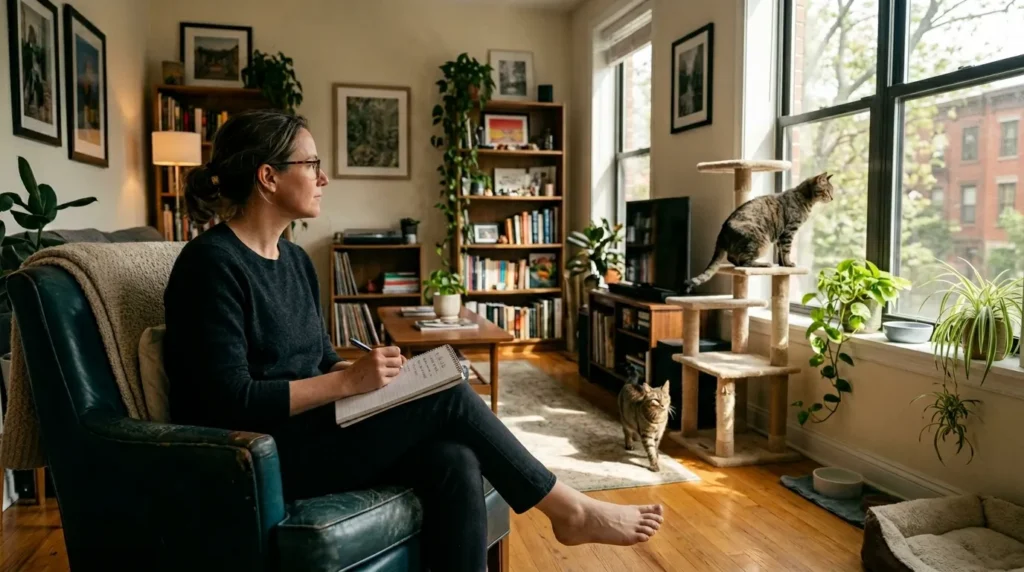
Before deciding whether an indoor cat needs a companion spend two weeks genuinely maximizing the current single-cat setup and observing the behavioral results. Add daily wand play sessions timed to dusk. Set up a window perch with a bird feeder outside. Switch one daily meal to a puzzle feeder. Keep a simple daily log of your cat’s activity: what it does, when it rests, how it greets you, whether it shows signs of distress when you leave.
If the behavioral picture after two weeks of improved enrichment is a cat that grooms regularly, plays enthusiastically and sleeps deeply then your cat does not need a companion. It needed better enrichment and you provided it. The problem is solved without introducing the significant risks and costs of a second cat.
If the behavioral picture after two full weeks of genuine enrichment improvement is a cat that is still showing sustained seeking behavior, unusual vocalization or reduced appetite then a companion becomes a more reasonable conversation. The difference between under-stimulation and genuine social deficit becomes clear when you rule out the former deliberately and consistently.
| Your Cat Shows | Likely Cause | Solution |
| Excessive vocalization, furniture destruction, midnight energy | Under-stimulation | Enrichment: play schedule, puzzle feeders, window setup |
| Seeks you constantly, follows room to room | Boredom and attachment | Daily scheduled play and consistent routine |
| Decreased appetite, reduced grooming after loss of companion | Grief and disruption | Time, routine stability, potentially a new companion |
| Hisses at visiting animals, guards territory | Territorial preference | Single-cat household is correct choice |
The Mistake That Makes This Decision Backfire
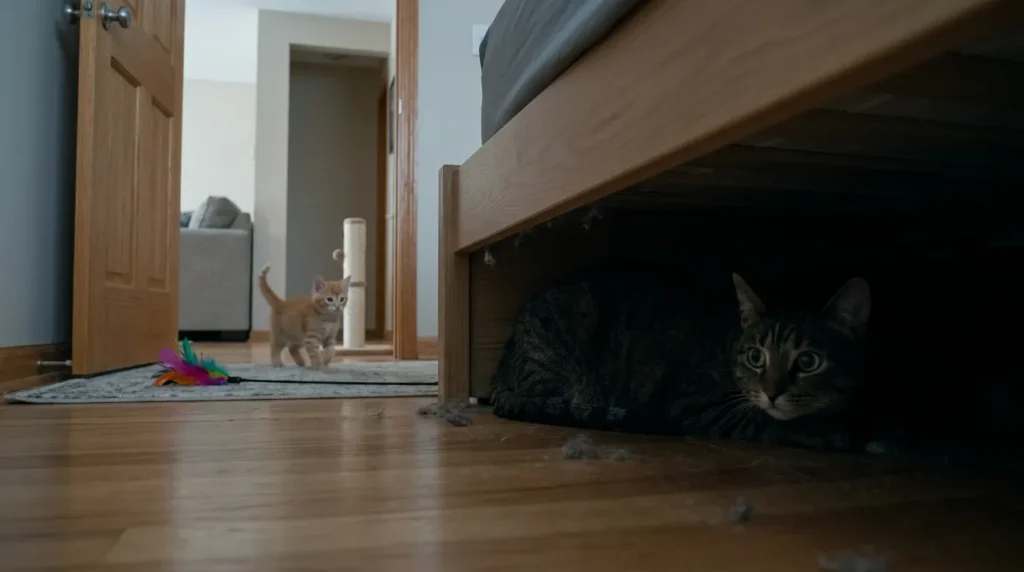
The most common mistake in the does-an-indoor-cat-need-a-companion decision is acting on the owner’s guilt rather than the cat’s behavioral signals. An owner who feels bad about leaving a cat alone and decides a companion will solve their own discomfort rather than the cat’s behavioral deficit makes the most common error in multi-cat household planning. The new cat does not improve the original cat’s situation. It introduces a territorial stressor that will cost both cats quality of life for months or years.
The second mistake is introducing a second cat without adequate preparation of the physical space. Two cats in an apartment requires a minimum of two separate feeding stations, three litter boxes and enough vertical territory to create genuinely separate resting zones that neither cat has to cross the other’s path to access. Most apartments do not have this setup by default and owners who add a second cat without preparing the space first create competition for every shared resource simultaneously.
If after genuine evaluation you decide a companion is right for your cat introduce them over a minimum of three to four weeks using scent swapping before any visual contact and visual contact through a barrier before any physical meeting. The slow introduction process exists because rushing it creates lasting negative associations between the cats that cannot be corrected through management alone.
💡 Insight The cats that end up surrendered to shelters from multi-cat households are almost always cats whose owners added a companion too quickly to a cat that was actually fine alone. The original cat was thriving as an only cat. The owner added a second cat for their own emotional reasons. The territorial cat spent six months stressed and hiding and eventually started eliminating outside the litter box as a stress response. The owner called it a behavior problem. It was a decision problem made much earlier. If your current cat is genuinely settled in a well-enriched single-cat household it does not need a companion.
Frequently Asked Questions
Do indoor cats get lonely by themselves?
Most indoor cats do not experience loneliness the way social animals like dogs do. Cats are naturally solitary and territorial. What looks like loneliness is usually under-stimulation from insufficient play, enrichment or environmental variety. A cat with daily interactive play sessions, a window station with bird activity and puzzle feeders is a satisfied single-cat household animal in the vast majority of cases.
How do I know if my cat needs a second cat?
Watch for behavior that persists after two weeks of genuine enrichment improvement. If your cat still shows sustained seeking behavior, reduced appetite or reduced grooming after adding daily play sessions and environmental enrichment then a companion assessment is reasonable. If the behavior resolves with enrichment changes the issue was stimulation deficit rather than social deficit and no companion is needed.
What age is best to introduce a second cat?
Under two years old is the window where most cats accept a companion most readily. Adult cats over three years old that have lived as only cats for more than a year are the riskiest candidates for companion introduction because their territorial patterns are well established. Same-age companions with similar energy levels produce the best outcomes regardless of breed.
Is it cruel to have only one indoor cat?
No. A single indoor cat with adequate daily enrichment, play and human interaction lives a healthy and contented life without a feline companion. What is genuinely unkind is keeping a single cat with insufficient stimulation or adding a companion to an under-prepared environment without proper introduction. The number of cats matters far less than the quality of care and enrichment each one receives.
My indoor cat seems depressed. Does it need a companion?
First rule out medical causes of lethargy and reduced engagement with a vet visit. If health is ruled out assess whether enrichment is genuinely adequate: daily interactive play, active window access, puzzle feeders and consistent routine. If behavioral signs persist despite two weeks of full enrichment implementation consult your vet before adding a second cat, as some apparent depression is medical in origin. A companion added to an unwell cat creates additional stress rather than relief.
Conclusion
Does an indoor cat need a companion comes down to this: most cats do not and adding one without clear behavioral justification risks the existing cat’s wellbeing more than leaving them as a single-cat household. Spend two weeks maximizing enrichment first and let your cat’s behavior tell you whether that was all that was needed. The indoor cat that has what it needs behaviorally is one of the most contented animals I have ever observed.
Most indoor cats do not need a feline companion. Cats are naturally solitary territorial animals descended from independent wildcats and most behavioral problems owners attribute to loneliness are caused by insufficient enrichment rather than social deficit. A single indoor cat receiving two daily interactive play sessions, access to a window perch with active outdoor views and puzzle feeders at meals demonstrates settled behavioral patterns without any feline companion present. The exceptions are cats under two years old with high social drive whose owners are absent long hours, and cats showing sustained behavioral changes after losing a previously bonded companion.