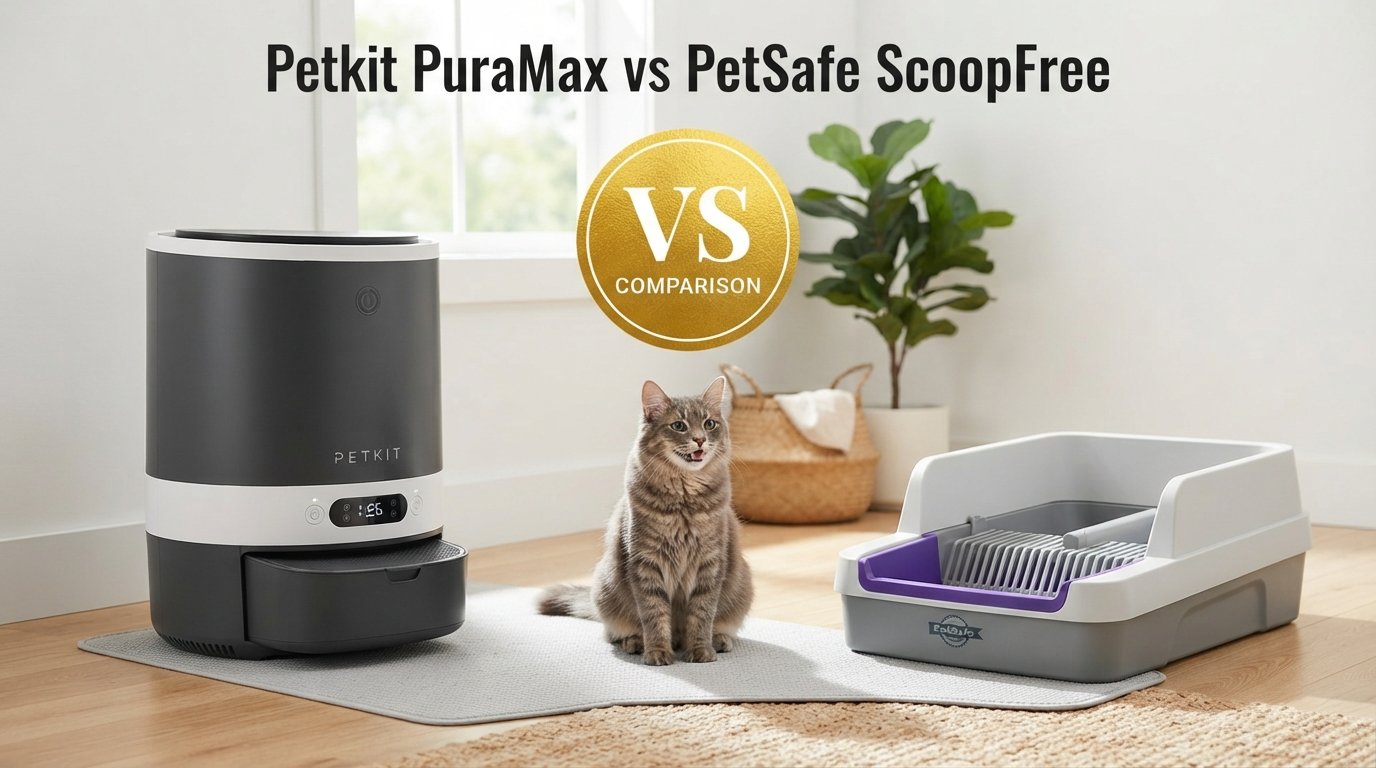
I put the PETKIT PuraMax 2 up against the PetSafe ScoopFree because they solve the same problem in almost opposite ways. The PuraMax 2 is a 76-liter smart box built for two or three cats and a phone app. The ScoopFree throws that out and bets on disposable crystal trays instead. One wants you to open an app every day. The other wants you to open the box maybe once a month.
So the real question isn’t which box is “better.” It’s whether you have one cat or three, whether you’d rather buy litter or buy trays, and how much floor space you can actually give up.
PETKIT PuraMax 2 vs PetSafe ScoopFree: Quick Comparison
| At a Glance | PETKIT PuraMax 2 | PetSafe ScoopFree |
|---|---|---|
| Best for | 2-3 cats, data lovers | 1 cat, small spaces |
| Typical price | $299-$499 | $150-$200 |
| Litter type | Standard clumping | Disposable crystal tray |
| Max cat weight | 22 lbs | Best under 15 lbs |
| App / tracking | Yes, full app | No app, on-unit counter |
| Ongoing cost | Lower (bulk litter) | Higher (per-tray) |
⚡ Quick Verdict
Multiple cats, and you want data on each one? Get the PuraMax 2. One cat, small apartment, and you never want to touch litter again? The ScoopFree wins that fight easily. The PuraMax handles logistics better. The ScoopFree handles simplicity better. Neither one is wrong, they’re just built for different homes.
Analysis: PETKIT PuraMax 2
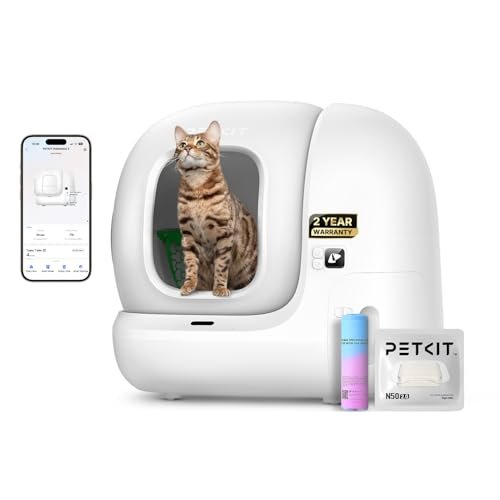
The PuraMax 2 is built for owners who want space and numbers, not just a clean box. It pairs 11 safety sensors with app tracking, so you get both a huge 76-liter interior and a running log of who used it, when, and how much they weighed.
The base is fully sealed and watertight, so nothing leaks through to your floor even with two or three cats sharing it. The pad inside stays firm when wet, which matters more than it sounds, since a soggy pad is how most automatic boxes start smelling. You run the whole thing from the PETKIT app on your phone, and that’s where most of the value actually lives.
PETKIT rates the PuraMax 2 for up to three cats and up to 22 lbs per cat. The entry point sits low to the ground, so older cats or ones with joint issues can step in without a jump. Sensors pause the rotating drum the instant a cat is detected inside, and the sealed housing traps odor instead of letting it spread through the room.
Build Quality & Design
This thing feels dense in a way most litter boxes don’t. The base doesn’t wobble, doesn’t shift, and doesn’t creak when a cat jumps in. PETKIT builds the outer shell from Oxford nylon over PVC, so it resists scratches better than the bare plastic on cheaper units. It’s not a small footprint at roughly 18.9 x 20.9 x 25.3 inches assembled, and it isn’t going to win a design award either. It’s built to last, not to look good on a shelf.
Performance & Speed
The cleaning cycle is consistent, and at roughly 35 decibels it runs quieter than most vacuum cleaners on standby. The rotating cylinder sweeps the entire drum, not just the top layer, which is the main functional difference from a rake-style box. Sensors catch a cat approaching and hold the cycle until they’re clear. It’s not silent, but it won’t wake anyone up either.
Features & Functionality
The app is the real selling point. It logs each cat’s weight and visit frequency separately, using weight to tell them apart, so you get per-cat data without buying separate boxes. The 76-liter capacity is what makes multi-cat use possible in the first place; a smaller drum just can’t keep up with three cats between cycles.
User Experience
Setup takes longer than a standard box, mostly because of the WiFi pairing step, and a few owners report the connection process is fiddly on the first try. Once it’s paired, day to day use is simple: scoop the waste bin every week or two, top off litter, and let the app handle scheduling. The low entry point is a real plus for skittish or older cats who won’t jump into a high-walled box.
Litter Compatibility & Maintenance
The PuraMax 2 works with any standard clumping litter, but the sensors are picky about depth. Keep it to 2-3 inches. Too much litter and the weight sensors misread; too little and clumps don’t form cleanly. Dusty clay litter will eventually coat the infrared sensors and cause false triggers, so a low-dust or crystal-blend litter keeps things running smoother longer.
Value for Money
Street prices run anywhere from $299 during a sale to close to $499 at full retail, so it pays to watch for a discount before buying. Factor in that it replaces two or three standard boxes, plus the app data, and the cost per cat starts to look fair rather than steep. PETKIT backs it with a 1-year limited warranty, shorter than some pricier competitors, so it’s worth testing the unit thoroughly in the first few months.
Analysis: PetSafe ScoopFree
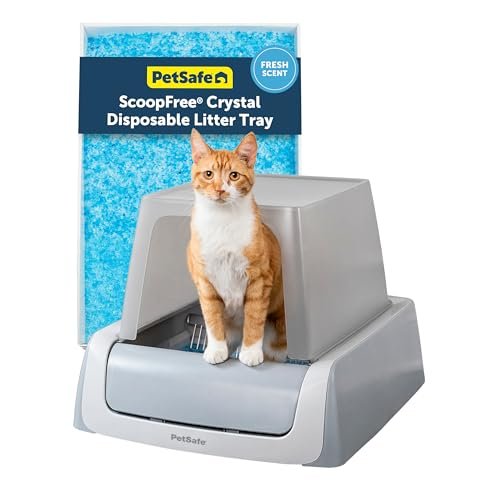
The ScoopFree skips the tech entirely and solves the problem a different way: throw the litter away instead of cleaning it. If you dislike scooping, hate touching waste, or just want something small enough to tuck under a bed, this is the simpler answer.
The Crystal Pro Legacy uses PetSafe’s proprietary crystal litter, which absorbs liquid waste and dries out solids so odor doesn’t build up the way it does with clay. There’s no scooping because there’s no reusable litter bed. You pull the disposable tray, drop it in the trash, and load a new one. PetSafe puts the odor control at roughly five times better than standard clumping clay, largely because the crystals dry waste instead of just clumping around it.
Motion sensors trigger the rake after each visit, and a leak-proof plastic lining inside the tray backs up the crystal’s own absorption. There’s no app here, just an on-unit health counter that logs how many times your cat has used the box, which is enough to flag a sudden change in habits.
Build Quality & Design
The housing is durable plastic, and it’s really just a shell that holds the disposable tray in place. At around 18 lbs assembled and roughly 28 x 20 x 16 inches, it’s light enough to move around the house on your own. It won’t feel as substantial as the PuraMax, but it doesn’t need to; the tray does the actual hygiene work, not the housing.
Performance & Speed
The crystals absorb liquid fast and keep the tray dry to the touch, which is the whole appeal. The rake only skims the surface layer rather than turning over the entire bed the way a rotating drum does, so it’s a simpler mechanism doing a simpler job. That’s fine for one cat. It gets overwhelmed faster with two or more.
Features & Functionality
The health counter is basic but useful: it tracks visits so you can spot a cat suddenly going more or less often, a common early sign of a urinary issue. There’s no weight tracking and no app, so you lose the granular data the PuraMax offers, but you also lose the setup hassle that comes with it.
User Experience
If you hate maintenance, this is the box for you. Plug it in, drop in a tray, done. The crystals are low-tracking and close to dust-free, so you won’t find litter trailing across the floor the way you might with clay. Most cats adjust to the texture within a few days.
Ongoing Maintenance & Tray Costs
PetSafe rates one tray for up to 30 days with a single cat, and owners on retailer Q&A pages report anywhere from three weeks to two months depending on how much the cat uses it. A single replacement tray runs about $20-$25, or roughly $24 each in a 3-pack. PetSafe itself recommends the ScoopFree for cats under 15 lbs; heavier or older cats produce more waste and burn through trays faster.
Value for Money
The upfront cost is genuinely low, typically $150-$200. But the tray subscription adds up. At one tray a month, that’s roughly $250-$300 a year in refills alone for a single cat, and it climbs fast if you’re running it for two. For a single-cat, low-maintenance household it’s still a good deal. For multiple cats, the math stops working in its favor.
Major Factors to Consider
The trade-offs come down to how each box handles waste, space, and cost over time. Both do their core job well. They just optimize for different owners.
Performance
The PuraMax rotates the entire drum on every cycle. The ScoopFree’s rake only skims the top layer. For one cat, that difference barely matters. For two or three, the PuraMax’s full-drum cleaning and 76L capacity pull ahead fast.
Noise Level
The PuraMax 2 runs at roughly 35 dB, quiet enough for most bedrooms. PetSafe doesn’t publish an official rating for the ScoopFree, but its simpler rake motor tends to run briefly and quietly since it only skims the surface rather than turning a full drum.
Price & Ongoing Cost
The ScoopFree costs less upfront, around $150-$200 versus $299-$499 for the PuraMax. But the ScoopFree’s disposable trays run about $250-$300 a year for a single cat. Standard clumping litter for the PuraMax typically costs less over the same period, even accounting for a bigger box.
Build Quality
The PuraMax uses a heavy, sealed cylinder that resists leaks and doesn’t shift underfoot. The ScoopFree relies on a lighter plastic shell around a disposable tray. Both hold up well; the PuraMax just feels more like a permanent fixture.
Design & Space
The PuraMax is a large, open-top cylinder built for cats up to 22 lbs. The ScoopFree is smaller and enclosed, easy to fit under a bed or in a closet corner. If floor space is tight, that alone might decide it for you.
Health Monitoring
The PuraMax tracks per-cat weight and visit frequency through its app, useful for multi-cat homes trying to spot which cat’s habits changed. The ScoopFree’s health counter is simpler: total visits only, with no per-cat ID if more than one cat shares it.
Warranty & Support
PETKIT backs the PuraMax 2 with a 1-year limited warranty. PetSafe has offered similar standard coverage on its litter boxes historically, though terms vary by retailer, so check the current listing before you buy either one.
Running Costs Over One Year
Purchase price only tells half the story. Here’s a rough estimate of what each box costs to keep running for a single cat over twelve months. Your numbers will shift with litter brand, how many cats share the box, and local prices.
| Cost Item | PETKIT PuraMax 2 | PetSafe ScoopFree |
|---|---|---|
| Unit price | $299-$499 | $150-$200 |
| Consumable | Standard clumping litter | Disposable crystal trays |
| Est. annual consumable cost (1 cat) | ~$150-$220 | ~$250-$300 |
| Est. total, year one | ~$450-$720 | ~$400-$500 |
Year one looks close for a single cat once you factor in the PuraMax’s higher upfront cost. Where the math changes is year two and beyond: litter stays cheap, but tray costs keep repeating at the same rate. Add a second cat and the ScoopFree’s per-tray cost climbs faster than the PuraMax’s litter cost does.
Feature Comparison
Side by side, the difference is really about which technology each brand chose to solve odor and mess.
| Feature | PETKIT PuraMax 2 | PetSafe ScoopFree |
|---|---|---|
| App Control | ✓ | ✗ |
| Weight Sensors | ✓ | ✗ |
| Multi-Cat Support | ✓ (up to 3) | ✗ (built for 1) |
| 76L+ Capacity | ✓ | ✗ |
| Crystal Litter Compatible | ✗ | ✓ (required) |
| Low-Entry Design | ✓ | ✓ |
| Leak Protection | ✓ | ✓ |
| Health Tracking | ✓ Per-cat weight + visits | ✓ Basic visit counter |
| Disposable Trays | ✗ | ✓ |
| Full-Drum Cleaning | ✓ | ✗ (surface rake only) |
| Noise Level | ~35 dB | Not published, generally quiet |
Specifications Comparison
Here’s the technical side, straight from manufacturer and retailer listings.
| Specification | PETKIT PuraMax 2 | PetSafe ScoopFree |
|---|---|---|
| Price | $299-$499 | $150-$200 |
| Assembled Weight | Not officially listed; feels substantial | ~18 lbs |
| Dimensions | ~18.9 x 20.9 x 25.3 in | ~28 x 20 x 16 in |
| Interior / Waste Capacity | 76L interior, 7L waste bin | Single disposable tray |
| Cleaning Method | Rotating cylinder | Surface rake |
| Litter Type | Standard clumping (2-3 in. depth) | Proprietary crystal, disposable tray |
| App Integration | Yes, PETKIT app | No app; on-unit counter |
| Sensors | 11 total (infrared + weight) | Motion sensor |
| Max Cat Weight | 22 lbs | Best under 15 lbs |
| Warranty | 1 year limited | Standard limited (check listing) |
🏆 Winner: PETKIT PuraMax 2
Score Breakdown
For most households with more than one cat, the PuraMax 2 is the stronger buy. It cleans more thoroughly, tracks more data, and handles more cats without buying a second unit. The ScoopFree isn’t a lesser product, it’s just built for a narrower use case.
Choose PetSafe ScoopFree If…
At $150-$200 upfront, the ScoopFree costs far less than the PuraMax to bring home. You still get a working automatic box, just without the app and multi-cat capacity you’d pay extra for elsewhere.
For a single cat under 15 lbs, the ScoopFree’s capacity and odor control are genuinely enough. You’re not paying for features built around a problem you don’t have.
At roughly 28 x 20 x 16 inches, the ScoopFree tucks under a bed or into a closet in a way the larger PuraMax simply can’t.
No app, no WiFi pairing, no sensor calibration. Plug it in and it works, which matters if you’d rather not manage another smart-home device.
🎯 Final Recommendation
Busy home, multiple cats, and you want to see the data? Get the PuraMax 2. Small space, one cat, and you’d rather never think about litter again? Get the ScoopFree. Both do their core job well. The difference is really about which trade-off fits your house: more upfront cost and setup for more capacity and data, or a lower price and less fuss with a narrower ceiling on how many cats it can serve.
Summary
- The PETKIT PuraMax 2 is a 76L smart box built for multi-cat households, with app-based weight and visit tracking for each cat.
- The PetSafe ScoopFree is a compact, low-maintenance system built for one cat under 15 lbs, using disposable crystal trays instead of scooping.
- The PuraMax’s rotating cylinder cleans the entire drum; the ScoopFree’s rake only skims the surface.
- App control, weight ID, and multi-cat support exist only on the PuraMax 2.
- The ScoopFree’s crystal litter controls odor better than clay, but its disposable trays cost roughly $250-$300 a year for one cat.
- The PuraMax 2 costs more upfront but uses cheaper standard litter, so it evens out or wins on cost for multi-cat households over time.
Frequently Asked Questions
Which product is better overall?
The PETKIT PuraMax 2 is the stronger overall pick thanks to its 76L capacity, app-based per-cat tracking, and full-drum cleaning. The ScoopFree is a solid product too, just narrower in scope. It’s built around one cat and simplicity, not multi-cat capacity.
Can the PetSafe ScoopFree handle multiple cats?
PetSafe designed the Crystal Pro Legacy primarily for one cat under 15 lbs. Multiple cats can technically share it, but the tray fills faster and needs more frequent replacement. If you have two or more cats, look at PetSafe’s larger ScoopFree models or the PuraMax 2 instead.
How much do ScoopFree replacement trays cost, and how often do I need one?
A single tray runs about $20-$25, or roughly $24 each bought in a 3-pack. PetSafe rates one tray for up to 30 days with a single cat, though real-world use ranges from three weeks to two months depending on your cat’s habits.
How loud is the PETKIT PuraMax 2 during a cleaning cycle?
PETKIT rates it at roughly 35 decibels, close to a quiet conversation. That’s quiet enough for most bedrooms or open living spaces, and noticeably quieter than older rake-style automatic boxes.
Which has better build quality?
The PuraMax 2 generally feels more substantial, with a sealed, watertight cylinder and Oxford nylon paneling. The ScoopFree uses durable but lighter plastic, since most of its hygiene work happens in the disposable tray rather than the housing itself.
Which is better for beginners or first-time automatic box owners?
The ScoopFree is the easier entry point: no app, no WiFi pairing, plug in and go. The PuraMax 2 has a bit more of a learning curve during setup, but it’s also fairly intuitive once the app is paired.
What litter does each box need?
The PuraMax 2 works with standard clumping litter kept at a 2-3 inch depth; dusty litter can eventually coat its sensors. The ScoopFree only works with PetSafe’s own disposable crystal trays, no substitutes.
Which offers better value for money?
For a single cat, the ScoopFree’s lower upfront cost gives it the edge in year one, even with tray refills. For a multi-cat household, the PuraMax 2’s higher price evens out fast since standard litter is cheaper than repeated disposable trays.
Is either box safe for kittens or senior cats?
Both have low-entry designs that suit older or smaller cats. PetSafe recommends the ScoopFree for cats older than 6 months, since younger kittens tend to produce softer waste that the crystal litter and rake handle less cleanly. The PuraMax’s sensors are built to pause around any cat inside, kitten or senior, though very light kittens may not register reliably on the weight sensor until they’re a bit older.
What are the main differences?
The PuraMax uses a rotating cylinder, standard litter, and app control, built for up to three cats. The ScoopFree uses a rake and disposable crystal trays, built for one cat. The PuraMax is larger and smarter; the ScoopFree is smaller, cheaper upfront, and simpler to run.
Still exploring your options? Check out our Best Automatic Litter Box guide for more top picks, or visit our Indoor Cat Litter Box hub for all litter box recommendations.

Written by Mishu
A passionate cat lover and indoor living enthusiast, Mishu is the founder and voice behind Indoor Living Cat – a go-to resource for cat owners who want to create the happiest, healthiest life for their feline companions indoors.
View Full Profile