
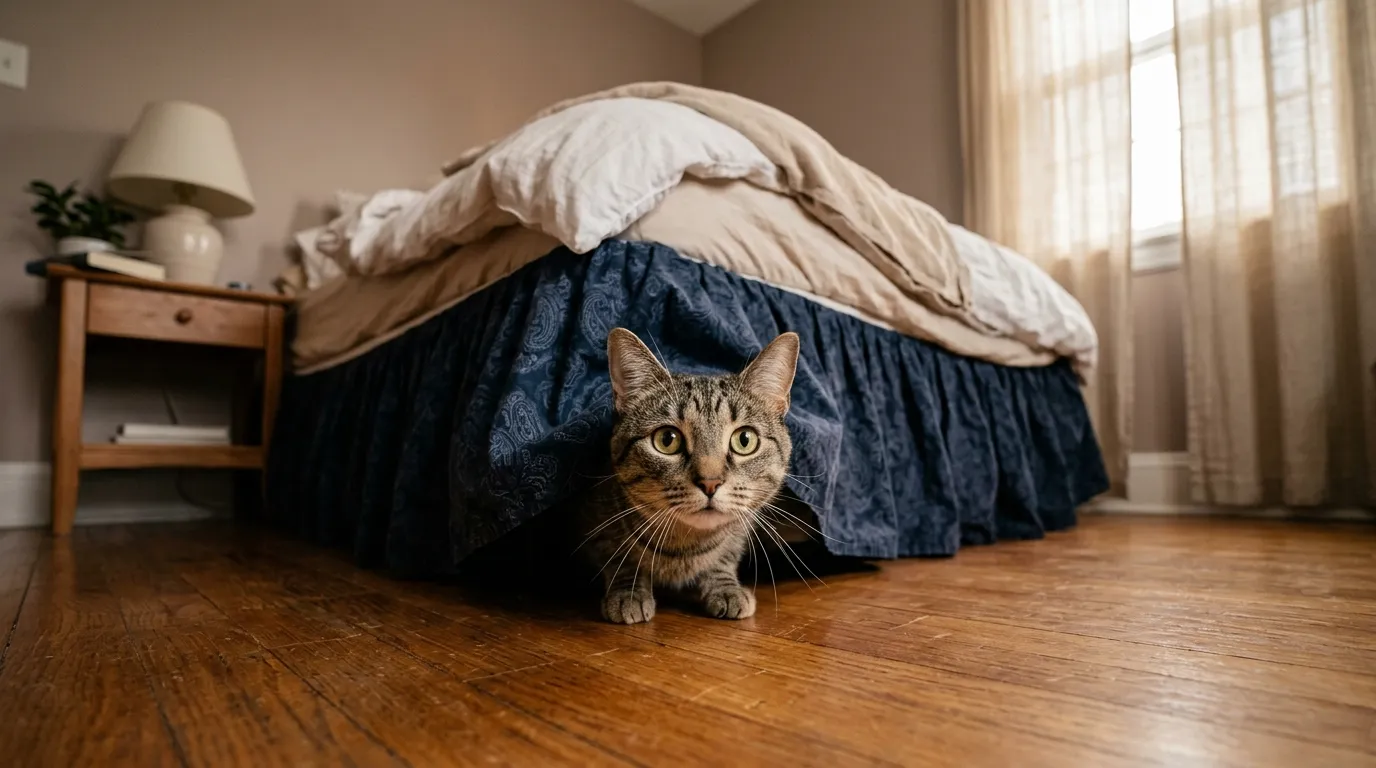
Your new cat has been under the bed for two days and you are already wondering if you made a mistake. You did not. Understanding how long for new cat to adjust to home is the single most reassuring thing you can learn in those first anxious days, because the hiding is not rejection it is a completely predictable biological response to an overwhelming change. I had a rescue cat who did not come out for food until after midnight for the entire first week, eating only when the apartment was completely silent. That felt alarming until I understood the timeline. This guide walks you through every phase, what to set up before your cat even arrives, how to introduce a resident cat or dog, and when to stop worrying and call the vet instead.
Most cats take 3 days to decompress, 3 weeks to feel comfortable and 3 months to fully settle into a home. This is called the 3-3-3 Rule. Shy or rescue cats may take longer at every stage. Kittens typically move through each phase faster than adult or senior cats.
How Long for a New Cat to Adjust to Home? The 3-3-3 Rule
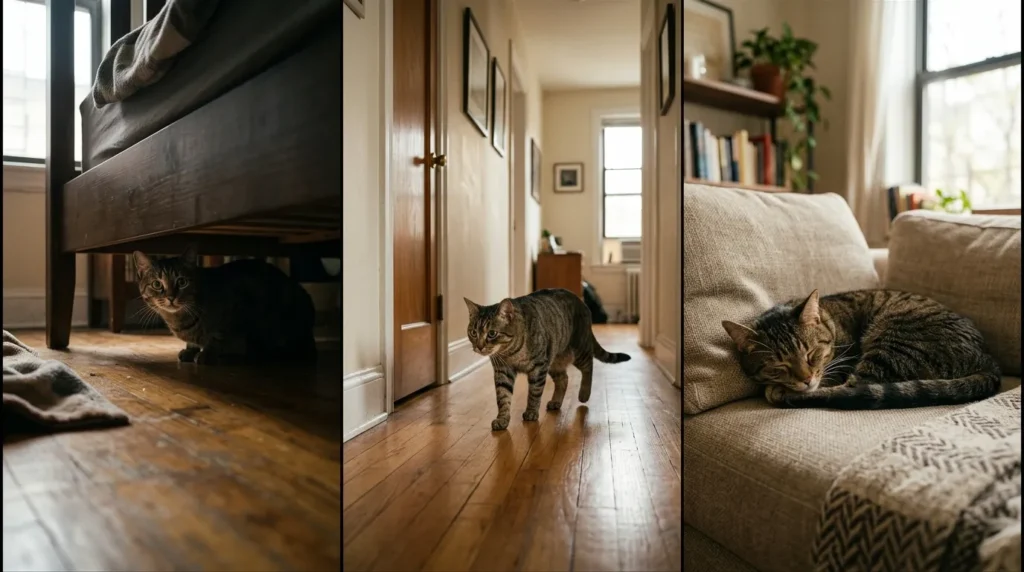
The 3-3-3 Rule is a framework that describes the three predictable stages every new cat passes through when entering an unfamiliar home. It gives you a realistic timeline instead of the vague “be patient” advice that leaves most owners more anxious than before. Each stage has a name, a set of typical behaviors and a specific role you play to help the cat move forward.
The three stages are decompression, acclimation and integration. They do not always arrive exactly on schedule but the order is almost always consistent. Skipping stages or trying to rush them is the most common reason an adjustment takes longer than it should. And the rule holds up whether your cat just came from a shelter, a breeder or another house across town, though a cat moving with its same family usually clears each stage faster than a cat starting completely from scratch.
| Phase | Duration | What Your Cat Feels | Your Job |
| Decompression | Days 1 to 3 | Survival mode every sound is a threat | Silence and space |
| Acclimation | Weeks 1 to 3 | Cautious curiosity begins | Routine and gentle interaction |
| Integration | Month 1 to 3 | Ownership and belonging | Deeper bond through play and grooming |
Before Your Cat Arrives: The Setup Checklist
A little prep work on your end shortens the whole timeline. Do these things before you bring the carrier through the door, not after:
- Pick one small room as the base camp — a spare bedroom or a quiet bathroom works, not the living room where foot traffic never stops.
- Set up the litter box, food, water and a hiding spot (an open carrier with a blanket inside counts) in that room before the cat is anywhere near it.
- Plug in a synthetic pheromone diffuser, like Feliway, a day or two ahead if you can. It will not sedate the cat, but several shelters and vets recommend it to take the edge off the first few days.
- Ask the shelter, breeder or previous owner what food the cat currently eats and buy the same brand. A diet change on top of a home change is a fast route to an upset stomach.
- Book the first vet visit for sometime in the next one to two weeks, not the first day. You want a baseline health check once the cat has calmed down a bit, not another stressful car ride during hour one.
- Shut and lock any windows, and check for gaps behind appliances or under sinks the cat could squeeze into and get stuck.
Days 1 to 3: What Decompression Really Looks Like?
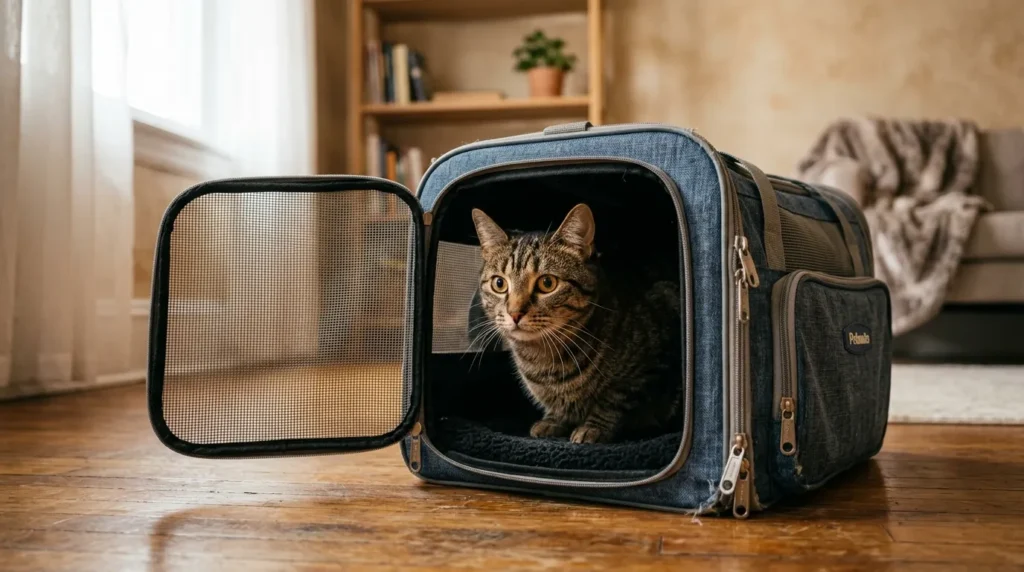
In the first 72 hours your cat is operating purely on instinct. Their nervous system is flooded with unfamiliar scents, sounds and stimuli and their only priority is finding a safe hiding spot. Hiding under the bed, inside a wardrobe or behind large furniture is not a personality problem it is a healthy response to an overwhelming situation.
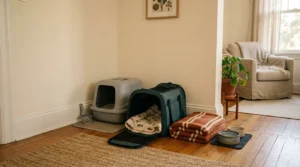
Confining the cat to the base camp room removes the overwhelm of a whole apartment and lets them build confidence from a smaller, controllable territory. Keep the door closed and let them decompress there for at least the first two to three days, longer if they are still tense or refusing food.
Do not sit next to the hiding spot and talk to the cat or try to coax them out. Sit in the same room quietly and let them decide when to approach. Your calm, predictable presence is the most useful thing you can offer in these first three days. Skipping food for a meal or two is normal here, but write down the last time your cat actually ate, because that number matters if the fast drags on (more on that below).
Weeks 1 to 3: The Acclimation Phase and What Changes?

By the end of the first week most cats begin exploring when the apartment is quiet, usually at night when foot traffic drops. You will hear them moving around after you go to bed. This is a good sign. It means their nervous system has downshifted from survival mode into curiosity mode.
This is also when their real personality starts showing up. A naturally bold cat may begin approaching you for food by day five. A naturally cautious cat might still disappear at the sound of a door closing at week two. Neither is wrong, both are working through the same process at their own pace.
Start a consistent feeding schedule now if you have not already. According to the Cornell Feline Health Center, routine and predictability are among the most effective environmental tools for reducing stress in newly homed cats. Same time, same location, same bowl every day. That repetition becomes a signal that this place is safe and organized.
Once the cat is eating on a schedule and using the litter box without hesitation, you can start opening the base camp door for supervised access to the rest of the house. Give them the run of one additional room at a time rather than the whole apartment at once. It is a smaller version of the same confidence-building logic that got them through decompression.
From Experience Resist the urge to invite friends over to meet the new cat during the first three weeks. Every unfamiliar person resets the trust clock by a few days. Let the cat bond with you first and introduce other people gradually after week three.
Adjusting With Other Pets Already in the Home
Everything above assumes a household with no other animals. Add a resident cat or a dog and the timeline stretches, because the new arrival has to navigate an existing social order on top of a new address. Rushing this part is the number one reason cat-to-cat introductions fail.
Introducing a New Cat to a Resident Cat
Keep the two cats fully separated behind the base camp door for the first three to seven days. During this window, build a shared scent before either cat ever sees the other:
- Rub a clean sock or cloth on the new cat’s cheeks, then leave it near the resident cat’s food bowl. Do the same in reverse with the resident cat’s scent, placed in the new cat’s room.
- Feed both cats on opposite sides of the closed door at the same time, so they associate the other cat’s scent with something good.
- Once both cats eat calmly through the door with no hissing or growling, crack the door open a couple of inches, or swap a baby gate in for a day, so they can see each other without full contact.
- Move to short, supervised face-to-face sessions once visual contact stays calm for a few days running. Keep sessions brief and end on a good note before either cat gets tense.
- Give the resident cat the same amount of attention as before. A resident cat that suddenly feels replaced is far more likely to act out toward the newcomer.
Most cat-to-cat introductions take two to four weeks done this way. Rushed introductions that skip scent swapping and go straight to face-to-face contact are the leading cause of long-term tension between cats in the same home, sometimes lasting months or never fully resolving.
Introducing a New Cat to a Dog
The scent-swapping steps above apply here too, but keep the dog leashed and under command for every supervised session, even a dog with a good track record around cats. Never let the dog chase, corner or “just sniff” the cat without a barrier between them at first. The cat needs a retreat route — up high on a cat tree or shelf, or through a door only they can fit through — for as long as they share the space. Most cats and dogs reach a workable truce within two to six weeks, though true friendship can take longer and some pairs simply coexist without ever cuddling, which is a fine outcome too.
Months 1 to 3: How Integration Actually Feels?

Full integration means your cat has shifted from visitor to owner. You notice it in small things first: sleeping in open spaces instead of hidden corners, waiting near the door when you come home, walking toward you with a tail held high. These are not just cute behaviors. They are specific signals that the cat’s stress-induced behavior has fully resolved.

The slow blink is one of the most reliable integration signals. When a cat makes eye contact with you and slowly closes their eyes, they are communicating that they feel safe enough to look away, which is a real act of trust for an animal that evolved as both predator and prey. Slow blink back at them. It works.
Most cats reach full integration between weeks six and twelve. A small number of very shy or previously traumatized cats take up to six months. That is still within the normal range and not a sign that something is wrong. Building a consistent indoor cat behavior routine during this period speeds the process significantly.
The Factors That Decide How Fast Your Cat Adjusts

Age is the single biggest variable in adjustment speed. History matters almost as much. So does whatever else is going on in the house. Here is roughly how it breaks down:
| Cat Type | Typical Full Adjustment Time | Why |
| Kitten (under 6 months) | 2 to 4 weeks | Nervous system is still plastic and adaptable |
| Adult cat, stable background | 6 to 12 weeks | Standard 3-3-3 timeline applies |
| Adult cat, shelter or stray history | 2 to 4 months | Longer decompression phase, less prior socialization |
| Senior cat (10+ years) | 3 to 6 months | Established territorial habits take longer to rebuild |
History matters almost as much as age. A cat from a stable foster home where it was handled daily arrives already partially socialized to domestic environments. A former stray that was trapped and never held before arriving at a shelter may spend six weeks in the decompression phase alone. Neither situation is a problem, they just require different amounts of patience.
Your home environment affects the timeline too. A quiet apartment with one adult is the easiest setting for a nervous cat to adjust in. A home with loud children, dogs or frequent visitors adds genuine complexity that slows the process, not because anything is wrong but because there is simply more for the cat to process before feeling safe. Cats moving house with the same family they already know almost always adjust faster than newly adopted cats, since the people and most of the smells stay familiar even when the address does not.
The Adjustment Mistake That Slows Everything Down
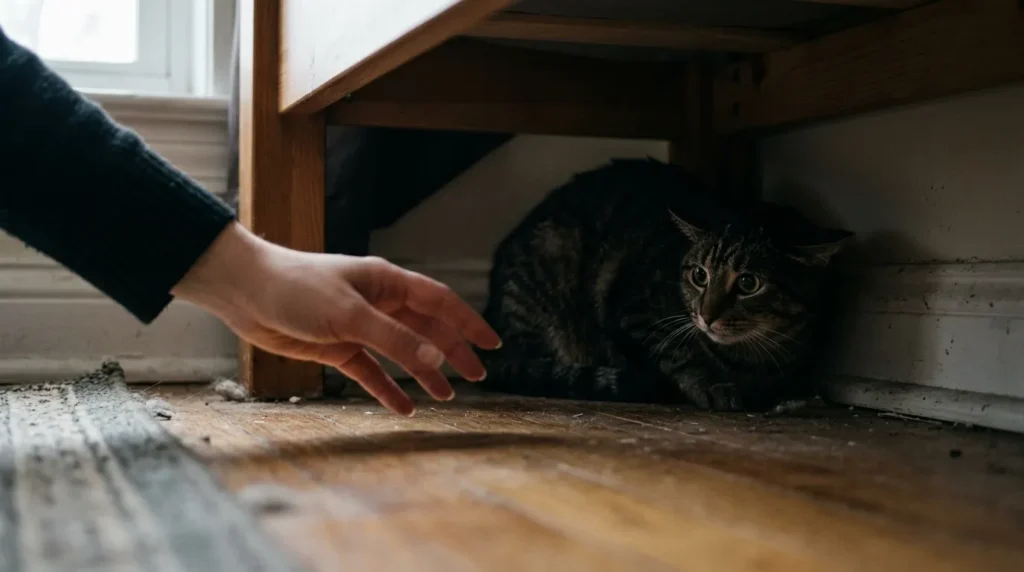
The most damaging thing you can do during the adjustment period is force interaction. Pulling a cat out from under the bed, picking them up before they approach you voluntarily or following them around the apartment trying to make contact all teach the cat that humans are unpredictable and cannot be trusted.
Every forced interaction adds days to the adjustment timeline. The cat learns that hiding works temporarily but that you will come and disturb them anyway, so they stay in a constant low-level state of alertness instead of ever fully relaxing. True decompression cannot happen in that environment.
The correct approach is counterintuitive. Ignore the cat during the day. Sit in the same room and read, work or watch television without directing attention at them. Let every positive interaction be entirely the cat’s idea. Cats given this kind of respectful space almost always come forward faster than cats who are constantly pursued.
My Cat Still Hasn’t Adjusted After a Month. Now What?
A few weeks of caution is normal. A full month of hiding around the clock, with no eating outside the room and zero curiosity even at night, is worth a second look. Before assuming something is medically wrong, check these three things first:
- Is the base camp room actually quiet, or does it back onto a hallway, a washing machine or a shared wall with noisy neighbors?
- Has anyone in the house been trying to force contact, even well-meaning kids reaching under the bed?
- Is the cat eating and using the litter box at all, even if only at 3 a.m.? If yes, this is likely still a confidence problem, not a health one.
If all three check out and the cat is still frozen after a month, a certified cat behavior consultant can help, and it is worth ruling out an underlying medical issue with your vet at the same time, since pain or illness can look identical to fear from the outside.
When Not Adjusting Is a Sign Something Is Wrong?
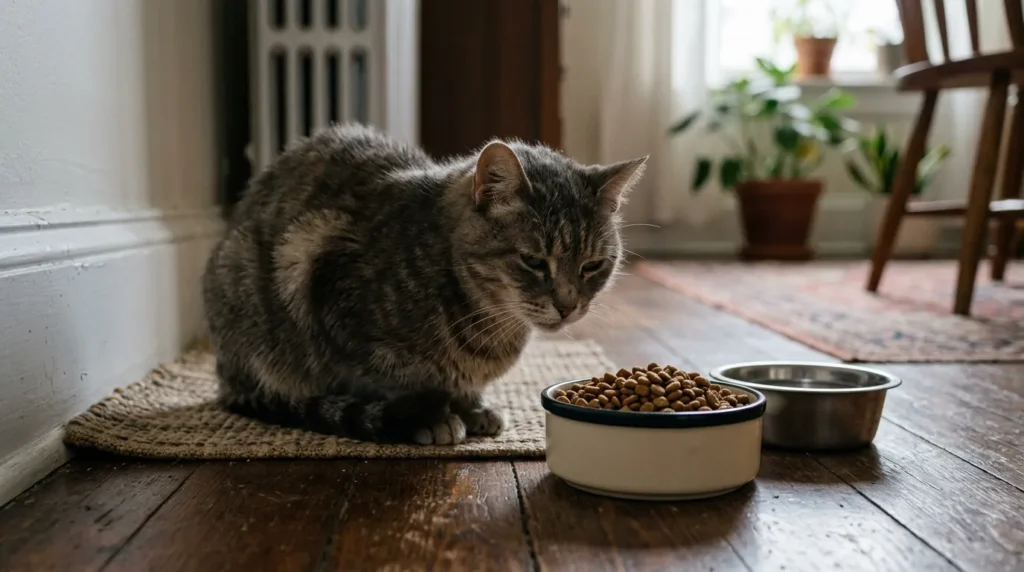
Hiding and reduced appetite for the first three to five days is normal. Beyond that, certain signs cross from normal adjustment behavior into something that needs attention. A cat that has not eaten or drunk any water in 48 hours is at real risk of hepatic lipidosis, a dangerous liver condition that develops quickly in cats who stop eating.
| Normal Adjustment | Call the Vet |
| Hiding most of the day for the first week | Refusing all food and water for more than 24 to 48 hours |
| Eating only at night when it’s quiet | Lethargy so severe the cat won’t move when touched |
| Occasional hissing or growling when startled | Labored breathing or open-mouth breathing |
| Skipping a litter box trip or two the first day | Visible blood in urine or stool, or straining with no output |
| Occasional vomiting from stress or a diet change | Persistent vomiting, diarrhea, or discharge from eyes or nose |
| Quiet, watchful, cautious body language | Persistent crying or howling with no clear trigger |
Normal adjustment behavior looks like hiding, watching and occasional midnight exploration. It does not look like physical illness. When in doubt, contact your vet, even a phone consultation helps you decide whether the behavior you are seeing is within the expected range.
This article is for informational purposes only. Always consult your vet if you have concerns about your cat’s health.
FAQ
How long does it take for a new cat to adjust to home?
Most cats follow the 3-3-3 Rule: 3 days to decompress, 3 weeks to acclimate and 3 months to fully integrate. Shy or rescue cats often take longer at every stage.
Is it normal for a new cat to hide all day?
Yes, completely normal in the first week. Hiding is a healthy stress response. As long as the cat is eating and using the litter box at night, leave them alone and let the process unfold.
Should I force my new cat to come out and socialize?
No. Forced interaction adds days to the adjustment timeline and damages trust. Let every positive encounter be the cat’s choice. Sit nearby calmly and let them approach on their own terms.
Why is my new cat not eating?
Reduced appetite in the first 48 to 72 hours is normal. If the cat has not eaten at all for more than 48 hours, contact your vet, as prolonged fasting can cause serious liver problems in cats.
How do I know when my cat has fully adjusted to home?
Look for sleeping in open spaces, the slow blink, a raised tail when they see you and consistent appetite. These behaviors together signal that the cat feels ownership over the space.
Does having another cat in the home make adjustment slower?
Yes, usually. Resident cats add a territorial layer that the new cat has to navigate on top of the home adjustment. Keep them separated for the first two to four weeks and use scent swapping before any face-to-face introduction.
Should I use a pheromone diffuser like Feliway?
It’s optional but many shelters and vets recommend one. Plug it into the base camp room a day or two before the cat arrives if possible. It will not sedate the cat or replace good setup, but it can take the edge off the first few days for an anxious cat.
Is adjustment different for a cat moving house versus a newly adopted cat?
Yes. A cat moving with the same family and belongings usually adjusts within a week or two, since the people and most of the scents are already familiar. A newly adopted cat is meeting new people, new smells and a new routine all at once, so the full 3-3-3 timeline applies.
When should I take my new cat for its first vet visit?
Within the first one to two weeks, once the cat has calmed down from the initial move. This sets a health baseline and catches anything, like parasites or dental issues, before it becomes a bigger problem.
The most important thing to take away is that the timeline for how long for a new cat to adjust to home is predictable even when it feels chaotic. Give your cat a quiet base camp, stick to a feeding routine and resist the urge to speed things up. Most cats will surprise you with how quickly they blossom once they feel safe. Start today by setting up a single dedicated room with everything the cat needs and let them lead every interaction from there. For building enrichment and confidence once your cat is settled, new indoor cat covers exactly what comes next.
How long for a new cat to adjust to home depends on age, history and environment but most cats follow the 3-3-3 Rule: 3 days of decompression, 3 weeks of acclimation and 3 months of full integration. Kittens adjust in 2 to 4 weeks while senior cats may take up to 6 months. The base camp method, which confines the new cat to one room initially with food, water, litter and a pheromone diffuser, is the most effective way to accelerate adjustment. Introducing a resident cat or dog adds 2 to 6 weeks on top of the base timeline and should always start with scent swapping before any face-to-face contact. Forced interaction and lack of routine are the two main factors that extend the adjustment period beyond the expected timeline. A cat refusing food and water for more than 48 hours needs a vet, not more waiting.

Written by Mishu
A passionate cat lover and indoor living enthusiast, Mishu is the founder and voice behind Indoor Living Cat – a go-to resource for cat owners who want to create the happiest, healthiest life for their feline companions indoors.
View Full Profile