
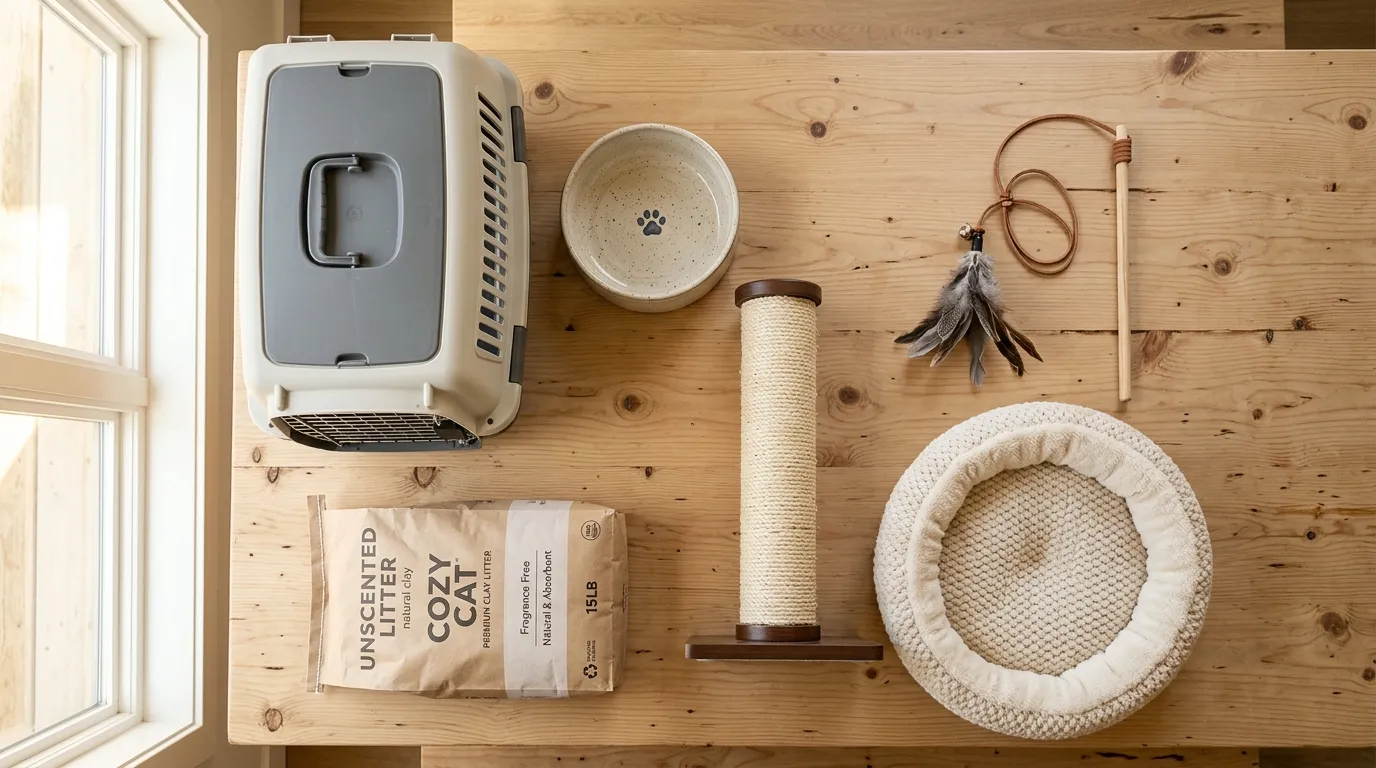
Walking into a pet store for the first time as a new cat owner is genuinely overwhelming. There are entire walls of bowls, dozens of litter brands and toys that cost more than your last dinner out and most of it your cat will ignore. A solid new cat owner checklist of what to buy saves you money and prevents the “expensive pile of rejected stuff” that ends up in the corner of every new cat owner’s apartment. I learned this the hard way when I bought a covered litter box on day one and my cat refused to set foot inside it for three weeks. This guide cuts straight to what actually matters so you can set up a home your cat feels safe and comfortable in from the first hour.
Before bringing a cat home, you need a secure carrier, wide ceramic or stainless steel food and water bowls, an open-top litter box with unscented clumping litter, a tall stable scratching post, a hiding spot and an interactive wand toy. Budget around $150 to $200 for quality versions of these six essentials and skip everything else until you know your cat’s preferences.
New Cat Owner Checklist: The 6 Survival Essentials for Day One
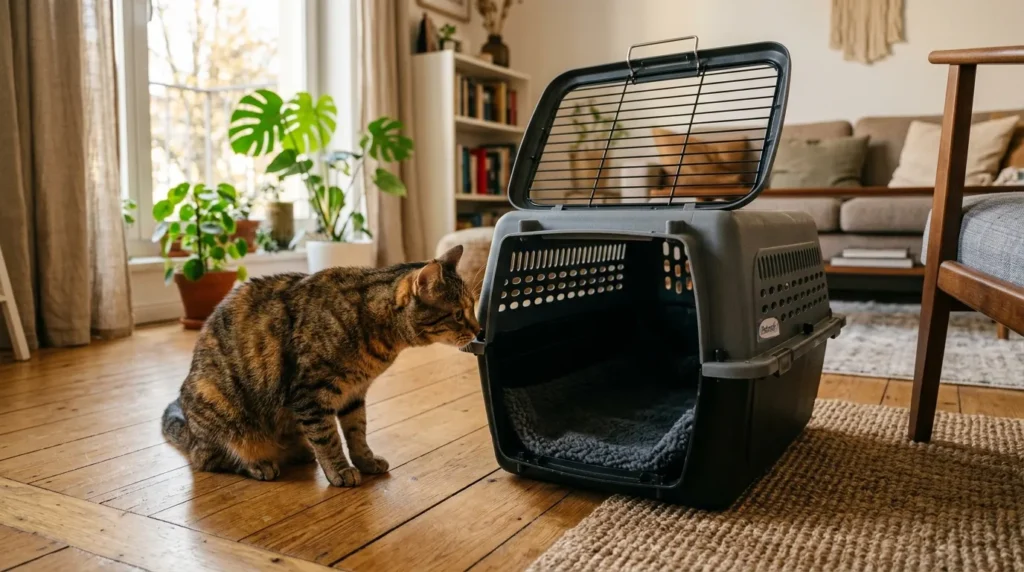
The six items on this section of the new cat owner checklist are non-negotiable. You need all of them in your home before the cat arrives, not after. Scrambling to set up a litter box while a terrified cat hides under your bed is not the first impression either of you deserves.
Start with the carrier. A top-loading hard-sided carrier lets you lower a nervous cat in gently from above instead of pushing them in face-first. Cats who are anxious about travel tolerate top-loading carriers significantly better and it is worth the extra ten dollars over a basic front-loader.
For food and water, buy wide shallow ceramic or stainless steel bowls before anything else. Deep narrow bowls cause whisker fatigue, a real condition where a cat’s highly sensitive whiskers constantly brush the bowl sides during eating, creating low-level stress at every meal. Ceramic and stainless steel also do not harbor bacteria the way plastic does.
The litter box matters more than almost anything else on this list. Buy a large open-top box, skip the hood and fill it with unscented clumping litter. According to the American Association of Feline Practitioners, most house soiling issues trace back to litter box problems that were entirely preventable with the right setup from day one.
The Litter Station Setup That Prevents 90% of Accidents
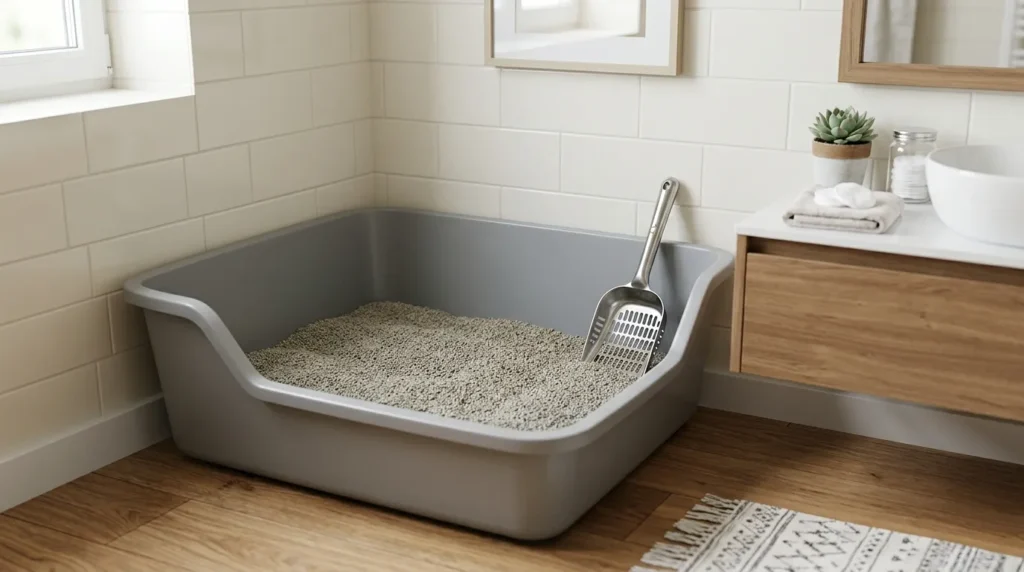
The litter station is the most important setup decision you will make as a new owner. Get the box size right first. Most boxes sold in pet stores are genuinely too small for an adult cat. A cat needs enough room to turn around fully, dig and position itself without touching the walls.
Follow the one-plus-one rule: one litter box per cat plus one extra. If you have one cat, start with two boxes in different locations. This prevents territorial guarding and gives your cat a backup option if one box is occupied or feels unsafe.
Use a metal scoop from the start. Plastic scoops crack, warp and hold odor over time. A five-dollar stainless steel scoop lasts years and stays genuinely clean between uses. Scoop at least once daily because cats will avoid a dirty box the same way you would avoid a gas station bathroom.
Real Owner Tip Skip the litter deodorizer powders and the scented litter. They are marketed to humans but cats find artificial fragrance overpowering and stressful. An unscented box cleaned daily smells better to your cat than a scented one cleaned twice a week.
Feeding Supplies and the 7-Day Food Transition Your Cat Needs
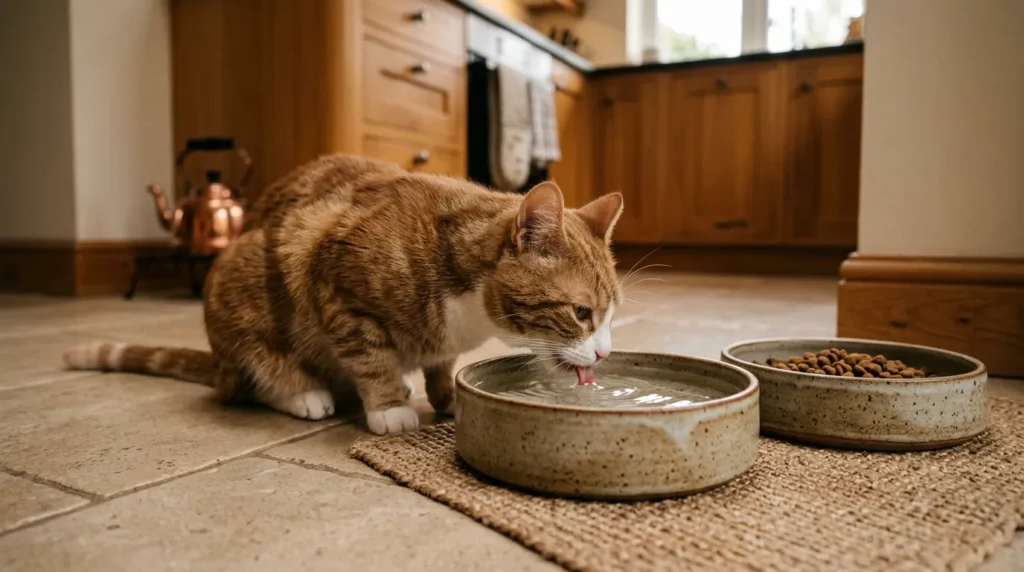
Ask the shelter or breeder exactly what food your cat is currently eating before you bring them home. Switching food too fast causes digestive upset and the resulting diarrhea in a new home will stress your cat and make litter training harder. Stick to the same food for at least two weeks before making any changes.
When you are ready to transition to a new food, use the 7-day schedule that veterinary nutritionists recommend. Days one and two: 75% old food and 25% new. Days three and four: 50/50. Days five and six: 25% old and 75% new. Day seven: fully on the new food. Moving slower than this is always safer than moving faster.
Place water bowls away from the food bowl. Cats in the wild do not drink near their kill and many cats will drink more water when the bowl is in a separate location. Better feline hydration means healthier kidneys over the long term, which matters enormously for indoor cats.
For deeper guidance on what and how much to feed, how to feed an indoor cat properly covers portion sizes, wet versus dry ratios and meal timing for apartment cats.
Scratching and Vertical Space: What Your Cat Actually Needs?
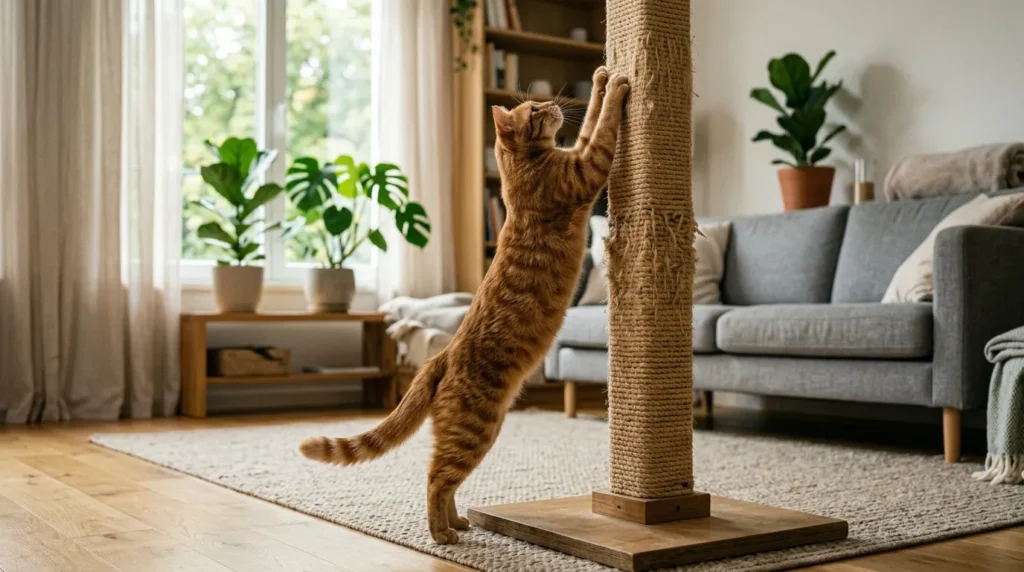
Scratching is not bad behavior. It is a biological need that releases scent from glands in your cat’s paws, stretches their spine and keeps their claws healthy. If you do not provide a scratching surface your cat considers good enough, they will decide your sofa is an acceptable substitute.
Buy the tallest sisal post you can afford and make sure it does not wobble when pushed with one hand. A wobbly post will be used once and then avoided permanently. Height matters too because cats scratch to stretch their whole body and a short post does not let them extend fully.
A cat tree or window perch is the other non-negotiable in this category. Cats need vertical space to feel territorially secure and your new cat will be anxious enough arriving in an unfamiliar home. A high spot they can retreat to gives them a safe vantage point while they adjust to the new environment. You can explore the full range of options through best cat furniture for indoor cats once you know what size and style fits your space.
Enrichment and Toys: What Actually Gets Used?
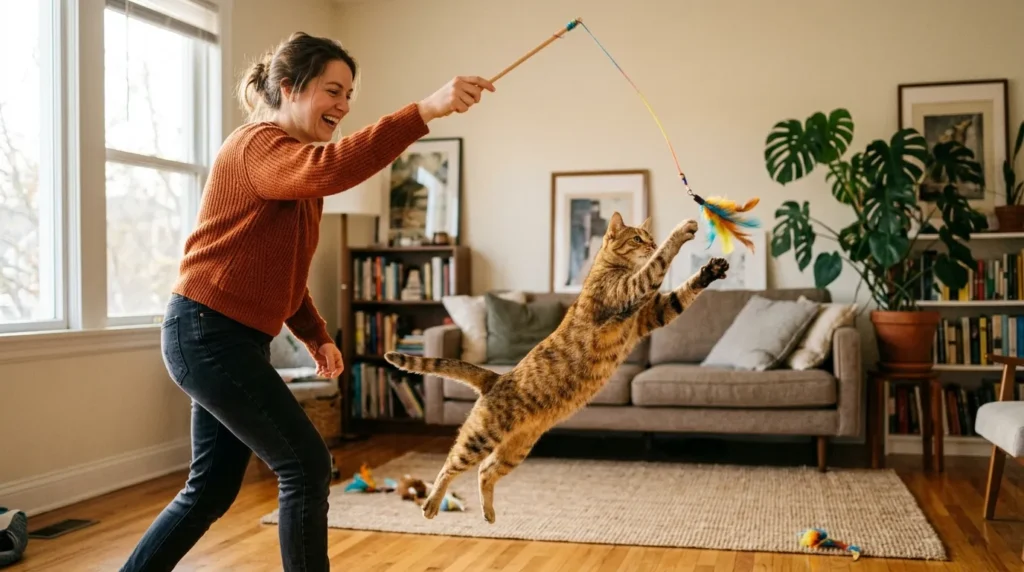
Most of the toy section at a pet store is designed to appeal to humans, not cats. Stuffed mice with googly eyes, battery-powered spinning gadgets and crinkle balls in novelty shapes your cat will bat most of them under the sofa in ten minutes and never look at them again.
Buy one good feather wand and use it every day. Interactive wand toys engage the predatory sequence stalk, pounce, catch in a way that no battery-powered toy can replicate. Ten to fifteen minutes of wand play before your cat’s evening meal burns off energy, reduces stress-induced behavior and builds a bond between you faster than anything else on this list.
For solo play, silvervine sticks outperform catnip toys for about 80% of cats and puzzle feeders turn mealtime into mental exercise. A puzzle feeder is especially useful in the first weeks when your new cat may be too anxious to settle but still needs stimulation. Read more about building a complete stimulation routine through indoor cat enrichment once the basics are in place.
Real Owner Tip Do not buy a laser pointer. Cats cannot catch a laser dot and that unsatisfied predatory drive at the end of every play session builds frustration over time. Always end play sessions with something your cat can physically catch and “kill,” even if it is just a crumpled piece of paper.
The Biggest Mistake New Cat Owners Make With Supplies
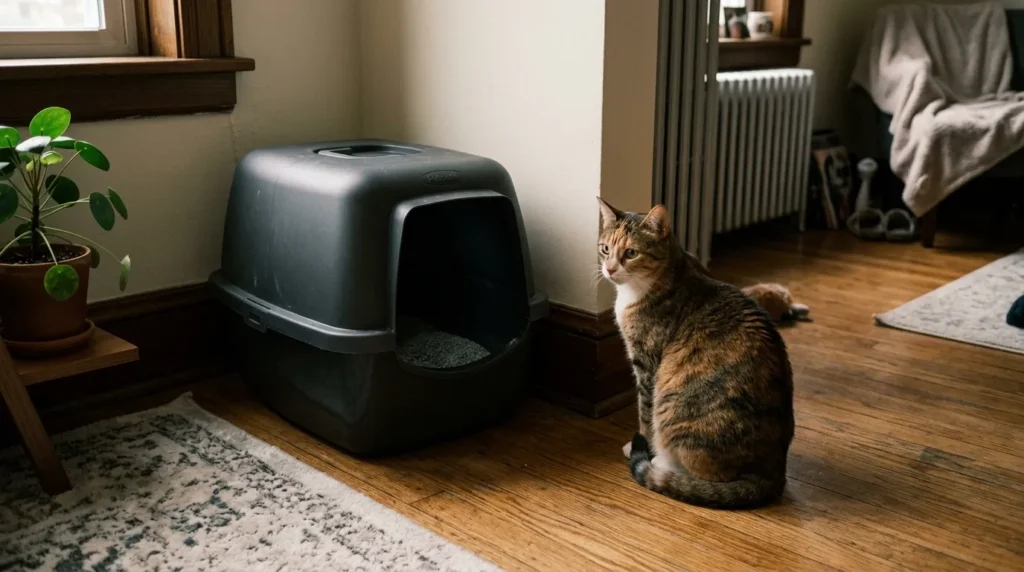
The most common and most expensive mistake new owners make is buying gear for themselves instead of for their cat. Covered litter boxes look tidier and smell more contained from across the room. Automatic self-cleaning boxes sound like they save time. Themed cat beds look great in apartment photos.
Your cat does not care about any of that. A covered litter box traps ammonia fumes and makes your cat feel vulnerable while using it. A self-cleaning box makes sudden mechanical noises that train a cat to avoid the area entirely. A decorative bed in the wrong spot will sit empty while your cat sleeps on your unwashed laundry.
Buy plain and functional first. Learn what your individual cat actually gravitates toward over the first month. Then upgrade based on real behavior, not what looked good in a product photo.
Budget vs. Splurge: Where to Save and Where to Spend?
| Category | Save Here | Spend Here | Why It Matters |
| Litter Box | Any large open-top plastic bin | Stainless steel box (no odor absorption) | Size and openness matter more than material |
| Food Bowl | Wide ceramic bowl from a kitchen store | Same ceramic beats any specialty cat bowl | Material and shape are what count |
| Scratching | Flat cardboard scratcher as a backup | Tall sisal post that does not wobble | Cats need height to stretch fully |
| Toys | Cardboard boxes, paper bags, crinkle balls | One quality feather wand toy | Interactive beats novelty every time |
| Bedding | Old fleece blanket placed up high | Heated cat cave for winter | Location matters more than the bed itself |
| Food | Mid-tier brand matching shelter’s current food | Higher-quality food once settled | Transition slowly to avoid digestive problems |
FAQ
How much should I budget for a new cat owner checklist of supplies?
Plan to spend $150 to $200 for quality essentials before the cat arrives. This covers a carrier, bowls, litter box, scratching post and a wand toy without overbuying.
Should I buy a hooded litter box for a new cat?
Skip the hood. Most cats dislike the enclosed smell and the confined feeling. Start open-top and only add a hood later if your specific cat requests more privacy.
Do I need a cat bed or will my cat just sleep on my bed?
Most cats end up on your bed anyway. Buy one fleece blanket and place it somewhere elevated. Save the money on a fancy bed until you know where your cat actually prefers to sleep.
What food should I feed my new cat?
Start with whatever the shelter or breeder was feeding. Ask them before you leave. Switching too fast causes digestive upset in the first stressful days at home.
Is a water fountain worth buying right away?
Not on day one. Start with a plain ceramic bowl in a separate location from the food. Add a fountain in month two if your cat is not drinking enough.
Do I need to cat-proof my apartment before bringing a cat home?
Yes. Secure loose wires, remove toxic plants like lilies and sago palms, and close off any gaps behind large appliances. Do this before the cat arrives, not after.
The most important items on any new cat owner checklist of what to buy are the ones that make your cat feel safe: a carrier that does not terrify them, a litter box that is clean and open and a high spot they can retreat to when the world feels like too much. Get those three right and the rest falls into place naturally. Once your cat is settled after the first few weeks, new indoor cat covers the next steps for building routine, confidence and a genuinely happy indoor life.
A new cat owner checklist of what to buy should include a top-loading hard-sided carrier, wide shallow ceramic or stainless steel food bowls to prevent whisker fatigue, a large open-top litter box with unscented clumping litter, a tall stable sisal scratching post, a high perch or cat tree for vertical territory and a feather wand toy for daily interactive play. New owners should budget $150 to $200 for quality essentials and avoid covered litter boxes, hooded beds and laser pointers. Food should match the shelter’s current brand for at least two weeks before any transition.

Written by Mishu
A passionate cat lover and indoor living enthusiast, Mishu is the founder and voice behind Indoor Living Cat – a go-to resource for cat owners who want to create the happiest, healthiest life for their feline companions indoors.
View Full Profile