
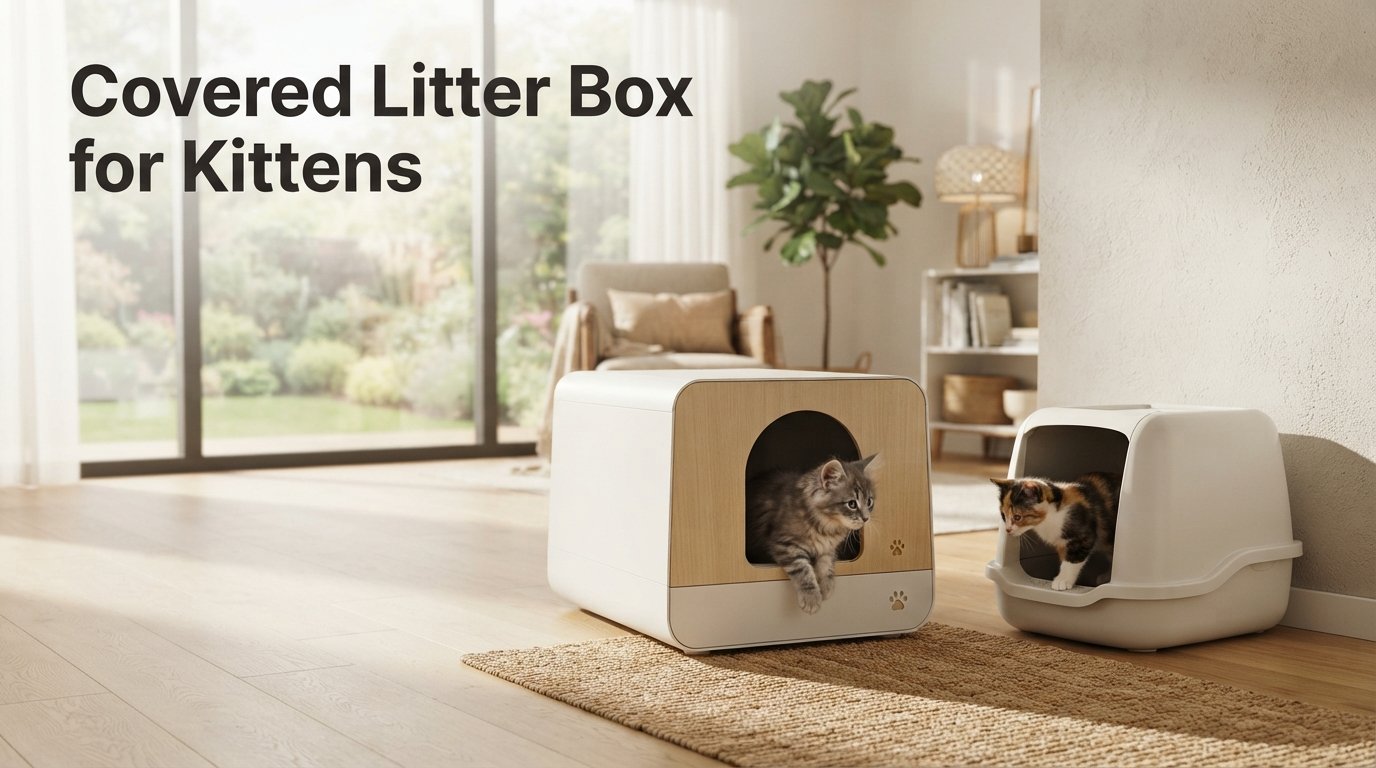
Most covered litter boxes marketed for kittens are the same box marketed for adult cats, just with a smaller sticker. That’s the real problem. A kitten at eight weeks old can’t clear a six-inch rim, and a fully enclosed hood can feel less like privacy and more like a trap when a cat hasn’t learned the space is safe yet.
In this set, Foldable Cat Litter Box, Fully Enclosed Litter offers three separate entry modes so the same box can flex from open tray to fully covered as your kitten grows. Amazon Basics No-Mess Hooded Enclosed Cat Litter goes the other direction, with a swinging door that seals in mess but assumes the cat is already confident walking through it.
That gap is the whole decision. It’s not about which box scores higher in a spreadsheet. It’s about whether your kitten is four weeks into litter training or already using an adult box without a second thought, and how much floor space you actually have to work with.
Below, we break down six covered and near-covered options, plus the sizing, litter type, and placement details that most product listings skip entirely. Get the entry height wrong and no amount of odor control will matter, because a kitten that can’t climb in won’t use the box at all.
⚡ Quick Verdict
List of Covered Litter Box For Kittens
| Image | Product | Score | Link |
|---|---|---|---|
 |
Foldable Cat Litter Box, Fully Enclosed Litter Box with Lid, 🏆 Editor’s Pick |
9.4/10 | View on Amazon Free Shipping & 30-Day Returns |
 |
FURTIME Stainless Steel Cat Litter Box, Easy-Clean High-Side 🥈 Runner-Up |
9.2/10 | View on Amazon Free Shipping & 30-Day Returns |
 |
Upgraded Fully Enclosed Cat Litter Box with Lid, Covered Cat | 8.8/10 | View on Amazon Free Shipping & 30-Day Returns |
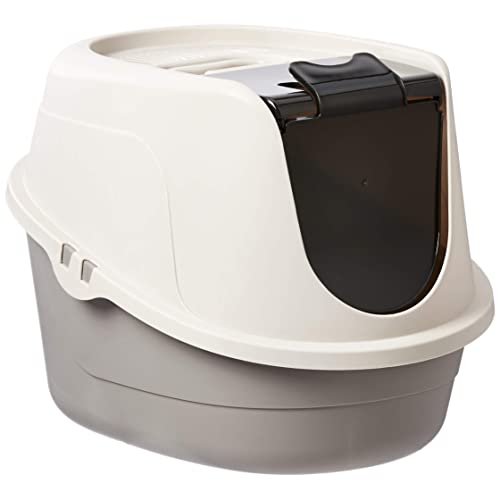 |
Amazon Basics No-Mess Hooded Enclosed Cat Litter Box with Od 🥈 Runner-Up |
8.2/10 | View on Amazon Free Shipping & 30-Day Returns |
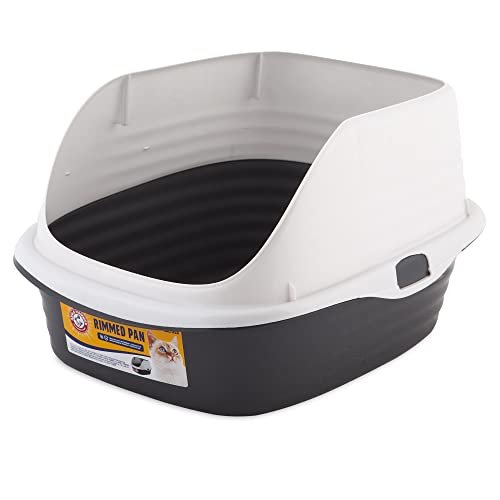 |
Arm & Hammer Rimmed Cat Litter Box with High Sides and Micro | 7.9/10 | View on Amazon Free Shipping & 30-Day Returns |
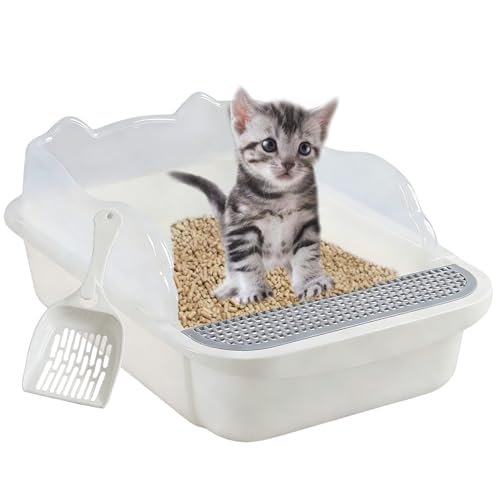 |
kathson Open Cat Litter Box with High Side,Anti-Splashing Ca 💵 Budget Pick |
7.5/10 | View on Amazon Free Shipping & 30-Day Returns |
📋 How We Evaluated
We scored each box on build quality, cleaning speed, and odor control, then weighted those against kitten-specific factors: entry height, interior floor space (not just the box dimensions on the label), and how forgiving the design is while a kitten is still learning to use it. A box that scores high for an adult cat can still be the wrong pick for a ten-week-old.
Kitten Litter Box Size and Entry Height, by Age
This is the part most buying guides skip, and it’s the part that actually decides whether your kitten uses the box or avoids it. A kitten’s ability to clear a rim changes fast between eight weeks and six months. Buy for where your kitten is now, not for where you think it’ll be in three months.
| Kitten Age | Box Length | Max Entry Height | Litter Depth | Box Style |
|---|---|---|---|---|
| 4 to 8 weeks | 12 to 14 inches | 2 to 3 inches | 1 to 1.5 inches | Open, no lid |
| 8 to 12 weeks | 14 to 16 inches | 3 to 4 inches | 1.5 to 2 inches | Open or low-sided |
| 3 to 6 months | 16 to 18 inches | 4 to 5 inches | 2 to 3 inches | High-sided or partial hood |
| 6+ months | 18+ inches (1.5x cat’s length) | Most standard heights | 3 to 4 inches | Covered, if the cat tolerates it |
Two things trip people up here. First, the number on the box’s packaging is the exterior measurement, not the usable interior space, and a curved hood or dome can eat two to four inches off the length you actually get to work with. Second, most vets and behaviorists recommend holding off on a fully enclosed box until a kitten is closer to six months old. Before that, an open or low-sided tray keeps the space visible and less intimidating, which matters more for litter training than odor control does.
[Image placeholder: side-by-side diagram comparing exterior vs. interior usable space on a covered kitten litter box]
Detailed Reviews
1
Foldable Cat Litter Box, Fully Enclosed Litter Box with Lid,🏆 Editor’s Pick
9.4/10
| Weight Capacity | 12 lbs |
| Design | Foldable |
| Entry Modes | 3 |
| Cleanup | Drawer system |
What We Found
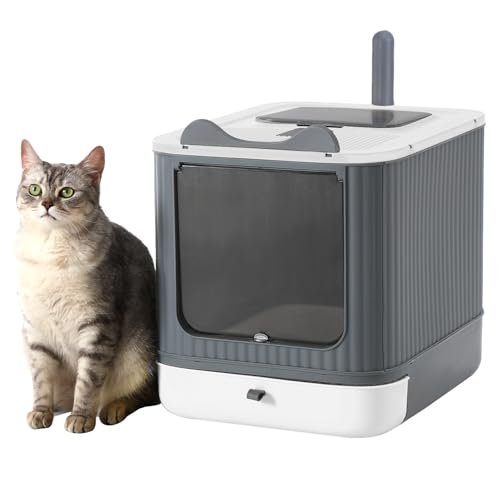
This is the box we’d point a new kitten owner to first, mostly because it doesn’t force a choice between “safe for a tiny kitten” and “actually contains the mess.” Three configurations, open, high-fence, and fully enclosed, mean you can start it flat and low, then close it up in stages as your kitten’s confidence and jumping height increase. That saves you from buying a second box in month three.
The pull-out drawer is the detail that sold us. Scooping a top-entry or fully hooded box usually means lifting the whole lid off or reaching in at an awkward angle. Here you slide the tray, scoop, slide it back. It’s a small thing until you’re doing it twice a day.
Two doors give the cat separate entry and exit paths, which cuts down on litter getting tracked back into the room. The foldable frame holds up fine under normal use, and the plain gray finish doesn’t scream “litter box” if it’s sitting in a living room or hallway. A built-in deodorizing sachet pocket handles smell between scoops, and the whole thing is rated for cats up to 12 pounds, which covers most kittens well into their first year.
💬 My Take
If you only buy one litter box for a kitten and don’t want to replace it in six months, this is the one. The modularity does real work here, it’s not just a marketing bullet point.
Who It’s For
Apartment dwellers and anyone short on space will get the most out of this one, since it folds flat when you need to store or move it. It also suits owners who’d rather buy one adaptable box than upgrade sizes every couple of months as the kitten grows.
People who travel with their cat, or who split time between two homes, will also appreciate that it packs down small enough to fit in a car trunk without disassembly.
✅ Pros
- Three usage modes grow with your kitten instead of forcing an early upgrade.
- Pull-out drawer cuts daily scooping time noticeably.
- Folds flat for storage or travel.
❌ Cons
- 12-pound weight limit means larger adult cats will outgrow it.
- Plastic hinges need reasonably gentle handling over time.
- First assembly takes more attention than a one-piece tray.
View Price on Amazon Free Shipping & 30-Day Returns Available
2
FURTIME Stainless Steel Cat Litter Box, Easy-Clean High-Side🥈 Runner-Up
9.2/10
| Material | Stainless steel |
| Dimensions | 17 x 13 x 8.4 inches |
| Cleaning | Non-stick surface |
| Accessories | Scoop and mat included |
What We Found
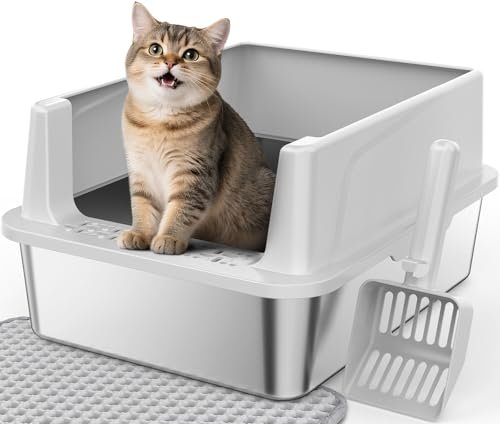
Plastic scratches. Once it does, litter odor works its way into those micro-scratches and never fully leaves, no matter how often you wash it. Stainless steel doesn’t have that problem. It’s non-porous, so there’s nothing for bacteria or smell to grip onto, and the surface here is genuinely non-stick, waste slides off with a rinse instead of needing a scrub brush.
High sides keep both urine and scattered litter inside the box, and it ships with a trapping mat plus a scoop, so you’re not buying those separately. It also comes in more than one size, which matters if you’re planning to keep the same box past kittenhood rather than replacing it at six months.
The catch is price. You’re paying more upfront than you would for plastic, and there’s no lid, so it doesn’t hide the mess the way a hooded box does. But steel boxes hold up for years, not seasons, and that changes the math if you’re not planning to replace the box every time your kitten grows.
💬 My Take
This is the box for someone who’s tired of replacing stained, smelly plastic every year. It costs more once and then you’re mostly done buying litter boxes.
Who It’s For
Owners who’ve already gone through a plastic box that started smelling no matter how often it got cleaned are the target buyer here. It’s also a reasonable pick if you want one box that carries a kitten into adulthood instead of upgrading twice.
✅ Pros
- Non-porous steel resists odor and bacteria far better than plastic.
- High sides contain leaks and litter scatter well.
- Built to last years, not one or two litter-training cycles.
❌ Cons
- Costs more upfront than any plastic option on this list.
- No lid, so it offers less visual privacy than a hooded box.
- Metal can ring or echo when a cat digs hard.
View Price on Amazon Free Shipping & 30-Day Returns Available
3
Upgraded Fully Enclosed Cat Litter Box with Lid, Covered Cat
8.8/10
| Weight Capacity | 12 lbs |
| Cleaning | Drawer system |
| Entry | Dual-mode |
| Extras | Deodorization bag |
What We Found
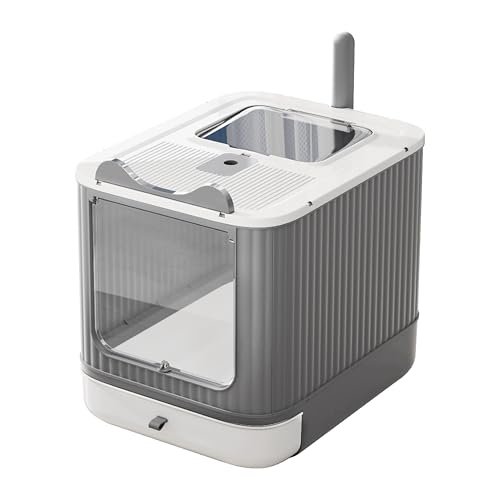
Think of this as the Editor’s Pick’s simpler sibling. It keeps the drawer-based cleanup and the fully enclosed shell, but drops down to two entry configurations instead of three. That’s less flexible, but it’s also less to fiddle with if you don’t need a box that reconfigures three different ways.
A deodorizing sachet slot adds a second layer of odor control on top of the enclosure itself, and the two door options let you set up the traffic pattern that suits your kitten’s comfort level. Assembly is straightforward, and it breaks down again just as easily if you need to move it or store it.
Same 12-pound cap as the top pick, so it’s really a kitten-through-young-adult box rather than a forever box. The plain, boxy shape doubles as a side table in a pinch, which matters if the litter box has to live in a shared space like a living room.
💬 My Take
A solid middle-of-the-road option. You give up one entry mode compared to our top pick, and you save a bit of money and setup complexity in return.
Who It’s For
Good fit for owners who want the drawer cleanup and full enclosure of the top pick without paying for a third entry mode they might not use. Works well in a small apartment where the box has to sit in a shared room.
✅ Pros
- Drawer system keeps daily scooping fast.
- Full enclosure contains scatter well.
- Plain shape blends into a living room.
❌ Cons
- 12-pound cap means it won’t fit a large adult cat.
- Plastic shell feels a bit thin under heavy digging.
- Entry knob is worth checking periodically to make sure it’s secure.
View Price on Amazon Free Shipping & 30-Day Returns Available
You may also like our Covered Self Cleaning Litter Box guide.
4
Amazon Basics No-Mess Hooded Enclosed Cat Litter Box with Od🥈 Runner-Up
8.2/10
| Dimensions | 21 x 16 x 15 inches |
| Odor Control | Carbon filter |
| Access | Swinging door |
| Material | Stain-resistant plastic |
What We Found
No drawer, no folding frame, no multiple entry modes. Just a hooded box with a built-in carbon filter and a swinging door that keeps things private and mostly contained. That’s the whole pitch, and for a lot of households, it’s enough.
The carbon filter does real work neutralizing smell before it leaves the hood, and the stain-resistant plastic wipes clean without much effort. At 21 x 16 x 15 inches, it’s on the larger side for a kitten box, so it’ll fit a young cat now and keep working well past the kitten stage.
The swinging door is the one thing to watch. Some kittens walk right through it. Others need a week or two, or the door propped open at first, before they trust it. It’s not a flaw exactly, just something to plan for if your kitten startles easily.
💬 My Take
No frills, and that’s the appeal. If your kitten is already confident walking through the door, this does the job without extra moving parts to maintain.
Who It’s For
Owners on a budget who want reliable basic odor control, and who plan to keep the box in one fixed spot rather than moving it around, will get the most value here. It’s also a reasonable next step for a kitten that’s already comfortable with enclosed spaces.
✅ Pros
- Carbon filter cuts down on odor noticeably.
- Swinging door keeps mess inside the hood.
- Stain-resistant plastic is easy to wipe down.
❌ Cons
- The swinging door can spook a nervous or very young kitten at first.
- No modular sizing or reconfigurable entry.
- Deep cleaning means lifting the full hood off, not sliding out a tray.
View Price on Amazon Free Shipping & 30-Day Returns Available
For hands-free cleaning, check our Covered Automatic Litter Box picks.
5
Arm & Hammer Rimmed Cat Litter Box with High Sides and Micro
7.9/10
| Dimensions | 18.7 x 15.5 x 10.6 inches |
| Material | Recycled plastic |
| Protection | Microban |
| Design | High-sided open top |
What We Found
Not a covered box in the strict sense, and we’re including it anyway because it’s the honest answer for a kitten that finds full enclosures frightening. High sides on three edges do most of the containment work a hood would normally do, while the open top means the kitten can always see out.
Built from recycled plastic with Microban worked into the material, it fights bacterial odor between cleanings better than an untreated plastic box would. There’s a large enough footprint here to handle clumping or crystal litter without spilling over the rim, and no hinges or moving parts means there’s nothing to eventually break.
The obvious tradeoff: an open top means visible waste and less odor trapping than any hooded box on this list. If smell containment is your top priority, this isn’t it. If your priority is a kitten that’s still nervous about enclosed spaces, it might be exactly right.
💬 My Take
A dependable bridge box. Use it while your kitten is still getting comfortable, then move to something enclosed later if you want to.
Who It’s For
Best for kittens who seem hesitant around enclosed spaces, and for owners who’d rather not deal with hinges or lids at all. It also suits anyone leaning toward a more eco-conscious material choice.
✅ Pros
- Open design feels less intimidating to a nervous kitten.
- High sides keep litter scatter under control.
- Microban-treated material resists lingering odor.
❌ Cons
- Traps far less odor than an enclosed model.
- Waste is visible from across the room.
- Needs more frequent scooping to stay on top of smell.
View Price on Amazon Free Shipping & 30-Day Returns Available
Prefer stainless steel? See our Covered Stainless Steel Litter Box guide.
6
kathson Open Cat Litter Box with High Side,Anti-Splashing Ca💵 Budget Pick
7.5/10
| Dimensions | 11 x 17 x 7 inches |
| Material | PP plastic |
| Feature | Hollow-out pedal |
| Entry | Low-profile |
What We Found
At 11 x 17 x 7 inches, this is sized for exactly one thing: a very young kitten that’s just starting litter training. The low entry point matters more than any feature on this list once you’re dealing with an eight- or nine-week-old kitten that genuinely can’t clear a four-inch rim yet.
High sides on three edges catch most scatter, the open front keeps entry easy, and a hollow-out pedal at the threshold knocks loose litter off tiny paws before they track it across the floor. It’s PP plastic, nothing fancy, but it holds up to daily use and it’s small enough to rinse in a bathroom sink instead of hauling to a tub.
Don’t expect this to last past the early kitten stage. It’s genuinely too small for an adult cat, and the open design means it does nothing for odor. Think of it as a starter box you’ll replace in a few months, not a long-term purchase.
💬 My Take
The right starter box for a brand-new kitten, and cheap enough that replacing it in a few months doesn’t sting.
Who It’s For
Best for kittens under about twelve weeks that are still working out how to use a litter box at all. Also a reasonable pick for anyone with very limited floor space who needs something small and light.
✅ Pros
- Low entry works for very young kittens.
- Built-in pedal noticeably reduces tracking.
- Lightweight and easy to rinse clean.
❌ Cons
- Too small for an adult cat to use comfortably.
- Open top means essentially no odor containment.
- Basic plastic can hold onto smell over months of use.
View Price on Amazon Free Shipping & 30-Day Returns Available
Prefer stainless steel? See our Covered Stainless Steel Litter Box guide.
Covered vs. Open Litter Boxes for Kittens: Which One Actually Wins?
Neither wins outright. It depends on the kitten and the room. Here’s the tradeoff laid out plainly, so you can decide instead of guessing.
| Factor | Covered Box | Open Box |
|---|---|---|
| Odor control | Traps smell inside the hood, especially with a filter | Smell escapes into the room faster |
| Kitten comfort | Can feel like a trap to a nervous or very young kitten | Feels safer, since the kitten can see all around it |
| Usable interior space | Smaller than the outside dimensions suggest | Interior matches the exterior measurement |
| Litter scatter | Fully contained | Needs a high rim or a mat to control |
| Monitoring for health issues | Harder to see waste without opening the lid | Easy to spot changes in stool or urine at a glance |
| Best for | Kittens 6 months and older, already confident with the box | Kittens under 6 months, or any cat new to litter training |
Most vets and behaviorists lean toward open or low-sided boxes for kittens under six months, mainly because visibility and easy escape routes matter more than odor control at that stage. A kitten that feels cornered in a hooded box may just avoid it and go elsewhere. That’s exactly why the modular boxes in this guide, the ones that start open and convert to covered later, make sense for anyone buying before their kitten is fully litter trained.
What to Look For Before Buying
Getting this right means balancing what’s comfortable for your kitten against how much daily cleanup you’re willing to do. Age and size drive most of the decision, but a few other details separate a box that gets used from one that ends up ignored in a corner.
Check Accessibility for Kittens
Young kittens can’t jump or climb the way adult cats can. Look for a low entry point, roughly two to three inches at eight weeks old, and don’t assume a “kitten” label on the box guarantees that. Measure it yourself if the listing doesn’t state entry height directly.
Match the Litter to Your Kitten’s Age
This gets skipped constantly, and it shouldn’t. Kittens under four months groom their paws after using the box, and if they’ve picked up clumping litter, that clump can swell in the digestive tract and cause a blockage. Stick with non-clumping clay or a pellet-style litter until your kitten is at least four months old, then transition to clumping litter once that risk has passed.
Get the Litter Depth Right
More litter isn’t better for a young kitten. Keep it to one to two inches under twelve weeks old, deep enough to dig and cover, shallow enough that a kitten doesn’t sink or struggle. Increase to two to three inches as digging behavior develops, and settle at three to four inches once the cat reaches adult size.
Value Material Durability
Plastic is the default and it’s fine for a starter box you’ll replace anyway. Stainless steel costs more but resists odor and scratching in a way plastic never will, which matters if you want one box to last well past the kitten stage.
Rate the Cleaning Efficiency
A box that’s a hassle to clean gets cleaned less often, and that’s when cats start avoiding it altogether. Pull-out drawers and non-stick surfaces cut real time off the daily scoop. Also check how the box disassembles for a deep clean, some hooded models require lifting the entire lid off, which gets old fast.
Verify Odor Containment
Covered boxes generally trap odor better than open pans, and a built-in carbon filter or deodorizing sachet adds another layer on top of that. If smell is your main concern, weigh it against your kitten’s comfort level with enclosed spaces, the two don’t always point the same direction.
How Many Litter Boxes Does Your Kitten Actually Need?
One, if you have one cat and a small apartment. But most vets and feline behaviorists recommend the “N+1 rule”: one litter box per cat, plus one extra. A single kitten still does better with two boxes, since some cats prefer to urinate in one and defecate in another, and having a backup matters if one box is dirty or another pet is in the way.
| Number of Cats | Recommended Boxes |
|---|---|
| 1 | 2 |
| 2 | 3 |
| 3 | 4 |
Placement matters as much as the count. Spread boxes across different rooms or floors rather than lining them up side by side, keep them away from food and water bowls, and pick quiet spots with at least one clear escape route. A kitten that feels cornered while using the box is a kitten that starts looking for somewhere else to go.
Kitten Litter Box Setup Checklist
Before you commit to a box, run through this list. It catches most of the mistakes that lead to a kitten refusing to use a brand-new box.
- Entry height is 2 to 3 inches for kittens under 8 weeks, up to 5 inches by 3 to 6 months.
- Litter is non-clumping until your kitten is at least 4 months old.
- Litter depth stays at 1 to 2 inches for kittens under 12 weeks.
- You have at least one more box than the number of cats in the house.
- Boxes sit in quiet spots with a clear escape route, not backed into a corner with only one way out.
- You’re scooping daily and doing a full wash every 2 to 4 weeks with mild soap, not scented cleaners.
- If you’re going with a covered box, you’ve confirmed your kitten is close to 6 months old and already comfortable with the space.
Related Articles
- Covered Sifting Litter Box
- Covered Corner Litter Box
- Covered Outdoor Litter Box
- Covered Litter Box Furniture
Frequently Asked Questions
When should I switch my kitten to an enclosed litter box?
Wait until your kitten is fully litter trained and confident moving around, usually somewhere around three to six months old. Switching too early, before a kitten trusts the space, can push it to avoid the box entirely.
What size litter box does a kitten need?
Start around 12 to 14 inches long for a kitten under eight weeks, then move up to 16 to 18 inches by three to six months. As a general rule, the box should be about 1.5 times your cat’s length once it reaches adult size.
Can kittens use clumping litter?
Not safely, not before four months old. Kittens groom litter off their paws, and swallowed clumping litter can clump inside the digestive tract. Use non-clumping clay or a pellet litter until your kitten is older, then switch.
How many litter boxes should I have for one kitten?
Two, even for a single cat. This follows the N+1 rule that vets and behaviorists recommend, and it gives your kitten a backup if one box is dirty or occupied by another pet.
How often should I clean the litter box?
Scoop daily. That’s non-negotiable for hygiene and odor control. Do a full wash with mild soap and water every two to four weeks, and skip scented cleaners, strong smells can be as off-putting to a cat as a dirty box.
Will a covered box make my cat feel trapped?
Some cats, yes, especially young kittens still building confidence. Most adult cats appreciate the privacy once they’re used to it. If yours seems hesitant, try removing the door or lid temporarily until it gains confidence with the space.
Are stainless steel boxes better than plastic?
For hygiene and longevity, yes. Steel is non-porous, so it doesn’t absorb odor or harbor bacteria in scratches the way plastic eventually does. You pay more upfront and get a box that lasts years instead of one or two seasons.
How do I prevent litter tracking outside the box?
Put a litter-trapping mat right at the exit to catch loose granules from your cat’s paws. Boxes with filter pedals or top-entry designs also help, though top-entry isn’t recommended for kittens since the jump height is too much for them early on.
🎯 Final Verdict
For most kitten owners, the Foldable Cat Litter Box wins because it doesn’t force a tradeoff between kitten safety and long-term function. Three entry modes and a pull-out drawer mean it fits an eight-week-old kitten today and still works when that kitten hits its first birthday.
If you’d rather buy once and never think about odor buildup again, the FURTIME stainless steel box is worth the higher price. And if your kitten is still too small or too nervous for anything enclosed, start with an open, low-sided tray like the kathson pick and upgrade once your kitten is closer to six months old.
Whichever you pick, match the litter depth and type to your kitten’s age, keep a second box available, and give the setup a few weeks before deciding it isn’t working.
View Our Top Pick on Amazon Free Shipping & 30-Day Returns Available
Explore our Covered Litter Box guide, or visit our Indoor Cat Litter Box hub for more expert picks.

Written by Mishu
A passionate cat lover and indoor living enthusiast, Mishu is the founder and voice behind Indoor Living Cat – a go-to resource for cat owners who want to create the happiest, healthiest life for their feline companions indoors.
View Full Profile