
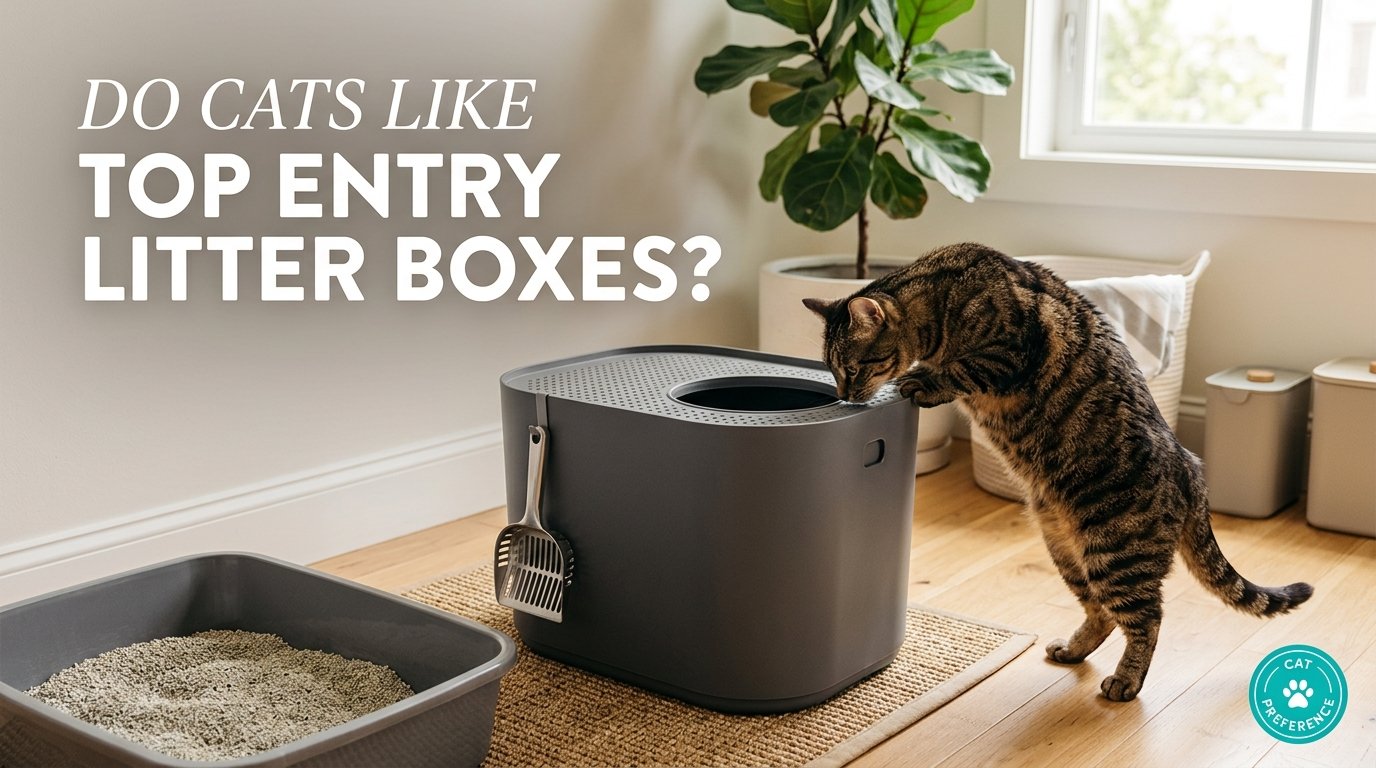
Some cats hop into a top entry litter box on day one. Others circle it for a week, then use the bathroom rug instead. So the honest answer to whether cats like top entry litter boxes is that it depends on the cat. Age, joint health, temperament, and whether another cat or a dog shares the house all change the outcome. Healthy adult cats usually adjust, especially when the old box stays put for a while, and you get a real payoff: the textured lid knocks loose litter off their paws before it reaches your floor. Seniors, young kittens, and cats with sore joints are the exceptions, and a front-entry box suits them better. Below you’ll find how to tell which group your cat belongs to, how to make the switch without a standoff, and five top entry models worth a look.
Disclosure: This post contains Amazon affiliate links. If you buy through them, we may earn a small commission at no extra cost to you.
Quick Answer
- ✓ Usually a good fit: healthy adult cats, heavy diggers, and shy cats who like a private, enclosed space
- • Often a poor fit: senior cats, cats with arthritis, very young kittens, and cats recovering from surgery
- • Best way to switch: keep the old box available, start with the lid off, and give your cat time
Do Cats Like Top Entry Litter Boxes?
Cats like litter boxes that feel safe, private, and easy to use. A top entry box delivers the first two and gambles on the third. The hooded walls and single opening give shy cats a tucked-away spot, and that privacy is the main reason some cats take to these boxes fast. The catch is the entry itself. Your cat has to jump up, drop in, and climb back out through the same hole, and some cats hate having only one exit, especially if another pet can block it.
There’s a fair counterpoint here. Many vets and behaviorists treat a big, open box as the safest default, because a cat can see around it and leave freely. That’s the reason to keep one open box available if your cat is nervous. I haven’t seen a reliable percentage for how many cats accept top entry designs, so I won’t invent one. What you can do is match the box to the cat in front of you:
| Type of cat | What usually happens | What to do |
|---|---|---|
| Healthy adult, good jumper | Adjusts, often within days to a few weeks | Transition gradually and keep the old box for a while |
| Heavy digger or kicker | Benefits most, since tall walls and the lid contain the scatter | Choose a large model with room to turn around |
| Shy or privacy-seeking cat | Often likes the enclosed feel | Place it in a quiet corner, away from appliances |
| Senior cat or cat with arthritis | Often struggles, because jumping in and climbing out strains sore joints | Use a low-entry box and ask your vet |
| Young kitten | Usually can’t manage the jump yet | Start with a low-sided open box, then move up |
| Multi-cat home | Mixed results, because one cat can block the only exit | Offer one box per cat plus one extra, including an open option |
Signs Your Cat Likes the Box
- ✓ Goes in and out without pausing at the opening
- ✓ Digs and covers waste the way they did before
- ✓ Keeps using it at their usual times of day
- ✓ No accidents on nearby floors or rugs
Signs Your Cat Doesn’t
- • Perches on the rim, hesitates, or backs away from the hole
- • Cries near the box or bolts out the second they’re done
- • Goes right next to the box, or holds it until you’re not looking
- • Avoids the room altogether
Vet note: If a cat that used the box reliably starts going elsewhere, book a vet visit before blaming the box. Urinary problems and joint pain both cause this, and a top entry design can make joint pain worse.
How a Top Entry Litter Box Works
Litter tracking and odor send most people shopping. A top entry box is a tall, enclosed tub with one hole in the lid. Your cat hops in, does their business, and climbs out across a textured lid surface that shakes stray granules back into the tray. That’s the whole mechanism, and it works at the source instead of leaving you with a broom afterward. The high walls also keep kicked litter and sprayed urine off the wall behind the box.
Top Entry vs Front Entry vs Open Box
Each design trades something. Our full breakdown of top entry vs front entry litter boxes goes deeper, but this is the short version.
| Feature | Top entry | Front entry (hooded) | Open tray |
|---|---|---|---|
| Litter tracking | Lowest, since the lid catches granules | Moderate | Highest |
| Privacy | High | High | Low |
| Ease of entry | Hardest, because it needs a jump | Easy | Easiest |
| Scooping | Lift or remove the lid | Varies by model | Easiest |
| Dog access | Harder, not impossible | Easy | Easy |
| Best for | Healthy adults and diggers | Seniors and kittens who want privacy | Cats who dislike enclosed spaces |
Best Top Entry Litter Boxes to Consider
Choosing a box comes down to three things: your cat’s size, your floor space, and how much scooping hassle you’ll tolerate. All five below are hooded, top entry designs with a lid that catches litter. They differ mostly in color, scoop storage, and extras like the Microban treatment on the Arm & Hammer.
| Model | Standout feature | Main trade-off | Best for |
|---|---|---|---|
| IRIS USA Large, Gray/White | Textured lid, raised entry | Lid comes off to scoop | Homes with a curious dog |
| IRIS USA Large, Beige | Scoop with side hook | Beige shows dirt over time | Living spaces where looks matter |
| Amazon Basics Large | Filtered lid, onboard scoop storage | Large footprint, lid needs regular cleaning | Budget-minded buyers with room to spare |
| Arm & Hammer Premium | Microban protection, recycled materials | Replace every 12 months | Odor-sensitive households |
| IRIS USA Large, Beige/White | Roomy interior, scoop with hook | Entry may be tight for very large breeds | Cats that need room to turn |
|
1
|
IRIS USA Top Entry Cat Litter Box, Hooded Privacy, Large, Gray/White |
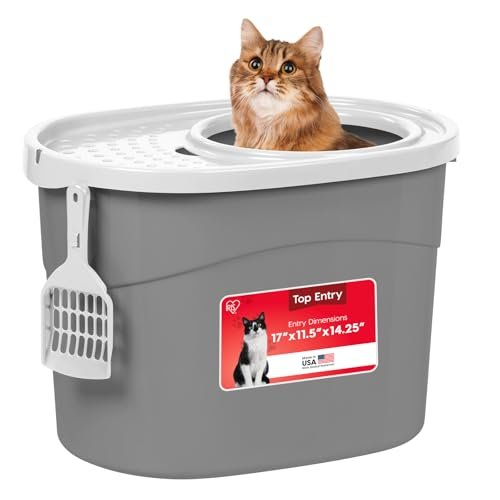
The IRIS USA Top Entry Cat Litter Box in Gray/White goes after one problem: litter on your floor. When your cat climbs out, the textured lid catches granules from their paws and drops them back into the basin. If you sweep the bathroom every day, that alone may be enough to justify it. The high walls also stop urine spray from reaching the wall, which an open tray can’t do, and the enclosure keeps most odor inside the unit. You’ll still need to scoop daily.
Dogs are the other selling point. The raised entry makes it harder for a curious dog to get at the litter, though a small or determined dog can still manage it, so don’t treat it as a lock. The compact footprint fits a laundry room or a bathroom corner, and the lid comes off quickly for scooping. Construction is durable plastic that holds up to daily use.
Best for: healthy adult cats in homes with a nosy dog.
How This Can Solve Your Problem
- ✓ Textured lid effectively captures loose litter from paws
- ✓ Enclosed high-wall design prevents spraying and contains odors
- ✓ Elevated entry point keeps curious dogs out of the litter
Important Considerations
- • Requires space for top access
- • Not suitable for elderly cats with mobility issues
- • Must remove lid to scoop
|
2
|
IRIS USA Top Entry Cat Litter Box, Hooded Privacy, Large, Beige |
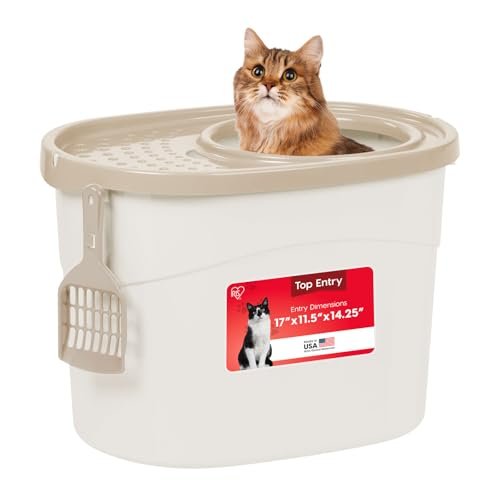
The IRIS USA Top Entry Cat Litter Box in Beige is the one to pick if the box will sit in a room people actually use. The high-walled enclosure hides waste from view and holds odors inside, and the same textured lid catches litter that would otherwise end up on carpet or hardwood. It includes a scoop that hangs on a side hook, so the tool stays with the box.
Inside, most cats have room to turn around, and the entry diameter is sized for easy access. Tall walls help with diggers and with cats that spray. The trade-off is color. Beige shows dirt over time, so plan on wiping it down, and the lid has to come off for deep cleaning.
Best for: owners who want the box to blend into a living space.
How This Can Solve Your Problem
- ✓ Aesthetically pleasing design integrates well into home decor
- ✓ Included scoop with side hook for easy storage
- ✓ High walls prevent spraying and contain litter scatter
Important Considerations
- • Beige color may show dirt over time
- • Lid must be removed for deep cleaning
- • Requires consistent scooping to keep the tray fresh
|
3
|
Amazon Basics Large Cat Litter Box with High Sides, Top Entry |
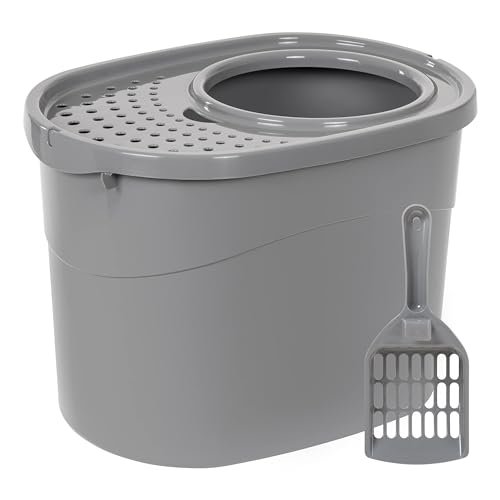
The Amazon Basics Large Cat Litter Box is the plainest option here, and that’s a compliment if you want something that just works. Cats exit across a filtered lid that traps granules before they scatter, and the high sides contain digging and spraying. It’s made from BPA-free plastic, and the scoop has a storage spot on the unit itself, so nothing goes missing.
The large size suits bigger cats and vigorous diggers, and the removable top makes it easy to check the litter level and deep clean. Two things to plan for. The filtered lid needs regular cleaning to keep working, and the large footprint can feel tight in a small bathroom.
Best for: budget-minded owners with enough floor space.
How This Can Solve Your Problem
- ✓ Filtered lid design cuts down litter tracking
- ✓ High sides contain spraying and minimize odors
- ✓ Onboard scoop storage keeps cleaning tools accessible
Important Considerations
- • Grey color may not match all decor
- • Requires regular lid cleaning to maintain filter efficiency
- • Large footprint may be tight in small spaces
|
4
|
Arm & Hammer Premium Top Entry Litter Box with Filter |
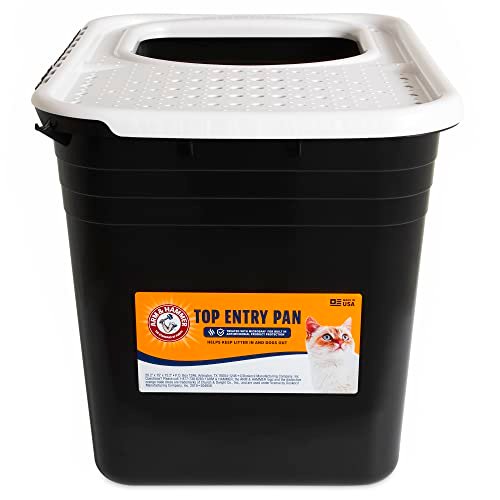
The Arm & Hammer Premium Top Entry Litter Box is the pick for households where odor is the main complaint. It has built-in Microban protection, which inhibits the growth of bacteria that cause odors. A grated lid surface catches stray particles from paws, and the wide opening leaves larger cats more room. It works with pine, crystal, and clumping litters. Keep in mind that Microban treats the plastic. It won’t replace daily scooping.
The box is made with recycled materials, and the high walls give your cat privacy while keeping kicked litter inside. It also helps keep dogs away from the litter, with the same caveat as any top entry box. The recommendation is to replace it every twelve months so the Microban protection stays effective, which is a recurring cost worth factoring in.
Best for: odor-sensitive homes and owners who use pine or crystal litter.
How This Can Solve Your Problem
- ✓ Microban protection inhibits odor-causing bacteria
- ✓ Spacious design accommodates larger cats comfortably
- ✓ Made from sustainable, recycled materials
Important Considerations
- • Replacement recommended every 12 months for hygiene
- • Larger footprint requires dedicated floor area
- • Top entry may be difficult for senior cats
|
5
|
IRIS USA Large Top Entry Cat Litter Box, Hooded Privacy, Beige/White |
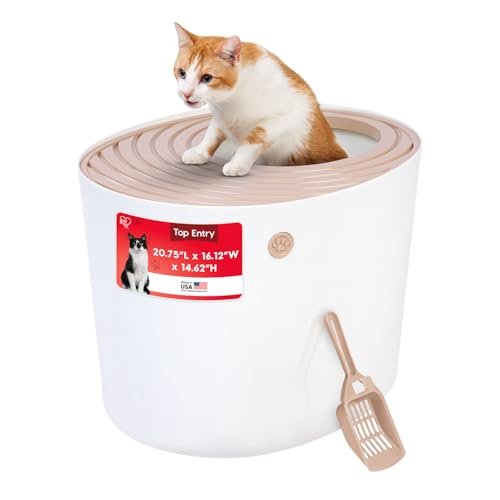
The IRIS USA Large Top Entry Cat Litter Box in Beige/White is the roomy option. Room to turn matters, because a cramped cat rushes the exit and kicks more litter out. The high walls hide waste from view, the top entry lid catches debris, and the enclosure holds odors in, which helps in a living area where you’d rather not smell the box.
It includes a scoop with a storage hook and uses durable plastic. The entry suits most cats, but it can be tight for very large breeds, so measure before you order. Plastic can hold odors if cleaning slips. If that bothers you, our guide to the stainless steel top entry litter box covers a non-plastic alternative.
Best for: mid-size to large cats that need space to turn around.
How This Can Solve Your Problem
- ✓ Sleek beige and white design suits modern homes
- ✓ Large dimensions provide ample room for cats
- ✓ Onboard scoop storage simplifies daily maintenance
Important Considerations
- • Entry size might be small for very large breeds
- • Requires lifting the lid to scoop
- • Plastic can retain odors if not cleaned regularly
How to Get Your Cat to Use a Top Entry Litter Box
Most refusals come from rushing. If your cat is used to an open box, a hooded box with a hole in the lid is a big change, so make it in stages.
- Keep the old box. Set the new one next to it. Remove the old box only after you’ve seen steady use of the new one.
- Start with the lid off. Let your cat get used to the tray first, then add the lid once they use it without fuss.
- Keep the same litter. Changing the box and the litter at once gives your cat two reasons to object.
- Pick a stable spot. A corner steadies the box when your cat jumps on it with force. Skip spots next to a washer or dryer, because a machine spinning up mid-visit can spook a cat off the box for good.
- Help a hesitant cat up. A low, sturdy step beside the box gives a nervous cat a way in. Place a treat near the box, not inside it.
- Know when to back off. If your cat avoids the box for more than a few days, or has accidents, go back to the open box. Some cats just won’t take to a top entry design, and that’s fine.
How to Solve Top Entry Litter Box Tracking Effectively
When litter granules keep showing up on your hardwood, your cat needs a more controlled exit. A top entry box makes them cross a textured lid that acts as a filter, so debris gets caught before it hits the floor. A few habits make that lid work harder:
- ✓ Positioning: Place the box in a corner so it stays stable when your cat lands on it.
- ✓ Litter choice: Heavier, low-dust litters such as pellets or large-grain crystals cling to paws less. Switch gradually, because cats notice a sudden change.
- ✓ Lid maintenance: Wipe the textured surface regularly. Once dust clogs the grooves, the lid stops catching litter.
- ✓ Depth check: Keep the litter about two to three inches deep. Deeper litter gets kicked out more when your cat leaves through the top hole.
- ✓ Daily scooping: A dirty box makes cats jump out fast, and a fast exit knocks more litter loose.
Key Factors in Choosing the Right Solution
Picking the right box means weighing your cat’s body against your floor plan. You’ll also need to decide whether odor containment or easy cleaning matters more, since the two pull in different directions.
Cat Size and Mobility
The interior has to let your cat turn around completely. A common vet guideline is a box about 1.5 times your cat’s length, measured from nose to the base of the tail. Check that your cat can also clear the entry hole while standing, without feeling trapped. If your cat is older or has mobility issues, a top entry box may be too hard to navigate.
Space Constraints
Measure the spot in your laundry room or bathroom. Top entry boxes have a smaller footprint than many front-entry models, but they need vertical clearance. Leave enough headroom for your cat to jump in and out without bumping a shelf or a low-hanging fixture.
Cleaning Frequency
Be honest about how often you’ll scoop. Removable lids make deep cleaning easier, but you’ll lift that lid every time. If you want a faster routine, look for a lightweight lid and a simple design with no assembly. And if scooping is the part you dread most, a self-cleaning unit may suit you better, which is what our roundup of the best smart litter box for cats covers.
Multiple Cats or Pets
The usual rule is one box per cat plus one extra. In a multi-cat home, a single opening lets one cat corner another, so include at least one open box in the mix. A raised entry does slow most dogs, but a small or determined one can still get in.
Buying Checklist
- ☐ My cat is a healthy adult who jumps onto furniture without trouble
- ☐ I measured my cat, and the interior is about 1.5 times their length
- ☐ I measured the floor space and the headroom above the box
- ☐ I’m keeping the old box for the transition
- ☐ I’m willing to lift the lid to scoop every day
Top Entry Litter Box Prevention Tips
Preventing litter scatter takes habits that match your hardware. A good box paired with steady upkeep keeps the litter where it belongs and cuts the daily effort.
- Scoop daily. A clean box encourages your cat to take their time, which helps them use the textured lid properly.
- Add a litter mat. Put a mat under the box as a backup for whatever slips past the lid.
- Control odor gently. A light sprinkle of unscented baking soda works between deep cleans. Skip heavily perfumed products, which many cats dislike.
- Deep clean every two weeks. Wash the box with mild, unscented soap so it doesn’t overwhelm your cat’s sensitive nose.
- Replace worn boxes. Deep scratches in old plastic hold odor that washing won’t remove.
- Watch their habits. If your cat stops using the top entry, they may be struggling with the height or the lid texture.
Common Mistakes When Solving Top Entry Litter Box Issues
Most owners struggle because they overlook how the switch feels to the cat. Forcing the change too quickly is the classic error, and a few smaller ones pile on top of it.
- • Choosing a box that’s too small. A cramped cat may avoid the box or rush out and track more litter. Prioritize interior space over a compact exterior.
- • Ignoring the lid. The textured surface only works while the grooves are clear. Let dust build up and the box loses its ability to filter particles from paws.
- • Ignoring entry height. A top entry box can aggravate joint pain in a senior cat. Assess your cat’s physical health before switching, and ask your vet if you’re unsure.
- • Removing the old box too soon. Pulling it on day one leaves a hesitant cat with nowhere else to go.
- • Choosing a noisy location. The laundry room is convenient, but a washer starting up mid-visit can scare a cat away from the box.
- • Using harsh cleaners. Cats have extremely sensitive noses, and strong scents can put them off the box entirely. Stick to mild, unscented cleaners.
Quick Summary
- The IRIS USA Top Entry Box in Gray/White has a textured lid that captures litter, cutting tracking while giving your cat a private, dog-resistant space.
Get this Solution - This beige IRIS USA model includes a scoop with a side hook and keeps odors hidden, which suits a room people actually use.
Get this Solution - Amazon Basics offers a durable, budget-friendly box with a filtered lid and high sides, and plenty of room for larger cats.
Get this Solution - Arm & Hammer adds Microban protection against odor-causing bacteria, and the top entry design keeps litter inside and most dogs away.
Get this Solution - This large IRIS USA box in Beige/White pairs a roomy interior with a scoop hook, so bigger cats can turn around while your floors stay clean.
Get this Solution
Frequently Asked Questions
Do cats like top entry litter boxes?
Many healthy adult cats do, especially shy cats and heavy diggers who value privacy. Seniors, young kittens, and cats with joint pain often struggle with the jump, so they’re better served by a front-entry or low-sided box.
Do cats prefer covered or uncovered litter boxes?
It varies by cat. Owners tend to prefer covered boxes, while some cats prefer open ones because they can see around them and leave easily. If you’re unsure, set up one of each and see which your cat uses.
How long does it take a cat to get used to a top entry litter box?
Some cats switch in a day or two, and others take a few weeks. Keep the old box available and start with the lid off to speed things up.
Are top entry litter boxes bad for older cats?
They can be. Climbing in and out means jumping and landing, which strains arthritic joints. If your senior cat hesitates or starts going outside the box, switch to a low-entry design and talk to your vet.
Can kittens use a top entry litter box?
Very young kittens usually can’t manage the jump. Start with a low-sided open box and move to top entry once they jump onto furniture reliably.
How do I solve the litter tracking issue?
Switch to a top entry litter box with a textured lid, which catches litter on the way out. Pair it with a heavier litter and a mat, and wipe the lid so the grooves stay clear.
What causes litter tracking?
Granules stick to a cat’s paws after digging and fall off as the cat walks away. Fine, lightweight litter and an overfilled box make it worse.
Which solution is best for litter tracking?
For most homes, a top entry box with a textured lid is the strongest fix, since it catches litter at the exit. A high-sided front-entry box with a large mat can work for cats that can’t manage the jump.
How long does it take to fix litter tracking?
You should see less litter outside the box as soon as your cat uses the lid to exit. Getting a cat to accept a new box can take a day or two to a few weeks, so the timeline depends mostly on the cat.
Will a top entry litter box stop my cat from spraying?
It contains the mess because the walls are high, but it doesn’t stop the behavior. Spraying often points to stress or a medical issue, so a vet visit is the next step if it continues.
Do top entry litter boxes keep dogs out?
The raised entry makes access harder for most dogs. Small or determined dogs can still get in, so treat it as a deterrent, not a lock.
Do top entry litter boxes smell worse?
Enclosed boxes trap odors inside, so the smell hits you when you lift the lid. Daily scooping and a regular deep clean keep it manageable.
Do I still need a litter mat with a top entry box?
Yes. The lid catches much of the litter, but a mat picks up what slips past.
Is it worth investing in top entry litter box solutions?
For healthy adult cats, usually yes, because you’ll spend less time sweeping and the enclosure keeps waste out of sight. If your cat is a senior or has joint problems, it’s a poor fit and worth skipping.

Written by Mishu
A passionate cat lover and indoor living enthusiast, Mishu is the founder and voice behind Indoor Living Cat – a go-to resource for cat owners who want to create the happiest, healthiest life for their feline companions indoors.
View Full Profile