
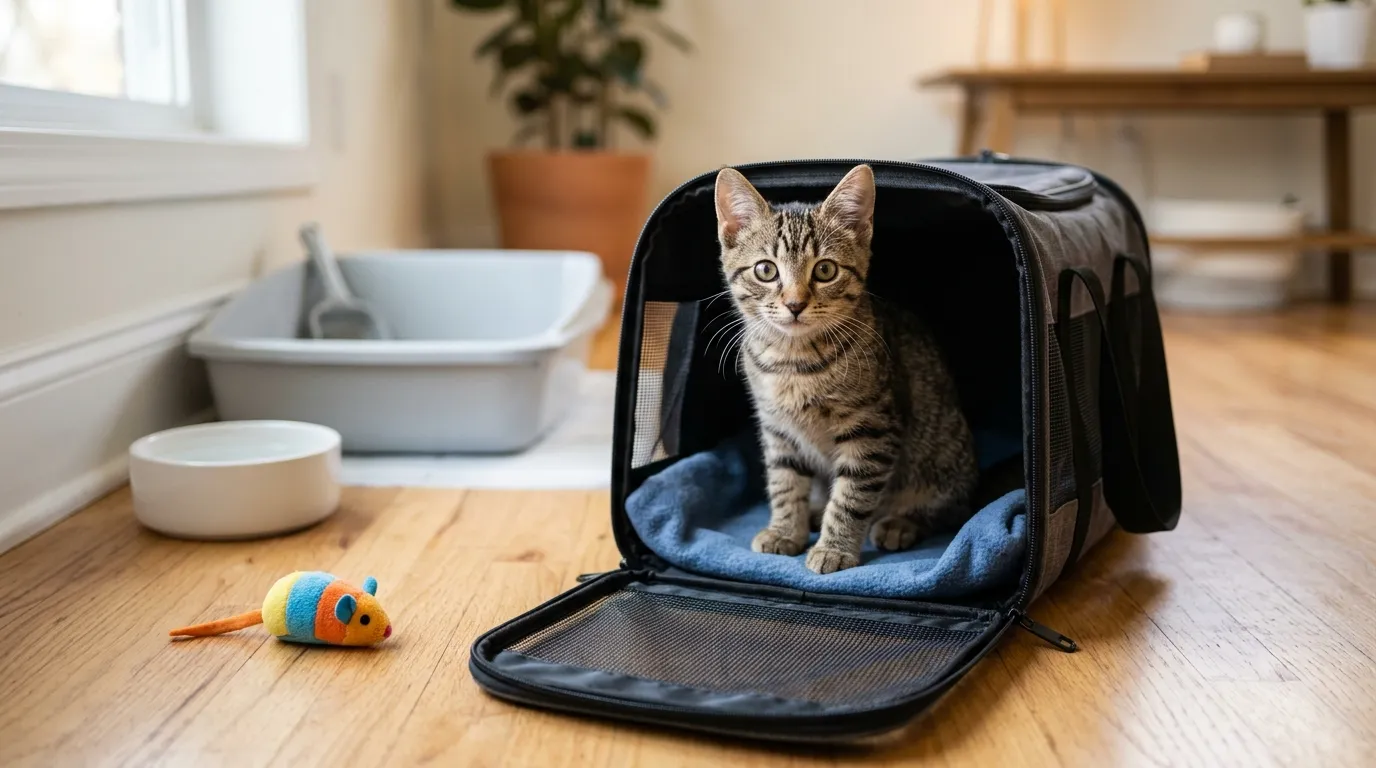
Getting a new indoor cat is one of the most exciting things you can do and one of the easiest to get wrong in the first two weeks if no one tells you the things that actually matter.
Bringing home a new indoor cat means setting up a safe, enriched, appropriately resourced environment and introducing the cat to its new home gradually so it builds confidence rather than anxiety. Cats that are given too much space too fast, or too little enrichment, or the wrong litter setup in the wrong location develop behavioral habits in the first 30 days that take months to undo.
My own first apartment cat taught me this the hard way. I gave her free run of the whole apartment on day one because I felt sorry confining her to a small room. She hid under the bed for six days and used the floor beside the litter box instead of the box itself. A properly set up safe room from the start would have prevented both problems entirely.
This guide covers everything a new indoor cat owner needs: the supplies checklist, safe room setup, the critical first week, litter training, feeding, enrichment, introducing your cat to other pets and the mistakes that derail new cat owners most often. Every section connects to a deeper resource for the specific topic you need most right now.
Confine your new indoor cat to one small safe room for the first 7 to 14 days before gradually expanding access to the rest of the home. The safe room needs a litter box, food and water in separate locations, a hiding spot and a scratching surface. Schedule a vet visit within 7 to 14 days of bringing your cat home. Start daily play from day one to build confidence and bonding.
New Indoor Cat Supplies Checklist: Everything to Buy Before Day One
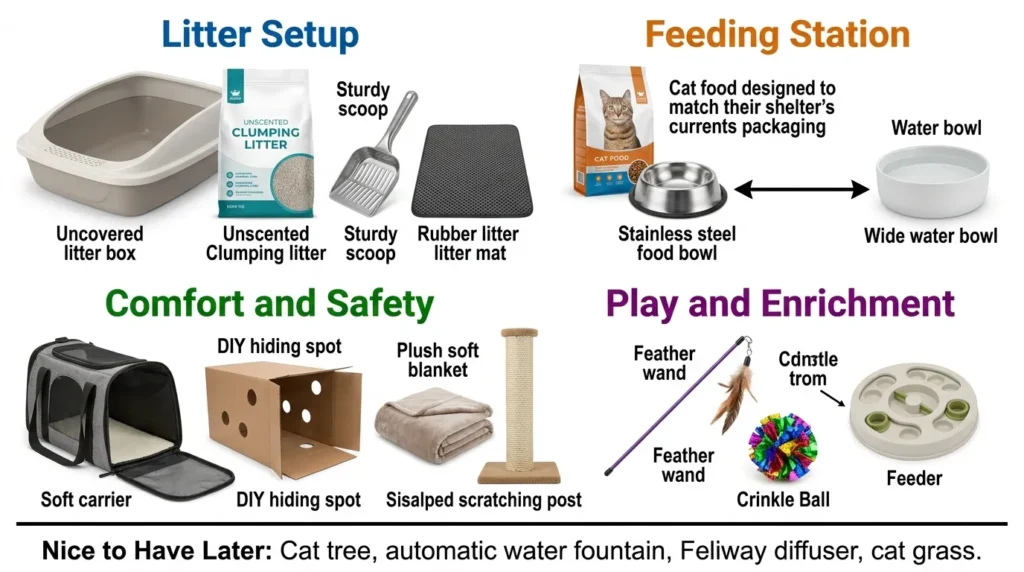
The supplies you buy before your new indoor cat comes home determine how smoothly the first week goes. The most common new cat owner mistake is buying too many non-essential items and missing a few critical ones. Here is what actually matters, separated by priority:
Must-Have Before Day One:
- Litter box: large, uncovered, low-sided entry. At minimum one box. Two is better for a single-cat home.
- Unscented clumping litter: 2 to 3 inches depth. Never scented. Scented litter deters use in new cats.
- Metal litter scoop and litter mat: scoop beside the box, mat outside the exit.
- Food and water bowls: stainless steel or ceramic, not plastic. Two separate bowls in separate locations.
- Food matching what the cat was eating at the shelter or previous home: switching food immediately causes digestive upset.
- Carrier: left open in the safe room as an additional hiding and resting spot.
- Hiding spot: a cardboard box on its side with two holes cut in it, lined with a soft towel. Free and perfect.
- Scratching surface: one tall sisal post or flat cardboard scratcher placed near the hiding spot.
- Wand toy: the single most important enrichment item for a new cat. Play from day one.
Buy Later Once Your Cat Is Settled:
- Cat tree or wall shelves for vertical territory.
- Automatic water fountain for improved hydration.
- Feliway pheromone diffuser if your cat shows high stress.
- Puzzle feeders for enrichment once eating normally.
| Owner’s Tip
The cardboard box hiding spot is not a placeholder for a cat cave you are going to buy later. Many cats prefer it permanently. I still have an open cardboard box in the corner of my apartment that has been used every day for three years. It costs nothing. Rotate it every few weeks when it gets worn and the cat re-investigates it as if it is brand new. Start with a box and buy the fancy cat cave later if you feel like it. |
Setting Up the Safe Room for Your New Indoor Cat
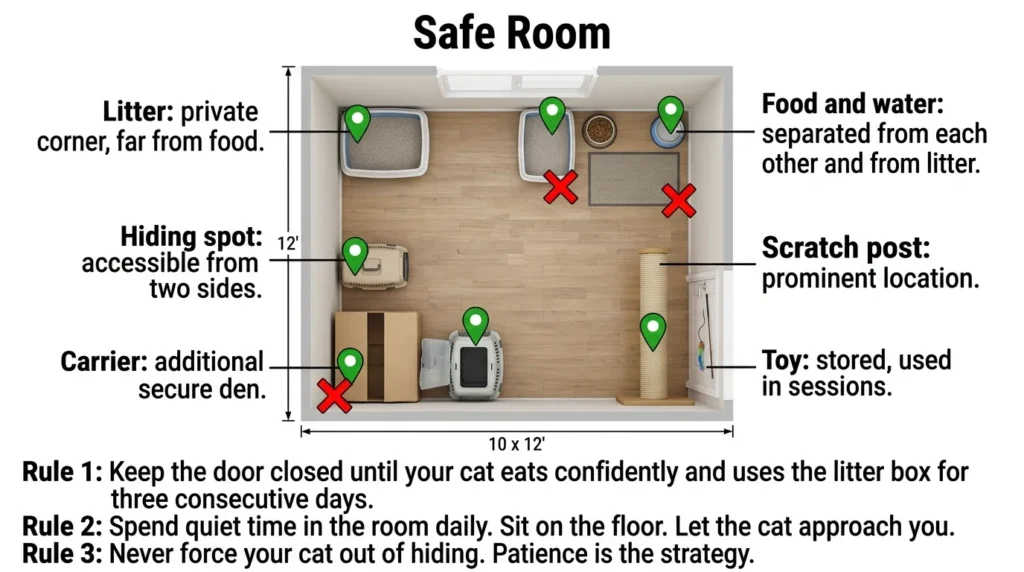
The safe room is the single most important setup decision for a new indoor cat and the one most first-time owners skip because it feels like unnecessary restriction. It is the opposite. A cat released into a full apartment immediately is a stressed cat with too much unmapped territory to feel secure in any of it. A cat given one room to fully map and claim settles in days rather than weeks.
Knowing how to introduce new cat to home correctly always starts with the safe room. Choose a small quiet room with a closable door. A spare bedroom, home office or large bathroom all work. Avoid the kitchen, the laundry room or any high-traffic noisy area.
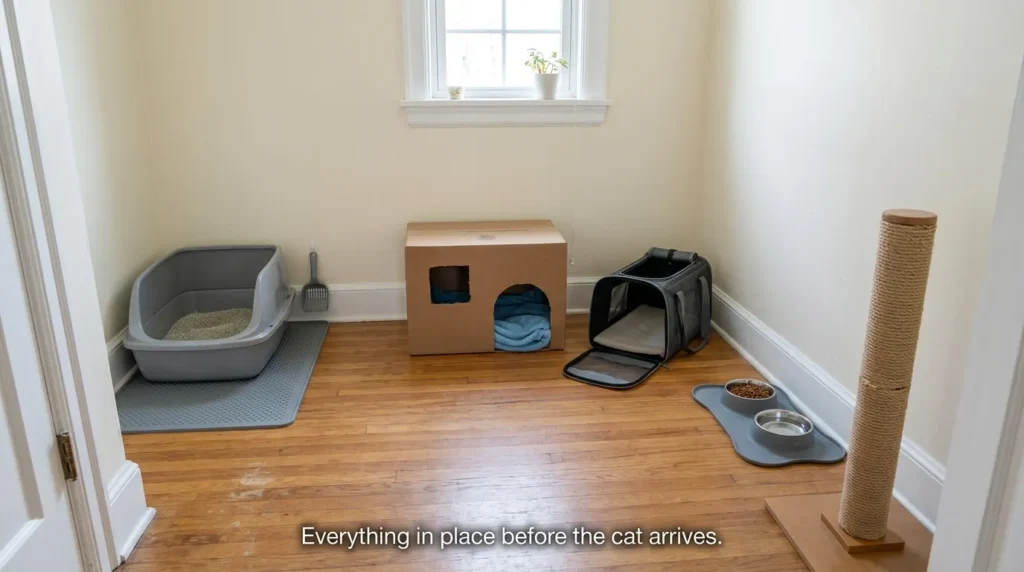 The layout rule that matters most in the safe room is physical separation of the litter area from the food and water area. Cats have a hardwired instinct to keep elimination separate from feeding. Place the litter box in the farthest possible corner from the food bowls. In a small room, even four to six feet of separation is significantly better than placing them near each other.
Keep your new cat in the safe room for 7 to 14 days minimum. Kittens often settle in 5 to 7 days. Adult cats from shelters or with previous outdoor experience may need three to four weeks. The signal to expand access is not time: it is confidence. A cat that exits the hiding spot voluntarily, approaches you without prompting, eats and drinks normally and uses the litter box consistently is ready for the next room.
The First 7 Days With a New Indoor Cat: What to Expect
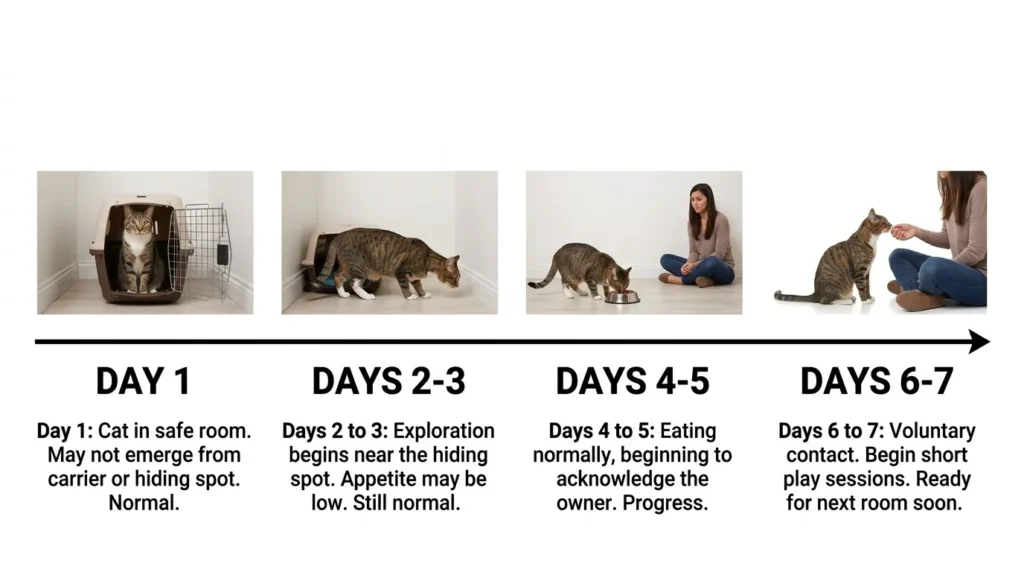
Knowing first week with new cat what to expect prevents the anxiety that makes new owners intervene too early. The first three days of silence, hiding and minimal eating are not a sign that something is wrong. They are the normal cat response to a completely new environment, new smells, new sounds and the stress of transport.
The adjustment timeline for most new indoor cats follows a predictable pattern:
- Day 1: Cat may not leave the carrier or hiding spot at all. May not eat. Keep the room quiet and exit after a short visit. This is fine.
- Days 2 to 3: Cat begins cautious exploration near the hiding spot. Appetite starts returning. Short visits from you with quiet voice and no direct approach.
- Days 4 to 5: Cat eats and drinks normally. Begins acknowledging your presence. Introduce a short wand toy session on the floor near the cat.
- Days 6 to 7: Voluntary contact initiated by the cat. May approach to sniff your hand or sit near you. Begin tentative wand toy play.
- Week 2: Confident eating, consistent litter use and voluntary owner contact are the signals to slowly expand access to one additional room.
Knowing how long for new cat to adjust to home depends on the individual cat’s background. A kitten from a socialized litter may settle in 3 to 5 days. An adult cat from a shelter, especially one with any outdoor history, typically needs 2 to 3 weeks before it genuinely relaxes. Do not measure adjustment by the calendar. Measure it by the behavioral markers above.
| Owner’s Tip
The hardest part of the first week is resisting the urge to handle the cat before it invites contact. Every new owner wants to pick up their cat and reassure it. This has the opposite effect of what is intended. A cat that is picked up before it trusts you associates your hands with loss of control. A cat that approaches you voluntarily on day five does so because you gave it the space to feel safe first. Sit on the floor. Read out loud in a calm voice. Let the cat make the first move. |
Litter Box Setup and Training for a New Indoor Cat
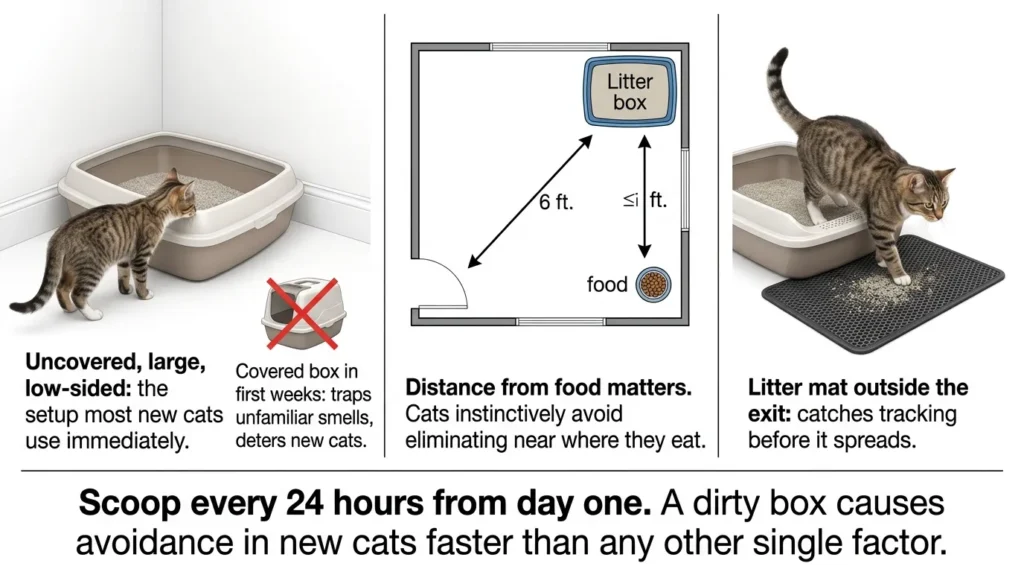
Most new cats arrive already litter trained. The litter box issues that appear in the first weeks are almost always caused by the setup rather than the cat’s behavior. Wrong location, wrong size, wrong type or an inconsistently scooped box will cause a properly trained cat to eliminate outside the box within the first week.
The setup that prevents litter problems in new indoor cats:
- Use a large uncovered low-sided box. Low sides allow easy entry for any cat, including stressed cats and kittens.
- Fill with 2 to 3 inches of unscented clumping litter. Do not switch to a different litter in the first weeks. Introduce any change gradually.
- Place the box in the farthest quiet corner from the food and water. If you have a two-room safe room configuration use two corners.
- Scoop every 24 hours from day one. A new cat testing an unfamiliar box will reject it if it is already used.
- Do not move the box once the cat has used it. Moving the litter box while a cat is still mapping its new territory causes avoidance accidents.
If your new cat eliminates outside the box in the first days, clean it completely with an enzymatic cleaner and review the setup before assuming the cat has a problem. In 90 percent of first-week litter issues the setup is the cause.
Feeding Your New Indoor Cat: What to Give and How to Set It Up?
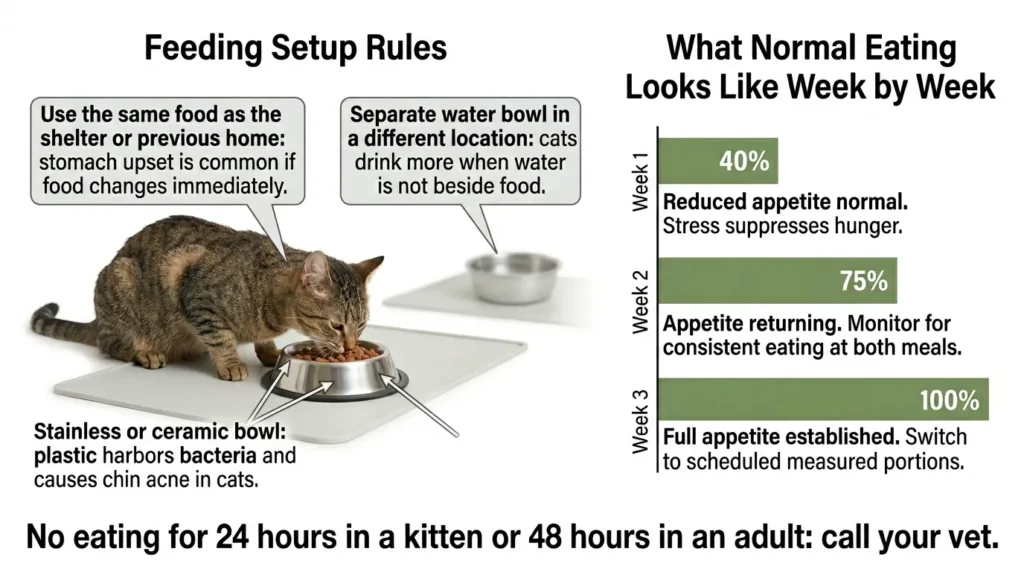
New indoor cat feeding in the first two weeks requires two specific decisions: use the exact food the cat was eating at the shelter and set up the feeding station with food and water in physically separate locations.
Switching food immediately creates digestive upset on top of adjustment stress. Get the brand name from the shelter before you take the cat home. Use that food for at least two to three weeks before any gradual transition to a different food. When you do transition, mix 25 percent new food with 75 percent old food and shift gradually over 7 to 10 days.
Knowing new kitten not eating what to do starts with knowing what is normal. Reduced appetite in the first 24 to 48 hours is expected and not a cause for intervention. A kitten that has not eaten anything for 24 hours or an adult cat that has not eaten for 48 hours in an otherwise otherwise normal-seeming state warrants a vet call. Kittens are particularly vulnerable to low blood sugar from missed meals, so the timeline is shorter for them than for adults.
Water setup rule: always place the water bowl in a different location from the food bowl. Cats instinctively avoid drinking near where they eat. Placing them together consistently reduces water intake which contributes to urinary tract problems over time.
Enrichment and Bonding With Your New Indoor Cat
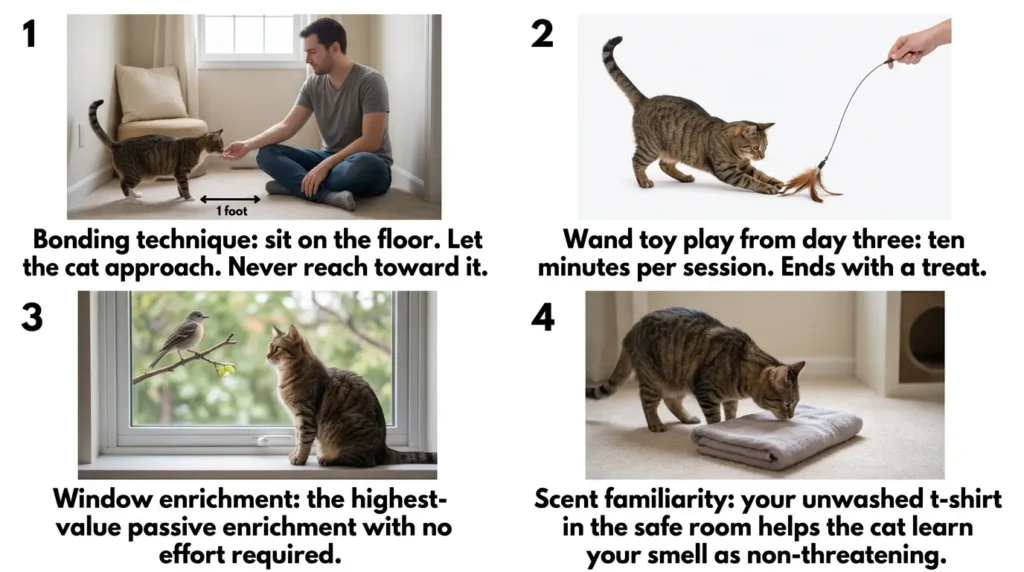
Knowing how to bond with new cat requires understanding that bonding happens on the cat’s schedule not yours. The most effective bonding technique is consistent calm presence in the cat’s safe room without reaching toward the cat, forcing interaction or picking it up before it trusts you.
Sit on the floor in the safe room every day for short visits. Speak in a calm low voice. Read aloud. Do not stare directly at the cat: a slow blink directed at the cat, then looking away, is the feline equivalent of a smile. Most cats begin approaching voluntarily within three to five days of this approach.
Start wand toy play from day three even if the cat only watches without engaging. The movement of the toy activates the predatory instinct and starts building the association between you and positive stimulation. Keep sessions to ten minutes maximum and end with a small treat placed on the floor near the cat without reaching toward it.
The window in the safe room is one of your best bonding tools. A window with a bird feeder or outdoor movement visible provides passive enrichment that keeps the cat stimulated and gives you a chance to sit quietly beside it at the window without the pressure of direct interaction. Many of the best bonding moments happen side by side at a window.
Introducing Your New Indoor Cat to Resident Pets and Family Members
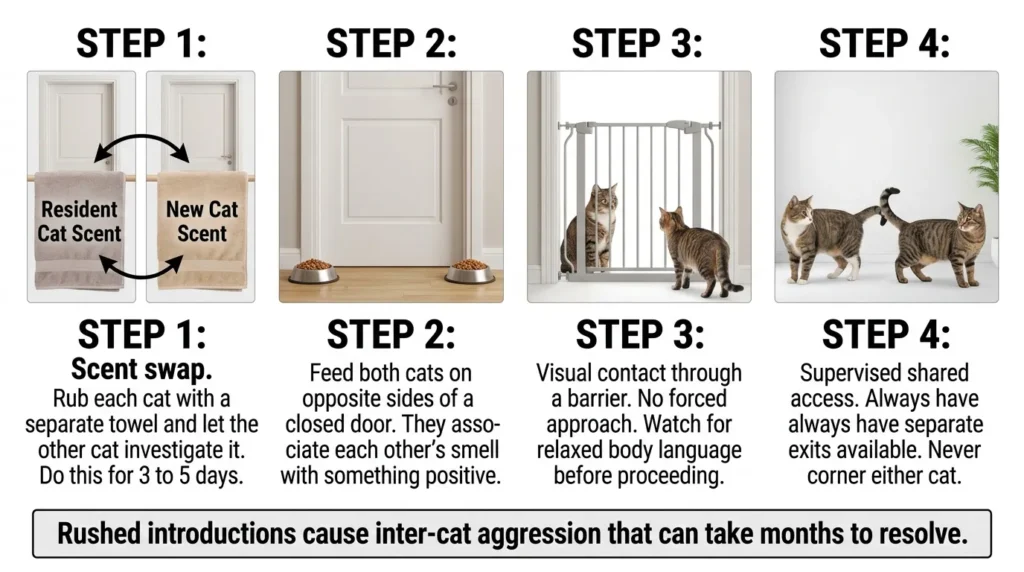
Introducing your new indoor cat to resident pets requires patience and structure that most new owners underestimate. A rushed introduction between a new cat and a resident cat is the most common cause of persistent inter-cat aggression in apartments, where limited space means the cats cannot avoid each other after a bad first encounter.
The scent-first introduction protocol that works reliably:
- Days 1 to 5: scent swap only. Rub a towel on the new cat and place it in the resident cat’s area. Rub a different towel on the resident cat and place it in the safe room. Let each cat investigate the other’s scent at their own pace.
- Days 5 to 10: feed both cats on opposite sides of a closed door simultaneously. This creates a positive association between the other cat’s presence and something good.
- Days 10 to 14: introduce a baby gate or cracked door with visual contact. Let them see each other without physical access. Watch for relaxed versus tense body language.
- Week 3 onward: supervised shared room time with both cats having separate exit routes. Never force proximity or block escape.
For introductions to children: teach children before the cat arrives that the cat decides when contact happens. Children who chase or grab new cats create lasting fear associations. The rule is: child sits on the floor and waits. Cat approaches if it chooses.
For introductions to dogs: use the same scent-first protocol. Keep the dog on a leash for initial visual introductions. The cat must always have a dog-free zone it can access instantly. A tall cat tree works as the cat’s high escape point.
Everything We Cover on Bringing Home a New Indoor Cat: Your Full Resource Library

Find the one that matches your most immediate situation and start there.
New Cat Owner Checklist: Exactly What to Buy Before Day One
This article goes further than a simple shopping list. It explains why each item matters, which products to avoid, what to skip in the first month and how to prioritize purchases if your budget is limited. It is organized into must-have before arrival, nice-to-have for week two and worth considering later categories.
Get the complete prioritized list in our guide to new cat owner checklist what to buy.
How Long Does It Take a New Cat to Adjust to a New Home?
The timeline question every new cat owner asks and the answer is more specific than most sources provide. This article covers the adjustment stages by week, the specific behavioral markers that signal readiness to expand access and what to do when a cat takes significantly longer than average to settle.
Find your answer in our article on how long for new cat to adjust to home.
How to Bond With a New Cat: What Actually Works
Bonding with a new cat requires a counterintuitive approach that most first-time owners do not know about: less direct pursuit, more patient presence. This article provides a specific day-by-day bonding technique for shy and confident cats alike and explains the body language signals that tell you the relationship is progressing.
Build your bond using our guide on how to bond with new cat.
My New Kitten Is Not Eating: When to Worry and What to Do
Reduced appetite in the first 48 hours is expected. Beyond that it requires attention. This article distinguishes normal adjustment appetite suppression from the signs that require a vet call and provides the specific feeding interventions that encourage reluctant new kittens to eat, including the role of warming food and hand-feeding.
Get the full guide in our article on new kitten not eating what to do.
My New Cat Is Hiding All Day: Is This Normal?
Hiding is the normal stress response of a cat in an unfamiliar environment and it almost always resolves naturally with the right approach. This article explains how long hiding is acceptable, the specific interventions that help a hiding cat come out faster and the signs that distinguish normal hiding from hiding driven by injury or illness.
Learn what is normal in our article on new cat hiding all day is this normal.
How to Introduce a New Cat to Your Home the Right Way
The step-by-step room introduction protocol that reduces stress and prevents litter box avoidance, furniture destruction and long-term hiding. This article provides the complete safe room to full access expansion sequence with specific day-by-day instructions and the behavioral readiness markers to watch for before each expansion.
Follow the complete protocol in our guide on how to introduce new cat to home.
First Week With a New Cat: A Day-by-Day Guide
The first seven days set the behavioral foundation for everything that follows. This article provides a specific daily schedule for the first week, explains what normal versus concerning behavior looks like at each stage and gives you the exact interventions that keep the adjustment on track when something does not go as expected.
Get the complete daily guide in our article on first week with new cat what to expect.
How to Kitten Proof an Apartment Before Your Kitten Comes Home
Kittens explore everything with their mouths and have no concept of height or danger. This article provides a room-by-room kitten proofing checklist with specific product recommendations for cord covers, window stops, cabinet locks and toxic plant identification. It is written for renters who cannot make permanent modifications.
Complete your safety prep with our guide on how to kitten proof apartment.
Should I Get One Cat or Two for My Apartment?
The decision between one and two cats has a different answer depending on your lifestyle, your apartment size and whether you are adopting a kitten or an adult. This article examines the companionship benefits and the resource and management requirements of two cats in a small space with honest guidance on which situation genuinely benefits from a second cat.
Make the right decision with our guide on should I get one cat or two for apartment.
First Time Cat Owner Mistakes: What Not to Do
The most common first-time cat owner mistakes are specific and predictable and almost every new owner makes at least two of them. This article names them directly: giving too much space too fast, switching food immediately, using hands as play toys, skipping the vet in the first week and misreading hiding as rejection rather than adjustment.
Avoid the most costly mistakes with our article on first time cat owner mistakes to avoid.
| Owner’s Tip
Every article linked above was written specifically for apartment and small-home cat owners navigating situations where space and resource management matter more than in a large house. IndoorLivingCat.com covers the full new cat owner experience from day zero through the first months with guidance that accounts for the specific constraints of small-space living. The one thing I wish someone had told me before my first cat came home: the awkward quiet first few days are not a sign that your cat dislikes you. They are a sign that your cat is doing exactly what it should be doing. The cats that take the longest to come out of hiding in week one are often the most trusting and affectionate by week four. Let the process work. |
The Most Common New Indoor Cat Owner Mistakes
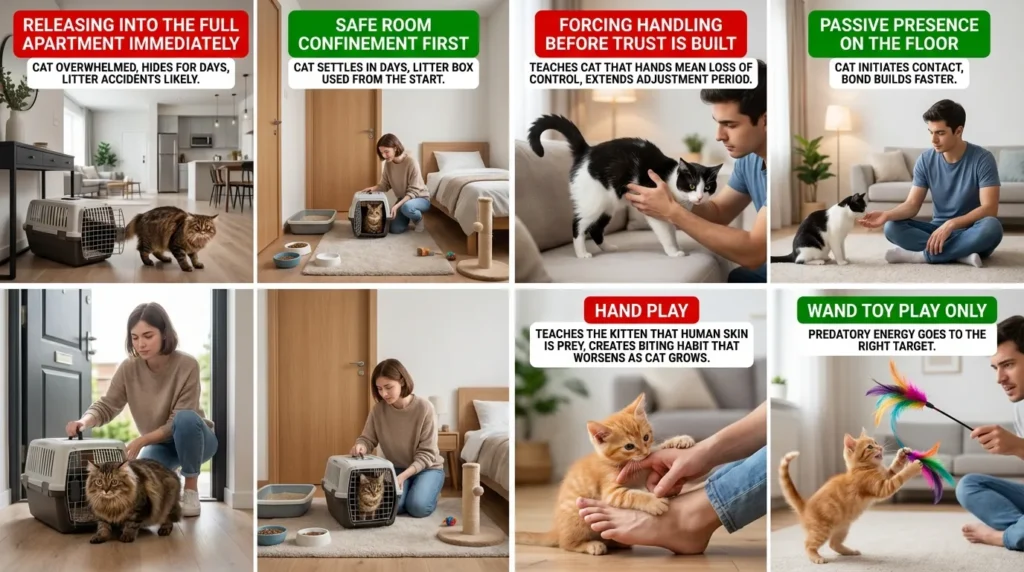
The most common new indoor cat owner mistake is giving the cat free run of the entire home on day one because confinement to a single room feels unkind. This is the mistake that generates almost all of the first-week problems: litter avoidance accidents, extended hiding and difficulty bonding. A cat released into an unmapped space is a stressed cat. A cat given one room to fully claim is a settling cat.
The second most common mistake is switching food immediately. New owners buy premium food they have researched and switch the cat over on arrival day. The combination of adjustment stress and a new food causes digestive upset that compounds the stress further. Get the exact food name from the shelter and buy it before pickup day.
The third mistake is scheduling the vet visit too late. Many new owners wait until something seems wrong to book the first vet appointment. The first vet visit should happen within 7 to 14 days of bringing the cat home for a health baseline, parasite check, vaccination review and spay/neuter discussion. This visit also establishes a relationship with a vet before you need one urgently. According to the American Veterinary Medical Association, early establishment of veterinary care is one of the most important factors in long-term pet health outcomes.
Frequently Asked Questions About Bringing Home a New Indoor Cat
How long should I keep my new cat in the safe room?
Keep your new cat in the safe room until it consistently eats and drinks normally, uses the litter box without incident and voluntarily approaches you without retreating. For most cats this is 7 to 14 days. Kittens from socialized litters may settle in 5 to 7 days. Adult cats with shelter history or any outdoor experience may need 2 to 4 weeks. Do not measure by days. Measure by behavioral readiness.
My new cat is hiding all day and won’t come out. What should I do?
Nothing immediately. Hiding in a new environment is the normal feline response to unfamiliarity. Continue short quiet visits to the safe room without approaching the hiding spot. Place a used t-shirt of yours near the hiding spot. Do not reach into the hiding area or pull the cat out. As long as the cat is eating and using the litter box, hiding is an adjustment behavior not a health concern. A cat that is not eating or showing other symptoms alongside hiding warrants a vet call.
My new cat is not eating. How long is normal?
Reduced appetite for 24 to 48 hours is normal in adult cats adjusting to a new environment. Kittens have less tolerance and should be eating within 24 hours of arrival. Warm the food slightly to increase palatability. Try offering a small amount of the exact food from the shelter if you have already switched. If a kitten has not eaten in 24 hours or an adult has not eaten in 48 hours, call your vet. This is informational only. Always consult your vet for guidance specific to your cat.
How long does it take a new cat to trust you?
Most cats show the first signs of voluntary trust, approaching without retreating, within 3 to 7 days of a patient low-pressure approach. Full confident bonding typically develops over 2 to 6 weeks depending on the cat’s prior socialization and shelter history. The fastest way to build trust is to let the cat dictate every interaction in the early days. Sit on the floor, speak calmly, let the cat make the first contact every time.
How do I know when my new cat has fully settled in?
The behavioral signs of a fully settled new indoor cat are: eating and drinking normally and predictably at every meal, using the litter box consistently with no accidents, grooming itself regularly and fully including the head and tail, engaging in play with you or with toys independently, sleeping in exposed locations rather than only in the hiding spot and initiating physical contact without retreating. Most cats reach this stage between 3 to 8 weeks after arrival.
When should I take my new cat to the vet for the first time?
Within 7 to 14 days of bringing your cat home. This first visit establishes a health baseline, verifies vaccination status, checks for parasites the shelter may have missed and gives you the opportunity to ask questions about your specific cat’s needs. Do not wait until the cat seems unwell. Early establishment of veterinary care makes every subsequent health situation easier to manage. This article is for informational purposes only. Always follow your vet’s specific recommendations.
Conclusion
Bringing home a new indoor cat successfully comes down to three things done before the cat arrives: setting up the safe room with litter, food, water, hiding spot and scratching surface all in separate locations, buying the same food the cat was eating previously and booking the first vet visit for within the first two weeks.
If you are preparing right now, begin with the safe room. It is the single decision that determines the quality of the first week. Our article on first time cat owner mistakes to avoid gives you the complete list of what not to do in those critical first days so you avoid the errors that create lasting problems.
Every other first-cat topic is covered in the resource library above. Start with the article that matches your most immediate situation and build from there.
A new indoor cat should be confined to one safe room for 7 to 14 days before gradual access to the rest of the home. The safe room needs a large uncovered litter box, food and water in separate locations away from the litter box, a hiding spot and a scratching surface. Use the same food as the shelter for the first 2 to 3 weeks. Schedule a vet visit within 7 to 14 days. Begin wand toy play from day 3. Reduced appetite and hiding are normal in the first 48 to 72 hours. Introduce resident pets through scent swapping before any visual contact.