
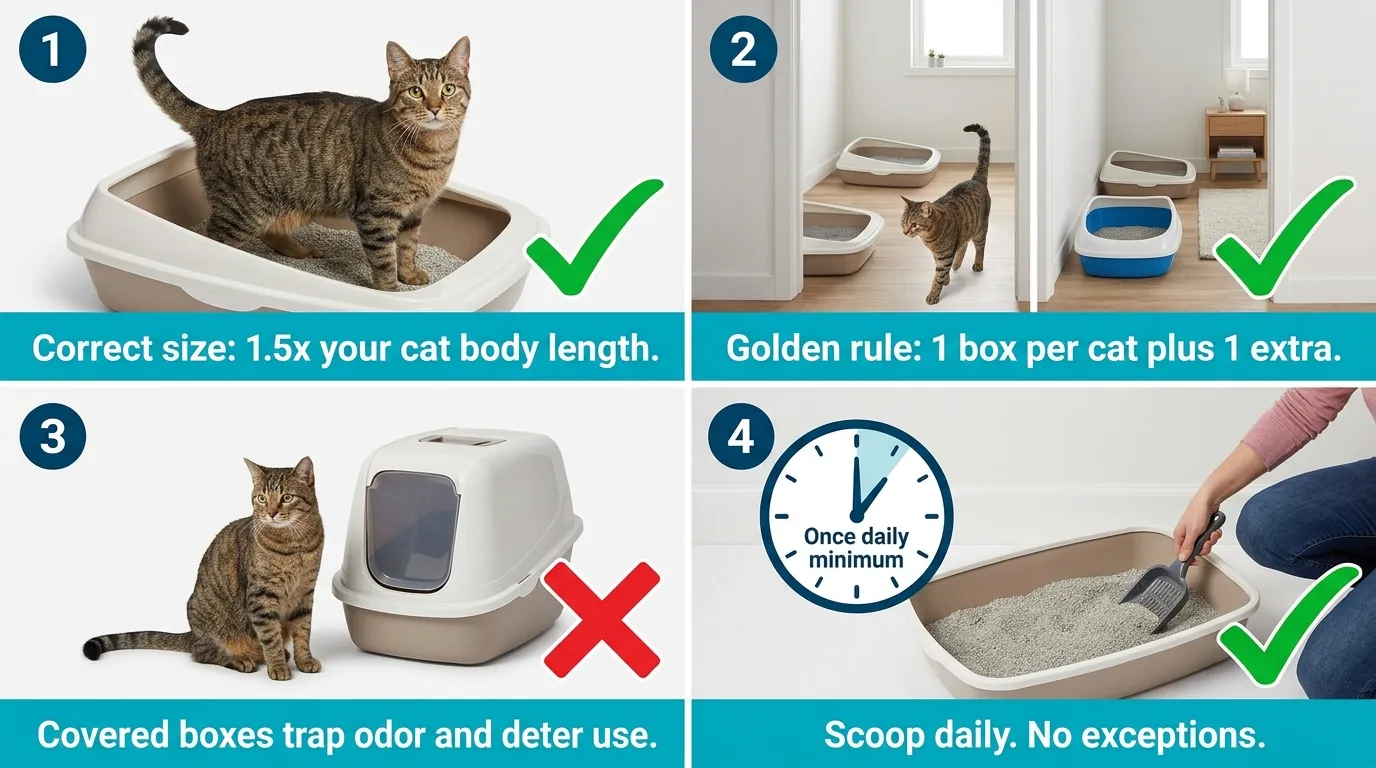
Getting the litter box setup wrong is the fastest way to end up with a cat using your laundry pile as a bathroom. Most litter box problems are not behavior problems at all — they are setup problems that the owner did not know to solve.
An indoor cat litter box is not just a container filled with sand. It is your cat’s private bathroom and the way you set it up directly determines whether your cat uses it consistently. According to the American Society for the Prevention of Cruelty to Animals, litter box avoidance is one of the most common behavioral complaints from cat owners and in the majority of cases it is caused by a box that is too small, too dirty or in the wrong location.
The first time I moved one of my cat’s litter boxes from the bathroom corner to a quieter spot along a wall in the hallway, she started using it every single time. Same box, same litter, completely different result just from changing the location.
This guide covers every decision that matters for indoor cat litter box setup: how many boxes you need, what type works best, where to place them, how to keep them clean and how to solve the most common problems. Each section connects to a dedicated deep-dive article so you can go as far as you need on any topic.
The indoor cat litter box rule is one box per cat plus one extra, each large enough for your cat to turn around fully inside. Use unscented clumping litter at 2 to 3 inches deep. Scoop daily and do a full litter change weekly. Place boxes in quiet low-traffic locations and never next to your cat’s food or water.
How Many Litter Boxes Does an Indoor Cat Actually Need?
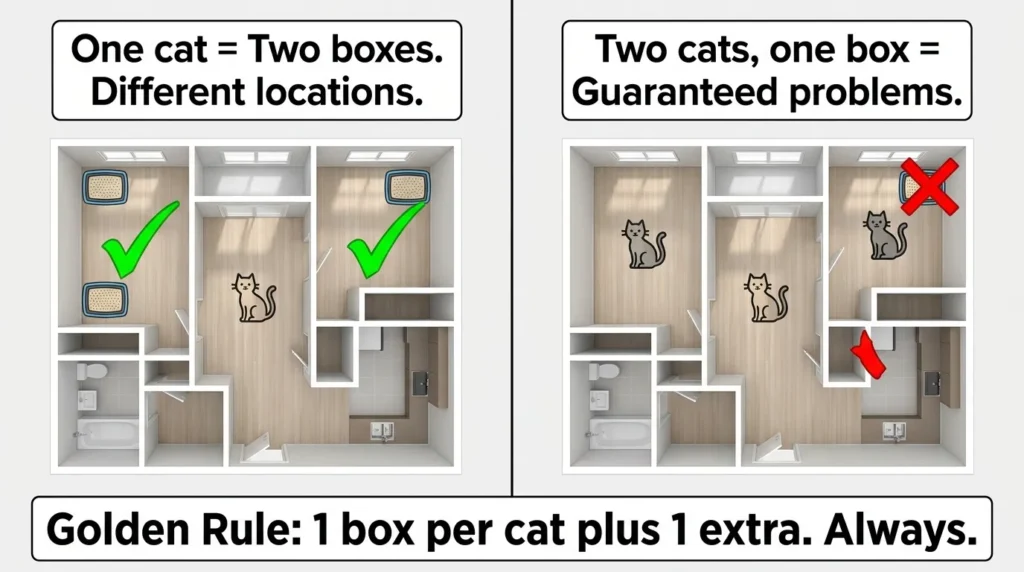
The rule is one litter box per cat plus one extra. One cat needs two boxes. Two cats need three. This is not a suggestion from overly cautious vets. It is the single most effective way to prevent elimination problems in a multi-cat or single-cat household.
The reason behind the rule is territorial. Cats are private animals and many refuse to share a box, especially if another cat has just used it. A second box gives each cat a backup option and eliminates the most common cause of going outside the box entirely.
In a multi-level home place at least one box on each floor. A cat with arthritis or a kitten building confidence will not always travel between floors to find the box in time. Placement distribution matters as much as total quantity.
The full breakdown of what drives this rule and how to adapt it for small apartments is covered in our deep-dive on how many litter boxes for one cat.
Indoor Cat Litter Box Types: Which One Your Cat Will Actually Use?
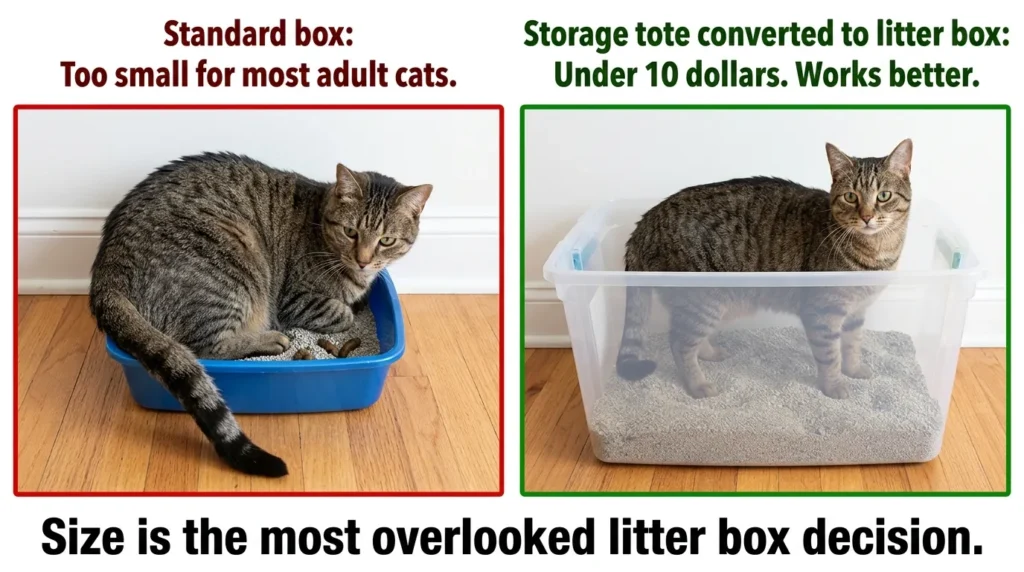
The type of indoor cat litter box you choose matters far less than its size. Most commercially sold litter boxes are too small for an adult cat. The box needs to be at least 1.5 times the length of your cat from nose to tail base large enough to stand, turn and dig without touching the sides.
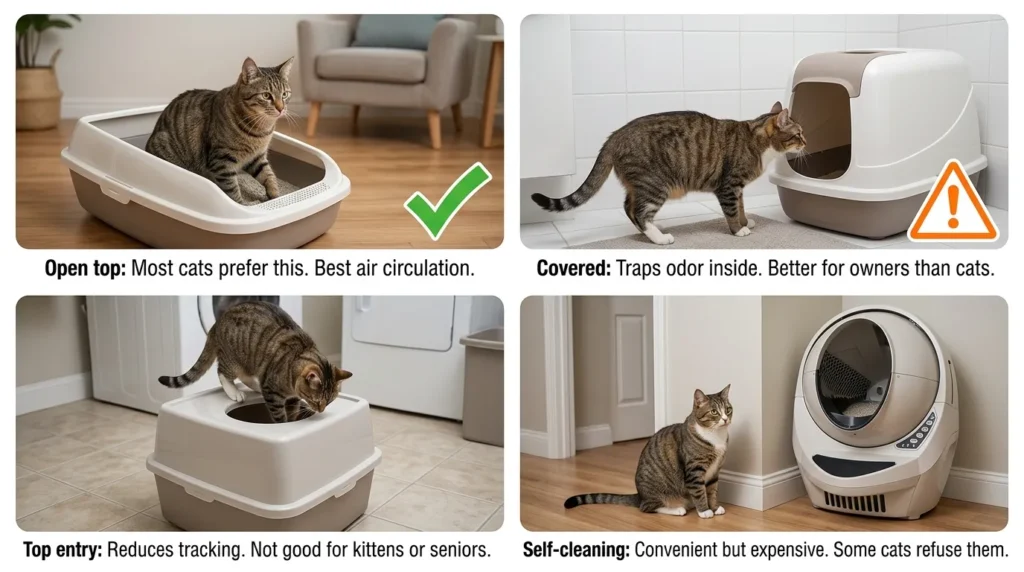
Open-top boxes are the default choice for most cats. They offer the best air circulation and the widest field of view while using the box which reduces anxiety. Most cats prefer them over covered options regardless of what the packaging implies.
Covered boxes trap odor inside, which is the opposite of what you want. The scent builds up faster inside a hooded box than in an open one and many cats refuse to enter a box that smells heavily of previous use. If you are using a covered box and experiencing avoidance this is the first thing to change.
Self-cleaning litter boxes are convenient but not universally accepted by cats. The motor noise and movement can frighten cats away from the box entirely, especially timid animals. Test any automatic box with a manual backup box nearby for the first two weeks before removing the original.
The full breakdown of every litter box type with specific product recommendations and the honest limitations of each is in our guide to top entry vs front entry litter box and how to choose between them.
| INSIGHT
If you want an inexpensive XL litter box that outperforms most premium options on the market, buy a large clear storage tote from any hardware store. Cut one low entry on the short side with scissors or a box cutter. The box costs under ten dollars and is bigger than almost anything sold specifically as a cat litter box. I have used this setup for years and my cat has never looked back. |
Choosing the Right Cat Litter: What Indoor Cats Actually Prefer?

Most cats prefer fine-grain unscented clumping litter. This is not a generalization. It is backed by preference studies and confirmed by almost every animal welfare organization that has tested litter types with cats. When in doubt this is what you start with.
Fill the box to a depth of 2 to 3 inches. Less than that and cats feel like they cannot dig and cover properly. More than that and some cats avoid the deep litter entirely. Two to three inches is the sweet spot for clumping performance and cat comfort.
Scented litters are made for owners not cats. The artificial fragrance that smells pleasant to you is often overwhelming to a cat whose sense of smell is 14 times stronger than yours. If your cat is avoiding the box and you are using scented litter switch to unscented this week and see what changes.
The right litter depth and how it affects your cat’s digging comfort is explained in full in our guide to how deep should cat litter be.
Where to Put the Litter Box in a Small Apartment?
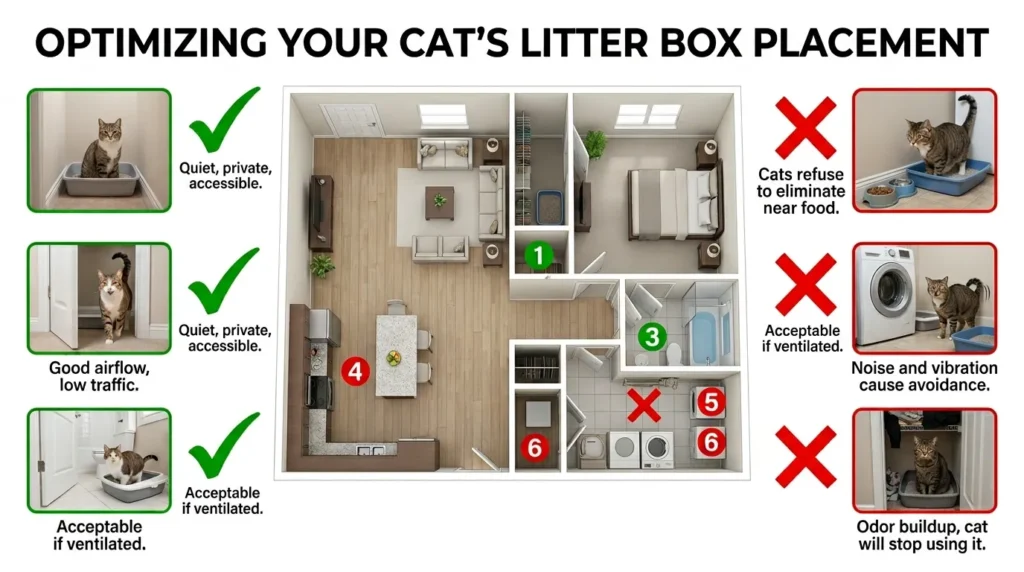
Litter box placement determines whether your cat uses the box consistently or starts finding alternatives. Cats need privacy, quiet and an easy exit. A box shoved in a corner with only one escape route feels like a trap to a cat that senses a threat while inside.
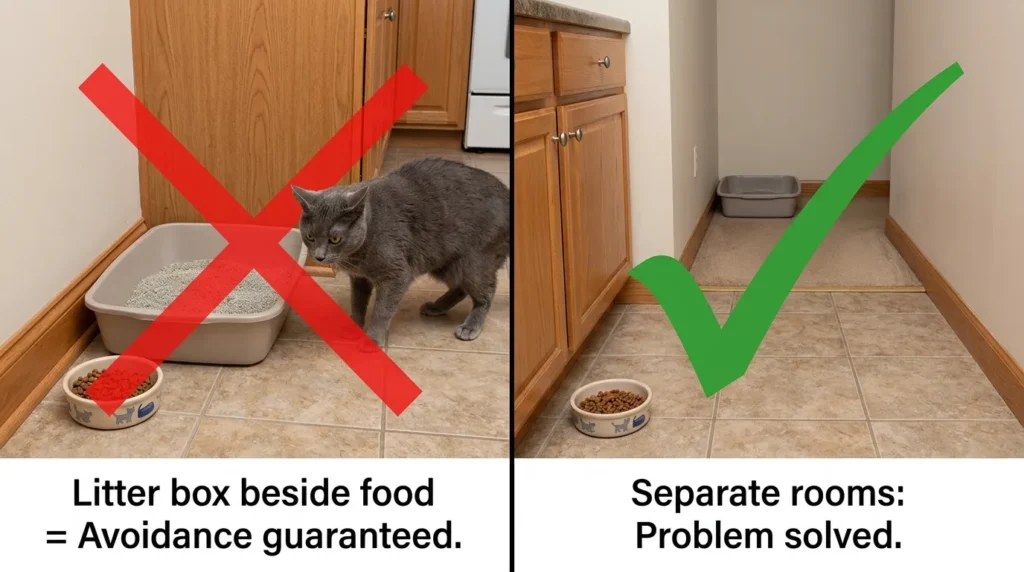
Never place a litter box next to your cat’s food or water bowls. Cats are instinctively averse to eliminating near their food source. This is not a training issue and it does not go away over time. Separate these locations completely.
In a small apartment the bathroom is a reasonable location if the door can stay propped open at all times. A cat should never be locked out of its litter box. Laundry rooms are problematic because the noise and vibration from machines can startle a cat mid-use and teach it to associate the box with fear.
The full placement guide for small apartments and studio units, including specific ideas for hiding the box without blocking access, is in our article on where to put litter box in small apartment.
How to Clean a Litter Box Properly and How Often?
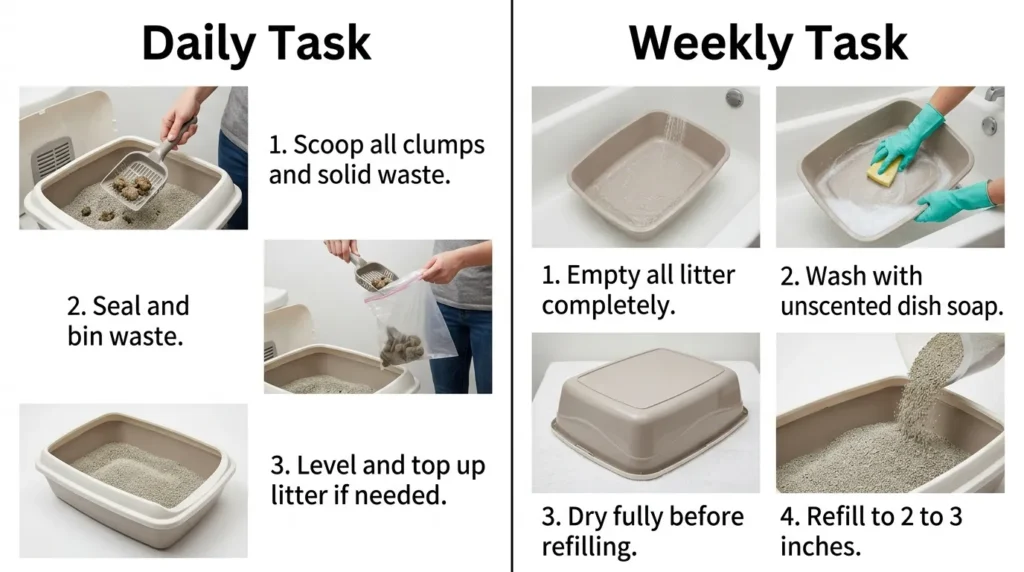
Scoop the litter box once a day at minimum. Cats have a sense of smell roughly 14 times stronger than ours and a dirty box smells far worse to them than it does to you. A cat that stops using a box that it previously used consistently is almost always responding to cleanliness first and location second.
Do a full litter change and box wash once a week. Empty all the litter, wash the box with unscented mild dish soap and warm water, dry it completely and refill to 2 to 3 inches. Avoid bleach and heavily scented cleaners as the residual smell deters most cats.
The plastic in litter boxes absorbs urine odor over time regardless of how well you clean them. Replace the box itself every 12 to 18 months. A box that smells like old urine even after washing will cause avoidance behavior in even the most cooperative cats.
The step-by-step process for eliminating litter box odor without chemical sprays is covered in our guides to how to clean litter box without smell and why does litter box smell after cleaning.
| INSIGHT
The single most common cause of litter box odor that persists after cleaning is the box itself. Plastic scratches over time and those micro-scratches hold bacteria that no amount of soap removes. If your box is more than a year old and still smells after a thorough wash it is time to replace the box not add more deodorizer. A new ten-dollar plastic tote solves the problem permanently. |
How to Stop Cat Litter Tracking Through Your Apartment?
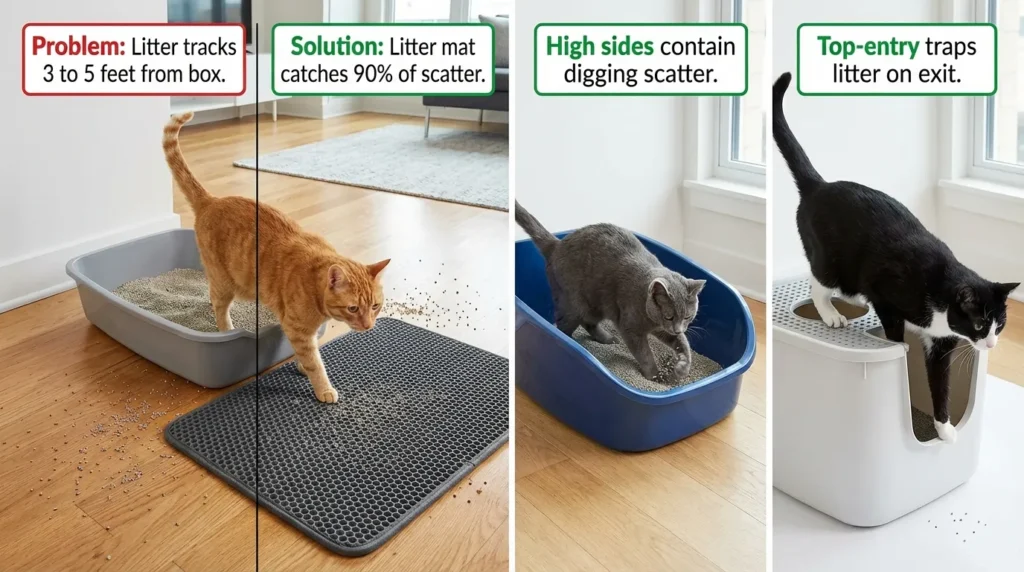
Litter tracking is one of the most common complaints from apartment cat owners and it is almost entirely solvable with two decisions: a litter mat placed directly in front of the box and a high-sided or top-entry box for cats that dig aggressively.
A quality litter mat catches the litter that sticks to your cat’s paws before it spreads across the floor. Look for a mat with deep grooves or a double-layer design that traps granules rather than just pushing them around. Place it so your cat must walk across it to exit the box. This single addition reduces litter scatter by the majority for most owners.
Switching to a lower-tracking litter type also helps. Larger pellet or crystal litters track significantly less than fine-grain clay because the granules are too heavy to stick to paws effectively. The trade-off is that some cats reject pellet textures initially so introduce the change gradually.
The full set of tracking solutions including the specific mat types that work best and how to train cats to accept top-entry boxes is in our guide to how to stop cat litter tracking.
Can You Put a Litter Box in the Bedroom? The Honest Answer
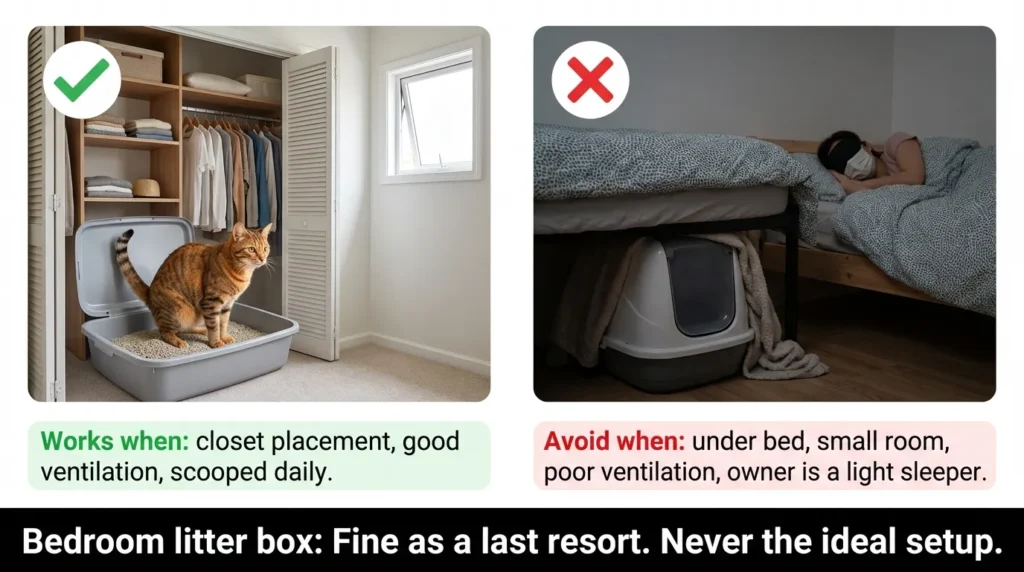
A litter box in the bedroom is not ideal but it is better than no accessible box at all. If your apartment has only one room or you have a senior cat that needs a nearby option overnight, placing a box in the bedroom is a legitimate solution when done correctly.
The two problems with bedroom placement are odor and sleep disruption. Odor is manageable if you scoop every single day without exception and place the box in a closet with ventilation rather than exposed in the room. Sleep disruption is harder to control because cats are most active at dawn and dusk and a litter box visit at 4am will wake most people.
Never place the box under the bed. The confined space concentrates odor and makes the box harder to clean thoroughly. A corner position with at least one open side and access to airflow is the minimum for bedroom placement.
The full decision guide including apartment-specific bedroom placement strategies is in our article on can you put litter box in bedroom.
Everything We Cover on Indoor Cat Litter Boxes: Your Full Resource Library
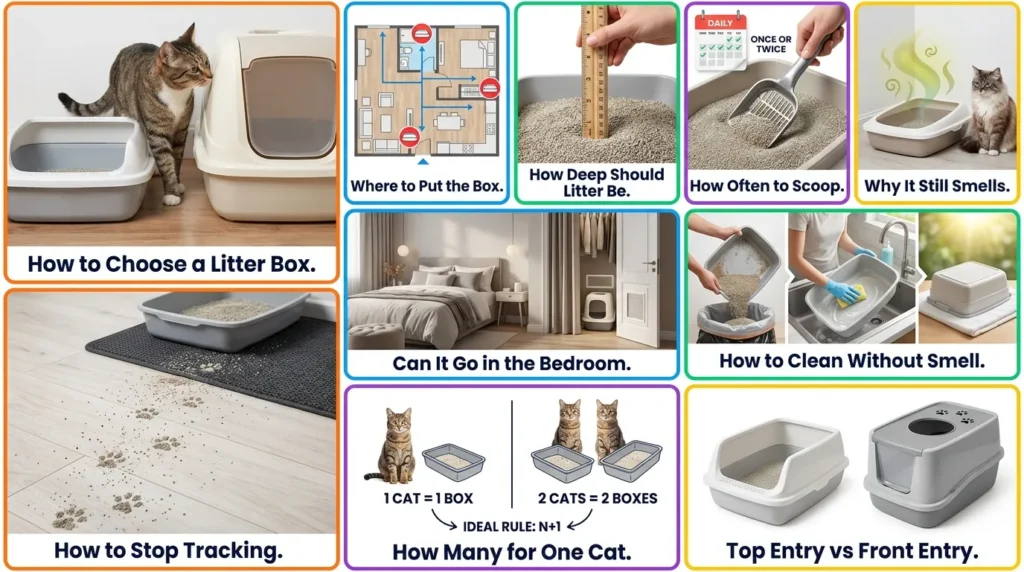
Start with the one that matches your situation right now.
How to Choose the Right Litter Box for Your Indoor Cat
Choosing the right box comes down to four decisions: size, entry style, material and whether you want a cover. Most owners get at least two of these wrong on the first purchase. This article breaks down every factor with specific guidance for large cats, kittens, seniors and cats with arthritis. Find the right option for your cat in our guide to how to choose litter box for indoor cat.
Where to Put a Litter Box in a Small Apartment
In a small apartment placement options are limited but the decision still matters enormously. This article walks through every room in a typical apartment with specific placement advice, ventilation tips and solutions for studio units where there is genuinely no ideal location. Get the full placement guide for small spaces in our article on where to put litter box in small apartment.
How Deep Should Cat Litter Be in the Box?
Litter depth is one of those details most owners never think about until their cat starts kicking litter out of the box or refusing to dig properly. The right depth varies slightly by litter type but there is a clear optimal range that satisfies most cats. Get the exact numbers and the reasoning behind them in our guide to how deep should cat litter be.
How Often Should You Scoop the Litter Box?
The frequency question matters more than most owners expect because the answer directly affects whether your cat continues to use the box or starts finding alternatives. This article covers daily vs twice-daily scooping, the difference between one-cat and multi-cat households and what happens to box hygiene when you skip even one day. Read the full breakdown in our article on how often should you scoop litter box.
Why Does the Litter Box Still Smell After Cleaning?
If you cleaned the box thoroughly and it still smells within hours the problem is almost never the cleaning process itself. This article identifies the six specific causes of persistent litter box odor and gives a concrete solution for each one. Find out what is really causing the smell in our guide to why does litter box smell after cleaning.
How to Stop Cat Litter Tracking in an Apartment
Litter tracking across clean floors is one of the top frustrations of indoor cat ownership and it is almost entirely solvable with the right mat and box combination. This article covers the best litter mats tested in real apartments, the litter types that track least and the training process for top-entry boxes. Stop the scatter for good with our guide to how to stop cat litter tracking.
Can You Put a Litter Box in the Bedroom?
The answer depends on your bedroom size, your sleep sensitivity and how willing you are to commit to daily scooping without exception. This article covers the specific scenarios where bedroom placement works, how to minimize odor in a small room and what furniture solutions make the box less disruptive to your sleep environment. Get the full decision guide in our article on can you put litter box in bedroom.
How to Clean a Litter Box Without the Smell Returning
Washing a litter box seems simple until you realize the odor comes back within 24 hours even after a thorough scrub. This article explains the chemistry of why litter box odor is so persistent and the specific cleaning method that actually eliminates rather than masks the problem. Follow the full process in our guide to how to clean litter box without smell.
How Many Litter Boxes Does One Indoor Cat Need?
The one-cat two-box rule is well established but the reasoning behind it surprises many owners. This article explains exactly why a single cat benefits from two boxes, the specific scenarios where one box works temporarily and how to decide on placement when you have limited space. See the complete breakdown in our guide to how many litter boxes for one cat.
Top Entry vs Front Entry Litter Box: Which Is Better?
Both entry styles have real advantages and real drawbacks and the right choice depends on your cat’s age, agility and digging habits. This article compares both types honestly with specific recommendations for kittens, seniors, anxious cats and aggressive diggers. Find the right entry style for your cat in our comparison of top entry vs front entry litter box.
| INSIGHT
Every article linked above was written specifically for indoor cat owners in apartments and small homes. You will not find generic advice that applies equally to a barn cat and a studio apartment tabby. IndoorLivingCat.com covers the real setup and space challenges that come with keeping cats in smaller living situations. If you are starting from scratch, begin with how to choose a litter box. That decision sets up everything else. Get the box right first and the placement, cleaning and tracking solutions all become easier. |
The Biggest Indoor Cat Litter Box Mistakes Owners Make
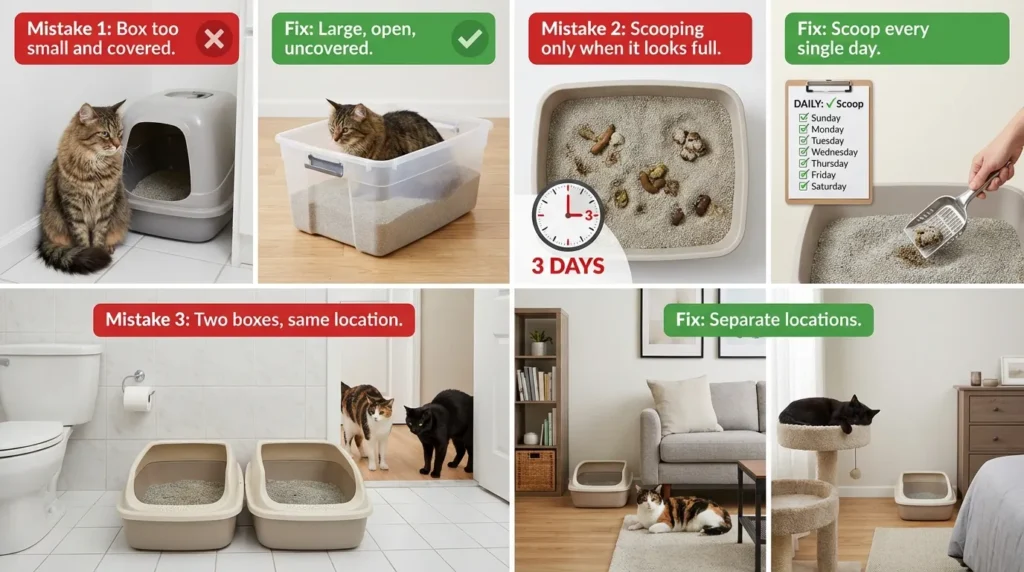
The most common indoor cat litter box mistake is buying a box that is the right size for a smaller cat than the one you actually own. Standard pet store boxes are genuinely undersized for most adult cats. If your cat hangs over the edge, cannot turn around or has to stand partially outside the box while using it, the box is too small.
The second most common mistake is inconsistent scooping. Skipping even one day in a home with multiple cats can trigger avoidance behavior that takes weeks to correct. Daily scooping is not a preference. It is the minimum maintenance standard for any cat that uses the box willingly.
Placing both boxes in the same room is the third. Two boxes in the same bathroom corner function as one box from a territorial perspective. Cats that compete for space will avoid both. Separate locations are required for the two-box system to work as intended.
Frequently Asked Questions About Indoor Cat Litter Boxes
How often should I clean my indoor cat’s litter box?
Scoop the litter box at least once every day. Twice daily is better in a multi-cat household. Do a full litter change and box wash once a week: empty all litter, wash with unscented mild dish soap, dry completely and refill to 2 to 3 inches. Replace the plastic box itself every 12 to 18 months because plastic absorbs odor over time and no amount of cleaning fully removes it.
Why is my indoor cat suddenly not using the litter box?
Sudden litter box avoidance has two main causes: a setup problem or a medical problem. Check the setup first. The box may be dirty, too small, in a new location that stresses the cat or using a different litter than before. If the setup has not changed and avoidance continues for more than 48 hours with signs like straining, blood in urine or crying while using the box, contact your vet immediately. This article is for informational purposes only. Always consult your vet if you have concerns about your cat’s health.
What is the best litter for indoor cats?
Unscented fine-grain clumping clay litter is the best starting point for most indoor cats. It clumps firmly for easy scooping, has low dust and matches the texture most cats prefer for digging. If your cat has respiratory sensitivity, low-dust crystal or paper litters are the alternatives to try. Avoid scented litters entirely. The fragrance is added for human preference and many cats actively avoid boxes with artificially scented litter.
Can I use one litter box for two indoor cats?
Technically yes but practically it creates problems. Two cats sharing one box leads to competition, territorial stress and one cat routinely avoiding the box after the other has used it. The correct setup for two cats is three boxes in two separate locations. This is the minimum for preventing litter box conflict in a multi-cat household. Two boxes placed in different rooms is a workable compromise but watch for avoidance signs.
How do I stop my cat from kicking litter out of the box?
Aggressive litter kicking usually means the box is too small, the sides are too low or the litter is filled too deep. Start by switching to a high-sided litter box or a storage tote with tall walls. Fill litter to exactly 2 to 3 inches — no deeper. Place a large litter-catching mat outside the exit. For cats that kick regardless of box size, a top-entry box is the most effective long-term solution because the litter falls back through the textured lid on exit.
Does the type of litter box affect my cat’s behavior?
Yes, directly. Box size, entry style, cover type and cleanliness all influence whether a cat uses the box consistently. A cat that appears to have a behavior problem is often responding rationally to a box it finds uncomfortable, too small or too dirty. Most litter box behavior problems resolve completely when the physical setup is corrected. Change the box before assuming the behavior needs to be trained.
Your Next Step Toward a Litter Box Setup That Actually Works
Three decisions determine whether your indoor cat litter box setup works long-term: the right number of boxes in the right locations scooped every single day without exception. Everything else — the litter type, the box style, the tracking mat — is built on top of those three foundations.
If you are starting fresh or troubleshooting a problem, begin with the number question. Our guide to how many litter boxes for one cat gives you the complete reasoning and the specific setup for any household size.
All the deep-dive resources linked throughout this guide are built specifically for apartment and small-home cat owners. IndoorLivingCat.com covers real setups for real spaces — not generic advice written for any cat in any home.
Indoor cats need one litter box per cat plus one extra, placed in separate quiet locations away from food and water. Each box should be at least 1.5 times the cat’s body length and filled with unscented clumping litter at 2 to 3 inches depth. Scoop daily and do a full wash weekly. Covered boxes trap odor and many cats avoid them. Replace plastic boxes every 12 to 18 months. Litter box avoidance is most often caused by a dirty, undersized or poorly placed box.